Age 10 | After Mongol forces captured Bukhara, accompanied his father and one thousand cavalrymen in surrendering and entered Genghis Khan's personal guard
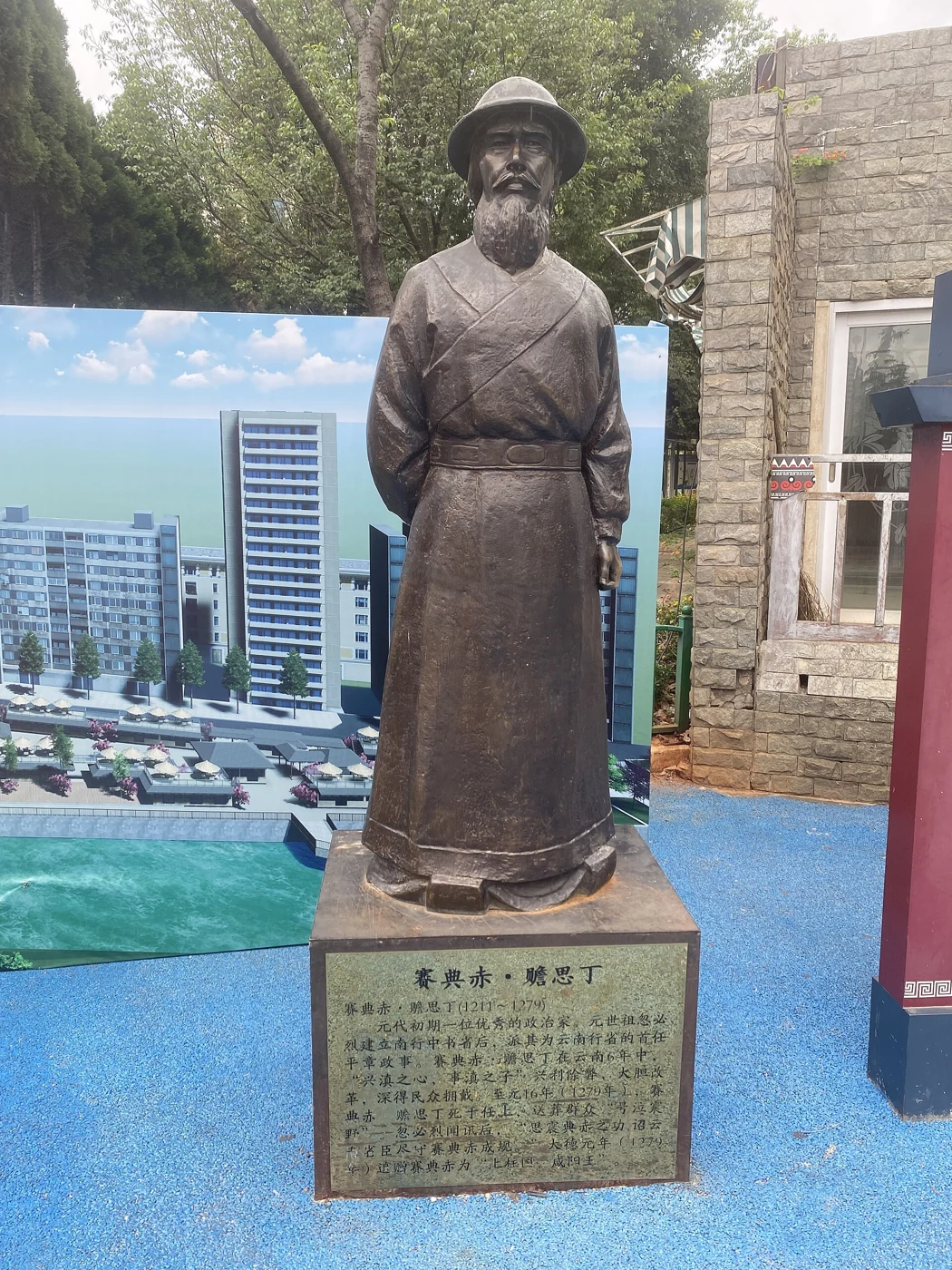
1211 CE–1279 CE
Politician
Sayyid Ajall Shams al-Din Omar
赛典赤·赡思丁·乌马儿
Sayyid Ajall Shams al-Din Omar (1211–1279), whose full name was Sayyid Ajall Shams al-Din Omar, was born in Bukhara in Central Asia, now in Uzbekistan, and was a prominent Huihui statesman of the Yuan period. In his early years he served in the personal guard of Genghis Khan. He later held posts including administrator-general of Yanjing Circuit, investigating commissioner, pacification commissioner, and Pingzhang Zhengshi in…
1211 CE–1279 CEYuan Dynasty
PROFILE
Sayyid Ajall Shams al-Din Omar (1211–1279), whose full name was Sayyid Ajall Shams al-Din Omar, was born in Bukhara in Central Asia, now in Uzbekistan, and was a prominent Huihui statesman of the Yuan period. In his early years he served in the personal guard of Genghis Khan. He later held posts including administrator-general of Yanjing Circuit, investigating commissioner, pacification commissioner, and Pingzhang Zhengshi in the Shaanxi and Sichuan branch secretariats. In 1274, the eleventh year of the Zhiyuan era, he became the first Pingzhang Zhengshi of the Yunnan Branch Secretariat. In office he reorganized the former territory of the Dali Kingdom as Yunnan Province, abolished the system of tümen offices, established an administrative hierarchy of circuits, prefectures, subprefectures, and counties, and moved the provincial capital to Zhongqing, present-day Kunming. He oversaw dredging of the Haikou River and Tanglang River, construction of Songhua Dam and the Jinzhi River irrigation system, and broader management of the Dianchi drainage basin. He ordered land measurement and military-agricultural colonies, and brought more than ten thousand concealed households onto the registers. He established Yunnan's first Confucius temple and enrolled students from multiple ethnic groups. He died in office in 1279, the sixteenth year of the Zhiyuan era. Kublai Khan ordered that “the officials of Yunnan Province shall fully observe the established practices of Sayyid Ajall,” and Sayyid Ajall was posthumously granted the title Supreme Pillar of State and Prince of Xianyang. He was buried in Kunming.
- Other names
- Omar; Sayyid Ajall Shams al-Din; Shams al-Din Omar
- Period
- Yuan
- Dynasty / regime
- Yuan
- Identity
- Politician
- Ethnicity / ethnic affiliation
- Huihui (classified as semu in Yuan sources)
- Clan
- Sayyid Ajall clan
- Native place
- Not reliably confirmed in the historical sources
- Date of birth
- 1211
- Place of birth
- Place of birth not known
- Date of death
- 1279
- Place of death
- Place of death not known
- Highest office
- See Biography and Major Activities
- Major achievements
- Huihui statesman; served as Pingzhang Zhengshi of the Yunnan Branch Secretariat; developed the Dianchi area and governed Yunnan's multiethnic regions
LIFE TIMELINE
About his twenties | Appointed chief darughachi of Feng, Jing, and Yunnei, in the region of present-day Datong and Hohhot
About age 30 | Transferred to serve as darughachi over Taiyuan and Pingyang
About his forties | Served as administrator-general and investigating commissioner of Yanjing Circuit
Age 50 | After Kublai Khan took the throne, promoted to pacification commissioner of Yanjing Circuit
Age 51 | Appointed Pingzhang Zhengshi of the Secretariat, overseeing finances and participating in issuance of Zhongtong paper currency
Age 54 | Appointed Pingzhang Zhengshi of the Shaanxi Branch Secretariat and Sichuan Branch Secretariat, with authority over officials of the Shaanxi Five Circuits and Sichuan Branch Bureau of Military Affairs
Age 64 | Appointed Pingzhang Zhengshi of Yunnan Province and became the first top provincial administrator after Yunnan was established as a province
Age 65 | Reorganized the western Jinzhi route as Jianning Circuit and the eastern route as Zhenkang Circuit and pacified groups in western Yunnan
Age 66 | Moved the provincial capital from Dali to Zhongqing, present-day Kunming; ordered his third son Husin and Zhang Lidao to lead three thousand men in cutting through the Shilong Dam at Haikou and dredging the Tanglang River; began construction of Yunnan's first Confucius temple
Age 67 | Burmese forces invaded Jinzhi; Duan Shi, administrator-general of Dali Circuit, defeated a large Pagan army; construction continued on Songhua Dam, the Jinzhi River, and other hydraulic works
Age 68 | Work on the six rivers and Haikou was completed, creating an integrated water-control system around Kunming
Age 69 | Died in office in Yunnan; Kublai Khan ordered that “the officials of Yunnan Province shall fully observe the established practices of Sayyid Ajall” and posthumously granted him the titles Supreme Pillar of State and Prince of Xianyang
Eighteen years after his death | The Yuan court formally confirmed his posthumous princely title
BIOGRAPHY
Biography
Family Background and Early Years
Sayyid Ajall Shams al-Din came from a Muslim royal lineage in Bukhara, Central Asia. “Sayyid Ajall” is described in the Chinese source as a transcription of Arabic meaning “great descendant of the Prophet,” indicating a family claim of descent from the Prophet Muhammad. “Shams al-Din” is explained as meaning “sun of the religion,” and “Omar” as meaning “long life.” The source states that his thirty-first-generation ancestor could be traced to Muhammad.
Bukhara lies in the oasis of the lower Zeravshan River in Central Asia and was an important city and cultural center of the Khwarazmian Empire. In 1219, the fourteenth year of the Taizu period, Genghis Khan launched his western campaign against Khwarazm. In 1221 the Mongol army captured Bukhara. Sayyid Ajall, then ten years old, accompanied his father Kurumadin, who led one thousand cavalrymen in surrender. Genghis Khan addressed him as “Sayyid Ajall” and ordered him to serve in the personal guard and accompany the army on campaigns. Thereafter Sayyid Ajall, described as a Huihui among the semu peoples of the Yuan world, served for many years at the Mongol court.
Early Official Career
After Ögedei took the throne, Sayyid Ajall was appointed chief darughachi over the three circuits of Feng, Jing, and Yunnei, in the general area of present-day Datong and Hohhot. Darughachi is explained in the Chinese source as a Mongolian term meaning “overseer,” referring to the highest supervisory official placed by the Mongol Empire in conquered areas and entrusted with local military and administrative authority. Sayyid Ajall was later transferred to Pingyang and Taiyuan, where he accumulated extensive experience in local administration.
During the reign of Möngke, Sayyid Ajall was transferred to serve as administrator-general and investigating commissioner of Yanjing Circuit. Yanjing, present-day Beijing, was a major center of Mongol rule in north China, making the post of administrator-general important. In 1258, the eighth year of Möngke's reign, he was ordered to manage military supplies and provide logistical support for Mongol forces campaigning against the Song, and the Chinese source states that he performed the work effectively.
Central Government and the Shaanxi-Sichuan Period
In 1260, the first year of the Zhongtong era, Kublai Khan became Great Khan and promoted Sayyid Ajall to pacification commissioner of Yanjing. In 1261 he appointed him Pingzhang Zhengshi of the Secretariat, placing him in the central decision-making structure. The source quotes that “no important military or state matter failed to pass through him.” In 1262 Sayyid Ajall also took charge of financial matters, strictly controlled the quantity of Zhongtong paper currency issued, and was credited with improving fiscal conditions. He became known for “holding wealth lightly, caring for the people, and governing with many beneficial policies.”
In 1264, the first year of the Zhiyuan era, Sayyid Ajall became Pingzhang Zhengshi of the Shaanxi Five Circuits and western Sichuan branch administrations and later exercised authority over officials of the corresponding Branch Bureau of Military Affairs. During his tenure he established schools and repaired mountain roads, bridges, and plank roads. People in Chang'an erected an inscription commemorating his achievements. The Chinese source presents this administrative experience in Shaanxi and Sichuan as preparation for his later government of Yunnan.
Governing Yunnan
In 1274, the eleventh year of the Zhiyuan era, Kublai Khan appointed Sayyid Ajall Pingzhang Zhengshi of the Yunnan Branch Secretariat. The Chinese source quotes Kublai as saying: “I once personally came to Yunnan. Because appointments were later handled improperly, the distant people became unsettled. I wish to choose someone prudent and generous to pacify and govern them, and none is more suitable than you.” More than twenty years had passed since Mongol forces had destroyed the Dali Kingdom, but the source says local commanders had understood military matters while lacking civil-administrative skill. Ethnic and social tensions had intensified, years of warfare had damaged irrigation and left fields uncultivated, and frontier government remained unstable.
After arriving, Sayyid Ajall first reorganized the former Dali region as the Yunnan Branch Secretariat. He introduced a system of circuits, prefectures, subprefectures, and counties and converted the earlier military administrations—administrator-general offices, tümen offices, and thousand-household offices—into corresponding civil administrative units. In 1276, the thirteenth year of the Zhiyuan era, he moved the provincial capital from Dali to Zhongqing, present-day Kunming. The Chinese source states that the name Yunnan Province, its basic provincial administrative structure, and Zhongqing as capital continued through the Yuan, Ming, Qing, and Republican periods for more than seven hundred years.
In water-control works, in 1276 Sayyid Ajall ordered his third son Husin and Zhang Lidao to lead three thousand men in cutting through Shilong Dam at Haikou, clearing and dredging the Tanglang River, and constructing three control sluices with twenty-one openings at Haikou to balance flood discharge and water storage at different times. He also supervised construction of Songhua Dam and its associated Jinzhi and Yinzhi river irrigation networks, and dredging of the Baoxiang, Maliao, and Haiyuan rivers. The work on the six rivers, Tanglang River, and Haikou took three years and ended in 1278. The source describes the resulting system as the largest, most complete, and most technically sophisticated hydraulic network in Yunnan's history and says that it continued to function.
In agriculture, Sayyid Ajall ordered Ailu to examine the Zhongqing household registers. The quoted record states that more than ten thousand concealed households were found and that four thousand households were settled locally for military-agricultural cultivation. Land was measured from the registers, taxes were assessed under newly established standards, and both military and civilian colonies were organized. Twelve colony districts were established, with 28,419 registered colony households and 98,707 shuang of cultivated land recorded in the source.
In education, Sayyid Ajall established what the source calls Yunnan's first Confucius temple, enrolling as many as 150 students in each cohort. The source says that local minority groups “even among the Cuan sent their sons to study.” The History of Yuan records that after he governed Yunnan he taught rites of kneeling and bowing, the use of matchmakers in marriage, coffins and sacrificial rites for the dead, cultivation methods, and construction of ponds to prepare for flood and drought. It further records that he founded a Confucius temple and Minglun Hall, purchased classics, and endowed school lands, after which “culture gradually flourished.”
For ethnic administration, after the branch secretariat was established, officials in most circuits, prefectures, subprefectures, and counties outside Zhongqing continued to be drawn from existing local ethnic chiefs. Under regulations, chiefs who pacified their localities and maintained peace could be recommended for promotion every three years. Twelve officials in Lijiang and other prefectures received additional noble titles, while ninety-six other prefectural, subprefectural, county, commission, and local jurisdictions were granted hereditary offices.
In external affairs, in March 1277, the fourteenth year of the Zhiyuan era, Burmese forces attacked Jinzhi after resenting the submission to the Yuan of Ahe, leader of Gan'e, identified with present-day Yingjiang County. They intended to establish a position between Tengyue, present-day Tengchong, and Yongchang, present-day Baoshan, and then attack Dali. Duan Shi, administrator-general of Dali Circuit, led fewer than one thousand elite cavalry directly from Nandian, present-day Lianghe, to Gan'e. Using terrain “beside the river” and “against the mountains,” his forces defeated a Pagan army described in the source as forty or fifty thousand strong with eight hundred elephants and ten thousand horses under commanders including Shiduoluobo.
Sayyid Ajall died in office in Yunnan on August 21, 1279, the sixteenth year of the Zhiyuan era, at the age of sixty-nine. Kublai Khan ordered that “the officials of Yunnan Province shall fully observe the established practices of Sayyid Ajall” and posthumously granted him the titles Supreme Pillar of State and Prince of Xianyang. In 1297, the first year of the Dade era, the Yuan court formally confirmed the princely title. Local people established temples to sacrifice to him. The source states that a cenotaph exists at Wuliduo village in Kunming and a tomb at Songhua Dam.
Major Activities
Establishment of Yunnan Province
The most important administrative achievement attributed to Sayyid Ajall after taking charge of Yunnan was the formal reorganization of the former Dali Kingdom into Yunnan Province. He abolished the military-control structure used during the early Mongol conquest, including the tümen office system, and established circuits, prefectures, subprefectures, and counties, making Yunnan a province-level administrative region of the Yuan. The source states that of 129 present-day cities, districts, and counties in the province, about sixty were either directly established by Sayyid Ajall or later renamed from circuits, prefectures, subprefectures, and counties he had created, with many names continuing across the Yuan, Ming, Qing, and Republican periods. He also moved the capital from Dali to Zhongqing, present-day Kunming, establishing Kunming's long-term position as Yunnan's political center.
Management of the Dianchi Water System
In 1276 Sayyid Ajall ordered his third son Husin and Zhang Lidao to lead three thousand men in cutting through Shilong Dam at Haikou and dredging the Tanglang River. Three control sluices with twenty-one openings were constructed to handle flood discharge and water storage. Songhua Dam and the Jinzhi and Yinzhi irrigation networks were also built, and the Baoxiang, Maliao, and Haiyuan rivers were dredged. Work on the six rivers and Haikou lasted three years and produced an integrated hydraulic system that, according to the source, continued to serve irrigation and flood control.
Military-Agricultural Colonies and Household Registration
Sayyid Ajall ordered Ailu to “examine the Zhongqing household registers, find more than ten thousand concealed households, and use four thousand households to establish agricultural colonies on the land.” Land was measured against household registers and taxes assessed under new standards. Twelve colony districts were established, containing 28,419 colony households and 98,707 shuang of agricultural land. The source credits these measures with increasing state revenue and promoting agricultural development in Yunnan.
Confucian Education
Sayyid Ajall established what the source describes as Yunnan's first Confucius temple, founded Minglun Hall, purchased the classics, endowed school land, and enrolled children of multiple ethnic groups, with 150 students in each cohort. It states that even local minority communities sent sons to school. He also promoted ritual practices associated with the Central Plains, including kneeling and bowing, matchmakers in marriage, and coffins and sacrificial rites for the dead, thereby promoting cultural exchange between Yunnan and the Central Plains.
Pacification, Frontier Defense, and External Threats
Sayyid Ajall applied a policy of indirect rule toward Yunnan's minority groups, pacified local chiefs, and encouraged their submission. The source credits him with reducing corvée labor, recalling dispersed households, assisting widowers, widows, orphans, and the childless, preparing for famine, honoring worthy scholars, removing redundant officials, establishing roadside provisions for laboring travelers, and reducing taxes to facilitate trade. In 1277 the Pagan Kingdom invaded the Jinzhi region. Sayyid Ajall organized a defense in which Duan Shi, administrator-general of Dali Circuit, defeated the Pagan army and protected the frontier. He also repaired roads, built bridges, and established postal stations, strengthening communication between Yunnan and the interior of southwest China.
Transmission of Islamic Culture
The Chinese source states that after Sayyid Ajall entered Yunnan with Huihui troops, Islam, Arabic, Persian, gun-making techniques, mining and metallurgy, medicine, astronomy, calendrical and mathematical knowledge, and handicraft techniques from Arabia and Central Asia were transmitted to Yunnan, contributing to the formation of the province's multicultural society.
Personal Relations
Family
- Father: Kurumadin, described as a descendant of the Bukhara royal family who led his people eastward and submitted to the Mongols
- Eldest son: Nasir al-Din, who rose to become Pingzhang Zhengshi of the Yunnan and Shaanxi provincial administrations
- Second son: Hasan, who became pacification commissioner and chief military commander of the Guangdong circuit
- Third son: Husin, who became a Right Chancellor and Pingzhang Zhengshi of the Jiangxi Branch Secretariat
- Fourth son: Shams al-Din Umar, who became administrator-general of Jianchang Circuit and Pingzhang Zhengshi of Yunnan Province
- Fifth son: Mas'ud, who became Pingzhang Zhengshi of the Branch Secretariat for the circuits of Yunnan
- Sixth-generation descendant: Zheng He, Ming dynasty navigator
Rulers
- Genghis Khan: after Bukhara surrendered in 1221, Sayyid Ajall entered his personal guard
- Ögedei: appointed Sayyid Ajall chief darughachi of Feng, Jing, and Yunnei
- Möngke: appointed Sayyid Ajall administrator-general and investigating commissioner of Yanjing Circuit
- Kublai Khan: after 1260 employed Sayyid Ajall in a series of offices including pacification commissioner, Pingzhang Zhengshi of the Secretariat, Pingzhang Zhengshi in Shaanxi and Sichuan, and Pingzhang Zhengshi of Yunnan; after Sayyid Ajall's death ordered that the Yunnan officials “fully observe the established practices of Sayyid Ajall”
Colleagues
- Zhang Lidao: together with Sayyid Ajall's third son Husin led three thousand men in cutting through Shilong Dam at Haikou and managing the Dianchi water system
- Ailu: ordered by Sayyid Ajall to examine Zhongqing household registers, identify concealed households, and implement agricultural colonies
- Duan Shi: administrator-general of Dali Circuit who in 1277 led troops that defeated a large Pagan invading army
Historical Assessment
Yuan / Contemporary Assessments
- Kublai Khan: “I once personally came to Yunnan. Because appointments were later handled improperly, the distant people became unsettled. I wish to choose someone prudent and generous to pacify and govern them, and none is more suitable than you.” — History of Yuan, juan 12, “Biography of Sayyid Ajall Shams al-Din”
- After Sayyid Ajall's death, Kublai ordered: “The officials of Yunnan Province shall fully observe the established practices of Sayyid Ajall and shall not alter them.” — History of Yuan, “Biography of Sayyid Ajall”
- The History of Yuan describes his government of Yunnan as teaching ritual conduct and marriage practices, providing coffins and sacrifices for the dead, teaching cultivation, constructing ponds for flood and drought, establishing a Confucius temple and Minglun Hall, purchasing the classics, and endowing school lands, after which “culture gradually flourished.”
Ming and Qing Periods
- Achievements of the Prince of Xianyang (Sayyid Ajall) in Pacifying Yunnan gives a detailed account of his government and states that twelve officials in places including Lijiang received additional noble ranks while hereditary offices were conferred in ninety-six other prefectural, subprefectural, county, commission, and local jurisdictions.
- Ming local gazetteers of Yunnan frequently recorded his hydraulic works and establishment of a Confucius temple. People in Kunming established temples for him and honored him as the “Prince of Xianyang.”
- The Qing Yunnan Gazetteer followed many Yuan and Ming assessments and described him as one of the leading capable ministers in the history of Yunnan government.
Modern Assessments
- Chapter 5, section 4 of A Concise History of Yunnan, “Agricultural Colonies in Yuan Yunnan,” discusses Sayyid Ajall's contribution to the colony system.
- Modern scholars cited in the Chinese source regard him as among the most successful Yuan administrators of Yunnan and hold that the provincial system he established shaped Yunnan's administration for the following seven centuries.
- Studies of Yunnan ethnic history identify him as an important figure in promoting multiethnic integration and the transmission of Central Plains culture in Yunnan.
FIGURES ASSOCIATED WITH THIS DYNASTY
Bibliography
- History of Yuan, juan 12, “Biography of Sayyid Ajall Shams al-Din,” compiled by Song Lian and others, punctuated Zhonghua Book Company edition
- New History of Yuan, juan 155, “Biography of Sayyid Ajall Shams al-Din,” by Ke Shaomin
- A Concise History of Yunnan, Chapter 5, Section 4, “Agricultural Colonies in Yuan Yunnan”