Birth | Born at Qianwulong, Linshui Ward, Shijing Township, Lin'an County, Hangzhou.
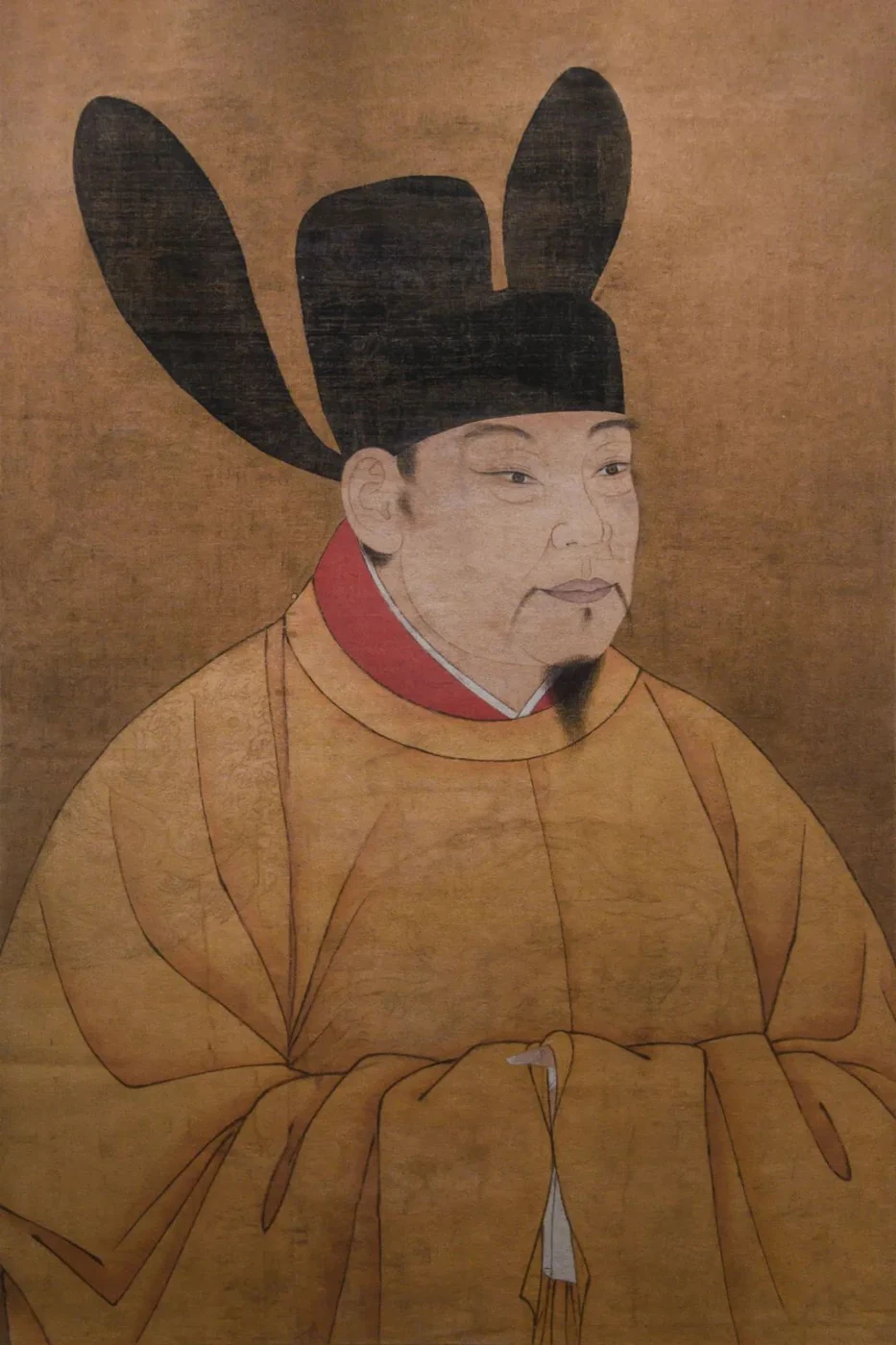
852 CE–932 CE
King of Wuyue
Qian Liu
钱镠
King of Wuyue who secured the Two Zhe region, protected its population, built seawalls, and established a dynasty whose descendants maintained Wuyue without claiming the imperial title.
852 CE–932 CEWuyue
PROFILE
King of Wuyue who secured the Two Zhe region, protected its population, built seawalls, and established a dynasty whose descendants maintained Wuyue without claiming the imperial title.
- Other Names
- Qian Poliu; King Wusu of Wuyue
- Courtesy Name
- Jumei
- Period
- Wuyue
- Date of Birth
- March 10 852
- Date of Death
- May 6 932
- Dynasty/Polity
- Wuyue
- Identity
- King of Wuyue
- Ethnicity/People
- Han Chinese
- Native Place
- Lin'an, Hangzhou (present-day Lin'an District, Hangzhou, Zhejiang)
- Place of Birth
- Not recorded in historical sources
- Reign
- Not recorded in historical sources
- Predecessor
- Not applicable (founding ruler)
- Successor
- Qian Yuanguan
- Era Name
- Shuntian
- Temple Name
- Taizu
- Posthumous Name
- Wusu
- Principal Achievement
- King of Wuyue who secured the Two Zhe region, protected its population, built seawalls, and established a dynasty whose descendants maintained Wuyue without claiming the imperial title.
LIFE TIMELINE
Age 16 | At about sixteen, left his studies and became involved in the salt trade, traveling among Hangzhou, Yuezhou, and Xuanzhou.
Enlisted under Dong Chang | Enlisted under Dong Chang, commander at Shijing, as a junior officer and helped suppress Wang Ying's revolt.
Suppressed bandit groups in Xuanzhou and Shezhou and received military appointments at Shi | Suppressed bandit groups in Xuanzhou and Shezhou and received military appointments at Shijing and Zhenhai Army.
With a smaller force | With a smaller force, checked Huang Chao's rebels near Lin'an and helped preserve Hangzhou.
Helped organize the Eight District Armies of Hangzhou and became deputy commander of the S | Helped organize the Eight District Armies of Hangzhou and became deputy commander of the Shijing unit.
Led the Eight District forces across the Qiantang River and surprised Liu Hanhong's troops | Led the Eight District forces across the Qiantang River and surprised Liu Hanhong's troops, winning his first major success.
Emperor Xizong sent the eunuch Jiao Jufan to mediate between Hangzhou and Yuezhou | Emperor Xizong sent the eunuch Jiao Jufan to mediate between Hangzhou and Yuezhou, but Dong Chang and Liu Hanhong refused to make peace; Liu then stationed naval forces at Wanghai.
Dong Chang promised Qian Liu control of Hangzhou if he captured Yuezhou. Qian Liu advanced | Dong Chang promised Qian Liu control of Hangzhou if he captured Yuezhou. Qian Liu advanced via Pingshui, cut a mountain road for five hundred li to Cao'e Dai, accepted Bao Junfu's surrender, captured Yuezhou, and destroyed Liu Hanhong's power.
Appointed General-in-Chief of the Left Guard and Prefect of Hangzhou | Appointed General-in-Chief of the Left Guard and Prefect of Hangzhou, establishing direct control over Hangzhou.
Built the inner fortifications of Hangzhou from Baoshi Mountain to Qinwang Mountain | Built the inner fortifications of Hangzhou from Baoshi Mountain to Qinwang Mountain, more than fifty li in length.
Mobilized soldiers and civilians to construct Hangzhou's outer city wall | Mobilized soldiers and civilians to construct Hangzhou's outer city wall, roughly seventy li in circumference.
Promoted to Surveillance Commissioner of Suzhou and Hangzhou | Promoted to Surveillance Commissioner of Suzhou and Hangzhou, then appointed Military Commissioner of Zhenhai Army and Prefect of Runzhou.
Granted the designation Joint Manager of Affairs with the Secretariat-Chancellery | Granted the designation Joint Manager of Affairs with the Secretariat-Chancellery, becoming a military governor with chancellery rank.
After Dong Chang proclaimed himself emperor | After Dong Chang proclaimed himself emperor, appointed Campaign Commissioner of Eastern Zhejiang to suppress him.
Captured Yuezhou and defeated Dong Chang | Captured Yuezhou and defeated Dong Chang; appointed Military Commissioner of both Zhenhai and Zhendong armies and granted an iron certificate of immunity.
Honored with the privilege of having his portrait placed in Lingyan Pavilion. | Honored with the privilege of having his portrait placed in Lingyan Pavilion.
Invested by Tang as Prince of Yue | Invested by Tang as Prince of Yue; in the same year Xu Wan and Xu Zaisi rebelled, and the crisis was settled through large payments and hostages.
Retitled Prince of Wu. | Retitled Prince of Wu.
Later Liang invested him as Prince of Wuyue | Later Liang invested him as Prince of Wuyue, conventionally marking the beginning of Wuyue.
Memorialized Later Liang and began construction of stone seawalls along the Qiantang River | Memorialized Later Liang and began construction of stone seawalls along the Qiantang River; also expanded Hangzhou.
Invested by Later Liang as King of Wuyue | Invested by Later Liang as King of Wuyue, formally establishing the kingdom and setting up a full court bureaucracy.
Stripped of titles because of the hostility of An Chonghui | Stripped of titles because of the hostility of An Chonghui, chief of the Later Tang military affairs commission.
Restored after An Chonghui's death. | Restored after An Chonghui's death.
BIOGRAPHY
Biography
Family Background and Early Life
Qian Liu was born on March 10, 852, the sixteenth day of the second month of the sixth year of the Dazhong era, at Qianwulong in Linshui Ward below Daguan Mountain in Lin'an County, Hangzhou. His father was Qian Kuan and his mother was Lady Shuiqiu; the family lived by farming and fishing. Tradition held that a red light filled the room when he was born and that his appearance was unusually ugly. His father considered the birth inauspicious and wished to abandon him in a well, but his grandmother intervened. He therefore received the childhood name Poliu, interpreted in the source as "grandmother kept him," and the well became known as the Poliu Well. The Spring and Autumn Annals of the Ten Kingdoms preserves a legendary account of this birth story.
As a boy Qian Liu disliked literary study and preferred martial exercises. He was skilled with the bow and spear and also took an interest in prophetic and apocryphal writings. A story says that he organized neighborhood children into squads beneath a large tree, which he later titled the "General Tree." Around age sixteen he abandoned formal study and entered the salt trade. Because private salt trading was illegal but lucrative, he moved among Hangzhou, Yuezhou, and Xuanzhou dealing in salt and grain. A later story credits him with building an early "Qian Family Bridge" at Rugao while trading salt. The source treats this experience as having strengthened his physique, boldness, and economic resources.
Military Service and Rise
In 875, Wang Ying, a garrison commander in western Zhejiang, rebelled. Dong Chang, commander at Shijing, recruited local militia to suppress him. Qian Liu enlisted at age twenty-four by traditional reckoning, became a junior commander, and took part in the successful campaign. In 878 he defeated several armed groups in Xuanzhou and Shezhou and received military appointments at Shijing and Zhenhai Army.
In 879, Huang Chao's rebel forces entered eastern Zhejiang and threatened Lin'an. Qian Liu used ambush and deception to defeat the advance force despite inferior numbers and then spread false information about a large army stationed at a place called Babaili, exploiting the place-name's literal meaning of "eight hundred li." Huang Chao's troops, according to the story preserved in the Spring and Autumn Annals of the Ten Kingdoms, interpreted it as the size of the garrison and avoided Hangzhou. Gao Pian, Military Commissioner of Huainan, praised Qian Liu after hearing of the episode.
In 880 Dong Chang organized local troops from eight districts of Hangzhou, including Shijing, Qingping, Yuqian, Yanguan, Wuan, Tangshan, Fuchun, and Longquan. Qian Liu became deputy commander of the Shijing contingent. Gao Pian later summoned Dong Chang and Qian Liu to Guangling and is said to have predicted that Qian Liu's future rank would exceed his own. Dong Chang soon returned to Hangzhou; Gao Pian recommended Dong Chang as Prefect of Hangzhou and Qian Liu as commander of military affairs and Heir Apparent's Guest.
Pacifying the Two Zhe Regions
In 882, conflict intensified between Liu Hanhong, Surveillance Commissioner of Yuezhou, and Dong Chang. Liu sent forces to Xiling in an effort to absorb Hangzhou. Qian Liu led the Eight District troops across the Qiantang River, surprised the enemy camp, and burned it. He then defeated additional armies sent by Liu Hanhong. In 884, Emperor Xizong sent the eunuch Jiao Jufan as a commissioner to mediate between Hangzhou and Yuezhou and ordered Dong Chang and Liu Hanhong to end their fighting, but neither obeyed. Liu Hanhong then sent Zhu Bao, Han Gongmei, Shi Jianshi, and others with naval forces to garrison Wanghai, in present-day Zhenhai, Zhejiang. In 886, Dong Chang promised Qian Liu control of Hangzhou if he could take Yuezhou. Qian Liu marched through Pingshui, cut a mountain road for five hundred li, advanced directly toward Cao'e Dai, accepted the surrender of the eastern Zhejiang general Bao Junfu, repeatedly defeated Liu's forces, and captured Yuezhou. Liu Hanhong fled to Taizhou, where Prefect Du Xiong captured him and handed him over for execution.
In 887 Dong Chang became Surveillance Commissioner of Yuezhou and Qian Liu was appointed General-in-Chief of the Left Guard and Prefect of Hangzhou. During the wider upheavals in Zhenhai and Huainan, Qian Liu's commanders Cheng Ji and Du Leng captured Changzhou and Runzhou, while Qian Liu sheltered the displaced military commissioner Zhou Bao. In 888 Qian Liu executed Xue Lang to sacrifice to Zhou Bao and sent his kinsman Qian Qiu against Xu Yue. Emperor Zhaozong appointed him Defense Commissioner of Hangzhou.
Thereafter Yang Xingmi rose in Huainan and fought Sun Ru and Qian Liu for control of Huainan and western Zhejiang. After years of warfare, Yang killed Sun Ru and took Huainan, Runzhou, and Changzhou, while Qian Liu retained Suzhou. Qian Liu absorbed part of Sun Ru's former army into a new elite unit, strengthening his forces.
Destroying Dong Chang and Controlling the Two Zhe Regions
In 895, Dong Chang proclaimed himself emperor at Yuezhou, founded the state of Dayue Luoping, and adopted the era name Shuntian. He appointed Qian Liu commander of the Two Zhe regions. Qian Liu tried to dissuade him, warning that being a military commissioner in lasting wealth was preferable to becoming an isolated emperor and bringing disaster on his clan and people. Dong Chang refused.
In May the Tang court stripped Dong Chang of his titles, appointed Qian Liu Campaign Commissioner of Eastern Zhejiang and Prince of Pengcheng Commandery, and ordered him to attack. Dong Chang sought assistance from Yang Xingmi of Huainan. In 896 Yang sent An Renyi to help Dong Chang, while Qian Liu sent Gu Quanwu against Yuezhou. Gu defeated several Dong Chang commanders and captured the city. Dong Chang was taken prisoner and died en route to Hangzhou, either by drowning himself in the Xixiao River or by being killed, depending on the account.
In October the Tang court renamed Weisheng Army as Zhendong Army and appointed Qian Liu military commissioner of both Zhenhai and Zhendong, while adding high honorary offices and granting him an iron certificate of immunity. In 897 Emperor Zhaozong issued a gold-lettered iron certificate forgiving nine capital crimes for Qian Liu himself or three for his descendants. The certificate later received inscriptions from figures such as Lu You and Liu Ji and was viewed by several Song, Ming, and Qing emperors. In 900 Tang requested Qian Liu's portrait for Lingyan Pavilion. By then he had largely consolidated control of the Two Zhe region and was one of the strongest military governors in the southeast.
Founding Wuyue and Protecting the Territory
In 902 Tang invested Qian Liu as Prince of Yue. That same year his officers Xu Wan and Xu Zaisi rebelled, allied with Tian Jun under Yang Xingmi, and besieged Hangzhou. Qian Liu ultimately paid 200,000 strings of cash and sent two sons as hostages to secure the withdrawal of the attackers. The episode made him more cautious in later government. In 904 he became Prince of Wu.
On the third day of the fifth month of 907, Emperor Taizu of Later Liang invested Qian Liu as Prince of Wuyue, conventionally regarded as the beginning of Wuyue. In February 923 Later Liang invested him as King of Wuyue, marking a more formal establishment of the kingdom. Qian Liu transformed his headquarters into a royal court and created offices including chancellors and vice directors, using ceremonial forms comparable to a sovereign court. In external diplomacy, however, he never claimed the imperial title. He recognized the Central Plains dynasties as legitimate, served Later Liang and Later Tang, and continually sent tribute in exchange for political protection.
The source credits Qian Liu with a policy of "protecting the territory and pacifying the people." Rather than taking part in broader warlord struggles, he concentrated on domestic development. Beginning in 890 he built inner fortifications around Hangzhou. In 892 he mobilized more than 200,000 soldiers and laborers to build a seventy-li outer wall extending across the later urban area. In 910 he expanded the city again, reconstructed the inner palace on Phoenix Mountain, and built halls including Tiance, Tianchong, and Gongchen. The source notes that these works helped shape the city later used as the Southern Song capital.
Also in 910, Qian Liu memorialized Later Liang about the destruction caused by Qiantang tides and began a stone seawall along the river. Because the tides made construction difficult, workers used bamboo containers filled with large stones to form a foundation. The seawall stretched from the area of Liuhe Pagoda toward Genshan Gate. Qian Liu also maintained 7,000 specialized lake-dredging soldiers for West Lake, worked on Taihu and Jianhu lakes, and established a maintenance system for polder and water-control networks, benefiting agriculture.
Later Years and Death
In his later years the Two Zhe region entered a more stable phase of recovery and construction. In 910 Qian Liu visited his native Yijin Army district, held a banquet for local elders, distributed ceremonial drinking vessels according to age, and composed a homecoming song. When the elders did not understand its literary diction, he repeated its sentiment in the local Wu speech, to general laughter.
In 929, after offending An Chonghui, chief of the Later Tang military affairs commission, Qian Liu was stripped of his official titles. After An Chonghui was killed in 931, the titles were restored. Qian Liu died on May 6, 932, in the main hall of his Lin'an palace, aged eighty-one by traditional reckoning. The source counts forty-one years of rule from his appointment over the two military districts in 896. He was buried at Maoshan in Yijin Township, Anguo County. Later Tang granted the posthumous name Wusu, and Wuyue bestowed the temple name Taizu.
Qian Liu, styled Jumei with the childhood name Poliu, was a native of Lin'an in Hangzhou. He was born on the sixteenth day of the second month of 852 at Linzhao in the district, and the tradition is that his father Qian Kuan was away that night, that a neighbour ran to tell him of the sound of many armoured horsemen at his house, and that hurrying home he found the child born and a red light filling the room; that his father, thinking it strange, would have thrown him into the well of the Qiu family, but his grandmother, knowing him for no common person, forbade it, so that he was named Poliu and the well took the name. Grown up, he was idle and would not work, making salt and turning smuggler; he was a master of bow and spear, unmatched in valour, and read somewhat in the books of prognostication. Zhong Qi, the county clerk, had sons who drank and gambled with him, and forbade them his company, which they sought in secret. A diviner of Yuzhang, seeing kingly air between the Ox and Bushel stars, which are the division of Qiantang, came to Lin'an and, hiding his art in the market, sought the man secretly; and Zhong Qi, who knew him, was told that the county held a noble man whom he could not find in the market and that Zhong Qi's own countenance was noble but not enough for it. Zhong Qi then made a feast of all the notables of the county, and the diviner found none sufficient; but passing Zhong Qi's house, he saw Qian Liu coming in and turning back, and cried out that this was the truly noble man, and told Zhong Qi that his own fortune would come through him, and bade Qian Liu take care of himself, for his frame was no common one. Thereafter Zhong Qi let his sons consort with him and often relieved his poverty. In 875, when Wang Ying of western Zhejiang rebelled, Dong Chang of Shijing raised local troops and made Qian Liu his lieutenant, and he broke Wang Ying at twenty-four. In 878 he put down the bandits Zhu Zhiguan, Cao Shixiong and Wang Zhixin who were plundering between Xuan and She, and was made provost of the Shijing office and an officer of the Zhenhai army. In 879, when Huang Chao's two hundred thousand ravaged the prefectures and came near Shijing, Qian Liu told Dong Chang that the enemy, crossing the hills in great numbers with their drums and banners far apart and their van and rear not answering, should be met by surprise. With twenty picked men he lay in the brush, and as the vanguard came through the pass in single file he shot its commander with a crossbow, threw the enemy into confusion and cut down several hundred; then, saying that this would serve but once and that they could not face the main body, he led his men to Babaili, a place-name, and told an old woman at the roadside to say, if any asked, that the Lin'an troops were camped over eight hundred li. When the enemy came and heard her, not knowing it for a place-name, they said that if a dozen men could not be beaten, how much less eight hundred li, and hurried past. The commander Gao Pian, hearing that Huang Chao dared not enter Lin'an, admired him and told his officers that Qian Liu's honours would one day exceed his own. In 880 the eight camps of Hangzhou were formed, with Dong Chang for Lin'an and Qian Liu his second; and when Gao Pian summoned them to Guangling he told those about him that this man's rank would exceed his own, though he would not move against the rebels himself, so that Dong Chang and Qian Liu returned and were made prefect of Hangzhou and provost marshal. In 882, when Liu Hanhong of Yuezhou quarrelled with Dong Chang and sent his brother and the provost Xin Yue to camp at Xiling, Qian Liu crossed the river with the eight camps, seized the enemy's watchwords, cut into their camp and burned it so that they fled; he broke Huang Gui and He Su at Zhuji and Xiaoshan, defeated Liu Hanhong himself and killed He Su and Xin Yue, Liu Hanhong escaping in the dress of a cook and saved by showing his cleaver. In 884 the emperor sent an envoy to make peace between them and both refused. In 886 Dong Chang told Qian Liu that if he could take Yuezhou he would give him Hangzhou, and Qian Liu, saying that otherwise it would be a lasting trouble, marched from Zhuji to Pingshui, cut a road five hundred li through the hills, came out at Cao'e dai, received the submission of Bao Junfu and, after repeated victories, took Yuezhou; Liu Hanhong fled to Taizhou, was handed over by its prefect and beheaded at Kuaiji, his family destroyed; and Dong Chang moved to Yuezhou, making Qian Liu provost of Hangzhou. In 887 Qian Liu was made general of the left guard and prefect of Hangzhou and Dong Chang observing commissioner of Yuezhou. That year Bi Shiduo imprisoned Gao Pian and Huainan fell into disorder, Xu Yue took Suzhou, and the officers of Runzhou mutinied and set up Xue Lang; Qian Liu sent Cheng Ji and Du Leng against Changzhou, brought back Zhou Bao with military honours and lodged him at Zhangting, where he died, and took Runzhou, expelling Liu Hao and seizing Xue Lang. In 888 he had Xue Lang killed and his heart cut out in sacrifice to Zhou Bao, sent his brother Qian Qiu against Xu Yue, who fled to sea and was killed, and was made prefect of Hangzhou by the emperor; and in the contention of Yang Xingmi and Sun Ru over Huainan, fought them between Suzhou and Changzhou until Sun Ru was killed by Yang Xingmi, who took Huainan and Runzhou while Qian Liu took Suzhou and Changzhou. In 890, when Li You took Suzhou and Shen Can fled from Hangzhou, Qian Liu would have killed him for the loss and Shen Can went over to Sun Ru; and in the intercalary ninth month Qian Liu built a new inner wall for Hangzhou, fifty li long, following the hills, in which work he himself encouraged the labourers and carried a brick, so that all strove. In 891 he stopped Sun Ru's southward advance with his fleet, and Du Leng built the Dong'an city in ten months to strengthen the northern frontier, and he retook Suzhou. In 893 he was made observing commissioner of Suzhou and Hangzhou and raised two hundred thousand labourers and the thirteen camps to build the outer wall of Hangzhou, seventy li about; and in 894 he was made concurrent chancellor. Dong Chang, holding Yuezhou, wished to make himself emperor; and Qian Liu wrote to him that it were better to open his gates as a military commissioner and be rich and honoured for life than to shut them as a Son of Heaven and drag his kin and people into ruin, and that repentance even now was not too late. Dong Chang would not hear, and Qian Liu marched to the city with thirty thousand men, greeted him at the Ying'en gate and told him that a man holding both military and civil office should not exchange safety for danger, that he had come only to await his amendment, and that if the emperor sent a general, the people of the region would perish with him. Dong Chang took fright, gave two million for the troops, delivered up the chief conspirators and asked to be punished by the emperor. Earlier he had put on the imperial cap and robes, proclaimed the state of Luoping with the era Shuntian and offered Qian Liu the post of commander; and the emperor, having stripped him of rank and made Qian Liu Prince of Pengcheng and commissioner of Zhedong, Dong Chang refused obedience again and begged help of Yang Xingmi. Yang Xingmi sent An Renyi to his aid; Qian Liu sent Gu Quanwu, who killed Cui Wen, and Dong Chang's generals being incompetent were beaten at every turn; Gu Quanwu brought him back towards Hangzhou, and at the Little West river, saying that he and Qian Liu had risen together and that he had once been a great general, he could not face him, he looked at his attendants, who wept, and drowned himself with a shout. The emperor made Wang Pu commissioner of Yuezhou, who asked that it be given to Qian Liu; so the Weiwang army became the Zhendong army, Qian Liu was made commissioner of both Zhenhai and Zhendong with the rank of grand commandant and director of the Secretariat, and was given an iron warrant sparing him nine deaths. He took up the office at Yuezhou and governed from Qiantang, calling Yuezhou the eastern capital; in 898 he moved the Zhenhai headquarters to Hangzhou and was made acting grand preceptor, renaming his native place and his old camp in his honour; and the emperor had his portrait hung in the Lingyan gallery. After subduing his rivals in the two Zhe, Qian Liu largely ceased great campaigns, but being surrounded on three sides fought many frontier actions against Yang Xingmi of Huainan. In 897 he relieved Wuzhou, sent Gu Quanwu with three thousand men by sea to relieve Jiaxing and broke the Huainan army, and took Suzhou with Songjiang, Wuxi, Changshu and Huating; in 898 Gu Quanwu took Suzhou and beat Zhou Ben at Wangting, setting up Cao Gui as its commissioner; and in 901, when a false report of Qian Liu's death reached Yang Xingmi, Li Shenfu marched on Hangzhou but, finding the city strong, guarded the tombs of Qian Liu's ancestors against woodcutting and sent Gu Quanwu with family letters, while Qian Liu, deceived by dummy camps and banners into thinking the whole Huainan army had come, sued for peace. In 902 he was made Prince of Yue. Touring his own city, he faced the revolt of Xu Wan and Xu Zaisi, who burned the suburbs and attacked the inner city while his son Qian Chuanying held the gates; and Qian Liu, unable to enter by the north gate, came in disguised over the wall, posted his officers at the gates and sent Gu Quanwu to secure the eastern capital. Gu Quanwu told him that the danger was not the eastern capital but Huainan, since Xu Wan would certainly call in the Huainan troops, and that Lord Yang, being a great man, would pity them if told of the trouble; so Qian Liu, who had thought of marrying his son Qian Yuanliao to the Yang family, sent him with Gu Quanwu to Guangling, and Xu Wan accordingly summoned Tian Jun from Xuanzhou. Gu Quanwu persuaded Yang Xingmi that Tian Jun's success would endanger him, and that if he recalled Tian Jun, Qian Liu would send his son Qian Chuanliao as a hostage and ask a marriage; and Yang Xingmi married his daughter to Qian Chuanliao and recalled Tian Jun, who took Xu Wan and Xu Zaisi back to Xuanzhou but kept Qian Liu's son Qian Chuanguan as a hostage and demanded two hundred thousand strings for his troops. The second son Qian Chuanguan offered himself, and though his mother wept at sending a child into a tiger's mouth, he said that to ease the state's trouble he could not spare himself, and bowed and went out while Qian Liu wept to see him off. In 903 Tian Jun revolted and was destroyed by Yang Xingmi, and Xu Wan, taken by the Huainan troops, was sent to Qian Liu in a cage-cart and put to death, his heart being cut out in sacrifice. Qian Liu, as commissioner of Zhenhai and Zhendong and Prince of Yue, asked for the title of Prince of Wuyue and was refused; but Zhu Quanzhong spoke for him and he was made Prince of Wu. In 904 he built the hall of meritorious ministers and set up a stele recording his services with the names of five hundred officers and retainers on its reverse. When the Liang founder took the throne he made him Prince of Wuyue and commissioner of Huainan; and when a guest urged him to refuse the Liang command he laughed and asked whether he was not to be another Sun Zhongmou, and accepted it. In 908 he was made director of the Secretariat, in 911 director of the Department of State Affairs and commander of the Huainan and Xuan-Run circuits, and in 912 the Liang honoured him as Shangfu; later he was made marshal of all armies and allowed to open a staff, and from 917 he sent tribute by sea. When the Wangs of Shu, the Yangs of Wu, the Lius of Han and the Wangs of Min all took imperial titles and urged him by gifts of dragon robes and jade tablets to do the like, he laughed and said that these children sat in the coals themselves and would set him above them, and refused, while all these rulers treated him as a father or elder brother. The Liang then sent an envoy to invest him as King of Wuyue, and he began his state with ceremonial and titles much like an emperor's, calling his residence a palace, his offices a court, and his orders to his territory edicts, his officers styling themselves subjects, though he did not change the era and styled himself Wuyue in memorials rather than a military command; and he set up a full establishment of officials. When the Later Tang founder entered Luoyang he sent tribute and asked for a jade tablet; the ministers held that none but a Son of Heaven might use one, and Guo Chongtao opposed it, but it was granted, together with a gold seal, and he was also empowered to invest the kings of Silla and Bohai and the rulers of the islands. Later writers note that while he was diligent in tribute he privately usurped the era names within his state, and that his descendants, observing the central calendar, concealed the matter, so that when Qian Chu surrendered his territory every stone inscription bearing a false era name was defaced by workmen; and the Memoirs of Rongzhai record that his testament bade him lay aside the imperial forms for those of a military commissioner, though three era names, Tianbao, Dabao and Baozheng, had been used. When the Later Tang sent envoys to Wuyue and one of them, at odds with his colleague, reported that the other had bowed to Qian Liu as a subject and called him "your highness" and betrayed state secrets, An Zhonghui had the man put to death and an edict was issued retiring Qian Liu with the rank of grand preceptor and stripping his other offices; Qian Liu had his son Qian Chuanguan memorialise in protest without effect, and afterwards his titles were restored, the earlier deprivation being An Zhonghui's forgery. Qian Liu was a careful governor of his state and rigorous in his household, twice laying down family instructions in eight and in ten articles. The eight, drawn up by his own hand in 912, took the fall of great clans since the Jin as a warning and aimed to inherit the virtue of his forebears and extend it to his descendants; and the ten, laid down on his deathbed, bade his sons measure their virtue and strength and understand the times, and if they met a true ruler to submit at once, since Heaven preserves the obedient and the people are more precious than the altars of state, and to avoid war for the love of the people; recalling that the silk of the region and the opening of waste land had come of his teaching, and that every thread and grain was the sweat of the people, he bade them not be insatiably greedy, not seek ease and pleasure, not tyrannise by their power, and not offend their ministers and people. The family rules consist of the eight instructions, the testament and the later Qian family instructions, collected with them in the family records of 1925 and arranged under self, family, society and state. In 932, gravely ill, Qian Liu called his ministers and told them to choose the worthiest among his sons, and when they all named Qian Yuanguan as the most deserving from his campaigns, he made him his heir and gave him the keys of his chests, saying that the generals had consented. He died soon after at eighty-one, and the Later Tang court suspended audience for seven days, gave him the posthumous name Wusu, buried him with princely rites and had Yang Ningshi write his stele, the coffin being laid in state at his own city in the fourth month. Earlier, when he built his mansion at Lin'an and rode home in great state, his father would avoid him, and when Qian Liu came on foot to ask the reason he answered that the family had lived by field and net and never risen so high, that his son was now master of thirteen prefectures with enemies on three sides and contending for advantage with others, and that he feared ruin for the house; and Qian Liu wept and thanked him.
Major Activities
Political and Military Activity
Qian Liu fought throughout his early life, helping suppress Wang Ying, armed groups in Xuanzhou and Shezhou, Huang Chao's rebels, Liu Hanhong, and Dong Chang before gaining control of the thirteen prefectures of the Two Zhe region. The source emphasizes his use of surprise and deception and records several victories against larger forces. After establishing Wuyue, he adopted a policy of preserving territory and population, avoided claiming the imperial title, limited expansion, and sought relatively stable relations with Wu and Min while defending against attacks from Yang Xingmi's forces. He incorporated former troops of Sun Ru into an elite unit and placed brothers, nephews, and sons in military commands to strengthen his own base.
Seawalls and Water Control
Beginning in 910, Qian Liu sponsored stone seawalls along the Qiantang River, using bamboo baskets of large stones where tides made conventional construction difficult. He also maintained 7,000 lake-dredging soldiers for West Lake, worked on Taihu and Jianhu, and established maintenance institutions for the region's water networks. The source also credits his government with digging wells in Hangzhou to address the city's fresh-water problem, specifically stating that the ninety-nine wells formerly found in Baijingfang Lane were dug during this period.
Construction of Hangzhou
Qian Liu successively built Hangzhou's inner fortifications in 890, the outer city in 892, and further expansions in 910. The outer wall is described as seventy li in circumference with ten gates. The palace city contained halls including Tiance, Tianchong, and Gongchen. These projects are presented as having helped prepare Hangzhou for its later role as the Southern Song capital.
Buddhism and Cultural Patronage
Qian Liu and his successors supported Buddhism and sponsored numerous temples and pagodas, giving Hangzhou an early reputation as a "Buddhist kingdom." The source associates the Wuyue period with the construction or expansion of temples such as Lingyin, Jingci, Zhaoqing, and Gaoli and pagodas including Leifeng, Liuhe, Baochu, Zhakou White Pagoda, and Gongchen Pagoda. Qian Liu also patronized literati, including Luo Yin, Hu Yue, and others; the claimed connection with Pi Rixiu is marked as uncertain in the Chinese source. He himself studied poetry and exchanged verse with scholars.
Relations with Contemporaries
Qian Liu's relationship with Yang Xingmi alternated between cooperation and conflict over roughly thirty years. Qian Liu at times helped Yang against Sun Ru and entered a marriage alliance, but the two sides also fought intensely during episodes such as the Dong Chang war. Qian Liu maintained close relations with Luo Yin and did not take offense when Luo wrote verse mocking his humble origins. A story in the Supplement to the History of the Five Dynasties claims that Qian Liu secretly killed a poet because the phrase "the river flows before the railing" sounded like his name; the Chinese source explicitly treats the story as dramatized and historically doubtful.
Qian Liu carried out great works of water conservancy and city building in the two Zhe. He built the sea wall of stone, having his troops and labourers split great bamboos into cages tens of fathoms long and fill them with boulders, plant long timbers across as the bank, fill within with earth and set timbers in the water in sixfold rows as "mixed pillars" for foundations - the first stone sea wall in the Wu-Yue region - extending over three hundred and thirty-eight thousand fathoms with an earthen bank without and a stone dike within, taking more than two months. He set up a lake-dredging corps to clear the Qiantang lake, gaining both pleasure and irrigation, led its water into the Yongjin pool and joined it to the canal, and in the Taihu region kept four divisions, seven or eight thousand men, to dredge lakes, build dikes and clear the channels, so that Suzhou, Jiaxing and Changzhou enjoyed the benefit of irrigation. He built in turn the inner wall, the outer wall of seventy li, and the Dong'an city. He was also given a casket of jade belts and ten polo horses of jade, which he had trained on the coastal plain at Rugao into warhorses, the place of their settlement being named after him, from which came the East and West horse ponds; and having built a house by the river at Rugao where his consort of the Huang family lived, and Rugao lying within his territory when he was made Prince of Pengcheng in 895 and again when he was made King of Wuyue and commissioner of Huainan, when it was the strategic point from which his state reached the central court and the island kingdoms by sea, the mansion there took its final form, called by the people the place where the King of Wuyue halted, with nine courts in succession and some three hundred and fifty thousand square metres, its bounds unchanged for a thousand years. Living long amid disorder, he kept himself vigilant: he slept on a round wooden pillow, called the warning pillow, so that if he slept too soundly his head would slip and wake him; he would shoot pellets beyond the city wall to keep the night watch alert; and he kept a dish of powder in his chamber to write down at night whatever came to mind, continuing the practice to old age. He was a student of calligraphy and fond of verse, and fifteen of his memorials and inscriptions survive in the collected prose of the Tang, with poems on his return home, on the green-history tower, on Mount Shijing and on building the sea wall. Many traces of him remain: his tomb is a major protected site and a centre of patriotic education at Hangzhou; the Qian Wang shrine, first built in 1077 and dedicated to the five rulers of the three generations, was a Hangzhou protected site from 1957, destroyed in the Cultural Revolution and rebuilt in 2003 on eleven thousand three hundred square metres with four thousand six hundred of building, again listed as a protected site; and the Lantern Festival sacrifice to the kings of Qian, a custom peculiar to Hangzhou in which his descendants sacrifice to their ancestor, was revived in 2008 after a hundred and forty years and has been entered in the provincial list of intangible heritage.
Personal Relations
- Father: Qian Kuan.
- Mother: Lady Shuiqiu.
- Grandmother: name unknown; according to tradition, saved the infant Qian Liu and inspired the childhood name Poliu.
- Wife: Lady Wu, posthumously Lady Zhuangmu.
- Brothers: Qian Qiu, Qian Yi, Qian Hua, Qian Biao, and others.
- Sons: Qian Yuanliao, Qian Yuanguan, later King Wenmu of Wuyue, Qian Yuanlian, and others.
- Grandsons: Qian Hongzuo, Qian Hongzong, and Qian Hongchu, the last ruler of Wuyue who surrendered the state to Song.
- Dong Chang: early superior who later proclaimed himself emperor and was defeated by Qian Liu.
- Gu Quanwu: senior commander and principal general in the destruction of Dong Chang.
- Du Leng: subordinate commander associated with fortification work.
- Cheng Ji: commander involved in operations at Changzhou and Runzhou.
- Bao Junfu: eastern Zhejiang general who surrendered to Qian Liu.
- Luo Yin: literary figure patronized by Qian Liu.
- Shen Song, Pi Guangye, and Lin Ding: guests and retainers in Qian Liu's service.
- Yang Xingmi: Military Commissioner of Huainan and founder of Wu; alternately ally and enemy.
- Liu Hanhong: Surveillance Commissioner of Yuezhou, defeated and destroyed by Qian Liu.
- Wang Ying: rebel garrison commander whose revolt Qian Liu helped suppress.
- Huang Chao: rebel leader checked near Lin'an.
- Gao Pian: Military Commissioner of Huainan who praised Qian Liu.
- An Chonghui: Later Tang military affairs commissioner who pushed for Qian Liu's dismissal and loss of titles.
Historical Assessment
Five Dynasties and Contemporary
- Gao Pian is quoted in the Spring and Autumn Annals of the Ten Kingdoms as predicting that Qian Liu's future rank and emoluments would surpass his own.
- Emperor Zhaozong of Tang granted Qian Liu an iron certificate of immunity and ordered his portrait displayed in Lingyan Pavilion.
- Emperor Mingzong of Later Tang restored Qian Liu's titles after An Chonghui's death and recognized his position as King of Wuyue.
Song and Yuan Periods
- Ouyang Xiu's New History of the Five Dynasties sharply criticized Wuyue taxation under Qian Liu, describing taxes on small household goods and corporal punishment for arrears, and accused his lavish construction of exhausting the people's wealth and labor.
- Sima Guang's Comprehensive Mirror in Aid of Governance records Qian Liu's policies of preserving the territory and his water-control works in a generally favorable way.
- Lu You wrote a colophon for Qian Liu's iron certificate and affirmed his achievements.
Ming and Qing Periods
- Liu Ji wrote a colophon for the iron certificate and praised Qian Liu's protection of the territory and population.
- Wang Shizhen and other Ming scholars generally approved his refusal to claim the imperial title and his recognition of the Central Plains dynasties.
- Zhao Yi's Notes on the Twenty-Two Histories treated Qian Liu's policy of protecting the territory and pacifying the people as an example of comparatively good government among the regimes of the Five Dynasties and Ten Kingdoms.
Modern Period
- Fan Wenlan's Concise General History of China credits Qian Liu's stability policies, seawalls, and West Lake works with contributing to Jiangnan's economic development.
- Modern scholars generally argue that Wuyue's relative peace helped preserve the Two Zhe region from warfare and laid foundations for the economic and cultural prosperity of the Song period.
- The source notes the later prominence of Qian descendants such as Qian Xuesen, Qian Sanqiang, and Qian Weichang and the renewed attention paid to the Qian family instructions.
FIGURES ASSOCIATED WITH THIS DYNASTY
Bibliography
- New History of the Five Dynasties, "Hereditary House of Wuyue"
- Old History of the Five Dynasties, "Hereditary Biographies"
- Comprehensive Mirror in Aid of Governance, Tang annals
- Spring and Autumn Annals of the Ten Kingdoms, "Wuyue 1"
- He Yongqiang, Studies on the History of the Qian Regime of Wuyue