Age 1 | Born in Gushi County, Guang Prefecture, Huainan Circuit (present-day Gushi County, Henan).
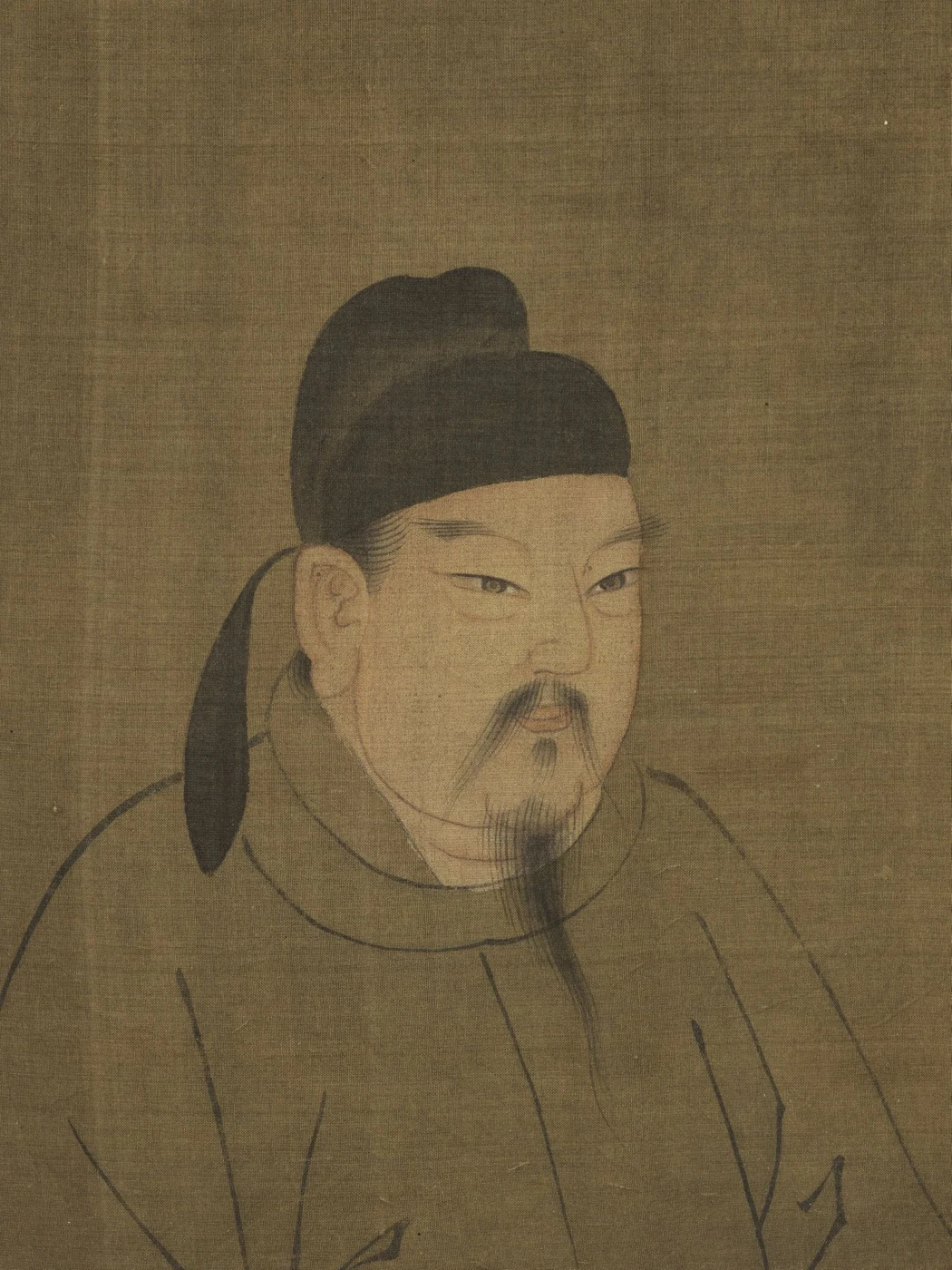
862 CE–925 CE
King of Min
Wang Shenzhi
王审知
Wang Shenzhi (862–30 December 925), courtesy name Xintong, also styled Xiangqing, and known as Baimasanlang, was a native of Gushi in Guang Prefecture (present-day Gushi County, Henan). He was the founding ruler of Min during the Five Dynasties and Ten Kingdoms period, the younger brother of Wang Chao, Military Commissioner of Weiwu Circuit, and one of the “Three Kings Who Opened Min.” Born into poverty, Wang joined Wang Xu's…
862 CE–925 CEMin
PROFILE
Wang Shenzhi (862–30 December 925), courtesy name Xintong, also styled Xiangqing, and known as Baimasanlang, was a native of Gushi in Guang Prefecture (present-day Gushi County, Henan). He was the founding ruler of Min during the Five Dynasties and Ten Kingdoms period, the younger brother of Wang Chao, Military Commissioner of Weiwu Circuit, and one of the “Three Kings Who Opened Min.” Born into poverty, Wang joined Wang Xu's uprising in his youth and campaigned with the army into Fujian. In 886 he helped take Quanzhou, which became the base from which the Wang brothers gradually unified Fujian. In 897 he succeeded Wang Chao as Military Commissioner of Weiwu Circuit and surveillance commissioner of Fujian. In 909 Zhu Wen, Emperor Taizu of Later Liang, made him Prince of Min. During his rule he reduced corvée and taxes, allowed the population to recuperate, attracted scholars from the Central Plains, and promoted overseas trade, contributing to substantial social, economic, and cultural development in Fujian. He died in 925 with the posthumous name Zhongyi. After his son Wang Yanjun later proclaimed himself emperor, Wang Shenzhi was posthumously honored as Emperor Zhaowu Xiao with the temple name Taizu.
- Other names
- One of the Three Kings Who Opened Min; Emperor Taizu of Min
- Courtesy name
- Xintong
- Art name
- Baimasanlang
- Period
- Min
- Dynasty / regime
- Ten Kingdoms · Min
- Identity
- King of Min
- Ethnicity / group
- Not recorded in historical sources
- Native place
- Gushi, Guang Prefecture (present-day Gushi County, Henan)
- Date of birth
- 862
- Place of birth
- Not recorded in historical sources
- Date of death
- 30 December 925
- Reign
- Not recorded in historical sources
- Predecessor
- Not applicable (founding ruler)
- Successor
- Wang Yanhan
- Era name
- Not recorded in historical sources
- Temple name
- Taizu
- Posthumous name
- Zhongyi
- Major achievements
- Founding ruler of Min; governed Fujian through light corvée and taxation, attracted scholars, and presided over the migration remembered as the arrival of the “clothed and capped families of eight surnames.”
LIFE TIMELINE
Age 20 | Joined Wang Xu's rebel army with his brothers Wang Chao and Wang Shengui.
Age 24 | Campaigned into Fujian with Wang Xu; participated in capturing Wang Xu and supported his elder brother Wang Chao as leader.
Age 25 | In the eighth month captured Quanzhou and killed prefect Liao Yanruo; Wang Chao was appointed prefect of Quanzhou.
Age 31 | In the second month attacked Fuzhou with his cousin Wang Yanfu.
Age 32 | Captured Fuzhou, unified Fujian, and became deputy surveillance commissioner of Fujian.
Age 36 | After Wang Chao died, tried unsuccessfully to yield leadership to his second elder brother Wang Shengui; succeeded as Military Commissioner of Weiwu Circuit and surveillance commissioner of Fujian.
Age 37 | Formally confirmed by the Tang court as acting Military Commissioner of Weiwu Circuit, Acting Grand Protector, and Minister of Justice.
Age 43 | Enfeoffed by the Tang as Commandery Prince of Langya.
Age 48 | In the fourth month, Zhu Wen made him Secretariat Director and Prince of Min and raised Fuzhou to a grand military governorship.
Age 55 | Married a daughter to Qian Chuanxiang, son of Qian Liu, king of Wuyue.
Age 56 | Had his second son Wang Yanjun marry a daughter of Liu Yan, ruler of Southern Han.
Age 63 | Fought Southern Han and was defeated.
Age 64 | Fell ill in the fifth month and appointed his eldest son Wang Yanhan acting head of the military government; died on the twelfth day of the twelfth month (30 December) with the posthumous name Zhongyi.
Posthumous | His second son Wang Yanjun proclaimed himself emperor and posthumously honored him as Emperor Zhaowu Xiao, temple name Taizu.
BIOGRAPHY
Biography
Family Background and Early Years
Wang Shenzhi was a descendant of the Qin general Wang Jian and belonged to the Langya Wang clan. The “Zhongyi King's Temple Stele” preserved in the Min section of the Spring and Autumn Annals of the Ten Kingdoms says that he was originally from Langya and was a thirty-fourth-generation descendant of Wang Jian. His fifth-generation ancestor Wang Ye served as magistrate of Gushi. Because of his good administration, local people reportedly persuaded him to remain, and the family became established there. Wang Shenzhi's father, Wang Ren, was a prosperous local farmer with three sons: Wang Chao, Wang Shengui, and Wang Shenzhi.
As a youth Wang Shenzhi liked reading. The source quotes a description that he read widely in the Rites of Zhou, was particularly accomplished in military methods, and continually encouraged his brothers through both civil and military principles. He was said to be tall and imposing, with a prominent forehead and square mouth, and often rode a white horse, giving rise to the name Baimasanlang. The three brothers were known locally for their abilities and were collectively called the “Three Dragons.”
Joining the Army and Entering Fujian
In the autumn of 881, Wang Xu, a butcher from Shou Prefecture in Anhui, led an uprising and occupied Guang Prefecture. In 885 he captured Gushi. Hearing of the courage and talent of the Wang brothers, he brought them into his army and made Wang Chao a military officer. Qin Zongquan, Military Commissioner of Cai Prefecture, soon sent troops against Wang Xu. To preserve his forces, Wang Xu led 5,000 soldiers and officials and civilians from Guang Prefecture south across the Yangzi, through Jiangxi, and into Fujian, successively taking Changting, Zhangzhou, and other places. His following grew to tens of thousands. Wang Shenzhi and his brothers accompanied the army into Fujian; Wang was then twenty-four.
Wang Xu was suspicious and often killed capable subordinates on pretexts. Wang Chao became deeply alarmed and persuaded commanders in the vanguard to act. Several dozen strong men were selected and concealed in a bamboo grove, where they seized Wang Xu and imprisoned him. Wang Xu later committed suicide. The vanguard commanders then chose Wang Chao as leader. According to the New History of the Five Dynasties, Wang Chao once thrust a sword into the ground as a makeshift sacred object and ordered the commanders to kneel in turn and pray for divine guidance. When Wang Shenzhi's turn came, the sword sprang up; the men took this as an omen and wanted Wang Shenzhi as commander, but he firmly declined and yielded leadership to Wang Chao.
Unification of Fujian
In 886 Chen Yan, surveillance commissioner of Fujian, appointed Wang Chao prefect of Quanzhou. Wang Shenzhi helped his brother reorganize the army and shared hardships with the soldiers. A quoted source states that he personally observed the troops' labor and rest, would not eat before the soldiers had eaten, and would not drink before they had drunk. The Wang brothers gathered dispersed people, equalized levies, repaired their military forces, enforced discipline strictly, and committed no abuses in the prefectures and counties they passed, winning popular support. In the eighth month they captured Quanzhou and killed prefect Liao Yanruo.
In 891 Chen Yan became gravely ill and wrote to invite Wang Chao to Fuzhou to receive command of the provincial government, but Chen died before Wang arrived. Chen's brother-in-law Fan Hui proclaimed himself acting commissioner, behaved arrogantly, and lost popular support. In the second month of 892 Wang Chao sent his cousin Wang Yanfu as commander-in-chief and Wang Shenzhi as army supervisor to attack Fuzhou. After a year without success, Wang Shenzhi requested withdrawal; Wang Chao refused. Wang then asked Wang Chao to come in person. Wang Chao replied that if soldiers were exhausted he would send more soldiers, if generals were exhausted he would send more generals, and only if the generals themselves were exhausted would he come. Wang Shenzhi then personally pressed the soldiers to renew the assault, and Fuzhou fell in 893. Fan Hui fled and was killed by his own subordinates. Zhong Quanmu, prefect of Tingzhou, surrendered his entire prefecture, and forces throughout Fujian submitted. The Wang brothers thereby controlled the five prefectures of Min and Ling. In the tenth month, Emperor Zhaozong of Tang appointed Wang Chao surveillance commissioner of Fujian and Wang Shenzhi deputy commissioner. In 896 Fuzhou was elevated to Weiwu Circuit, with Wang Chao as Military Commissioner and Wang Shenzhi as deputy.
Succession and Government
In 897 Wang Chao became seriously ill. Passing over his four sons, he ordered Wang Shenzhi to administer military and civil affairs. After Wang Chao died in the twelfth month, Wang Shenzhi tried to yield leadership to his second brother Wang Shengui. Wang Shengui declined, citing Wang Shenzhi's merits. Wang Shenzhi therefore styled himself acting commissioner of Fujian and memorialized the court. In the third month of 898 the Tang formally appointed him acting Military Commissioner of Weiwu Circuit, Acting Grand Protector, and Minister of Justice; in the tenth month he additionally received the rank of Grand Master for Splendid Happiness with Gold Seal and Purple Ribbon, Right Vice Director of the Department of State Affairs, and Military Commissioner of Weiwu Circuit. He treated Wang Chao's sons generously, giving them high rank but no real power. Because their mother Lady Dong was still living and the brothers remained harmonious, Wang consolidated his position smoothly.
Wang made public security and livelihood his first priorities. When more than 20,000 famine-stricken people from Huangliandong in western Fujian surrounded Ting Prefecture, he personally led an army there but strictly forbade killing. After investigating their circumstances, he reportedly told them that abusive officials were truly to blame and asked what guilt the hungry people themselves had. He pacified them through leniency without losing a soldier, and they returned to farming. He was also quoted as saying that if a great man could not bring peace to the people and aid the world, there was little point in living in vain.
Enfeoffment as Prince of Min
In 904 the Tang court sent Right Reminder Weng Chengzan to Fuzhou, adding the title Acting Grand Protector and enfeoffing Wang as Commandery Prince of Langya with a fief of 4,000 households, of which 100 were actual households. In 907 Zhu Wen usurped the Tang and founded Later Liang. In the fourth month of 909, Zhu Wen, Emperor Taizu of Later Liang, additionally appointed Wang Secretariat Director and Prince of Min and elevated Fuzhou to a grand military governorship. Historians treat this as the beginning of the Min state. After Later Tang destroyed Later Liang, Wang continued sending tribute to Later Tang. Emperor Zhuangzong of Later Tang additionally made him Acting Grand Preceptor while retaining the office of Secretariat Director.
Wang consistently acknowledged the calendar and political legitimacy of the Central Plains dynasties. When people urged him to proclaim himself emperor, he rejected the proposal, saying that he would rather be a “military commissioner with the gates open” than an “emperor behind closed gates.”
Later Years and Death
In the fourth month of 924, Liu Yan, ruler of Southern Han, led troops to the border and encamped between Ting and Zhang prefectures. Wang Shenzhi fought him and was defeated. In the fifth month of 925, Wang fell ill and appointed his eldest son Wang Yanhan, deputy Military Commissioner of Weiwu, as acting head of the military government. Wang died on 30 December at the age of sixty-four. The Later Tang court granted him the posthumous name Zhongyi, and he was buried at Fengchi Mountain north of Fuzhou. In 932 he was reburied at Lianhua Mountain, present-day Douding Mountain in Xindian, Jin'an District, Fuzhou. In 933 his second son Wang Yanjun proclaimed himself emperor and posthumously honored Wang Shenzhi as Emperor Zhaowu Xiao, temple name Taizu, with the tomb name Xuanling.
His Family, His Enlistment, and the Seizing of Wang Xu
The Spring and Autumn of the Ten States, quoting the stele of the temple of the prince Zhongyi, says that his style was Xiangqing, that his surname was Wang and that he was of Langya, the thirty-fourth-generation descendant of the Qin general Wang Jian; and that his great-great-great-grandfather Wang Ye, as magistrate of Gushi, governed so well that "the people loved his benevolence and pressed him to stay," so that he moved his family there and the line became men of Gushi. His father Wang Nen was a farmer, and had three sons, Wang Chao, Wang Shenqui and Wang Shenzhi. As a boy Wang Shenzhi loved learning: "of the books of the Rites of Zhou there was none he did not read, and in the arts of war he was especially refined; and when he went about with his brothers he never failed to urge them on with the way of letters and arms." He was of mighty frame with a high forehead and square mouth, and rode a white horse, so that the army called him the White Horse Third Son, the three brothers being known in their district as the Three Dragons. In the autumn of 881 Wang Xu of Shouzhou took Gushi and, hearing that the Wang brothers were able and brave, brought them into his army with Wang Chao as a commandant. Presently Qin Zongquan of Caizhou attacked Wang Xu, who, to preserve his strength, crossed the river south with five thousand men and part of the officials and people of Guangzhou, entered Fujian by way of Jiangxi and took Changting and Zhangzhou one after another, his following growing to tens of thousands; and the Wang brothers went with him into Fujian. Wang Xu was suspicious and put to death on one pretext or another the officers who had ability, so that Wang Chao grew afraid, and he persuaded the vanguard commanders, chose several dozen braves and laid them in ambush in the bamboo, who seized Wang Xu as he came and imprisoned him in the camp; and Wang Xu afterwards killed himself, and the vanguard commander said that it was Chao who had given them life, and they made him their chief. The New Tang History records that Wang Chao once thrust his sword into the ground as a shrine and had the generals bow to it in turn for a sign, and that when it came to Wang Shenzhi's turn the sword leapt up, so that all took it for an oracle and would have made Wang Shenzhi their commander, which he firmly refused, yielding the place to his elder brother Wang Chao.
The Unification of Fujian and His Command of the Army
In 886 the observation commissioner of Fujian, Chen Yan, memorialized to make Wang Chao governor of Quanzhou; and with Wang Chao in that office the three brothers put their forces in order, Wang Shenzhi above all sharing hardship with the soldiers, so that the histories say that "in all the toil and ease of the ranks he looked on them as his own; he would not lift his spoon before his men had eaten, nor go near a cup before they had drunk," and he therefore had great credit with the army. By his repeated orders and his personal example a force at first quite slack became one that "bends the bow and the hare crouches in terror, lifts the blade and the ice melts and breaks"; and the brothers attended to the relation between army and people, drawing in the scattered without stint and equalizing taxes and equipment with fairness, with strict discipline so that "they stopped only at killing," and wherever they passed through a prefecture nothing was touched, so that they were soon loved by the people of Fujian. When the elders came to the army to press them to stay and rid Fujian of its scourges, Wang Shenzhi told Wang Chao that the Spring and Autumn went to war to punish the guilty and comfort the people, that with the whole prefecture come to them it could not be refused, and that they should inquire and comfort them; and so Wang Chao moved his army to Quanzhou and after a year of hard fighting took the city in the eighth month of 886 and put its governor Liao Yanruo to death, Chen Yan being obliged to accept the fact and memorialize the court to appoint Wang Chao governor of Quanzhou. In 891 Chen Yan, gravely ill, wrote asking Wang Chao to come to Fuzhou and receive the military government, but died before he came; and Chen Yan's wife's brother Fan Hui called himself acting commissioner, being "arrogant and extravagant and losing men's hearts," while Chen Yan's old officers, most of them friendly to Wang Chao, and those dissatisfied with Fan Hui came in numbers to Quanzhou to join the Wang brothers and offer plans. In the second month of 892 Wang Chao sent his cousin Wang Yanfu as commander-in-chief and Wang Shenzhi as supervising general against Fuzhou, and a year passed without its falling, Fan Hui being reinforced with five thousand men from his neighbours; and Wang Shenzhi asked to withdraw, which Wang Chao refused, and asked him to come and direct the fighting in person, to which Wang Chao answered that when both troops and generals were exhausted he would come himself — and so Wang Shenzhi led the assault in person and took Fuzhou. Fan Hui fled and was killed by his own officers; the governor of Tingzhou, Zhong Quanmu, brought his prefecture over, and the other powers of Fujian submitted one after another, so that the Wang brothers held all the five prefectures of Min and Ling. To win men's hearts Wang Shenzhi buried Chen Yan with honour and provided for his family, so that many of Chen Yan's former followers were set at ease; and afterwards the name of the Wang army spread far, and its proclamation went out in all directions, so that Xu Guifan of Jianzhou, Zhong Quanmu of Tingzhou and the scattered armed bands of the hills and coast, more than twenty in all, submitted without fighting and all Fujian was united.
His Accession, His Service to His Elder Brother, and the Settling of Western Fujian
Wang Chao was strict with Wang Shenzhi and beat him for his faults, and Wang Shenzhi bore it silently without complaint, so that the histories record that "as observation deputy, when he erred, Chao would still have him flogged, and Shenzhi showed no resentment." In 897, gravely ill, Wang Chao set aside his own four sons Wang Yanxing, Wang Yanhong, Wang Yanfeng and Wang Yanxiu and gave Wang Shenzhi the charge of the military government; and in the twelfth month he died, and Wang Shenzhi offered the place to his second brother Wang Shenqui, who, holding that Shenzhi had the merit, declined it, so that Wang Shenzhi succeeded, styled himself acting commissioner of Fujian and memorialized the court. He afterwards treated Wang Chao's four sons well, giving them high office and rich stipends but no real power, and made Wang Yanxing deputy observation commissioner of Fujian, hinting that he might be the successor, though this was only an expedient to hold the family together and quiet men's minds. His smooth succession had something to do with his mother Lady Dong still being alive — the three brothers were most filial and would do nothing to grieve her — and with the support of the clansmen and neighbours of Gushi who had come to Fujian with them. Once in power, the first thing before him was to steady the situation; and he said that "a great man who cannot bring peace to the people and help the world has lived to no purpose." He matched his words with deeds: when more than twenty thousand starving people of the Huanglian cave in western Fujian surrounded Tingzhou, he led the army there in person but forbade all killing, going into the country to find the facts; and having learned that the officials were indeed oppressive, he comforted the starving with the words that the officers had been cruel and that the people were innocent of it, and by grace and kindness brought tens of thousands of them to lay down their arms unconditionally, so that without losing a man or spending a coin he achieved that the spears should rest and the people's hearts be settled.
His Titles, His Sea Trade, His City Walls and His Waterworks
In 902 the Tang court granted him twelve halberds from the armoury to stand before his private gate; in the fourth month of 904 it sent the right reminder Weng Chengzan to Fuzhou, making him acting grand guardian, enfeoffing him prince of Langya commandery with four thousand households of revenue and a hundred in real fief; in the fifth month of 907 Zhu Wen advanced him to commissioner of the Xiongwu army and concurrent attendant; and on the fourth day of the fourth month of 909 the founder of the Later Liang made him concurrent director of the Secretariat and prince of Min and raised Fuzhou to be a grand commandery, which the historians take as the beginning of the state of Min; and after the Later Tang destroyed the Liang he continued to send tribute, receiving from Zhuangzong the rank of acting grand tutor and director of the Secretariat. He always upheld the calendar of the central dynasty, and when some urged him to take the imperial title he overcame their views, saying that he would rather be a military commissioner with the gates open than a Son of Heaven with the gates shut. In government the histories say that he was "frugal and courteous to scholars," that "though he held a whole region, his offices and dwellings were mean and he never repaired them; he always wore hempen sandals; his punishments were mild and his taxes light, so that public and private were both well off and the region was at peace"; he set up a hall for summoning worthies and brought in great numbers of able men, "even men from remote villages, so long as they had one skill," among them the Tang scholar Han Wo, Wang Dan the son of the Tang chancellor Wang Pu, Yang Yi the cousin of the chancellor Yang She, and the known graduate Xu Yin; and he "founded a school of the four gates to teach the best scholars of Min." He developed overseas trade, opened the Gangtang harbour and drew foreign merchants, and the state of Srivijaya and others sent tribute in turn; and because Wu held the Huai and the Yangtze and the land route for tribute was cut, he sent envoys every year from Dengzhou and Laizhou to the Later Liang. As to walls, in 902 he built the outer wall of Fuzhou, forty li in circuit, about one point eight kilometres east to west and one point seven north to south in an irregular arc with eight gates named Hainan of the east, Shanhua of the west, Lishe of the south, Yongan of the north, Tongjin of the south-east, Yanyuan of the north-east, Qingyuan of the south-west and Anshan of the north-west; and the wall took in the residential and commercial quarters south of Mount Ye, the Antai river and the Dahang bridge, making two lines of wall, the inner being the political centre and the nobles' quarter and the outer the commoners' dwellings and the market, divided at the Dahang bridge with the political centre and nobles north of it, so that the commoners' quarter became the beginning of the wards and lanes still known as the Three Lanes and Seven Alleys and the old streets of the Min capital. In 905 he built the north-south inner wall called the Two Moons, and in 908, the city being too small, he extended the outer wall at its north and south ends, enlarging the circuit to twenty-six li and four thousand eight hundred feet and dredging it into connexion with the rivers and lakes, taking in the high points of Mounts Ping, Wu and Yu and the white and black pagodas, so raising Fuzhou's defensive power. He also directed the building or extension of the coastal dykes of Fuqing and Changle, the nine creeks and eighteen dams of Quanzhou, the Eastern Lake of Lianjiang and more than forty li of irrigation channels at Jinjiang, and dredged works serving as much as twenty-five square kilometres.
His Foreign Relations and His Last Years
Wang Shenzhi dealt carefully with his neighbours, avoiding war as far as he could: in 909, when Wu sent the envoy Zhang Zhiyuan, he had him beheaded for his insolence, so that relations with Wu were poor, though no fighting broke out between the two during his reign; in 916 he married a daughter to Qian Chuanxiang, son of Qian Liu of Wuyue; in 917 he had his second son Wang Yanjun marry a daughter of Liu Yan of the Southern Han; in 918 he sent troops to relieve Tan Quanbo of Qianzhou and withdrew when Southern Chu was beaten; and in 924, when Liu Yan of the Southern Han crossed his frontier and camped on the borders of Ting and Zhang, Wang Shenzhi met him and was beaten. In the fifth month of 925, having fallen ill, he gave his eldest son, Wang Yanhan, deputy commissioner of the Xiongwu army, authority over the military government; and on the twelfth day of the twelfth month he died at the age of sixty-four with the posthumous name Zhongyi, and was buried at the Fengchi hill north of Fuzhou, being moved in 932 to the Lianhua hill. His son Wang Yanhan succeeded him as acting commissioner of the Xiongwu army; and in 933 his second son Wang Yanjun took the imperial title and gave him the posthumous name emperor Zhaowu Xiao with the temple name Taizu and the tomb name Xuanling.
Major Activities
The Unification of Min
From the capture of Quanzhou in 886 to the fall of Fuzhou in 893, the three Wang brothers spent eight years defeating Liao Yanruo, eliminating Fan Hui, and accepting the surrender of Zhong Quanmu and other local powers, ultimately unifying Fujian. Wang Shenzhi fought in the front line, shared hardships with the soldiers, and also participated in strategic direction, making him one of the principal commanders among the brothers.
Governance of Fujian
Wang ruled Fujian for nearly thirty years. He reduced corvée and taxes, simplified punishments, cut expenditures, and allowed the population to recuperate. Historical records describe him as frugal, respectful toward scholars, and personally austere; although he controlled a region, his government buildings remained humble, he regularly wore hemp sandals, punishment and taxation were light, public and private wealth accumulated, and the territory remained peaceful. He appointed capable officials and maintained local security, allowing Fujian to remain relatively stable during the warfare of the Five Dynasties and Ten Kingdoms. Refugees from the Central Plains consequently migrated into the region.
Recruiting Scholars and Promoting Education
Wang treated scholars with respect and attracted a number of Central Plains literati, including the Tang scholar Han Wo, Wang Dan, Yang Yi, and the jinshi Xu Yin. He emphasized education and, according to the source, established schools at the four gates to teach outstanding men of Min, helping advance Fujian's cultural development.
Overseas Trade
Wang actively promoted maritime trade, developed Gantang Harbor, and encouraged foreign merchants to come to Fujian; states including Srivijaya reportedly sent missions. He continued to recognize Central Plains dynastic legitimacy. When the Yang Wu state controlled the Jiang-Huai region and blocked the normal overland tribute route, he sent envoys each year by sea through Dengzhou and Laizhou to Later Liang and Later Tang.
Expansion of Fuzhou
In 902 Wang constructed an outer circuit wall around Fuzhou measuring forty li. In 905 he added paired northern and southern walls known as the “Northern and Southern Crescent Cities.” Together with the main city, the walls were said to form a perimeter of twenty-six li and 4,800 zhang, establishing the basic urban layout of Fuzhou.
External Relations
Wang generally maintained cautious relations with neighboring states and tried to avoid warfare. In 909 Yang Wu sent Zhang Zhiyuan on a diplomatic mission; because of what the source describes as arrogant behavior, Wang had him executed. Relations with Yang Wu were poor, but the two states did not fight during Wang's lifetime. In 916 Wang married a daughter to Qian Chuanxiang, son of Qian Liu, king of Wuyue. In 917 he arranged the marriage of his second son Wang Yanjun to a daughter of Liu Yan, ruler of Southern Han. In 918 he sent troops to aid Tan Quanbo of Qian Prefecture but withdrew after hearing that Southern Chu had been defeated. In 924 he fought Southern Han and lost.
His Government of Min, His Administration, and Fujian among the Ten States
The way he governed Min may be summed up as making order its business. He "rose from the fields to wealth and honour and always kept to frugality, choosing good officials, sparing punishments and expenses, lightening labour service and lowering taxes, and letting the people rest," so that the Old History of the Five Dynasties could say of his thirty years that "the whole region was at peace." In the selection of officials he held to worth and attended to the improvement of their conduct: he set up a hall for summoning able men, and Wang Dan the son of the Tang chancellor Wang Pu, Yang Yi the cousin of the chancellor Yang She and the known graduate Xu Yin all served under him; he founded the school of the four gates to train the best scholars of Min; and he drew in the barbarian merchants of the sea. As to why scholars were willing to come to Fujian, the New History of the Five Dynasties offers an explanation: most of these men of letters were of the central plain and had travelled far, east to Jing and Xiang, south to Wu and Yue; they would not stay in the central plain to bow the head to Zhu Wen, nor go north to Hedong to serve the Shatuo noble Li Keyong, and yet were willing to face hardship and danger and travel a thousand li to the remote Fujian, serving no one but Wang Shenzhi, which shows how deep a hold he had on their hearts. In the regional pattern, it was under his management that Fujian stayed comparatively peaceful among the Ten States, so that refugees from the central plain moved in one after another; he upheld the calendar of the central dynasty and kept political connexion with it by sea-borne tribute, while handling relations with Wu, Wuyue and the Southern Han by trade, marriage and limited military action, so that Min had few great wars among strong neighbours. His manner of dealing with the starving people of western Fujian by grace and kindness, and his line of policy in "drawing in the scattered," in "governing with all his mind, checking the strong and comforting the weak, settling the aged and cherishing the young, using their time and ordering them by the rites," were summed up by the historians as the reason that "officials and people were won over" and that "the murk of several tens of years was cleared away," and are taken as the precondition for the economic and social development of Fujian that followed.
Personal Relations
- Wang Ren — father; posthumously honored as Grand Commandant and prefect of Guang Prefecture.
- Lady Dong — mother; titled Grand Lady of the State of Qin.
- Wang Chao — eldest brother; Military Commissioner of Weiwu Circuit.
- Wang Shengui — second elder brother; prefect of Quanzhou.
- Ren Neiming — wife; posthumously honored as empress.
- Wang Yanhan — eldest son; successor king.
- Wang Yanjun — second son; later ruler of Min.
- Wang Yanxi — son; later known as Jingzong.
- Wang Yanzheng — son; later known as the Tiande Emperor.
- Wang Yanwang — son; Minister of Revenue.
- Wang Yanxi — son; prefect of Ting Prefecture.
- Wang had eight sons in all.
- Emperor Zhaozong of Tang — confirmed Wang as Military Commissioner of Weiwu Circuit and Commandery Prince of Langya.
- Zhu Wen, Emperor Taizu of Later Liang — made Wang Secretariat Director and Prince of Min.
- Emperor Zhuangzong of Later Tang — additionally granted Wang the title Acting Grand Preceptor while retaining him as Secretariat Director.
- Wang Xu — early rebel leader; later seized after becoming suspicious and subsequently committed suicide.
- Chen Yan — surveillance commissioner of Fujian who appointed Wang Chao prefect of Quanzhou.
- Fan Hui — Chen Yan's brother-in-law; proclaimed himself acting commissioner and was defeated by Wang's forces.
- Qian Liu — king of Wuyue and Wang's marriage ally.
- Liu Yan — ruler of Southern Han, also linked by marriage and later an opponent in war.
- Han Wo, Wang Dan, Yang Yi, and Xu Yin — Central Plains scholars who came to Wang's domain.
Historical Assessment
Five Dynasties and Early Song
- The Old History of the Five Dynasties states that Wang rose from agricultural life to wealth and rank, remained frugal, selected good officials, reduced punishment and expenditure, kept corvée and taxes light, and allowed the people to rest, so that his territory was peaceful for thirty years.
- The New History of the Five Dynasties describes him as physically imposing, with a prominent nose and square mouth, frequently riding a white horse, hence the army's nickname Baimasanlang.
- The Spring and Autumn Annals of the Ten Kingdoms praises the three brothers as outstanding men known as the “Three Dragons,” credits them with attracting scholars and stabilizing Min, and compares Wang's policy of serving Central Plains dynasties and resting the people to that of Wuyue.
Song and Yuan Periods
- Song historians generally praised Wang for protecting his territory, bringing peace to the people, and advancing education, often comparing him with Qian Liu of Wuyue as an enlightened ruler of the Five Dynasties and Ten Kingdoms.
- Liang Kejia's Song work Sanshan Zhi records Wang's expansion of Fuzhou and credits him with laying out the city's urban form.
- Yuan historian Hu Sanxing, in his commentary on the Comprehensive Mirror in Aid of Governance, approved Wang's statement that he would rather be an open-gate military commissioner than a closed-gate emperor, interpreting it as evidence of self-knowledge.
Ming and Qing Periods
- Ming writer Wang Shizhen praised Wang's administration of Fujian and argued that the preservation of learning and culture in Fujian during the disorder of the Five Dynasties owed much to him.
- Qing scholar Wu Renchen included a biography of Wang in the Spring and Autumn Annals of the Ten Kingdoms and praised him for honoring scholars and attracting the “clothed and capped” families of the Central Plains.
- Fujian local gazetteers record works attributed to him such as irrigation projects and the development of Gantang Harbor. Local communities established temples and revered him as a “King Who Opened Min.”
Modern Assessments
- Modern historians generally credit Wang with protecting Fujian, stabilizing society, and promoting economic and cultural development during the turmoil of the Five Dynasties and Ten Kingdoms.
- In Fujian regional cultural studies, he is revered as one of the “Three Kings Who Opened Min,” and his governing policies are seen as having had a lasting effect on Fujian's historical development.
- Surviving remains in Fuzhou include the Min King's Shrine and Min King's Tomb. In 2012 the Fuzhou municipal government named a road near the tomb “Shenzhi Road” in his memory.
FIGURES ASSOCIATED WITH THIS DYNASTY
Bibliography
- Old History of the Five Dynasties, vol. 134, “Usurpers, Biography 1”
- New History of the Five Dynasties, vol. 68, “Hereditary House of Min, 8”
- Spring and Autumn Annals of the Ten Kingdoms, Min section, “Zhongyi King's Temple Stele”
- Wu Renchen, Spring and Autumn Annals of the Ten Kingdoms