Birth | Born in Wenxi, Hedong.
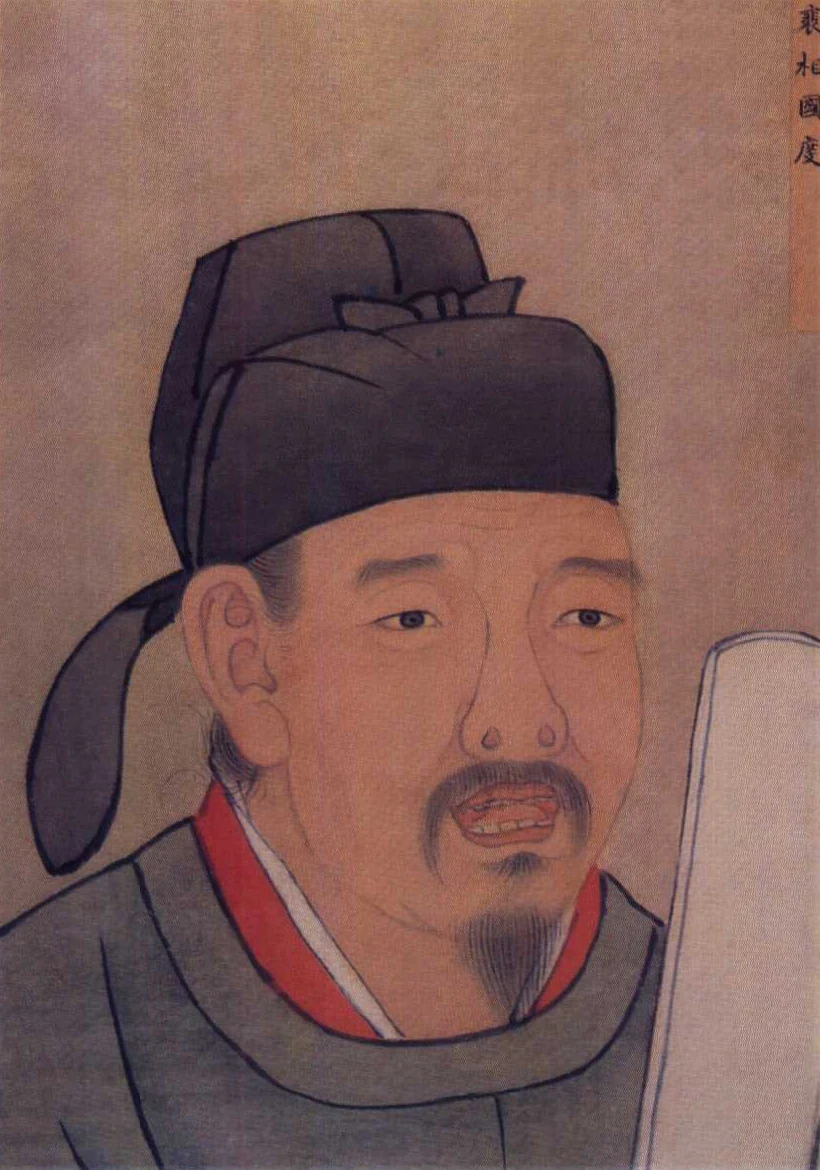
765 CE–839 CE
Chancellor
Pei Du
裴度
Pei Du was the leading advocate of suppressing the Huaixi military regime and personally supervised the armies in the campaign. He became one of the principal figures of the Yuanhe Restoration and served as a senior chancellor across the reigns of four Tang emperors.
765 CE–839 CETang Dynasty
PROFILE
Pei Du was the leading advocate of suppressing the Huaixi military regime and personally supervised the armies in the campaign. He became one of the principal figures of the Yuanhe Restoration and served as a senior chancellor across the reigns of four Tang emperors.
- Other Name
- Duke Pei of Jin
- Courtesy Name
- Zhongli
- Period
- Tang
- Date of Birth
- 765
- Date of Death
- 839
- Dynasty/Polity
- Tang
- Identity
- Chancellor
- Ethnicity/People
- Not recorded in historical sources
- Native Place
- Wenxi, Hedong (present-day Wenxi County, Shanxi)
- Place of Birth
- Not recorded in historical sources
- Place of Death
- Not recorded in historical sources
- Highest Office
- See Biography and Major Achievements
- Principal Achievement
- Chief architect of the suppression of Huaixi and a field supervisor of the armies; leading contributor to the Yuanhe Restoration and a veteran chancellor under four emperors.
LIFE TIMELINE
Age 24 | Passed the jinshi examination at age twenty-four, later passed the Broad Learning and Fine Composition examination and the special examination for worthy and upright men able to remonstrate frankly; appointed Commandant of Heyin County.
Served as Investigating Censor | Served as Investigating Censor, military administrative officer in Henan Prefecture, and Reminder.
Age 45 | As Vice Director of the Bureau of Titles, put in charge of drafting edicts; soon promoted within the bureau.
Age 47 | Sent to Weibo to proclaim the court's instructions; Tian Xing, later Tian Hongzheng, Military Commissioner of Weibo, submitted to the court.
Age 49 | Appointed Vice Censor-in-Chief.
Age 50 | Sent to the Caizhou army headquarters to inspect and console the troops; in June survived an assassination attempt with a head wound; three days later appointed Vice Director of the Chancellery and Joint Manager of Affairs with the Secretariat-Chancellery, replacing the murdered Wu Yuanheng as chancellor.
Age 51 | Served as ritual commissioner for the funeral of Empress Zhuangxian and successfully advised against creating the ancient office of chief regent for the mourning period.
Age 52 | Volunteered to supervise the war, serving as chancellor, Military Commissioner of Zhangyi Army, and commissioner for the pacification and suppression of Huaixi; in October Li Su entered Caizhou in a night snowstorm and captured Wu Yuanji.
Age 53 | Enfeoffed as Duke of Jin for his achievements.
Age 54 | The Ziqing regime of Li Shidao was suppressed and the Yuanhe Restoration reached its height.
Age 55 | After Emperor Muzong's accession and renewed disorder in Hebei, appointed campaign commissioner of the Zhenzhou army and led the suppression force.
Because of obstruction by Yuan Zhen and others | Because of obstruction by Yuan Zhen and others, lost military command and became Eastern Capital Defender; briefly returned to the chancellorship but continued to face exclusion.
Under Emperor Jingzong | Under Emperor Jingzong, again appointed chancellor as Vice Director of the Secretariat and Joint Manager of Affairs.
Helped establish Emperor Wenzong and | Helped establish Emperor Wenzong and, after the Sweet Dew Incident, memorialized to save many innocent people from the eunuch reprisals.
Withdrew to Luoyang | Withdrew to Luoyang, built the Greenfield Hall estate, and exchanged poetry and wine with Bai Juyi, Liu Yuxi, and others.
Age 75 | Appointed Secretariat Director and died the same year at age seventy-five; posthumously Grand Preceptor with the name Wenzhong.
Further posthumously honored as Grand Tutor. | Further posthumously honored as Grand Tutor.
Enshrined with Emperor Xianzong. | Enshrined with Emperor Xianzong.
BIOGRAPHY
Biography
Family Background and Early Life
Pei Du belonged to the Eastern Branch of the Hedong Pei clan, one of the most prominent aristocratic lineages of medieval China. The family had produced officials from the Han and Wei periods onward and remained an elite lineage in Tang times. His grandfather Pei Youlin had been Magistrate of Puyang County in Puzhou, while his father Pei Xu, also recorded as Pei Shu, served as County Assistant of Mianchi in Henan Prefecture. Their offices were not high, but the family's reputation and tradition still provided important social capital. His mother was from the Cui clan of Qinghe and was a granddaughter of Cui Yinfu, Minister of Justice.
Pei Du studied diligently. In 789, aged twenty-four, he passed the highly competitive jinshi examination. In 792 he also passed the Broad Learning and Fine Composition examination, then took the special court examination for worthy and upright men capable of frank remonstrance. His high score led to appointment as Commandant of Heyin County, a busy transport junction where the source credits him with capable administration. He later became Investigating Censor. His blunt confidential criticism of favored officials angered Emperor Dezong and led to transfer out of court as a military administrative officer in Henan Prefecture, but he was later promoted to Reminder, recording the emperor's words and deeds.
Emergence and Mission to Weibo
In August 810 Emperor Xianzong appointed Pei Du Vice Director of the Bureau of Titles and put him in charge of drafting edicts; he soon became director. In 812, after the death of Weibo Military Commissioner Tian Ji'an, the garrison soldiers supported Tian Xing, later Tian Hongzheng, because Tian Ji'an's young son Tian Huaijian could not govern. Tian Xing favored submission to the central court and asked that officials be appointed by the dynasty and taxes remitted according to law.
Xianzong sent Pei Du to Weizhou to proclaim the imperial will. Tian Xing avoided the extravagant vehicles, clothing, and residence used by earlier military governors and remained in the former office of the inspection commissioner. He asked Pei Du to write an inscription recording his humility and obedience, and the people of Weibo reportedly appreciated the gesture. Tian Xing also asked Pei to travel through the subordinate prefectures announcing imperial instructions. Pei completed the mission successfully and was appointed Secretariat Drafter on his return.
Advocating the Campaign against the Military Governors and Becoming Chancellor
In 814, Wu Shaoyang, Military Commissioner of Huaixi, died and his son Wu Yuanji sought to inherit the command without approval, attacking neighboring territory. Xianzong, supported by chancellors Li Jifu and Wu Yuanheng, decided to suppress the defiant military governor. Pei Du, then Vice Censor-in-Chief, firmly supported the policy.
In May 815 he was sent to inspect the Caizhou army headquarters because the campaign had stalled. On return he analyzed the military situation for Xianzong, whose views largely matched his own, and was concurrently appointed Vice Minister of Justice. Pei also praised Li Guangyan, predicting that he would prove courageous in a just cause; Li soon won a major victory at Shiqu, reinforcing Xianzong's confidence in Pei's judgment.
In June, Wang Chengzong of Chengde and Li Shidao of Pinglu, fearful of the anti-military-governor campaign, sent assassins against chancellor Wu Yuanheng and Pei Du. Wu was killed. Pei was struck three times while leaving his residence: one blow cut his boot strap, another hit his back, and a third lightly wounded his head. A thick felt hat reduced the injury. His attendant Wang Yi shielded him and lost his right hand. Pei fell into a roadside ditch and the assassins left, believing him dead.
Some officials proposed removing Pei to appease Wang Chengzong and Li Shidao. Xianzong angrily refused, saying that dismissing Pei would allow the criminals' scheme to succeed and weaken court authority, and that with Pei alone he could defeat both rebels. Three days later Pei was appointed Vice Director of the Chancellery and Joint Manager of Affairs with the Secretariat-Chancellery, succeeding Wu Yuanheng as chancellor. The source says public confidence in Chang'an returned after the appointment.
Supervising the Huaixi Campaign and the Yuanhe Restoration
In 816, after Empress Zhuangxian died, Pei Du served as commissioner for funeral ritual. Xianzong considered appointing a chief regent to lead the bureaucracy during mourning. Pei argued that the office belonged to antiquity and did not exist in Tang institutions, proposing instead that the Secretariat-Chancellery temporarily manage affairs. The emperor accepted the recommendation.
That same year, after Gao Xiayu suffered a major defeat at Tiecheng, many officials again urged ending the Huaixi campaign. Pei alone continued to insist that Wu Yuanji should not be pardoned. Xianzong declared that alternating victory and defeat was normal in war and that one general's reverse should not overturn the entire strategy. The campaign therefore continued.
By 817 the war had lasted four years, cost enormous supplies, and produced limited results because commanders watched one another instead of coordinating. Li Fengji, Wang Ya, and others urged withdrawal. When Xianzong asked Pei's view, Pei volunteered to command personally. In a private audience he tearfully swore that either the rebels would be destroyed or he would not return.
In July 817 Pei Du went to the front as Vice Director of the Chancellery, Joint Manager of Affairs, Prefect of Caizhou, Military Commissioner of Zhangyi Army, Surveillance Commissioner of Shenzhou, Guangzhou, and Caizhou, and overall commissioner for pacifying and suppressing Huaixi. Before departure he declared that if the rebels were destroyed he would again face the emperor, but while they survived he had no date for returning to court. At the front he requested the removal of eunuch army supervisors, strengthening unified command. In October Li Su, son of Li Sheng, made his famous night march through snow, entered Caizhou, and captured Wu Yuanji. Li Su welcomed Pei on the road and urged him to teach the long-isolated people of Cai proper respect for imperial authority. Pei entered the city using court ritual while pacifying the population. With Huaixi defeated, military governors in Hebei were intimidated and successively submitted. In 819 Li Shidao's Ziqing regime was also destroyed, an achievement remembered as the high point of the Yuanhe Restoration.
Later Political Ups and Downs
When Xianzong died in 820, Emperor Muzong succeeded. Mishandling by the court led to renewed disorder in Hebei. Pei Du was appointed campaign commissioner of the Zhenzhou army. However, the Chinese source portrays Muzong as weak and Chancellor Yuan Zhen as fearful that Pei's military success would overshadow him. Yuan allegedly obstructed requests from the front, and the campaign faltered. Pei was stripped of command and made Eastern Capital Defender, a high but relatively inactive post. In 824 he briefly returned as chancellor but faced exclusion by Li Fengji and others.
Emperor Jingzong valued Pei and again made him chancellor. After Jingzong was killed by eunuchs, Pei helped arrange the accession of Li Ang as Emperor Wenzong. After the Sweet Dew Incident in 835, eunuchs massacred officials; Pei memorialized on their behalf and, according to the source, saved many innocent people. As eunuch power expanded, the elderly Pei became discouraged and withdrew to Luoyang, where he built Greenfield Hall in Jixian Ward and lived semi-retired, exchanging poetry and wine with Bai Juyi and Liu Yuxi. His prestige remained so high that officials passing through Luoyang were expected to call on him.
In 839 he was appointed Secretariat Director, an unusually exalted office for a minister in the late Tang. He died on April 21 that year at age seventy-five. The court posthumously granted him Grand Preceptor and the name Wenzhong; in 841 he received the additional honor of Grand Tutor. During Emperor Xuanzong's Dazhong era he was enshrined in Emperor Xianzong's temple.
Lineage and Early Career
By the Table of Chancellors' Lineages in the New Tang History, Pei Du came of the "Eastern Branch" of the Pei, descended from Pei Ji, the third son of Pei Mao, and his line had held office since Han and Wei times as commandant of the capital, general, governor of Xuantu, governor of Henan and governor of Bingzhou under the Later Qin; under the Liu Song, Pei Daozi entered the passes with Liu Yu and served the Wei as governor of Nanzhang and earl of Yichang, and his grandson Pei Dehuan, "also named Du, governor of Yu, Zheng, Guang and Fang prefectures, posthumously named Kang", shows that the name Du was not unique in the family. Pei Du studied hard in youth and, after passing the metropolitan examination, did not stop there but passed further decree examinations in the following years, rising from registrar of Heyin through investigating censor, and secretary of the Henan prefecture, to imperial diarist, entering the confidential offices. The Extensive Records of the Taiping Era tells that when Pei Du was still obscure and "lodging in Luoyang, riding a lame donkey into the imperial city and crossing the Tianjin bridge", two old men leaning on the bridge rail were lamenting that "the campaign at Caizhou has lasted long and the levies sorely burden the people; who knows when it will be settled", and, seeing Pei Du, withdrew in amazement; Pei Du's servant, carrying the book bag behind and somewhat apart, heard them say that "we were just fretting that Caizhou is not pacified; it must wait for this man to be its general". When the servant told him, Pei Du only laughed and said that they were mocking his shabbiness, yet "that autumn he passed the provincial recommendation and the next year the examination". The tale, though fiction, was already current in Tang times and shows how men looked back on his later pacification of Huaixi.
Remonstrance against the Five Aviaries and Plea for Liu Yuxi
Once in office as a censor, Pei Du repeatedly corrected abuses by direct remonstrance. The five aviaries of the Xuanhui court went out each autumn into the outskirts to fly falcons and hounds, and "wherever they went the officials had to entertain them richly, and if they were the least displeased they extorted as they wished, so that the people feared them as bandits"; under Dezong at the end of Zhenyuan they were especially violent, even "stretching nets over the people's doors and wells so that none might come or go for water", saying that the imperial birds would be startled, and gathering in eating-houses to drink and gorge, leaving behind a hamper of snakes with the warning that "we use these snakes to bring in the imperial birds, so feed them well and let them neither thirst nor hunger", so that the keeper had to bribe them before they would take the hamper away; by the beginning of Yuanhe "though their abuses were several times corrected, the old ways had not ended". When the attendants reached the county of Xiagui, whose magistrate Pei Huan was strict and hated their violence, "beyond the public hostel he gave them nothing", and the attendants, enraged, accused him of insolent speech; when the emperor heard it he was angry, had Pei Huan thrown into prison and meant to charge him with great disrespect, and though the chancellor Wu Yuanheng reasoned with him, "the emperor's anger did not abate". Pei Du, coming to the Yanying hall to report business, took the occasion to argue that Pei Huan was innocent, at which the emperor grew angrier and said that "if by your account Huan is innocent, then the five-aviaries men must be executed; if they are innocent, then Huan must be executed"; Pei Du answered that "by the law it is indeed as Your Majesty says, but since Pei Huan, as a magistrate, so grieved for Your Majesty's people, how can he be punished?", and "the emperor's angry look at once cleared", ordering his release the next day. By the Comprehensive Mirror, in the tenth year of Yuanhe those of Wang Shuwen's party who had been banished ten years without promotion were summoned to the capital by a chancellor who pitied their talents, and all were made governors of distant prefectures, "their office higher but their place farther"; Liu Zongyuan, because Bozhou was no place for men to live and Liu Yuxi had an aged mother, asked to exchange his own Liuzhou for it, and Pei Du spoke for Liu Yuxi, saying that "Yuxi is indeed guilty, but his mother is old, and to part from her son for death is truly pitiable", to which Xianzong first answered that "as a son he should have been careful not to bring sorrow to his parents", and Pei Du replied that "Your Majesty is yourself serving the Empress Dowager, and Liu Yuxi should, I think, be shown pity there too"; after a long while the emperor said that he had spoken only to rebuke the son and did not wish to wound the mother's heart, and told his attendants as he withdrew that "Pei Du's love for me is earnest indeed", whereupon Liu Yuxi was made governor of Lianzhou.
Contests with Favourites and the Obstructiveness of Yuan Zhen
After Huaixi was pacified Xianzong grew arrogant and extravagant, and "the vice minister of revenue and commissioner of salt and iron Huangfu Bo and the chief of the court of imperial sacrifices Cheng Yi understood his wishes and repeatedly presented surplus funds for his expenses, and so were in favour", Huangfu Bo also bribing the eunuch Tutu Chengcui; in the ninth month of the thirteenth year of Yuanhe the two were made joint chancellors, and "when the decree came down the court and the country were astonished, even the pedlars in the market sneered". Pei Du and Cui Qun argued strongly that it could not be, but the emperor would not listen; ashamed to stand in the same rank as petty men, Pei Du asked leave to retire and was refused, and memorialised again that "Bo and Yi are only revenue clerks, crafty little men, and once Your Majesty places them in the chancellorship none within or without but laughs in amazement", noting that Huangfu Bo in the revenue office "took only from the many and gave grudgingly to the few, so that all who depended on the revenue office would gladly have eaten his flesh", and had cut the grain allowance of the Huaixi army so that "the soldiers were angry", and only his own arrival at the camp to explain and encourage had "barely prevented their mutiny"; he added that since "to retire is not permitted and to speak is unheeded, I am like a man burned by fire, with arrows in every part", and asked how the emperor, having built nine-tenths of a peaceful reign, could bring himself to ruin it and dissolve the allegiance of the four quarters; but "the emperor took him for a factionalist and did not heed him". Of a like kind was the case of the merchant Zhang Zhi, who owed interest to the five-aviaries commissioner Yang Chaowen and went into hiding: Yang, searching his house, found a private ledger with the name of one Lu Zaichu, and, since the hand was like that of the late governor of Xichuan, Lu Tan, arrested and imprisoned Lu Tan's household; Lu's son dared not protest and paid the money in private, and only when the hand was verified was it found to be that of the late governor of Zheng and Hua, Lu Qun. The investigating censor Xiao Mian and the remonstrating officials memorialised on his violence, and Pei Du and Cui Qun took the occasion of an audience at the Yanying hall to argue the matter fully; the emperor said that "I wish to consult you about the eastern army; this small matter I shall deal with myself", and Pei Du answered that "war is a small matter, but the five aviaries pursuing common folk is a great one; if military affairs are neglected we need only fear for Shandong, but if the five-aviaries commissioners are violent I fear disturbance in the capital"; the emperor was displeased but in time understood, and, calling Yang Chaowen, rebuked him, saying that "because of you I was shamed before my chancellor", and had him executed.
In the autumn of the first year of Changqing, when the Youzhou troops imprisoned Zhang Hongjing and Tian Hongzheng was killed at Zhenzhou, and Zhu Kerong and Wang Tingcou again rebelled in Hebei, Pei Du was made recruiting commissioner for the armies around Zhenzhou; the sovereign being "arrogant and eccentric and his chancellors mediocre, so that the dispositions were ill made", even such famous generals as Li Guangyan and Wu Zhongyin with more than a hundred thousand men "won not an inch of merit", yet Pei Du on taking command "sought out soldiers and filled the ranks, without leisure to sleep", and, leading the western army to the rebel border, "took cities, killed generals and repeatedly reported victories", so that Muzong admired his loyalty and envoys comforted him every month. But the Hanlin scholar Yuan Zhen, courting office through the eunuchs, was the sworn friend of the privy commissioner Wei Hongjian; and although "Yuan Zhen bore Pei Du no grudge, he much resented that an old and senior man should be above him", so that while Pei Du was campaigning in Shandong almost every report he made "was obstructed by such as Yuan Zhen". Pei Du sent up three memorials from the army in the sharpest terms, and the emperor, though displeased, feared the upright judgement of the great ministers and made Wei Hongjian commissioner of the bow-and-arrow store and deprived Yuan Zhen of his inner office, but "his favour towards Yuan Zhen was not yet worn away"; soon he made Yuan Zhen chancellor and stripped Pei Du of his military command, making him guardian of the heir apparent and chancellor of the second rank as keeper of the eastern capital. The remonstrating officials appeared in groups at the Yanying gate "two or three times a day", all memorialising that "the time is not one for arms; Pei Du has the whole talent of a general and chancellor and should not be set aside". The emperor, unable to do anything about the pile of memorials and knowing where men's hearts lay, ordered Pei Du from Taiyuan by way of the capital to Luoyang. In the third month of the second year of Changqing Pei Du reached the capital and was received at the Linde hall, where he first related the rebellion of Zhu Kerong and Wang Tingcou in Hebei and his own failure as commissioner, and then his appointment to the eastern capital and permission to come to court; "his words mild and his spirit strong, he moved those about him". He "knelt in the dragon's steps and reported, weeping and choking", and the emperor was moved, saying that he knew what Pei Du wished and would receive him at the Yanying hall. At first men thought that, having no support among those about the emperor and being excluded by the wicked, "though his merit and virtue were great he could not move the sovereign"; but when he reported on Hebei "in vigorous and urgent terms that echoed through the hall", everyone present was shaken, and "even soldiers and nobles sighed and wept", and the next day he was made guardian of the heir apparent, chief minister of Yangzhou, and commissioner of Huainan, advanced to the rank of the grand master of light.
The Case of Liu Wu and Liu Chengxie
Liu Chengxie, the marching commissioner of Zhaoyi, presuming on favour, insulted his governor Liu Wu, so that the army rose in fury, seized Liu Chengxie, and would have killed him; two of his attendants were already killed and only Liu Wu's rescue spared him, whereupon he was imprisoned, and though an edict ordered his return to the capital Liu Wu, pleading military considerations, did not obey in time. When Pei Du was appointed to Huainan, the chancellors were reporting at the Yanying hall and Pei Du was among them; the emperor asked him and Pei Du, while declaring that a frontier officer should not discuss affairs of state, argued for Liu Wu and asked for an edict ordering Liu Chengxie's execution. The emperor bowed his head for a long while and said that "I do not spare Chengxie, but he is the adopted son of the Empress Dowager and she does not yet know that he is imprisoned; if your disposition is not yet settled, we may consider a suitable alternative". Pei Du answered that Liu Chengxie's lawlessness at Zhaoyi he knew in full, Liu Wu having written to him at the camp to describe it, the eunuch Zhao Hongliang having then carried the letter away to report it himself; and he added that "Liu Wu is a soldier and does not know the forms of high officers", yet even were he to memorialise secretly "Your Majesty could not dispose of it", for if a matter argued to his face could not be settled, "how should one man's word move the sacred ear?" The emperor pressed him for what should be done, and Pei Du answered that if the emperor truly wished to win the hearts of the loyal, he should send half a page of edict saying that the appointment had been ill made and Chengxie had thus broken the law, and order Liu Wu to assemble the army and execute him, "and then all directions would die for you, the bandits would lose heart and the world would be at peace". The emperor bowed his head long, said that he did not spare Chengxie but "he is the adopted son of the Empress Dowager, and now that he is imprisoned she does not know", and that if the disposition was not satisfactory they should consider another; whereon Pei Du and Wang Bo proposed exile to a distant and evil place, which the emperor thought right, and Liu Chengxie was allowed to return to the capital.
Unjust Accusations and the Baoli Years
Pei Du and Li Fengji had long been at odds. When Pei Du came to court from Taiyuan those who disliked him thought Li Fengji, skilled in secret schemes, capable of destroying him, and so recalled him from Xiangyang as minister of war; after Pei Du returned to the chancellorship the partisans of Wei Hongjian and Liu Chengxie were still in the palace, and Li Fengji, on the plan of his clansman Li Zhongyan, through the physician Zheng Zhu became intimate with the palace commander Wang Shoucheng, "all the eunuchs helping him". In the fifth month of the second year of Changqing the Left Shenze army reported that the informer Li Shang said that Yu Fang, the sima of the prince of He, had been sent by Yuan Zhen "to bind assassins to kill Pei Du"; the left vice director Han Gao, the supervising official Zheng Tan and Li Fengji were ordered to try the case, and before it was concluded Yuan Zhen was made governor of Tongzhou and Pei Du stripped of the left vice directorship, Li Fengji taking his place as chancellor. Thereafter Li Fengji's party, with Li Zhongyan, Zhang Youxin and Li Xu, "within binding the eunuchs and without stirring the officials, forming a faction to obstruct Pei Du", were known as "the eight passes and sixteen sons", and Pei Du's reputation was daily blackened, until he was sent out as governor of Shannan West without the chancellorship. In the first month of the fourth year of Changqing Muzong died and Jingzong came to the throne at sixteen; in the third month, when the family of the former governor Niu Yuanyi was killed by Wang Tingcou, the young emperor "grieved at their wrongful death and mourned long", lamenting that his ministers were without talent and let wicked men be insolent, and the Hanlin scholar Wei Chuhou said that "the root of order and disorder is nothing else than following men, which brings order, or opposing them, which brings disorder; Your Majesty often sighs that there is no Xiao or Cao, yet here is a Pei Du whom you cannot employ", at which Jingzong, startled, understood, and asking why Pei Du's memorials lacked the chancellorship was told that "he was squeezed out by Li Fengji and sent from the vice directorate to Xingyuan, where the title was dropped from his old commission", and said that it should not be so; the next day an edict restored him as joint chancellor. Li Fengji's party continued to slander him, fearing his return: one Wu Zhao of Chenliu, bold and eloquent, had sought service under Pei Du in the Huaixi campaign and was sent into Caizhou to persuade Wu Yuanji, who "threatened him with soldiers, but Wu Zhao's colour did not change, and he was well treated and returned"; Pei Du thought him useful, gave him a military post, took him to Taiyuan and obtained for him the governorship of Shizhou, and after that office he was made a secretary of the prince of Yuan; being idle Wu Zhao grew sullen and spoke resentfully of Li Fengji, whereupon the wicked party had An Zairong, a follower of the chief of the imperial insignia Liu Zungu, inform against him as plotting to kill Li Fengji, and "the case being made, Wu Zhao died, the object being to dig up old matters concerning Pei Du and defame him"; yet "the public judgement of gentlemen all sided with Pei Du and condemned Li Fengji", and the emperor, gradually seeing the truth, sent secret messages of comfort by every eunuch who passed Xingyuan, promising his recall.
In the eleventh month of the first year of Baoli Pei Du asked to come to court, and in the first month of the next year he arrived; the emperor received him with great honour, and within days an edict restored him to the chancellorship. Zhang Quanyu, a left reminder of Li Fengji's party, worked hardest against him, memorialising when Pei Du asked to come from Xingyuan that "his name answers to the prophecies and his house stands on the ridge; that he comes unbidden shows his heart"; and before this the wicked party, hating Pei Du, had invented a jingle that "the boy in a torn coat bares his belly; the heavenly mouth is driven out", the heavenly mouth referring to his pacification of Wu Yuanji, and since the ridges east and west of the city numbered six, matching the hexagram Qian, and Pei Du's house in Pingle ward "happened to stand on the fifth ridge", Zhang Quanyu used it as a phrase; but "though Jingzong was young, he saw through the slander, and his esteem for Pei Du did not wane, so that the wicked had nothing to say".
Counsels against the Eastern Journey and the Handling of Zhu Kerong
Jingzong once resolved to visit Luoyang, and the chancellor Li Fengji and the remonstrating officials of the two departments memorialised repeatedly against it, but the emperor said sternly that "my mind is made up; my attendants and palace people shall all carry their own dry provisions, and the people shall not be troubled to supply them"; Li Fengji, bowing, said that "the eastern capital is but a thousand li away and its palaces stand; to tour it in season is after all the regular usage", yet "when the imperial carriage moves, all must be prepared, and a thousand chariots and ten thousand horses cannot be reduced", and that "now arms are not yet put away nor the borders quiet, and I fear men's hearts will waver", but the emperor would not hear, and sent the revenue official Lu Zhen east to inspect the travelling palace and the great interior; the court was anxious when Pei Du, coming from Xingyuan, reported at the Yanying hall and the emperor spoke of the journey. Pei Du said that "the two capitals were built to provide for imperial tours, but since the troubles that has ceased, and the eastern palace, the camps of the six armies and the offices of the hundred bureaus are mostly waste; if Your Majesty must go, they must first be somewhat repaired, and only after a year and a half may the journey be considered". The emperor said that "the ministers never thought of this but only said it should not be done; if it is as you report, it may be postponed", and when Zhu Kerong and Shi Xiancheng each asked to send five thousand workmen to repair the eastern capital, the journey was stopped. Zhu Kerong of Youzhou detained the commissioner sent with spring clothing, Yang Wenduan, complaining that the silk was thin, and asked for a season's spring clothing for his army, some three hundred thousand bolts, and to send five thousand workmen to repair the eastern capital. The emperor, fearing his insolence, asked the chancellors whether he should send a great minister to comfort him and reclaim the commissioner, and Pei Du answered that "the Zhu family were always a savage clan, and to behave so outrageously without cause is to destroy himself; Your Majesty need not worry. He is like a jackal or tiger leaping and roaring in the hills by itself; take no notice and it can do nothing. The wretch dares to be rude only in his own lair and cannot stir abroad." He advised that no envoy be sent and no commissioner demanded, but that after a few days an edict be sent saying that the eunuch had behaved improperly on arrival and would be dealt with on his return, and that the spring clothing had been carelessly made by the officials, of which he wished to know and had ordered punishment; the request for five thousand workmen and troops for the eastern capital was "plainly an empty word", and if the emperor wished to check his villainy outright he should reply that "the workmen you ask for may be sent at once, and I have ordered the circuits of Weibo and others to provide for them on the road", which would leave him confounded; or, if he would still be forbearing, to answer that "the eastern palace is repaired by the officials concerned, and there is no need for you to send workmen from afar", and that the army's spring clothing "is a standing matter of your own circuit", the court's occasional gifts having been "a special favour, not the ordinary rule", so that "I grudge not two or three hundred thousand bolts, but the form of the thing forbids giving them to Fanyang alone". The emperor followed him and had him draft the edict, and all came out as Pei Du had foreseen; within ten days "Youzhou killed Zhu Kerong and his two sons". Pei Du also, because the young emperor "weary of receiving his ministers", calmly memorialised that of late "Your Majesty has held court some six or seven times a month, and all men know that you attend to business yourself, so that even the rebel ministers of Hebei hear of it with respect", but that in the last two months audiences had grown rare and important matters might be delayed, asking him to hold court oftener in the cool of the day; he cited the Daoist books on rising early in spring and summer and late in autumn and winter, and held that audiences in high summer should be in the early morning; afterwards the emperor attended to business somewhat oftener, and Pei Du was soon given charge of the revenue.
Honours under Wenzong and Old Age
Under Wenzong Pei Du was treated with ever greater honour; being old and often ill, he begged to be relieved of business, and Wenzong sent imperial physicians to examine him and eunuchs to comfort him daily. In the sixth month of the fourth year of Taihe an edict made him "guardian of the heir apparent, chancellor for weighty affairs of state, to enter the secretariat every three or five days when his illness allowed", with all his ranks and fiefs unchanged and with formal investiture; Pei Du declined, saying that he had "three times already received such ceremony", and asking that "the ceremony of investiture be stopped", which was graciously allowed; in the ninth month he was made guardian of the heir apparent and president of the secretariat, prefect of Xiangzhou and commissioner of Shannan East and superintendent of the Linhan pastures. He was "always upright and never turned back before his sovereign, and so was repeatedly excluded by the wicked and nearly ruined"; but "in his late years he drifted somewhat to avoid trouble": when the salt and iron commissioner Wang Bo "gave lavishly in gifts to win favour", Pei Du too "gathered surplus funds in imitation of Wang Bo", for which gentlemen thought the less of him; he also brought in Wei Houshu and Nan Zhuo as remonstrating officials "to patch and ingratiate himself, as a plan for safety", and the later chancellors Li Zongmin and Niu Sengru, displeased, took the occasion of his plea of illness to end his chancellorship and send him out again as governor of Xiangyang. Long before, in the fourteenth year of Yuanhe, a Linhan pasture had been established at Xiangyang, "taking four hundred qing of the people's fields and keeping some three thousand two hundred horses"; Pei Du, finding the horses few and the fields wastefully taken, had it abolished and the office removed. Thereafter, with the eunuchs in power and "the way of the gentry extinguished", Pei Du, "past the age of retirement and with the dynasty's order collapsing, no longer cared whether he was in or out of office"; he built a house in Jixian ward in Luoyang, "making hills and pools, dense with bamboo and trees, with pavilions, water-houses, stair-bridges and galleries, and winding islets, the finest prospect in the capital"; and at Wuqiao he made a villa with ten thousand trees and flowers and a cool terrace and summer hall called the Green Field Hall, leading the sweet water through it and dividing its channels on either side; in the intervals of business he "feasted all day with the poets Bai Juyi and Liu Yuxi, singing loudly and speaking freely, taking his pleasure in poetry, wine, the lute and books, all the famous men of the time following him". Wenzong once feasted the ministers at the Qijiang pool and they wrote poems, but Pei Du, being ill, could not attend; Wenzong sent a eunuch with a poem for him, "I gaze and await the elder statesman; I regret I did not know you earlier; my house's pillar is failing, and in my sorrow I would learn the prayers of Qiu", with a letter in his own hand saying that he wished to see Pei Du's answering poem in his own collection and that, as he was not yet recovered, he might present it later, and adding that spring was a hard season for the sick and that he should tend himself carefully, and that he should not scruple to memorialise often for medicines. In the fourth year of Kaicheng Pei Du died at seventy-five, and was granted the rank of grand tutor and the posthumous name Wenzhong; in the first year of Huichang he was further granted the title of grand preceptor, and in the tenth month of that year an edict ordered that at the great sacrifices in the ancestral temple the ministers of merit should be associated, and "in the temple of Xianzong, Pei Du, Du Huangshang, Li Su and Gao Chongwen were to be associated". His tomb, six metres high and some two hundred metres about, with stone sheep, horses and figures before it and a cemetery once of eight mu, was made a protected site of Zhengzhou municipality in 2009, and in 2013 the city of Xinzheng resolved to build a Pei Du park of thirty-three mu, restoring the spirit road, the stone figures and the tombstone and recoating the mound in circular form, all in Tang style, with a Pei Du tablet written and inscribed by Li Tiecheng of the provincial institute of culture and history.
Receiving Guests at Home and His Far-Reaching Fame
At the beginning of Pei Du's chancellorship he asked that chancellors be allowed to receive guests in their own houses. By his biography in the Old Tang History, under Dezong "government was much perverse, and if court officials visited one another the imperial guardsmen were often set to watch and report in secret, so that chancellors dared not see guests in their own houses"; but when Pei Du came to power, "since the wicked were not yet destroyed it was right to receive men of talent and plan with them", and so he asked leave to entertain guests privately, which Xianzong granted, "and from that time the worthy men of the realm could offer their counsels to the chancellor", the practice of chancellors receiving scholars at home dating from his request.
Major Activities
Political Activity
Pei Du was a central figure in Emperor Xianzong's Yuanhe Restoration. He resisted calls to abandon the Huaixi campaign, personally supervised the front when commanders had failed to make progress, removed eunuch military supervisors, unified command, and oversaw the final destruction of Wu Yuanji. The later defeat of Li Shidao further intimidated the Hebei military governors and produced the strongest restoration of central authority in the middle and late Tang. Pei served as senior minister for more than two decades under Xianzong, Muzong, Jingzong, and Wenzong. Even in old age he used his prestige to save officials during the aftermath of the Sweet Dew Incident.
Literary Contributions
Pei Du also wrote on literature. When Han Yu advocated ancient-style prose, Pei objected to reducing literary value to the revival of particular forms. He argued that differences in writing lay in the nobility of its spirit and depth of thought rather than in deliberately breaking conventional syntax or discarding sound and rhythm. He advocated language that became elegant without deliberate strangeness and ideas that appeared new without departing from reason. He also wrote poetry and prose and exchanged verse with Bai Juyi and Liu Yuxi; Greenfield Hall became a gathering place for literati.
Travels and Places of Service
Pei Du was born in Wenxi, Hedong, studied in Chang'an, served in Heyin and Henan near Luoyang, traveled to Weibo in Hebei, personally went to the Huaixi front, and spent his final years at Greenfield Hall in Luoyang. His career was closely connected with both Chang'an and Luoyang and reflected the shifting political geography of the middle and late Tang.
Relations with Contemporaries
Pei Du was known for recognizing and employing talent. He recommended Li Deyu, Li Zongmin, Han Yu, and others and supported commanders such as Li Guangyan and Li Su. His prediction that Li Guangyan would prove courageous was regarded as accurate. He protected demoted literary figures such as Liu Yuxi and in retirement exchanged poems with Bai Juyi and Liu Yuxi. He and Wu Yuanheng both supported the anti-military-governor policy; after Wu's assassination Pei succeeded him and completed the policy. He clashed politically with Yuan Zhen, Li Fengji, and others and was repeatedly marginalized in later years.
His Views on War and His Measure of Men
Pei Du's judgement in military matters is best shown by his argument of the thirteenth year of Yuanhe over the crossing of the Wei river. When Li Shidao broke faith and the four circuits of Xuanwu, Yicheng, Wuning and Henghai were ordered to join Tian Hongzheng against him, Tian asked to cross at Liyang and advance with Li Guangyan; Xianzong called the chancellors to the Yanying hall, and all said that "the business beyond the passes is for the general to settle, and since he has memorialised, his request should be granted", but Pei Du alone thought it wrong, arguing that "the Weibo army is not like the other circuits; once across the river it cannot fall back and must attack to succeed; if it crosses at Liyang it has barely left its own bounds when it is at Huazhou, with the toil of supply and no advantage, and with a mind to look back", and that as Tian Hongzheng and Li Guangyan "both lack decision and doubt each other, delay is certain"; and since "the business of war does not allow control from the middle", if the emperor wished to be cautious in Henan it would be better "to nurse his strength in Hebei", or else to rest and wait for the frost and rains and cross at Yangliu straight for Yunzhou, "for if the camp be pitched south of Yanggu the army's spirit will grow of itself and the rebels' case will crumble". The emperor said that he was right and ordered Tian Hongzheng to cross at Yangliu; and when his army had crossed southward and built its ramparts forty li from Yunzhou, "the rebels' case indeed grew strait", and before long Li Shidao was killed. Pei Du also remonstrated calmly when the emperor's building works caused a meritorious officer to be blamed: the army commissioner Zhang Fengguo, because public funds were short, gave his own money to help repair the eastern gallery of the Linde hall and complained to the chancellors, whereupon Pei Du said that "for Your Majesty's building works there are the offices of works; how can you let meritorious officers ruin themselves to build?", and the emperor, angry that Zhang Fengguo had let the matter out, retired him.
Promoting Talent, Protecting Men, and Other Anecdotes
Pei Du was skilled at recognising talent and at lending a hand in others' perils. He spoke for Liu Yuxi because of his aged mother and had him moved from Bozhou to Lianzhou; and after the Ganlu incident, when the eunuchs were slaughtering the court, he memorialised and saved many innocent men. By the Jade Hall Talks, in the Yuanhe years a newly appointed registrar of Huzhou, before taking up his post, was robbed and "stripped of all", losing even his commission and records, and had to beg old clothes in the near villages and borrow his way back to an inn which happened to stand by Pei Du's house; Pei Du, then on leave, went out in plain clothes and came to the shop, where, sitting down and greeting him, he asked him of his doings, and the man, weeping, told of his troubles, saying that he had been years in the capital and was appointed far away, that he had "lost all to the robbers and kept only his life", and that, worse, "his betrothed was taken by the prefect and given to his Excellency the duke of Jin". Pei Du asked her name, and was told "Huang E"; being then in a purple shirt, he said that "I am a trusted officer of the duke of Jin, and will look into it for you", and asked his name before leaving. The man then repented, fearing that the stranger was one of Pei Du's men and would report him and bring trouble, and "could not sleep at ease"; at dawn he spied by Pei Du's house without seeing within, and in the evening an officer came urgently to summon him, at which he went in terror and, entering the house, "knelt and sweated, not daring to look up", until the master bade him sit; stealing a glance, he saw that it was the man in purple of the day before, and bowed in apology again and again. Pei Du said that "what you told me yesterday moved me to pity, and today I may relieve your trouble", and, taking the commission from a chest, gave it him, already re-appointed, and told him that "Huang E may fly with you to your post", sending him back to the inn with clothes, luggage and a thousand strings of cash, so that the next day he set out for his post with his betrothed. It is also recorded that once, when an attendant reported that the official seal was lost, Pei Du "was wholly unperturbed" and told them not to spread the news; a banquet and music were going on and none understood him, but at midnight, when the feast was at its height, the seal was reported returned and Pei Du said nothing, and the drinking went on joyfully to the end; asked why, he said that the clerks stole the seal to seal documents and "if one does not search in haste, they will put it back; if one searches in too great haste, they will destroy it".
Fame Abroad and the Judgement of His Contemporaries
Pei Du rose from a scholar to the highest offices within a few years, and in a difficult age could "risk his life in decision and throw himself upon the rebels"; the histories say that he was "of less than common stature, but of brilliant presence and powerful in argument, so that those who saw and heard him were stirred". Whenever envoys were sent to distant lands, "the lords of the four barbarian peoples would ask how old Pei Du was, whom he resembled, and whether the Son of Heaven employed him", so far did his fame spread and so much was he feared by Chinese and foreigner alike; as for his prestige and achievements, they were "equal to those of Guo Ziyi, standing in and out of court for twenty years with the safety of the state and the weight of the times resting on him", and in the appointment of generals and chancellors "all, worthy or not, put Pei Du first".
Personal Relations
- Grandfather: Pei Youlin, Magistrate of Puyang County, Puzhou.
- Father: Pei Xu, also recorded as Pei Shu, County Assistant of Mianchi in Henan Prefecture, later posthumously Grand Commandant.
- Mother: Lady Cui of Qinghe, granddaughter of Cui Yinfu, Minister of Justice.
- Younger brother: Pei Geng.
- Eldest son: Pei Xu, Director in the Ministry of Revenue administration.
- Second son: Pei Zhuan, jinshi, later bureau director in the ministries of personnel and war and prefect of Changzhou and Yingzhou.
- Third son: Pei Shi (796–864), Acting Vice Director of the Department of State Affairs, Military Commissioner of Binning, and Duke Zhao of Jin.
- Son: Pei Shen, Hanlin Academician, Vice Minister of Works, Inspection Commissioner of Xuanshe, and Vice Minister of Personnel.
- Son: Pei Rang, administrative assistant of Jingzhao Prefecture.
- Sons: Pei Diao, Pei Xian, and others.
- Han Yu: literary figure recommended by Pei, though the two differed in literary theory.
- Bai Juyi: late-life friend in Luoyang and poetic correspondent.
- Liu Yuxi: late-life friend and poet whom Pei had earlier protected.
- Li Deyu and Li Zongmin: court officials whom Pei recommended.
- Emperor Xianzong of Tang, Li Chun: Pei's principal imperial supporter; their cooperation underlay the Yuanhe Restoration.
- Emperor Muzong of Tang, Li Heng: trusted Pei but was influenced by Yuan Zhen and others.
- Emperor Jingzong of Tang, Li Zhan: valued Pei and restored him as chancellor.
- Emperor Wenzong of Tang, Li Ang: established with Pei's support; Pei later became disillusioned with eunuch power.
- Wu Yuanheng: fellow leader of the anti-military-governor policy who was assassinated; Pei succeeded him as chancellor.
- Li Fengji: opposed the Huaixi campaign and later repeatedly excluded Pei.
- Wang Ya: opposed the Huaixi campaign.
- Yuan Zhen: chancellor under Muzong who, according to the source, feared Pei's prestige and obstructed his military operations.
- Wu Yuanji: Huaixi rebel whose regime was defeated under Pei's supervision.
- Wang Chengzong and Li Shidao: allied with resistant military governors and arranged assassination attempts against Pei.
Historical Assessment
Tang / Contemporary
- Emperor Xianzong: "With Pei Du alone, I have enough to defeat these two rebels." (Old Book of Tang, biography of Pei Du)
- Li Su asked Pei to teach the people of Cai proper respect for the court after decades under military-governor rule.
- The source notes Emperor Wenzong's high respect for Pei and the custom that officials passing Luoyang visited him.
Song and Yuan Periods
- The Old Book of Tang praised Pei's broad bearing and open character and credited his strategy with bringing about the restoration, while emphasizing that he preserved his virtue through the end of life.
- The New Book of Tang described him as outwardly modest but inwardly possessing unshakable resolve and compared his weight in the state to Mount Tai.
- Sima Guang's Comprehensive Mirror in Aid of Governance gives extensive coverage to his supervision of the Huaixi campaign and treats his courage and loyalty favorably.
Ming and Qing Periods
- Wang Fuzhi's Commentaries on Reading the Comprehensive Mirror called Pei a pillar of the Tang and a great figure of history, praising his decisiveness at Huaixi and firmness amid court factions.
- Zhao Yi's Notes on the Twenty-Two Histories argued that Pei's contribution to the Yuanhe Restoration was no less than Guo Ziyi's and treated him as its leading meritorious minister.
Modern Period
- Chen Yinke's Outline of the Political History of the Tang Dynasty identifies Pei as a key figure in carrying Xianzong's policy against the military governors through to completion.
- Cen Zhongmian's History of the Sui and Tang Dynasties regarded Pei as one of the rare truly able chancellors of the Tang, whose achievements and integrity outweighed any late-career decline.
- Modern historians generally consider Pei one of the few middle- and late-Tang politicians whose personal prestige could still sustain central authority, with his career closely bound to the success and limits of the Yuanhe Restoration.
FIGURES ASSOCIATED WITH THIS DYNASTY
Bibliography
- Old Book of Tang, juan 170, "Biography of Pei Du"
- New Book of Tang, juan 173, "Biography of Pei Du"
- Chen Yinke, Outline of the Political History of the Tang Dynasty
- Cen Zhongmian, History of the Sui and Tang Dynasties