潘淑
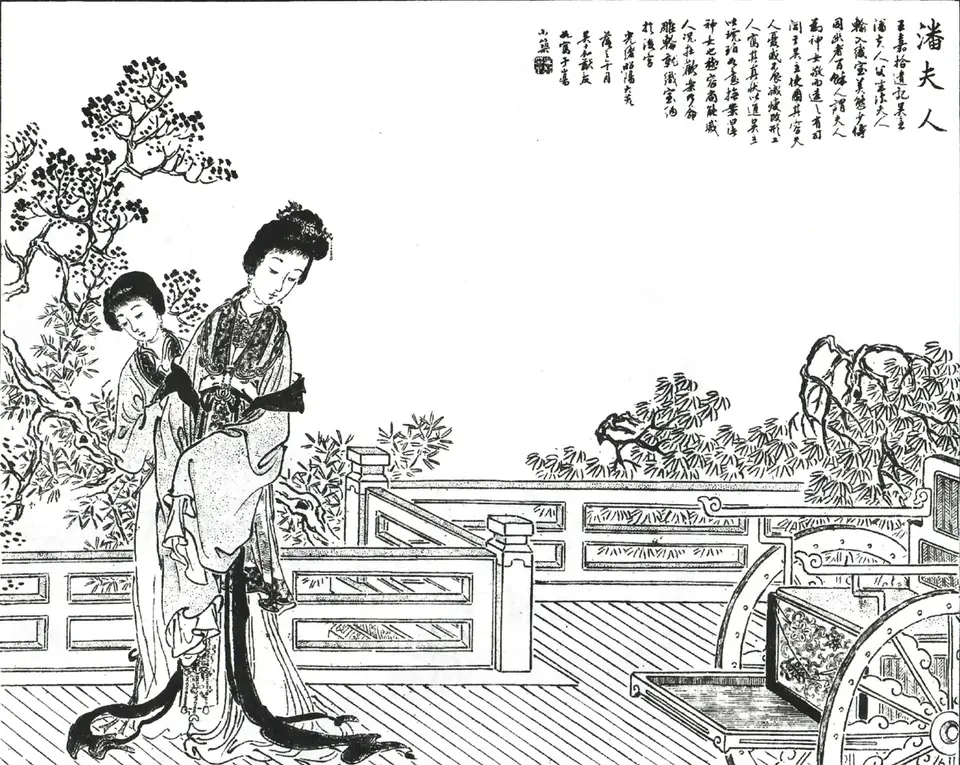
Historical portrait of Pan Shu
Image creditsWu Youru(died c. 1893) · Public domainImage source

252 CE

Empress of Sun Quan (Emperor Da of Eastern Wu) and birth mother of Sun Liang

Pan Shu (潘淑)

潘淑

Pan Shu (潘淑, ?–252), commonly recorded in historical texts as Lady Pan or Empress Pan, a native of Juzhang County, Kuaiji Commandery (around modern Jiangbei District, Ningbo, Zhejiang Province), was the empress of Sun Quan, founding emperor of Eastern Wu during the Three Kingdoms period, and the birth mother of Sun Liang. Born into the family of a minor official, she and her elder sister were consigned to the palace weaving…

252 CEEastern Han Dynasty (东汉)

PROFILE

Pan Shu (潘淑, ?–252), commonly recorded in historical texts as Lady Pan or Empress Pan, a native of Juzhang County, Kuaiji Commandery (around modern Jiangbei District, Ningbo, Zhejiang Province), was the empress of Sun Quan, founding emperor of Eastern Wu during the Three Kingdoms period, and the birth mother of Sun Liang. Born into the family of a minor official, she and her elder sister were consigned to the palace weaving house after their father was executed for violating the law; struck by her extraordinary beauty, Sun Quan summoned her from the weaving house into the rear palace as a consort. In the seventh year of the Chiwu era (244), after dreaming that someone presented her with a dragon's head, she gave birth in the inner palace to Sun Quan's youngest son, Sun Liang. Charming in appearance yet jealous and malicious by nature, she repeatedly slandered and harmed Lady Yuan and many other consorts; because both mother and son were deeply favored by the aging Sun Quan and supported by Princess Quan, who bore a grudge against Crown Prince Sun He's mother Lady Wang, Sun Quan deposed Crown Prince Sun He in the thirteenth year of the Chiwu era (250), installed Sun Liang as crown prince, and granted Pan Shu's request to arrange a marriage for her elder sister outside the palace. In the fifth month of the first year of the Taiyuan era (251), Sun Quan formally invested Pan Shu as Empress, proclaiming a general amnesty and changing the reign era—making her the only empress formally invested during Sun Quan's lifetime. When Sun Quan fell gravely ill in the eleventh month of that year, Pan Shu sent inquiries to Secretariat Director Sun Hong regarding the historical precedent of Empress Lü's regency under the Western Han while exhausting herself attending the emperor's illness; in the second month of the first year of the Shenfeng era (252), palace attendants strangled her while she lay unconscious, claiming she had died of a sudden illness. Six or seven attendants were executed after the plot came to light, and after Sun Quan died in the fourth month, she was buried with him at Jiangling Mausoleum.

Alternative Name
Lady Pan, Empress Pan (潘皇后)
Dynasty
Three Kingdoms (Eastern Wu)
Native Place
Juzhang County, Kuaiji Commandery (around modern Jiangbei District, Ningbo, Zhejiang Province)
Title
Lady (Furen), Empress
Identity
Empress of Sun Quan (Emperor Da of Eastern Wu) and birth mother of Sun Liang

LIFE TIMELINE

Entry into the Rear Palace

Consigned with her elder sister to the palace weaving house after her father was executed for a legal offense, she was noticed by Sun Quan and taken into the rear palace; remained in the palace when other favored consorts were sent away after Sun He was named crown prince.

Birth of Sun Liang

After dreaming of receiving a dragon's head in her apron upon conceiving, gave birth in the inner palace to Sun Quan's seventh and youngest son, Sun Liang, winning deep imperial favor for both mother and son.

Installation of Her Son as Crown Prince

After executing Chen Zheng and Chen Xiang and flogging Zhu Ju and Qu Huang for remonstrating, Sun Quan deposed Crown Prince Sun He in the eighth month and named Sun Liang crown prince in the eleventh month; Pan Shu obtained permission for her elder sister to leave the weaving house and marry.

Investiture as Empress

Formally invested by Sun Quan as Empress, accompanied by a change of era name to Taiyuan and an empire-wide amnesty, becoming the only empress invested by Sun Quan during his lifetime.

Inquiry into Regency and Exhaustion from Nursing

When Sun Quan fell critically ill in the eleventh month, sent someone to ask Secretariat Director Sun Hong about Empress Lü's regency while falling gravely ill herself from the strain of nursing the emperor.

Assassination and Joint Burial

Strangled by palace attendants while lying unconscious on her sickbed, with her death initially reported as a sudden illness; six or seven attendants were executed when the truth emerged, and she was buried with Sun Quan at Jiangling Mausoleum after his death in the fourth month.

Relationship graph

BIOGRAPHY

Biography

Selection from the Weaving House and Birth of Sun Liang

Pan Shu came from a humble background as the second daughter of a minor local official in Juzhang, Kuaiji Commandery (around modern Jiangbei District, Ningbo, Zhejiang Province). After her father committed an offense against the law and was executed, Pan Shu and her elder sister were implicated and consigned as bondmaids to the palace weaving house. According to the Record of Gleanings (Shiyiji), Pan Shu possessed peerless beauty and was hailed as the finest beauty east of the Yangtze; the more than one hundred women confined with her in the weaving house called her a "Goddess" and kept a respectful distance from her. Grieving day and night in the weaving house, she ate little and grew slender and frail. When officials reported her appearance to Sun Quan, he ordered a painter to depict her likeness and present it to him. Beholding her portrait, which remained captivating even in sorrow, Sun Quan was so delighted that he pressed his amber ruyi scepter against the painting until it snapped, exclaiming: "This is truly a goddess! If her sorrowful countenance can enchant people so, how much more so when she is joyful!" He immediately ordered a carved carriage sent to the weaving house to welcome Pan Shu into the rear palace as a consort.

In the first month of the fifth year of the Chiwu era (242), Sun Quan installed his son Sun He as crown prince; because Sun He's birth mother Lady Wang was held in high esteem, most of the other consorts who had enjoyed Sun Quan's favor were sent out of the palace to reside elsewhere, yet Pan Shu remained in attendance within the palace. Soon afterward, Pan Shu conceived; dreaming that someone handed her a dragon's head which she caught in her apron, she gave birth in the inner palace in the seventh year of the Chiwu era (244) to Sun Quan's youngest son, Sun Liang (courtesy name Ziming). Because Sun Quan was already advanced in years and Sun Liang was his youngest son, the emperor doted on Sun Liang with special solicitude, and Pan Shu and her son rose to supreme favor in the rear palace.

Slandering Consorts, Changing the Heir, and Investiture as Empress

Although charming in appearance, Pan Shu was sinister and jealous by nature; from the beginning of her rise to favor until her death, she repeatedly slandered and harmed Lady Yuan and numerous other imperial consorts. As the "Two Palaces Dispute" between Crown Prince Sun He and Sun Ba, Prince of Lu, left both factions weakened, Sun Quan's eldest daughter Princess Quan (Sun Luban), who harbored a bitter feud against Sun He's mother Lady Wang, actively catered to Sun Quan's inclinations and persuaded him to arrange a marriage between Pan Shu's young son Sun Liang and the daughter of Quan Shang, thereby promoting the replacement of the older heir with the younger. When Sun Quan resolved to depose Sun He and install Sun Liang as crown prince, Commander of the Fearless Guards Chen Zheng and Commander of the Five Camps Chen Xiang submitted memorials citing the historical lesson of Duke Xian of Jin, who favored Li Ji, killed Crown Prince Shensheng, and installed Xiqi to the ruin of Jin; General of Chariots and Cavalry Zhu Ju and Vice Director of the Department of State Affairs Qu Huang also remonstrated persistently. Enraged, Sun Quan exterminated the clans of Chen Zheng and Chen Xiang and had Zhu Ju and Qu Huang dragged into the hall and flogged one hundred strokes each, while more than a dozen officials were executed or banished for opposing the change of heir.

Having silenced opposition at court, Sun Quan formally deposed Crown Prince Sun He in the eighth month of the thirteenth year of the Chiwu era (250), banishing him to Guzhang, and in the eleventh month installed Sun Liang as crown prince. Once Sun Liang was established as heir apparent, Pan Shu remembered her elder sister who was still laboring in the weaving house and petitioned Sun Quan to release her sister for marriage; Sun Quan readily consented and married her sister to Tan Shao, a Flourishing Talent nominate from Luling who rose to Commandant of Cavalry. In the fifth month of the first year of the Taiyuan era (251), Sun Quan formally invested Pan Shu as Empress, changing the reign era to "Taiyuan" and proclaiming a general amnesty across the realm. Pan Shu thus became the only empress formally invested by Sun Quan during his lifetime and the only empress of the Three Kingdoms period whose investiture was marked simultaneously by an era change and a general amnesty.

Palace Anecdotes and Assassination before Burial at Jiangling

During the years of her favor, Sun Quan frequently took Pan Shu on excursions to Zhaoxuan Terrace in Jianye. According to historical anecdotes, once while tipsy and delighted at a banquet, Pan Shu spat wine into a jade vessel and ordered a maid to pour it out below the terrace, whereupon a ruby ring spilled out; Pan Shu hung the ring on a pomegranate branch, and Sun Quan built a terrace on the spot named "Huanliu Terrace" (Encircling Pomegranate Terrace). When a courtier remonstrated that "Huanliu" was a homophone for "returning to Liu" at a time when Wu and Shu were contending for supremacy, Sun Quan reversed the name to "Liuhuan Terrace" (Pomegranate Ring Terrace). On another occasion, when Sun Quan caught a large fish at the Fishing Terrace and rejoiced, Pan Shu cited the Warring States story of Lord Longyang weeping over a caught fish to warn that where there is joy there must also be sorrow when a larger fish causes the earlier catch to be discarded, earning praise from contemporaries for her foresight. In addition, Pan Shu founded Huibao Temple in Eastern Wu's secondary capital Wuchang (modern Ezhou, Hubei Province), which stood alongside Sun Quan's Changle Temple and Kan Ze's Derun Temple as one of the earliest Buddhist monasteries in Hubei.

In the eleventh month of the first year of the Taiyuan era (251), the seventy-year-old Sun Quan fell critically ill and was confined to bed. Because Crown Prince Sun Liang was only eight years old, Pan Shu secretly sent someone to ask Secretariat Director Sun Hong about the precedents of Empress Lü holding court as regent after the accession of Emperor Hui of Western Han, revealing her intention to rule on behalf of the young sovereign. At the same time, exhausted from attending Sun Quan day and night at his bedside, Pan Shu fell gravely ill herself. In the second month of the first year of the Shenfeng era (252), palace attendants waiting upon her took advantage of her unconscious stupor to strangle her together, announcing to the outside that the empress had died suddenly of a malignant illness. Soon afterward, the murder came to light and six or seven palace attendants were executed for the crime; when Sun Quan died in the fourth month of the same year, Pan Shu was buried together with him at Jiangling Mausoleum in Jianye. Regarding the deeper cause of her assassination, Xu Song's Veritable Records of Jiankang attributed it to attendants unable to bear the exhaustion of nursing her, Sima Guang's Comprehensive Mirror in Aid of Governance attributed it to attendants unable to endure her cruelty, while the Southern Song historian Hu Sansheng argued in his commentary that powerful court ministers such as Sun Hong orchestrated the murder out of fear that Empress Pan would seize regency power.
Personal Relationships

  • Husband: Sun Quan (Emperor Da of Eastern Wu), founding emperor of Eastern Wu who summoned Pan Shu from the weaving house, deposed Crown Prince Sun He in favor of her son Sun Liang, invested her as his sole lifetime empress, and was buried with her at Jiangling Mausoleum.
  • Son: Sun Liang, seventh son of Sun Quan, born to Pan Shu in 244, named crown prince in 250, and enthroned as emperor in 252 before being deposed by the regent Sun Chen in 258.
  • Elder Sister and Brother-in-Law: Lady Pan (Pan Shu's elder sister) and Tan Shao; confined to the weaving house together with Pan Shu, her sister was released at Pan Shu's request after Sun Liang became crown prince and married to Commandant of Cavalry Tan Shao of Luling.
  • Palace Rivals: Lady Yuan and Lady Wang; Lady Yuan, daughter of Yuan Shu, was slandered by Pan Shu, while Lady Wang, mother of deposed Crown Prince Sun He, died in grief after losing favor amid the machinations of Princess Quan and Pan Shu.
  • Political Ally: Princess Quan (Sun Luban), eldest daughter of Sun Quan, who allied with Pan Shu out of hatred for Lady Wang andarranged the marriage between Sun Liang and Quan Shang's daughter to secure Sun Liang's succession.
  • Court Opponents: Chen Zheng, Chen Xiang, Zhu Ju, Qu Huang, and Sun Hong; the first four were executed or flogged for opposing the replacement of Sun He with Sun Liang, while Secretariat Director Sun Hong was consulted by Pan Shu on Empress Lü's regency and suspected by historians of instigating her murder.

Historical Evaluations

  • Chen Shou, Records of the Three Kingdoms ("Biographies of Consorts"): "She was sinister and jealous by nature yet charming in appearance; from beginning to end, she slandered and harmed Lady Yuan and many others."
  • Hu Sansheng, Annotated Comprehensive Mirror in Aid of Governance (Vol. 75): "This affair was in truth the work of the ministers holding power in Wu. When Empress Pan sought to hold court as regent, petty attendants around her would naturally have egged her on to do so—how could there be any reason for them to strangle her out of inability to bear her cruelty! The historians of Wu embellished the account, and later writers simply copied it down."
  • Yu Maoheng, Collected Works of Guanzhong ("On Sun Quan"): "Crown Prince He had already been established, yet out of favor for Lady Pan he replaced him with his youngest son Liang, changing the foundation of the state as if moving chess pieces."
  • Huang Entong, Supplementary Notes on Historical Criticism: "Sun Quan's deposition of He, execution of Ba, and installation of Liang stemmed precisely from Pan's desire to become empress; hence he proclaimed a general amnesty and changed the reign era to magnify the event."

Related Entries

  • Sun Quan
  • Sun Liang
  • Sun He
  • Sun Luban
  • Zhu Ju
  • Two Palaces Dispute

FIGURES ASSOCIATED WITH THIS DYNASTY

Bibliography

  • Chen Shou, annotated by Pei Songzhi, Records of the Three Kingdoms (Sanguozhi), Vol. 47 ("Biography of the Lord of Wu") and Vol. 50 ("Biographies of Consorts"), Beijing: Zhonghua Book Company, 1959.
  • Xu Song, Veritable Records of Jiankang (Jiankang Shilu), Vols. 2–3, Beijing: Zhonghua Book Company, 1986.
  • Sima Guang, annotated by Hu Sansheng, Comprehensive Mirror in Aid of Governance (Zizhi Tongjian), Vol. 75, Beijing: Zhonghua Book Company, 1956.
  • Wang Jia, Record of Gleanings (Shiyiji), Vol. 8, Beijing: Zhonghua Book Company, 1981.