Born | into an official family in Mingzhou
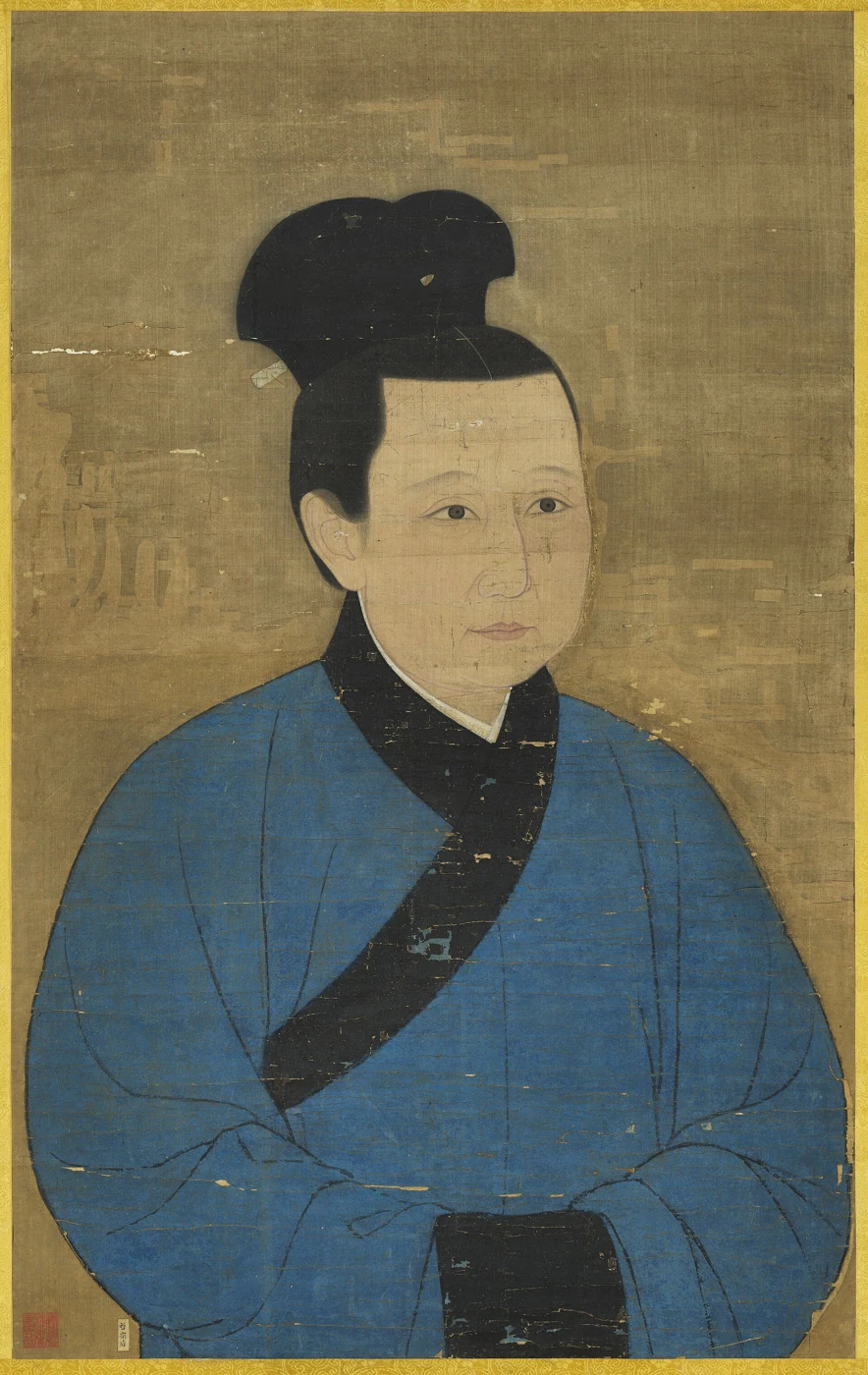
1073 CE–1131 CE
Empress Dowagerregent
Empress Meng
孟氏(宋哲宗皇后)
Empress Meng (1073–1131), whose personal name is not recorded, was a native of Mingzhou (present-day Yongnian District, Handan, Hebei) and the first empress of Zhao Xu, Emperor Zhezong of Song. She was historically known as Empress Yuanyou and, in the early Southern Song, as Empress Dowager Yuanyou and later Empress Dowager Longyou. Her final posthumous title was Empress Zhaoci Shengxian. During her life she was twice deposed…
1073 CE–1131 CENorthern Song
PROFILE
Empress Meng (1073–1131), whose personal name is not recorded, was a native of Mingzhou (present-day Yongnian District, Handan, Hebei) and the first empress of Zhao Xu, Emperor Zhezong of Song. She was historically known as Empress Yuanyou and, in the early Southern Song, as Empress Dowager Yuanyou and later Empress Dowager Longyou. Her final posthumous title was Empress Zhaoci Shengxian. During her life she was twice deposed and twice restored, and at two moments of acute political crisis—the fall of the Northern Song and the establishment of the Southern Song—she ruled from behind the curtain. She was therefore a key figure in the transition between the Northern and Southern Song. Born into a military family, she was a granddaughter of Meng Yuan, who had served as defense commissioner of Meizhou and commander of the palace cavalry and was posthumously awarded the rank of Defender-in-chief. In 1092, the seventh year of the Yuanyou era, Grand Empress Dowager Gao arranged for her to be installed as empress. In 1096, the third year of the Shaosheng era, she was deposed in connection with a sorcery accusation and sent to Yaohua Palace. She was restored after Emperor Huizong's accession in 1100 but was deposed again in 1102. During the Jingkang Incident in 1127, her status as a deposed empress meant that she escaped deportation by the Jin. Zhang Bangchang invited her to rule from behind the curtain, after which she supported Prince Kang Zhao Gou's accession and thereby helped establish the Southern Song. During the Miao-Liu Mutiny in 1129 she was again compelled to act as regent, secretly summoned Han Shizhong and others to restore the emperor, and relinquished power immediately after the revolt was suppressed. She died at the imperial residence in Yuezhou in 1131. At a time when much of the Song imperial family had been lost, her exceptional position helped preserve the dynastic legitimacy of the Zhao house, and Emperor Gaozong treated her with the respect due a mother.
- Alternative names
- Zhaoci Shengxian; Empress of Emperor Zhezong; Empress Meng
- Era
- Song · Northern Song
- Dynasty/Regime
- Song · Northern Song
- Identity
- Empress Dowager; regent
- Date of Birth
- 1073
- Date of Death
- 1131
- Ethnicity/Ethnic affiliation
- Not reliably confirmed in available sources
- Native place
- Mingzhou (present-day Yongnian District, Handan, Hebei)
- Place of birth
- Not reliably recorded
- Period of regency
- Not reliably confirmed in surviving sources
- Posthumous title
- Empress Zhaoci Shengxian
- Major achievements
- Empress of Emperor Zhezong of Song; twice deposed and secluded; after the Jingkang Incident she was honored as empress dowager in the Southern Song and helped establish Emperor Gaozong's succession.
- Courtesy / Art Name
- Empress Zhaoci Shengxian, empress of Emperor Zhezong, Empress Meng
- Dynasty
- Song dynasty (Northern Song)
- Ethnicity
- Not reliably confirmed in available sources
- Ancestral Home
- Mingzhou (present-day Yongnian District, Handan, Hebei)
- Place of Birth
- Unknown
- Place of Death
- Unknown
- Lifespan
- 58 years old
- Highest Office
- See the Biography section
- Major Offices
- See the Biography section
- Peerage
- Duke of Wen
- Posthumous Name
- Empress Zhaocishengxian
- Posthumous Honors
- Acting Grand Tutor
- Major Achievements
- Empress of Emperor Zhezong of Song, deposed and confined; after Jingkang she was honoured as empress dowager in the Southern Song and helped Emperor Gaozong to the succession
LIFE TIMELINE
Age 17 | Selected for the palace and favored by Grand Empress Dowager Gao and Empress Dowager Xiang
Age 19 | Personally invested as empress by Emperor Zhezong at Wende Hall
Age 23 | Deposed in the sorcery case, sent to Yaohua Palace, and given the religious name Chongzhen
Age 27 | Emperor Zhezong died; Emperor Huizong acceded; under Empress Dowager Xiang's administration, Lady Meng was restored as Empress Yuanyou
Age 29 | Implicated in the political struggle over the Yuanyou faction and deposed a second time; returned to Yaohua Palace
Age 53 | Yaohua Palace and Yanning Palace burned in succession; moved to a private residence in front of Xiangguo Temple
Age 54 | During the Jingkang Incident, escaped deportation because of her deposed status; Zhang Bangchang invited her to rule from behind the curtain; she supported Zhao Gou's accession, then withdrew from regency and was honored first as Empress Dowager Yuanyou and later as Empress Dowager Longyou
Age 56 | During the Miao-Liu Mutiny, was compelled to rule from behind the curtain again, secretly summoned Han Shizhong to restore the emperor, and withdrew after the mutiny was suppressed
Age 58 | Died at the imperial residence in Yuezhou and received the posthumous title Empress Zhaoci Xianlie
Posthumous | Posthumous title changed to Empress Zhaoci Shengxian
BIOGRAPHY
Biography
Family Background and Early Years Lady Meng came from a family of middle-ranking military officials of the Northern Song. Her great-grandfather Meng Yuan served as defense commissioner of Meizhou and commander of the palace cavalry and was posthumously awarded the rank of Defender-in-chief and later enfeoffed as Duke of Wen. Her grandfather Meng Sui was posthumously granted the rank of acting Grand Preceptor and military governor of Anhua Army. Her father Meng Zai ended his career as acting military governor and observation commissioner of Anwu Army and was posthumously granted the title of Grand Master of the Palace with Equal Rank to the Three Excellencies. Although the Meng family was not among the very highest aristocratic houses, it was a multigenerational military-official family with close ties to the imperial house. Zhao Xu, Emperor Zhezong of Song, came to the throne as a child and his grandmother Grand Empress Dowager Gao, Empress Xuanren Shenglie, ruled from behind the curtain. As the emperor grew older, Empress Gao followed imperial custom and selected more than one hundred young women from official families as candidates for the palace. Lady Meng, then sixteen, was among them. Both Empress Gao and Emperor Zhezong's principal mother, Empress Dowager Xiang, Empress Qinsheng Xiansu, were very fond of Lady Meng and personally instructed her in palace etiquette. Her respectful and gentle temperament won the affection of both empress dowagers. ### Installation as Empress and First Deposition In 1092, the seventh year of the Yuanyou era, Grand Empress Dowager Gao told the chief councillors that Lady Meng “is able to fulfill the rites of a wife and should occupy the proper position in the central palace.” She then ordered a Hanlin academician to draft the investiture edict. To emphasize the solemnity of the event, the court performed the full six traditional rites for the creation of an empress. Senior officials including Lü Dafang, Han Zhongyan, Su Song, and Su Zhe were appointed to the various ceremonial offices. Emperor Zhezong personally presided at Wende Hall and invested Lady Meng as empress. Empress Gao told the emperor, “To obtain a worthy inner assistant is no small matter.” At the same time, Meng Zai was promoted to Chongyi envoy and prefect of Rongzhou, and Lady Meng's mother, Lady Wang, was granted the title Lady of Huayuan Commandery. The favorable situation did not last. Emperor Zhezong gradually became enamored of the beautiful Lady Liu, a palace attendant, whose ambition increased with imperial favor. In 1096, the third year of the Shaosheng era, the daughter born to Empress Meng, Princess Fuqing, became gravely ill. Empress Meng's elder sister had some medical knowledge and had once cured the empress of a dangerous illness, so she was permitted to enter the palace. She brought Daoist talisman water to treat the princess. Because the use of such talismans was taboo within the palace, Empress Meng was alarmed and ordered it hidden, then voluntarily explained the matter when Emperor Zhezong arrived. The emperor regarded it at the time as understandable and did not blame her. After the princess eventually died, however, Empress Meng's foster mother Lady Yan and others prayed for the empress and princess. Lady Liu seized on the matter, linked the two incidents together, and accused Empress Meng before the emperor of using sorcery to curse him. Suspicious, Emperor Zhezong ordered Liang Congzheng and Su Gui to investigate the case at the Imperial City Office. Nearly thirty palace women and eunuchs serving the empress were arrested and tortured. The source describes the torture as so severe that bodies were broken and some tongues were severed. Many refused to falsely accuse the empress despite brutal treatment. Liang Congzheng and the others eventually fabricated depositions sufficient to establish a charge of plotting against the throne. The case also had a political background. The Northern Song was then riven by conflict between reformist and anti-reformist factions. Empress Meng had been chosen by Empress Gao and Empress Xiang, who supported the old faction. After Empress Gao's death, Emperor Zhezong attempted to escape his grandmother's political legacy, supported the New Policies faction, and promoted Zhang Dun to chief councillor. Zhang Dun secretly aligned himself with Lady Liu and sought to depose Empress Meng and install Liu in her place; together with the eunuch Hao Sui, he helped construct the case. After the investigation, Emperor Zhezong ordered censor Dong Dunyi to review the depositions. Dong found the accused barely breathing and unable to speak and hesitated to sign. Threatened by Hao Sui and others, however, he eventually placed his name on the memorial. An edict deposed Empress Meng and sent her to Yaohua Palace. She was given the Daoist titles “Master of Huayang” and “Yuqing Miaojing Immortal Master” and the religious name Chongzhen. Dong Dunyi later memorialized that there were grounds to reconsider the case, saying that the darkened sky and the tears of the people showed that neither Heaven nor the people wished the empress to be deposed. Emperor Zhezong at first wanted to punish him but later regretted the affair and reportedly said, “Zhang Dun misled me.” ### Restoration and Second Deposition In 1100, the third year of the Yuanfu era, Emperor Zhezong died without a son. Empress Dowager Xiang selected Prince Duan Zhao Ji to succeed him as Emperor Huizong. Because Empress Xiang supported the old faction, its political position revived and Lady Meng was restored as empress. Since she had originally been invested during the Yuanyou era, she was called “Empress Yuanyou,” distinguishing her from Lady Liu, who had since become empress and was known as “Empress Yuanfu.” The change again proved short-lived. Empress Xiang died in 1101, and political conditions reversed. In 1102, the first year of the Chongning era, Emperor Huizong recalled Cai Jing and other New Policies officials and launched proceedings against the Yuanyou faction. Empress Meng, as a woman originally installed by the old faction, was implicated once more. At Hao Sui's urging, Cai Jing advocated her second deposition. Censors Qian Yu, Shi Yu, Zuo Fu, and others submitted repeated accusations, and Emperor Huizong eventually ordered that the Shaosheng edict be re-applied. Lady Meng returned to Yaohua Palace and received the additional Daoist title “Xiwei Yuantong Zhihe Miaojing Immortal Master.” For more than twenty years thereafter, she lived in religious seclusion. ### The Jingkang Incident and Third Restoration Early in the Jingkang era of Emperor Qinzong, Yaohua Palace burned and Lady Meng moved to Yanning Palace. That palace soon also burned, forcing her into a private residence in front of Xiangguo Temple, where she depended on her nephew Meng Zhonghou. In 1127, the second year of the Jingkang era, Jin forces captured Bianjing and took Emperors Huizong and Qinzong north, the event known as the Jingkang Incident. Imperial consorts and palace women with formally recorded ranks were deported according to the palace registers. Lady Meng alone escaped because, as a deposed empress living outside the palace, she was not listed. The Jin installed Zhang Bangchang as emperor of Chu. Following Lü Haowen's advice, Zhang invited Lady Meng to reside in Yanfu Palace, granted her the title “Empress Dowager of Song,” and had officials pay court to her. Some officials objected that this resembled the precedent of Song founder Zhao Kuangyin honoring the Later Zhou empress dowager and could imply Zhang's intent to replace the Song. Hu Shunzhi, Ma Shen, and others memorialized that important decisions should require the empress dowager's approval. Under pressure, Zhang restored Lady Meng's title as Empress Yuanyou and asked her to rule from behind the curtain. Learning that Prince Kang Zhao Gou was at Jizhou, in present-day Juye, Shandong, Empress Meng sent Feng Xie, Li Hui, and her nephew Meng Zhonghou with a letter inviting him to assume leadership. She also ordered deputy commander Guo Zhongxun to provide an escort and Zhang Jun, commander of the palace expeditionary vanguard, to receive him along the route. She issued a handwritten proclamation to the realm calling for loyalist support. When Zhao Gou reached Nanjing, Yingtian Prefecture (present-day Shangqiu, Henan), she sent imperial clan members and eunuch Shao Chengzhang with seals, carriage, and regalia to welcome him. Zhao Gou then ascended the throne as Emperor Gaozong and changed the era name to Jianyan. Empress Meng withdrew from regency that same day and was honored as Empress Dowager Yuanyou. Because the character “Yuan” was the personal name of her grandfather Meng Yuan, the title was changed to Empress Dowager Longyou. ### Southward Flight and the Miao-Liu Mutiny Because Bianjing could not be held, Empress Meng followed Emperor Gaozong south. When the emperor prepared to go to Yangzhou, he ordered Guo Zhongxun to escort her ahead to the prefectural seat there. Zhang Jun later recommended that residences for the imperial household first be established, and Meng Zhonghou was ordered to escort the empress dowager to Hangzhou with Miao Fu as the guard commander. In 1129, the third year of the Jianyan era, Miao Fu and Liu Zhengyan launched a mutiny, forced Emperor Gaozong to abdicate, and placed the three-year-old crown prince Zhao Fu on the throne. The mutineers demanded that Empress Dowager Meng rule from behind the curtain. She told Miao Fu and his followers that Cai Jing and Wang Fu had altered ancestral institutions, Tong Guan had provoked frontier wars, and these acts had brought disaster to the state; the present emperor himself had committed no moral fault and had merely been misled by Huang Qianshan and Wang Boyan, who had already been dismissed. When the rebels insisted on enthroning the crown prince, she argued that with powerful enemies outside, a woman holding a three-year-old child could not command the realm. She resisted even as they pleaded in tears. Emperor Gaozong, learning how urgent the situation had become, issued an edict yielding the throne to his eldest son, and Empress Meng was compelled to assume the regency. Behind the curtain, she outwardly soothed Miao Fu's faction while secretly maneuvering against it. Zhu Shengfei proposed permitting officials to submit individual memorials and arranging for one rebel partisan per day to be received in audience to reduce their suspicions; the empress dowager agreed. Han Shizhong's wife Liang Hongyu was then in the rebels' camp. Zhu devised a way for her to leave, and Empress Meng summoned her and urged her to have Han Shizhong come quickly to rescue the emperor. Liang carried the message to her husband's army, and Han and other loyalist commanders advanced toward Hangzhou. The rebel faction became afraid. Zhu Shengfei and others then induced them to accept a restoration and had Wang Shixiu draft a petition. On seeing it, the empress dowager said with relief, “My responsibility is fulfilled.” She immediately sent a handwritten order urging Emperor Gaozong to return to the palace and sought to withdraw from regency. Gaozong asked Zhu Shengfei to request that she preside once more in the hall before formally relinquishing power. That day she received an elevated empress-dowager title, and the Miao-Liu Mutiny came to an end. Empress Meng subsequently moved repeatedly with the imperial court. When Gaozong went to Jiankang, Zheng Jue was ordered to escort her. As the autumn defense emergency intensified, Liu Ningzhi was appointed to manage Jiang-Zhe and protect her on the journey to Hongzhou (present-day Nanchang, Jiangxi). While passing Luoxing Temple, boats overturned and more than ten palace women drowned, while the empress dowager's own boat was unharmed. After reaching Hongzhou, Jin forces crossed the Yangtze from Qizhou and Huangzhou. Liu Guangshi, stationed at Jiangzhou, was unprepared, and the enemy moved directly toward Hongzhou. Teng Kang and Liu Jue escorted her toward Jizhou, but the pursuit was close and she traveled by boat at night. At dawn near Taihe County, the boatman Jing Xin rebelled; Yang Weizhong's troops collapsed, 160 palace women were lost, and Teng Kang and Liu Jue fled. With fewer than one hundred guards remaining, the empress dowager and Consort Pan had to travel in sedan chairs carried by farmers toward Qianzhou (present-day Ganzhou, Jiangxi). They were then besieged by the local strongman Chen Xin, but Hu You, an officer under Yang Weizhong, broke the encirclement with troops. On learning of her plight, Emperor Gaozong said that although he had not previously known the empress dowager, after she welcomed him at Nanjing she had loved him no less than her own child, and that he must quickly bring her back from thousands of li away amid warfare. He dispatched Xin Qizong and Pan Yongsi to escort her. When the empress dowager reached Yuezhou (present-day Shaoxing, Zhejiang), Gaozong personally met her outside the gate of the imperial residence. ### Later Years and Death Empress Dowager Meng was respectful in temperament and no serious misconduct was reported of her in the palace. She enjoyed drinking wine. When Gaozong thought the wine of Yuezhou poor and ordered sweeter wine purchased elsewhere, she sent people to pay for it rather than taking it without compensation. Because of the false talisman-water accusation she had suffered when young, when someone in the palace later claimed to cure illness with talisman water, she immediately expelled the person. In 1131, the first year of the Shaoxing era, Empress Meng died at the imperial residence in Yuezhou at the age of fifty-eight. She received the posthumous title Empress Zhaoci Xianlie and was buried at Shanghuang Village in Kuaiji County. In 1133 her posthumous title was changed to Empress Zhaoci Shengxian. Until Emperor Gaozong's birth mother, Empress Dowager Wei, returned from the Jin in 1142, Empress Meng remained the principal maternal representative of the Southern Song imperial house.
Major Activities
Two Regencies Empress Meng twice ruled from behind the curtain, both during existential crises for the Song. The first occurred in 1127, after the fall of the Northern Song and Zhang Bangchang's assumption of imperial status. Invited back into the palace as regent, she supported Prince Kang Zhao Gou's accession and thereby helped transmit dynastic legitimacy to the Southern Song. The second occurred during the Miao-Liu Mutiny of 1129. Forced to act as regent, she secretly worked to summon Han Shizhong and other loyalist commanders, then immediately relinquished power once the revolt was suppressed. In both cases her regency ended in political stabilization and the return of power to the emperor, an unusual pattern among Song imperial consorts. ### Survival in the Jingkang Incident and the Founding of the Southern Song When the Jin captured Bianjing in 1127, all formally ranked palace women were deported north. Lady Meng alone survived in the capital because her status as a deposed empress had removed her from the palace registers. As the only surviving senior member of the Zhao imperial household in Bianjing, she was invited by Zhang Bangchang to rule from behind the curtain. She decisively supported Prince Kang Zhao Gou, sent envoys to receive him, and issued a handwritten proclamation to the realm. Her actions provided a legal basis for the establishment of the Southern Song. Gaozong later recalled that although he had not known her before, after welcoming him at Nanjing she loved him no less than her own child. ### Mediation during the Miao-Liu Mutiny During the 1129 mutiny led by Miao Fu and Liu Zhengyan, Empress Meng was compelled to assume the regency after Gaozong's forced abdication. Outwardly she reassured the mutineers while secretly cooperating with Zhu Shengfei to free Liang Hongyu and summon Han Shizhong. Once Han and other loyalist forces reached Hangzhou and the rebels became frightened, Zhu and his allies induced the mutineers to accept Gaozong's restoration. The empress dowager then urged the emperor to return and immediately withdrew from power. Her conduct throughout the crisis was cautious and decisive: she avoided escalating the confrontation while preserving Gaozong's throne. ### The Sorcery Case and Two Depositions In 1096, Empress Meng was implicated in an accusation arising from the use of talisman water and was framed by Lady Liu. Torture and forced testimony produced a wrongful case that led to her deposition and confinement at Yaohua Palace. She was restored after Emperor Huizong's accession in 1100 but deposed again in 1102 because of factional politics. These events reflected the fierce New Policies–old faction struggle of the late Northern Song. Empress Meng, originally selected by Empress Gao, became a victim of the political conflict. Paradoxically, her deposed status later allowed her to survive the Jingkang Incident and play a central role in the early Southern Song.
Personal Relations
- Grandfather: Meng Sui, posthumously acting Grand Preceptor and military governor of Anhua Army
- Father: Meng Zai, acting military governor and observation commissioner of Anwu Army; posthumously Grand Master of the Palace with Equal Rank to the Three Excellencies
- Mother: Lady Wang, repeatedly honored and finally titled Grand Lady of Rong
- Nephew: Meng Zhonghou, Tongzhilang and official of the Directorate for Imperial Manufactures; after the Jingkang Incident he helped welcome and attend the empress dowager ### Rulers and Imperial Relations - Zhao Xu, Emperor Zhezong of Song: husband; installed her as empress in 1092 and deposed her in 1096
- Zhao Ji, Emperor Huizong of Song: brother-in-law; restored her in 1100 and deposed her again in 1102
- Zhao Gou, Emperor Gaozong of Song: nephew; received her support after the Jingkang Incident, honored her as empress dowager, and treated her as a mother
- Grand Empress Dowager Gao, Empress Xuanren Shenglie: selected Lady Meng and personally taught her court etiquette
- Empress Dowager Xiang, Empress Qinsheng Xiansu: participated in selecting her and restored her position under Emperor Huizong ### Conflicts - Lady Liu, later Empress Zhaohuai: rival for imperial favor and principal instigator of the sorcery accusation
- Zhang Dun: chief councillor who supported Lady Liu and helped construct the case against Empress Meng
- Hao Sui: eunuch who encouraged Lady Liu's bid for the empress's position and participated in fabricating charges
- Cai Jing: chief councillor who advocated her second deposition during the Chongning era ### Associates - Zhang Bangchang: invited her to rule from behind the curtain after the Jingkang Incident and restored her title as Empress Yuanyou
- Lü Haowen: advised Zhang Bangchang to receive Lady Meng into the palace
- Zhu Shengfei: assisted her political maneuvering during the Miao-Liu Mutiny
- Han Shizhong and Liang Hongyu: responded to her secret appeal for loyalist intervention during the mutiny
- Dong Dunyi: reviewed the sorcery case and protested on Empress Meng's behalf
Historical Assessment
Song and Contemporary Assessments - Her biography in the History of Song describes Empress Meng as “respectful in nature,” states that she had “not the slightest fault” in the palace, and records widespread sympathy over her two depositions.
- Censor Dong Dunyi memorialized after reviewing the sorcery case that both Heaven and the people opposed her deposition.
- Emperor Gaozong expressed deep respect for her, saying that after she welcomed him at Nanjing she loved him no less than her own child, and later urgently ordered her return while she was displaced in Jiangxi.
- During the Miao-Liu Mutiny she told the rebels that with a powerful enemy outside, a woman holding a three-year-old child could not command the realm, demonstrating clear political judgment. ### Song–Yuan Period - The Southern Song historian Li Tao recorded the sorcery case in detail in the Long Draft of the Continuation of the Comprehensive Mirror in Aid of Governance and was sympathetic to Empress Meng, attributing the case to framing by Zhang Dun, Hao Sui, and others.
- Yuan compilers of the History of Song emphasized that she alone survived “because she had been deposed” and affirmed her role in the establishment of the Southern Song.
- Historians around the Song–Yuan transition compared her with worthy empresses such as Empress Yin of Emperor Guangwu of Eastern Han, regarding her as a woman who, despite deposition, preserved Song dynastic legitimacy as empress dowager and could be called a “mother of restoration.” ### Ming and Qing Periods - Wang Fuzhi, discussing Empress Meng in Song Lun, regarded her timely relinquishing of power after both regencies as unusually virtuous among Song imperial women, though he also criticized her inability to prevent Emperor Gaozong's compromise with the Jin.
- Bi Yuan recorded her affairs in detail in the Continuation of the Comprehensive Mirror in Aid of Governance and treated the sorcery case as an injustice.
- Zhao Yi, in Nian’er Shi Zhaji (Notes on the Twenty-Two Histories), discussed female intervention in Song politics and emphasized that Empress Meng's two regencies arose from emergencies and that she relinquished power promptly, contrasting her with rulers such as Empress Lü and Wu Zetian. ### Modern Assessments - Modern scholars generally regard Empress Meng as a key figure in the transition between the Northern and Southern Song, whose survival as a deposed empress supplied an important source of dynastic legitimacy after the Jingkang Incident.
- A study by Wang Zhongcan of Xuchang University argues that ritual or sorcery practices may indeed have been carried out by eunuchs and palace attendants around Empress Meng, but that the investigation was manipulated by reformist and opportunist factions and ultimately extended culpability to the empress herself.
- Contemporary scholarship generally assesses her conduct during the Miao-Liu Mutiny favorably, noting her composure and effective handling of the crisis in both stabilizing the rebels and preserving Emperor Gaozong's throne.
FIGURES ASSOCIATED WITH THIS DYNASTY
Bibliography
- History of Song*, vol. 243, “Biographies of Empresses, Part Two: Empress Zhaoci Shengxian Meng of Emperor Zhezong”