Steppe Birth
Born in the Xiongnu royal encampment, son of Laoshang Chanyu and grandson of Modu Chanyu.
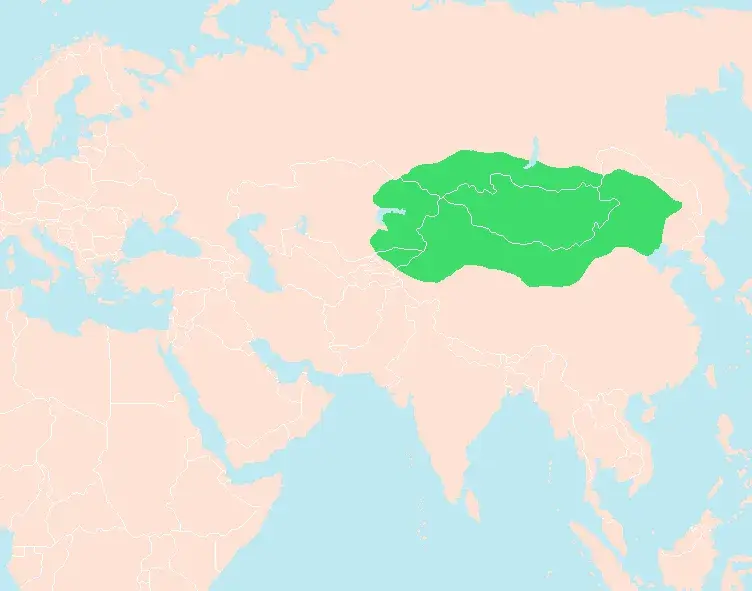
161 BCE–126 BCE
挛鞮·军臣
Luandi Junchen (c. 185 BC – 126 BC), historically designated as Junchen Chanyu (军臣单于), was the supreme ruler of the Xiongnu Confederation during the mid Western Han period. As the son of Laoshang Chanyu and grandson of Modu Chanyu, he presided over the nomadic empire for thirty-five years, spanning the reigns of Han Emperors Wen, Jing, and Wu. During his extensive reign, Junchen concluded three successive dynastic marriage…
Luandi Junchen (c. 185 BC – 126 BC), historically designated as Junchen Chanyu (军臣单于), was the supreme ruler of the Xiongnu Confederation during the mid Western Han period. As the son of Laoshang Chanyu and grandson of Modu Chanyu, he presided over the nomadic empire for thirty-five years, spanning the reigns of Han Emperors Wen, Jing, and Wu. During his extensive reign, Junchen concluded three successive dynastic marriage alliances with the Han court, receiving imperial princesses as his royal consorts while extracting massive annual subsidies in silk, grain, and liquor. In the early years of his rule, Junchen pursued an aggressive raiding strategy, personally leading dozens of thousands of cavalry across the Great Wall to threaten Ganquan Palace and Yong County, sending warning beacons within sight of Chang'an. During Emperor Jing's reign, he contemplated supporting the Rebellion of the Seven States, but quickly reaffirmed peaceful trade when Han generals suppressed the revolt. Under Emperor Wu, as Han military might reached its peak, the Han court orchestrated the Battle of Mayi in 133 BC, stationing three hundred thousand concealed troops to ambush the nomads. Detecting anomalies from abandoned cattle and capturing a Han outpost officer, Junchen narrowly aborted the march, permanently terminating the seven-decade policy of marriage alliances. Following the loss of the Henan Ordos loop to General Wei Qing in 127 BC, Junchen retreated north and died in the winter of 126 BC, after which his brother Yizhixie seized the throne in a violent coup.
Born in the Xiongnu royal encampment, son of Laoshang Chanyu and grandson of Modu Chanyu.
Laoshang Chanyu passed away; Junchen inherited the supreme seat and launched deep raids toward Ganquan.
Explored joint offensive with rebellious Han princes; abandoned plans and restored border trade after Han victory.
Led one hundred thousand horsemen toward Mayi, detected the imperial trap, and executed a rapid retreat.
Han General Wei Qing expelled the Xiongnu from the Ordos Loop, establishing Shuofang Commandery.
Died in winter in the northern steppe; brother Yizhixie usurped the throne, forcing Crown Prince Yu Dan to flee to Han.
Luandi Junchen was born around 185 BC on the Mongolian Plateau into the ruling house of the Xiongnu. Following the death of his father Laoshang Chanyu in 161 BC, Junchen assumed the supreme leadership of the nomadic confederation. Immediately after taking power, Junchen repudiated existing border agreements and launched massive cavalry incursions across the northern frontier. Steppe horsemen pierced the defense lines of Shang Commandery and Beidi, advancing as far south as Ganquan Palace and Yong County. Fire signals lit the night skies within direct sight of the Han capital at Chang'an, forcing Emperor Wen to mobilize massive garrison corps to defend the Guanzhong passes.
During the reign of Emperor Jing, the Rebellion of the Seven States destabilized the Han interior. Envoys from rebellious kings, including Liu Sui of Zhao, secretly contacted Junchen, urging him to join a pincer offensive against Chang'an. However, the lightning campaign of Han Grand Commander Zhou Yafu crushed the rebels within three months, leaving Zhao isolated in Handan. Observing the collapse of the insurrection, Junchen wisely refrained from crossing the frontier. Emperor Jing reestablished dynastic marriage treaties, sending royal brides alongside vast quantities of cotton, silk, and wine, while reopening border markets. This ushered in a rare era of mutual commerce and tranquility between Han and Xiongnu.
By the accession of Emperor Wu, the economic accumulation of the Rule of Wen and Jing had enriched Han imperial treasuries. In 133 BC, the Han court adopted merchant Nie Yi's scheme to lure the nomadic army into a devastating ambush at Mayi. Nie Yi claimed he had assassinated local magistrates and offered to surrender the wealthy trading center. Enticed by immense plunder, Junchen led one hundred thousand cavalry across the border. When his vanguard reached a point approximately one hundred li from Mayi, Junchen noticed vast herds of cattle grazing across the valleys without a single shepherd. Suspicious of this anomaly, he attacked a nearby Han beacon tower and captured a military officer, who confessed that over three hundred thousand Han soldiers lay in wait. Stunned by the scale of the trap, Junchen ordered an immediate full-speed retreat, permanently ending the seventy-year era of interstate harmony.
The abortive ambush at Mayi plunged the two empires into an era of total war. In 127 BC, Emperor Wu launched a massive preemptive campaign commanded by General Wei Qing. The Han legions struck west from Yunzhong, sweeping across the Ordos Loop and routing the allied forces of the Baiyang and Loufan princes. Han forces annexed the fertile agricultural and pasture lands of the Henan region, constructing the fortress of Shuofang and establishing Shuofang Commandery. Stripped of this crucial southern springboard and facing imperial garrisons astride the Yellow River bend, Junchen's confederation suffered a catastrophic strategic and economic setback.
In the winter of 126 BC, after reigning for thirty-five years, Junchen Chanyu passed away of illness in his northern steppe encampment. His demise triggered immediate dynastic convulsions. His ambitious younger brother, Wise Prince of the Left Yizhixie, launched a surprise assault on Crown Prince Yu Dan, seizing the royal insignia and usurping the supreme seat. Defeated and pursued across the desert, Crown Prince Yu Dan fled southward to seek sanctuary with Emperor Wu, who enfeoffed him as Marquis of She'an. Yu Dan died of disease within months, leaving Yizhixie to confront the full brunt of the great Han counteroffensives.
Junchen Chanyu presided over the apex of Xiongnu geopolitical power during the middle of the second century BC. By maintaining a standing mobile cavalry host exceeding three hundred thousand mounted archers, he dictated terms to the Western Han court during the reigns of Emperors Wen and Jing. His aggressive frontier incursions repeatedly extracted substantial annual economic tribute and royal consorts, while allowing nomadic pastoralists to trade livestock for agricultural commodities in regulated border markets, consolidating Xiongnu prosperity.
Junchen's sharp military instincts at the Battle of Mayi altered the course of East Asian history. By astutely discerning tactical irregularities in the deserted livestock pastures and interrogating captured officers, he deduced the presence of thirty Han legions and executed an orderly extraction before the trap could spring. While this escape preserved the core combat power of the nomadic confederation, it also signaled the definitive collapse of nomadic diplomatic deterrence, propelling both powers into decades of continental warfare.
FIGURES ASSOCIATED WITH THIS DYNASTY