Early Administrative Service
Recommended as Outstanding Talent, governed two counties, and served as Attendant Officer under Han Fu.
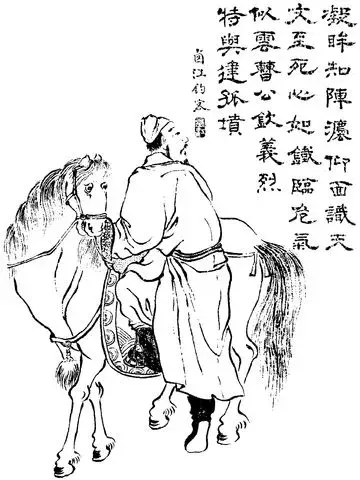
沮授
Ju Shou (沮授, ?–200 CE), courtesy name Gongyu (公与), a native of Yiyang County in Guangping Commandery (present-day southeast of Yongnian District, Handan, Hebei Province), was an outstanding strategist, counselor, and military commander during the late Eastern Han dynasty, serving as the chief grand strategist of Yuan Shao's coalition with the offices of Army Supervisor and General Who Displays Might. In his youth, Ju Shou was…
Ju Shou (沮授, ?–200 CE), courtesy name Gongyu (公与), a native of Yiyang County in Guangping Commandery (present-day southeast of Yongnian District, Handan, Hebei Province), was an outstanding strategist, counselor, and military commander during the late Eastern Han dynasty, serving as the chief grand strategist of Yuan Shao's coalition with the offices of Army Supervisor and General Who Displays Might. In his youth, Ju Shou was well versed in classical scholarship, ambitious in statecraft, and resourceful in grand strategy. He was recommended as an Outstanding Talent and served as magistrate in two counties and as Attendant Officer in Jizhou, later being appointed Major of Cavalry by Governor Han Fu. In 191 CE, when Han Fu contemplated surrendering Jizhou under dual pressure from Gongsun Zan and Yuan Shao, Ju Shou vigorously remonstrated against yielding the province, though his advice went unheeded. After Yuan Shao assumed control of Jizhou, he sought out Ju Shou's counsel, personally recruiting him and soliciting his grand design for pacifying the realm. Ju Shou formulated the renowned grand strategy of conquering the four northern provinces and welcoming the Son of Heaven. He proposed first subduing the Yellow Turban remnants, wiping out Zhang Yan's Heishan bandits, crushing Gongsun Zan in Youzhou, and subjugating the Wuhuan tribes. Once Ji, Qing, You, and Bing provinces were united under Yuan Shao's banner, the army would march west to welcome Emperor Xian to Luoyang, commanding the feudal lords in the name of the sovereign and dispatching punitive expeditions against insubordinate warlords. Profoundly impressed, Yuan Shao appointed Ju Shou Army Supervisor and General Who Displays Might, conferring upon him supreme operational authority over the allied armies. Under Ju Shou's strategic coordination, Yuan Shao obliterated Gongsun Zan and consolidated the four northern provinces, becoming the preeminent hegemon of late Eastern Han China. However, as Yuan Shao's power expanded, his hesitation and susceptibility to court slander grew. Ju Shou's counsels to welcome Emperor Xian, reject regional division among Yuan Shao's sons, avoid premature offensive warfare against Cao Cao, and pursue a three-year war of attrition were dismissed. During the decisive Battle of Guandu in 200 CE, Ju Shou's warnings against reckless advances and vulnerable supply depots at Wuchao were ignored, culminating in the catastrophic destruction of the northern army. Captured by Cao Cao, Ju Shou maintained unyielding fidelity, refusing to defect, and was executed after attempting to escape back to Hebei, dying a tragic martyr to his principles.
Recommended as Outstanding Talent, governed two counties, and served as Attendant Officer under Han Fu.
Urged Han Fu to defend Jizhou's massive resources, but Han Fu yielded the provincial seat to Yuan Shao.
Recruited by Yuan Shao, presented the plan to unite the four provinces and escort the Emperor, and was appointed Army Supervisor.
Urged Yuan Shao to welcome Emperor Xian to Ye to command the realm; rejected due to Guo Tu's opposition.
Warned against dividing four provinces among Yuan Shao's sons, predicting fatal fraternal succession conflicts.
Advised against a hasty southern offensive against Cao Cao, advocating a three-year attrition strategy instead.
Slandered by factional rivals, leading Yuan Shao to divide the Army Supervisor office into three separate directorates.
Distributed family assets before crossing the Yellow River, foreseeing catastrophic operational disaster.
Warned of inadequate security at Wuchao; Yuan Shao disregarded the warning, leading to the burning of supplies and army collapse.
Captured by Cao Cao, steadfastly refused defection, and was executed following a failed escape attempt.
Ju Shou hailed from an illustrious clan in Yiyang, Guangping Commandery. From an early age, he showed exceptional intellectual breadth and dedicated himself to the study of military strategy, statecraft, and historical state formation. During the Zhongping era of Emperor Ling, his distinguished erudition and civic virtue earned him recommendation as an Outstanding Talent. He subsequently served as magistrate in two separate counties, where his benevolent governance and administrative capability won widespread admiration across Jizhou.
When Emperor Xian ascended the throne and Dong Zhuo seized control of Luoyang, warlords across the eastern provinces formed a coalition. Han Fu, appointed Governor of Jizhou, recognized Ju Shou's farsighted strategic insight and invited him into his provincial staff as an Attendant Officer, subsequently appointing him Major of Cavalry in command of provincial garrison troops. In 191 CE, northern general Gongsun Zan advanced south toward Jizhou on the pretext of punishing Dong Zhuo, while Yuan Shao, Administrator of Bohai, dispatched emissaries to pressure the timid Han Fu into transferring governance of Jizhou. Confronted with the crisis, Ju Shou joined chief clerk Geng Wu in strenuously remonstrating: "Jizhou possesses vast territory, hundreds of thousands of armored troops, and grain sufficient for ten years. Yuan Shao leads a desperate and destitute army that depends entirely on our provisions. He is like an infant in our palms who would starve the moment milk is withdrawn. Why surrender our realm into another's hands?" However, Han Fu was paralyzed by fear and surrendered Jizhou to Yuan Shao.
Following his acquisition of Jizhou, Yuan Shao understood that consolidating his power required the active cooperation of regional elites. Having long heard of Ju Shou's exceptional strategic mind, Yuan Shao personally visited his residence with lavish gifts, appointed him Attendant Officer of the Branch Administrative Office, and hosted banquets to solicit his grand plan for pacifying China.
In response, Ju Shou articulated a comprehensive geopolitical vision: "Your Excellency descends from an illustrious family that has served the Han court for generations, commanding unparalleled prestige. If you wish to establish preeminent authority across the realm, you should first pacify the Yellow Turban remnants to the east, integrating their veteran warriors into your ranks. Next, march westward to crush Zhang Yan and eradicate the Heishan bandits. Then turn north to vanquish Gongsun Zan and pacify the Wuhuan tribes along the frontiers. Once Ji, Qing, You, and Bing provinces are consolidated under your rule, lead hundreds of thousands of elite troops west to welcome the Emperor to Luoyang and rebuild the ancestral shrines at Ye. Command the realm in the name of the sovereign and punish rebel warlords under imperial authority. With such a strategy, who under heaven can withstand your might?"
Yuan Shao was thrilled by this magnificent design, exclaiming that it mirrored his innermost ambitions. He immediately elevated Ju Shou to Army Supervisor and appointed him General Who Displays Might, conferring upon him supreme authority to supervise internal and external military operations. Under Ju Shou's operational planning, Yuan Shao crushed Gongsun Zan, suppressed the Heishan insurgents, and consolidated the four northern provinces, establishing himself as China's foremost warlord.
In 195 CE, Emperor Xian escaped the turbulent factional fighting of western warlords Li Jue and Guo Si in Chang'an, enduring extreme hardships before reaching the devastated ruins of Luoyang. The imperial court had collapsed into poverty, with ministers foraging for wild vegetables and the dynasty teetering on dissolution.
Ju Shou recognized a generational strategic opportunity and petitioned Yuan Shao: "Emperor Xian wanders in exile in the ruined capital. If Your Excellency submits a formal memorial to escort the Son of Heaven to our capital at Ye, commanding the feudal lords in his name and mobilizing armies under imperial mandate, none in the realm will dare disobey. This is a matchless opportunity that occurs once in a century." However, shortsighted courtiers Guo Tu and Chunyu Qiong vehemently objected: "The Han house has long decayed. If we escort the sovereign, every action will require imperial approval; obeying will diminish your own authority, while disobeying will brand you an insubordinate rebel. It is far better to remain independent." Hesitant and suspicious of imperial constraints, Yuan Shao rejected Ju Shou's counsel. In 196 CE, Cao Cao seized the strategic vacuum, escorting Emperor Xian to Xuchang and securing the supreme moral high ground of commanding the lords in the Emperor's name. Yuan Shao subsequently regretted his hesitation, but Cao Cao rejected all demands to transfer the sovereign to Yuancheng.
In 199 CE, having annihilated Gongsun Zan and absorbed four northern provinces, Yuan Shao decided to divide the realm among his progeny: his eldest son Yuan Tan was assigned Qingzhou, second son Yuan Xi Youzhou, nephew Gao Gan Bingzhou, while his youngest son Yuan Shang remained with him in Jizhou. Recognizing the seeds of internal destruction, Ju Shou pleaded: "King Wen of Zhou enfeoffed princes to spread virtue, but the Western Han princes revolted during the Rebellion of the Seven States. Fraternal contention has brought disaster since ancient times. A state cannot endure multiple heirs; dividing military and territorial power will inevitably ignite bloody succession wars." Yuan Shao ignored the warning, declaring that he wished to test his sons' governing abilities. Ju Shou withdrew in despair, foreseeing future fratricidal conflict.
In the autumn of 199 CE, having defeated Liu Bei in Xuzhou, Cao Cao faced mounting military tension along the Yellow River. Yuan Shao sought to capitalize on Cao Cao's scattered forces by mobilizing one hundred thousand infantry and ten thousand cavalry for an immediate southern crossing to force a decisive battle.
Ju Shou and Tian Feng joined forces to counsel patience. Ju Shou presented an incisive operational analysis: "Cao Cao is an exceptional military leader of strict discipline, and he holds the Emperor, securing the mantle of imperial legitimacy. Our soldiers have fought continuous campaigns against Gongsun Zan and are exhausted, while our grain reserves require replenishment. A hasty southern expedition is ill-advised. Your Excellency commands the formidable terrain and immense resources of four provinces. We should honor imperial protocols while dispatching mobile cavalry to launch relentless raiding strikes against Cao Cao's border frontiers, striking his vulnerabilities and disrupting his military farming colonies. By conducting a three-year war of attrition, our forces will remain rested while Cao Cao's supplies collapse, enabling us to prevail without catastrophic bloodletting."
However, rival counselors Guo Tu and Shen Pei urged an immediate strike, claiming that Yuan Shao's overwhelming numerical superiority would crush Cao Cao with ease. Furthermore, Guo Tu secretly slandered Ju Shou before Yuan Shao: "Ju Shou oversees the entire army and commands paramount authority; his growing prestige threatens the throne." Suspecting Ju Shou's independence, Yuan Shao restructured the military command into three separate directorates, placing Ju Shou, Guo Tu, and Chunyu Qiong each in command of an independent division, stripping Ju Shou of unified supreme authority and fatally undermining operational coordination.
In the spring of 200 CE, the Battle of Guandu erupted. Yuan Shao marched his army to Liyang and dispatched general Yan Liang across the river to assault Baima. Ju Shou warned against the move: "Yan Liang is hot-tempered and impetuous. Though valiant in single combat, he cannot be entrusted with independent operational command." Yuan Shao dismissed the counsel, and Yan Liang was encircled and slain by Guan Yu. When Yuan Shao ordered Wen Chou to pursue the enemy across the river, Ju Shou once again counseled against reckless advance, but Wen Chou was ambushed and killed.
As the northern armies reached Yanjin for the general crossing of the Yellow River, Ju Shou realized that disaster was imminent. He assembled his clan and distributed his personal fortune among his relatives, lamenting to the heavens: "The Yellow River flows on without turning back! Wise men are silenced while reckless fools hold sway. I fear I shall never return alive from this campaign." When Ju Shou attempted to excuse himself citing illness, an infuriated Yuan Shao stripped him of his remaining division and transferred his troops to Guo Tu.
During the prolonged stalemate at Guandu, Cao Cao's provisions neared exhaustion. Yuan Shao dispatched Chunyu Qiong with over ten thousand men to guard the vital supply depot at Wuchao. Aware that supply lines were the linchpin of warfare, Ju Shou petitioned Yuan Shao once more: "Wuchao holds the lifeblood of our entire army. Chunyu Qiong is prone to drunkenness and negligence. Your Excellency should dispatch general Jiang Qi to lead mobile cavalry patrolling the outer perimeter to prevent sneak attacks." Yuan Shao ignored the advice. Shortly thereafter, Xu You defected to Cao Cao and revealed Wuchao's location. Cao Cao led five thousand elite cavalry in a nighttime raid, incinerating Yuan Shao's provisions.
Following the destruction of Wuchao, northern generals Zhang He and Gao Lan defected, and Yuan Shao's vast army disintegrated. Yuan Shao escaped across the Yellow River with only eight hundred cavalry, while Ju Shou was captured in the chaos. Cao Cao personally untied Ju Shou's bonds, declaring with admiration: "Had I secured your counsel earlier, the empire would already be pacified." Ju Shou stood upright and replied: "Yuan Shao brought about his own ruin by rejecting loyal advice. Having received great favor from the Yuan house, I seek only a swift death and will never defect."
Deeply valuing his strategic genius, Cao Cao treated him with lavish honors and retained him in his camp in hopes of winning his allegiance. However, Ju Shou's loyalty remained unshakeable. He subsequently acquired horses in secret to escape back across the Yellow River to reassemble the northern forces. Intercepted during his flight, Cao Cao realized that Ju Shou could never be reconciled and tearfully ordered his execution. The great strategist perished with unbroken dignity.
In 191 CE, when warlords engaged in chaotic localized conflicts across northern China, Ju Shou provided Yuan Shao with an unparalleled geopolitical blueprint: eliminate the Yellow Turbans, pacify the Heishan bandits, crush Gongsun Zan, subdue the frontier nomads, and consolidate the four provinces of Ji, Qing, You, and Bing before escorting the Emperor to Luoyang. This strategic framework guided Yuan Shao's rise from an isolated warlord into the most formidable hegemon of late Eastern Han China, ranking as one of the preeminent grand strategies of the era.
In 195 CE, as Emperor Xian languished in the ruins of Luoyang, Ju Shou astutely recognized that political legitimacy remained the decisive currency of imperial unification. He urged Yuan Shao to welcome the sovereign to Ye, enabling the regime to issue commands to regional warlords under the authority of the Son of Heaven. Although factional rivalries prevented Yuan Shao from executing the plan, Ju Shou's strategic foresight anticipated Cao Cao's subsequent elevation and demonstrated an exceptional understanding of statecraft.
Prior to the showdown at Guandu, Ju Shou correctly analyzed the fundamental structural disparities between the northern and southern coalitions. Recognizing that Cao Cao possessed superior generalship and interior lines while suffering from chronic food shortages, Ju Shou advocated a three-year war of attrition based on northern geographic and demographic superiority. His tactical assessments—predicting the deaths of Yan Liang and Wen Chou and warning of the critical vulnerability of the Wuchao supply base—proved entirely accurate, demonstrating superlative military foresight.
Following the collapse at Guandu, Ju Shou was captured alive by Cao Cao. Despite Cao Cao's lavish inducements and earnest attempts to enlist his counsel, Ju Shou refused to compromise his allegiance. He endured captivity with resolute pride and attempted to escape back to Hebei to fulfill his duties, facing execution with supreme composure. Ju Shou's unbending integrity and tragic demise earned the enduring respect of Cao Cao and posterity, establishing him as an archetype of scholarly rectitude and unyielding loyalty.
FIGURES ASSOCIATED WITH THIS DYNASTY