Entry into Civil Service
Studied in Chang'an; passed the Oratory subject exam, served as Chancellor of Gude, and advanced to Vice Commandant of Shuodiao.
26 CE
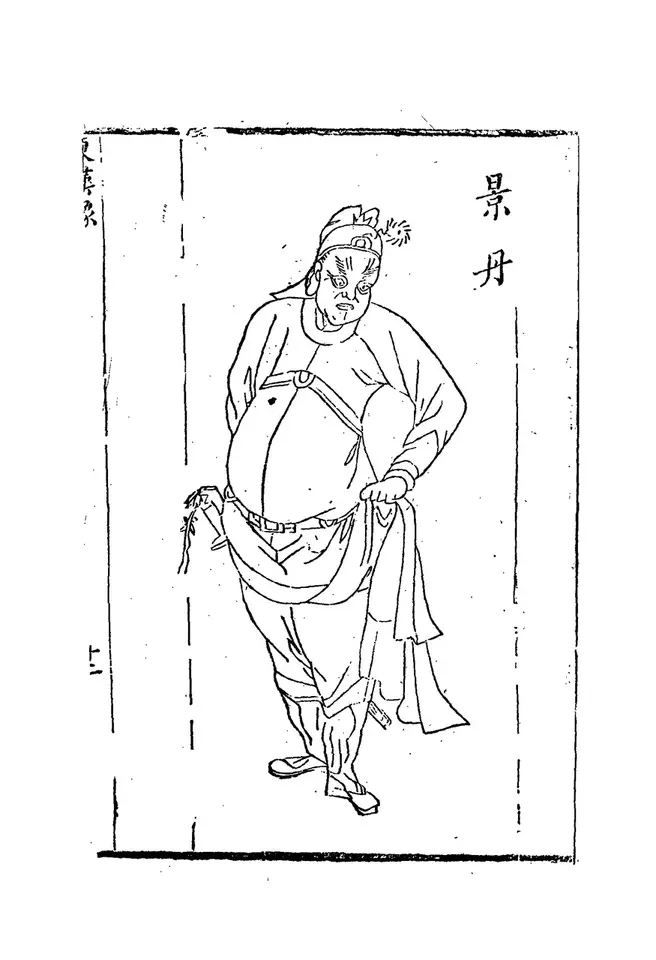
景丹
Jing Dan (景丹, ?–26 CE), courtesy name Sunqing (孙卿), was a native of Yueyang County in Zuo Fenyin (present-day Wutun Subdistrict, Yanliang District, Xi'an, Shaanxi). He was a founding general of the Eastern Han dynasty, ranked tenth among the celebrated Yuntai Twenty-Eight Generals. In his youth, Jing Dan studied in Chang'an, entering civil service under the Xin dynasty through the "Oratory" category of the Four Subjects exam.…
Jing Dan (景丹, ?–26 CE), courtesy name Sunqing (孙卿), was a native of Yueyang County in Zuo Fenyin (present-day Wutun Subdistrict, Yanliang District, Xi'an, Shaanxi). He was a founding general of the Eastern Han dynasty, ranked tenth among the celebrated Yuntai Twenty-Eight Generals. In his youth, Jing Dan studied in Chang'an, entering civil service under the Xin dynasty through the "Oratory" category of the Four Subjects exam. He served as Chancellor of Gude Marquisate and later advanced to Vice Commandant of Shuodiao (Upper Valley/Shanggu Commandery). When the Gengshi regime arose in 23 CE, Jing Dan joined Grand Administrator Geng Kuang in submitting to Emperor Gengshi, remaining as Chief Clerk of Shanggu. In 24 CE, when Wang Lang usurped the imperial title at Handan, Jing Dan joined Geng Kuang and Kou Xun in resolving to support Liu Xiu. Alongside Geng Yan and Kou Xun, he led elite Shanggu shock cavalry south to unite with Yuyang forces, storming through twenty-two counties and joining Liu Xiu at Guang'a, where he was appointed Lieutenant-General and ennobled as Marquis of Fengyi. During the decisive Battle of Nanluan outside Julu, when Han infantry retreated under heavy enemy pressure, Jing Dan spearheaded thousands of elite shock cavalry in a devastating flank charge that crushed Wang Lang's commanders Ni Hong and Liu Feng, prompting Liu Xiu's famous praise: "The shock cavalry are truly the finest troops under heaven!" He subsequently served as a principal commander pursuing insurgent armies across Youzhou. When Emperor Guangwu ascended the throne in 25 CE, the court evaluated candidates for Grand Minister of War, nominating Wu Han and Jing Dan as the premier contenders. Honoring Jing Dan as the "Great General of the Northern Commanderies," Guangwu followed the Western Han precedent of Huo Qubing to commission him as General of Agile Cavalry, a post matching the Three Excellencies in status. In 26 CE, he was ennobled as Marquis of Yueyang with ten thousand households, pacified Aocang to accept the surrender of Liu Mao's hundred thousand troops, and crushed the Five Camp insurgents. When rebel Su Kuang captured Hongnong, Jing Dan accepted appointment as Grand Administrator of Hongnong despite grave illness, passing away in camp after ten days. In 60 CE, his portrait was placed tenth in the Yuntai Gallery.
Studied in Chang'an; passed the Oratory subject exam, served as Chancellor of Gude, and advanced to Vice Commandant of Shuodiao.
Submitted to Emperor Gengshi alongside Geng Kuang, reappointed as Chief Clerk of Shanggu Commandery.
Rejected Wang Lang; marched south with elite shock cavalry, joined Liu Xiu at Guang'a, and became Lieutenant-General.
Smashed Ni Hong's lines with a devastating flank cavalry charge; pursued rebel remnants across Youzhou to Right Beiping.
Ascended the imperial throne; Guangwu followed Huo Qubing's precedent to appoint Jing Dan as General of Agile Cavalry.
Led campaign against Aocang, shattering Liu Mao's rebel forces and accepting the surrender of over one hundred thousand troops.
Reconfirmed as Marquis of Yueyang; urged by Guangwu to accept his home fief; routed the Five Camp rebels in autumn.
Appointed Grand Administrator of Hongnong despite grave illness to pacify the capital corridor; died in camp after ten days.
Jing Dan was born in Yueyang County of Zuo Fenyin, a historic stronghold in the Guanzhong basin. Since Dukes Xian and Xiao of Qin made it their capital, Yueyang had flourished as an economic and cultural center known for its straightforward customs and martial spirit. In his youth, Jing Dan traveled to the Western Han capital of Chang'an to pursue academic training, reading extensively in Confucian classics, history, and statutory codes. Beyond his erudite foundation, he became celebrated across Guanzhong for his persuasive eloquence and sharp diplomatic wit.
When Wang Mang established the Xin dynasty, the government launched the Four Subjects examination system—covering Virtuous Conduct, Oratory, Administrative Competence, and Literary Attainment—to recruit governing talent. Relying on his exceptional rhetorical intellect, Jing Dan qualified under the Oratory category and was dispatched as Chancellor of the Gude Marquisate. In this post, he adjudicated disputes with clarity and efficiency, earning widespread esteem as an energetic civil official. Recognizing his merit, the central court promoted him to Vice Commandant of Shuodiao (serving as deputy to the regional administrator of Shanggu Commandery). Operating along the northern marches, Jing Dan traversed defensive mountain passes, mastered regional topography, and familiarized himself with the military traditions of both Han settlers and Wuhuan nomadic auxiliaries. This tenure enabled him to develop deep expertise in assembling and deploying northern shock cavalry squadrons.
In the ninth month of 23 CE, Wang Mang's Xin regime collapsed, and Emperor Gengshi (Liu Xuan) established his court at Luoyang. Gengshi dispatched envoys across the realm offering to confirm all administrators who surrendered. Jing Dan advised Grand Administrator Geng Kuang to submit to Gengshi, after which he was confirmed as Chief Clerk of Shanggu Commandery. That winter, Liu Xiu crossed the Yellow River under imperial commission as Acting Grand Minister of War to pacify northern regions. Early in 24 CE, an astrologer in Handan named Wang Lang claimed to be Prince Ziyu, son of Emperor Cheng of Han, and declared himself emperor with the backing of regional magnates. Wang Lang issued mobilization decrees demanding that Shanggu and Yuyang furnish frontier shock cavalry to aid his rebellion.
Confronted with Wang Lang's sudden ascent, regional officials were seized with panic. Meanwhile, Liu Xiu fled northward from Ji with only a handful of horsemen after local rebels declared for Wang Lang. When Wang Lang's ultimatum reached Shanggu, Grand Administrator Geng Kuang convened Chief Clerk Jing Dan and Officer of Merit Kou Xun for strategic deliberation. Jing Dan argued persuasively against submitting to Wang Lang, characterizing him as a fraudulent soothsayer doomed to failure. Conversely, he praised Liu Xiu as an upright imperial prince noted for humility and magnanimity, predicting that he would unify the realm. Geng Kuang endorsed this counsel and forged an offensive pact with Grand Administrator Peng Chong and Acting Chief Clerk Wu Han of neighboring Yuyang.
Shanggu and Yuyang mobilized a joint expeditionary corps. Jing Dan, Kou Xun, and Geng Kuang's eldest son Geng Yan took command of two thousand elite Shanggu shock cavalry and one thousand infantry, combining with Yuyang troops to drive south. Sweeping through Zhuo, Zhongshan, Julu, Qinghe, and Hejian commanderies, the northern cavalry cut down over four hundred rebel commanders and captured twenty-two counties. In the spring of 24 CE, the combined forces joined Liu Xiu at Guang'a. Overjoyed at this formidable reinforcement, Liu Xiu proclaimed that he would share grand honors with the northern gentlemen, appointing Jing Dan as Lieutenant-General and ennobling him as Marquis of Fengyi.
The arrival of the northern shock cavalry fundamentally shifted the balance of power. In the third month of 24 CE, Liu Xiu marched to besiege Wang Lang's key fortress of Julu. Because Julu shielded Handan, Wang Lang dispatched senior generals Ni Hong and Liu Feng with tens of thousands of veteran troops to relieve the city. Keeping his siege lines intact, Liu Xiu personally commanded infantry under Tiao Qi and shock cavalry under Jing Dan to confront the relief army at Nanluan. When the battle commenced, Ni Hong's vast formations pressed forward aggressively, forcing Han foot soldiers into a precarious retreat.
At this critical juncture, Lieutenant-General Jing Dan unleashed his two thousand shock cavalry from reserve, sweeping across the battlefield like a thunderbolt to strike Ni Hong's exposed flank. The devastating momentum of the cavalry charge shattered enemy cohesion, turning the rebel line into a chaotic rout. Jing Dan pursued the broken army for more than ten miles, leaving thousands of enemy dead across the plain. Observing the battlefield carnage, Liu Xiu exclaimed: "I had always heard that the northern shock cavalry were the finest troops under heaven; now that I have witnessed them in combat, words cannot describe my delight!" The Han forces pressed forward to invest Handan, capturing the city and beheading Wang Lang in the fifth month.
Following Wang Lang's fall, dozens of peasant insurgent factions including the Tongma, Youlai, and Wufan remained entrenched across Hebei. In the autumn of 24 CE, Liu Xiu defeated their main bodies at Puyang and Shequan. Returning to Ji, Liu Xiu appointed Jing Dan alongside Geng Yan, Wu Han, Gai Yan, and nine other senior commanders to hunt down insurgent remnants in Youzhou. Jing Dan's cavalry engaged the enemy repeatedly at Lunan and Pinggu, decapitating over thirteen thousand fighters and pursuing the remnants through Wuzhong, Tuyen, and Junmi along the Great Wall frontier, completely securing Liu Xiu's northern base.
In the sixth month of 25 CE, Liu Xiu ascended the throne at Hao, founding the Eastern Han dynasty. Initially attempting to appoint Sun Xian as Grand Minister of War based on an apocryphal omen, Guangwu encountered strong discontent among his generals. The emperor instructed the court to nominate suitable candidates, and the ministers unanimously proposed Wu Han and Jing Dan. Evaluating their respective achievements, Guangwu lauded Jing Dan as a brilliant general of the northern border, yet noted that Wu Han had initiated grand strategic policies and eliminated rival commanders Miao Zeng and Xie Gong. Citing Western Han precedents where the General of Agile Cavalry held equal status with the Grand Minister of War, Guangwu commissioned Wu Han as Grand Minister of War and invested Jing Dan as General of Agile Cavalry, elevating him to the pinnacle of ministerial rank.
In the autumn of 25 CE, rebel general Liu Mao gathered over a hundred thousand troops to seize the strategic granary of Aocang along the Yellow River, choking capital food shipments and threatening Luoyang. Emperor Guangwu ordered General of Agile Cavalry Jing Dan, alongside Zhu You and Wang Chang, to mount an immediate counter-offensive. Displaying masterful combined-arms coordination, Jing Dan crushed the rebel army beneath the granary walls, compelling Liu Mao to surrender with his entire host of over one hundred thousand men and safeguarding the capital's lifeline.
In the spring of 26 CE, having established Luoyang as capital, Emperor Guangwu re-evaluated the permanent estates of founding heroes, granting Jing Dan the fief of Marquis of Yueyang with ten thousand households. While other generals aggressively lobbied for fertile domains, Jing Dan demonstrated modesty, requesting an insignificant township instead of his native Yueyang. Emperor Guangwu responded with warm reassurance: "Although kingdoms in Guandong encompass several counties, they do not equal the ten thousand households of Yueyang. As the ancients observed, gaining wealth without returning home is like walking in embroidered robes at night. Yueyang is your hometown, and this feoffment honors your heritage." Deeply moved, Jing Dan bowed in acceptance.
In the autumn of 26 CE, Jing Dan joined Wu Han and Geng Yan in routing the Five Camp insurgents at Xiyang, receiving the surrender of fifty thousand rebels. However, years of relentless campaigning had taken a heavy toll on his health, forcing him to convalesce in Luoyang. In the ninth month, rebel Su Kuang suddenly sacked Hongnong commandery and murdered the local administrator. With rebel vanguards threatening the western approaches to Luoyang, the court fell into alarm. Deeply anxious, Emperor Guangwu summoned the bedridden general during the night, declaring: "The rebels are pressing close to the capital, and we urgently need an illustrious veteran commander. With your profound prestige, even lying on a sickbed in Hongnong will be enough to overawe the commandery!"
Gravely ill though he was, Jing Dan accepted the imperial commission as Grand Administrator of Hongnong and marched west with his division. Reaching the commandery seat, he succumbed to exhaustion and chronic illness, passing away in camp after ten days. Emperor Guangwu was devastated by the loss, granting him funeral honors of the highest order. His noble title was inherited by his son Jing Shang and later transferred to Yuwu. In 60 CE, Emperor Mingdi commissioned portraits of twenty-eight founding heroes for the Yuntai Gallery, placing Jing Dan tenth among the generals of the restoration.
When Wang Lang usurped the throne in Handan, northern China stood on the brink of capitulation. Jing Dan displayed acute geopolitical foresight in Shanggu, orchestrating the alliance with Yuyang and persuading Geng Kuang to commit the frontier cavalry to Liu Xiu.
Leading the charge across twenty-two counties, his northern cavalry wiped out over thirty thousand hostile troops and linked up with Liu Xiu at Guang'a, delivering the decisive mobile strike force that turned the tide of the northern campaigns.
The Battle of Nanluan was the most precarious field engagement of the anti-Wang Lang war. With Han infantry retreating before overwhelming enemy forces, Jing Dan led two thousand shock cavalry into the enemy's exposed flank.
This violent cavalry charge shattered Ni Hong's divisions and produced thousands of enemy casualties, securing the relief of Julu and sealing the fate of Handan, earning Guangwu's immortal praise for the northern shock cavalry.
Following the capture of Handan, vast insurgent armies roamed the northern frontier. Serving as a premier field commander among the thirteen generals, Jing Dan led continuous pursuit operations through Youzhou.
Winning battles at Pinggu and Lunan, he drove insurgent remnants to the borders of Right Beiping and the Great Wall, pacifying the frontier and securing Eastern Han's northern theater.
In 25 CE, when Liu Mao seized the national granary at Aocang, Jing Dan directed offensive operations that smashed the rebel lines and secured the surrender of more than one hundred thousand troops.
This victory restored the imperial grain supply lines and eliminated the foremost strategic menace facing the new capital of Luoyang.
When Su Kuang's rebellion imperiled the western gate of the capital, Jing Dan accepted imperial orders to take command of Hongnong despite fatal illness.
Demonstrating the highest devotion to state duty, he served until his final breath, passing away in camp ten days after arrival. His selfless martyrdom established him as an enduring paragon of military loyalty in Chinese history.
FIGURES ASSOCIATED WITH THIS DYNASTY