Steppe Birth
Born in the Xiongnu royal court, son of Hulugu Chanyu; later created Wise Prince of the Left Guli.
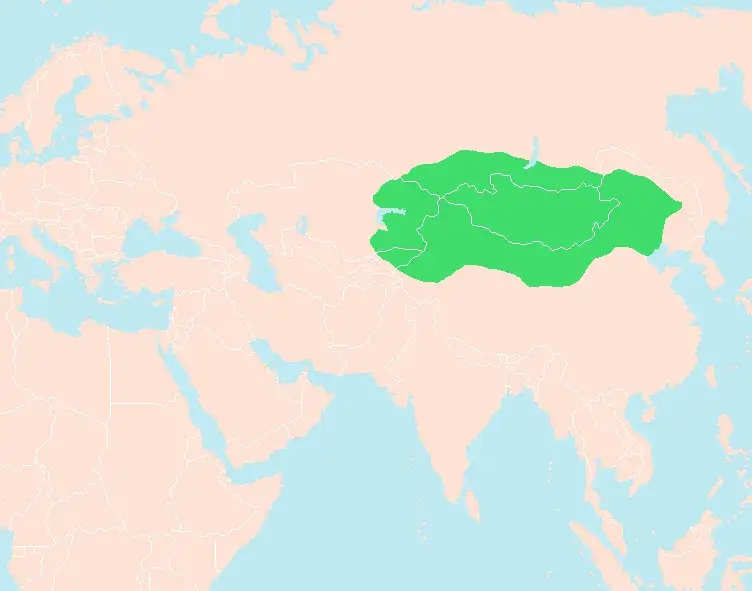
85 BCE–68 BCE
壶衍鞮单于
Huyandi (c. 110 BC – 68 BC), historically designated as Huyandi Chanyu (壶衍鞮单于), was the supreme ruler of the nomadic Xiongnu Confederation during the mid Western Han dynasty, spanning the reigns of Emperors Zhao and Xuan. He was a son of Hulugu Chanyu. In 85 BC, as Hulugu lay dying, he intended to bequeath the supreme seat to his experienced brother, the Wise Prince of the Right Guli. However, powerful minister Wei Lü and…
Huyandi (c. 110 BC – 68 BC), historically designated as Huyandi Chanyu (壶衍鞮单于), was the supreme ruler of the nomadic Xiongnu Confederation during the mid Western Han dynasty, spanning the reigns of Emperors Zhao and Xuan. He was a son of Hulugu Chanyu. In 85 BC, as Hulugu lay dying, he intended to bequeath the supreme seat to his experienced brother, the Wise Prince of the Right Guli. However, powerful minister Wei Lü and Empress Dowager Zhuanqu conspired to conceal the ruler's death, forged an imperial testament, and illicitly enthroned young Huyandi, who was then Wise Prince of the Left Guli. This illegitimate succession fractured the confederation, prompting the Wise Prince of the Left and Wise Prince of the Right Guli to break away from the royal court with their clans. Beset by domestic fragmentation and imperial Han pressure, Huyandi initially attempted to stabilize his regime by floating tentative proposals for peace treaties. Nevertheless, frontier raids persisted, prompting Han General Zhao Chongguo to repulse nomadic forces and capture royal leaders. In the winter of 72 BC, enraged by the pro-Han allegiance of the Western Regions kingdom of Wusun, Huyandi personally commanded a punitive expedition of nearly one hundred thousand cavalry through the northern slopes of the Borohoro Mountains. While the initial invasion inflicted severe damage on Wusun, the returning nomadic host was engulfed by an apocalyptic blizzard that froze tens of thousands of warriors and vast herds of livestock. Seizing upon this catastrophe, Han armies launched a five-pronged counteroffensive, while surrounding nomadic peoples—including the Wusun, Dingling, and Wuhuan—assailed the Xiongnu on all fronts. Huyandi died of grief and illness in 68 BC, leaving behind a fatally weakened confederation that rapidly dissolved into the great civil war between Huhanye and Zhizhi.
Born in the Xiongnu royal court, son of Hulugu Chanyu; later created Wise Prince of the Left Guli.
Wei Lü and Zhuanqu Yanzhi forged the royal testament to install Huyandi; princes broke away.
Dispatched emissaries to hint at marriage alliances to ease internal and external pressures.
Led one hundred thousand horsemen west against Wusun; catastrophic blizzards destroyed the army on return.
Han forces struck alongside Wusun, Dingling, and Wuhuan, decimating nomadic population and herds.
Passed away after a seventeen-year reign; succeeded by his younger brother Xulüquanqu.
Huyandi was born around 110 BC on the Mongolian Plateau as a son of Hulugu Chanyu. During his youth, he was invested as the Wise Prince of the Left Guli, controlling pasturelands in the eastern territories. In 85 BC, Hulugu fell mortally ill. Recognizing the severe crises facing the steppe, Hulugu designated his mature brother, the Wise Prince of the Right Guli, as heir apparent. However, court grandee Wei Lü and Chief Empress Zhuanqu Yanzhi conspired to monopolize state authority. Concealing Hulugu's demise, they produced a forged testament declaring young Huyandi supreme sovereign. This usurpation outraged senior royal princes; the Wise Prince of the Left and the Wise Prince of the Right Guli seceded with their tribal confederates, refusing to attend the annual royal assemblies at Longcheng.
Ascending the throne amidst profound internal division and the towering shadow of Western Han military might, Huyandi pursued a cautious dual track. Through diplomatic envoys, he repeatedly dropped private hints to Han border officials expressing an interest in renewing marital alliances and peaceful trade. Concurrently, predatory steppe factions continued periodic border incursions. Han imperial defenses remained impenetrable: veteran commander Zhao Chongguo executed brilliant counter-strikes, routing nomadic raiders and capturing senior officers including King Puyin. Thwarted along the northern frontier, the Chanyu turned his military ambitions westward toward Central Asia.
In the 70s BC, the Kingdom of Wusun deepened its strategic alliance with Western Han, accepting imperial princesses and harassing Xiongnu outposts in the Western Regions. In the winter of 72 BC, determined to punish Wusun defection, Huyandi personally mobilized a colossal force of nearly one hundred thousand elite cavalry from both the eastern and western wings. The nomadic army crossed the Borohoro Mountains, ravaging Wusun settlements and capturing substantial herds. However, during the homeward trek across the Dzungarian Basin, an unprecedented arctic blizzard struck the mountains. Temperatures plummeted, burying the trails in ten feet of snow. Over sixty percent of the soldiers and nearly all horses froze to death, breaking the military spine of the confederation.
Capitalizing on the calamity, Emperor Xuan deployed five massive army corps commanded by Tian Guangming, Fan Mingyou, and allied generals, while Wusun cavalry struck from the west. Simultaneously, subordinate nomadic nations exploited Xiongnu weakness: the Dingling invaded from the north and the Wuhuan struck from the east. The confederation lost tens of thousands of warriors and hundreds of thousands of livestock, with one-third of the remaining populace dying of subsequent famine. In 68 BC, overwhelmed by military disasters, famine, and internal mutiny, Huyandi died of illness in the northern court at age forty-two. He was succeeded by his younger brother Xulüquanqu.
Huyandi Chanyu's seventeen-year reign marked the irreversible collapse of the early Xiongnu Empire. The internal illegitimacy spawned by Wei Lü's forged succession poisoned tribal cohesion, while the disastrous winter retreat from Wusun permanently wiped out the core cavalry forces accumulated since the Mobei campaigns. This military paralysis dismantled the nomad tributary network across inner Asia, setting the stage for the formal submission of the Southern Xiongnu to Western Han during the reign of Emperor Xuan.
FIGURES ASSOCIATED WITH THIS DYNASTY