Birth in Bohai
Born in the Bohai Principality to Prince Liu Hong and Lady Chen, demonstrating precocious intellect.
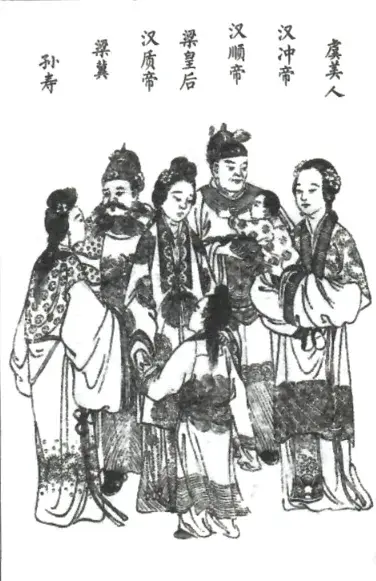
145 CE–146 CE
刘缵
Liu Zuan (刘缵, 138 CE – July 26, 146 CE), historically known as Emperor Zhi of Han (汉质帝), was the tenth monarch of the Eastern Han dynasty, reigning from 145 CE until his assassination in 146 CE. Born into the princely lineage of Bohai as the son of Prince Xiao Liu Hong, he was recognized from early childhood for his remarkable discernment, precocious composure, and sharpness of mind among the imperial clansmen. In early 145…
Liu Zuan (刘缵, 138 CE – July 26, 146 CE), historically known as Emperor Zhi of Han (汉质帝), was the tenth monarch of the Eastern Han dynasty, reigning from 145 CE until his assassination in 146 CE. Born into the princely lineage of Bohai as the son of Prince Xiao Liu Hong, he was recognized from early childhood for his remarkable discernment, precocious composure, and sharpness of mind among the imperial clansmen. In early 145 CE, following the premature death of the two-year-old child Emperor Chong without heirs, the tyrannical Grand General Liang Ji seized political control. Seeking an easily manipulated figurehead to perpetuate his clan's grip on the imperial court, Liang Ji rejected senior minister Li Gu's proposal to enthrone the mature and capable Prince of Qinghe. Instead, Liang Ji conspired with Empress Dowager Liang to summon the eight-year-old Liu Zuan to Luoyang, ennobling him as Marquis of Jianping before installing him on the imperial throne. Despite his extreme youth, Emperor Zhi exhibited extraordinary political awareness and solemn dignity during state audiences. Distressed by Liang Ji's unchecked arrogance, the young emperor famously rebuked him in open court, identifying him as the arrogant and tyrannical general. Terrified by the boy's sharpness and anticipating vengeance upon his coming of age, Liang Ji ordered poisoned pastries fed to the young sovereign, murdering him at age nine. Liu Zuan was posthumously honored as Emperor Xiaozhi and entombed at Jingling.
Born in the Bohai Principality to Prince Liu Hong and Lady Chen, demonstrating precocious intellect.
Following Emperor Chong's fatal illness, Liang Ji summoned Liu Zuan to Luoyang and created him Marquis of Jianping.
Following Chong's demise, Liang Ji and Empress Dowager Liang enthroned eight-year-old Liu Zuan as emperor.
Empress Dowager Liang assumed court regency while Grand Commandant Li Gu was entrusted with executive governance.
Issued edicts opening imperial granaries to succor famine victims, bury exposed remains, and pacify rebels.
Rebel chieftains Xu Feng and Zhang Ying in the Jianghuai region were vanquished and pacified by loyalist commanders.
Renamed era to Benchu and mandated noble youths enroll in the Imperial Academy, swelling enrollment to thirty thousand scholars.
Publicly rebuked Liang Ji as the arrogant and domineering general during a full imperial court assembly.
Liang Ji orchestrated his poisoning via boiled pastries; Liu Zuan expired in the Yutang Front Palace aged nine.
Honored with the posthumous title Emperor Xiaozhi and buried in the Jingling Mausoleum south of Luoyang.
Liu Zuan was born in 138 CE in the Bohai Principality during the reign of Emperor Shun. His father was Liu Hong, Prince Xiao of Bohai, and his mother was Lady Chen. As a great-great-grandson of Emperor Zhang through Prince Kang of Qiancheng and Prince Chong of Le'an, Liu Zuan represented an honorable branch of the imperial Liu clan. Due to frequent premature deaths of Eastern Han emperors without direct adult male heirs, provincial branches often provided candidates for imperial succession. Raised under strict princely discipline, Liu Zuan earned widespread acclaim for his natural brilliance, modesty, and acute perception.
Following the death of Emperor Shun, his two-year-old infant son Emperor Chong was placed on the throne while Empress Dowager Liang held court and her brother, Grand General Liang Ji, monopolized administrative and military power. When Emperor Chong fell mortally ill within months of his accession, Liang Ji grew anxious that an experienced adult ruler would dismantle his family's hegemony. In the first month of 145 CE, Liang Ji dispatched imperial emissaries to summon eight-year-old Liu Zuan from Bohai to the capital's suburbs under armed escort.
On the twenty-fifth day of the first month of 145 CE, the toddler Emperor Chong passed away in the Yutang Front Palace. Grand Commandant Li Gu, Minister over the Masses Hu Guang, and Minister of Works Zhao Jie submitted a joint memorial urging the appointment of the adult, virtuous, and capable Prince of Qinghe, Liu Suan, to stabilize the dynasty. However, Liang Ji feared an intelligent adult monarch whom he could neither control nor intimidate, insisting on placing a vulnerable minor upon the throne.
Disregarding the counsel of the highest imperial ministers, Liang Ji secretly plotted with his sister, Empress Dowager Liang, in the inner palace. On the following day, imperial edicts bestowed upon Liu Zuan the title Marquis of Jianping with an estate of four thousand households. That very afternoon, Liang Ji convened the ministers and enthroned the eight-year-old prince as emperor, known to posterity as Emperor Zhi. An imperial amnesty was declared, while actual authority remained entrenched in the hands of the Liang clan.
Following the enthronement, Empress Dowager Liang authorized Grand Commandant Li Gu to participate in managing the Imperial Secretariat. Li Gu, an incorruptible and revered scholar-official, immediately dismissed hundreds of venal eunuchs and recommended illustrious Confucian scholars to bureaucratic posts, temporarily revitalizing central administration. However, Liang Ji viewed Li Gu's growing prestige and moral authority with intense jealousy and suspicion, constantly undermining his reformative initiatives.
Despite his tender age of eight, Emperor Zhi demonstrated impressive poise and understanding of state rituals. During court audiences, he sat upright upon the imperial throne, observing ceremonial protocols and listening attentively to official reports. The boy quickly perceived Liang Ji's overbearing conduct, weapon-bearing privileges, and haughty demeanor towards court dignitaries. Rather than remaining indifferent, the intelligent young sovereign repeatedly questioned junior attendants regarding ministerial responsibilities, causing Liang Ji acute apprehension.
In the spring of 146 CE, the imperial era was altered to Benchu. The court issued decrees encouraging classical learning and compelling noble scions to attend the Imperial Academy, drawing more than thirty thousand students to Luoyang. During one morning assembly, civil and military officials stood in reverent rows while Liang Ji swaggered through the grand hall with unrestrained arrogance. Emperor Zhi stared fixedly at the powerful warlord from the dragon throne before declaring aloud to the assembly: "This is indeed the arrogant and tyrannical general!"
This public condemnation fell like a thunderbolt upon the court, leaving ministers paralyzed with astonishment and Liang Ji drenching in cold sweat from fury and fear. Following the audience, Liang Ji realized that such a perceptive and spirited monarch would inevitably exterminate the Liang clan upon reaching adulthood. Deciding on regicide, Liang Ji bribed trusted personal attendants inside the imperial sleeping quarters to lace the young emperor's customary lunch pastry with virulent poison.
On the Jia-Shen day of the leap sixth month, Emperor Zhi ingested the poisoned pastry in the Yutang Front Palace and was instantly stricken with excruciating abdominal agony. Summoned to the imperial bedside, Grand Commandant Li Gu wept bitterly while holding the writhing sovereign. The dying child gasped faintly: "I ate the pastry and my insides burn like fire; if I could only drink cold water, I might yet survive!" Liang Ji, standing nearby, barked harshly that drinking water would induce pestilential chills, barring anyone from offering relief. Emperor Zhi perished moments later at age nine, and was entombed at Jingling.
During Emperor Zhi's brief reign, extensive peasant uprisings erupted across the Jianghuai basin. In early 145 CE, rebel chieftain Zhang Ying led thousands of dispossessed peasants in attacking Guangling, Jiangdu, and Tangyi, while brigand leader Xu Feng sacked county seats and executed local officials in Jiujiang. Grand Commandant Li Gu devised a dual strategy of military suppression combined with generous clemency for forced recruits, which the court formally adopted.
Under imperial directives, local loyalist commanders mobilized local forces, while Xie An of Xiapi ambushed and decapitated Xu Feng. Meanwhile, upright Governor Zhang Gang of Guangling bravely rode unescorted into Zhang Ying's encampment, successfully persuading tens of thousands of rebels to lay down their weapons and return to agriculture. In the fifth month, government forces eliminated pseudo-monarch Ma Mian in Liyang, hanging his counterfeit seal upon the city gates of Luoyang and restoring regional tranquility.
Emperor Zhi's administration enacted benevolent policies to relieve widespread destitution caused by warfare, Qiang border raids, and natural droughts. Empress Dowager Liang and Li Gu coordinated relief initiatives, culminating in imperial decrees promulgated in the fifth month of 145 CE instructing regional commanderies to support impoverished widows, orphans, and destitute families.
Local granaries were opened to distribute grain rations, and afflicted agricultural households were exempted from land taxes and compulsory labor duties. Distressed by reports of unburied corpses strewn across battlefields and drought-stricken provinces, Emperor Zhi dispatched special commissioners with imperial tallies to bury exposed human remains at treasury expense, winning deep admiration from the common populace.
In early 146 CE, Emperor Zhi and his counselors undertook measures to revive Confucian scholastic discipline among the ruling elite. Distressed by the decadent and superficial lifestyle prevalent among aristocratic youths, the throne decreed that sons and brothers of high ministers, down to officials earning six hundred bushels, must enroll in the Imperial Academy to master the Confucian classics.
The court revived ancient ceremonial banquets and archery rites, establishing annual royal visits to evaluate scholastic achievements. Attracted by these institutional patronages, scholars and wandering students converged upon the capital, expanding the Imperial Academy's population to over thirty thousand scholars and nurturing a tradition of moral criticism among Eastern Han literati.
Emperor Zhi is immortalized in Chinese history for his fearless denunciation of Grand General Liang Ji as the arrogant and tyrannical general. At that historical juncture, the Liang consort clan controlled all military and administrative levers, executing critics without trial and treating the imperial palace as their private domain. Ministers and princes cowered in terror, offering obsequious deference to avoid destruction.
The nine-year-old sovereign broke this silence of terror. By openly rebuking the supreme warlord before the civil and military elite, Liu Zuan unmasked the despot's illegitimacy with royal dignity. This historic confrontation exposed the mortal conflict between sovereign authority and consort hegemony, permanently engraving Liang Ji's infamy in Chinese political lexicon.
The succession dispute triggered by Emperor Zhi's untimely murder demonstrated the devastating impact of his assassination upon Eastern Han dynastic fortunes. Following the sovereign's death, Grand Commandant Li Gu wept openly over the corpse and openly confronted Liang Ji regarding the sudden demise. During deliberations over the new sovereign, Li Gu and fellow grand councilors pleaded with Liang Ji to emulate the Duke of Zhou and Huo Guang by selecting the experienced Prince of Qinghe, Liu Suan.
Bent on preserving absolute power, Liang Ji rejected ministerial recommendations and colluded with senior eunuchs like Cao Teng to slander and eliminate Liu Suan. Instead, Liang Ji placed fifteen-year-old Liu Zhi, Marquis of Liwu, on the throne as Emperor Huan. Shortly after his accession, Liang Ji fabricated treason charges against Li Gu, executing the loyal minister and his sons. This catastrophe plunged the dynasty into decades of bloody palace feuds, marking Emperor Zhi's death as the pivotal watershed leading toward Eastern Han's decline.
Emperor Zhi Liu Zuan is remembered as a tragic yet extraordinary child emperor whose fearless moral clarity and early martyrdom under despotic consort rule evoked profound sorrow and praise across imperial Chinese history.
Fan Ye, Southern Song dynasty historian, recorded in the Book of the Later Han: "Emperor Zhi inherited the sacred vessel in early childhood yet possessed extraordinary perception. Witnessing Grand General Liang Ji's lawless insolence, he uttered the condemnation of the arrogant and tyrannical general with commanding eloquence. Though poisoned shortly thereafter, his natural wisdom and majestic dignity terrified traitors and inspired subsequent generations."
Sima Guang, Northern Song dynasty historian, noted in the Comprehensive Mirror for Aid in Governance: "Though a mere child, Emperor Zhi discerned Liang Ji's unbounded hubris and denounced him as arrogant, demonstrating true insight into human character. How could an eight-year-old child confront such an entrenched villain without consummate inborn genius? It is profoundly tragic that the consort clan held such tyrannical sway, leaving the throne unprotected and leading to the fatal tragedy in the imperial bedchamber."
Modern historians recognize Emperor Zhi not only for giving Chinese literature the indelible phrase "arrogant and tyrannical general," but also as the quintessential martyr of the Eastern Han dynasty's structural downfall under the suffocating grip of consort and eunuch oligarchies.
FIGURES ASSOCIATED WITH THIS DYNASTY