Birth in Taiyuan
Born into an impoverished household in Jiexiu County, Taiyuan Commandery.
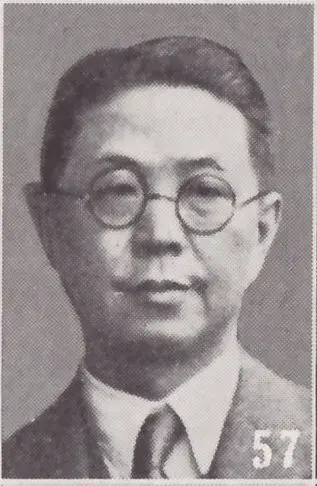
郭泰
Guo Tai (128–169), courtesy name Linzong (recorded as Guo Tai in Fan Ye's Book of the Later Han to observe naming taboos), was a native of Jiexiu County, Taiyuan Commandery (modern Jiexiu, Shanxi Province). He was a paramount Confucian master, supreme intellectual arbiter, and spiritual leader of the Imperial Academy (Taixue) during the mid-to-late Eastern Han dynasty. Celebrated alongside ancient worthy Jie Zhitui and Song…
Guo Tai (128–169), courtesy name Linzong (recorded as Guo Tai in Fan Ye's Book of the Later Han to observe naming taboos), was a native of Jiexiu County, Taiyuan Commandery (modern Jiexiu, Shanxi Province). He was a paramount Confucian master, supreme intellectual arbiter, and spiritual leader of the Imperial Academy (Taixue) during the mid-to-late Eastern Han dynasty. Celebrated alongside ancient worthy Jie Zhitui and Song Dynasty Chancellor Wen Yanbo as one of the "Three Worthies of Jiexiu," he was also paired with Xu Shao as the pinnacle of character evaluation ("Xu-Guo"). Raised in acute poverty following his father's early death, Guo Tai studied under Qu Boyan in Chenggao, mastering the classics and cultivating commanding eloquence. Standing eight Chinese feet tall with an imposing physical presence, he traveled across the provinces in scholar's robes. During his stay in Luoyang, his meeting with Henan Intendant Li Ying led to an intimate friendship; their joint voyage across the Yellow River drew thousands of admiring scholars to the banks in the legendary episode "Li and Guo in the Same Boat." Revering him as their supreme guide, thirty thousand imperial academy students looked to him as the leader of pure criticism (qingyi). Summoned by Minister of Education Huang Qiong and recommended by Minister of Ceremonies Zhao Dian under the category of "Possessing the Dao" (Youdao), Guo Tai discerned the irreversible decline of the Han dynasty and steadfastly refused all public office, earning the lifelong title "Master Guo Youdao." During the brutal first Disaster of the Partisan Prohibitions (166), Guo Tai avoided execution because his character evaluations were instructive rather than seditious. Retiring to his hometown, he opened an academy that instructed over a thousand disciples, cultivating more than sixty eminent scholars. In 168, upon hearing of the murder of Grand Tutor Chen Fan and General-in-Chief Dou Wu by corrupt eunuchs, Guo Tai fell into profound grief and passed away the following year at age forty-two. Over ten thousand scholars assembled for his funeral, and Cai Yong composed his famous funerary stele, declaring that of all the epitaphs he had ever composed, only Guo Linzong's caused him no shame.
Born into an impoverished household in Jiexiu County, Taiyuan Commandery.
Orphaned early; declined his mother's suggestion to serve as a menial county runner, resolving to pursue classical scholarship.
Traveled to Chenggao to study under master Qu Boyan, spending three years mastering the ancient canon.
Introduced to Li Ying in Luoyang; their shared boat crossing drew universal admiration, establishing him as leader of the Imperial Academy.
Recommended as Possessing the Dao by Zhao Dian; declined all summons, predicting the collapse of dynastic fortune.
Succeeded in avoiding arrest during the First Disaster of Partisan Prohibitions; retired to teach over a thousand disciples.
Mourned bitterly upon learning that Chen Fan and Dou Wu had been slain by court eunuchs, coughing blood in despair.
Passed away at his home in Jiexiu at age forty-two; Cai Yong composed his stele as ten thousand scholars attended his burial.
Guo Tai was born into a humble, impoverished family in Jiexiu. Losing his father at a young age, he lived in destitution with his mother. As he grew, his mother suggested that he seek a low-level clerkship in the local county yamen to earn rations. Guo Tai politely declined, asserting: "How could a noble man spend his life performing menial servitude for local officials?" Resolute in his ambition to study classical statecraft, he took leave of his mother.
He traveled on foot to Chenggao to study under the renowned scholar Qu Boyan. Over three years of relentless devotion, Guo Tai mastered the Confucian Five Classics, historical records, and philosophical treatises. He possessed a resonant, melodic voice and brilliant oratorical precision, presenting intricate philosophical points with compelling clarity.
Reaching physical maturity, Guo Tai measured eight Chinese feet tall, possessing a commanding physical presence and dignified posture. Clad in loose scholars' robes and wide cloth sashes, he traveled throughout the commanderies, studying local mores and mentoring promising youths with gentle warmth.
During the Yanxi era of Emperor Huan, Guo Tai journeyed to the imperial capital of Luoyang. Because he was an untitled commoner from a distant northern commandery, high officials at court initially took little notice of him. However, the prominent scholar Fu Rong encountered Guo Tai and was stunned by his penetrating intellect, praising him as an extraordinary talent endowed with harmonious virtue and profound insight. Fu Rong introduced him to Henan Intendant Li Ying, whom the scholars of the capital hailed as the supreme moral paragon of the age.
Upon conversing with Guo Tai, Li Ying was astonished, declaring: "I have observed many scholars in my lifetime, but none equal Guo Linzong. His intellect is lucid and comprehensive, his virtue profound and pure; in all of China today, his peer can scarcely be found!" Li Ying treated the young commoner as his closest companion, and Guo Tai's reputation spread throughout the imperial capital.
When Guo Tai prepared to return north after his studies, thousands of court officials, renowned scholars, and Imperial Academy students assembled along the banks of the Yellow River in thousands of carriages to bid him farewell. In full view of the assembly, Guo Tai boarded a single pleasure boat alongside Li Ying to cross the waters. Watching the two intellectual giants standing side by side at the prow, the crowds felt as though they were gazing upon celestial beings, giving rise to the famous cultural phrase "Li and Guo in the Same Boat." From that juncture forward, the thirty thousand students of the Imperial Academy recognized Guo Tai as their undisputed moral and spiritual leader.
Observing his immense prestige, Minister of Education Huang Qiong invited him to join his cabinet, and Minister of Ceremonies Zhao Dian formally nominated him as "Possessing the Dao." Yet Guo Tai foresaw dynastic collapse: "I observe the celestial constellations by night and examine human affairs by day; heaven has decreed the abandonment of this house, and human effort cannot preserve it." He declined all appointments, living as a private scholar known to history as "Guo Youdao."
When scholars asked the fearless partisan leader Fan Pang to evaluate Guo Tai, Fan Pang replied with veneration: "In retirement, he is like Jie Zhitui in never disobeying his mother; in public conduct, he is like Liuxia Hui in maintaining purity without aloof eccentricity. The Son of Heaven cannot make him his minister, nor can feudal lords make him their companion. Beyond this, his virtue is beyond my comprehension." Following his mother's death, Guo Tai observed classical mourning rites with profound filial piety.
In 166, Guo Tai returned to the Imperial Academy. Enraged by the rampant corruption, extortion, and sale of offices perpetrated by palace eunuchs like Cao Jie and Wang Fu, Guo Tai collaborated with Jia Biao to organize the students. They formulated concise, rhythmic couplets to praise incorruptible ministers and censure corrupt courtiers, inaugurating the widespread culture of "pure criticism" (qingyi). Fear of student denunciation was so intense that many corrupt grandees dared not visit the academy precincts.
Despite leading intellectual dissent, Guo Tai possessed extraordinary prudence and compassion. In evaluating individuals, he focused on moral encouragement rather than inflammatory attacks. A student named Zuo Yuan had been expelled from the academy for a legal infraction, leaving him ostracized and bitter. Encountering Zuo Yuan on the road, Guo Tai invited him to a lavish meal and cited the historical examples of ancient figures who reformed past transgressions to become great ministers, urging him to reflect on his actions rather than surrender to malice.
When purists criticized Guo Tai for associating with an expelled wrongdoer, Guo Tai remarked: "To treat flawed men with excessive ruthlessness is merely to drive them into deeper wickedness." Later, Zuo Yuan plotted with bandits to seek violent revenge against the academy; yet upon entering and discovering Guo Tai lecturing in the main hall, he was overcome with remorse over his mentor's kindness and disbanded the gang. When the plot was revealed, the scholars marveled at Guo Tai's moral foresight.
In the autumn of 166, the First Disaster of Partisan Prohibitions erupted, resulting in the imprisonment of Li Ying, Du Mi, and over two hundred scholars. Because Guo Tai had consistently focused on educational benevolence rather than treasonous conspiracy, the eunuch faction could find no pretext to arrest him, allowing him and Yuan Lang to emerge unscathed.
Following the partisan crisis, Guo Tai retired to Jiexiu, establishing an academy where he taught classical literature and moral philosophy. Students traveled thousands of li to attend his lectures, with enrollments consistently exceeding one thousand. Throughout his teaching career, Guo Tai discovered and nurtured more than sixty brilliant minds who subsequently attained historical renown, including Huang Xian and Li Xun.
In 168, Emperor Ling ascended the throne. Grand Tutor Chen Fan and General-in-Chief Dou Wu executed a coordinated coup to eliminate the eunuchs, but the plot was leaked, leading to the murder of the leaders and the slaughter of hundreds of scholars. Upon learning of the tragedy, Guo Tai wept uncontrollably, lamenting: "When the pillars of state collapse, where can the empire find refuge?" His intense sorrow aggravated a latent chest ailment.
In the first month of 169, Guo Tai passed away at his residence in Jiexiu at the age of forty-two. Over ten thousand scholars, officials, and disciples from across the empire journeyed on foot and in carts to attend his funeral. Disciples gathered funds to erect a towering memorial stone, commissioning Cai Yong to compose the inscription. After finishing the text, Cai Yong remarked to Lu Zhi: "I have composed countless epitaphs for noble lords, yet I always felt a twinge of shame for excessive praise; only in composing the stele for Guo Youdao do I feel completely free of guilt!" Later, Emperor Wen of Wei honored Guo Tai among the Twenty-Four Sages, and Emperor Wu of Northern Zhou issued an imperial decree explicitly preserving Guo Tai's stele while destroying all other private monuments.
Guo Tai elevated the social and political status of the Chinese scholar-gentry to unprecedented heights. By uniting thirty thousand students behind pure criticism and moral rectitude, he demonstrated that intellectual authority could counterbalance autocratic corruption. His shared voyage with Li Ying remains an immortal cultural symbol of scholar-gentry dignity.
Guo Tai was universally acknowledged as one of China's greatest masters of character evaluation. Disdaining superficial rhetoric, he evaluated individuals based on internal moral fiber, philosophical temperament, and potential for growth. His pedagogical mercy in reforming troubled youths like Zuo Yuan reflected the highest Confucian ideal of transforming human nature through benevolence.
Amidst the violent purges of the late Eastern Han dynasty, Guo Tai embodied the Daoist-Confucian principle of knowing when to withdraw. By avoiding political entrapment and establishing an extensive academy, he preserved the intellectual seeds of classical Confucianism during a time of systemic catastrophe, ensuring the transmission of cultural knowledge to the next generation.
Guo Tai's cultural influence extended even to sartorial aesthetics. During his travels in Chen and Liang, a sudden cloudburst soaked his headdress, causing one corner of his cloth cap to fold downward. Fascinated by his effortless elegance, scholars and citizens throughout the realm deliberately folded the corner of their headwear, creating the widespread fashion known as the "Linzong Cap" (Linzong Jin).
FIGURES ASSOCIATED WITH THIS DYNASTY