Steppe Birth
Born in the Xiongnu Chanyu court, eldest son of Huhanye Chanyu; later created Wise Prince of the Left.
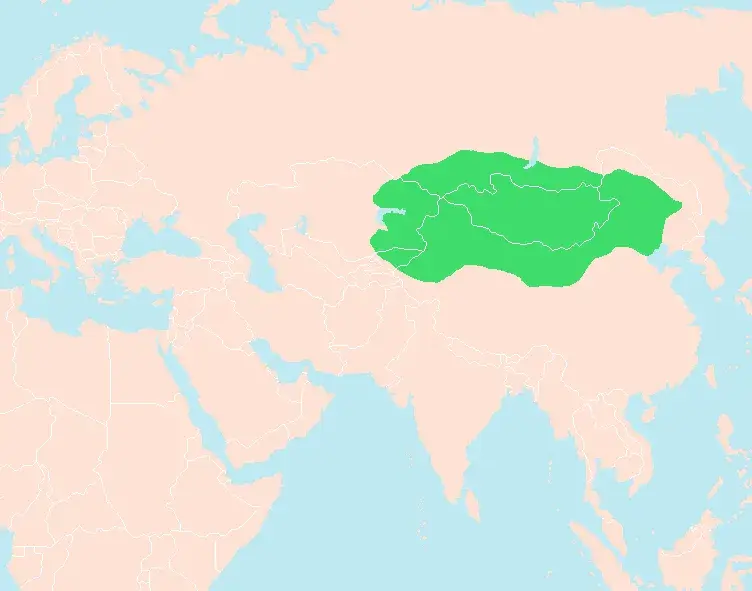
31 BCE–20 BCE
雕陶莫皋
Diao Tao Mo Gao (c. 58 BC – 20 BC), formally known as Fuzhulei Ruodi Chanyu (复株累若鞮单于), was the supreme ruler of the Xiongnu Confederation during the reign of Emperor Cheng of Han. He was the eldest son of Huhanye Chanyu and the Great Yanzhi (daughter of King Huyan). In 31 BC, as Huhanye lay dying, he designated Diao Tao Mo Gao as his successor under a sacred covenant that royal power must subsequently pass laterally to his…
Diao Tao Mo Gao (c. 58 BC – 20 BC), formally known as Fuzhulei Ruodi Chanyu (复株累若鞮单于), was the supreme ruler of the Xiongnu Confederation during the reign of Emperor Cheng of Han. He was the eldest son of Huhanye Chanyu and the Great Yanzhi (daughter of King Huyan). In 31 BC, as Huhanye lay dying, he designated Diao Tao Mo Gao as his successor under a sacred covenant that royal power must subsequently pass laterally to his younger brothers to preserve dynastic stability. Upon accession, he took the regal title Fuzhulei Ruodi; the Xiongnu term "Ruodi" translated to "filial," inaugurating the institutional custom whereby all subsequent Chanyus appended this epithet to signify filial devotion to their ancestors and feudal loyalty to the Han emperor. In accordance with nomadic levirate custom, Fuzhulei petitioned the Han court and remarried his father's royal consort Wang Zhaojun (the Ninghu Yanzhi). The royal couple lived in great harmony, rearing two daughters, Princess Xubu and Princess Dangyu, who later played prominent roles in bilateral diplomacy. Throughout his eleven-year reign, Fuzhulei faithfully upheld his father's grand strategy of tributary alliance with Western Han. He prohibited border raids and fully opened frontier markets, creating an unprecedented golden age across the northern borders described in historical annals as an era when "gates remained closed in tranquility, livestock covered the wild plains, and for three generations no barking dogs sounded alarms." Furthermore, he cultivated warm diplomatic relations with the thirty-six kingdoms of the Western Regions. In 20 BC, honoring his solemn oath, he bequeathed the throne to his brother Qimixu (Souxie Ruodi Chanyu) before passing away at under forty years of age.
Born in the Xiongnu Chanyu court, eldest son of Huhanye Chanyu; later created Wise Prince of the Left.
Huhanye died; Diao Tao Mo Gao swore the fraternal succession oath and ascended the throne.
Remarried Wang Zhaojun under steppe levirate custom, subsequently fathering two princesses.
Prohibited cross-border raiding, promoting thriving commerce along the Great Wall frontier.
Maintained peaceful embassies with Wusun, Dayuan, and Kangju, securing the Silk Road.
Transferred the crown to younger brother Qimixu and died of illness at under forty.
Diao Tao Mo Gao was born around 58 BC on the Mongolian Plateau into the ruling Luandi house, the eldest son of Huhanye Chanyu. Prior to his accession, he governed the eastern tribes as Wise Prince of the Left. In 31 BC, Emperor Xuan's loyal vassal Huhanye Chanyu fell mortally ill. To prevent succession wars, Huhanye bound his sons in a solemn pact that the throne must rotate among brothers. Following his father's death, Diao Tao Mo Gao was enthroned as Fuzhulei Ruodi Chanyu. The designation "Ruodi," meaning "filial" in the steppe language, was intentionally modeled after the Han imperial convention of posthumous titles, underscoring nomadic commitment to peaceful vassalage under the Han dynasty.
Upon ascending the throne, Fuzhulei adhered to traditional steppe levirate custom by petitioning Emperor Cheng for permission to marry his late father's imperial consort, Wang Zhaojun. Respecting nomadic domestic practices, Emperor Cheng issued an imperial edict counseling Zhaojun to conform to local customs. The sovereign and Ninghu Yanzhi married and lived in mutual devotion, producing two daughters, Princess Xubu and Princess Dangyu. In the royal encampment, Wang Zhaojun actively introduced Chinese agricultural knowledge, weaving craftsmanship, and imperial etiquette, becoming an indispensable ambassador of civilizational harmony and goodwill across the Gobi Desert.
Throughout his eleven-year reign, Fuzhulei Chanyu remained steadfast in preserving the peace settlement established between Huhanye and Emperor Xuan. He instituted severe punishments for any nomadic tribesmen who ventured south to plunder Han territory, while working closely with Han border commanderies to expand official and private frontier markets. Livestock, horses, furs, and wool from the steppe were peacefully bartered for imperial silk fabrics, iron tools, grain, and tea. The Great Wall frontier enjoyed an extraordinary peace, recorded by Han historians as decades without the alarm of barking dogs, allowing generations of frontier farmers and nomadic herdsmen to prosper without military conscription.
In 20 BC, Fuzhulei Ruodi Chanyu fell gravely ill in the northern court at under forty years of age. Resisting the temptation to appoint his own sons, he rigorously fulfilled the covenant made to his father, personally investing his full brother Qimixu as his successor (historically known as Souxie Ruodi Chanyu). Fuzhulei's brief reign demonstrated enlightened statecraft, trading nomadic plunder for mutual commerce and interstate security, cementing the northern frontier's integration into the broader sphere of Chinese dynastic civilization.
Fuzhulei Chanyu's reign embodied the most harmonious chapter in the history of Han-Xiongnu relations. By replacing military confrontation with reciprocal commerce and diplomatic marriage, he brought an end to over a century of border devastation. His fidelity to the fraternal succession compact eliminated court factionalism, securing three generations of domestic peace across the Eurasian steppe and enabling the Silk Road to flourish unimpeded.
FIGURES ASSOCIATED WITH THIS DYNASTY