Early Command
Entered the service of Liu Yan and Liu Zhang, garrisoning the strategic bastion of Jiangzhou in Ba Commandery.
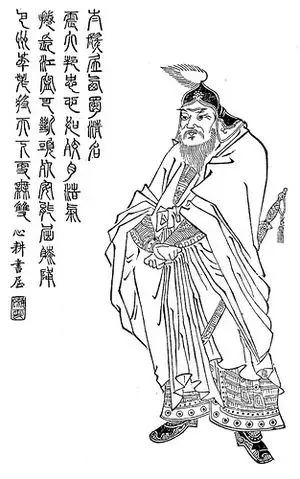
严颜
Yan Yan (严颜, dates unknown) was a native of Linjiang in Ba Commandery. He was a distinguished military general under Governor of Yizhou Liu Zhang during the late Eastern Han dynasty, immortalized in Chinese history as the Decapitated General for his peerless loyalty and unyielding fortitude. Entrusted by Liu Zhang with garrisoning the strategic river nexus of Jiangzhou (modern Yuzhong, Chongqing), Yan Yan commanded land…
Yan Yan (严颜, dates unknown) was a native of Linjiang in Ba Commandery. He was a distinguished military general under Governor of Yizhou Liu Zhang during the late Eastern Han dynasty, immortalized in Chinese history as the Decapitated General for his peerless loyalty and unyielding fortitude. Entrusted by Liu Zhang with garrisoning the strategic river nexus of Jiangzhou (modern Yuzhong, Chongqing), Yan Yan commanded land and water defenses controlling the throat of the upper Yangtze River. In the sixteenth year of the Jian'an era (211 AD), when Liu Zhang resolved to invite Liu Bei into Yizhou to resist Cao Cao and Zhang Lu, Yan Yan clutched his chest and famously sighed that this policy amounted to sitting alone on an impassable mountain and releasing a tiger to guard oneself, foretelling Liu Bei's eventual usurpation of the province. In the nineteenth year of the Jian'an era (214 AD), when open warfare erupted between Liu Bei and Liu Zhang, Liu Bei summoned Zhuge Liang, Zhang Fei, and Zhao Yun from Jingzhou to advance along the Yangtze River. Leading vanguard veterans, Zhang Fei besieged Jiangzhou. Yan Yan defended the fortress with desperate valor, but was overwhelmed and taken prisoner. When Zhang Fei demanded why he had dared to resist instead of surrendering, Yan Yan fearlessly rebuked Liu Bei's treacherous invasion, declaring that his province possessed decapitated generals, but never surrendering generals. When an infuriated Zhang Fei ordered him dragged away for execution, Yan Yan remained entirely unperturbed, laughing that execution was a simple matter and questioning the general's petulant rage. Stunned and moved by his transcendent heroism, Zhang Fei personally untied his bonds and treated him as an honored guest. Celebrated as the ultimate embodiment of martial virtue and righteous defiance, Yan Yan was memorialized by Song poets and honored by Southern Song martyr Wen Tianxiang in his immortal Song of Righteousness, remaining a timeless moral symbol in Chinese culture.
Entered the service of Liu Yan and Liu Zhang, garrisoning the strategic bastion of Jiangzhou in Ba Commandery.
Appointed Grand Administrator of Bajun (or General of the Commandery), controlling the river approach to Sichuan.
Liu Zhang invited Liu Bei into Sichuan; Yan Yan sighed in warning that welcoming Liu Bei was releasing a tiger for defense.
Warfare erupted between Liu Bei and Liu Zhang; Yan Yan reinforced city ramparts and prepared for Jingzhou incursions.
Besieged by Zhang Fei's armies at Jiangzhou; fought to exhaustion, captured, and delivered the immortal defiance of the Decapitated General.
Awed by his moral grandeur, Zhang Fei untied his ropes and treated him as an honored guest, establishing his eternal fame.
Yan Yan was born into an established family in Linjiang of Ba Commandery. Situated along the steep cliffs of the Yangtze River, Linjiang was famed for hardy fighters and martial traditions. From his youth, Yan Yan excelled in archery, horsemanship, and military planning, possessing a resolute character and far-sighted strategic insight. During the chaotic disintegration of the Han dynasty, Governor of Yizhou Liu Yan established an independent regime in Sichuan, followed by his son Liu Zhang. Yan Yan served Liu Zhang faithfully, rising through military merit to become Grand Administrator of Bajun (recorded in some sources as general of the commandery), stationed at the military bastion of Jiangzhou.
Jiangzhou, located at the confluence of the Jialing and Yangtze rivers, served not only as the administrative seat of Ba Commandery but also as the indispensable gateway linking Jingzhou to the Chengdu plain. Throughout his garrison command, Yan Yan reinforced city ramparts, maintained strict naval vigilance, and fostered peace between Han settlers and indigenous Ba populations, establishing an unassailable defensive perimeter across the upper gorges.
In the sixteenth year of the Jian'an era (211 AD), Chancellor Cao Cao consolidated the northern plains and prepared an offensive toward Hanzhong against warlord Zhang Lu. Governor Liu Zhang, timorous and suspicious by nature, panicked at the prospect of northern armies descending upon Sichuan while simultaneously fearing his bitter rival Zhang Lu. Deceived by treasonous retainers Zhang Song and Fa Zheng, Liu Zhang made the catastrophic decision to dispatch Fa Zheng to Jingzhou to invite his kinsman Liu Bei into Sichuan with an elite host to defend the province.
While faithful ministers Huang Quan and Wang Lei remonstrated vigorously against welcoming a formidable warlord into their midst, Liu Zhang remained stubborn. When Liu Bei's fleet sailed up the Yangtze through Ba Commandery with tens of thousands of veteran soldiers, Yan Yan stood atop the battlements of Jiangzhou. Observing the disciplined ranks of the Jingzhou host, he pressed his hand to his chest and sighed with deep foreboding: "Liu Zhang's decision is truly like sitting alone upon an impassable mountain and releasing a tiger to guard oneself!" Yan Yan's prediction cut directly to the core of Liu Bei's geopolitical ambition, anticipating the betrayal of the province long before hostilities commenced.
Events unfolded precisely as Yan Yan had predicted. In the winter of the seventeenth year of the Jian'an era (212 AD), Liu Bei broke with Liu Zhang at Jiameng Pass, launching a surprise southward invasion. Desperately realizing his folly, Liu Zhang ordered all frontier garrisons to resist to the death. By the nineteenth year of the Jian'an era (214 AD), Liu Bei had besieged Luocheng, where his chief strategist Pang Tong was killed by an arrow. Needing reinforcements, Liu Bei dispatched urgent orders summoning Zhuge Liang, Zhang Fei, and Zhao Yun to lead the main Jingzhou army upriver into Sichuan.
Zhuge Liang commanded Zhang Fei to lead a spearhead division along the Yangtze directly against Jiangzhou. Aware that the fate of Yizhou hung in the balance, Yan Yan rejected all summons to surrender. He sealed the city gates, donned heavy armor, and took personal command of the ramparts. Faced with the veteran infantry of Zhang Fei, Yan Yan led his garrison in desperate resistance, repulsing multiple assaults. However, isolated and vastly outnumbered, the defenses were breached, and Yan Yan was captured alive amidst the fighting.
Having captured the city, Zhang Fei established his command pavilion and summoned the captive for interrogation. Bound with heavy cords, Yan Yan stood proudly before the dais. Zhang Fei glared fiercely and bellowed: "My grand army has arrived; why did you dare to resist instead of surrendering immediately?" Yan Yan looked directly into Zhang Fei's eyes, showing no fear, and answered with thunderous defiance: "You and your masters have acted without propriety, unscrupulously invading and seizing our province! In our province of Yizhou, there are only decapitated generals; there are no surrendering generals!"
Furious at having his master's betrayal exposed in open court, Zhang Fei flew into an explosive rage, slamming his fist onto the table and shouting to his guards: "Drag him away and chop off his head immediately!" Hearing the sentence of death, Yan Yan's facial expression did not change in the slightest. Looking up at the ceiling, he laughed with cool indifference: "If you wish to chop off my head, then chop it off! Why do you throw such a ridiculous tantrum?"
Zhang Fei was one of the foremost champions of the era, fiery in temper yet deeply reverent of authentic heroism. Seeing Yan Yan face death with calm laughter and sublime moral dignity, Zhang Fei was overcome with profound admiration. His wrath vanished instantly. Waving the executioners away, Zhang Fei stepped down from the dais, personally severed Yan Yan's bonds with his own hands, guided him to the seat of honor, and treated him with the highest courtesies as an honored guest. Yan Yan's unyielding righteousness conquered the heart of his captor, transforming his martyrdom into an eternal legend.
Amidst the collective delusion of Liu Zhang's court regarding an alliance with Jingzhou, Yan Yan stood apart for his penetrating geopolitical foresight. He dissected the competing ambitions of Cao Cao, Zhang Lu, and Liu Bei with clarity.
His celebrated warning that welcoming Liu Bei was releasing a tiger on an impassable mountain became a classical military proverb, exposing the fatal folly of a weak ruler relying on a predatory neighbor for survival.
As the supreme commander guarding the river approaches of the Three Gorges, Yan Yan fulfilled his sacred obligations to his master. Even after learning that central Sichuan was collapsing under Liu Bei's rapid advance, he refused to preserve his life through surrender.
He held Jiangzhou against Zhang Fei's assault until the city fell, personifying the highest military virtue of standing steadfast to the end.
In the face of immediate execution, Yan Yan demonstrated the supreme height of Confucian martial dignity. Interrogated by a victorious general whose name terrified the realm, he refused all compromise, delivering a devastating moral condemnation of Liu Bei's unprincipled aggression.
His immortal declarations that his province possessed decapitated generals but no surrendering generals, and that decapitation was nothing to lose one's temper over, completely overwhelmed Zhang Fei's arrogance, transforming a captive into an honored guest.
Yan Yan's moral fortitude transcended the factional boundaries of the Three Kingdoms, evolving into a timeless emblem of loyalty and courage throughout Chinese civilization. Prominent Song dynasty literary masters Su Shi and Su Zhe made pilgrimages to Jiangzhou, composing enduring poetry celebrating his moral grandeur.
During his imprisonment by the Mongols, Southern Song patriot Wen Tianxiang composed the immortal Song of Righteousness, invoking the head of General Yan alongside the blood of Chancellor Ji Shao to represent the unyielding moral spine of the Chinese nation.
Chen Shou recorded in the Records of the Three Kingdoms (Sanguozhi, Biography of Zhang Fei): "Zhang Fei shouted at Yan Yan: 'When my grand army arrived, why did you dare to resist instead of surrendering?' Yan Yan replied: 'You people behave without propriety, seizing our province. In our province there are only decapitated generals, no surrendering generals.' Zhang Fei was awed by his loyalty, untied his bonds, and treated him as an honored guest."
Chang Qu recorded in Chronicles of Huayang (Huayang Guozhi): "Yan Yan clutched his chest and sighed: 'This is releasing a tiger to guard oneself on an impassable mountain!' When captured, his countenance remained unperturbed, leaving behind eternal heroism."
Southern Song patriot Wen Tianxiang wrote in Song of Righteousness (Zhengqi Ge): "It is the head of General Yan, it is the blood of Attendant Ji. It is the teeth of Zhang Suiyang, it is the tongue of Yan Changshan."
Su Shi praised in his poem Stele of Yan Yan: "How extraordinary was master Yan, smiling as he mocked the chopping block! Though his realm fell and his lord was bound, he died for unshakeable duty. Ah, the Decapitated General makes men tremble with reverence through thousands of autumns!"
Su Zhe recorded in his poem Stele of Yan Yan: "Captured without dishonor occurred in ancient times, yet I love how he broke the fierce pride of Zhang Fei. Decapitation is a calm death, why lose your temper? How could I fear death like an ignorant child! His immense courage swallowed the Yellow River whole."
FIGURES ASSOCIATED WITH THIS DYNASTY