Birth
Born into the illustrious Ma clan in Maoling, Youfufeng; orphaned at age twelve.
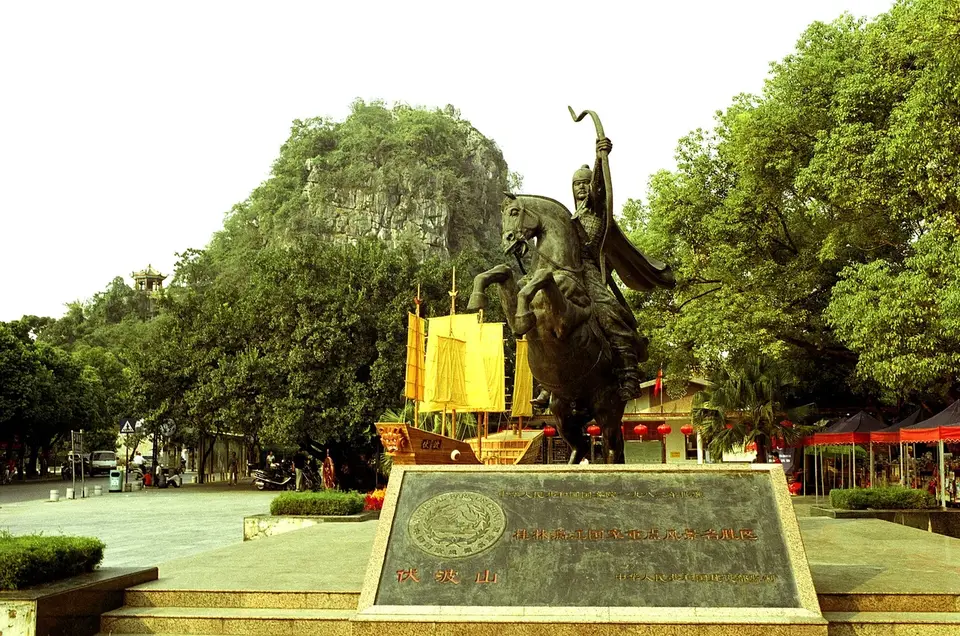
马援
Ma Yuan (马援, 14 BCE – 49 CE), courtesy name Wenyuan, was an eminent founding general and military strategist of the Eastern Han Dynasty from Maoling in Youfufeng. A descendant of the renowned Warring States general Zhao She (Lord of Mafu), Ma Yuan initially engaged in border livestock grazing, formulating his celebrated maxim that a true gentleman should become firmer in adversity and more heroic in old age. During the…
Ma Yuan (马援, 14 BCE – 49 CE), courtesy name Wenyuan, was an eminent founding general and military strategist of the Eastern Han Dynasty from Maoling in Youfufeng. A descendant of the renowned Warring States general Zhao She (Lord of Mafu), Ma Yuan initially engaged in border livestock grazing, formulating his celebrated maxim that a true gentleman should become firmer in adversity and more heroic in old age. During the chaotic interregnum between the Xin and Han dynasties, he served the western warlord Kui Xiao, saw through the pretenses of Gongsun Shu in Sichuan, and formally allied with Emperor Guangwu (Liu Xiu) in Luoyang. During the suppression of Kui Xiao, Ma Yuan pioneered the three-dimensional terrain sand table by heaping rice on the imperial table to illustrate topographic choke points, leading Han forces to a crushing victory. As Grand Administrator of Longxi for six years, he pacified and integrated the Qiang tribes through combined military fortitude and enlightened civil works. Appointed General of the Wave-Quelling, he mounted a maritime expedition to suppress the rebellion of the Trưng sisters in Jiaozhi, erected the frontier Bronze Pillars, and was enfeoffed as Marquis of Xinxi. Returning to the capital, he famously proclaimed that a soldier should die on the frontier and be buried wrapped in horsehide. At the age of sixty-two, he volunteered to lead forty thousand troops against the Wuling indigenous insurgents, perishing of camp pestilence at Mount Hutou. Despite posthumous slander by imperial son-in-law Liang Song, his marquisate and honor were fully exonerated under Emperor Zhang with the posthumous title Zhongcheng.
Born into the illustrious Ma clan in Maoling, Youfufeng; orphaned at age twelve.
Mourned his deceased eldest brother Ma Kuang for three years, serving his widowed sister-in-law with scrupulous Confucian etiquette.
Released a condemned felon while serving as commandery police officer; fled to Beidi to engage in animal husbandry and distributed amassed fortunes to kinsmen.
Resigned as Grand Administrator of Xincheng following the Xin collapse; fled to Liangzhou and joined Kui Xiao as General of Pacifying Virtue.
Dispatched to Chengdu by Kui Xiao; discerned Gongsun Shu's narrow-minded arrogance and urged Kui Xiao to align with Liu Xiu.
Carried letters to Luoyang to meet Emperor Guangwu; declared that a minister also chooses his sovereign, winning imperial favor and service as palace consultant.
Escorted Kui Xiao's hostage son Kui Xun to Luoyang; led his personal retinue to open agricultural colonies in the Shanglin Park.
Joined Emperor Guangwu's western expedition; piled cooked rice to create a three-dimensional map of Longyou, enabling the destruction of Kui Xiao's main army.
Appointed Palace Grandee and deputy to Lai Xi, commanding troops stationed at Chang'an to guard against Qiang incursions.
Appointed Grand Administrator of Longxi; defeated the Xianling and Shaodang Qiang tribes, repaired canals, and settled thousands of surrenderers.
Led four thousand troops against the Canlang Qiang in Wudu, seizing water sources and pastures to compel over ten thousand tribesmen to surrender.
Conquered rebel cultist Li Guang; appointed General of the Wave-Quelling to command naval and ground forces against the Trưng sisters in Jiaozhi.
Slew Trưng Trắc and Trưng Nhị, pacified Jiuzhen Commandery, codified local laws into the "General Ma Precedents," and was enfeoffed as Marquis of Xinxi.
Authored the famous Letter to Nephews Yan and Dun en route, admonishing against frivolous gossip and coining the proverb "failing to draw a tiger yields a dog."
Led three thousand cavalry out of Gaoliu to inspect Yanmen and Dai Commanderies against Wuhuan incursions; cast standard bronze horse models for the court.
Volunteered at sixty-two to suppress the Wuling indigenous uprising; demonstrated equestrian vitality before the emperor and took command of forty thousand troops.
Besieged by summer heat and epidemic at Mount Hutou; directed operations from a dugout cave before dying in camp; slandered by Liang Song over Job's tears pearls, until Emperor Zhang cleared his name in 78 CE with the posthumous title Zhongcheng.
Ma Yuan traced his lineage to Zhao She, the celebrated general of the State of Zhao during the Warring States period who received the noble title Lord of Mafu following his victory over Qin at Yanyu. His descendants adopted the surname Ma from this title. During the Western Han Dynasty under Emperor Wu, Ma Yuan's great-grandfather Ma Tong was enfeoffed as the Marquis of Chonghe. However, Ma Tong and his brother Ma Heluo were implicated in the aftermath of the Witchcraft Catastrophe and executed after plotting to assassinate Emperor Wu, casting the family into political ruin.
The lineage survived through Ma Tong's son Ma Bin, who served as an imperial envoy under Emperor Xuan. Ma Bin's son Ma Zhong attained the post of Commandant of Xuanwu and fathered four sons: Ma Kuang, Ma Yu, Ma Yuan, and Ma Yuan. Ma Yuan lost his father when he was only twelve years old. Although the household suffered financial decline, young Ma Yuan harbored lofty ambitions. His older brothers tutored him in the Qi Poems, but Ma Yuan found pedantic commentary stifling, longing instead to cultivate pastureland along the remote frontier.
When about to depart for the border, his eldest brother Ma Kuang suddenly died. Ma Yuan cast aside his personal aspirations, remaining in his hometown to mourn his brother for three full years. During this period, he never left the burial grounds and served his widowed sister-in-law with impeccable Confucian decorum, refusing even to cross the threshold into the inner chambers unless fully attired in ceremonial robes and headgear. His fraternal piety and upright conduct won universal acclaim across Youfufeng.
Following his mourning rites, Ma Yuan entered local service as a commandery police officer. Entrusted with escorting a heavily chained felon to the central judicial office, Ma Yuan took pity on the prisoner's weeping family and secretly unlocked his shackles, allowing him to escape into the wilderness. Ma Yuan fled into Beidi Commandery to escape prosecution. Following an imperial amnesty, he settled in the northwest borderlands as a herdsman and farmer. Possessing exceptional acumen in assessing terrain and evaluating horses, he built vast herds numbering thousands of cattle, horses, and sheep, accumulating over ten thousand bushels of grain within a few years.
Several hundred displaced households and frontier stalwarts gathered around him, acknowledging him as their chieftain. Enduring the harsh winds of the frontier, Ma Yuan frequently proclaimed to his guests: "A true gentleman's determination should grow firmer in adversity and become more heroic in advanced years!" Gazing upon his vast stores, he sighed: "Wealth obtained from pasture and commerce is noble only when used to alleviate poverty and aid friends; otherwise, one is merely a pitiful miser!" He distributed his accumulated cattle, land, and granaries among his kinsmen and needy neighbors, continuing to wear humble sheepskin tunics and live a life of frugal simplicity.
During the chaotic downfall of Wang Mang's Xin Dynasty, peasant uprisings erupted nationwide. Wang Lin, cousin of Wang Mang and General of the Guards, recruited talent and appointed Ma Yuan to his staff, later recommending him to the throne. Wang Mang appointed Ma Yuan as Grand Administrator of Xincheng. Following the total collapse of the Xin regime in 24 CE, the Gengshi Emperor occupied the Guanzhong region. Disillusioned by the chaos of the Gengshi court, Ma Yuan and his brother Ma Yuan resigned their posts and fled westward to Liangzhou.
In 25 CE, Liu Xiu founded the Eastern Han Dynasty in Hebei. While Ma Yuan traveled east to Luoyang to submit to Liu Xiu, Ma Yuan remained in the western territory of Longyou, where the autonomous warlord Kui Xiao recognized his exceptional strategic intellect. Kui Xiao treated Ma Yuan as an honored advisor, appointing him General of Pacifying Virtue and consulting him on all military and civil policies.
Around the same time, Gongsun Shu declared himself Emperor of White in Chengdu, dominating the fertile Sichuan Basin with formidable legions. Uncertain of Gongsun Shu's actual military strength, Kui Xiao dispatched Ma Yuan on a diplomatic mission to Chengdu. Ma Yuan and Gongsun Shu were boyhood friends from the same commandery, and Ma Yuan assumed they would meet cordially as old acquaintances.
Instead, Gongsun Shu adopted the rigid, haughty ceremonial of an exalted emperor. Upon Ma Yuan's arrival, imperial guards bearing halberds and banners lined the palace gates. After a stiff, formal audience, Gongsun Shu immediately ordered Ma Yuan to a state guesthouse, sending him old-fashioned cloth court robes and towering caps before staging a grand banquet in the ancestral temple. Gongsun Shu offered to enfeoff Ma Yuan as a marquis and appoint him General-in-Chief.
Ma Yuan's attendants were dazzled by the wealth of Chengdu and urged him to accept the imperial offer. Ma Yuan rebuked them sharply: "When the realm hangs in the balance, a true ruler seeks men of valor from all corners of the earth. Gongsun Shu acts like a frog at the bottom of a well, indulging in hollow rituals and marionette pageantry while failing to recognize real heroes. Remaining here leads only to destruction!" Ma Yuan declined the titles and returned to Longyou, advising Kui Xiao: "Gongsun Shu is nothing more than a frog in a well. Your Excellency should dedicate your loyalty solely to Emperor Guangwu in the east."
In 28 CE, Kui Xiao resolved to ascertain the character of the Luoyang court and sent Ma Yuan with an official tribute memorial to Emperor Guangwu. Liu Xiu received Ma Yuan in the Xuande Hall in informal dress without elaborate imperial protocol. The emperor smiled and greeted him: "Sir, you move between two self-proclaimed emperors. Seeing you today makes Us feel truly ashamed."
Recognizing the emperor's genuine magnanimity, Ma Yuan replied boldly: "In times of turmoil, not only does a sovereign choose his ministers, but ministers also choose their sovereign. I have come from the far western borders; how could Your Majesty know I am not an assassin or a spy sent by your enemies?" Liu Xiu laughed heartily: "You are certainly no assassin, merely an eloquent diplomat." Ma Yuan responded with deep conviction: "Countless usurpers claim imperial titles in these fractured times. Seeing Your Majesty's vast generosity and open heart, which mirrors Emperor Gaozu, I know that Heaven's true son has indeed appeared!"
Emperor Guangwu was deeply impressed by Ma Yuan's courage and strategic brilliance. He retained him on imperial tours to Liqiu and Donghai, consulting him continuously on statecraft and military strategy. Following the tour, Liu Xiu appointed Ma Yuan as a Palace Attendant in Ordinary, summoning him day and night to deliberate on major campaigns. When Ma Yuan prepared to return west, the emperor appointed Grand Master for Splendid Happiness Lai Xi to escort him with imperial credentials.
Upon his return, Kui Xiao eagerly questioned Ma Yuan regarding the political climate in Luoyang. Ma Yuan offered unreserved praise: "His Majesty received me in private audiences, conversing from dusk until dawn. His military genius and transparent honesty are unmatched. In classical learning, administrative execution, and eloquence, he surpasses past monarchs." Kui Xiao asked with hesitation: "How does he compare to Emperor Gaozu?" Ma Yuan replied: "In sweeping audacity, he may yield to Gaozu, but in devotion to governance, adherence to law, and restraint from alcohol, he far exceeds him." Though somewhat displeased by the comparison, Kui Xiao trusted Ma Yuan's counsel and dispatched his eldest son Kui Xun as a hostage to Luoyang.
When Ma Yuan escorted Kui Xun to Luoyang in 30 CE, the court was fully occupied with campaigns in the east and south, leaving Ma Yuan without an active military command for several months. Observing that the Guanzhong region lay desolate after years of civil war, while hundreds of his western retainers were running short of rations, Ma Yuan proactively petitioned the emperor to establish military-agricultural colonies in the imperial Shanglin Park. Emperor Guangwu gladly approved the initiative.
Meanwhile, Kui Xiao's ambition flared up once more. Incited by his general Wang Yuan, Kui Xiao sought to carve out an independent western kingdom and secretly allied with Gongsun Shu in Sichuan. Recognizing that open rebellion would bring catastrophic retribution upon Longyou, Ma Yuan dispatched repeated missives to Kui Xiao and his chief general Yang Guang, expounding the inevitability of national unification and urging them to reconsider.
Kui Xiao reacted with fury, regarding Ma Yuan as a traitor to their friendship. He cut off ties with Luoyang, assassinated imperial messengers, and mobilized his forces against the empire. Recognizing that Kui Xiao was beyond persuasion, Ma Yuan submitted six strategic measures for the pacification of Longyou to Emperor Guangwu. The emperor placed five thousand elite shock cavalry under Ma Yuan's command, tasking him with launching a political warfare campaign to undermine Kui Xiao's coalition.
Ma Yuan used personal friendships to communicate with Kui Xiao's key commanders, Gao Jun and Ren Yu, as well as various Qiang chieftains, exposing Wang Yuan's treachery and highlighting the consequences of treason. His strategic pressure fractured Kui Xiao's western alliances, sowing widespread desertion and paving the way for the imperial assault.
In the summer of 32 CE, Emperor Guangwu personally commanded the imperial armies on an expedition against Kui Xiao. When the imperial forces reached Qi County, heavy torrential rains turned the mountain trails into quagmires. News arrived that Gongsun Shu's Sichuan generals, Li Yu and Tian Yan, had emerged from the mountain gorges to reinforce Kui Xiao. Daunted by the perilous terrain and precarious supply lines, several senior Han commanders urged the emperor to call off the campaign and withdraw to Guanzhong.
Faced with sharp division among his generals, Emperor Guangwu summoned Ma Yuan to his war tent in the middle of the night. Ma Yuan argued with decisive clarity: "Kui Xiao's coalition is already crumbling from within. If we press forward now, victory is assured!" To provide an undeniable visual demonstration, Ma Yuan ordered attendants to bring a large quantity of white rice to the imperial table.
Using his fingers, Ma Yuan sculpted the rice into miniature mountain ridges, deep gorges, valleys, and river networks, reproducing the entire topography of Longyou before the eyes of the emperor and his generals. Pointing with a bamboo rod, he outlined every pass, detour, and enemy garrison: "This route accommodates heavy cavalry; that defile is prone to ambushes; this outpost has depleted its provisions; and that valley holds the enemy's vital water supply."
The visual clarity of the rice model dispelled all hesitation. Emperor Guangwu struck the table in delight, exclaiming: "The enemy is already captured within Our sight!" At dawn, the emperor ordered an immediate offensive along the routes charted by Ma Yuan's rice model, driving straight to the First City of Gaoping. Dou Rong arrived from Hexi with tens of thousands of cavalry and five thousand supply carts to join the encirclement. Overwhelmed by the precision of the Han advance, thirteen of Kui Xiao's division commanders and sixteen counties surrendered without fighting, breaking Kui Xiao's army and forcing him to flee to Xicheng.
In 33 CE, Ma Yuan was named Grand Master for Splendid Happiness, assisting General Lai Xi in securing Chang'an against nomadic incursions. Following the upheaval of the Xin interregnum, various branches of the Qiang people had pushed past the border passes, occupying fertile lands in Jincheng and menacing Guanzhong. Lai Xi submitted a memorial stating that no one except Ma Yuan possessed the stature to bring enduring peace to the northwestern frontier. In 35 CE, Emperor Guangwu appointed Ma Yuan as Grand Administrator of Longxi.
Upon assuming office, Ma Yuan assembled three thousand elite infantry and cavalry, marching rapidly to relieve Lintao from the Xianling Qiang. Engaging the nomads outside Lintao, he executed a double envelopment, slaying hundreds of warriors and capturing over ten thousand head of livestock. Eight thousand frontier Qiang tribesmen surrendered immediately. When several tens of thousands of Qiang warriors fortified the narrow pass of Haowei, Ma Yuan led light cavalry through a hidden mountain shortcut, attacking the enemy's rear camp at Yunwu Valley and throwing the tribes into headlong panic toward Tangyi Valley.
Pursuing the enemy to Mount Beishan, Ma Yuan faced a steep defensive redoubt. He deployed his main line in front of the mountain while dispatching several hundred mounted archers to infiltrate the enemy's rear under the cover of night. At a prearranged signal, the flanking force ignited blazes and beat war drums. Believing themselves surrounded by immense armies, the Qiang collapsed in disarray, suffering over a thousand casualties. In the melee, an arrow pierced completely through Ma Yuan's calf, yet he bound the wound and continued to direct operations. When the emperor dispatched imperial messengers with thousands of cattle and sheep as personal awards, Ma Yuan distributed every animal among his troops.
Following the victory, central court ministers recommended abandoning all territories west of Poqiang due to their remoteness. Ma Yuan vehemently opposed this retreat, presenting three decisive arguments: first, the fortifications west of Poqiang remained robust; second, the soil was exceptionally fertile and well-suited for irrigation; and third, abandoning Huangzhong would invite nomadic occupation, leaving Guanzhong vulnerable to permanent incursions. Emperor Guangwu endorsed his view and ordered three thousand displaced households repatriated to their ancestral lands.
During his six-year tenure in Longxi, Ma Yuan dredged canals, constructed city walls, promoted agriculture, and established equitable trade markets. He dispatched chieftain Yang Feng to negotiate peaceful pacts with outer nomadic tribes and integrated surrenderers into the civil registries across Tianshui, Longxi, and Fufeng. When a minor local skirmish triggered rumors that the Qiang were rebelling, the magistrate of Didao panicked and rushed to Ma Yuan's yamen, begging to shut the city gates. Ma Yuan, who was calmly drinking with guests, laughed aloud: "How could the Shaodang Qiang dare to challenge me? Tell the magistrate to return to his post; if anyone is terrified, let him hide under his bed!" The panic subsided immediately, cementing his legendary prestige across the northwest.
In 41 CE, Ma Yuan was recalled to Luoyang as Leader of the Court Gentlemen of the Rapid as Tigers. Recognizing monetary chaos caused by degraded coins, he successfully petitioned the throne to restore the standardized wuzhu coinage, bringing enduring economic stability to the empire. Later that year, he led forces south to annihilate the religious insurgent Li Guang, who had captured Wan City.
Soon after, a massive rebellion erupted in the southernmost province of Jiaozhi. Trưng Trắc and her sister Trưng Nhị, daughters of a local chieftain, revolted against the extortionate governance of Grand Administrator Su Ding. Over sixty walled settlements across Jiuzhen, Rinan, and Hepu commanderies joined the uprising, and Trưng Trắc proclaimed herself queen. Emperor Guangwu appointed Ma Yuan as General of the Wave-Quelling, with Liu Long as deputy, placing him in command of naval and ground forces drawn from Changsha, Lingling, Guiyang, and Cangwu.
When the expedition reached Hepu, Naval General Duan Zhi died of illness, and Ma Yuan assumed sole command of both the fleet and infantry. Forging paths through dense rainforests and cutting passages across mountain cliffs, Ma Yuan led his army over a thousand li along the coast. In 42 CE, the two armies met at Langbo. Drawing the rebel forces into open ground, Ma Yuan launched a ferocious combined-arms counterattack, slaying thousands and capturing over ten thousand prisoners. The Trưng sisters fled into the mountainous stronghold of Jinxi Gorge.
In the first month of 43 CE, Ma Yuan tracked the sisters to Jinxi, defeating their remaining forces and executing Trưng Trắc and Trưng Nhị, sending their heads to Luoyang. He then mobilized two thousand war vessels and twenty thousand troops, chasing rebel remnant Du Yang southward to Jufeng in Jiuzhen Commandery, capturing five thousand insurgents and entirely restoring imperial authority. Recognizing that Xiyu County had swelled to over thirty-two thousand households, he partitioned it into Fengxi and Wanghai counties to ensure effective administration.
Throughout the southern commanderies, Ma Yuan constructed ramparts, dug irrigation channels, and harmonized conflicting local Yue customs with statutory Han legal codes. He revised over seventy contentious clauses, establishing an administrative framework known as the "General Ma Precedents," which remained in force for centuries. Before departing, he cast massive bronze pillars along the southernmost boundary of the empire, inscribed with the words: "When the bronze pillars break, Jiaozhi shall perish." In the autumn of 43 CE, Ma Yuan returned triumphantly to Luoyang, where he was enfeoffed as Marquis of Xinxi with an estate of three thousand households. When well-wishers congratulated him at court banquets, he remarked: "A real man should die on the wild frontier and be brought home wrapped in horsehide; how could I bear to end my days in bed surrounded by weeping women?"
In the autumn of 44 CE, nomadic Wuhuan and Xiongnu cavalry raided Fufeng, threatening the imperial tombs. Ma Yuan immediately volunteered for frontier patrol duty. In 45 CE, he led three thousand elite cavalry out of Gaoliu, conducting deep reconnaissance sweeps across Yanmen, Dai, and Shanggu commanderies, forcing the nomadic raiders to disperse into the northern steppes without risking an engagement.
Possessing a lifelong passion for equestrian excellence, Ma Yuan understood that cavalry was the bedrock of national defense. Having mastered the anatomical equine doctrines of Master Yang Zi'a during his frontier youth, he melted bronze drums captured from the Yue tribes of Jiaozhi to cast an exquisite, anatomically flawless bronze stallion model, standing three feet four inches tall.
Submitting the bronze stallion to the emperor, Ma Yuan noted: "Nothing excels a dragon in the heavens, and nothing excels a horse upon the earth. Horses are the foundation of war and the paramount instrument of the state." Emperor Guangwu ordered the sculpture placed beneath the steps of the Xuande Hall, establishing it as the official empire-wide standard for evaluating warhorses.
Despite his distinguished status, Ma Yuan maintained a modest, private existence in Luoyang, refusing to court favor with royal in-laws. When the emperor's son-in-law Liang Song visited Ma Yuan during an illness and bowed deeply before his couch, Ma Yuan acknowledged the salute merely with a nod while remaining prostrate. Afterward, his sons cautioned him: "Liang Song is the imperial son-in-law, feared by high ministers. Why did you not return his courtesy?" Ma Yuan replied firmly: "I was a close friend of Liang Song's father. Even though he has attained imperial rank, how could I abandon the proper generational etiquette?" Liang Song harbored a bitter personal grudge from that day forth.
In 48 CE, indigenous Wuhling tribes rose in rebellion, wiping out an imperial force under General Liu Shang. When news reached the court, Emperor Guangwu was deeply troubled by the absence of veteran commanders. The sixty-two-year-old Ma Yuan submitted a request to lead the expedition. Concerned about his age, Liu Xiu remarked: "General, you are too old to endure such hardship."
Ma Yuan immediately replied: "I can still don heavy armor and mount a warhorse!" At the emperor's request, he donned full iron armor, grasped his spear, and leaped onto a stallion, wheeling about with fierce vigor. Impressed by his unbroken spirit, Emperor Guangwu exclaimed: "How wonderfully robust is this old warrior!" The emperor appointed Ma Yuan commander of forty thousand troops, accompanied by generals Ma Wu, Geng Shu, and Sun Yong. Before departing, Ma Yuan shared a premonition with his friend Du Yin: "My only fear is that noble youths accompany our headquarters, making military discipline hard to enforce."
In the spring of 49 CE, the Han forces reached Linxiang, routing an indigenous ambush and capturing over two thousand warriors. At Xiajun, the army faced two advance routes: a long, circuitous overland trail via Chong County with reliable roads but difficult grain logistics, or a direct river route via Mount Hutou that was fast but beset by rapids and narrow gorges. Geng Shu and other aristocratic officers favored Chong County, but Ma Yuan chose Mount Hutou, seeking a rapid strike against the enemy's logistical hub. The emperor approved Ma Yuan's plan.
In the third month, the army reached Mount Hutou, where the indigenous warriors held fortified mountain positions. Severe summer heat descended, swelling the rapids and bringing a deadly camp pestilence. Thousands of soldiers fell ill and died, and Ma Yuan himself was struck by high fever. Refusing to yield, he ordered soldiers to hollow out a dugout cave in the riverbank cliff to escape the blistering heat. Whenever the enemy appeared on the ridges shouting battle cries, Ma Yuan dragged himself from the cave to inspect their formations, moving his men to tears.
Meanwhile, Geng Shu sent a secret memorial to his brother, Marquis Geng Yan, accusing Ma Yuan of moving like a sluggish Western merchant and bringing ruin upon the army. Geng Yan delivered the letter to the emperor. Seizing the opportunity for revenge, Liang Song joined the accusation. Emperor Guangwu dispatched Liang Song to relieve Ma Yuan of command. By the time Liang Song reached Mount Hutou, Ma Yuan had already died of fever.
Liang Song fabricated charges of cowardice and military delay. Furthermore, during his Jiaozhi campaign, Ma Yuan had brought back a cartload of large Job's tears seeds, which he intended to propagate in the north as an herbal remedy against tropical miasma. Court courtiers had assumed the covered cart held pearls and rhinoceros horns. Seizing upon this old rumor, Liang Song and other nobles alleged that Ma Yuan had embezzled a wagon of rare southern jewels. Enraged, Emperor Guangwu stripped Ma Yuan of his Marquis of Xinxi seals.
When his coffin arrived in Luoyang, his terror-stricken family dared not bury him in the ancestral cemetery, purchasing a plot west of the capital for a hurried interment. Former friends avoided the funeral in fear. His wife, Lady Lin, and nephew Ma Yan submitted six bloodwritten appeals to the throne, while his boyhood friend Zhu Bo submitted an impassioned defense of his lifelong loyalty. Convinced of his innocence, Emperor Guangwu permitted a formal burial. In 78 CE, Emperor Zhang conducted an exhaustive review, formally clearing Ma Yuan of all charges and bestowing the posthumous title Zhongcheng.
During the western campaign of 32 CE against Kui Xiao, the Eastern Han army faced mountainous defiles, hostile fortresses, and severed logistics. Frontline commanders were paralyzed by indecision, prompting intense debates over retreat. Summoned to the imperial tent, Ma Yuan revolutionized military cartography.
Rather than relying on abstract descriptions, Ma Yuan took cooked white rice from the table, shaping it with his hands into an exact three-dimensional terrain model representing the peaks, passes, canyons, and river bends of Longyou. He used a bamboo pointer to trace advance routes, highlighting enemy troop concentrations, water access points, and logistical bottlenecks.
This tactical innovation gave Emperor Guangwu an immediate, intuitive understanding of the battlefield, enabling the Han army to capture Gaoping without delay. Ma Yuan's rice model represents the earliest recorded use of a three-dimensional tactical sand table in global military history, standing as a landmark in the integration of terrain modeling and strategic command.
Between 41 and 43 CE, Ma Yuan led naval and infantry forces into the subtropical rainforests of Jiaozhi to suppress the widespread rebellion led by the Trưng sisters. Operating across thousands of li of jungle and coastline, he combined naval mobility with disciplined terrestrial operations, successfully capturing all rebel bases and restoring imperial authority over Lingnan.
Following military victory, Ma Yuan demonstrated exceptional administrative foresight. Recognizing that imposing northern laws directly upon the indigenous Yue people would provoke continuous unrest, he meticulously compared traditional Yue customs with statutory Han legal codes. He revised and codified over seventy regulatory provisions into an equitable legal system known as the "General Ma Precedents."
In addition to legal reforms, Ma Yuan constructed protective city walls, dredged irrigation canals, and established new administrative seats to ensure long-term stability. The bronze pillars he erected on the southern frontier served as enduring symbols of territorial sovereignty and cultural integration.
Recognizing that superior warhorses formed the essential core of imperial cavalry power, Ma Yuan combined decades of personal equestrian experience on the northern frontier with the ancient diagnostic teachings of Master Yang Zi'a and other equine masters.
In 44 CE, Ma Yuan melted bronze drums captured in Jiaozhi to cast an authoritative standard bronze horse model. The sculpture synthesized the finest anatomical proportions from various historical traditions: the bridle proportions of the Yi clan, the dentition standards of the Zhongbo clan, the mane characteristics of the Xie clan, and the muscular torso structure of the Ding clan.
Standing three feet four inches tall, the model was officially installed by imperial decree beneath the steps of the Xuande Hall in Luoyang. It served as the binding empire-wide legal standard for the breeding, selection, and procurement of cavalry mounts throughout the Eastern Han Dynasty, greatly enhancing the quality of imperial horse stocks.
Beyond his military and administrative triumphs, Ma Yuan left an indelible cultural legacy through his personal philosophy and family teachings. En route during his southern campaign, he composed the celebrated Letter to Nephews Yan and Dun, admonishing his young relatives against frivolous arrogance and meddling in court gossip.
In this letter, he coined the immortal proverb warning that aspiring to emulate the noble Long Bogao would at worst yield a respectable, modest gentleman ("failing to carve a swan still yields a duck"), whereas failing to master the reckless charisma of Du Jiliang would reduce one to a despised scoundrel ("failing to paint a tiger yields a dog").
Furthermore, his personal declarations established timeless ideals of Confucian heroism. His youth maxim, "a true gentleman should become firmer in adversity and more heroic in old age," alongside his martial vow, "a soldier should die on the wild frontier and be buried wrapped in horsehide," transcended his era to inspire generations of Chinese patriots and statesmen.
FIGURES ASSOCIATED WITH THIS DYNASTY