Birth
Born into an illustrious aristocratic family in Pingling, Fufeng.
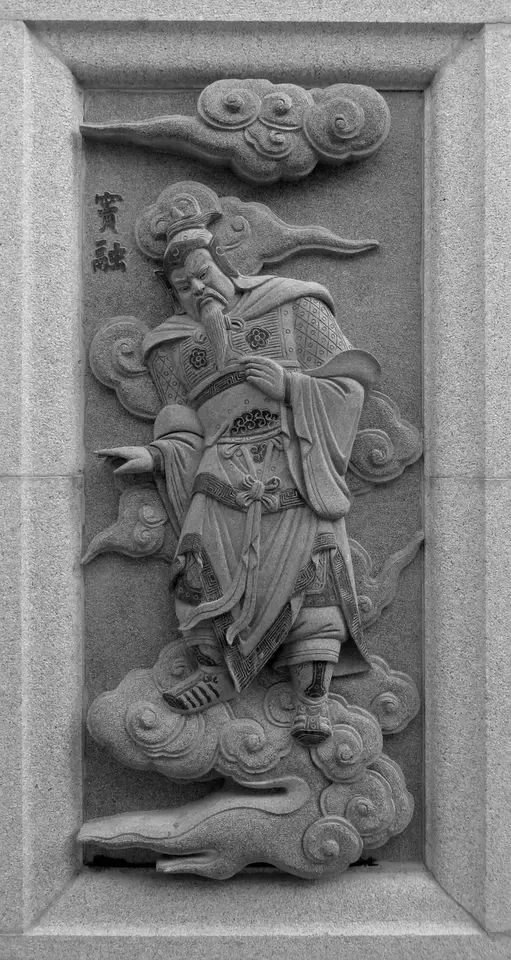
窦融
Dou Rong (窦融, 16 BCE – 62 CE), courtesy name Zhougong, was a prominent statesman and military commander of the Eastern Han Dynasty from Pingling in Fufeng. Emerging from a lineage of high-ranking generals dating back to the early Western Han, Dou Rong governed the Hexi Corridor during the turbulent collapse of the Xin Dynasty and the Gengshi regime. By securing the five commanderies west of the Yellow River, he shielded the…
Dou Rong (窦融, 16 BCE – 62 CE), courtesy name Zhougong, was a prominent statesman and military commander of the Eastern Han Dynasty from Pingling in Fufeng. Emerging from a lineage of high-ranking generals dating back to the early Western Han, Dou Rong governed the Hexi Corridor during the turbulent collapse of the Xin Dynasty and the Gengshi regime. By securing the five commanderies west of the Yellow River, he shielded the region from devastation and successfully repelled the Xiongnu. In 29 CE, recognizing Emperor Guangwu's legitimacy, he formally allied his regime with Luoyang and coordinated strategic campaigns against the warlord Kui Xiao. After peace was restored, Dou Rong surrendered his territorial command, serving at the imperial court as Minister of Works and Chamberlain for the Capital Patrol. He was enfeoffed as the Marquis of Anfeng and honored posthumously as Marquis Dai.
Born into an illustrious aristocratic family in Pingling, Fufeng.
Entered state service as an Officer of the Strong Bow and Palace Attendant under Wang Mang.
Fought under Wang Yi at Kunyang; fled back to Chang'an and subsequently surrendered to Emperor Gengshi, who appointed him General of the Wave-Quelling.
Appointed Grand Administrator of Zhangye and acclaimed as General-in-Chief of the Five Commanderies of Hexi, stabilizing the Hexi Corridor.
Dispatched Senior Clerk Liu Jun to pledge allegiance to Emperor Guangwu in Luoyang; received imperial credentials confirmation as General-in-Chief of Liangzhou.
Mobilized cavalry from five commanderies, coordinated with imperial armies at Gaoping, and broke Kui Xiao's western coalition.
Voluntarily resigned regional governorship and moved his family to Luoyang; appointed Minister of Works and enfeoffed as Marquis of Anfeng.
Resigned the post of Minister of Works due to factional memorializations; served as Chamberlain for the Capital Patrol and General of the Wave-Quelling.
Stripped of military authority and ordered to confine his household following misconduct and treasonous intrigues by his nephew Dou Xuan and clan kin.
Honored by Emperor Ming among the thirty-two founding generals depicted in the Southern Palace Yuntai Pavilion.
Died at the age of seventy-eight; granted the posthumous title Marquis Dai.
Dou Rong traced his ancestry to Dou Guangguo, the younger brother of Empress Dou in the Western Han Dynasty. For generations, the Dou clan flourished in Pingling, producing nine military commandants and border commanders. His great-grandfather Dou Rong served as General of the Strong Bow, and his father Dou Shou was a palace commandant during the reign of Emperor Ping. Blessed with a tall, imposing physique and broad military learning, Dou Rong was appointed an Officer of the Strong Bow and Palace Attendant during the Xin Dynasty.
When peasant rebellions erupted across northern China, Wang Mang assembled an immense army under Wang Yi and Wang Xun to suppress the resurgence of the Han house. Dou Rong served as a lieutenant commander under Wang Yi. In the fifth month of 23 CE, Liu Xiu executed a daring cavalry breakout from Kunyang, routing the imperial vanguard and breaking the imperial encirclement. During the chaos, Dou Rong managed to rally his detachment and escort Wang Yi back to Chang'an. When Chang'an fell in the ninth month, Dou Rong surrendered to Emperor Gengshi (Liu Xuan).
Emperor Gengshi appointed Dou Rong as General of the Wave-Quelling. Having witnessed the rapid collapse of both Wang Mang and previous regional authorities, Dou Rong perceived that the Gengshi regime was plagued by indiscipline, factional intrigue, and administrative incompetence. Foreseeing prolonged civil strife, Dou Rong sought a stable, geographically defensible base in the northwest far from the chaotic central plains.
Through the recommendation of Grand Marshal Zhao Meng, Dou Rong secured an appointment as Grand Administrator of Zhangye Commandery in 24 CE. Before departing, he arranged for his younger brother Dou You to serve as Grand Administrator of Jiuquan, while placing trusted associates in neighboring administrative seats, systematically preparing for an independent regional command in the Hexi Corridor.
Upon reaching the northwestern frontier, Dou Rong found the Hexi Corridor threatened by both the Xiongnu and local insurgent bands. The region consisted of five strategic commanderies: Liangzhou, Zhangye, Jiuquan, Dunhuang, and Jincheng. The local officials, isolated from the central court, were eager for coordinated military leadership. Dou Rong allied with Grand Administrator Liang Tong of Wuwei, Shi Bao of Jiuquan, and Kuang Tan of Dunhuang. At a grand regional conclave, Liang Tong proposed that Dou Rong assume overall command due to his military prestige and clan pedigree.
Accepting the mandate, Dou Rong took the title of General-in-Chief of the Western Region and Governor of Liangzhou. He instituted strict military training, reorganized border garrisons, and enforced rigorous agricultural reclamation policies along the oases. He kept signal towers staffed day and night and established proactive defensive cavalry patrols. When Xiongnu cavalry contingents attempted incursions across the northern desert, Dou Rong personally directed combined garrison counteroffensives, inflicting severe defeats on the nomad raiders.
As the Central Plains descended into famine, banditry, and cannibalism, the Hexi Corridor remained remarkably peaceful and prosperous. Commercial caravans traveled the Silk Road unhindered, agricultural yields reached record levels, and hundreds of thousands of refugees, scholars, and gentry clans streamed from the interior into Dou Rong's territory. Dou Rong established schools, distributed surplus grain to newcomers, and recruited capable talents regardless of their regional origins.
In 25 CE, the Gengshi regime fell to the Red Eyebrow insurgents, and warlord Kui Xiao seized control of Longxi and Tianshui. Recognizing Dou Rong's strategic depth, Kui Xiao sought to incorporate Hexi into his coalition and sent envoys offering high regional ministerial positions. Dou Rong declined these subordinations, maintaining cordial diplomatic exchanges while firmly guarding the Yellow River crossings at Jincheng.
By 29 CE, Emperor Guangwu (Liu Xiu) had pacified the central plain, captured Luoyang, and pushed his eastern boundaries toward the sea. Dou Rong convened a secret council with Liang Tong and his senior advisers to deliberate on the shifting geopolitical balance. While some officers recommended maintaining an independent northwest realm or balancing between Kui Xiao and Gongsun Shu of Shu, Dou Rong resolutely argued that Emperor Guangwu was a righteous descendant of the Han who possessed peerless virtue and military discipline.
Dou Rong dispatched his Senior Clerk Liu Jun and Brotherly Envoy Ding Feng across dangerous rebel territory to Luoyang, presenting tribute, detailed military maps, and a formal pledge of allegiance. Emperor Guangwu was overjoyed by Dou Rong's strategic loyalty. In an imperial audience, he bestowed a gold-tasseled tally and confirmed Dou Rong as General-in-Chief of Liangzhou, granting him full administrative authority over the civil and military affairs of the five western commanderies.
Upon receiving the imperial credentials, Dou Rong mobilized his troops and public declarations to support the Eastern Han cause. When Kui Xiao formally broke with Emperor Guangwu in 30 CE and sought an alliance with Gongsun Shu in Sichuan, Dou Rong rejected Kui Xiao's summons and closed all border mountain passes. In 31 CE, Kui Xiao dispatched senior generals to invade Liangzhou and seize Zhangye, but Dou Rong deployed mobile cavalry ambushes, crushing the invading force and decapitating several rebel division commanders.
In the summer of 32 CE, Emperor Guangwu launched a two-pronged imperial offensive against Kui Xiao. Dou Rong mobilized thirty thousand elite infantry and cavalry from the five Hexi commanderies, accompanied by thousands of carts carrying grain and supplies. They marched through the desert passes to rendezvous with the imperial army at Gaoping First Pass. When the joint forces united, Dou Rong personally bowed before Emperor Guangwu, who embraced him warmly and praised his peerless loyalty. The combined assault broke Kui Xiao's fortresses and forced his remnants into retreat.
Following the final suppression of Kui Xiao and the pacification of Shu in 36 CE, Dou Rong realized that retaining a private military fiefdom and commanding regional armies was fundamentally incompatible with the long-term centralizing policies of an imperial dynasty. Despite immense personal prestige across Liangzhou, Dou Rong drafted an emotional memorial requesting permission to return his seal of office, resign his governorship, and move his entire clan to the capital.
Emperor Guangwu admired Dou Rong's unselfish modesty. He summoned Dou Rong and his family to Luoyang, awarding him luxurious estates, a treasury annuity of millions of coins, and an enfeoffment as the Marquis of Anfeng with four taxable county estates. Soon afterward, Dou Rong was appointed Minister of Works, entering the supreme tripartite cabinet (San Gong) alongside the Grand Commandant and Minister over the Masses.
As Minister of Works, Dou Rong managed water conservancy, urban construction, and sacrificial protocols with scrupulous caution. He never accepted private bribes or promoted unqualified kin. His younger brother Dou You was appointed General-in-Chief of the Guards and Marquis of Xinfeng, while his sons and nephews entered the imperial palace as cadets and imperial bodyguards. The Dou family became the most prominent aristocratic house in Luoyang, frequently intermarrying with the imperial Liu imperial clan.
Aware that immense prestige often attracted imperial suspicion and court jealousy, Dou Rong repeatedly submitted memorials begging to retire from executive office. In 44 CE, taking advantage of a minor eclipse and censorial memorials questioning aristocratic influence, he formally stepped down as Minister of Works. Emperor Guangwu retained him as Chamberlain for the Capital Patrol and granted him privileged access to imperial policy deliberations.
During the late Jianwu era and early Yongping era under Emperor Ming, the younger generation of the Dou clan grew increasingly haughty and dissipated, confident in their imperial marital ties and immense hereditary wealth. Dou Rong's son Dou Mu married Princess Yiping, the daughter of Emperor Guangwu, but frequently flouted imperial sumptuary codes and coerced regional magistrates. Dou Rong's nephew Dou Xuan engaged in bitter feuds and illegal private vengeance.
In 59 CE (the second year of Yongping), Imperial Censors submitted blistering indictments against Dou Mu and the Dou household for arrogance, extortion, and insubordination. Emperor Ming ordered Dou Mu dismissed from office and sent into internal exile, while Dou Rong was commanded to shut his mansion doors and conduct strict domestic penance. Overwhelmed by grief, remorse, and fear of family ruin, Dou Rong personally presented a confession of guilt, acknowledging his inability to discipline his progeny.
Emperor Ming, mindful of Dou Rong's monumental contributions during the founding of the dynasty, did not inflict corporal punishment upon the aging statesman. His marquisate and court status were preserved. In 62 CE (the fifth year of Yongping), Dou Rong passed away peacefully at his Luoyang residence at the age of seventy-eight. Emperor Ming dispatched imperial attendants with condolence gifts, granted him a state burial, and conferred upon him the posthumous title of Marquis Dai.
During the twelve years from the fall of Wang Mang in 23 CE to the formal reunification under Eastern Han in 36 CE, northern and central China endured catastrophic devastation, depopulation, and economic ruin. Through decisive governance and diplomatic tact, Dou Rong transformed the five commanderies of the Hexi Corridor into a stable sanctuary of peace and order.
Dou Rong established an integrated border defense network that effectively checked predatory raids by the Northern Xiongnu and the Western Qiang. He maintained signal communications across the Gobi Desert, kept frontier storage granaries full, and organized armed militia agricultural colonies. His administration protected ancient trade corridors along the Silk Road, enabling sustained cultural exchange and trade between China and Central Asian states when interior trade had ground to a complete halt.
Furthermore, Dou Rong opened the doors of Hexi to hundreds of thousands of displaced scholars, officials, and gentry families fleeing violence in Shaanxi, Henan, and Shanxi. He founded academic institutes, funded literary compilations, and preserved ancient administrative archives, ensuring that traditional Han institutional knowledge survived intact throughout the interregnum.
Dou Rong's voluntary alignment with Emperor Guangwu was one of the pivotal geopolitical turning points of the Eastern Han founding wars. Situated squarely between the warlord Kui Xiao in Longxi and the autonomous regime of Gongsun Shu in Sichuan, Dou Rong held the balance of power across western China. Had Hexi joined Kui Xiao and Shu, the combined western coalition could have severed the Han empire's northwest frontiers and tied down the central armies indefinitely.
Dou Rong rejected lucrative titles and alliances offered by both Kui Xiao and Gongsun Shu, remaining steadfast in his loyalty to Emperor Guangwu. During the crucial campaign of 32 CE, Dou Rong mobilized thirty thousand veteran cavalrymen and thousands of transport wagons to strike Kui Xiao's western rear at Gaoping. This decisive flanking maneuver shattered Kui Xiao's defenses, liberated the Guanzhong plains, and directly opened the strategic corridor for the final conquest of Sichuan.
Throughout Chinese imperial history, warlords who controlled vast frontier regions rarely surrendered their independent armies and territorial domains willingly, often sparking bloody rebellions or regional secession. Dou Rong established an exemplary precedent of civic virtue and institutional deference by surrendering his complete regional command after national peace was achieved.
In 36 CE, when his personal authority in Liangzhou was absolute, Dou Rong proactively submitted his seals of office, requested the appointment of regular central magistrates to the five commanderies, and brought his entire clan to live in the capital under imperial supervision. His self-effacing conduct eliminated the danger of northern warlordism, reinforced imperial central authority, and secured long-term peace for the newly established Eastern Han state.
FIGURES ASSOCIATED WITH THIS DYNASTY