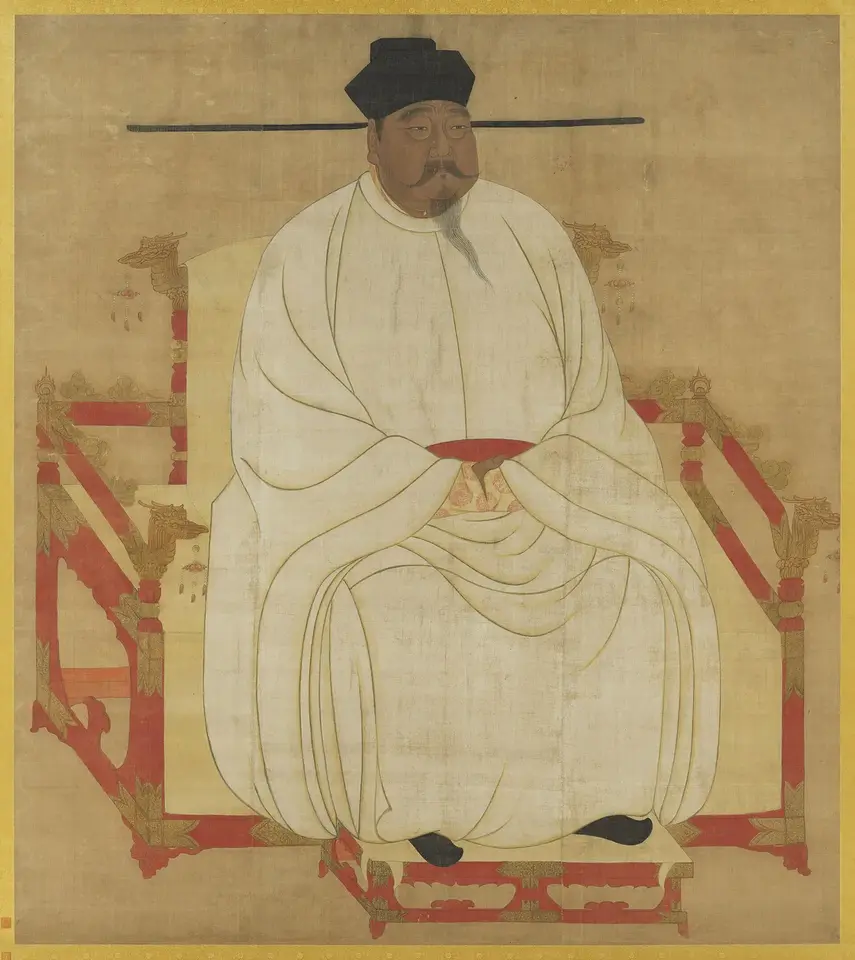
Biography
Ancestral Heritage and Joining Zhao Kuangyin's Council
Lv Yuqing descended from an illustrious lineage of civil servants in Anci, Youzhou. His grandfather, Lv Yan, served Later Tang as Administrative Judge of Henghai Command; his father, Lv Qi, was an eminent classical scholar and Vice Minister of War in Later Jin who served as Academician of the Duanming Hall. Lv Yuqing, originally named Lv Yin, possessed a generous and steady temperament from early youth. Entering bureaucratic life through his father's hereditary privilege as a Guardsman of the Thousand Bulls, he served as Adjutant and Revenue Officer in Kaifeng. In 944, when Prince Shi Zhongrui of Later Jin took charge of the Zhongwu Military Commandery, Lv Yuqing was appointed Judicial Administrator. Through the political transitions of Later Han and Later Zhou, he consistently maintained judicial precision as Director of Records in Puzhou.
During the Xiande era of Later Zhou, Zhao Kuangyin assumed command of the Tongzhou Military Commandery. Appreciating Lv Yuqing's reputation for administrative acumen and financial honesty, Zhao petitioned the court to appoint him as Staff Officer. Emperor Shizong of Later Zhou (Chai Rong), who had formerly commanded Chanyuan where Puzhou was situated, recognized Lv's merits and asked Zhao: "Is this the same official who served as Revenue Judge in Puzhou?" Emperor Shizong promptly appointed Lv as Director of Records for the Dingguo Army. In subsequent years, as Zhao Kuangyin successively governed Huazhou, Xuzhou, and Songzhou, Lv Yuqing remained his indispensable administrative secretary. Within Zhao Kuangyin's personal staff, Lv's status was second only to Zhao Pu and Li Chuyun, with the three men forming the core strategic vanguard of the future dynasty.
Founding of Song and Preserving Capital Security
In the first lunar month of 960, Zhao Kuangyin mounted the throne through the Chenqiao mutiny, founding the Northern Song dynasty. To avoid using the new emperor's personal name, Lv Yin adopted his courtesy name "Yuqing" as his formal name. Emperor Taizu immediately recalled Lv Yuqing from his post as Administrative Judge in Songzhou and Bozhou, appointing him Palace Remonstrance Official and Academician of the Duanming Hall. During the Qingtai era of Later Tang, Lv Yuqing's father Lv Qi had occupied this identical academician post with identical rank, an ancestral repetition widely celebrated by capital literati as an extraordinary honor.
Shortly thereafter, the court appointed Lv Yuqing Governor of Kaifeng, placing administration of the imperial metropolis in his hands. During the vulnerable opening months of the dynasty, regional warlords Li Jun in Luzhou and Li Chongjin in Yangzhou launched rebellions. As Emperor Taizu led field armies on consecutive punitive campaigns, Lv Yuqing was charged with safeguarding the imperial capital as Vice Regent of the Capital, orchestrating domestic grain logistics and garrison vigilance. His administration was praised for its balance of benevolence and order. In 962, Lv was promoted to Vice Minister of Revenue, subsequently entering filial mourning upon his mother's death. Following the pacification of Jinghu, he was recalled to manage the critical regional hubs of Tanzhou, Xiangzhou, and Jiangling.
Moral Rectitude and the Pacification of Sichuan
Lv Yuqing was known for profound modesty and magnanimity. Following Emperor Taizu's accession, his former colleagues Zhao Pu and Li Chuyun were rapidly promoted to Grand Councilor and Vice Commissioner of Military Affairs respectively, while Lv remained in regional governorships without the slightest trace of resentment. In the late Jianlong era, Li Chuyun was demoted to Zizhou following policy clashes with Zhao Pu. When Lv Yuqing returned to the capital from Jiangling, Emperor Taizu questioned him closely regarding the circumstances of Li Chuyun's conduct. Disregarding factional pressure, Lv defended Li Chuyun based on objective legal reality and strategic merit. Moved by Lv's honesty, Taizu recognized the justice of the report and immediately appointed Lv Yuqing Assistant Grand Councilor (vice-chancellor). Soon afterward, when Zhao Pu incurred imperial displeasure and other ministers rushed to slander the fallen chancellor, Lv Yuqing stood alone in presenting objective defenses for Zhao Pu, alleviating Taizu's wrath. Contemporaries universally revered Lv as a truly benevolent elder statesman.
In 965, Northern Song armies under Wang Quanbin conquered Later Shu. However, drunken with victory, the expeditionary forces engaged in widespread looting, and Wang Quanbin failed to restrain his commanders, inciting widespread rebellions across Sichuan. Emperor Taizu dispatched Lv Yuqing as Governor of Chengdu to stabilize the province. Arriving in Chengdu, Lv learned on the opening morning of the medicinal herb market that a drunken military officer had brandished a weapon to rob merchant stalls. Lv Yuqing had the offender seized immediately, verified the crime, and ordered his summary execution in the central market square. Stunned by this unhesitating enforcement of law, the soldiers submitted to discipline, and the terrified Sichuan populace returned to peaceful daily commerce. Delighted by the news, Emperor Taizu promoted Lv to Vice Minister of Personnel, concurrently appointing him Superintendent of Jiangnan and Sichuan River Transport to oversee regional economic recovery.
Relinquishing Power and Posthumous Veneration
By 973, with the Northern Song political system consolidated, Emperor Taizu demonstrated his supreme trust by ordering Assistant Grand Councilor Lv Yuqing to rotate custody of the Grand Councilor's Privy Seal with the prime minister. However, years of arduous administrative travel had severely undermined Lv's physical health. Refusing to cling to high office while incapacitated, he repeatedly submitted petitions requesting release from state secrets. Taizu reluctantly granted his request, reassigning him as Left Assistant Director of the Department of State Affairs.
In the autumn of 976, Lv Yuqing's illness worsened, and he died in his capital residence at the age of fifty. Deeply grieved, Emperor Taizu posthumously granted him the rank of Military Commissioner of Zhenhai Command. Lv left behind infant children, whom his younger brother Lv Duan nurtured with exemplary fraternal devotion. In 995, when Lv Duan ascended to become Grand Councilor under Emperor Taizong, the emperor issued an imperial edict posthumously elevating Lv Yuqing to Palace Attendant. Throughout his life, Lv Yuqing embodied selfless impartiality, employing calm integrity to heal factional rifts and military discipline to pacify imperial frontiers, standing as a noble architect of Northern Song stability.
Key Achievements
Inner Council Service and Stabilizing the New Empire
Serving as an intimate advisor to Zhao Kuangyin across the Huazhou, Xuzhou, and Songzhou commands, Lv Yuqing helped shape the early strategic foundation of the Song dynasty. During the rebellions of Li Jun and Li Chongjin, he governed the capital as Vice Regent, ensuring absolute civil tranquility and logistics continuity while the emperor campaigned.
Restoring Civil Order and Enforcing Law in Sichuan
Following the conquest of Later Shu in 965, Lv Yuqing was dispatched to govern Chengdu amid widespread mutinous chaos. By executing an insolent military officer in the public market, he decisively suppressed army indiscipline, reassured the conquered populace, and prevented further regional uprisings, earning promotion to Vice Minister of Personnel.
Principled Advocacy and Exemplary Moral Magnanimity
As Assistant Grand Councilor, Lv Yuqing exhibited extraordinary moral courage by defending his former colleagues Li Chuyun and Zhao Pu when both faced imperial fury and court abandonment. His refusal to exploit political vulnerability for personal advancement earned him the veneration of both Emperor Taizu and the entire officialdom as a true model of classical virtue.