Entering the Imperial Court
Selected into the Han imperial harem from a reputable household in Nan Commandery as an imperial attendant.
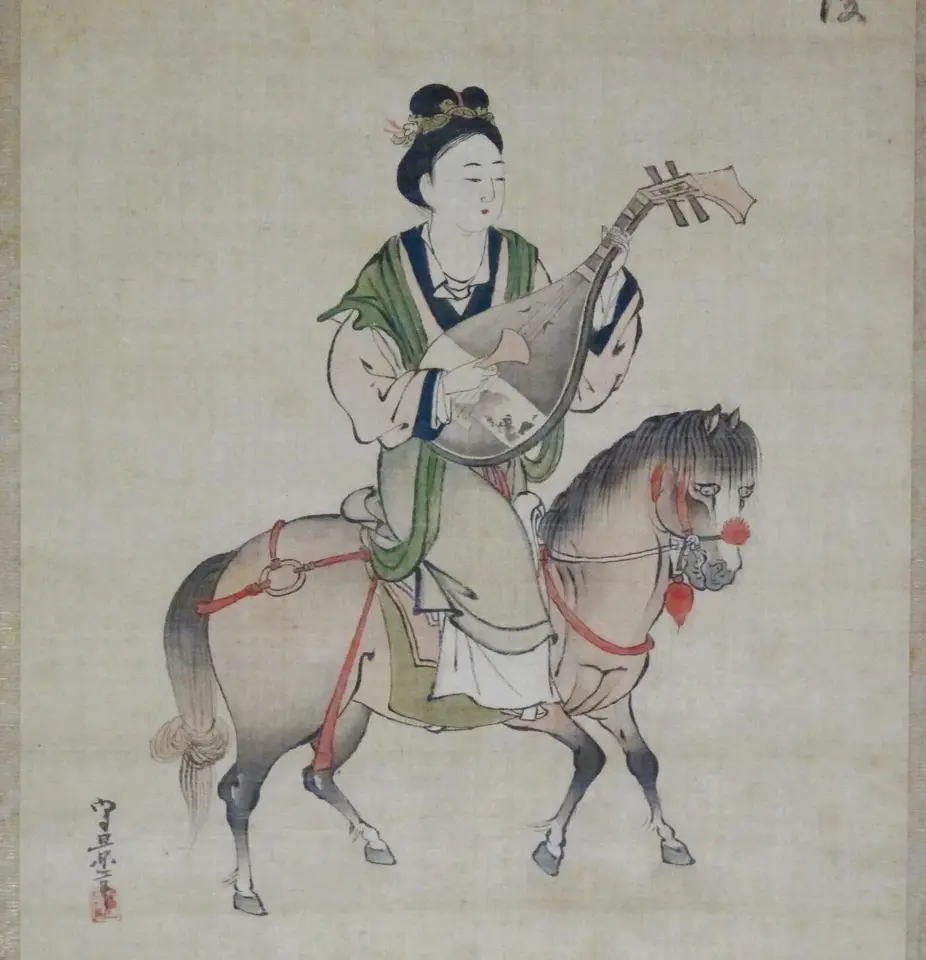
王昭君
Wang Zhaojun (王昭君, Wang Qiang), styled Zhaojun and historically referred to as Mingfei or Mingjun to avoid the naming taboo of Sima Zhao, was a renowned palace lady and diplomatic envoy of the Western Han dynasty, celebrated as one of the Four Beauties of Ancient China (traditionally embodying the beauty that caused "wild geese to drop from the sky"). Born into an ordinary household in Zigui, Nan Commandery, she was selected…
Wang Zhaojun (王昭君, Wang Qiang), styled Zhaojun and historically referred to as Mingfei or Mingjun to avoid the naming taboo of Sima Zhao, was a renowned palace lady and diplomatic envoy of the Western Han dynasty, celebrated as one of the Four Beauties of Ancient China (traditionally embodying the beauty that caused "wild geese to drop from the sky"). Born into an ordinary household in Zigui, Nan Commandery, she was selected into the imperial palace under Emperor Yuan of Han. In 33 BCE, when Huhanye Chanyu of the Southern Xiongnu journeyed to Chang'an to pledge allegiance and formally requested an imperial matrimonial alliance, Wang Zhaojun departed the Han court to marry him, receiving the noble title of Ninghu Yanzhi ("the Queen Consort who brings tranquility to the Xiongnu"). Following Huhanye's demise, Wang Zhaojun followed the imperial rescript of Emperor Cheng of Han instructing her to adhere to nomadic steppe customs, subsequently remarrying Huhanye's eldest son, Fuzhulei Ruodi Chanyu. Her cross-cultural marriage transformed relations between the central dynastic court and northern nomadic tribes, initiating over half a century of unbroken border peace celebrated in ancient annals as an era when beacon fires remained unlit, cattle and horses freely roamed grazing pastures, and border garrisons were dismantled. She facilitated the dissemination of advanced central agricultural implements, textile techniques, and court institutions to the steppe, becoming an enduring symbol of intercultural harmony and peaceful diplomacy in Chinese history.
Selected into the Han imperial harem from a reputable household in Nan Commandery as an imperial attendant.
Huhanye Chanyu journeyed to Chang'an seeking marriage; Emperor Yuan bestowed Wang Zhaojun as Ninghu Yanzhi, departing for the northern grasslands.
Huhanye passed away; Wang Zhaojun submitted a memorial requesting permission to return to Chang'an, but Emperor Cheng instructed her to abide by nomadic customs.
Remarried Huhanye's eldest son, Fuzhulei Ruodi Chanyu, in accordance with the levirate customs of the Xiongnu, later bearing two daughters.
Fuzhulei Chanyu passed away; his younger brother Souxie Ruodi Chanyu ascended the throne, while Wang Zhaojun lived peacefully in the north.
Passed away in the northern frontier grasslands; mourned deeply across the nomadic tribes and interred at the Green Mound south of modern Hohhot.
Renowned palace lady and diplomatic envoy of the Western Han dynasty, one of the Four Beauties of Ancient China, historically celebrated for Zhaojun Chusai (Zhaojun departing the frontier to marry the Xiongnu ruler) which fostered long-term border peace and cultural integration.
Wang Zhaojun was born into an ordinary family in Zigui County, Nan Commandery. Renowned locally for her natural elegance, intelligence, and virtue, she acquired literacy, musical mastery, and proficiency in classical arts from an early age. In 38 BCE, when the imperial government launched a nationwide selection of accomplished maidens to staff the imperial palaces, Wang Zhaojun was chosen and traveled north along the Yangtze River to the imperial capital of Chang'an, entering the imperial women's quarters.
During her years in the palace, Wang Zhaojun remained unacknowledged by Emperor Yuan due to her integrity and refusal to solicit court favorites or bribe palace officials. Later literary compilations, such as the Miscellaneous Records of the Western Capital (Xijing Zaji), popularized the narrative that court painter Mao Yanshou demanded lavish bribes from palace ladies, and intentionally defaced Wang Zhaojun's portrait with an unsightly mole when she refused, thereby preventing Emperor Yuan from recognizing her true appearance. While this account belongs largely to romantic folklore, it truthfully reflected the prolonged seclusion and obscurity experienced by countless women confined within the vast imperial harem.
In 36 BCE, Western Han military commanders Gan Yanshou and Chen Tang launched an expedition into Central Asia that destroyed Zhizhi Chanyu of the Northern Xiongnu, terminating the destructive partition of the steppe. Filled with admiration and gratitude toward the Han court, Huhanye Chanyu of the Southern Xiongnu traveled to Chang'an in 33 BCE to render vassalage and formally requested an imperial bride to consolidate dynastic ties.
Emperor Yuan resolved to select a maiden from the imperial quarters to marry the nomadic ruler. Faced with the prospect of traveling thousands of miles across arid wilderness into unfamiliar lands with harsh climates and alien customs, imperial palace women shrank in terror. Demonstrating extraordinary fortitude, Wang Zhaojun stepped forward voluntarily to accept the diplomatic assignment. Historical annals record that when she appeared at the imperial court presentation, her breathtaking beauty and stately poise captivated the entire hall. Although Emperor Yuan was astounded and deeply regretted losing her, imperial integrity and diplomatic decorum forbade revocation. He formally bestowed her upon Huhanye Chanyu alongside magnificent bridal endowments of silks, gold, and chariots.
Traveling alongside Huhanye Chanyu across the Yellow River and Yin Mountains, Wang Zhaojun arrived at the northern nomadic headquarters. Huhanye received her with profound reverence and bestowed upon her the honorary title of Ninghu Yanzhi, signifying that her presence would bring perpetual tranquility to the Xiongnu tribes. She bore him a son named Yituzhiyashi, who was subsequently appointed Right Rizhu King.
Following his wedding, Huhanye submitted a formal memorial to Emperor Yuan offering to guard the Western Han border extending from Shanggu westward to Dunhuang for generations, proposing that dynastic authorities withdraw frontier garrisons to permit the common people to prosper in peace. Although court official Hou Ying advised retaining border defensive architecture, active hostilities entirely ceased. Wang Zhaojun introduced iron agricultural implements, crop cultivation methods, sericulture, and Han administrative decorum across the northern tribes, winning the universal affection and respect of the nomadic populace.
In 31 BCE, Huhanye Chanyu passed away from illness. Steeped in Confucian traditions regarding widowhood, Wang Zhaojun submitted an earnest petition to the Han court requesting repatriation to Chang'an. However, the delicate diplomatic equilibrium and tribal stability hinged directly upon the marriage alliance. Understanding that her sudden return would disrupt mutual trust and trigger steppe factionalism, Emperor Cheng issued an imperial rescript directing her to "follow nomadic customs."
Under the traditional Xiongnu practice of levirate marriage, Huhanye's eldest son Diaotaomogao ascended the throne as Fuzhulei Ruodi Chanyu and took Wang Zhaojun as his consort. Prioritizing dynastic stability over personal sentiment, Wang Zhaojun complied with the imperial command. Over eleven years of harmonious marriage, she bore Fuzhulei Chanyu two daughters: Princess Xubu Juci and Princess Dangyu Juci. Both daughters were educated in Han culture, married prominent Xiongnu aristocratic nobles, and continued to serve as indispensable diplomatic coordinators between the imperial court and nomadic leadership.
In 20 BCE, Fuzhulei Chanyu passed away, and his brother Qiemixu succeeded him as Souxie Ruodi Chanyu. Having weathered decades of steppe life across two matrimonial alliances, Wang Zhaojun passed away around 19 BCE. The Chanyu and the tribal populace held an elaborate solemn funeral, with nomadic chieftains cutting their hair and ears in profound mourning.
She was buried on the south bank of the Dahei River near modern Hohhot, Inner Mongolia. Folklore maintained that while surrounding steppe vegetation withered each autumn, the grass covering Wang Zhaojun's tumulus remained perpetually green, earning it the celebrated name "Green Mound" (Qingzhong). Du Fu's renowned verses, lamenting her lonely mound facing the twilight desert, cemented her place in immortal literature. Following her death, her descendants continued her mission of harmony; her nephews Wang Xi and Wang Xian served as imperial envoys to the north, while Princess Xubu Juci repeatedly journeyed to Chang'an to reinforce peace until dynastic transitions disrupted the frontier.
Wang Zhaojun's marital alliance marked a decisive turning point in Han-Xiongnu relations. From her arrival in 33 BCE until the political upheavals of the Wang Mang era half a century later, the northern Great Wall corridor enjoyed comprehensive relief from centuries of relentless warfare. The Book of Han praised this era as a period when border gates remained unlocked, livestock covered the open fields, three generations were spared alarms of war, and commoners were free from military levies. Relieved soldiers returned to agriculture, trade caravans moved unmolested across frontiers, and both empires enjoyed sustained socioeconomic prosperity.
Wang Zhaojun's journey was far more than an individual diplomatic sacrifice; it represented a transformative channel of civilizational exchange. She brought to the northern steppes not merely silks and jewels, but advanced metal plowshares, irrigation methods, medicinal remedies, and architectural techniques. She taught nomadic women weaving, embroidery, and sericulture, guiding tribes toward settled agricultural practices and elevating steppe socioeconomic life.
Throughout the reigns of Huhanye and Fuzhulei Chanyu, Wang Zhaojun actively mediated disputes between tribal factions and imperial border commanders. Whenever dynastic ambassadors visited the north or nomadic missions traveled to Chang'an, she participated directly in ceremonial arrangements, ensuring decorum and protocol were scrupulously maintained. Her diplomatic diplomacy neutralized conservative tribal warmongers, allowing Han frontier commanderies like Xihe, Wuyuan, and Shuofang to remain secure while substantially reducing dynastic military expenditures.
Wang Zhaojun's peace legacy extended through generations of her descendants. Her eldest daughter, Princess Xubu Juci, married Xiongnu grand noble Xubu Dang and repeatedly led official embassies to the imperial court in Chang'an, receiving highest honors from Empress Dowager Wang Zhengjun. When frontier friction threatened to escalate, Wang Zhaojun's nephews traveled to the steppe to negotiate settlements, maintaining peaceful coexistence across decades.
The compelling narrative of Zhaojun departing the frontier inspired an extraordinary outpouring of classical literature and visual art over two millennia. From early yuefu ballads like Songs of Resentment to timeless masterpieces by Du Fu, Li Shangyin, and Wang Anshi, her story enriched poetic heritage. In theater and visual arts, Ma Zhiyuan's Yuan drama Autumn in the Palace of Han and Qiu Ying's Ming painting Mingfei Departing the Frontier embedded her image within the collective artistic consciousness, establishing her as an enduring cultural emblem of courage, empathy, and intercultural unity.
FIGURES ASSOCIATED WITH THIS DYNASTY