Uprising in Pei
Joined Liu Bang's anti-Qin insurrection from his butcher's trade, appointed personal aide.
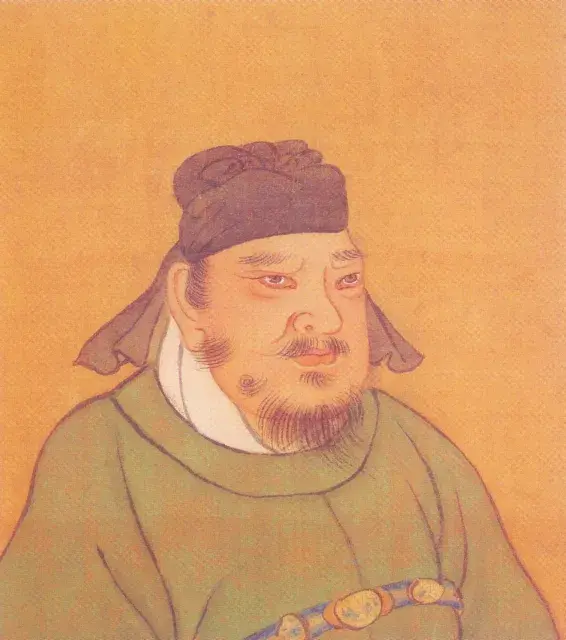
樊哙
Fan Kuai (樊哙, died 189 BCE), a native of Pei County in Sishui Commandery (modern Pei County, Xuzhou, Jiangsu), was an eminent founding general and military commander of the Western Han Dynasty, ranked fifth among the founding merit-holding marquises as Marquis of Wuyang. Born into humble circumstances, he earned a living as a dog butcher in his youth and formed an intimate bond with Liu Bang. He joined Liu Bang in hiding in…
Fan Kuai (樊哙, died 189 BCE), a native of Pei County in Sishui Commandery (modern Pei County, Xuzhou, Jiangsu), was an eminent founding general and military commander of the Western Han Dynasty, ranked fifth among the founding merit-holding marquises as Marquis of Wuyang. Born into humble circumstances, he earned a living as a dog butcher in his youth and formed an intimate bond with Liu Bang. He joined Liu Bang in hiding in the swamps of Mount Mangdang, subsequently taking up arms alongside Xiao He and Cao Can during the anti-Qin rebellion in Pei County, serving as Liu Bang's close personal aide. Throughout the campaigns overthrowing the Qin Dynasty and the subsequent Chu-Han Contention, Fan Kuai distinguished himself by unmatched battlefield valor, consistently serving as vanguard in storming hostile ramparts. Following the capture of Xianyang, he sternly dissuaded Liu Bang from indulging in Qin palace luxuries, convincing him to withdraw to Bashang. At the critical Hongmen Banquet, when Xiang Zhuang performed a sword dance intending to assassinate Liu Bang, Fan Kuai burst into the main command tent with sword and shield, glaring fiercely at Xiang Yu, devouring raw pork, and rebuking the Hegemon-King for entertaining slanders, securing Liu Bang's escape. Under the Han Dynasty, Fan Kuai served successively as General, Left Chancellor, and Chancellor of State, commanding armies that suppressed insurrections led by Zang Tu, Han Xin, Han Wang Xin, Chen Xi, and Lu Wan. When the aging Emperor Gaozu secluded himself during terminal illness and refused to grant audience to ministers, Fan Kuai forced open the palace doors in tears, invoking the disastrous historical precedent of Zhao Gao to urge the emperor back to imperial governance. He passed away in 189 BCE and was posthumously honored as Marquis Wu.
Joined Liu Bang's anti-Qin insurrection from his butcher's trade, appointed personal aide.
Led assaults at Dangdong and against Zhang Han's forces, earning ranks of Grandee and Senior Grandee.
Accompanied Liu Bang through Wu Pass to Bashang, advising the preservation of state treasuries.
Burst into Xiang Yu's tent at the Hongmen Banquet to rescue Liu Bang, ennobled as Marquis of Linwu.
Marched out of Hanzhong to defeat Zhang Han and Zhang Ping, promoted to General.
Defended Guangwu at Xingyang and besieged Xiang Yu at Chen County and Gaixia.
Suppressed the revolt of Zang Tu and was created Marquis of Wuyang with extensive fiefdoms.
Accompanied Gaozu to Chen County to seize Han Xin, pacifying the Chu region.
Crushed the rebellions of Han Wang Xin and Chen Xi, capturing twenty-seven counties and elevated to Left Chancellor.
Forced his way into the imperial bedchamber to arouse the dejected sovereign from depression.
Led troops against Lu Wan; nearly executed due to court slanders, transported in a cage cart and pardoned.
Passed away peacefully in Chang'an, posthumously honored as Marquis Wu.
Fan Kuai was born into poverty in Pei County, Sishui Commandery, where he sustained himself as a dog butcher. Tall and physically formidable, he was known for his blunt bravery and strength. During Liu Bang's tenure as Chief of Sishui Pavilion, the two men formed an enduring comradeship, sharing leisure and mutual trust.
In the late reign of the First Emperor of Qin, Liu Bang was assigned to escort penal laborers to Mount Li. When many laborers escaped along the journey, Liu Bang released the remaining men in the marshes of Fengxi and took refuge with dozens of loyal followers in the dense wetlands and caves of Mount Mangdang. During the ensuing imperial manhunt, Fan Kuai maintained unbroken loyalty, covertly delivering provisions and intelligence to Liu Bang's hideout.
In the autumn of 209 BCE, Chen Sheng and Wu Guang launched the Dazexiang Uprising. When the magistrate of Pei County contemplated rebellion, local functionaries Xiao He and Cao Can secretly invited Liu Bang to return. Fan Kuai accompanied Liu Bang back to Pei County, where they executed the magistrate with the support of local elders and proclaimed Liu Bang the Lord of Pei. Fan Kuai was appointed close personal aide, beginning his career as a frontline military commander.
Throughout the anti-Qin campaigns, Fan Kuai distinguished himself by unrivaled battlefield aggression, consistently leading assaults. In early clashes at Huling and Fangyu, and in defeating the forces of the Governor of Sishui at Feng County, Fan Kuai spearheaded charges. During the battle east of Dang County against Qin commander Sima Yi, he personally decapitated fifteen elite enemies, driving back the hostile vanguard and earning the noble rank of Grandee.
When Qin commander Zhang Han launched a counteroffensive, Fan Kuai fought desperately on the ramparts of Puyang and Dingtao, scaling ladders under heavy fire and slaying twenty-three enemies, advancing to the title of Senior Grandee. In subsequent victories at Chengyang and Huyou, and in routing the forces of Li You, Governor of Sanchuan and son of Chancellor Li Si, Fan Kuai took sixteen heads, advancing to Upper Associate. In the siege of Dongjun, he killed fourteen enemies and captured eleven prisoners, attaining the rank of Grandee of the Fifth Order.
Advancing west into the Guanzhong basin, Fan Kuai shattered Qin armies commanded by Zhao Ben and Yang Xiong. In the final push from Wu Pass to Bashang, he slew a commanding officer, took ten heads, captured 146 soldiers, and secured the surrender of 2,900 troops, earning the title Lord Xiancheng.
In late 207 BCE, Liu Bang's forces entered the Qin capital of Xianyang, accepting the surrender of King Ziying. Dazzled by the opulent palaces, stored treasures, and thousands of palace ladies, Liu Bang desired to reside within the luxurious imperial quarters. Fan Kuai intervened, bluntly warning Liu Bang that Qin had brought about its own ruin through decadence and luxury, and urged him to seal the royal storehouses and withdraw the army to the open plain of Bashang to win the hearts of the people. Reinforced by Zhang Liang's counsel, Liu Bang heeded the warning, sealed the palaces, and promulgated the famous Three Articles of Law at Bashang.
Liu Bang's occupation of Guanzhong provoked the fury of Hegemon-King Xiang Yu, who marched four hundred thousand troops to Hongmen, intending to annihilate Liu Bang's army of one hundred thousand. Recognizing the immense military disparity, Liu Bang traveled to Hongmen with a small cavalry escort to offer personal apologies.
During the banquet, Chu advisor Fan Zeng instructed Xiang Zhuang to perform a sword dance to assassinate Liu Bang. Alerted by Zhang Liang outside the banquet tent, Fan Kuai donned an iron breastplate, grasped a heavy iron shield in his left hand, and drew his sword. When Chu guards crossed their halberds to block him, Fan Kuai slammed into them with his shield, sending soldiers sprawling across the floor.
Parting the tent curtains, Fan Kuai glared fiercely at Xiang Yu, his eyes bulging and his hair bristling beneath his helmet. Startled, Xiang Yu gripped his sword, asking for the warrior's identity. Zhang Liang identified him as Liu Bang's carriage escort. Admiring his audacity, Xiang Yu praised him as a brave warrior and presented him with a bronze vessel of wine and an uncooked pig shoulder. Fan Kuai drained the wine in a single draught, placed the raw meat upon his shield, and carved slices with his sword, consuming it within moments.
When Xiang Yu asked if he could drink more, Fan Kuai rebuked him, declaring that he did not fear death, let alone a cup of wine. He recounted how Liu Bang had preserved Xianyang and withdrawn to Bashang out of respect for Xiang Yu, and warned that executing an allied commander on the advice of petty slanders would alienate the empire. Xiang Yu remained silent and invited him to be seated. Soon after, Liu Bang excused himself to the latrine and escaped with Fan Kuai along mountain paths back to Bashang. For this feat, Fan Kuai was ennobled as Marquis of Linwu.
Following the partition of the empire, Liu Bang was dispatched to Hanzhong as King of Han, with Fan Kuai accompanying him as Palace Attendant. In late 206 BCE, Liu Bang launched the campaign to reconquer the Three Qins under the strategy of general Han Xin.
Fan Kuai served as vanguard, crushing the armies of King Zhang Han of Yong, Zhang Ping, and Zhao Ben at Baishui, Feiqiu, Changshe, and Huaili, earning promotions to Cavalry Commander of the Palace Attendants and General, alongside the estate of Fanxiang in Duling.
In the ensuing Chu-Han Contention, Fan Kuai campaigned eastward, seizing Zou, Lu, Xiaqiu, and Xue. Following the disaster at Pengcheng, he held the defensive line at Guangwu near Xingyang, checking Xiang Yu's offensive for months, for which he received an additional fief of two thousand households. In the final counteroffensive, he captured Yangxia, captured over four thousand troops under Chu General Zhou, and helped encircle Xiang Yu at Chen County and Gaixia, securing the total triumph of the Han Dynasty.
Following the establishment of the Western Han in 202 BCE, several non-imperial princes staged rebellions, and Fan Kuai served as the primary field commander dispatched to restore imperial authority. He crushed the revolt of King Zang Tu of Yan, capturing Zang Tu alive, and was created Marquis of Wuyang. In 201 BCE, he accompanied Gaozu to Chen County to arrest King Han Xin of Chu.
When Han Wang Xin rebelled and allied with the Xiongnu, Fan Kuai campaigned in Dai, slaying Han Wang Xin in battle alongside Zhou Bo. In 197 BCE, when Chen Xi revolted, Fan Kuai stormed Xiangguo and Bairen, taking twenty-seven counties across Changshan and Qinghe, and was promoted to Left Chancellor. In the Battle of Henggu, he routed northern nomadic cavalry, killed commander Zhao Ji, captured ten rebel leaders including Chancellor Feng Liang, and subdued seventy-three towns.
In 196 BCE, Emperor Gaozu was severely wounded during the campaign against Ying Bu. Despondent and suffering from infected arrow wounds, the emperor secluded himself within the palace, forbidding all courtiers and commanders from entering. After more than ten days of paralysis, while senior ministers hesitated outside, Fan Kuai pushed past palace guards and burst through the doors.
Finding Gaozu resting on his couch with his head on a eunuch's lap, Fan Kuai fell to his knees in tears, reminding the sovereign of their heroic campaigns from Feng and Pei, and warned that secluding himself in the company of eunuchs risked repeating the palace disaster of Zhao Gao in the Qin Dynasty. Moved by his blunt loyalty, Gaozu laughed and rose from his bed, restoring normal imperial audiences.
In 195 BCE, King Lu Wan of Yan rebelled, and Gaozu appointed Fan Kuai as Chancellor of State to command the punitive expedition. By then, Gaozu was near death, and courtiers hostile to the Empress Lü faction warned the emperor that because Fan Kuai was married to Empress Lü's sister, Lü Xu, he would lead his army to exterminate Consort Qi and Prince Liu Ruyi after the emperor's death.
Gaozu flew into a rage and dispatched Chen Ping and Zhou Bo with secret orders to execute Fan Kuai on the spot. On their journey, Chen Ping reasoned with Zhou Bo that executing a founding hero and imperial in-law would provoke severe retribution from Empress Lü if the emperor died. They decided instead to seize Fan Kuai, place him in a cage cart, and transport him to Chang'an for imperial judgment.
Midway through their return, news arrived of Gaozu's passing. Chen Ping galloped ahead to the palace and knelt weeping before Empress Lü, explaining how he had preserved Fan Kuai's life. Relieved, Empress Lü immediately ordered Fan Kuai released and restored to his marquisate and chancellorship. Fan Kuai lived out his remaining years in peace, passing away in 189 BCE during the reign of Emperor Hui, and was posthumously honored as Marquis Wu.
The intervention at the Hongmen Banquet in 206 BCE stands as one of the pivotal rescues in Chinese imperial history. Confronting the mortal threat posed by Xiang Zhuang's sword dance, Fan Kuai relied upon indomitable courage to smash past guards and enter the presence of Xiang Yu.
His imposing physical stature, dramatic consumption of raw meat, and articulate defense of Liu Bang disarmed the host's aggression. By invoking moral principles and exposing the dishonor of killing an ally, Fan Kuai preserved Liu Bang's life, preventing the destruction of the infant Han movement.
When Liu Bang captured Xianyang, the allure of imperial wealth threatened to derail his grand strategy. Amid generals scrambling for treasures, Fan Kuai demonstrated political prescience by sternly rebuking the temptation to indulge in luxury.
His insistence on sealing the palaces and stationing troops at Bashang enabled Liu Bang to present himself as a disciplined, benevolent alternative to Qin despotism, establishing the moral prestige that anchored Han legitimacy across the Guanzhong region.
As the foremost assault general of the Han army, Fan Kuai achieved an extraordinary combat record. Over decades of campaigning, he personally severed 176 enemy heads and captured 288 prisoners. Operating as an independent field commander, he defeated seven opposing armies, conquered five fortified cities, subdued six commanderies and fifty-two counties, and captured one chancellor and twelve generals.
Whether leading the vanguard in assault ladders or holding the defenses of Guangwu against Xiang Yu, his aggressive battlefield presence served as an offensive engine for the founding of the dynasty.
In 196 BCE, when Emperor Gaozu succumbed to despair and retreated into isolation with palace eunuchs, Fan Kuai demonstrated ministerial fidelity by forcing open the palace doors.
His tears and invocation of the downfall of Qin severed the monarch's depressive inertia, averting an administrative crisis and demonstrating the rare courage of a founding commander willing to confront his sovereign for the preservation of dynastic stability.
During the dangerous early years of the Han Dynasty, when regional kings threatened imperial unity, Fan Kuai served as the primary instrument of territorial pacification.
Leading forces against Zang Tu, Han Xin, Han Wang Xin, Chen Xi, and Lu Wan, his military victories dismantled autonomous kingdoms, establishing direct central administration across northern China and providing the structural stability necessary for the subsequent era of peace.
FIGURES ASSOCIATED WITH THIS DYNASTY