Sponsoring the Stele
Donated five hundred copper cash toward the Stele of Cao Quan, with his name inscribed on the reverse side as an Erudite.
李儒
Li Ru (李儒), courtesy name Wenyou, was an Eastern Han scholar and official who served under the warlord Dong Zhuo. In his early years, Li Ru excelled in Confucian classical studies and received appointment as an Imperial Erudite; in 185, he personally contributed funds toward the erection of the celebrated Stele of Cao Quan. Following Dong Zhuo's usurpation in 190, Li Ru was appointed Chamberlain for Attendants to Liu Bian,…
Li Ru (李儒), courtesy name Wenyou, was an Eastern Han scholar and official who served under the warlord Dong Zhuo. In his early years, Li Ru excelled in Confucian classical studies and received appointment as an Imperial Erudite; in 185, he personally contributed funds toward the erection of the celebrated Stele of Cao Quan. Following Dong Zhuo's usurpation in 190, Li Ru was appointed Chamberlain for Attendants to Liu Bian, the deposed Young Emperor demoted to Prince of Hongnong. Under Dong Zhuo's direct order, Li Ru delivered the poisoned wine that forced Liu Bian's suicide. After Dong Zhuo's assassination, Li Ru served in the camp of general Li Jue. When Li Jue nominated him to be Palace Attendant in 192, Emperor Xian sternly condemned him for the murder of his elder brother, after which Li Ru vanished from official historical records.
Donated five hundred copper cash toward the Stele of Cao Quan, with his name inscribed on the reverse side as an Erudite.
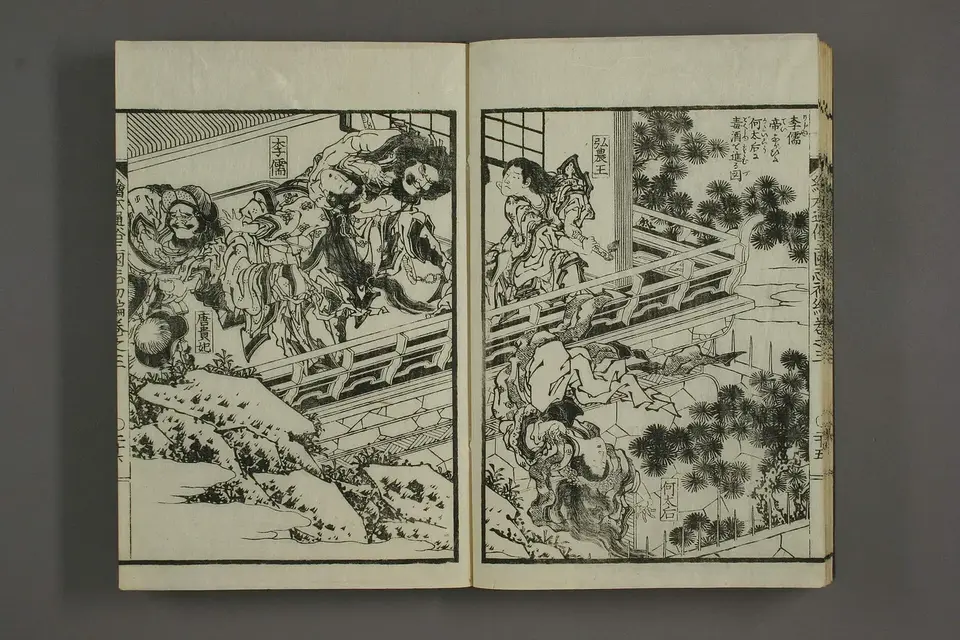
Serving as Chamberlain for Attendants to the Prince of Hongnong, he delivered poisoned wine to execute the deposed former emperor on Dong Zhuo's orders.
Nominated by Li Jue for the high office of Palace Attendant, but rebuked and rejected by Emperor Xian for his complicity in regicide.
Li Ru, courtesy name Wenyou, was active during the late Eastern Han period. Renowned for his erudition and proficiency in classical canons, he was summoned by the imperial court and appointed as an Imperial Erudite.
In the second year of Zhongping (185), local officials and gentry in Heyang County gathered funds to erect a commemorative monument honoring their former magistrate, Cao Quan, for pacifying regional banditry and restoring local welfare. Li Ru, then residing in Guanzhong, contributed five hundred copper coins to the construction effort. His name was formally carved on the back of the monument as "Li Ru, Courtesy Name Wenyou, Erudite by Special Summons, Five Hundred Cash." This artifact, known as the Stele of Cao Quan (Cao Quan Bei), survived intact through the centuries and is preserved in the Forest of Stone Steles Museum in Xi'an.
In the spring of the first year of Chuping (190), the frontier warlord Dong Zhuo seized control of the imperial court in Luoyang, deposed Emperor Shao (Liu Bian), demoted him to Prince of Hongnong, and enthroned Liu Xie as Emperor Xian. When regional warlords formed a coalition in the east to challenge his dictatorship, Dong Zhuo resolved to eliminate the deposed emperor to prevent him from becoming a figurehead for the opposition.
Li Ru was appointed Chamberlain for Attendants within the prince's household administration. Dong Zhuo dispatched Li Ru to the secluded palace quarters where the prince was held under house arrest to administer lethal poison. Li Ru entered the bedchamber presenting the poisoned wine, euphemistically claiming it was an herbal elixir to ward off illness. Liu Bian saw through the pretense, retorting that he suffered from no sickness and that it was an execution. Confronted by armed guards and insurmountable force, the eighteen-year-old former monarch wept, composed a farewell verse with his consort Lady Tang, and swallowed the poison.
In the fourth month of the third year of Chuping (192), Minister of Education Wang Yun and general Lu Bu assassinated Dong Zhuo. Dong Zhuo's Liangzhou subordinates Li Jue and Guo Si retaliated, captured Chang'an, and seized control of the government. Li Ru was absorbed into Li Jue's military administration while retaining his status as an Erudite.
In the tenth month of that year, Li Jue submitted a formal memorial recommending that Li Ru be appointed Palace Attendant, a position granting daily direct access to the sovereign. Emperor Xian rejected the recommendation with indignation, issuing an imperial decree declaring that Li Ru had previously served as Chamberlain for Attendants to the Prince of Hongnong and had coerced the murder of his royal brother, for which he deserved punishment rather than promotion. Li Jue and other officers pleaded on Li Ru's behalf, arguing that the execution had been commanded by Dong Zhuo and did not reflect Li Ru's personal design. Although the young emperor could not punish Li Ru due to Li Jue's armed ascendancy, the appointment was permanently shelved. Following this incident, no further mentions of Li Ru appear in official histories.
FIGURES ASSOCIATED WITH THIS DYNASTY