Westward Evacuation
Followed the imperial court during the forced evacuation from Luoyang to Chang'an, entering the palace as a Noble Lady.
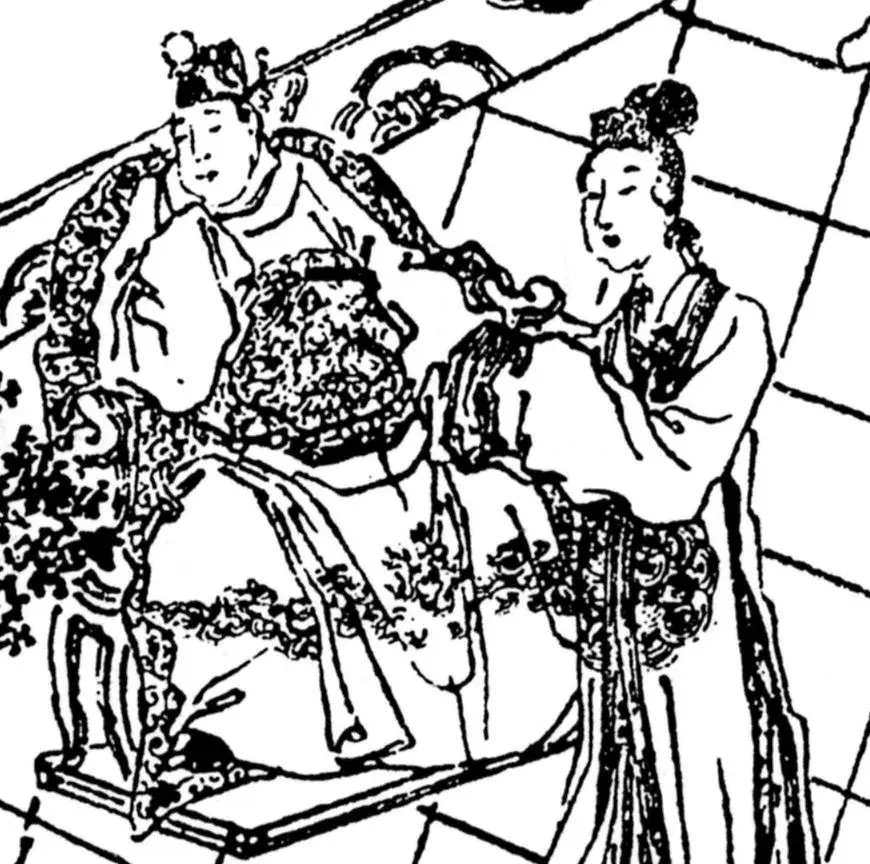
伏寿
Fu Shou (伏寿, ?–214 CE), a native of Dongwu in Langya Commandery (琅邪郡东武, modern Zhucheng, Shandong), was the first empress of Emperor Xian of Han (汉献帝) in the late Eastern Han dynasty. A descendant of Han classicist Fu Sheng and Grand Minister over the Masses Fu Zhan, she was the daughter of Fu Wan, Marquis of Buji. In 190 CE, when warlord Dong Zhuo forcibly relocated the imperial court westward to Chang'an, Fu Shou…
Fu Shou (伏寿, ?–214 CE), a native of Dongwu in Langya Commandery (琅邪郡东武, modern Zhucheng, Shandong), was the first empress of Emperor Xian of Han (汉献帝) in the late Eastern Han dynasty. A descendant of Han classicist Fu Sheng and Grand Minister over the Masses Fu Zhan, she was the daughter of Fu Wan, Marquis of Buji. In 190 CE, when warlord Dong Zhuo forcibly relocated the imperial court westward to Chang'an, Fu Shou accompanied the court into Guanzhong and entered the imperial harem as a Noble Lady. In the fourth month of 195 CE, Fu Shou was officially consecrated as Empress. Later that year, when warlords Li Jue and Guo Si threw Guanzhong into bloody civil war, Empress Fu accompanied Emperor Xian during their perilous flight eastward to Luoyang, surviving battlefield massacres at Caoyang and an emergency night crossing of the Yellow River. Following the transfer of the capital to Xu under Cao Cao in 196 CE, the imperial couple became figureheads under military dictatorship. In 200 CE, after the Girdle Edict conspiracy resulted in the execution of loyalists and the strangulation of the pregnant Consort Dong, Empress Fu sent a secret letter to her father Fu Wan begging him to recruit loyalists to eliminate Cao Cao. In the eleventh month of 214 CE, the correspondence was uncovered. Cao Cao forced the emperor to depose her, sending Hua Xin with armored troops to smash palace walls and drag the empress to the palace prison, where she was killed alongside her two sons, while over one hundred clan members were executed. In office for twenty years, Empress Fu Shou stood as an enduring symbol of the tragic collapse of Eastern Han imperial legitimacy.
Followed the imperial court during the forced evacuation from Luoyang to Chang'an, entering the palace as a Noble Lady.
Consecrated as Empress by Emperor Xian, presiding over the inner chambers amid national disarray.
Endured ambushes by rebel warlords, having her robes stained with blood before crossing the freezing Yellow River on an open boat.
Arrived in the new capital of Xu, where Cao Cao assumed total military dictatorship, leaving the court under constant surveillance.
Following the murder of Consort Dong, secretly composed a letter to her father Fu Wan urging the elimination of Cao Cao.
The secret plot was uncovered; Cao Cao dispatched Hua Xin to drag her from a hollow wall, and she was murdered in the palace prison.
Fu Shou was born into a prominent academic lineage in Dongwu of Langya Commandery that had transmitted the Book of Documents across generations. Her remote ancestor Fu Sheng was renowned for preserving canonical texts during the Qin book burnings, while her seventh-generation ancestor Fu Zhan was created Marquis of Buji during the restoration under Emperor Guangwu. Her father, Fu Wan, inherited the marquisate and married Liu Hua, Grand Princess of Yang'an and daughter of Emperor Huan, maintaining a household known for Confucian decorum and classical learning.
From youth, Fu Shou was celebrated for her intellectual brilliance, poise, and knowledge of ancestral rituals. In 189 CE, Emperor Ling passed away, and western warlord Dong Zhuo seized Luoyang, deposing the young emperor to enthrone nine-year-old Liu Xie as Emperor Xian. In 190 CE, facing advancing coalitions of eastern warlords, Dong Zhuo burned Luoyang to ashes and drove the imperial court and millions of civilians to Chang'an. Fu Shou accompanied her parents westward. During the flight, her noble bearing and intelligence brought her to royal attention, and she was inducted into the Side Chambers of the Weiyang Palace as a Noble Lady.
Throughout Emperor Xian's confinement in Chang'an, the imperial court remained subject to the whims of warlords. After Dong Zhuo was assassinated, his former lieutenants Li Jue and Guo Si seized the capital and terrorized the court. Through these crises, Noble Lady Fu remained constantly beside the teenage monarch, providing steadfast comfort. In the fourth month of 195 CE, the fourteen-year-old Emperor Xian issued an imperial decree elevating her to Empress of the Han realm.
In the sixth month of that year, open war erupted between Li Jue and Guo Si within Chang'an. Li Jue abducted Emperor Xian into his fortified military camp, while Guo Si seized senior ministers as hostages. The palace was reduced to starvation, with the empress subsisting on coarse grain. Following fragile mediation, the sovereign departed Chang'an in the seventh month, seeking to return to the ancestral capital of Luoyang under the escort of generals Dong Cheng and Yang Feng.
Li Jue and Guo Si quickly reneged on the agreement, pursuing the retreating caravan with elite cavalry. At Caoyang and Dongjian, imperial guards were crushed in fierce combat, and dozens of high-ranking ministers were slaughtered. During the panic, Empress Fu fled on foot carrying a few remaining bolts of silk cloth. An officer under Dong Cheng named Sun Hui drew a blade to extort the cloth, slaying the empress's personal attendant on the spot and splattering her silk garments with blood. Upon reaching Dayang on the southern banks of the Yellow River, with enemy cavalry torches illuminating the night sky, Emperor Xian and Empress Fu boarded a small skiff under fire, braving icy waters to reach the northern shore and eventually returning to the ruins of Luoyang.
In 196 CE, the imperial entourage arrived at a devastated Luoyang, where ancestral temples were burned, palaces overgrown with weeds, and court ministers were forced to scavenge for wild roots to survive starvation. In the seventh month, regional warlord Cao Cao arrived with seasoned troops, escorting the court to his military stronghold at Xu.
While the relocation provided material relief, it stripped the throne of all autonomy. Cao Cao assumed supreme military and administrative power under the mantle of assisting the sovereign. Armed retainers were posted at every palace entrance, monitoring imperial audiences, communications, and daily movements. Empress Fu lived under perpetual surveillance within the inner chambers, witnessing the systematic reduction of the Han throne to an ornamental vassal.
In the winter of 199 CE, Emperor Xian covertly pierced his finger and wrote an imperial decree in blood upon his inner girdle, smuggling it to General of Chariots and Cavalry Dong Cheng, instructing him to assemble loyal commanders to assassinate Cao Cao.
In the first month of 200 CE, the conspiracy was betrayed to Cao Cao. The dictator launched a ruthless purge, executing Dong Cheng and his fellow conspirators alongside their clans. Emperor Xian's favored concubine, Consort Dong, was pregnant with royal offspring. Despite Emperor Xian prostrating himself before Cao Cao and weeping bitterly to beg for her life, Cao Cao had the imperial consort dragged from the inner palace and strangled before the eyes of the emperor and empress.
Traumatized by Consort Dong's execution, Empress Fu lived in terror, aware that her position as empress could not protect her from similar destruction. Driven by outrage and desperation, she composed a secret letter to her father, Colonel Fu Wan. In the letter, she described Cao Cao's murderous insolence, detailing the execution of the royal consort and imploring her father to secretly rally upright ministers and regional warlords to eliminate the warlord. Recognizing that Cao Cao's military apparatus was impenetrable and that regional warlords were unreliable, Fu Wan concealed the letter in a secret room, judging armed action impossible. In 209 CE, Fu Wan passed away in sorrow.
In the eleventh month of 214 CE, the secret letter written by Empress Fu was uncovered by Cao Cao's secret service. Viewing this as an opportunity to extinguish imperial opposition, Cao Cao forced Emperor Xian to issue a decree stripping Empress Fu of her title, accusing her of jealousy and treason. Cao Cao dispatched Imperial Censor Xi Lu carrying the imperial staff, accompanied by Master of Writing Hua Xin leading armored troops, to storm the palace.
Hearing the clash of weapons outside her chambers, Empress Fu closed the doors and hid inside a hollow partition wall. Hua Xin smashed down the doors with an axe, broke through the wooden wall, and dragged the empress out by her hair. Disheveled, weeping, and barefoot, she was led through the outer hall where Emperor Xian sat beside Xi Lu.
Reaching the sovereign, Empress Fu grasped his sleeves and cried: "Can Your Majesty not save my life once more?" Emperor Xian wept, replying: "I do not even know when my own life will end; how can I deliver you?" Turning to Xi Lu, the emperor lamented in despair: "Lord Xi, can such a thing exist under heaven?"
Hua Xin's troops hauled Empress Fu away to the palace prison, where she was murdered in confinement. Her two young sons were poisoned with venomous wine. Cao Cao subsequently ordered the desecration of Fu Wan's tomb, beheading over one hundred members of the Fu clan, while her mother and nineteen relatives were exiled to northern frontiers. Having reigned as empress for twenty years, Fu Shou perished as the ultimate casualty of the collapsing Han dynasty.
Empress Fu Shou's historical significance lies partly in her steadfast companionship beside Emperor Xian during the collapse of Han authority. Through the terrors of Chang'an and the bloody retreat to Luoyang, she shared every hardship with the sovereign.
Her courage during the night crossing of the Yellow River and her refusal to abandon the emperor under fire provided Emperor Xian with crucial emotional stability, personifying dynastic loyalty amid warlord chaos.
The clandestine letter composed by Empress Fu represented the final organized attempt from within the Eastern Han inner palace to challenge the dictatorship of Cao Cao.
Witnessing the execution of Consort Dong, she risked her lineage to petition her father for military intervention. While the plot was neutralized by political realities, her defiance demonstrated the enduring moral courage of Han empresses against military usurpation.
Empress Fu's execution marked the structural extinction of independent imperial authority in late Eastern Han history. By executing the consecrated empress, poisoning two royal heirs, and slaughtering the illustrious Fu lineage, Cao Cao dismantled the last traditional defenses surrounding the throne.
Following her murder, Cao Cao installed his own daughter Cao Jie as empress, consolidating total control over the inner court. The destruction of Empress Fu severed the last moral ties between the monarchy and the military regime, directly inaugurating the transition to the Cao Wei dynasty.
FIGURES ASSOCIATED WITH THIS DYNASTY