Imperial Kinsman
Sima Yan founded Western Jin, honoring his mother Wang Yuanji as Empress Dowager; uncle Wang Kai entered court as Supernumerary Cavalier.
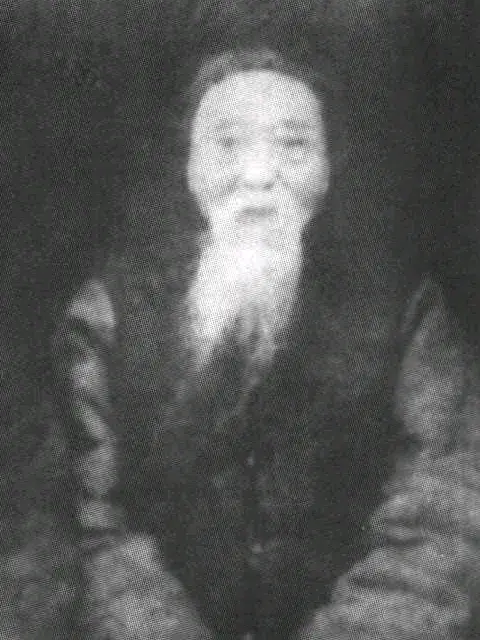
王恺
Wang Kai (王恺), courtesy name Junfu, was a native of Tan County in Donghai Commandery (modern Tancheng, Shandong). He was a prominent imperial relative, senior general, and immensely wealthy aristocrat of the Western Jin dynasty, hailing from the prestigious Donghai Wang clan. His grandfather was Cao Wei Minister over the Masses Wang Lang, his father was Confucian classical master and General of the Guards Wang Su, and his…
Wang Kai (王恺), courtesy name Junfu, was a native of Tan County in Donghai Commandery (modern Tancheng, Shandong). He was a prominent imperial relative, senior general, and immensely wealthy aristocrat of the Western Jin dynasty, hailing from the prestigious Donghai Wang clan. His grandfather was Cao Wei Minister over the Masses Wang Lang, his father was Confucian classical master and General of the Guards Wang Su, and his elder sister was Empress Dowager Wenming (Wang Yuanji), consort of Sima Zhao and biological mother of Western Jin's founding ruler, Emperor Wu (Sima Yan). By virtue of his status as Emperor Wu's maternal uncle, Wang Kai enjoyed unrivaled imperial favor, entering officialdom as Supernumerary Cavalier Regular Attendant and subsequently commanding elite metropolitan garrisons as General of the Valiant Cavalry, Colonel of Archer Cadres, and General of the Rear. Though possessing natural talent and demonstrating administrative diligence in public office, Wang Kai lacked personal rectitude, living a life of unbridled extravagance that symbolized the moral decay of the Western Jin aristocracy. In 291, Wang Kai joined Empress Jia Nanfeng and Prince of Chu Sima Wei in the palace coup that eliminated regent Yang Jun, earning the title Duke of Shandu County with an estate of 1,800 households. He is celebrated throughout Chinese history for his legendary competition in ostentatious wealth against the fabulously rich Inspector of Jingzhou, Shi Chong. Encouraged by Emperor Wu, who secretly supplied him with rare imperial treasures, Wang Kai contested Shi Chong in washing cauldrons with sugar syrup, erecting forty-li silk screens, and displaying rare coral trees. Serving as General of the Rear in his final years, Wang Kai died in office; the imperial court conferred upon him the scathing posthumous name "Chou" (The Reprehensible) to condemn his lifetime of unrepentant vanity and decadence.
Sima Yan founded Western Jin, honoring his mother Wang Yuanji as Empress Dowager; uncle Wang Kai entered court as Supernumerary Cavalier.
Promoted to Colonel of Archer Cadres and Cavalier Regular Attendant, amassing immense fortunes through imperial favor.
Competed in ostentatious luxury against Shi Chong in Luoyang, backed secretly by Emperor Wu with imperial treasures.
Participated in Empress Jia's coup to destroy regent Yang Jun; rewarded with the peerage of Duke of Shandu County.
Promoted to General of the Valiant Cavalry; dismissed from office following bitter mutual impeachments with cousin Wang Yan.
Reinstated as Colonel of Archer Cadres and elevated to General of the Rear, commanding imperial palace garrisons.
Passed away at his Luoyang residence; the court branded his lifetime of vanity by bestowing the derogatory posthumous title Chou.
Wang Kai traced his descent from the prestigious Donghai Wang clan, one of the foremost aristocratic lineages of early medieval China. The family had achieved empire-wide renown for classical scholarship since the Eastern Han dynasty, translating intellectual prestige into political supremacy during the Wei-Jin transition. Wang Kai's grandfather, Wang Lang, had served as the foremost chancellor of Cao Wei as Minister over the Masses. His father, Wang Su, was the celebrated master who founded the "Wang School" of classical learning and commanded palace guards as Central Commander of the Army. Most decisively, Wang Kai's elder sister, Lady Wang Yuanji, married Sima Zhao, giving birth to Western Jin's founding monarch Emperor Wu (Sima Yan) and the Prince of Qi (Sima You).
Benefiting from these intimate royal ties, Wang Kai was showered with imperial honors from earliest youth. In 265, Sima Yan accepted the abdication of Cao Wei, established the Jin dynasty, and elevated his mother as Empress Dowager Wenming. As the emperor's biological uncle, Wang Kai was immediately commissioned as Supernumerary Cavalier Regular Attendant, serving in the inner palace. Though lacking moral restraint in his private life, Wang Kai possessed sharp practical intellect, eloquent speech, and physical bravery. In discharging routine palace duties, he displayed commendable administrative competence, earning the historical assessment that while he lacked private virtues, he enjoyed a respectable reputation in public office.
Following the conquest of Eastern Wu in 280, the Jin empire enjoyed widespread peace, and the metropolitan aristocracy in Luoyang descended into unrestrained hedonism. Emperor Wu treated his maternal uncle with extraordinary generosity, lavishing upon him vast estates, tributary treasures, and imperial gold. Relying upon his imperial pedigree, Wang Kai accumulated colossal wealth, constructing sprawling palatial compounds in Luoyang and maintaining thousands of concubines, musicians, and household retainers, living as one of the most ostentatious grandees of the capital.
Throughout the middle and late reign of Emperor Wu, Wang Kai served in prestigious military posts, including Colonel of Archer Cadres and Cavalier Regular Attendant, commanding veteran central guard units. In 290, Emperor Wu died, and his developmentally disabled heir Sima Zhong ascended the throne as Emperor Hui. Power was monopolized by Grand Tutor Yang Jun, the emperor's maternal relative by marriage, who alienated the imperial princes and founding statesmen through autocratic paranoia.
In March 291, Empress Jia Nanfeng allied with the Prince of Chu, Sima Wei, to execute a bloody palace coup against the Yang faction. In this decisive military purge, Wang Kai placed his central guard units at the disposal of Empress Jia, personally leading troops to assault Yang Jun's palace. Following the complete extermination of Yang Jun's clan, the imperial court rewarded Wang Kai's military assistance by elevating him to Duke of Shandu County, with a fief of 1,800 households, promoting him to General of the Valiant Cavalry and Cavalier Regular Attendant.
Shortly thereafter, a bitter power struggle erupted between Wang Kai and his younger cousin, Central Commander Wang Yan, who was the intellectual leader of the Xuanxue metaphysical movement. Wang Kai relied upon his seniority and royal kinship, while Wang Yan commanded immense prestige among the literati. The two men traded acrimonious impeachments in the presence of the throne, leading the court to dismiss Wang Kai on technical grounds. However, needing the support of the Donghai Wang family, Empress Jia soon recalled him as Colonel of Archer Cadres and promoted him to General of the Rear, restoring him to the pinnacle of metropolitan military power.
Wang Kai's enduring notoriety in Chinese history stems from his sensational public competition in luxury against Shi Chong, the Inspector of Jingzhou. During the Taikang era, the Western Jin ruling elite equated wealth with personal prestige. Wang Kai considered himself unrivaled as the emperor's uncle, while Shi Chong, son of founding general Shi Bao, had amassed astronomical wealth through commercial extortion and maritime piracy along the Yangtze River. The two aristocrats engaged in an outrageous duel of ostentation that captivated Luoyang.
Hearing that Shi Chong's banquets featured unprecedented luxury, Wang Kai ordered his cooks to clean all cooking cauldrons with expensive maltose sugar syrup rather than water (yi yi wo fu). Learning of this, Shi Chong scoffed and ordered his own kitchens to discard ordinary firewood, burning expensive tallow candles as cooking fuel (yi la dai xin). In this initial exchange, burning candles as firewood eclipsed washing pots with syrup in sheer profligacy.
Determined to regain superiority, Wang Kai ordered his servants to erect two parallel forty-li screens of costly purple silk along both sides of the main avenue whenever he traveled by carriage, dazzling the capital with shimmering waves of silk. Shi Chong laughed at the display and immediately deployed his vast warehouses of multi-colored brocade to construct a fifty-li brocade screen, surpassing Wang Kai's purple silk both in fabric quality and by ten full li in length. Humiliated before the entire population of Luoyang, Wang Kai was consumed by indignation.
Stung by repeated defeats, Wang Kai sought assistance from his imperial nephew during a palace audience. Rather than rebuking his uncle's grotesque vanity, Emperor Wu enthusiastically supported him, ordering eunuchs to retrieve an incomparable heirloom from the inner treasury. The treasure was a natural red coral tree standing over two feet tall, with exquisitely balanced branches and luminous translucence, a solitary marvel of nature unrivaled across the empire. Emperor Wu assured his uncle that even the fabulously rich Shi Chong could never match such an imperial treasure.
Ecstatic, Wang Kai hosted a grand banquet, inviting ministers, princes, and high grandees, with Shi Chong as the guest of honor. Midway through the feast, Wang Kai ordered attendants to carry the coral tree into the center of the hall. The luminous crimson branches radiated across the hall, drawing gasps of awe from the assembled guests. Preening with arrogance, Wang Kai turned to Shi Chong: "Does your household possess a divine marvel such as this?"
Shi Chong showed no emotion. Slowly withdrawing an iron scepter (ruyi) from his sleeve, he took one casual swing and shattered the priceless coral tree to pieces with a crisp crack, sending crimson fragments across the floor. The guests were paralyzed with shock, and Wang Kai leapt up, shouting in fury: "Shi Chong! You broke my treasure out of base jealousy! How dare you commit such insolence!"
Shi Chong smiled serenely: "Why should you grieve over so trivial a trinket? I shall repay you double today." Snapping his fingers, Shi Chong ordered his servants to bring forward his personal collection. Within moments, retainers carried into the hall six or seven colossal red coral trees, each standing three to four feet in height, boasting flawless trunks and dazzling radiance that completely eclipsed Wang Kai's broken specimen, while smaller two-foot trees were too numerous to count. Shi Chong gestured for Wang Kai to take his pick. Stunned into silence, Wang Kai realized the unbridgeable gulf in their wealth, slumping into his seat in bitter humiliation.
On another occasion, Wang Kai owned a prized bull named "Eight-Hundred-Li Striped," famed for its lightning speed and pristine white hooves. Shi Chong challenged Wang Kai to an archery contest, wagering treasures against the bull. When Shi Chong won, he ordered the bull butchered on the spot, carving out its roasted heart to serve to the banquet guests, leaving Wang Kai heartbroken yet powerless.
During the middle of Emperor Hui's reign, the catastrophic civil strife known as the War of the Eight Princes engulfed the Western Jin court. As imperial princes mobilized private armies to slaughter rivals across Luoyang, the ostentatious grandees of the Taikang era faced catastrophic retribution. Shi Chong became entangled in the feud between the Prince of Huainan and the Prince of Zhao, being executed alongside his entire clan in 300.
In contrast, Wang Kai's intimate imperial kinship shielded him from physical destruction. Holding the post of General of the Rear, he navigated the deadly crosscurrents of the regency, preserving his life and household.
Around 300, General of the Rear Wang Kai passed away at his Luoyang mansion. Evaluating his lifetime of service, the court ritualists of the Ministry of Rites concluded that although Wang Kai was a royal relative and high general, he had never rendered substantial service to the state, dedicating his career to shameless vanity, wealth hoarding, and moral corruption that degraded social mores. Conforming to historical precedent, the court conferred upon him the scathing posthumous name "Chou" (The Reprehensible), branding him historically as Duke Chou of Shandu. The legendary anecdotes of his rivalry with Shi Chong were immortalized in the Shishuo Xinyu and Book of Jin, serving as the ultimate historical symbol of aristocratic decadence preceding dynastic collapse.
During the early reign of Emperor Hui, Grand Tutor Yang Jun attempted to monopolize state power, creating an existential crisis for the imperial administration.
In March 291, Wang Kai committed his central guard units to Empress Jia Nanfeng and Prince of Chu Sima Wei, leading troops to storm Yang Jun's palace and eliminate his faction. For his military service in stabilizing the court, he was elevated to Duke of Shandu County with an estate of 1,800 households, consolidating his influence within the metropolitan hierarchy.
Following the conquest of Eastern Wu, the Western Jin ruling class monopolized land and office, cultivating an ethos of competitive material hedonism.
Leveraging his status as the emperor's uncle, Wang Kai engaged in his historic competition with Shi Chong. From washing cauldrons with sugar syrup against burning candles as firewood, to forty-li silk screens against fifty-li brocade barriers, his daily life pushed aristocratic luxury to unprecedented extremes, providing historians with the quintessential portrait of late Western Jin ruling-class decadence.
The iconic scene of Shi Chong shattering the imperial coral tree with an iron scepter reflects not merely private vanity, but the complex political tensions between imperial favorites and private oligarchs.
That Emperor Wu personally loaned imperial heirlooms to his uncle to assist in a vulgar wealth competition demonstrated the complete absence of moral leadership at the summit of the state. Shi Chong's effortless display of larger coral trees revealed that private magnates had accumulated wealth dwarfing the imperial treasury, highlighting the structural corruption that led inexorably to the War of the Eight Princes and the collapse of the Western Jin dynasty.
FIGURES ASSOCIATED WITH THIS DYNASTY