Birth in Baxi
Born into a distinguished scholar-gentry lineage in Anhan, Baxi Commandery.
陈寿
[!NOTE] Chen Shou (233–297), courtesy name Chengzuo and also styled Chen Chengzuo, was a preeminent historian, scholar-official, and writer of the Three Kingdoms period and the Western Jin dynasty. Hailing from Anhan in Baxi Commandery (modern Nanchong, Sichuan Province), he studied classical Confucian learning and historical methodology under the renowned Shu Han polymath Qiao Zhou. Serving in the Shu Han administration as…
[!NOTE] Chen Shou (233–297), courtesy name Chengzuo and also styled Chen Chengzuo, was a preeminent historian, scholar-official, and writer of the Three Kingdoms period and the Western Jin dynasty. Hailing from Anhan in Baxi Commandery (modern Nanchong, Sichuan Province), he studied classical Confucian learning and historical methodology under the renowned Shu Han polymath Qiao Zhou. Serving in the Shu Han administration as Assistant in the Palace Library and Gentleman Attendant at the Palace Gate, Chen Shou maintained unbending integrity, repeatedly facing demotion for refusing to flatter the corrupt court eunuch Huang Hao. Following the fall of Shu Han, he entered the service of the Western Jin through the patronage of Minister of Works Zhang Hua, serving as Gentleman Compiler, Secretarial Censor, and Palace Cadet of the Heir Apparent. His crowning masterpiece, the monumental sixty-five-volume Records of the Three Kingdoms (Sanguozhi), consisting of the Book of Wei (section of Records of the Three Kingdoms), the Book of Shu (section of Records of the Three Kingdoms), and the Book of Wu (Wei Zhao et al.), established him alongside Sima Qian, Ban Gu, and Fan Ye as one of the four supreme masters of ancient Chinese dynastic historiography. Additionally, he rescued and compiled the Collected Works of the Zhuge Clan, submitting the Memorial Presenting the Catalog of the Collected Works of the Zhuge Clan, and authored Biographies of Eminent Elders of Yizhou, Records of Ancient States, Discourse on Government Offices, and Explaining Name Taboos.
Born into a distinguished scholar-gentry lineage in Anhan, Baxi Commandery.
Traveled to Chengdu to study Confucian classics, the Records of the Grand Historian, and the Book of Han under master Qiao Zhou.
Served as Master of Records to the General of the Guards and Gentleman Attendant at the Palace Gate in Shu Han, suffering repeated demotions for refusing to curry favor with Huang Hao.
General Deng Ai conquered Shu Han; Chen Shou returned to his hometown in retirement, beginning regional historical compilations.
Recommended by Minister of Works Zhang Hua; appointed Assistant Gentleman Compiler in the Western Jin court.
Compiled the twenty-four fascicles of the Collected Works of the Zhuge Clan, submitting the Memorial Presenting the Catalog of the Collected Works of the Zhuge Clan to Emperor Wu of Jin.
Following the Western Jin conquest of Sun Wu, utilized captured official archives to launch the comprehensive compilation of Records of the Three Kingdoms.
Slandered by jealous court rivals including Xun Xu; assigned as Administrator of Changguang but declined on account of his mother's frail health.
Completed the sixty-five volumes of Records of the Three Kingdoms, winning wide acclaim from contemporary literati.
Appointed Palace Cadet of the Heir Apparent and later Secretarial Censor under Emperor Hui of Jin (Sima Zhong).
Passed away in Luoyang at the age of sixty-five; imperial scribes were dispatched to transcribe his manuscripts for the imperial library.
Chen Shou was born in 233 in Anhan, Baxi Commandery, during the reign of the Later Ruler of Shu Han (Liu Shan). His lineage was one of the prestigious scholar-gentry families of Yizhou, long celebrated for devotion to classical letters. His father served under Chancellor Zhuge Liang during Zhuge Liang's Northern Expeditions.
Endowed with exceptional memory and intellectual curiosity, young Chen Shou was sent to the Shu capital of Chengdu to enter the academy of Qiao Zhou, the premier master of classical scholarship and historiography in the southwest. Qiao Zhou immersed him in the Rites of Zhou, the Spring and Autumn Annals, Sima Qian's Records of the Grand Historian, and Ban Gu's Book of Han. Under Qiao Zhou's rigorous instruction, Chen Shou mastered textual criticism, source collation, and the subtle moral distinctions of spring and autumn historiographical principles, establishing scholarly renown alongside fellow classmates Wen Li and Luo Xian.
Upon completing his education, Chen Shou entered officialdom under the Shu Han government. He initially served as Master of Records to the General of the Guards, managing army archives and military administration. His meticulous organizational efficiency led to promotions as Assistant in the Palace Library and Clerk in the Archive Hall, granting him direct access to imperial edicts, genealogical rosters, and administrative records.
Later elevated to Gentleman Attendant at the Palace Gate, Chen Shou observed the rapid decay of court politics. With Emperor Liu Shan neglecting governance, powerful eunuch Huang Hao usurped civilian and military authority. While opportunistic courtiers flocked to Huang Hao's faction, Chen Shou maintained unbending moral rectitude, steadfastly refusing to flatter the eunuch. Incensed by his defiance, Huang Hao repeatedly orchestrated slanderous charges against him, resulting in multiple demotions and dismissals. Although his bureaucratic career suffered, this period of adversity gave Chen Shou intimate insight into the structural weaknesses and political dynamics that precipitated Shu Han's collapse.
In 263, Wei general Deng Ai bypassed mountain passes via Yinping, compelling Liu Shan to surrender. Refusing to despair amid dynastic annihilation, the thirty-year-old Chen Shou returned to Baxi. During this period of rustic seclusion, he collected oral histories and local genealogical registers, authoring the ten-volume Biographies of Eminent Elders of Yizhou to preserve the cultural memory and intellectual heritage of his native region.
In 265, Sima Yan founded the Western Jin dynasty. Seeking to integrate southern gentry into imperial governance, the Jin court recruited regional talents. Minister of Works Zhang Hua, a discerning statesman and voracious bibliophile, read Chen Shou's Biographies of Eminent Elders of Yizhou and marveled at his rigorous archival precision and elegant prose. In 268, Zhang Hua vigorously petitioned the throne, leading to Chen Shou's appointment as Assistant Gentleman Compiler and subsequent elevation to Gentleman Compiler. Working in the imperial archives in Luoyang, Chen Shou gained unrestricted access to the official administrative archives of Cao Wei and initiated preliminary research on the three rival kingdoms.
During his tenure in the Institute of Historiography, Chen Shou held deep reverent admiration for Zhuge Liang's moral dedication and administrative genius. Recognizing that Zhuge Liang's wartime dispatches, legal statutes, and tactical diagrams were rapidly vanishing, Chen Shou spent years gathering scattered private drafts and military registers, compiling them into the definitive twenty-four fascicles of the Collected Works of the Zhuge Clan.
In 274, Chen Shou submitted the Memorial Presenting the Catalog of the Collected Works of the Zhuge Clan to Emperor Wu of Jin. In this masterly memorial, Chen Shou offered an objective appraisal of Zhuge Liang, lauding him as a supreme statesman comparable to Guan Zhong and Xiao He, while offering balanced analysis of his military campaigns. Emperor Wu commended his scholarship and ordered imperial copyists to distribute duplicates to court ministers.
However, the rigid Northern aristocratic hierarchy in Luoyang resented the growing influence of southern scholars. Following his mother's death, Chen Shou fulfilled her dying request to be buried in Luoyang rather than undergoing a grueling thousand-mile journey back to Sichuan. Factional enemies seized upon this to accuse him of violating traditional filial mourning etiquette. Secretariat Supervisor Xun Xu and other courtiers orchestrated his impeachment, stripping him of his compiler post.
In 280, Western Jin conquered Sun Wu, bringing an end to nearly a century of territorial division and reuniting China. Following the pacification of Jiangdong, massive quantities of imperial Wu state archives and historical drafts written by historians like Wei Zhao arrived in Luoyang.
Reinstated in the compilation bureau, Chen Shou recognized that the tripartite era had reached definitive closure and embarked on writing the definitive general history of the period. He synthesized Cao Wei official chronicles by Yu Huan and Wang Shen into the thirty volumes of the Book of Wei (section of Records of the Three Kingdoms), drew upon Shu archives and personal interviews for the fifteen volumes of the Book of Shu (section of Records of the Three Kingdoms), and incorporated Wu records into the twenty volumes of the Book of Wu (Wei Zhao et al.).
Balancing political reality with historical truth, Chen Shou framed Cao Wei as the imperial chronography to maintain chronological continuity for Western Jin. Yet he accorded full sovereign dignity to Liu Bei and Sun Quan, recording their reigns under royal designations. Beyond emperors and marshals, he included biographies of cultural luminaries such as physician Hua Tuo. Around 290, after a decade of painstaking labor, the sixty-five volumes of Records of the Three Kingdoms were completed.
Upon its completion, Records of the Three Kingdoms was hailed as a literary and historiographical triumph throughout Luoyang. Zhang Hua praised Chen Shou as a peerless chronicler and sought to appoint him as Secretariat Drafter. However, Xun Xu and Feng Dan conspired against him, arranging for his transfer as Administrator of Changguang in distant coastal Shandong. Discerning the peril of court factions, Chen Shou declined on grounds of his mother's advanced age.
Following Emperor Wu's death and the ascension of Emperor Hui (Sima Zhong), the political environment shifted. Chen Shou was summoned back to service as Palace Cadet of the Heir Apparent and later appointed Secretarial Censor. Witnessing the rising savagery of the War of the Eight Princes and the tyranny of Empress Jia, Chen Shou withdrew into private scholarship, editing his institutional treatises Discourse on Government Offices and Explaining Name Taboos. In 297, Chen Shou passed away peacefully in Luoyang at the age of sixty-five. Moved by petitions from local officials like Fan Xue, Emperor Hui commanded the governor of Henan to send scribes to Chen Shou's estate to transcribe the entire Records of the Three Kingdoms for permanent preservation in the imperial secret archives.
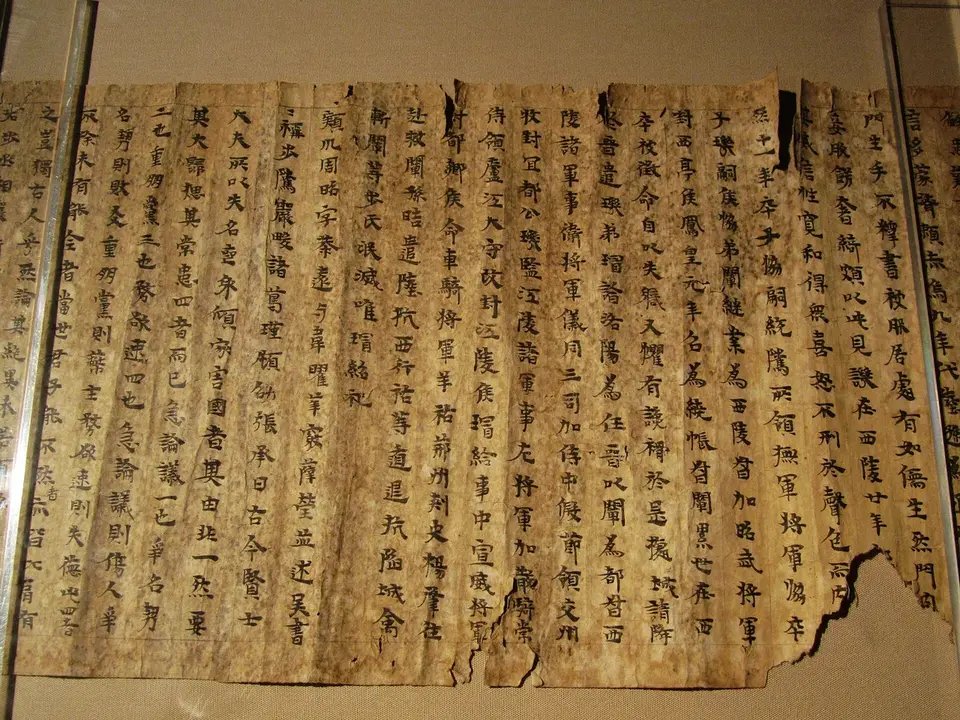
Chen Shou's crowning achievement in Chinese historiography was his private authorship of the sixty-five-volume Records of the Three Kingdoms. Ranking alongside Sima Qian's Records of the Grand Historian, Ban Gu's Book of Han, and Fan Ye's Book of the Later Han, his work stands as one of the four foundation stones of Chinese dynastic historiography.
Synthesizing dozens of conflicting regional narratives and partisan accounts into a cohesive 360,000-character masterpiece, Chen Shou established an authentic record of the chaotic era between 184 and 280. His sparse, elegant prose brought towering historical figures—Cao Cao, Liu Bei, Sun Quan, Zhuge Liang, and Sima Yi—to vivid life. Later enhanced by Pei Songzhi's monumental commentary Annotated Records of the Three Kingdoms, Chen Shou's work provided the definitive historical foundation that preserved the memory of the Three Kingdoms across world culture.
Chen Shou rendered an incalculable service to ancient Chinese intellectual and institutional history by recovering and collating the writings of Chancellor Zhuge Liang into the Collected Works of the Zhuge Clan.
Facing the imminent loss of Shu Han administrative documents, Chen Shou searched private libraries across the southwest to assemble twenty-four themed chapters covering military strategy, civil governance, and administrative memorials. In his celebrated Memorial Presenting the Catalog of the Collected Works of the Zhuge Clan, Chen Shou provided a definitive balanced evaluation of Zhuge Liang's genius, immortalizing his administrative integrity and establishing his venerated status in Chinese cultural history.
Within historiographical structural design, Chen Shou pioneered an innovative tripartite framework that objectively reconciled multiple regional regimes within a unified narrative.
Confronted with the delicate legitimacy claims of Wei, Shu, and Wu, Chen Shou avoided the narrow dogmatism of declaring Shu or Wu illegal bandit entities. While diplomatically adopting Cao Wei's imperial calendar to anchor the chronology, he granted independent narrative stature to the rulers of Shu and Wu, documenting their accessions, reign titles, and civil administration on equal footing. This objective, multi-centered historical vision established an enduring paradigm for recording periods of imperial division.
Beyond national histories, Chen Shou was a pioneer of regional historiography and local biography through his ten-volume Biographies of Eminent Elders of Yizhou.
Systematically documenting eminent Confucian scholars, upright magistrates, and filial exemplars across Sichuan from the Han dynasty downward, Chen Shou demonstrated that southwestern regional culture was fully integrated into the broader Huaxia classical heritage. His biographical structure provided direct inspiration for Chang Qu's renowned fourth-century gazetteer Chronicles of Huayang and established the foundational format for Chinese local gazetteers (fangzhi).
Chen Shou's scholarly inquiries extended into institutional history and archaic antiquity through specialized treatises that preserved crucial historical data.
In his institutional work Discourse on Government Offices, he analyzed bureaucratic balances and administrative specialization across pre-Qin and Han-Jin dynasties. In his fifty-volume compendium Records of Ancient States, he traced the territorial lineages and rise and fall of ancient feudal fiefdoms. Furthermore, his philological work Explaining Name Taboos illuminated naming taboos and court rituals, while his compilation Memorials of Eminent Ministers of Wei preserved key administrative statecraft documents from the Cao Wei era.
Across seventeen centuries, Chen Shou's historical integrity endured scrutiny against scurrilous allegations popularized in the Tang dynasty official Book of Jin, notably the tabloid rumors of "demanding grain to write biographies" from the Ding brothers and "derogating Zhuge Liang out of private vengeance."
Tang dynasty historiographical critic Liu Zhiji in Shitong first dismantled these calumnies, highlighting that Chen Shou's praise of Zhuge Liang was profoundly elevated and free from personal animus. During the Qing dynasty, Qian Daxin in Textual Research on the Records of the Three Kingdoms and Wang Mingsheng in Critical Discussions of the Seventeen Histories proved through rigorous genealogical evidence that the Ding lineage was executed without surviving heirs under Cao Cao decades before Chen Shou wrote, exposing the grain extortion story as an absurd later fabrication. This rigorous philological defense vindicated Chen Shou's enduring stature as a truly upright, peerless historian (liangshi).
FIGURES ASSOCIATED WITH THIS DYNASTY