Birth and Heritage
Born into the Boling Cui house, he inherited the classical learning of his father Cui Yin.
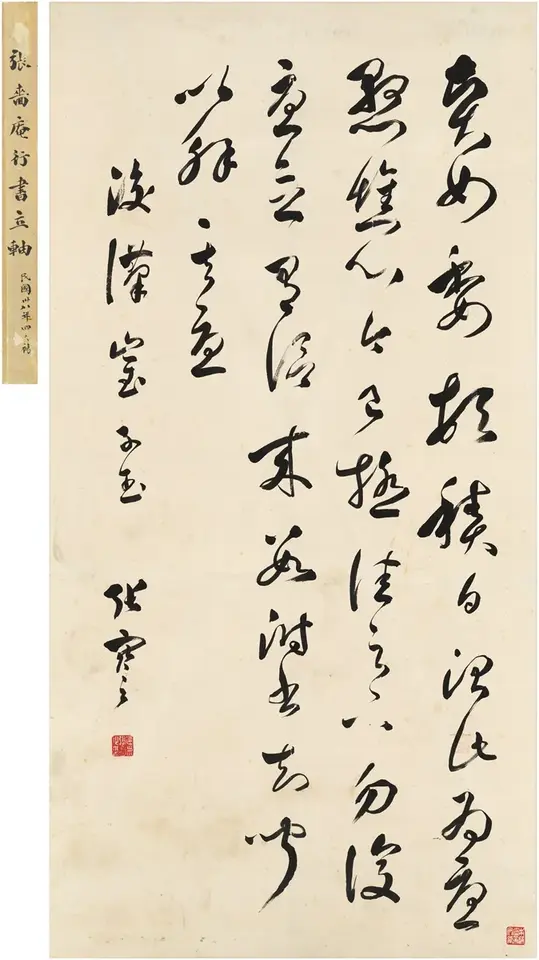
崔瑗
Cui Yuan (崔瑗, 77–142 CE), courtesy name Ziyu (子玉), a native of Anping County in Zhuo Commandery (modern Anping, Hebei), was an eminent calligrapher, essayist, and classical scholar of the Eastern Han dynasty, the son of literary master Cui Yin and the father of political thinker Cui Shi. Endowed with fierce courage and prodigious intellect, Cui Yuan avenged his elder brother's murder by slaying the culprit in his youth,…
Cui Yuan (崔瑗, 77–142 CE), courtesy name Ziyu (子玉), a native of Anping County in Zhuo Commandery (modern Anping, Hebei), was an eminent calligrapher, essayist, and classical scholar of the Eastern Han dynasty, the son of literary master Cui Yin and the father of political thinker Cui Shi. Endowed with fierce courage and prodigious intellect, Cui Yuan avenged his elder brother's murder by slaying the culprit in his youth, fleeing as a fugitive before receiving imperial amnesty and dedicating himself to profound scholarship. He mastered the Six Classics alongside astronomy, calendrical mathematics, and the Changes of Master Jing, forming lifelong intellectual bonds with polymath Zhang Heng and classicist Ma Rong. Renowned as a transformative master in Chinese calligraphic history, Cui Yuan specialized in cursive script (caoshu), inheriting the foundational traditions of Du Du, earning the joint accolade "Cui-Du." Directly inspiring the "Sage of Cursive Script" Zhang Zhi, he authored China's earliest dedicated calligraphic treatise, On the Momentum of Cursive Script (Caoshu Shi). In literature, his immortal Motto on the Right Side of the Seat (Zuoyouming), inscribed beside his desk for moral self-cultivation, became the universal ethical compass for Chinese scholars across two millennia. Appointed Chancellor of Jibei under Emperor Shun, he governed with integrity before passing away in 142 CE at age sixty-six.
Born into the Boling Cui house, he inherited the classical learning of his father Cui Yin.
After slaying his brother's murderer, he fled as a fugitive, later returning home upon amnesty.
In the capital, he mastered cursive script and mathematics, befriending Zhang Heng and Ma Rong.
He composed the hundred-character ethical treatise Zuoyouming, carving it beside his seat.
Nominated as Outstanding Talent, he served as Magistrate of Jixian, improving agrarian welfare.
Promoted to Chancellor of Jibei, he restrained aristocratic clans and reformed local customs.
Passing away in Luoyang at age sixty-six, he instructed his family to execute a strictly austere burial.
Cui Yuan was born into the prestigious literary household of Anping. At age eighteen, his elder brother Cui Zhang was murdered by regional bullies. Consumed by grief and righteous fury, Cui Yuan drew his sword, personally executed the murderer, and fled into the northern frontier. Surviving for years under assumed identities, he returned to Anping only after an imperial general amnesty pardoned his fugitive status.
Having discharged his filial vendetta, Cui Yuan dedicated his life to scholarship. He closed his doors to societal frivolities, immersing himself in the classical canons. Beyond the Five Classics, he mastered empirical astronomy, calendrical computation, Jing Fang's hexagram cycles, and mathematical geometry, constructing an unassailable foundation of polymathic learning.
Around age forty, Cui Yuan traveled to the imperial capital Luoyang. His towering intellect drew the admiration of leading contemporary scholars. He formed profound intellectual bonds with the universal genius Zhang Heng and classical giant Ma Rong, the three meeting constantly to discuss celestial mechanics, rhapsodic literature, and calligraphic aesthetics.
Possessing an austere and uncompromising temperament, Cui Yuan feared that intellectual vanity might corrupt his moral vigilance. To maintain vigilance over his soul, he composed a hundred-character poetic manifesto in five-character meter, carving the inscription directly into the right side of his desk. This work, the immortal Motto on the Right Side of the Seat (Zuoyouming), contained timeless maxims such as "Do not brandish criticism as honesty; do not act merely for worldly fame" and "In darkness, maintain inner radiance," defining the ultimate Confucian ideal of moral self-cultivation.
In calligraphy, Cui Yuan studied under Du Du, the founding master of early Han draft cursive (zhangcao). Synthesizing Du's structural discipline with fluid momentum, Cui Yuan introduced continuous brushwork that captured dynamic vitality, earning the peerless capital pairing "Cui-Du." His cursive script captivated the empire; the later "Sage of Cursive Script" Zhang Zhi confessed that he studied Cui and Du's brushwork for decades, considering his own accomplishments inferior to their divine vigor.
During Emperor Shun's reign, nominated as Outstanding Talent (Maocai), Cui Yuan was appointed Magistrate of Jixian. Governing with integrity, he dredged irrigation canals, resolved backlogged litigation, and patronized education. In 140 CE, for outstanding administrative merit, he was elevated to Chancellor of Jibei Commandery, where he curbed rapacious regional clans and instituted famine relief, winning widespread veneration.
In 142 CE, Cui Yuan fell ill and died in Luoyang at age sixty-six. On his deathbed, he summoned his son Cui Shi, strictly commanding: "Man receives vital breath from Heaven and Earth; in death, he returns to the cosmic void. Ancient sages mandated austere burials. Wrap my body in ordinary single-layered hemp, excavate a trench merely large enough to receive the coffin, and build neither tumulus nor plant cypress trees!"
Cui Shi dutifully executed his father's frugal instructions. While his life ended humbly, his aesthetic breakthroughs in On the Momentum of Cursive Script and moral teachings in Zuoyouming established him as an immortal luminary of Chinese calligraphy and literature.
Cui Yuan holds a foundational position in the history of world calligraphy. While Du Du initiated draft cursive, his characters retained the rigid horizontal strokes of clerical script. Cui Yuan infused brushwork with flowing momentum, creating dynamic aerial variations and establishing the "Cui-Du" calligraphic lineage.
His treatise, On the Momentum of Cursive Script (Caoshu Shi), is the earliest dedicated work of calligraphic theory in Chinese history. Employing vivid metaphors—describing brushstrokes as "beasts crouching, birds alighting, poised on the verge of soaring flight"—he established the aesthetic principle that calligraphy derives its vitality from natural cosmic forms. His theory directly inspired Zhang Zhi, Zhong Yao, and the "Sage of Calligraphy" Wang Xizhi.
In Chinese literature and moral philosophy, Cui Yuan composed the quintessential personal manifesto, the Zuoyouming. Spanning twenty five-character lines across five distinct rhyming stanzas, the piece crystallizes the highest virtues of modesty, emotional restraint, and moral self-scrutiny.
His aphorisms—such as "Stubborn aggression is the mark of a vulgar man; patient serenity is truly unfathomable"—established the classical genre of "mottoes inscribed beside the seat." Included by Xiao Tong as the inaugural text of the "Inscriptions" section in the Selections of Refined Literature (Wenxuan), it has functioned as a universal ethical guide for scholars across two millennia.
FIGURES ASSOCIATED WITH THIS DYNASTY