March 15, 999 CE(2nd year of the Xianping era, Emperor Zhenzong of Song, 2nd month, 25th day) | Age 1 | Born into the prominent Zeng clan of Jinjiang, Quanzhou; son of Vice Director Zeng Hui.
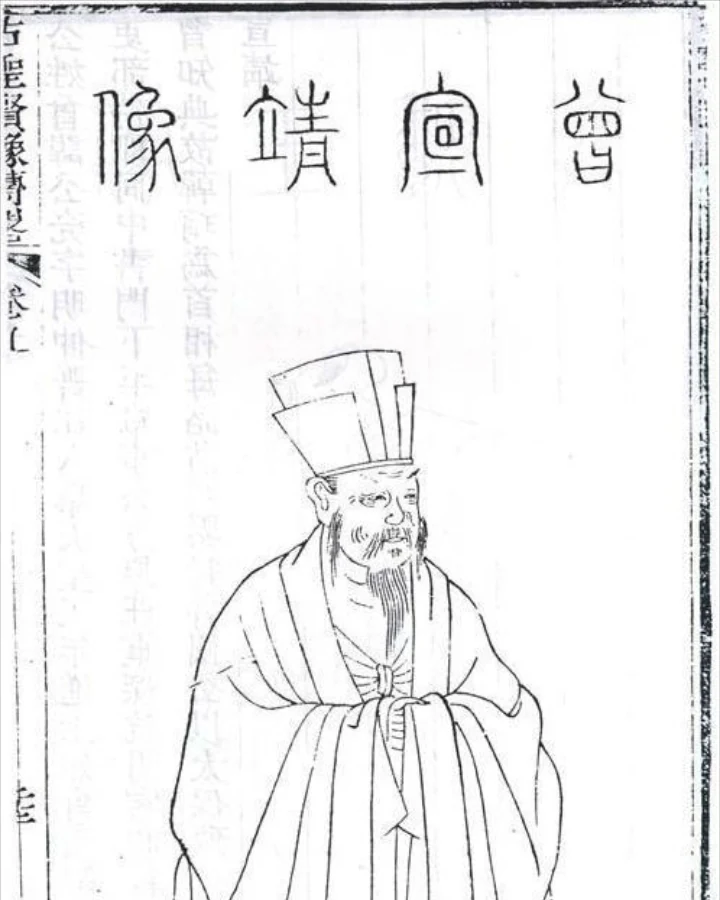
999 CE–1078 CE
Grand ChancellorStatesmanMilitary TechnologistHall of Illustrious Virtue Founder
Zeng Gongliang
曾公亮
Zeng Gongliang (999–1078), courtesy name Mingzhong, art name Yuezheng, was a native of Jinjiang, Quanzhou (modern Jinjiang, Fujian Province). He was an illustrious grand chancellor, statesman, and military technologist serving across the reigns of Renzong, Yingzong, and Shenzong of the Northern Song Dynasty. He rose to Grand Chancellor and Left Executive President, was created Duke of Lu, and was posthumously honored as Grand…
999 CE–1078 CENorthern Song
PROFILE
Zeng Gongliang (999–1078), courtesy name Mingzhong, art name Yuezheng, was a native of Jinjiang, Quanzhou (modern Jinjiang, Fujian Province). He was an illustrious grand chancellor, statesman, and military technologist serving across the reigns of Renzong, Yingzong, and Shenzong of the Northern Song Dynasty. He rose to Grand Chancellor and Left Executive President, was created Duke of Lu, and was posthumously honored as Grand Preceptor and Prince of Lu with the posthumous name Xuanjing, ranked among the Twenty-Four Meritorious Founders in the Hall of Illustrious Virtue. Passing the jinshi examinations in 1024, Zeng Gongliang supervised the compilation of the foundational military compendium Wujing Zongyao (1044), which recorded the world's earliest written gunpowder formulas and thermoremanent compasses. Appointed Grand Chancellor in 1261, he stabilized court succession under Yingzong and later strongly recommended Wang Anshi to Emperor Shenzong to launch the historic Xining Reforms.
- Courtesy / Art Name
- Mingzhong
- Era
- Northern Song Dynasty
- Dynasty
- Song dynasty (Northern Song)
- Identity
- Grand Chancellor, Statesman, Military Technologist, Hall of Illustrious Virtue Founder
- Date of Birth
- March 15, 999 CE(2nd year of Zhen Zong Xian Ping, 2nd month, 25th day)
- Ethnicity
- Han
- Ancestral Home
- Jinjiang county, Quanzhou, Fujian circuit
- Place of Birth
- Jinjiang, Quanzhou
- Place of Death
- His private residence at Luoyang
- Lifespan
- 80 years old
- Highest Office
- Grand Chancellor (Tong Pingzhangshi, Left Executive President), Director of Monastic Affairs
- Major Offices
- Joint Manager of Affairs with the Secretariat-Chancellery, Left Vice Director of the Department of State Affairs concurrently Palace Attendant, Grand Secretary of the Jixian Hall
- Peerage
- Duke of Lu (Luguogong)
- Posthumous Name
- Xuanjing (Cultured and Serene)
- Major Achievements
- Chief compiler of the Wujing Zongyao recording the world's earliest gunpowder formulas and magnetic needle; enthroned Emperor Yingzong; recommended Wang Anshi to initiate the New Policies
- Date of Death
- March 9, 1078 CE(23rd day of the intercalary 1st month, 1st year of Yuanfeng;a variant gives the 24th day)
LIFE TIMELINE
Posthumous | Enshrined as one of the Twenty-Four Meritorious Founders in the Hall of Illustrious Virtue (Zhaoxunge).
Age 24 | Presented imperial congratulatory memorials on Renzong's enthronement; offered the office of Case Reviewer in the Court of Judicial Review, but declined to preserve his examination integrity.
Contemporary chronicles described him as "austere | Contemporary chronicles described him as "austere, dignified, deeply penetrating, and possessing the comprehensive vision of an imperial grand chancellor." In the second month of the first year of the Qianxing era (1022), Emperor Zhenzong passed away, and the thirteen-year-old Emperor Renzong (Zhao Zhen) ascended the throne.
Age 26 | Passed the imperial examinations, ranking fifth in the First Class (Jinshi Jiake); appointed Subprefectural Magistrate of Kuaiji.
Age 27 | Engineered the stone sluice-gate (doumen) at Mirror Lake, diverting floodwaters into the Cao'e River and reclaiming thousands of hectares of arable land.
Age 31 | Implicated by his father's acquisition of farmland within his jurisdiction; demoted to Supervisor of the Wine Monopoly in Huzhou.
Grateful peasants erected ancestral shrines beside the sluice-gate | Grateful peasants erected ancestral shrines beside the sluice-gate, revering it across centuries as the "Lord Zeng Stone Sluice-Gate." In 1029 (Tiansheng 7), a sudden family crisis interrupted his career: his father, Zeng Hui, having retired from high office, purchased several plots of farmland within Kuaiji County without his son's prior knowledge, technically violating the statutory code barring judicial officials' families from buying land within their jurisdictions.
Age 33 | Rewarded for massive surplus revenues in the wine monopoly; appointed Editorial Assistant in the Palace Library (Mishusheng Zhuozuo Zuolang).
Acknowledging his extraordinary fiscal record | Acknowledging his extraordinary fiscal record, the imperial court promoted him to Editorial Assistant in the Palace Library in 1031.
Age 35 | His father Zeng Hui passed away; stepped down from office to observe traditional filial mourning.
Following his father's death in 1033 | Following his father's death in 1033, he observed three years of filial mourning, returning to Kaifeng in 1036 to supervise the Metropolitan Commercial Tax Office.
Age 38 | Completed mourning; appointed Supervisor of the Metropolitan Commercial Tax Office in Kaifeng.
Following his father's death in 1033 | Following his father's death in 1033, he observed three years of filial mourning, returning to Kaifeng in 1036 to supervise the Metropolitan Commercial Tax Office.
Promotion to Erudite of the Court of Imperial Sacrifices | He was promoted to Erudite of the Court of Imperial Sacrifices.
Age 39 | Promoted to Professor of the Court of Imperial Sacrifices (Taichang Boshi).
Memorial on frontier affairs | He memorialised on frontier affairs and was appointed lecturer of the Directorate of Education.
Age 41 | Submitted strategic memorials addressing Western Xia border defense; appointed Lecturer at the National University (Guozijian Zhijiang).
Orchestrating the Wujing Zongyao: A Landmark in Global Science In the Qingli era of | ### Orchestrating the Wujing Zongyao: A Landmark in Global Science In the Qingli era of Emperor Renzong (1041–1048), the Northern Song Empire faced a catastrophic military emergency.
Concurrent academic posts | He concurrently held the posts of expositor of the Tianzhang Pavilion, collator of the History Office and diarist of the imperial actions.
Age 43 | Presented philosophical treatises to the throne; granted exemption from written exams and appointed Collator in the Academy of Scholarly Worthies (Jixian Jiaoli) and Diarist of the Imperial Diaries.
Age 46 | Lectured on the Mao Commentary to the Classic of Poetry to Emperor Renzong; in winter, completed and presented the forty-volume military encyclopedia Wujing Zongyao.
Compilation of the New Tang History | He took part in compiling the New Tang History.
Age 47 | Commissioned alongside Song Qi and Ouyang Xiu to compile the official New Tang Book (Xin Tangshu).
Age 52 | Appointed Hanlin Academician, Drafter of Imperial Edicts, and Administrator of the Office of Three Ranks (Sanbanyuan); enfeoffed as Founding Marquis of Luling; established rigid regulations that eradicated bureaucratic corruption.
In the ninth month of the first year of the Zhihe era (1054) | In the ninth month of the first year of the Zhihe era (1054), Zeng Gongliang was appointed Academician of the Duanming Hall and Prefect of Zhengzhou.
Age 56 | Appointed Academician of the Duanming Hall and Prefect of Zhengzhou; governed with such efficacy that banditry ceased and gates were left unlocked at night, earning the name "Open-Door Zeng."
Hanlin and the capital prefecture | He entered the court as Hanlin Academician and acting prefect of Kaifeng; in the twelfth month he was appointed Supervising Secretary and Assistant Administrator of State Affairs.
Grand Chancellorship | ### Grand Chancellorship, the Dynastic Succession, and the "Pu Controversy" In 1060 (Jiayou 5), following the completion of the hundred-volume New Tang Book (Xin Tangshu) under his co-direction alongside Ouyang Xiu, Zeng Gongliang was promoted to Acting Grand Tutor and Chief of the Bureau of Military Affairs (Shumishi).
Age 58 | Appointed Prefect of Kaifeng; in December, elevated to Policy Reviewer (Jishizhong) and Vice Grand Chancellor (Canzhi Zhengshi).
Age 63 | Promoted to Vice Minister of Civil Personnel, Grand Chancellor (Tong Zhongshu Menxia Pingzhangshi), and Grand Academician of the Hall of Scholarly Worthies, co-directing the government with Han Qi.
In the third month of 1063 | In the third month of 1063, when Renzong passed away, Empress Dowager Cao prepared to assume administrative control behind the curtains.
Age 64 | Conspired secretly with Han Qi to urge Emperor Renzong to officially designate Zhao Shu (Emperor Yingzong) as Crown Prince.
Age 66 | Emperor Yingzong ascended the throne; advanced to Vice Director of the Secretariat and Minister of Rites; mediated the volatile "Pu Controversy."
Champion of Wang Anshi and the New Policies In the first month of the fourth year of Z | ### Champion of Wang Anshi and the New Policies In the first month of the fourth year of Zhiping (1067), Emperor Yingzong died, and his charismatic nineteen-year-old heir, Emperor Shenzong (Zhao Xu), ascended the throne.
Age 69 | Emperor Shenzong ascended the throne; elevated to Left Executive President of the Department of State Affairs and Duke of Lu; strongly recommended Wang Anshi to direct state reforms.
In the second month of 1069 (Xining 2) | In the second month of 1069 (Xining 2), Shenzong appointed Wang Anshi Vice Grand Chancellor (Canzhi Zhengshi) and established the Finance Planning Commission (Tiao Zhi Si), launching the historic New Policies (Xining Bianfa).
Age 71 | Wang Anshi launched the New Policies; Zeng harmonized conservative and reformist factions, while his eldest son Zeng Xiaokuan oversaw the Finance Planning Commission.
Emperor Shenzong revered Zeng Gongliang as the irreplaceable pillar of his administration | Emperor Shenzong revered Zeng Gongliang as the irreplaceable pillar of his administration, regularly summoning him for private audiences and praising him as the "supreme elder statesman of our realm." ### Final Retirement, Honors in the Ancestral Temple, and the Hall of Illustrious Virtue In the autumn of 1070 (Xining 3), having observed the successful institutional stabilization of the New Policies, the seventy-two-year-old Zeng Gongliang resolved to step aside.
Supervision of Yongxing Army | He was appointed to supervise the Yongxing Army and calmly dealt with the aftermath of the mutiny at Qingzhou.
Retirement | He retired with the title of Grand Tutor.
Age 72 | In September, retired from active executive office, appointed Minister of Works, Director of the Chancellery, and Military Commissioner of Heyang; subsequently retired to Luoyang as Grand Preceptor.
Death | On the twenty-third day of the intercalary first month in Yuanfeng 1 (March 9, 1078), alternatively the twenty-fourth day (March 10), Zeng Gongliang passed away peacefully at his Luoyang residence at the grand age of eighty.
Age 80 | Passed away in Luoyang; Emperor Shenzong suspended court audiences for three days, attended the wake in person, and posthumously conferred the rank of Grand Preceptor and Director of the Chancellery, granted the posthumous title "Xuanjing," and accorded accompanying enshrinement in Yingzong's temple.
BIOGRAPHY
Biography
Princely Ambition and the Examination Triumph Zeng Gongliang, courtesy name Mingzhong, was born on the twenty-fifth day of the second month in the second year of the Xianping era of Emperor Zhenzong (March 15, 999) in Jinjiang County, Quanzhou, Fujian Circuit. His family was the renowned Jinjiang Zeng clan, an intellectual lineage celebrated throughout southeastern China for its unbroken tradition of classical scholarship. His father, Zeng Hui, was an illustrious statesman who served as Vice Director in the Ministry of Justice and Drafter in the Hall of Scholarly Worthies, renowned for his moral rectitude. From his earliest youth, Zeng Gongliang displayed an extraordinary gravity and intellectual depth, possessing a majestic, dignified bearing and an incisive analytical mind. Contemporary chronicles described him as "austere, dignified, deeply penetrating, and possessing the comprehensive vision of an imperial grand chancellor." In the second month of the first year of the Qianxing era (1022), Emperor Zhenzong passed away, and the thirteen-year-old Emperor Renzong (Zhao Zhen) ascended the throne. Provincial administrations across the empire sent congratulatory delegations to the capital of Kaifeng. Zeng Hui, then governing a regional commandery, designated his twenty-four-year-old second son, Zeng Gongliang, to represent the family and present official congratulatory memorials. When Zeng Gongliang was received in audience, his flawless mastery of court etiquette, classical eloquence, and majestic composure profoundly impressed the young sovereign and the regent Empress Dowager Liu. Recognizing his exceptional talents, Emperor Renzong issued an extraordinary imperial rescript directly conferring upon him the official civil appointment of Case Reviewer in the Court of Judicial Review (Dali Pingshi). In the meritocratic society of the Northern Song, civil appointments granted through imperial favor rather than the imperial examinations were derided by the literati as "oblique seal appointments" (xiefeng guan), carrying an indelible stigma that precluded holders from ascending to the supreme chancellorship. Possessing boundless academic pride and an unyielding commitment to Confucian meritocracy, the young Zeng Gongliang made a breathtaking decision: he respectfully submitted a formal memorial declining the imperial appointment, boldly declaring that "a Confucian scholar must enter public service exclusively through the broad gates of the national examinations, and he would consider it a lifelong disgrace to accept an unearned back-door sinecure." Returning the imperial commission to the Ministry of Personnel, he shut his doors in Jinjiang, immersing himself in the study of the Confucian classics and statecraft treatises. In the spring of the second year of the Tiansheng era (1024), Zeng Gongliang traveled to Kaifeng to compete in the national civil service examinations. Competing against thousands of elite scholars from across the empire, his examination treatises on political philosophy and administrative reform dazzled the imperial examiners. During the palace examination before Emperor Renzong, Zeng Gongliang was awarded fifth place in the supreme First Class (Jinshi Jiake), embarking upon an illustrious bureaucratic career as an unblemished examination scholar. ### Hydraulic Mastery at Mirror Lake, "Open-Door Zeng," and the Three Ranks Upon his examination triumph, Zeng Gongliang was appointed Proofreader in the Court of Imperial Sacrifices and dispatched as Subprefectural Magistrate of Kuaiji County in Yuezhou (modern-day Shaoxing, Zhejiang). Kuaiji was situated in the low-lying plains of eastern Zhejiang, where the vast, ancient reservoir of Mirror Lake (Jinghu) collected runoff from the surrounding Kuaiji Mountains. Whenever seasonal typhoons or torrential monsoon rains struck the region, Mirror Lake overflowed its earthen embankments, submerging thousands of hectares of fertile farmland, sweeping away villages, and drowning peasants. Immediately upon assuming office, Zeng Gongliang traversed the wetlands on foot, mapping the hydraulics of the lake and its outlets. He recognized that while the lake collected water from thirty-six mountain streams, it possessed no adequate engineered spillway to discharge excess waters into the sea during flash floods. Acting with remarkable engineering boldness, Zeng mobilized regional laborers to construct a monumental stone sluice-gate (doumen) at the strategic drainage bottleneck connecting the lake with the Cao'e River. Constructed of interlocking granite blocks, the sluice-gate operated as an ingenious multi-stage regulator: during periods of drought, the gates were sealed to preserve water, irrigating tens of thousands of hectares across Shaoxing and Shanbei; during summer floods, the massive sluice-gates were cranked open, allowing roaring floodwaters to vent safely into the Cao'e River and discharge into Hangzhou Bay. The agricultural plains were permanently liberated from the scourge of inundation, transforming Kuaiji into a prosperous granary. Grateful peasants erected ancestral shrines beside the sluice-gate, revering it across centuries as the "Lord Zeng Stone Sluice-Gate." In 1029 (Tiansheng 7), a sudden family crisis interrupted his career: his father, Zeng Hui, having retired from high office, purchased several plots of farmland within Kuaiji County without his son's prior knowledge, technically violating the statutory code barring judicial officials' families from buying land within their jurisdictions. Implicated by this procedural oversight, Zeng was demoted to Supervisor of the Wine Monopoly in Huzhou. Far from yielding to bitterness, Zeng applied his formidable administrative intellect to reforming the commercial taxation of alcohol: eliminating corruption among revenue collectors and restructuring licensing networks, the annual wine tax revenues of Huzhou experienced a massive, unprecedented surplus. Acknowledging his extraordinary fiscal record, the imperial court promoted him to Editorial Assistant in the Palace Library in 1031. Following his father's death in 1033, he observed three years of filial mourning, returning to Kaifeng in 1036 to supervise the Metropolitan Commercial Tax Office. In the ninth month of the first year of the Zhihe era (1054), Zeng Gongliang was appointed Academician of the Duanming Hall and Prefect of Zhengzhou. Situated at the junction of the central plains' commercial highways, Zhengzhou was notorious for its rampant, organized banditry and corrupt municipal constabulary. Armed robbery, kidnapping, and warehouse looting were daily occurrences. Zeng Gongliang instituted a revolutionary regime of public safety: he purged corrupt bailiffs, reorganized the mutual-responsibility neighborhood watch (baojia) networks, deployed plainclothes intelligence agents throughout the markets, and decreed that receiving stolen property would be punished with the same severity as violent robbery. Within months, the criminal underworld of Zhengzhou was utterly eradicated; thieves and extortionists fled to neighboring prefectures, and public order reached such a sublime height that citizens and shopkeepers slept peacefully through the night with their front doors wide open. The entire central plains celebrated his governance, coining the immortal proverb: "In Zhengzhou, under Open-Door Zeng, locks are forgotten and doors need no keys" (Zeng Kaimen). During this period, a high-ranking imperial envoy traveling along the post-road through Zhengzhou suffered the theft of a chest filled with gold and jewels. In a furious rage, the envoy dispatched an official letter accusing the Zhengzhou prefecture of shielding bandit gangs and demanding an immediate, draconian manhunt. Zeng Gongliang reviewed the circumstances and calmly drafted an immediate reply: "Within the borders of Zhengzhou, not a single bandit exists; our soil shields no thieves. The treasure could not have been taken by an outsider; it must have been concealed by one of your own traveling attendants who succumbed to greed." Stunned by the prefect's unshakeable certainty, the envoy ordered a surprise inspection of his own escort; sure enough, the missing gold was discovered sewn inside the traveling bags of his private carriage driver. The court marveled at Zeng's piercing psychological clarity. Earlier, in 1050 (Huangyou 2), Zeng Gongliang had been appointed Hanlin Academician and Administrator of the Office of Three Ranks (Sanbanyuan). The Three Ranks Office was the chaotic administrative clearinghouse responsible for testing, assigning, and promoting more than ten thousand junior military officers, palace escorts, and imperial couriers across the empire. The bureau was paralyzed by systemic venality: clerks openly demanded exorbitant bribes to process promotions, while imperial dukes, princes, and noble favorites leaned heavily upon the administrators to secure lucrative sinecures for their incompetent offspring. Zeng Gongliang executed an immediate structural purge: he compiled every contradictory precedent, statutory regulation, and imperial rescript into a single, standardized, open manual; he displayed examination rubrics and promotional vacancies publicly upon wooden bulletin boards outside the office; and he decreed that every appointment would be decided exclusively by statutory rules and documented combat evaluations. Corrupt clerks found their hands completely tied, noble petitioners were politely turned away with printed regulations, and the Three Ranks Office was transformed into a model of bureaucratic justice. ### Orchestrating the Wujing Zongyao: A Landmark in Global Science In the Qingli era of Emperor Renzong (1041–1048), the Northern Song Empire faced a catastrophic military emergency. In the arid northwest, Li Yuanhao, the ferocious Tangut chieftain, proclaimed himself Emperor of Western Xia, declaring total war against the Song. In three apocalyptic field battles—at Sanchuankou, Haoshuichuan, and Dingchuanzhai—the Tangut cavalry shattered the imperial armies, slaughtering dozens of senior Song commanders and laying siege to Shaanxi. Emperor Renzong realized with bitter regret that a century of civilian rule had eroded the empire's military preparedness: frontier officers were ignorant of tactical battle arrays, artillery engineering was neglected, and no standardized manual of military science existed. In 1044 (Qingli 4), Emperor Renzong issued a solemn imperial mandate appointingGrand Lecturer of the Tianzhang Pavilion Zeng Gongliang and Hanlin Academician Ding Du to head an imperial editorial commission, mobilizing the empire's premier generals, mathematicians, and weapons masters to compile the definitive, authorized military encyclopedia of the dynasty: the forty-volume Wujing Zongyao (Complete Essentials for the Military Classics). Working with obsessive scholarly rigor over five exhausting years, Zeng Gongliang produced an epochal masterpiece divided into two grand sections (Front Collection in twenty volumes, Rear Collection in twenty volumes). In the history of human civilization and technology, the Wujing Zongyao occupies an unshakeable, foundational pinnacle:
- The World's Earliest Recorded Gunpowder Formulas: In Volumes 11 and 12, Zeng Gongliang recorded the earliest known chemical recipes for military gunpowder in human history: the "Formula for the Explosive Bomb" (huopao huoyao fa, containing roughly 50% potassium nitrate, 25% sulfur, and 25% charcoal, augmented by pitch and resin), the "Caltrop Fireball Formula" (jili huoqiu huoyao fa), and the "Toxic Smoke Ball Formula" (duyao yanqiu huoyao fa). Accompanied by detailed engineering cross-sections of explosive iron shells and fuse mechanisms, these formulas predate the earliest European accounts of gunpowder by Roger Bacon and Marcus Graecus by nearly three centuries, establishing definitive documentary proof of China's invention of chemical explosive warfare;
- The Earliest Artificial Thermoremanent Compass ("South-Pointing Fish"): In Volume 15, the text details the earliest known method in human history for producing artificial magnetic implements utilizing the Earth's magnetic field and thermal remanence: cutting thin iron sheets into the shape of a fish, heating them red-hot, quenching them in water while aligning their tails precisely with the geomagnetic north-south axis, and floating them in bowls of water to act as navigational direction-finders in nocturnal darkness or thick fog. The work likewise provided the earliest comprehensive engineering diagrams of the mechanical gearing of the south-pointing chariot (zhinanche);
- Comprehensive Codification of Siegecraft and Fortifications: The compendium contains hundreds of exquisite technical illustrations depicting the apex of medieval Chinese military engineering: triple-bow arcuballistas (san-gong chuangnu), counter-weighted trebuchets (paoche), multi-tiered assault towers (lǚgongche), mobile wheeled assault ladders (yunti), and armored river combat galleys. When the completed work was submitted to the throne, Emperor Renzong was overwhelmed with admiration, personally composing an imperial preface to grace its opening scroll and commanding that copies be locked within the secret archives, accessible only to chancellors and commanding generals. ### Grand Chancellorship, the Dynastic Succession, and the "Pu Controversy" In 1060 (Jiayou 5), following the completion of the hundred-volume New Tang Book (Xin Tangshu) under his co-direction alongside Ouyang Xiu, Zeng Gongliang was promoted to Acting Grand Tutor and Chief of the Bureau of Military Affairs (Shumishi). In the intercalary eighth month of 1061 (Jiayou 6), Emperor Renzong elevated him to Vice Minister of Civil Personnel, Grand Chancellor (Tong Zhongshu Menxia Pingzhangshi), and Grand Academician of the Hall of Scholarly Worthies. Zeng Gongliang governed the empire in flawless synergy with Grand Chancellor Han Qi. During this epoch, Emperor Renzong had grown elderly and infirm, having lost all three of his biological sons in infancy. The absence of a designated imperial heir cast a terrifying shadow over the dynasty. Operating with immense discretion and steel resolve, Zeng Gongliang and Han Qi held confidential conclaves with the monarch, repeatedly presenting impassioned petitions urging the formal adoption and elevation of Zhao Shu (the son of the emperor's cousin, Prince of Pu Zhao Yunrang). In 1062 (Jiayou 7), Renzong finally designated Zhao Shu as Crown Prince. In the third month of 1063, when Renzong passed away, Empress Dowager Cao prepared to assume administrative control behind the curtains. Zeng Gongliang and Han Qi deployed imperial guards to secure the palace gates, smoothly enthroning Zhao Shu as Emperor Yingzong and preserving the continuity of the state without a drop of spilled blood. Following Yingzong's enthronement, Zeng Gongliang was advanced to Vice Director of the Secretariat and Minister of Rites. Emperor Yingzong was chronically ill and emotionally volatile, leading to severe friction with his adoptive mother, Empress Dowager Cao. While Han Qi frequently engaged in heated, righteous confrontations with both palaces, Zeng Gongliang deployed masterly diplomatic finesse, shuttling between the emperor's bedchamber and the dowager's apartments, soothing hurt pride, drafting conciliatory imperial rescripts, and preserving filial harmony. When the explosive "Pu Controversy" erupted—with the bureaucracy tearing itself apart over whether Yingzong should address his biological father as "Imperial Father" or "Imperial Uncle"—Zeng Gongliang exercised consummate moderation, shielding moderate scholars and preventing the ideological dispute from crippling imperial governance. ### Champion of Wang Anshi and the New Policies In the first month of the fourth year of Zhiping (1067), Emperor Yingzong died, and his charismatic nineteen-year-old heir, Emperor Shenzong (Zhao Xu), ascended the throne. Shenzong burned with ambition to wipe away the humiliations inflicted by the Tanguts and the Khitans, eradicate the crippling financial deficits caused by surplus bureaucracy and standing armies, and revitalize the Song Empire through radical institutional reform. Shenzong immediately elevated Zeng Gongliang to Left Executive President of the Department of State Affairs (Shangshu Zuo Puye) and Duke of Lu, placing him at the head of the Grand Council. In intimate palace audiences, the youthful sovereign repeatedly pressed his chief minister for recommendations of transcendent talent capable of transforming the empire. Zeng Gongliang, possessing absolute clarity regarding the state's financial sclerosis, took a momentous step: he stood forward and passionately recommended Wang Anshi, declaring: "Wang Anshi's classical learning and statecraft talents are supreme in our age; he possesses the transcendent vision of a prime minister! If Your Majesty truly desires to reform the laws and enrich the state, none beneath heaven can achieve it save Anshi!" Persuaded by Zeng's recommendation, Shenzong summoned Wang Anshi to the capital, finding his reformist philosophy in perfect alignment with his own ambitions. In the second month of 1069 (Xining 2), Shenzong appointed Wang Anshi Vice Grand Chancellor (Canzhi Zhengshi) and established the Finance Planning Commission (Tiao Zhi Si), launching the historic New Policies (Xining Bianfa). As radical new statutes—including the Equable Transportation Law (Junshu Fa), the Green Sprouts Agricultural Loan Law (Qingmiao Fa), and the Service Exemption Law (Mianyi Fa)—were unleashed across the empire, conservative senior statesmen such as Sima Guang, Fu Bi, and Han Qi launched ferocious attacks against the reforms. In this maelstrom of factional warfare, Zeng Gongliang played a masterly, indispensable role:
- On strategic principle, he firmly supported the grand objective of state enrichment and military revitalization; his eldest son, Zeng Xiaokuan, served as Wang Anshi's right-hand administrator within the Finance Planning Commission, drafting and enforcing the Green Sprouts and Militia statutes;
- Concurrently, Zeng served as the vital moral ballast of the court, privately cautioning Shenzong against vindictive purges of conservative critics and urging patience in implementation. Wang Anshi, notoriously stubborn and intolerant of dissent, consistently treated Zeng Gongliang with filial reverence and deep respect, remembering that without Zeng's foundational patronage, he would never have attained the chancellorship. Emperor Shenzong revered Zeng Gongliang as the irreplaceable pillar of his administration, regularly summoning him for private audiences and praising him as the "supreme elder statesman of our realm." ### Final Retirement, Honors in the Ancestral Temple, and the Hall of Illustrious Virtue In the autumn of 1070 (Xining 3), having observed the successful institutional stabilization of the New Policies, the seventy-two-year-old Zeng Gongliang resolved to step aside. Firmly believing that an elder statesman must not block the promotion of younger reformers, he submitted four consecutive petitions requesting permission to retire. Reluctantly acceding to his plea, Emperor Shenzong relieved him of active executive duties, promoting him to Minister of Works (Sikong), Director of the Chancellery (Shizhong), and Military Commissioner of Heyang. On the day of his departure, Shenzong composed a personal farewell poem, and the entire civil bureaucracy escorted his carriage beyond the metropolitan gates. Subsequently retiring with the supreme rank of Grand Preceptor (Taishi) and Open Palace Privileges, Zeng settled in his private villa in the western capital of Luoyang. In his retirement, he lived with serene simplicity, spending his days reading classical history, exchanging poetry with retired elders such as Fu Bi and Wen Yanbo, and avoiding all political lobbying. Emperor Shenzong routinely dispatched imperial couriers laden with rare medicines, imperial wines, and seasonal delicacies to inquire after his health. On the twenty-third day of the intercalary first month in Yuanfeng 1 (March 9, 1078), alternatively the twenty-fourth day (March 10), Zeng Gongliang passed away peacefully at his Luoyang residence at the grand age of eighty. When news of his demise reached Kaifeng, Emperor Shenzong was overwhelmed with grief. The sovereign suspended court audiences for three full days, personally traveled to Zeng's residence to perform mourning sacrifices, and wept aloud before his coffin. An imperial edict posthumously conferred upon him the supreme dual honors of Grand Preceptor and Director of the Chancellery (Zhongshuling), commanding the Court of Imperial Sacrifices to bestow the revered posthumous title "Xuanjing" (Cultured, Proclaiming, and Serene). The emperor granted him accompanying burial honors in the imperial temple of Emperor Yingzong, ensuring that his tablet would receive ancestral sacrifices alongside the monarchs he had faithfully served. In the second year of the Baoqing era of Southern Song (1226), Emperor Lizong ordered a comprehensive historical review of the greatest statesmen of the Song dynasty. The court established the Hall of Illustrious Virtue (Zhaoxunge), selecting the twenty-four supreme ministers in Song history for life-sized pictorial enshrinement. For his monumental roles in orchestrating the succession of Emperor Yingzong, patronizing the reforms of Emperor Shenzong, and authoring the Wujing Zongyao, Zeng Gongliang was honored among the Twenty-Four Meritorious Founders in the Hall of Illustrious Virtue, shining across Chinese history.
Major Activities
Editorial Direction of the Wujing Zongyao 1. Codification of Early Gunpowder Recipes: Directed the compilation of the forty-volume Wujing Zongyao in 1044, recording the world's earliest chemical formulas for military explosive gunpowder, establishing an immortal milestone in the history of global science;
- Invention of the Thermoremanent "South-Pointing Fish": Recorded the world's earliest artificial magnetization techniques utilizing geomagnetic fields and thermal remanence, pioneering the technology of water-floating navigational compasses;
- Comprehensive Codification of Medieval Military Engineering: Systematically cataloged hundreds of military weapons, siege engines, cross-bow batteries, naval galleys, and frontier fortifications. ### Public Administration and Hydraulic Engineering 1. Mirror Lake Stone Sluice-Gate: Engineered the monumental granite drainage sluice-gate connecting Mirror Lake to the Cao'e River, permanently eliminating catastrophic flood risks across the Shaoxing plains;
- "Open-Door Zeng" in Zhengzhou: Enforced revolutionary public security measures that eradicated banditry, producing an era where citizens slept with unlocked doors;
- Institutional Purge of the Three Ranks Office: Formulated transparent statutory procedures that eliminated entrenched bribery and aristocratic influence-peddling. ### Dynastic Continuity and the New Policies 1. Dynastic Succession of Emperor Yingzong: Collaborated with Han Qi to secure the adoption and peaceful enthronement of Emperor Yingzong, expertly mediating the volatile "Pu Controversy";
- Architect of the New Policies: Personally discovered and recommended Wang Anshi to Emperor Shenzong, serving as the senior political ballast during the historic implementation of the New Policies.
Personal Relations
- Father: Zeng Hui, Vice Director in the Ministry of Justice, Drafter in the Hall of Scholarly Worthies; posthumously honored as Grand Preceptor.
- Elder Brother: Zeng Gongwang, served as Court Assistant in the Court of Judicial Review.
- Younger Brother: Zeng Gongji, served as Vice Director of Agricultural Colonies.
- Eldest Son: Zeng Xiaokuan, Military Commissioner of Baoning, Signatory Official of the Bureau of Military Affairs, Minister of Rites; primary administrative director within Wang Anshi's Finance Planning Commission.
- Second Son: Zeng Xiaoguang, Imperial Censor and Prefect of Henan.
- Third Son: Zeng Xiaoyun, served as Gentleman for Court Discussions.
- Fourth Son: Zeng Xiaochun, served as Junior Minister of the Court of Agriculture.
- Lineage Kinsmen: Zeng Bu (Grand Chancellor under Emperor Huizong and key New Policies architect), Zeng Gong (celebrated master of classical prose and one of the Eight Great Prose Masters of the Tang and Song). ### Imperial Monarchs - Emperor Renzong: Conferred the initial child prodigy appointment (declined by Zeng), commissioned the Wujing Zongyao, and elevated him to Grand Chancellor.
- Emperor Yingzong: Enthroned through Zeng's secret planning; granted him accompanying honors in his imperial ancestral temple.
- Emperor Shenzong: Revered Zeng as an elder statesman, accepted his recommendation of Wang Anshi, and wept at his funeral. ### Ministerial Peers and Collaborators - Han Qi: Lifelong political soulmate and co-Chancellor; united with Zeng to govern under Renzong and install Yingzong, jointly addressed as "Han-Zeng."
- Wang Anshi: Mentored and recommended by Zeng; launched the New Policies with Zeng's political protection and maintained lifelong reverence for his patron.
- Ding Du: Co-editor of the Wujing Zongyao.
- Ouyang Xiu, Song Qi: Distinguished literary colleagues who collaborated with Zeng on the New Tang Book.
Historical Assessment
Song Imperial Rescripts and Official Chronicles - Emperor Shenzong's Eulogy: "His capacity was vast and profound, his vision penetrating and far-reaching. Serving across three reigns and exerting his strength for four decades, his dignity and rectitude mirrored the ancient ministers of antiquity; reconciling factions and protecting the state, he preserved the altars of our dynasty."
- Toqto'a in the History of Song: "Zeng Gongliang was deep, penetrating, and meticulous; he was enlightened in public administration and understood the grand architecture of statecraft. In perfect accord with Han Qi, he established Emperor Yingzong, earning renown as a virtuous chancellor... Upon Shenzong's accession, he was the first to recommend Wang Anshi, fulfilling the sovereign's deepest ambitions. Enlightened in statutes and profoundly versed in dynastic precedents, he was an elder statesman of rare and matchless quality."
- Emperor Lizong: Formally enshrined his portrait among the Twenty-Four Meritorious Founders in the Hall of Illustrious Virtue in 1226. ### Global History of Science and Technology - Joseph Needham in Science and Civilisation in China: "The Wujing Zongyao, compiled under the direction of Zeng Gongliang and Ding Du, is one of the most remarkable scientific works in human history. It contains the earliest explicit chemical formulas for gunpowder and the earliest accounts of thermoremanent artificial magnetization in human literature, exerting an immeasurable influence on the evolution of global warfare and navigation."
FIGURES ASSOCIATED WITH THIS DYNASTY
Bibliography
- History of Song*, Volume 312, Biographies 71 (Biography of Zeng Gongliang)
- Needham, Joseph. Science and Civilisation in China: Volume 5, Chemistry and Chemical Technology; Part 7, The Gunpowder Epic. Cambridge University Press.
- Dongdu Shilue*, Volume 72 (Biography of Zeng Gongliang)
- Portraits and Eulogies of the Twenty-Four Meritorious Founders of the Zhaoxun Hall* (Imperial Edition of Emperor Lizong)