Early life | Of Hefei, Luzhou; his place of birth and exact birth date are not recorded.
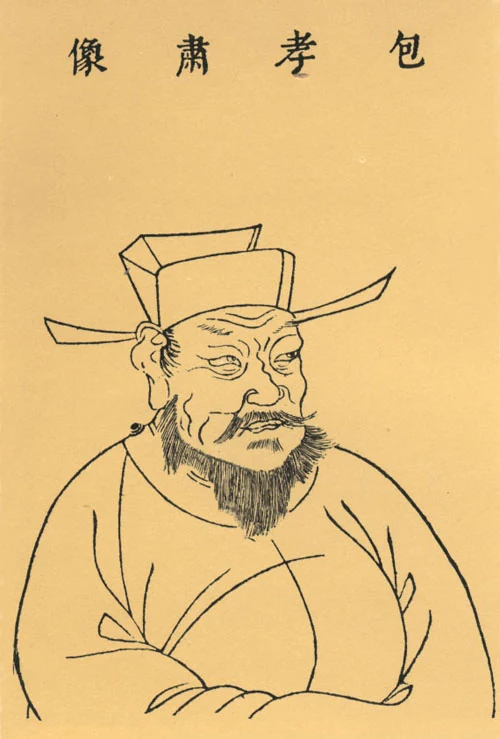
999 CE–1062 CE
Officialpolitician
Bao Zheng
包拯
Bao Zheng (999–1062), courtesy name Xiren, was a Northern Song official and politician from Hefei, Luzhou. After passing the jinshi examination in 1027, he held local posts and served as Investigating Censor, Director of the Office of Remonstrance, Acting Prefect of Kaifeng, and Commissioner of the Three Offices, eventually rising to Deputy Commissioner of Military Affairs. He memorialized on frontier defence and public…
999 CE–1062 CENorthern Song
PROFILE
Bao Zheng (999–1062), courtesy name Xiren, was a Northern Song official and politician from Hefei, Luzhou. After passing the jinshi examination in 1027, he held local posts and served as Investigating Censor, Director of the Office of Remonstrance, Acting Prefect of Kaifeng, and Commissioner of the Three Offices, eventually rising to Deputy Commissioner of Military Affairs. He memorialized on frontier defence and public burdens, opposed abuses by powerful relatives and eunuchs, and changed how petitions were received while governing Kaifeng. The History of Song describes his firmness and integrity; the supernatural judge known as Bao Qingtian was elaborated in later novels and drama.
- Other names
- Bao Daizhi; Bao Longtu (a later popular title); Bao Qingtian (a later popular honorific)
- Courtesy name
- Xiren
- Period
- Northern Song
- Date of Birth
- 999 (the exact date is not recorded)
- Date of Death
- July 3, 1062 CE(7th year of the Jiayou era, 5th month, 24th day)
- Dynasty / regime
- Northern Song
- Identity
- Official; politician
- Ethnicity
- Not recorded in historical sources
- Ancestral home
- Hefei, Luzhou (present-day Feidong, Hefei, Anhui)
- Place of birth
- Not recorded in historical sources
- Major achievements
- Served as Academician of the Longtuge and rose to Deputy Commissioner of Military Affairs; remembered for his upright service and later popular image as Bao Qingtian.
LIFE TIMELINE
Early appointment | Passed the jinshi examination and was appointed Evaluator at the Court of Judicial Review and magistrate of Jianchang County, but did not take up the post because his parents were elderly.
Family service and mourning | Remained at home to care for his parents and observed mourning after their deaths.
First county appointment | Went to the capital for appointment and became magistrate of Tianchang County.
Local administration | Transferred to govern Duan Prefecture and eliminated abuses surrounding the tribute of inkstones.
Censorial service | Entered the capital as Acting Investigating Censor and was later made Investigating Censor.
Mission to the Liao | Served as envoy for the Liao New Year audience and observed frontier affairs.
Fiscal service | Served successively as Fiscal Commissioner of Jingdong Circuit, Transport Commissioner of Shaanxi, and Transport Commissioner of Hebei, then returned to court as Deputy Commissioner of the Revenue Section of the Three Offices.
Office of Remonstrance | Appointed Reader-in-Waiting at the Tianzhang Pavilion and Director of the Office of Remonstrance; memorialized against Zhang Yaozuo’s appointments.
Hebei and prefectural service | Appointed Academician of the Longtuge and Transport Commissioner of Hebei; later governed Yingzhou, Yangzhou, and Luzhou.
Demotion | Penalized for an error in guaranteeing an appointee and demoted to govern Chizhou.
Return to office | Restored to office as governor of Jiangning Prefecture.
Kaifeng appointment | Appointed Acting Prefect of Kaifeng.
Censorial service | Promoted to Right Remonstrance Counsellor and acting Censor-in-Chief; memorialized on establishing a Crown Prince and impeached Zhang Fangping and Song Qi.
Fiscal office | As Academician of the Privy Council, became Acting Commissioner of the Three Offices.
Privy Council | Promoted to Deputy Commissioner of Military Affairs.
Death | Died in Kaifeng at the stated age of sixty-four; posthumously appointed Minister of Rites and given the posthumous name Xiaosu.
BIOGRAPHY
Biography
Family Background and Early Years
Bao Zheng was born into an official family in Hefei, Luzhou. His father Bao Lingyi passed the jinshi examination in 983(8th year of Taiping Xingguo) and eventually served as Vice Minister of Justice, while his grandfather Bao Shitong was a commoner. This family background gave Bao Zheng a sound Confucian education from childhood and provided a foundation for his later official career.
Bao Zheng was born in 999(2nd year of Xianping under Emperor Zhenzong of Song) and studied diligently in his youth. In 1027(5th year of Tiansheng), he passed the jinshi examination, was appointed Evaluator at the Court of Judicial Review, and was assigned as magistrate of Jianchang County (present-day Yongxiu, Jiangxi). Because his parents were elderly, Bao Zheng requested a post nearer Hefei and was reassigned to supervise taxation in Hezhou (present-day Hexian, Anhui). His parents did not want him to travel far, so he resigned and returned home to support them. In the following years both parents died. Bao Zheng built a hut beside their graves and observed mourning; even after the mourning period had ended, he remained reluctant to leave until local elders repeatedly consoled and urged him to seek appointment in the capital. This period gave him a reputation for filial piety and formed part of the moral background later associated with his uncompromising character.
Early Official Career
In 1037(4th year of Jingyou), Bao Zheng was appointed magistrate of Tianchang County, in present-day Anhui. There he began to display the judicial abilities for which he later became famous. The well-known “case of the severed ox tongue” is associated with this period. A thief cut out the tongue of a farmer's working ox. When the owner reported the crime, Bao Zheng ordered him to go home and slaughter the ox for sale. Soon afterward, someone came to accuse the owner of illegally slaughtering a working ox. Bao Zheng immediately arrested the accuser, who proved to be the person who had cut out the ox's tongue. The story was later taken as evidence both of Bao Zheng's perceptiveness in judging cases and of his understanding of human motives.
In 1041(1st year of Qingli), Bao Zheng was transferred to govern Duan Prefecture, present-day Zhaoqing in Guangdong. The prefecture produced inkstones, and previous prefects had used the tribute system to collect dozens of times the required quota and distribute the surplus as gifts to powerful figures at court. Bao Zheng ordered producers to supply only the amount required for tribute. At the end of his term he did not take a single inkstone home, giving rise to his reputation for “leaving after a full term without carrying away one inkstone.”
Censorial Service
In 1043(3rd year of Qingli), Bao Zheng entered the capital as an Assistant of the Palace Administration. On the recommendation of Censor-in-Chief Wang Gongchen, he was appointed Acting Investigating Censor in the eleventh lunar month and later became Investigating Censor. By then, he had formally entered the political center of the Northern Song.
As an Investigating Censor, Bao Zheng repeatedly submitted memorials and remonstrated directly. He argued that the state should not rely solely on annual payments to the Khitan, but should “train troops, select generals, and make frontier defence preparedness practical.” He requested stronger use of the Chancellery's power to return and reject inappropriate documents, urged that corrupt officials be barred from further office, called for careful selection of prefects and magistrates, and advocated assessment of officials and regulation of hereditary appointment privileges. At the time, Fiscal Commissioners also served as inspectors and often sought reputations for severity by accusing officials over minor matters. Bao Zheng asked that this additional inspectorial function be abolished in order to reduce official anxiety.
In August 1045(5th year of Qingli), Bao Zheng served as envoy to the Liao dynasty for the New Year's court audience. During the mission he observed conditions in the neighboring state. After returning, he memorialized that the court should select generals “long familiar with frontier affairs,” placing particular emphasis on commanders in Daizhou, present-day Daixian in Xinzhou, Shanxi, so that the border would be prepared for sudden developments. He later served as a judge in the Revenue Section of the Three Offices, Fiscal Commissioner of Jingdong Circuit, Transport Commissioner of Shaanxi, Transport Commissioner of Hebei, and finally returned to court as Deputy Commissioner of the Revenue Section of the Three Offices. While serving in the provinces, Bao Zheng memorialized for the abolition of levies imposed on commoners for timber used to build vessels at the Xiegu office in Qinlong, the abolition of several hundred thousand units of taxes on bamboo ropes used for river bridges in seven prefectures, and the distribution to farmers of fifteen thousand qing of horse-pasture land in Xing, Ming, and Zhao prefectures. He also reformed the salt administration of Xiezhou by allowing merchants to circulate and exchange salt, thereby reducing burdens on the population.
Office of Remonstrance and Impeachment of Powerful Officials
In 1050(2nd year of Huangyou), Bao Zheng was appointed Reader-in-Waiting at the Tianzhang Pavilion and Director of the Office of Remonstrance. This was the most confrontational phase of his political career. He repeatedly submitted arguments against powerful favorites and imperial relatives, asked that extraordinary favors granted from within the palace be cancelled, and presented three memorials by the Tang statesman Wei Zheng, requesting that Emperor Renzong keep them beside his seat as admonitory texts.
The most famous controversy of this period was Bao Zheng's impeachment of the maternal relative Zhang Yaozuo. Zhang Yaozuo was the uncle of Noble Consort Zhang, later Empress Wencheng, and had been appointed Military Governor of Huaikang, Commissioner for State Horse Administration, Commissioner of the Southern Hall of the Palace Administration, and Commissioner of Jingling Palace, holding four appointments simultaneously and wielding great influence. Bao Zheng, Right Admonition Censor Zhang Zexing, and Tang Jie jointly submitted forceful memorials, denouncing Zhang Yaozuo as “truly the filth of a clear court, a daylight demon” and requesting that the appointments be revoked or at least that he retain only one of the Palace Administration and military commission posts. Under their sustained pressure, Zhang Yaozuo eventually resigned the positions of Commissioner of the Southern Hall of the Palace Administration and Commissioner of Jingling Palace. Bao Zheng also investigated and resolved the case of the charlatan Leng Qing, who falsely claimed to be an imperial prince, causing a sensation at court.
Later Years and Service in Kaifeng
In March 1052(4th year of Huangyou), Bao Zheng was assigned outside the capital as Transport Commissioner of Hebei and received the additional title Academician of the Longtuge. He proposed stationing part of Hebei's garrison troops in Yanzhou, Yunzhou, Qizhou, Puzhou, Caozhou, and Jizhou in Henan for emergency response, but the proposal was not adopted. A few months later he was transferred as Pacification Commissioner of Gaoyang Pass and then to govern Yingzhou, where he memorialized for the cancellation of more than one hundred thousand in accumulated deficits arising from official trading funds. Grieving the death of his son, Bao Zheng requested a less demanding provincial assignment and was transferred to govern Yangzhou and then Luzhou, with the additional office of Director of the Ministry of Justice.
In December 1055(2nd year of Zhihe), Bao Zheng was punished for an error in guaranteeing an official appointment. He was demoted to Vice Minister of War and made governor of Chizhou. In August 1056(1st year of Jiayou), he was restored as Director of the Ministry of Justice and governor of Jiangning Prefecture. In December of the same year he was recalled to the capital, appointed Acting Prefect of Kaifeng, and promoted to Right Director.
Kaifeng Prefecture, which administered the Northern Song capital, was considered difficult to govern. After Bao Zheng took office, orders and prohibitions were strictly enforced. He punished unlawful conduct by powerful people, firmly restrained arrogant clerks, and promptly dealt with false accusers and troublemakers. He opened the main gate so that litigants could enter directly and state their cases, reducing opportunities for clerks to manipulate proceedings. A contemporary saying in the capital declared: “Where connections cannot reach, there is old Bao the King of Hell.” Under the earlier system, petitioners first handed their written complaints to gate clerks, who transmitted them to the office; whether a case would be heard and what response was given were also conveyed through clerks, creating opportunities for extortion and delay. Bao Zheng allowed petitioners to present their cases directly in court. During flooding in the capital, he demolished gardens and pavilions built by eunuchs and powerful families that encroached on the Huimin River and cleared the obstructed channel. When litigants produced land deeds and alleged that boundaries had been extended, he remeasured the properties and impeached those found to have falsely enlarged their claims. These measures addressed, respectively, clerkly manipulation of litigation, encroachment on waterways by powerful people, and land disputes, and cannot be reduced simply to a general reputation for “incorruptibility.”
In June 1058(3rd year of Jiayou), Bao Zheng was promoted to Right Remonstrance Counsellor and acting Censor-in-Chief. He memorialized that a Crown Prince should be established early. When Emperor Renzong asked whom he wished to see appointed, Bao Zheng replied: “I am sixty years old and have no son. I am not seeking future favor.” The emperor was greatly pleased. Bao Zheng also requested restraints on eunuchs, reductions in unnecessary expenditures, faithful performance by regional supervisors, and permission for the Censorate to select its own subordinate officials; these proposals were implemented.
In 1059(4th year of Jiayou), State Finance Commissioner Zhang Fangping was removed after Bao Zheng impeached him for purchasing the property of a wealthy commoner. Song Qi succeeded Zhang and was also impeached. Bao Zheng then became Acting Commissioner of the Three Offices while holding the title Academician of the Privy Council. Ouyang Xiu criticized the appointment with the analogy: “A man leads an ox across another's field; taking away the ox is already a heavy punishment. If one then covets its wealth as well, is that not excessive?” Bao Zheng therefore remained at home and declined the appointment for some time before eventually taking office.
In 1061(6th year of Jiayou), Bao Zheng was promoted to Deputy Commissioner of Military Affairs and entered the highest decision-making institutions of the Northern Song. A little more than a year later, on July 3, 1062(24th day of the fifth lunar month, 7th year of Jiayou), Bao Zheng died of illness in Kaifeng Prefecture at the stated age of sixty-four. He was posthumously appointed Minister of the Ministry of Rites and given the posthumous name Xiaosu.
Family, Resigning Office to Care for His Parents, and the Inkstone He Did Not Take Home
The Song History records that "Bao Zheng, styled Xiren, was a man of Hefei in Luzhou. Having passed as a presented scholar, he was appointed an assistant in the court of judicial review and sent out as magistrate of Jianchang county; because his parents were both old he declined the post. Given the tax supervision of Hezhou, his parents again did not wish him to go, and Zheng at once resigned his office to support them." After several years his parents died in turn, and he "built a hut at the graves and kept mourning to its end, lingering and unable to leave, until the village elders came again and again to urge him on"; only much later did he go to be assigned, as magistrate of Tianchang. This resignation to care for his parents and the mourning at their graves is the earliest form of the honesty and the posthumous name "Xiaosu" (Filial and Stern) for which he is known.
When he was later moved to be magistrate of Duanzhou there followed the famous record of the inkstone: "Duan produces inkstones; former prefects, on the pretext of tribute, took tens of times the tribute number to give to the powerful. Zheng ordered the makers to produce only enough for the tribute, and at the end of his year took not one inkstone home." His predecessors had exacted several dozen times the tribute in inkstones to present to court favourites, while Bao Zheng had only the tribute number made and went home empty-handed; that small matter best measures his distance from the official customs of the day, and it is from details of this kind that his later image has grown.
The Censorial Years: Frontier Defence, the Sealed Reversal of Edicts, and Abolishing the Investigating Commissioners
In the eleventh month of 1043 Li Jing and Bao Zheng were made acting investigating censors, "on the recommendation of the censor-in-chief Wang Gongchen," and so he entered the censorial office. His proposals in these years struck at real abuses: he said that "the state's annual bribe to the Khitan is no policy against the barbarians; we should drill troops, choose generals and give substance to frontier defence," arguing for drill and selection in place of the annual payment; and he asked for the weight of the chancellery's sealed reversal of edicts, for the permanent barring of corrupt officials, for the careful choice of prefects, and for examination to be applied to the filling of posts with the sons of officials. Since "the transport commissioners of the several circuits, holding also the office of investigating commissioner, in impeaching officials mostly seized on trifles and prided themselves on harsh scrutiny, so that officials were ill at ease," he asked that the investigating commissioners be abolished — opposition to a fashion of mutual one-upmanship in petty harshness being an important side of his work in the censorial office.
In 1045 he served as the New Year's envoy to the Khitan, where the Khitan had their master of ceremonies ask him whether "the new side gate opened at Xiongzhou was meant to lure our rebels out and spy on our frontier affairs"; on his return he memorialized from his observation that "having gone abroad on my mission, the true and false in the enemy's camp are known to me in some detail," and advised that "at the key points along the frontier, the chief ministers should be specially charged to select men well versed in frontier affairs as defending generals," adding that "Daizhou in particular must not be lightly entrusted; if the right man is found and held to results, then though he have small faults he should not be transferred out of order," so that "the army and people may be at ease with his orders and, in an emergency, affairs may not miscarry."
Transport Commissions, the Finance Commission, and the Prefecture of Kaifeng
He then served as transport commissioner of Jingdong (1047), of Shaanxi (1047), of Hebei (1048) and as vice-director of the revenue section of the Finance Commission. In local finance, the timber of the Qin-Long Xiegu yard for shipbuilding was "levied from the people without exception," and seven prefectures paid a tax of bamboo cables for river bridges "commonly several hundred thousand," all of which he memorialized to abolish. When the Khitan massed troops near the frontier and the border prefectures grew alert, he was sent to Hebei to call out army grain, and said that "the rich soil of the Zhang river country cannot be ploughed by the people, and fifteen thousand qing of the people's fields in the three prefectures of Xing, Ming and Zhao are used entirely for horse pasture; let it all be given to the people," which was granted; and the salt administration of Xiezhou "exhausted the people," whereupon he went to manage it and asked that it "be entirely opened to trade with merchants." He was then made a waiting official of the Tianzhang pavilion and put in charge of the Remonstrance Bureau, where he "repeatedly impeached and denounced the powerful and favourites, asking that all the private favours granted from within the palace be ended," laid before the throne the three memorials of Wei Zheng of Tang "wishing them placed at the right hand of the throne as a mirror," and urged seven matters including that the emperor should "hear and accept clearly, distinguish factions, value talent and not hold to preconceived views," asking that "harshness be removed, favouritism checked, punishments corrected and prohibitions made clear, building stopped and false talk forbidden," much of which "the court put into effect." With the right remonstrant Zhang Zexing and Tang Jie he argued the case of Zhang Yaozuo's appointments, holding that they should be recalled or that only one of the posts of Xuanhui commissioner and military governor be given, and "in the end Zhang Yaozuo gave up the offices of Xuanhui commissioner and commissioner of the Jingling palace."
In 1052 he was a scholar of the Longtu pavilion and transport commissioner of Hebei, and asked that the Hebei garrison be dissolved and distributed among the prefectures south of the Yellow River — Yan, Yun, Qi, Pu, Cao and Ji — or that the militia be trained with a little dry grain, "the yearly cost being less than one month's expense of the garrison," on which no reply came; when he was moved to Yingzhou, "the prefectures had traded with public money and owed more than a hundred thousand over the years, and he memorialized to remit it all"; and asking for a light prefecture after the death of his son, he was made prefect of Yangzhou and then of Luzhou. In 1055, having failed in a recommendation, he was reduced to prefect of Chizhou, and in 1056 restored and moved to Jiangning, in the twelfth month of which year he was summoned to act as prefect of Kaifeng and made director of the right, and in 1058 became grand master of remonstrance and acting censor-in-chief. As censor-in-chief he asked for the early appointment of an heir, and when Renzong asked whom he would set up, he answered: "That I, unworthy as I am, beg for the early appointment of an heir is for the sake of the ancestral temple and ten thousand generations. That Your Majesty asks whom I would set up is to doubt me. I am seventy and have no son, and am no seeker of favour," at which the emperor said with pleasure that it should be discussed in time; and he asked that the palace attendants be restrained, superfluous expenses reduced, the inspectors of the several circuits held to their duties, the censorate allowed to recommend its own officers, and the yearly holidays cut — "and all were carried out." When Zhang Fangping as finance commissioner was impeached by him for buying the property of rich commoners and dismissed, and Song Qi, replacing him, was attacked by Bao Zheng too, and Song Qi dismissed, Bao Zheng himself was made acting finance commissioner as a scholar of the Privy Council; and Ouyang Xiu said that "this is what is called leading a cow across a field and then seizing the cow — the punishment was already heavy, and to covet his wealth as well is going too far," so that Bao Zheng "stayed at home to avoid the appointment," coming out only after a long time. In 1061 he was made supervising secretary and finance commissioner, and a few days later vice-commissioner of the Privy Council, declining the post of vice-minister of rites; and in the fifth month of 1062, "while attending to business he was taken ill and went home," the emperor sending good medicine, and soon his death was announced, at sixty-four, with the posthumous gift of minister of rites and the posthumous name Xiaosu.
Major Activities
Political Activities
Bao Zheng's political activities extended across the reign of Emperor Renzong of Song. His principal views can be summarized in several areas. First, in response to the Northern Song's financial and military difficulties, he advocated strict selection of officials and the removal of redundant, corrupt, violent, or incompetent officeholders, while requiring elderly officials to retire in order to reduce bureaucratic overstaffing. Second, he opposed indiscriminate recruitment of soldiers, advocated removing the old and weak, selecting and training commanders, and drilling local militia for frontier defence in order to address military overstaffing. Third, he sought to restrain the power of imperial relatives and eunuchs, lighten corvée and taxes, and reduce expenditures. Fourth, in foreign relations, he opposed relying solely on annual payments to obtain peace and argued for practical frontier defence preparedness.
Bao Zheng's memorials while serving in censorial offices covered appointments, frontier defence, penal administration, and extraordinary favors from the inner court. As Investigating Censor, he argued that payments to the Khitan should not be treated as a substitute for frontier defence and recommended selecting and training troops and commanders. He also requested stronger powers of rejection by the Chancellery, punishment of corrupt officials, and an end to Fiscal Commissioners seeking fame by excessively investigating minor faults. After becoming Director of the Office of Remonstrance in 1050(2nd year of Huangyou), he requested the abolition of irregular inner-court favors and successively presented seven proposals concerning receptive hearing of advice, distinguishing factions, and cherishing talent, many of which the court implemented. In the controversy over Zhang Yaozuo's simultaneous appointments, Bao Zheng joined Zhang Zexing and Tang Jie in asking for the appointments to be withdrawn or reduced, and Zhang Yaozuo eventually resigned two offices. Bao Zheng later impeached the Jiangxi Fiscal Commissioner Wang Kui seven times and, as Censor-in-Chief, impeached State Finance Commissioners Zhang Fangping and Song Qi, controversies that also illustrate conflict between censorial supervision and official appointments.
Judicial Administration and Governance of Kaifeng
The History of Song records that, while magistrate of Tianchang, Bao Zheng used a report by an ox owner to identify the person who had cut out the animal’s tongue. This account is kept brief and is not expanded with courtroom episodes from later Bao-gong drama. While governing Luzhou, Bao Zheng also punished an uncle who violated prohibitions, preventing relatives and old associates from relying on his position to trouble local people.
While Acting Prefect of Kaifeng, Bao Zheng changed the procedure for receiving lawsuits by allowing complainants to state their cases directly, reducing the gate clerks' control over submission and transmission of petitions. When eunuchs and powerful families built gardens and pavilions that encroached on the Huimin River and obstructed the channel, he had them removed. In land disputes, he verified deeds and boundaries and impeached parties found to have falsely increased claimed areas. These measures recorded in Song sources concerned access to justice, urban waterways, and land litigation and give a more concrete account of his administration than later generalizations that he could “solve cases like a god.”
Fiscal Administration and Local Administration
As a Fiscal Commissioner, Bao Zheng addressed specific burdens and problems of resource use in his memorials. Timber needed for shipbuilding at the Xiegu office in Qinlong had been apportioned to households, and seven prefectures also bore heavy taxes for bamboo ropes used on river bridges; Bao Zheng requested their abolition. When Hebei's frontier defences required military supplies, he proposed returning about fifteen thousand qing of horse-pasture land in Xing, Ming, and Zhao prefectures to cultivation by commoners, and the court accepted the proposal. After examining the salt system at Xiezhou, which had imposed hardship on the people, he requested that merchants be allowed to circulate salt. While governing Yingzhou, he also requested the cancellation of more than one hundred thousand in long-accumulated losses from official trading funds. These cases show that his policies were not merely an abstract program of “light corvée and taxes,” but addressed specific issues of levies, pasture land, salt administration, and local public-account deficits.
Travels
Bao Zheng's official career took him across northern and southern China. Early in his career he was appointed to Jianchang, present-day Yongxiu in Jiangxi, and supervised taxation in Hezhou, present-day Hexian in Anhui. He later governed Tianchang in Anhui and Duan Prefecture in present-day Zhaoqing, Guangdong, served as Fiscal Commissioner of Jingdong Circuit, Transport Commissioner of Shaanxi, and Transport Commissioner of Hebei, and governed Yingzhou in present-day Hejian, Hebei; Yangzhou; Luzhou in present-day Hefei, Anhui; Chizhou in Anhui; Jiangning Prefecture in present-day Nanjing; and, late in life, Kaifeng Prefecture. His 1045 mission to the Liao dynasty was his only journey outside the Song realm.
Contemporary Reputation and Associations
The History of Song: Biography of Bao Zheng records that Bao Zheng was firm at court and that imperial relatives and eunuchs restrained themselves because of him. Women and children were said to know his reputation and called him “Bao Daizhi,” while the capital repeated the saying “Where connections cannot reach, there is old Bao the King of Hell.” The record links his reputation to refusal of private requests and strict discipline of officials; this should be distinguished from the later dramatic image of a supernatural judge of both the living and the dead. Censor-in-Chief Wang Gongchen recommended him for censorial service; he joined Tang Jie and Zhang Zexing in memorializing against Zhang Yaozuo. Ouyang Xiu criticized Bao Zheng's succession to the fiscal office after impeaching Zhang Fangping and Song Qi, showing that contemporary assessments of his integrity and appointments were not wholly uniform. Sima Guang wrote that “under Emperor Renzong, Bao Zheng was the most renowned for uprightness.” Bao Zheng's memorials were later compiled by Zhang Tian as Xiaosu Bao Gong Zouyi.
How His Name for Integrity Was Made, and Its Limits
Bao Zheng's later image is above all that of the upright official, and his career shows three sources for it. The first is personal conduct: resigning office to care for his parents and keeping mourning at their graves, taking no inkstone home after his year at Duanzhou, and, at Yingzhou, memorializing to remit the hundred thousand owed from the prefectures' trading with public money — all corrections of local and central abuses by his own renunciations. The second is institutional proposals: opposing the investigating commissioners' fashion of "priding themselves on harsh scrutiny," asking for the weight of the sealed reversal of edicts and for examinations in filling posts, and asking that palace attendants be restrained, expenses cut and the censorate be allowed to recommend its own officers, were all remedies for the administrative temper of the day; and on the frontier, urging drill and the choice of generals in place of the annual payment, and after his mission to the Khitan urging that men versed in frontier affairs be chosen and Daizhou not lightly entrusted, were concrete and workable. The third is the stance of plain speech: arguing the case of Zhang Yaozuo's appointments, impeaching Zhang Fangping and Song Qi, and asking for an early heir while refusing to name a man, won him the name of being upright. Its limits are equally clear: what he argued was mostly the reform of official conduct and the saving of expense, and could not alter the Northern Song's structure of "annual bribes to the Khitan" and "redundant officials and expenses"; the appointment of an heir in the Jiayou years was not his to decide, and his own words — "I am seventy and have no son, and am no seeker of favour" — show precisely how far a famous minister of his kind could go: no further than counsel and remonstrance.
Personal Relations
- Father: Bao Lingyi, presented scholar of 983(8th year of Taiping Xingguo), who eventually became Vice Minister of Justice.
- Mother: Lady Zhang.
- Wives: Lady Li (died early); Lady Dong (second wife, titled Lady of Yongkang Commandery).
- Concubine: Lady Sun (secondary consort; mother of Bao Shou).
- Eldest son: Bao Yi, who died two years after marriage; his son Bao Wenfu died at age five.
- Second son: Bao Shou (originally named Bao Yan, Bao Yan), son of Lady Sun; married a daughter of Zhang Tian and later a daughter of Wen Yanbo.
- Eldest daughter-in-law: Lady Cui, wife of Bao Yi, who remained widowed and raised the orphaned child.
- Daughters: two, respectively married to Wang Xiang and Wen Xiao.
- Wang Gongchen: Censor-in-Chief who recommended Bao Zheng as Acting Investigating Censor.
- Tang Jie and Zhang Zexing: fellow remonstrance officials who joined him in impeaching Zhang Yaozuo.
- Ouyang Xiu: served at court with Bao Zheng; criticized Bao's appointment as Acting Commissioner of the Three Offices but praised his integrity.
- Sima Guang: contemporary official who praised Bao Zheng as “the most renowned for uprightness.”
- Zhang Tian: disciple who compiled Xiaosu Bao Gong Zouyi.
- Wen Yanbo: Bao Zheng's co-father-in-law; his daughter married Bao Zheng's second son, Bao Shou.
- Emperor Renzong of Song, Zhao Zhen: Bao Zheng served him for more than thirty years and repeatedly remonstrated to his face. Although the emperor was sometimes displeased, he ultimately tolerated and accepted Bao Zheng's advice.
- Zhang Yaozuo: maternal relative impeached by Bao Zheng, who lost the offices of Commissioner of the Southern Hall of the Palace Administration and Commissioner of Jingling Palace.
- Zhang Fangping and Song Qi: successive State Finance Commissioners who were removed after Bao Zheng impeached them.
- Wang Kui: Jiangxi Fiscal Commissioner impeached seven times by Bao Zheng.
Historical Assessment
Northern Song / Contemporaries
- Ouyang Xiu: “His pure integrity and fine conduct were evident from his poor and humble days; his frank words and upright arguments were heard at court.” (Collected Works of Ouyang Xiu)
- Sima Guang: “Under Emperor Renzong, Bao Zheng was the most renowned for uprightness.” (Sushui Jiwen)
- Liu Chang: “His discernment was clear and his spirit vigorous, upright and unbending; awe-inspiring, he possessed the constancy of one who remains green in winter.” (Gongshi Ji)
Southern Song and Yuan Periods
- Zhu Xi said of Bao: “He again served as governor of the capital; his orders were carried out and prohibitions enforced, and at court he was firm and resolute.” (Classified Conversations of Master Zhu)
- History of Song: Biography of Bao Zheng states: “Zheng was austere and upright by nature. He disliked officials who were harsh, and sought generous treatment. Although he strongly hated evil, he never failed to extend loyalty and forbearance. He did not associate with others carelessly, did not use flattering words or expressions to please people, and in ordinary life kept no private correspondence, so even old friends and relatives were cut off from such access. Though he became honored, his clothing, utensils, and food remained as they had been when he was a commoner.”
Ming and Qing Periods
- The Ming novel Longtu Gong'an portrayed Bao Zheng as a supernatural judge who decided cases among the living by day and among the dead by night. Later works such as The Seven Heroes and Five Gallants further developed the stories of Bao Gong, making “Bao Qingtian” a widely known symbol of judicial justice.
Modern Period
- Hu Shi, in his preface to The Seven Heroes and Five Gallants, called Bao Gong “an arrow-target figure,” meaning that popular tradition attached many different judicial tales to him, while the official histories recorded only the case of the severed ox tongue. Hu Shi also noted that the historical Bao Zheng was described as generous, and suggested that the later image of a judge fond of severe punishments may have been confused with stories about Bao Hui, a ninth-generation descendant.
FIGURES ASSOCIATED WITH THIS DYNASTY
Bibliography
- History of Song, juan 316, Biography 75 (local source text)