Captured following Wei Bao's defeat; placed in the palace weaving workshops.
?–155 BCE
Imperial consortQueen DowagerEmpress Dowagermother of Emperor Wen
Empress Dowager Bo (薄姬)
薄姬
Empress Dowager Bo (薄姬, ?–155 BCE), a native of Wu County in Kuaiji Commandery (modern Suzhou, Jiangsu), was an imperial consort of Emperor Gaozu (Liu Bang), the biological mother of Emperor Wen (Liu Heng), and a seminal matriarch of the Western Han Dynasty. Originally taken into the harem of regional King Wei Bao during the late Qin rebellions, Lady Bo was captured by Han forces following Wei Bao's defeat and placed in the…
?–155 BCEWestern Han (西汉)
PROFILE
Empress Dowager Bo (薄姬, ?–155 BCE), a native of Wu County in Kuaiji Commandery (modern Suzhou, Jiangsu), was an imperial consort of Emperor Gaozu (Liu Bang), the biological mother of Emperor Wen (Liu Heng), and a seminal matriarch of the Western Han Dynasty. Originally taken into the harem of regional King Wei Bao during the late Qin rebellions, Lady Bo was captured by Han forces following Wei Bao's defeat and placed in the imperial weaving workshops. Observed by Liu Bang, she was summoned to the harem and gave birth to Prince Liu Heng in 202 BCE. Characterized by profound modesty, emotional quietude, and freedom from palace vanity, Lady Bo was rarely favored by Gaozu, which ironically spared her and her son from the murderous purges unleashed by Empress Dowager Lu against favored concubines like Consort Qi. Following Gaozu's demise, Lady Bo was permitted to accompany Prince Liu Heng to his remote northern fief in Dai (modern Shanxi/Hebei), where she lived in virtuous seclusion for seventeen years as Queen Dowager of Dai. In 180 BCE, following the eradication of the Lu clan, the imperial ministers selected Liu Heng as Emperor Wen due to Lady Bo's renowned benevolence and lack of ambitious male kinsmen. Elevated to Empress Dowager and later Grand Empress Dowager, she guided the imperial family with gentle wisdom, laying the moral bedrock for the "Governance of Wen and Jing." She died in 155 BCE and was buried in the Nanling Mausoleum, later posthumously elevated as "Empress Gaohuang" during the Eastern Han.
- Posthumous Title
- Empress Gaohuang (高皇后, posthumously honored in Eastern Han)
- Peerage Title
- Consort Bo, Queen Dowager of Dai (Dai Wang Taihou), Empress Dowager, Grand Empress Dowager
- Era
- Late Qin to Western Han Dynasty
- Dynasty
- Western Han
- Ancestral Home
- Wu County, Kuaiji Commandery (modern Suzhou, Jiangsu)
- Date of Death
- 155 BCE (2nd year of Emperor Jing)
- Identity
- Imperial consort, Queen Dowager, Empress Dowager, mother of Emperor Wen
- Highest Rank and Position
- Grand Empress Dowager (太皇太后)
- Major Offices and Peerages
- Imperial Consort, Queen Dowager of Dai, Empress Dowager, Grand Empress Dowager
- Major Achievements
- Biological mother of Emperor Wen of Han; survived the murderous palace purges of Empress Lu through modesty and quietude; nurtured the serene moral ethos of the Wen-Jing Governance
LIFE TIMELINE
Giving Birth to Liu Heng
Summoned by Liu Bang; gave birth to Liu Heng (future Emperor Wen).
Relocation to Dai
Accompanied Prince Liu Heng to Dai as Queen Dowager following Gaozu's death.
Empress Dowager
Crowned Empress Dowager of Han upon Emperor Wen's accession to the throne.
Grand Empress Dowager
Elevated to Grand Empress Dowager upon Emperor Jing's accession.
Demise
Passed away in Chang'an; buried at Nanling Mausoleum.
Early Youth
Born to a father from Wu County and Lady Wei of the royal house of Wei; her father died early and was buried at Shanyin.
Entering the Palace of Wei
Sent by her mother Lady Wei into the palace of King Wei Bao as a consort.
Physiognomy by Xu Fu
Physiognomist Xu Fu examined her features and predicted that she would give birth to a Son of Heaven.
Summoned by Liu Bang at Chenggao
Summoned by Liu Bang after he overheard Lady Guan and Zhao Zi'er recalling their youthful pact with Lady Bo.
Liu Heng Enfeoffed as King of Dai
Her eight-year-old son Liu Heng was enfeoffed as King of Dai with his capital at Jinyang.
Ennoblement of Bo Zhao
Her younger brother Bo Zhao was enfeoffed as Marquis of Zhi, and her parents received posthumous noble titles.
Marriage of Crown Princess Bo
Arranged for a grandniece of her maternal Bo clan to marry Crown Prince Liu Qi (later Emperor Jing).
Relationship graph
BIOGRAPHY
Life and Career
Early Misfortune and Entry into Liu Bang's Harem
Lady Bo was the daughter of a commoner named Bo from Wu County and a woman of the royal Wei lineage named Lady Wei. During the anti-Qin rebellions, Lady Wei presented her daughter to Wei Bao, King of Wei. Famed physiognomist Xu Fu examined Lady Bo's features and astonishingly predicted: "This young lady is destined to give birth to the Son of Heaven." Believing the omen meant that he himself would conquer All Under Heaven, Wei Bao rebelled against Liu Bang, only to be crushed by Han Xin at Anyang in 205 BCE.
Taken captive, Lady Bo was assigned to work at the looms in the Han palace weaving bureau. Once, while inspecting the textile workshops, Liu Bang noticed her quiet beauty and summoned her to his inner harem. On the night of their union, Lady Bo shyly whispered to Liu Bang: "Last night I dreamed of a blue dragon coiling upon my belly." Liu Bang smiled and said: "This is a sign of supreme fortune!" In 202 BCE, she gave birth to Prince Liu Heng.
Quietude in Dai and Surviving Palace Terrors
Following Liu Heng's birth, Liu Bang rarely visited Lady Bo, lavishing his affection upon Consort Qi and Lady Zhao. Rather than breeding bitterness or participating in palace factions, Lady Bo accepted her solitude with serene grace, teaching her young son frugality, self-restraint, and Daoist philosophy.
This self-effacing quietude proved to be her salvation. In 195 BCE, upon Emperor Gaozu's passing, Empress Dowager Lu seized autocratic power, imprisoning all the favored imperial concubines, poisoning Liu Ruyi, and brutally mutilating Consort Qi. However, because Lady Bo had never competed for Gaozu's affections, Empress Lu looked upon her with indifference and benevolence, granting her permission to leave the treacherous capital and accompany eight-year-old Prince Liu Heng to his desolate northern frontier fief of Dai. For seventeen years in Jinyang, Queen Dowager Bo lived with her son in modest austerity, fortifying northern border garrisons, caring for common soldiers, and staying completely removed from the bloody power struggles in Chang'an.
Ascendance as Empress Dowager and Moral Exemplar
In 180 BCE, Empress Dowager Lu passed away, and veteran ministers Zhou Bo and Chen Ping executed the Lu clan. When deliberating which imperial prince should inherit the empire, the ministers evaluated candidate lineages. Rejecting the Prince of Qi because his maternal clan was fierce and overbearing, Grand Commandant Zhou Bo argued: "Prince Liu Heng is the eldest surviving son of Emperor Gaozu, renowned for filial benevolence; moreover, his mother Lady Bo is gentle, humble, and devoid of greedy relatives!" The court unanimously invited Liu Heng to Chang'an as Emperor Wen.
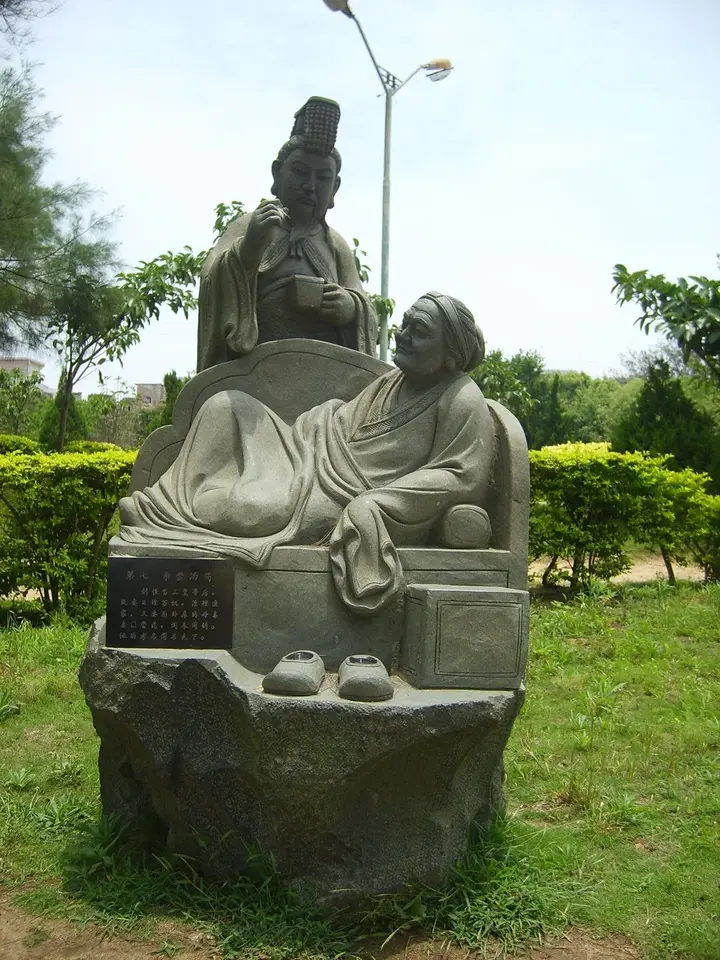
Lady Bo was consecrated as Empress Dowager. She strictly forbade her limited kinsmen from dominating government affairs, ensuring that the state did not suffer from maternal consort meddling. Emperor Wen treated his mother with extraordinary filial devotion; once, when Empress Dowager Bo was bedridden with illness for three years, Emperor Wen personally tasted every herbal broth before presenting it to her, an act commemorated among China's "Twenty-Four Filial Exemplars."
Under Emperor Jing, she was honored as Grand Empress Dowager. She passed away peacefully in 155 BCE. Because Empress Lu was buried with Gaozu at Changling, Lady Bo was interred in the Nanling Mausoleum south of Chang'an, facing her son's Baling Mausoleum. During the Eastern Han Dynasty, Emperor Guangwu formally removed Empress Lu's ancestral tablet, elevating Empress Dowager Bo as the legitimate "Empress Gaohuang" paired with Liu Bang in the imperial ancestral shrine.
Seclusion in the Kingdom of Dai
For seventeen years in the northern frontier state of Dai, Queen Dowager Bo guided her son Liu Heng in frugality and modesty, staying clear of the court purges in Chang'an.
Major Achievements
Preserving Mother and Son through Prudent Self-Restraint
By refraining from harem rivalry during Liu Bang's lifetime and governing quietly in Dai, Lady Bo protected both herself and the future Emperor Wen through the turbulent Empress Lu era.
Facilitating the Peaceful Accession of Emperor Wen
In 180 BCE, the reputation of Lady Bo and the Bo family for gentleness and virtue persuaded Zhou Bo, Chen Ping, and the founding ministers to welcome Liu Heng to the throne.
Restraining the Maternal Bo Consort Clan
Unlike the Lu clan, Empress Dowager Bo kept her maternal relatives strictly within bounds, with only her brother Bo Zhao enfeoffed as Marquis of Zhi.
Posthumous Elevation to Empress Gaohuang and the Nanling Mausoleum
Interred at Nanling Mausoleum near Emperor Wen's Baling in 155 BCE, she was posthumously elevated by Emperor Guangwu of Eastern Han in 56 CE as Empress Gaohuang, enshrined alongside Emperor Gaozu.
Personal Relationships
- Husband: Emperor Gaozu of Han — Founding Emperor of the Han Dynasty.
- Son: Emperor Wen of Han — Renowned sovereign of the Han Dynasty, famed for filial devotion.
- Grandson: Emperor Jing of Han — Ruler who completed the Wen-Jing golden age.
- Former Master: Wei Bao — King of Wei, early husband whose downfall brought Lady Bo to Han.
- Sovereign Rival: Empress Dowager Lu — Ruling Empress whose wrath Lady Bo escaped through modesty.
Historical Assessment and Legacy
Sima Qian in the Records of the Grand Historian commemorated Lady Bo in the Hereditary Families of Imperial Consorts, praising her wisdom: "Lady Bo's virtue was pure and tranquil; she held no envy in the harem and lived without ambition in the provinces. When fortune turned, her son inherited the realm, and her lineage brought peace to the world." Historians universally acclaim Empress Dowager Bo as the ideal model of the Daoist-Confucian matriarch, whose serene temperament directly shaped the benevolent governance, low taxation, and societal peace of the early Han Empire.
Han Dynasty Contemporary Assessments
Both Sima Qian in the Records of the Grand Historian and Ban Gu in the Book of Han praised Lady Bo's gentle, tranquil character and noted how her lack of harem jealousy preserved her family.
Evaluations from the Wei-Jin to Sui-Tang Eras
Emperor Guangwu of Eastern Han honored her as the legitimate Empress Gaohuang in the imperial temple, and later historical records noted the enduring reverence surrounding her Nanling Mausoleum.
Song, Yuan, Ming, and Qing Historical Commentaries
Sima Guang in the Zizhi Tongjian and Ming-Qing historians contrasted Empress Dowager Bo's modest restraint with Empress Dowager Lu's autocratic ambition, celebrating her as a model imperial mother.
Modern Historical Perspectives
Contemporary scholars view Empress Dowager Bo's quietude and the restraint of the Bo consort clan as a vital stabilizing factor in the political transition that inaugurated the Rule of Wen and Jing.
Related Entries
- Liu Bang
- Emperor Wen of Han
- Emperor Jing of Han
- Governance of Wen and Jing
- Nanling Mausoleum
FIGURES ASSOCIATED WITH THIS DYNASTY
Bibliography
- Sima Qian, Records of the Grand Historian (Shiji), Volume 49, "Hereditary Family of Imperial Consorts: Empress Dowager Bo".
- Ban Gu, Book of Han (Hanshu), Volume 97, "Biographies of Imperial Consorts: Empress Dowager Bo".