Classical Studies in the Capital
Journeyed to Luoyang to study under master Liu Tao; recommended as Filial and Incorrupt and served as Master of Writing.
士燮
Shi Xie (士燮, 137–226 CE), courtesy name Weiyan, was a native of Guangxin in Cangwu Commandery during the late Eastern Han and Three Kingdoms periods. An eminent statesman, autonomous regional ruler, and revered Confucian master, he governed the far southern region of Jiaozhou for four decades. Descended from an ancestral lineage that had migrated south from the state of Lu during the Wang Mang interregnum, Shi Xie studied…
Shi Xie (士燮, 137–226 CE), courtesy name Weiyan, was a native of Guangxin in Cangwu Commandery during the late Eastern Han and Three Kingdoms periods. An eminent statesman, autonomous regional ruler, and revered Confucian master, he governed the far southern region of Jiaozhou for four decades. Descended from an ancestral lineage that had migrated south from the state of Lu during the Wang Mang interregnum, Shi Xie studied classical texts in Luoyang under the famed scholar Liu Tao, mastering the Zuo Tradition of the Spring and Autumn Annals and the Classic of History. He entered civil administration as a Master of Writing and Magistrate of Wu County. Following the outbreak of violent rebellions and the demise of successive provincial governors in the late 180s, the imperial court appointed Shi Xie Grand Administrator of Jiaozhi. Shi Xie stabilized the borderlands, securing commandery governorships for his three brothers across Hepu, Jiuzhen, and Nanhai, establishing undisputed familial authority across Lingnan. Benevolent, broad-minded, and devoted to classical learning, Shi Xie shielded Jiaozhou from the devastating civil wars raging across northern China. For more than twenty years, his realm remained an oasis of peace, attracting hundreds of prominent refugee scholars from the central plains, including Yuan Hui, Xu Jing, Liu Xi, Xue Zong, and Cheng Bing. Shi Xie accommodated them generously, establishing schools, lecturing on classical literature, and laying the cultural foundations of Chinese literacy in southern China and northern Vietnam. In external diplomacy, he secured imperial recognition as General of the Household for Pacifying the South and General Who Pacifies Distant Lands. In 210 CE, he voluntarily pledged allegiance to Sun Quan of Eastern Wu, sending his son as hostage and dispatching regular seafaring tributes of pearls, incense, and warhorses. Passing away in 226 CE at the age of ninety, he was honored in Vietnamese dynastic records as King Shi, revered as the patron of southern classical education.
Journeyed to Luoyang to study under master Liu Tao; recommended as Filial and Incorrupt and served as Master of Writing.
Recommended as an Abundant Talent and appointed Grand Administrator of Jiaozhi, deploying his brothers to govern neighboring commanderies amidst widespread unrest.
Recognized by the Han central court under Cao Cao as General of the Household for Pacifying the South, directing military affairs across seven commanderies.
Welcomed Eastern Wu inspector Bu Zhi into Jiaozhou, voluntarily pledging allegiance to Sun Quan and sending his eldest son as hostage.
Dispatched regular maritime embassies to Jianye, presenting precious gems, tropical incense, and hundreds of warhorses to reinforce the alliance.
Coordinated with Eastern Wu during the Battle of Yiling by inciting southwestern magnate Yong Kai to defect from Shu Han, earning appointment as General of the Imperial Guards.
Passed away peacefully in Jiaozhi at the age of ninety; revered across subsequent centuries as a cultural founding father.
Shi Xie's ancestral roots lay in Wenxiang County of the Lu state in the central plains. During the social turmoil accompanying Wang Mang's usurpation of the Western Han throne, his ancestors migrated south into Jiaozhou to escape warfare. Across six generations, the Shi lineage intermarried with influential southern clans, rising to become the premier gentry family in Lingnan. Shi Xie's father, Shi Ci, served as Grand Administrator of Rinang during the reign of Emperor Huan of Han.
Gifted with formidable intellectual curiosity, Shi Xie resolved to pursue classical studies in the imperial heartland. He undertook the arduous overland trek to Luoyang, enrolling in the Imperial Academy and apprenticing under the eminent scholar and Imperial Counselor Liu Tao. Under Liu Tao's mentorship, Shi Xie applied himself to the Zuo Tradition of the Spring and Autumn Annals and the Old Text Classic of History, acquiring an exhaustive understanding of canonical commentaries and earning widespread respect among metropolitan intellectuals. Following his studies, he was recommended as Filial and Incorrupt, appointed Master of Writing in the central secretariat, but was subsequently relieved of office over administrative legal technicalities. When his father passed away, Shi Xie observed the full three years of filial mourning in Guangxin. Completing his mourning, he was recommended as an Abundant Talent and outwardly appointed Magistrate of Wu County in Jingzhou, where his equitable administration won high praise.
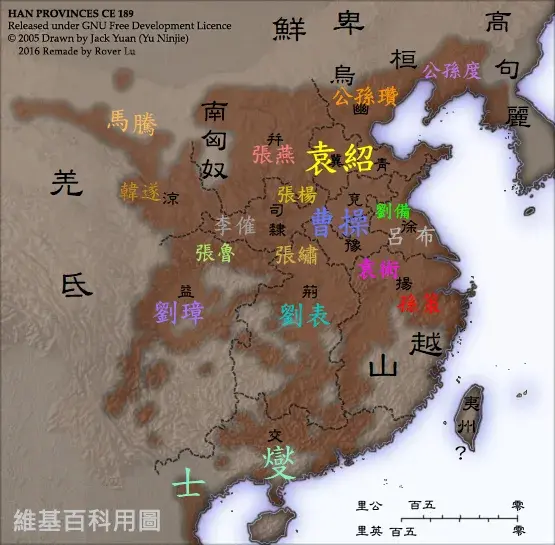
In 187 CE, the imperial court selected Shi Xie to serve as Grand Administrator of Jiaozhi. Soon afterward, imperial authority across China fractured under the Yellow Turban Rebellion. The far southern territories of Jiaozhou erupted into disorder. Regional Inspector Zhu Fu imposed extortionate taxes on indigenous communities, provoking massive uprisings during which he was hunted down and killed. The successor inspector, Zhang Jin, indulged in bizarre occult rituals, wearing red turbans and playing musical instruments to banish rebels, eventually being assassinated by his subordinate Ou Jing. Provincial administration collapsed into total anarchy.
Faced with this vacuum, Shi Xie demonstrated consummate political acumen. He secured strategic mountain passes, fortified commandery garrisons, and repelled insurgent marauders. Recognizing the necessity of regional cohesion, Shi Xie memorialized the throne, nominating his three younger brothers to command surrounding strategic commanderies: Shi Yi as Grand Administrator of Hepu, Shi Wei as Grand Administrator of Jiuzhen, and Shi Wu as Grand Administrator of Nanhai. Consequently, the four Shi brothers consolidated governance over thousands of miles of coastal and inland river valleys, controlling the Pearl River delta and Red River basin. Although nominally maintaining loyalty to the Han dynasty, Shi Xie established an autonomous family hegemony across Lingnan.
Because of their immense geographical distance from the central government, the Shi brothers enjoyed supreme ceremonial prestige in the south. Historical accounts record that whenever Shi Xie traveled abroad, massive entourages escorted his carriage. Chimes and drums echoed across the landscape, while dozens of foreign monks and incense-bearers surrounded his procession. His consorts rode in luxurious carriages draped with green canopies, flanked by squadrons of armored cavalry. His majestic display of dynastic pomp awed indigenous tribal chiefs throughout the region, far exceeding the ancient prestige of King Zhao Tuo of Nanyue.
Despite his autonomous regional power, Shi Xie never degenerated into a rapacious warlord. He was intrinsically generous, humble toward intellectuals, and profoundly devoted to moral education. While northern warlords waged catastrophic internecine wars, leaving the central plains barren and littered with unburied bones, Jiaozhou under Shi Xie's administration enjoyed uninterrupted social peace for decades. Farmers tended their fields, trade flourished along maritime routes, and communities prospered without fear of conscription or pillage.
Recognizing Jiaozhou as an exceptional haven of stability, hundreds of prominent Confucian scholars and court grandees fled south across the Five Ridges to seek refuge under Shi Xie's protection. Eminent intellectuals such as Yuan Hui, Xu Jing, Liu Xi, Xue Zong, and Cheng Bing were welcomed with open arms. Shi Xie provided them with residences, stipends, and academic platforms. In a famous letter to Imperial Secretariat Prefect Xun Yu, the refugee scholar Yuan Hui praised Shi Xie, asserting that in the midst of nationwide destruction, Shi Xie had preserved an entire province without warfare for over twenty years, sustaining commerce and agriculture to an extent that surpassed even Dou Rong's ancient pacification of the Hexi corridor. In his leisure hours, Shi Xie convened daily seminars with refugee scholars, dissecting the philosophical nuances of the Spring and Autumn Annals and synthesizing the New Text and Old Text traditions of the Classic of History. Through his patronage, canonical Chinese classical scholarship and bureaucratic literacy were planted permanently across Lingnan and northern Vietnam.
During the Jian'an era, Chancellor Cao Cao governed northern China in the name of Emperor Xian. Seeking to check warlord Liu Biao's ambitions in the south, Cao Cao issued imperial edicts appointing Shi Xie General of the Household for Pacifying the South, granting him military oversight over all seven commanderies of Jiaozhou, subsequently creating him Pavilion Marquis of Longdu. Shi Xie dispatched envoys across the sea to present dynastic tributes at Xuchang, confirming his nominal allegiance to the Han court.
In 210 CE, Sun Quan secured complete control over the lower Yangtze basin and dispatched his trusted counselor Bu Zhi with an army to assume the governorship of Jiaozhou. Warlord Wu Ju resisted and was executed by Bu Zhi. Recognizing the regional balance of power and prioritizing the preservation of civilian peace, Shi Xie led his brothers to submit voluntarily to Eastern Wu. Sun Quan received him with great joy, appointing him General of the Left. Shi Xie sent his eldest son, Shi Xin, to Jianye as an imperial hostage, and Sun Quan responded by appointing Shi Xin Grand Administrator of Wuchang while conferring colonel commissions upon other Shi family sons.
Throughout the Three Kingdoms Period, Shi Xie maintained loyal tributary relations with Eastern Wu. He dispatched regular maritime fleets to Jianye laden with pearls, tropical fruits, kingfisher feathers, rhinoceros horns, ivory, exotic fragrances, and fine textiles, accompanied by hundreds of prime cavalry mounts. During the Battle of Yiling between Shu Han and Eastern Wu, Shi Xie actively assisted Sun Quan by dispatching agents to persuade southern tribal chief Gao Ding and regional magnate Yong Kai in Yizhou to rebel against Shu Han. In gratitude, Sun Quan promoted Shi Xie to General of the Imperial Guards and elevated his rank to Marquis of Longbian.
In 226 CE, Shi Xie passed away peacefully in Jiaozhi at the age of ninety. Following his death, Sun Quan attempted to annex the province directly, dividing it into Jiaozhou and Guangzhou, which provoked an abortive rebellion by Shi Xie's son Shi Hui that was ruthlessly suppressed by General Lv Dai. Nevertheless, Shi Xie's forty-year administration left an indelible imprint upon southern civilization. In subsequent Vietnamese dynastic historiography across the Tran, Le, and Nguyen dynasties, Shi Xie was enshrined as King Shi, posthumously honored as the divine ancestor who introduced Confucian culture, Chinese writing, and civic institutions to the southern realm.
While the central plains suffered immense devastation during the late Han civil wars, Shi Xie preserved Jiaozhou as an oasis of absolute tranquility for nearly forty years. His administrative stability allowed agriculture, maritime commerce, and handicraft industries to flourish, making the southern frontier the wealthiest sanctuary of the era.
Shi Xie opened his borders to hundreds of prominent refugee intellectuals, including Xu Jing, Yuan Hui, and Xue Zong. By sponsoring academy lectures and transcribing classical commentaries on the Zuo Tradition and Classic of History, he catalyzed the rapid dissemination of Confucian civilization and Chinese script across Lingnan and northern Vietnam.
Navigating delicate geopolitics, Shi Xie avoided catastrophic warfare by voluntarily allying with Eastern Wu and coordinating southwestern operations during the Yiling conflict. His prudent diplomacy facilitated the peaceful absorption of the southern territories into the regional state system.
FIGURES ASSOCIATED WITH THIS DYNASTY