Birth in Nanyang
Born into a scholar-official family in Nieyang County, Nanyang Commandery; exposed to historical classics and family archives in early childhood.
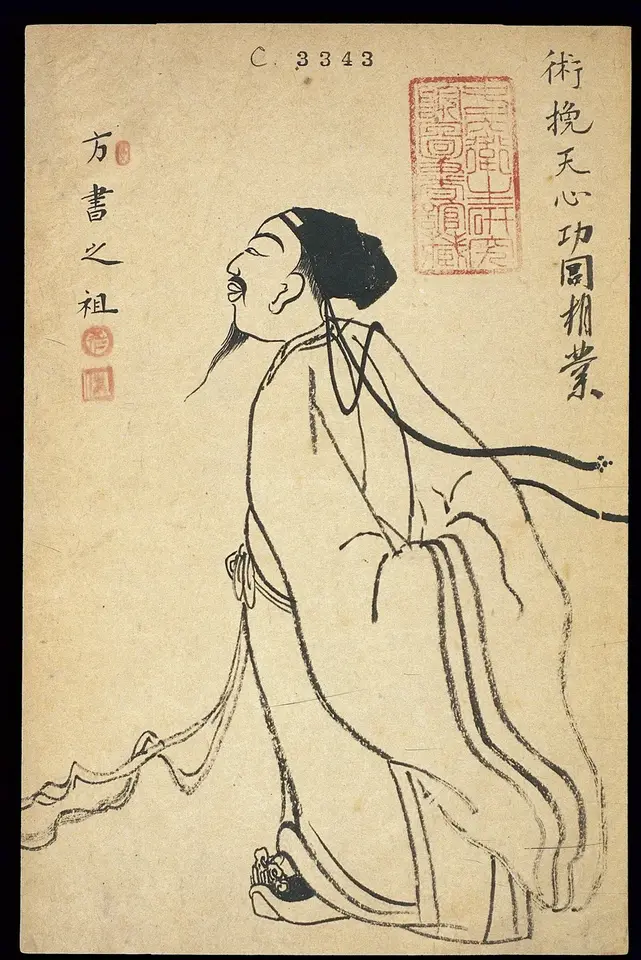
张仲景
Zhang Zhongjing (张仲景, c. 150–c. 219), personal name Zhang Ji (张机) and courtesy name Zhongjing (仲景), was a native of Nieyang County, Nanyang Commandery, Jingzhou (modern Rangdong Town, Dengzhou City, Henan Province, or Wancheng District, Nanyang City). He stands as an extraordinary medical theorist, clinical master, and the foundational synthesizer of traditional Chinese prescription and clinical therapeutics, revered…
Zhang Zhongjing (张仲景, c. 150–c. 219), personal name Zhang Ji (张机) and courtesy name Zhongjing (仲景), was a native of Nieyang County, Nanyang Commandery, Jingzhou (modern Rangdong Town, Dengzhou City, Henan Province, or Wancheng District, Nanyang City). He stands as an extraordinary medical theorist, clinical master, and the foundational synthesizer of traditional Chinese prescription and clinical therapeutics, revered throughout East Asia as the "Sage of Medicine" (Yisheng). Born into an aristocratic bureaucratic family, Zhang displayed disciplined scholarship from youth, reading widely across Confucian and historical canons. Inspired by the historical accounts of ancient physician Bian Que resuscitating the Prince of Guo and diagnosing Duke Huan of Qi through visual inspection, he resolved to master the healing arts, studying under fellow townsman Zhang Bozu at age ten. Regional intellectual He Rong praised his penetrating intellect, predicting he would become an exceptional physician. Nominated as Filial and Incorrupt during the reign of Emperor Ling, Zhang was appointed Grand Administrator of Changsha according to persistent medical traditions. Faced with raging epidemics, he broke feudal administrative taboos by opening the government courtrooms on the first and fifteenth days of each lunar month, examining pulses and prescribing remedies for impoverished commoners directly from his official bench, originating the venerated tradition of the "hall doctor" (zuotangyi) and the naming of Chinese pharmacies with the suffix "tang" (hall). During the early Jian'an era, catastrophic warfare and virulent epidemics swept the Central Plains; observing over two-thirds of his extended two-hundred-member clan perish within a decade—with cold damage fevers accounting for seven out of ten deaths—and witnessing incompetent doctors hastening deaths with incorrect remedies, Zhang resigned from office in grief to dedicate his life to medical synthesis. Applying rigorous scientific methodology, Zhang diligently studied ancient medical canons including Suwen, Lingshu, Nanjing, and Yinyang Dalun, synthesizing these theories with extensive clinical emergency experience and folk remedies to author the monumental sixteen-volume Treatise on Febrile and Miscellaneous Diseases (Shanghan Zabing Lun). The work founded the clinical methodology of pattern differentiation and treatment (bianzheng lunzhi), integrating theory, treatment principle, formula, and medicinal herbs (li-fa-fang-yao) into an organic whole. It introduced the Six-Meridian Pattern Differentiation for external fevers and Visceral Meridian Pattern Differentiation for internal disorders, formulating classical prescriptions such as Ephedra Decoction, Cinnamon Twig Decoction, Bupleurum Decoction, and White Tiger Decoction. Preserved and separated during the Jin and Song dynasties into the Treatise on Cold Damage (Shanghan Lun) and Essential Prescriptions of the Golden Coffer (Jinkui Yaolue), his writings stand as immortal foundations of Chinese clinical medicine.
Born into a scholar-official family in Nieyang County, Nanyang Commandery; exposed to historical classics and family archives in early childhood.
Inspired by the legendary deeds of Bian Que, formally apprenticed to prominent local physician Zhang Bozu to master herbal pharmacology and pulse lore.
Achieved rapid clinical mastery; regional scholar-statesman He Rong praised his subtle intellect and predicted his future greatness as a healer.
Nominated as Filial and Incorrupt during Emperor Ling's reign, entering bureaucratic service while keeping his medical compassion intact.
Traditional accounts record his tenure as Grand Administrator of Changsha, where he opened the official hall twice monthly to treat sick civilians.
Virulent cold damage pestilence swept Nanyang; over two-thirds of his clan died within a decade, prompting him to dedicate his life to conquering epidemic fever.
Resigned from official life and returned to Nanyang, researching classical medical texts and clinical cases along the Bai River to draft his masterwork.
Completed the sixteen-volume Treatise on Febrile and Miscellaneous Diseases, establishing the Six-Meridian and Visceral Pattern Differentiation systems.
Observing frostbitten refugees on the Bai River in winter, formulated medicinal mutton-filled dough wraps called "Jiao'er," originating the Winter Solstice dumpling custom.
Passed away peacefully in his native Nanyang at approximately age seventy; weeping citizens gathered to erect an ancestral tomb and shrine by the Wenliang River.
Zhang Zhongjing was born around 150 (the first year of the Heping reign of Emperor Huan of Han) in Nieyang County, Nanyang Commandery, Jingzhou (modern Rangdong Town, Dengzhou City, Henan Province, or Wancheng District, Nanyang City). Nanyang was a critical intersection connecting northern and southern China, celebrated as the "Imperial Homeland" where Emperor Guangwu had assembled his founding aristocracy. Zhang was born into an illustrious scholar-official lineage; his father, Zhang Zonghan, served as a civil official in the imperial court. This privileged domestic environment granted young Zhang unhindered access to classical court texts, historical records, and natural philosophy.
Naturally solemn, observant, and deeply compassionate, Zhang pursued Confucian classics while harboring an instinctive curiosity regarding the mysteries of physical health and disease. While reading ancient dynastic chronicles, he was profoundly moved by Sima Qian's accounts in the Records of the Grand Historian of ancient master Bian Que inspecting Duke Huan of Qi's facial complexion to diagnose impending internal disease, and entering the kingdom of Guo to revive the apparently deceased crown prince with acupuncture and herbs. In his autobiographical preface to the Treatise on Febrile and Miscellaneous Diseases, Zhang recalled that whenever he read of Bian Que's diagnostic brilliance, he could not help but marvel with deep admiration. Bian Que's dedication to preserving human life became young Zhang's lifelong ideal.
Around 161 (the fourth year of the Yanxi reign), seeing the Han empire slip into factional turmoil, peasant distress, and pestilence, ten-year-old Zhang resolved to study medicine, apprenticing under his fellow townsman, the renowned physician Zhang Bozu. Zhang Bozu was a physician of unblemished integrity and simple lifestyle, celebrated throughout Nanyang for his diagnostic acumen and his compassionate refusal to charge extortionate fees to poor patients.
Studying under Zhang Bozu, young Zhang applied himself with diligence, standing beside his master's consultation mat day and night, transcribing prescriptions, tasting medicinal herbs, and studying pulse subtleties. Gifted with deep analytical reflection, he absorbed his master's clinical secrets while surpassing him in diagnostic precision. Within years, Zhang's medical reputation spread widely; visiting Nanyang, prominent scholar-official He Rong marveled at the young man's disciplined intellect, declaring to his peers that this young scholar possessed such profound insight that he was destined to become a master physician of the age.
During the reign of Emperor Ling, Zhang was recommended as Filial and Incorrupt (xiaolian) by the commandery magistracy in recognition of his filial virtue and extensive learning, entering imperial administrative service. Despite the corruption of late Han bureaucratic politics, Zhang embraced the traditional Confucian ethos that if one could not serve as a benevolent prime minister, one should serve as a benevolent physician, dedicating his office to public welfare. Persistent medical chronicles and Song dynasty official scholarship record that during the early Jian'an era of Emperor Xian, Zhang was appointed Grand Administrator of Changsha.
While official dynastic histories like the Book of the Later Han omitted formal biographies of physicians due to feudal disdain for medical practitioners, medical historians including Tang dynasty master Sun Simiao and Northern Song imperial medical compilers explicitly cited ancient sources confirming Zhang's administration of Changsha. Arriving in Changsha during an outbreak of virulent pestilence, Zhang was confronted with immense civilian suffering.
Under Han bureaucratic etiquette, commandery administrators were surrounded by ceremonial guards and forbidden from casually entering the domestic quarters of commoners, while impoverished citizens were barred from entering the central hall of the administrative yamen. Deeply moved by the plight of untreated patients, Zhang broke through aristocratic taboos. He established an unprecedented official protocol: on the first and fifteenth days of every lunar month, the main gates of the Changsha yamen were thrown open, all judicial disputes and bureaucratic dockets were suspended, and an examination desk was erected directly in the center of the great hall.
Dressed in his formal official robes, Zhang sat at the bench to examine pulses, inspect tongues, diagnose illnesses, and prescribe formulas for long queues of impoverished commoners, using his personal official salary to purchase medicinal herbs for destitute patients. The grateful populace hailed him as a living savior. In commemoration of Zhang's practice of examining patients from his judicial hall, subsequent generations of Chinese physicians operating private apothecary clinics came to be respectfully designated as "hall doctors" (zuotangyi), and traditional pharmacies throughout China adopted the character "tang" (hall) in their titles, preserving an immortal tribute to his humanitarian spirit.
In the early Jian'an era, catastrophic warfare broke out among rival warlords throughout the Yellow, Huai, and Han river valleys. Warfare disrupted agriculture, leaving uncounted corpses unburied and unleashing unprecedented waves of virulent epidemic disease known collectively as "cold damage" (shanghan)—a broad category encompassing acute infectious febrile diseases. The contagion spread with terrifying velocity, wiping out entire communities and leaving whole villages desolate.
This catastrophic disaster struck Zhang's own family with devastating ferocity. In his poignant Author's Preface, Zhang recorded with tears of sorrow that his clan was originally large, numbering over two hundred members; yet since the beginning of the Jian'an era, within less than a decade, more than two-thirds had died, with cold damage accounting for seven out of every ten deaths. Watching beloved siblings, children, and elders succumb to agonizing fevers without effective remedies shattered Zhang's heart.
Compounding his grief was the negligence and incompetence of contemporary physicians. Many doctors clung to dogmatic, rigid formulas, never investigating pathological mechanisms or examining physical constitutions. In consultations, they made superficial inquiries, quickly scrawling prescriptions without conducting thorough pulse palpation, blindly administering cold herbs for exterior syndromes or inducing violent purgation for depleted patients, causing countless preventable deaths. Indignant at this medical malfeasance and mourning the untimely loss of his kin, Zhang renounced his administrative career, retiring to his native estate along the Bai River in Nanyang to devote his remaining days to conquering epidemic fevers and establishing an unshakeable clinical foundation for posterity.
Living in quiet seclusion in Nanyang, Zhang embarked on a monumental research initiative. Maintaining a rigorous empirical approach, he conducted an exhaustive synthesis of classical medical literature, gathering all surviving texts from antiquity to the late Han. He studied the Suwen, Lingshu, Nanjing, Yinyang Dalun, and Tailu Yaolu, analyzing bodily physiology, visceral pathology, meridian systems, and environmental seasonal influences.
Rejecting sectarian dogma, Zhang integrated theoretical wisdom with grassroots experience. He traveled widely across rural villages, collecting folk prescriptions, herbal remedies, and specialized techniques from village practitioners, herb gatherers, and peasant elders. Combining ancient formulas with his extensive emergency clinical practice, he systematically verified herbal dosages and clinical reactions.
Around 210 (the fifteenth year of the Jian'an reign), after years of concentrated writing and clinical verification, his monumental sixteen-volume masterwork, the Treatise on Febrile and Miscellaneous Diseases (Shanghan Zabing Lun), was completed along the banks of the Bai River. Ancient bibliographic records note that Zhang also authored specialized treatises including ten volumes of Differentiating Cold Damage, two volumes of Prescriptions for Women's Diseases, and monographs on visceral and dental pathology, though these were lost in subsequent warfare.
The Treatise on Febrile and Miscellaneous Diseases synthesized the crowning medical achievements of pre-Qin and Han medicine, establishing the integrated system of pattern differentiation and treatment (bianzheng lunzhi). Classifying acute external fevers through Six-Meridian Differentiation and chronic internal ailments through Visceral Differentiation, the work established three hundred and ninety-seven clinical methods and one hundred and twelve definitive formulas, marking the transition of Chinese medicine into a fully rational, empirical clinical science.
Throughout his years of clinical practice, Zhang demonstrated profound psychological insight alongside pharmaceutical genius. In Nanyang, an elderly physician named Shen Huai, aged over seventy, possessed immense medical skill but had no surviving sons. Grieving over the lack of an heir, Shen fell into chronic depression, becoming bedridden with digestive failure and severe melancholy. Numerous local physicians attempted treatments without success, and Shen's condition grew critical. Learning of his colleague's plight, Zhang paid him a personal visit.
Recognizing that Shen's illness stemmed entirely from psychological fixation that could not be resolved by ordinary herbs, Zhang devised an ingenious psychological cure. He wrote out a bizarre prescription, instructing Shen's family to mix five catties of diverse cereal flours, shape them into massive pills coated with red cinnabar, and demand that Shen consume them all in a single meal. When Shen examined the prescription, he was stunned by its absurdity. Shen ordered his family to hang the giant dough balls beneath his eaves, pointing at them and laughing uproariously whenever friends or colleagues visited, mocking Zhang for prescribing flour balls to cure critical illness.
As visitors joined in laughter, Shen spent days laughing and debating the absurdity of the prescription. His constant merriment dispersed the stagnant liver qi and thoracic melancholia that had choked his digestion. Within days, Shen's appetite returned, his vital energy revived, and his chronic illness vanished. When Zhang returned to offer congratulations, explaining that he had utilized emotional displacement to dislodge psychological stagnation, Shen was overcome with admiration and gratitude, presenting Zhang with his secret family formulas and clinical records.
Upon returning to Nanyang during a bitter winter, Zhang observed shivering refugees along the frozen Bai River, their ears blackened and ulcerated from severe frostbite. Moved by their distress, Zhang instructed his disciples to formulate a warming medicinal dietary remedy called "Cold-Dispelling Jiao'er Soup" (Quhan Jiao'er Tang).
On the day of the Winter Solstice, Zhang erected straw shelters and boiling cauldrons outside the eastern gates of Nanyang. They simmered fresh mutton, hot ginger, and warming herbs in large pots, minced the cooked meat and herbs, wrapped them in ear-shaped dough skins called "Jiao'er," and boiled them in the rich mutton broth. Zhang distributed a bowl of broth and two dumplings to every shivering refugee. Consuming the steaming soup and dumplings, the refugees' bodies warmed, blood circulation returned to their extremities, and their frostbitten ears healed. In gratitude, the people of Nanyang prepared similar ear-shaped dumplings every Winter Solstice, creating the timeless Chinese culinary tradition of eating dumplings on the Winter Solstice.
In 219 (the twenty-fourth year of the Jian'an reign), seventy-year-old Zhang Zhongjing passed away peacefully in his native Nanyang. News of his death plunged Nanyang and Changsha into deep mourning. Thousands of citizens gathered to escort his funeral bier to the banks of the Wenliang River east of Nanyang, constructing a grand burial tumulus and ancestral shrine that would be venerated for millennia.
In the chaotic warfare of the Three Kingdoms, the original sixteen-volume manuscript of the Treatise on Febrile and Miscellaneous Diseases was scattered and broken. Fortunately, during the Western Jin dynasty, Court Physician Wang Shuhe gathered surviving fragments from palace depositories and private collections, carefully compiling the sections on external febrile illnesses into the ten-volume Treatise on Cold Damage (Shanghan Lun), preserving the core teachings of Six-Meridian Differentiation.
During the Tang dynasty, the famous physician Sun Simiao lamented in his early magnum opus Essential Prescriptions Worth a Thousand Pieces of Gold (Qianjin Yaofang) that Zhang's formulas were jealously guarded and concealed by southern physicians; late in life, having finally acquired an authentic copy of Zhang's text, Sun rejoiced and devoted nine entire volumes of Qianjin Yifang to Zhang's original chapters and formulas, praising their balanced profundity and spreading Zhongjing scholarship across the Tang empire.
In the Northern Song dynasty, when Emperor Renzong established the Bureau for Collating Medical Books, Hanlin academician Wang Zhu discovered a forgotten bamboo-bound manuscript entitled Essential Prescriptions of the Golden Coffer and Jade Sheath in the imperial archives, preserving Zhang's clinical sections on internal miscellaneous diseases. Imperial medical officials Lin Yi and Gao Baoheng collated these texts with surviving fragments, publishing the three-volume Essential Prescriptions of the Golden Coffer (Jinkui Yaolue). In 1599, Ming bibliophile Zhao Kaimei recarved the Song edition of the Shanghan Lun, ensuring its survival to modern times. Preserved in these twin masterpieces, Zhang's legacy gave birth to the Cold Damage School, guiding clinical medicine across East Asia for over two millennia.
Zhang Zhongjing's crowning historical contribution was the creation of the Treatise on Febrile and Miscellaneous Diseases (Shanghan Zabing Lun), later preserved as the Treatise on Cold Damage (Shanghan Lun) and Essential Prescriptions of the Golden Coffer (Jinkui Yaolue). Standing alongside the Huangdi Neijing, Nanjing, and Shennong Bencao Jing as one of the Four Great Classics of Chinese Medicine, it represents the world's earliest systematic clinical treatise uniting theory with therapeutic practice. It transformed ancient medicine from fragmented empirical remedies into an integrated clinical methodology, revered across centuries as the "Canon of Ten Thousand Generations."
In the Treatise on Cold Damage, Zhang formulated the comprehensive theoretical framework of Six-Meridian Pattern Differentiation (liujing bianzheng). He revealed the dynamic physiological and pathological laws governing the invasion of pathogenic factors from the exterior to the interior, classifying acute diseases into three yang stages (Taiyang, Yangming, Shaoyang) and three yin stages (Taiyin, Shaoyin, Jueyin).
For Taiyang syndromes, he formulated Ephedra Decoction for exterior excess and Cinnamon Twig Decoction for exterior deficiency; for Yangming heat, he created White Tiger Decoction for meridian heat and the Chengqi Decoctions for intestinal purgation; for Shaoyang disorders, he designed Minor Bupleurum Decoction to harmonize interior and exterior. In critical yin collapse, he formulated Sini Decoction to restore devastated yang, and Wumei Pill for complex Jueyin reversals. This Six-Meridian framework provided generations of physicians with an effective clinical methodology to combat acute epidemic fevers.
In the Essential Prescriptions of the Golden Coffer, Zhang established the system of Visceral Meridian Pattern Differentiation (zangfu bianzheng) for complex internal disorders. Covering stroke, joint pain, chest congestion, edema, jaundice, phlegm-fluid retention, and gynecological disorders, Zhang articulated the preventive doctrine that identifying disease in the liver requires fortifying the spleen to block transmission.
He formulated classic remedies such as Gualou Xiebai Baijiu Decoction for chest pain (coronary angina); Fangji Huangqi Decoction for edema; Linggui Zhugan Decoction for fluid retention; and Wenjing Decoction, Danggui Shaoyao Powder, and Guizhi Fuling Pill for gynecological complaints, establishing the enduring clinical foundations of internal medicine, surgery, and obstetrics.
Zhang achieved a methodological revolution by establishing the standardized clinical sequence of "Theory, Principle, Formula, and Herb" (li-fa-fang-yao). Guided by profound pathological theory (li), the physician synthesizes the four examinations to determine the precise therapeutic principle (fa), selects the matching canonical formula (fang), and adjusts herbal ingredients and dosages according to strict hierarchical rules of emperor, minister, assistant, and envoy (yao). This rigorous diagnostic discipline transformed Chinese medicine into an empirical clinical science capable of reliable replication and nuanced adaptation.
Zhang refined two hundred and sixty-nine canonical prescriptions whose clinical efficacy remains legendary. Celebrated for their spare elegance and potent synergy, his formulas utilize minimal herbs to achieve maximum therapeutic effect, earning recognition as the "Ancestors of All Prescriptions." Zhang pioneered advanced administrative forms including decoctions, pills, powders, ointments, pig-bile enemas, and sublingual tablets. In modern medicine, Zhongjing prescriptions are extensively utilized for cardiovascular, gastrointestinal, and respiratory emergencies, while constituting over sixty percent of commercial formulations in Japanese Kampo medicine.
Zhang stood as an exemplar of medical humanism. Opening his official courtroom in Changsha to examine impoverished commoners, he originated the enduring "hall doctor" tradition, enshrining social equity within the medical profession. Furthermore, he established standardized dietary therapy, creating Angelica, Ginger, and Mutton Decoction for postpartum exhaustion, Licorice, Wheat, and Jujube Decoction for neuroses, and Cold-Dispelling Jiao'er Soup for frostbite, blending therapeutic nutrition with popular cultural life.
FIGURES ASSOCIATED WITH THIS DYNASTY