In the final years of the Western Jin, Liu Yuan, commander of the Left Division of the Xiongnu, assumed the title King of Han at Zuoguocheng under the banner of “restoring Han” and founded the state of Han.
304 CE–329 CE
Former Zhao
Regional polity前赵
Former Zhao (304–329), also known as Han-Zhao, was a regional regime founded during the Sixteen Kingdoms period by the Liu clan of the Xiongnu Tuge branch. It was also the first regime established during the Sixteen Kingdoms period. In the final years of the Western Jin, Liu Yuan, commander of the Left Division of the Xiongnu, assumed the title King of Han at Zuoguocheng in 304, the first year of the Yongxing era, under the banner of “restoring Han,” and founded the state of Han. In 308, the…
304 CE–329 CECapital · See entry
ERA OVERVIEW
Former Zhao (304–329), also known as Han-Zhao, was a regional regime founded during the Sixteen Kingdoms period by the Liu clan of the Xiongnu Tuge branch. It was also the first regime established during the Sixteen Kingdoms period. In the final years of the Western Jin, Liu Yuan, commander of the Left Division of the Xiongnu, assumed the title King of Han at Zuoguocheng in 304, the first year of the Yongxing era, under the banner of “restoring Han,” and founded the state of Han. In 308, the second year of the Yongfeng era, Liu Yuan formally proclaimed himself emperor while retaining Han as the state name. In 319, the second year of the Guangchu era, Liu Yao, a clansman and nephew-generation relative of Liu Yuan, changed the state name to Zhao. To distinguish it from Later Zhao founded by Shi Le, historians conventionally refer to the Han and Zhao phases of the Liu regime together as Former Zhao, or Han-Zhao, and to Shi Le's regime as Later Zhao. Former Zhao successively established its capitals at Zuoguocheng, Pingyang (present-day Linfen, Shanxi), and Chang'an (present-day Xi'an, Shaanxi). It had five rulers—Liu Yuan, Liu He, Liu Cong, Liu Can, and Liu Yao, including Liu He's extremely brief reign. Liu Yao was its final ruler. The regime was destroyed by Later Zhao in 329, the twelfth year of the Guangchu era, after twenty-six years of existence.
Time span304 CE–329 CE
CapitalSee entry
ERA TIMELINE
Liu Yuan formally proclaimed himself emperor and inaugurated the Yongfeng era.
Liu Yuan died. Crown Prince Liu He succeeded him but was soon killed by his younger half-brother Liu Cong, who took the throne.
During the Disaster of Yongjia, Liu Yao and Wang Mi captured Luoyang and took Emperor Huai of Jin prisoner.
Jin Zhun killed Liu Can in a coup at Pingyang; Liu Yao proclaimed himself emperor at Chibi.
Former Zhao defeated Chen An and secured Qin Province in Longyou.
Liu Yao attacked Former Liang; Zhang Mao declared vassalage and offered tribute.
Former Zhao sent Liu Yue to besiege Shi Sheng of Later Zhao at Jinyongcheng in Luoyang. Shi Hu arrived with 40,000 infantry and cavalry; Liu Yue was defeated and captured, and Former Zhao suffered a major setback on the Luoyang front.
Later Zhao captured Shanggui and destroyed Former Zhao.
FULL ENTRY
Overview
Former Zhao (304–329), also known as Han-Zhao, was a regional regime founded during the Sixteen Kingdoms period by the Liu clan of the Xiongnu Tuge branch. It was also the first regime established during the Sixteen Kingdoms period. In the final years of the Western Jin, Liu Yuan, commander of the Left Division of the Xiongnu, assumed the title King of Han at Zuoguocheng in 304, the first year of the Yongxing era, under the banner of “restoring Han,” and founded the state of Han. In 308, the second year of the Yongfeng era, Liu Yuan formally proclaimed himself emperor while retaining Han as the state name. In 319, the second year of the Guangchu era, Liu Yao, a clansman and nephew-generation relative of Liu Yuan, changed the state name to Zhao. To distinguish it from Later Zhao founded by Shi Le, historians conventionally refer to the Han and Zhao phases of the Liu regime together as Former Zhao, or Han-Zhao, and to Shi Le's regime as Later Zhao. Former Zhao successively established its capitals at Zuoguocheng, Pingyang (present-day Linfen, Shanxi), and Chang'an (present-day Xi'an, Shaanxi). It had five rulers—Liu Yuan, Liu He, Liu Cong, Liu Can, and Liu Yao, including Liu He's extremely brief reign. Liu Yao was its final ruler. The regime was destroyed by Later Zhao in 329, the twelfth year of the Guangchu era, after twenty-six years of existence.
Historical Development
Raising the Five Divisions: The founder of Former Zhao descended from the chanyu lineage of the Southern Xiongnu. In 216, the twenty-first year of the Jian'an era of the Eastern Han, the Southern Xiongnu chanyu Huchuquan came to court and was retained at Ye. Cao Cao then divided the Southern Xiongnu into five divisions, appointed Xiongnu nobles as their commanders, and assigned Han Chinese officials as sima to supervise them. The divisions were settled in several commanderies of Bing Province, including Zishi, Qixian, Puzi, Xinxing, and Daling. Liu Yuan's father Liu Bao commanded the Left Division of the Xiongnu at Xinxing and was the strongest of the five division leaders. After Liu Bao's death, Liu Yuan succeeded him as commander of the Left Division. From 279 onward, he successively served as General Who Establishes Might and Chief Commander of the Five Divisions; in 289 he became Commandant of the Northern Xiongnu. Known for generosity and sociability, he attracted prominent men of the Five Divisions and noted scholars from You and Ji provinces. During the Tai'an era of Emperor Hui of Jin (302–303), as the imperial princes fought one another and refugee uprisings multiplied, Liu Xuan, Right Wise King of the Five Xiongnu Divisions in Bing Province, and others secretly plotted to rebel against Jin and revive Xiongnu power. They jointly selected Liu Yuan as Grand Chanyu and sent Huyan You to Ye to contact him. Their declared plan was to gather the Five Divisions to assist Sima Ying, Prince of Chengdu, but the actual purpose was to prepare an anti-Jin uprising. In the eighth month of 304, the first year of Yongxing, Wang Jun and Sima Teng attacked Ye. Liu Yuan requested permission to mobilize the Five Xiongnu Divisions in Sima Ying's defense. Sima Ying therefore appointed him Northern Chanyu and sent him back to Bing Province to summon the divisions. After Liu Yuan returned to Lishi, the assembled leaders acclaimed him Grand Chanyu, and he gathered some 50,000 followers, known as the “forces of the Five Divisions.”
Assuming the Title King of Han and Establishing a Bureaucracy: In the tenth month of 304, the first year of Yongxing, Liu Yuan moved from Lishi to Zuoguocheng. He erected an altar in the southern suburbs and, invoking the principle that a younger brother succeeds an elder brother and the restoration of the Han house, assumed the title King of Han. He inaugurated the Yuanxi era, established a full bureaucracy, set up ancestral temples and altars of soil and grain, proclaimed a general amnesty, and formally founded a state named Han. Liu Yuan claimed that his ancestors had been bound to the Han imperial house as brothers and through marriage and therefore described himself as a maternal relative of the Han. He posthumously honored the Later Ruler Liu Chan of Shu Han and enshrined the spirit tablets of three ancestors and five sovereigns beginning with Emperor Gaozu of Han, presenting his cause as a “restoration of Han.” At that time Wang Mi of Qing and Xu, Ji Sang and Shi Le of Wei Commandery, Luzhuyan of the four Xianbei divisions of Shang Commandery, the Di chieftain Shan Zheng, and others all accepted Liu Yuan as their common leader, greatly strengthening the Han regime.
Height: In the twelfth month of 304, the first year of Yuanxi, the Jin inspector of Bing Province Sima Teng sent troops against Han. The two sides fought at Daling, north of present-day Wenshui in Shanxi, and Liu Yuan was victorious. Over the following years he sent Liu Yao to seize commanderies and counties in Shangdang, Taiyuan, and Xihe. He also ordered Wang Mi, Shi Le, and others to attack commanderies in Hebei; their forces at one point entered the Western Jin stronghold of Xuchang and advanced to the outskirts of Luoyang. In the tenth month of 308, the second year of Yongfeng, Liu Yuan formally proclaimed himself emperor at Zuoguocheng and changed the era name to Yongfeng. The following year, 309, he moved the capital to Pingyang. Liu Yuan died in 310, the fourth year of Yongjia. Crown Prince Liu He succeeded him but was soon killed by his younger half-brother Liu Cong, who then took the throne. During Liu Cong's reign, Liu Yao, Wang Mi, Shi Le, and others captured Luoyang in 311, the fifth year of Yongjia, and took Emperor Huai of Jin prisoner; Emperor Huai was later killed in 313. In 316, the fourth year of Jianxing, Liu Yao again captured Chang'an and took Emperor Min of Jin prisoner. The Western Jin thereby came to an end, and Han controlled broad areas of the Central Plains, reaching the height of its power.
Turning Point: Liu Cong died in the seventh month of 318, the first year of Guangchu. Crown Prince Liu Can succeeded him and adopted the Hanchang era name. In the eighth month of the same year, the Xiongnu noble and Grand Minister over the Masses Jin Zhun launched a coup in Pingyang, killed Liu Can, massacred the Liu clan living in Pingyang regardless of age or sex, and proclaimed himself Heavenly King of Han. Liu Yao, then Prince of Zhongshan and stationed at Chang'an, raised troops against Jin Zhun. In the tenth month, while advancing through Chibi, north of present-day Hejin in Shanxi, he proclaimed himself emperor and adopted the Guangchu era name. Liu Yao and Shi Le subsequently combined forces to suppress Jin Zhun, after which Shi Le controlled Pingyang and the territories east of Luoyang. In the fourth month of 319, the second year of Guangchu, Liu Yao made Chang'an his capital, and in the sixth month changed the state name to Zhao, adopted Water as the dynastic virtue, and paired Modu Chanyu with Heaven in state worship. Meanwhile, Shi Le had already proclaimed himself Grand General, Grand Chanyu, and King of Zhao at Xiangguo in the eleventh month of the previous year, breaking away from Former Zhao to establish Later Zhao. The split between the two Zhao regimes cost Former Zhao its eastern territories, leaving it largely with Guanzhong and lands farther west. This division marked the regime's transition from strength to decline.
Decline: After Liu Yao's accession, he adopted harsh policies toward the various peoples of Guanzhong, governed poorly, and repeatedly resorted to warfare, while the state's strength contracted. To replenish the population of Guanzhong, he moved 200,000 Di and Qiang people from Shang Commandery and more than 10,000 households of prominent Yang and Jiang families from Longxi into the region. In 322, the fifth year of Guangchu, the strongman Chen An, who controlled Longyou from Shanggui (present-day Tianshui, Gansu), held Qin Province independently and came into conflict with Liu Yao. Liu Yao sent Rear General Liu Yue to besiege Shanggui. Chen An suffered repeated defeats, withdrew to Longcheng, and, when food ran short, broke out southward intending to seek refuge with the Eastern Jin, but was killed en route by his own followers. Former Zhao thus secured Qin Province and Longyou. In 323, the sixth year of Guangchu, Liu Yao personally led a major western expedition against Former Liang. Zhang Mao, ruler of Former Liang, feared his military power and sent envoys to declare vassalage and present tribute, including horses and cattle. Liu Yao appointed Zhang Mao Protector-General of the Western Regions and King of Liang, and Former Liang thereby became a vassal of Former Zhao. At this point Former Zhao controlled Yong Province, the Wei River region of Sili, and areas of Bing, Yu, and Qin provinces east of the Yellow River. From 324 onward, however, Former Zhao and Later Zhao fought year after year, devastating the lands east of the Yellow River and around Hongnong. In 325, the eighth year of Guangchu, Former Zhao sent Liu Yue to besiege Shi Sheng of Later Zhao in Jinyongcheng at Luoyang. Shi Hu, Duke of Zhongshan under Later Zhao, arrived with 40,000 infantry and cavalry. Liu Yue was defeated and captured after retreating to the Shiliang garrison, which Shi Hu surrounded with ditches and barriers. Former Zhao's setback on the Luoyang front forced it to turn its attention westward.
Fall: In 328, the eleventh year of Guangchu, Shi Hu, Duke of Zhongshan under Later Zhao, advanced west with 40,000 troops. Liu Yao personally led the elite forces of the court and the provinces and decisively defeated Shi Hu at Gaohou in the eighth month, in the area of present-day Wenxi County, Shanxi. He killed numerous officers and then crossed southward and besieged Jinyongcheng at Luoyang. In the eleventh month, Shi Le personally led tens of thousands of infantry and cavalry to relieve Luoyang. In the Battle of Luoyang, Later Zhao attacked the Former Zhao army from multiple directions and routed it. Liu Yao, heavily intoxicated, attempted to retreat; his horse fell into an icy drainage channel, and he was injured and captured by Shi Kan. He was sent to Xiangguo and later killed. More than 50,000 of Liu Yao's troops had been killed. When Liu Yao was captured, Crown Prince Liu Xi and Liu Yin, Prince of Nanyang, who remained at Chang'an, did not formally proclaim a new emperor. On hearing the news, they abandoned the city and fled to Shanggui, where Liu Xi temporarily held authority as crown prince. In the ninth month of 329, the twelfth year of Guangchu, Shi Hu of Later Zhao captured Shanggui and killed Liu Xi, Liu Yin, and more than 3,000 princes, nobles, ministers, and officers. At Luoyang, Later Zhao also buried alive princes and nobles of the former regime together with 5,000 Tuge people from five commanderies. The Xiongnu Liu clan was nearly exterminated, and Former Zhao ceased to exist.
Politics and Institutions
After Liu Yuan, commander of the Left Division of the Xiongnu, assumed the title King of Han in 304, the first year of Yongxing, Former Zhao adopted Han-style institutions. Its central offices included the Grand Councilor, Censor-in-chief, Defender-in-chief, and Six Ministers, while military offices included the Grand Marshal, Defender-in-chief, General-in-Chief, and generals bearing various titles. At the local level it retained the province-commandery administrative structure of the Wei and Jin periods. Its rule followed a dual system for non-Han groups and Han registered households, and the Grand Chanyu possessed extremely extensive authority, second only to the emperor.
The Chanyu Platform and the Grand Chanyu: When Liu Yuan assumed the title King of Han, he established a Chanyu Platform headed by the Grand Chanyu, who commanded the various non-Han tribal groups. The Chanyu Platform derived from earlier Xiongnu practice and was used to govern peoples who had submitted or been conquered. By 314, the fourth year of Liu Cong's Jiaping era, the system had become relatively well developed.
Left and Right Sili and Chanyu Assistants under Liu Cong: Under Liu Cong, Left and Right Sili offices were established in the regime's territory. Each administered more than 200,000 households, although the historical record states that together they controlled “more than 600,000 households,” a figure sometimes estimated differently by scholars. An inner administrator was appointed for each 10,000 households, with forty-three such officials under the two Sili offices. Below the Grand Chanyu in the Chanyu Platform, Left and Right Chanyu Assistants each supervised 100,000 settlements of the various non-Han peoples, with a commandant appointed for each settlement group. Han registered households were thus governed through the two Sili offices, while the tribal populations were administered through the Chanyu hierarchy, forming a dual administrative system.
Liu Yao's Reforms: After proclaiming himself emperor, Liu Yao broadly retained the existing system but introduced limited reforms and continued the policy of separate administration for the military tribal population and Han registered households. On one hand, he made his son Liu Yin Grand Marshal and Grand Chanyu and established the Chanyu Platform at Weicheng, in present-day Xianyang, Shaanxi; positions below the Left and Right Wise Kings were filled by leading non-Han chieftains. On the other hand, he broadly retained the Wei-Jin Nine-rank system, founded schools, recognized aristocratic privilege, and worked with prominent Han families to secure their support. He also followed Liu Yuan and Liu Cong's practice of concentrating conquered peoples around the capital, relocating large numbers of households of various groups to the Chang'an region for direct control. Because surviving sources on Former Zhao are limited, many details of its institutions remain unclear. Scholars such as Zhou Weizhou have reconstructed them primarily from the biographical annals in the Book of Jin and the Comprehensive Mirror in Aid of Governance.
Military and Foreign Relations
Former Zhao relied primarily on Xiongnu cavalry, supplemented by troops from other non-Han groups and Han followers. On one expedition against Later Zhao, Liu Yao reportedly led 285,000 troops. The Book of Jin, in its account of Liu Yao, describes his forces as drawn up along the river for more than a hundred li, with the sound of bells and drums shaking the river; this figure refers to a specific expedition led by Liu Yao rather than to the regime's normal standing military strength. Former Zhao fought remnants of the Western Jin, Former Liang, and Later Zhao. In the final years of Liu Yao's rule, prolonged warfare with Shi Le exhausted the regime and contributed directly to its destruction.
Interaction with the Eastern Jin: After the Jin court moved south, Sima Rui, Prince of Langya, proclaimed himself emperor at Jiankang, present-day Nanjing, and founded the Eastern Jin in 317, the first year of Jianwu. The Eastern Jin, based south of the Yangzi, became another major political force alongside Former Zhao, Later Zhao, and other northern regimes. Although not overwhelmingly strong, it consistently constrained northern states. Along the Huai River, it maintained a frontier against them while large numbers of Central Plains refugees continued to move south, placing the lower Yangzi beyond Han-Zhao's practical reach. Meanwhile, the Eastern Jin general Zu Ti began northern campaigns around 317, garrisoned territory north of the Huai, recovered parts of Henan, and confronted northern regimes for years. His operations indirectly restrained Later Zhao and other northern powers from expanding toward the lower Yangzi. After Zu Ti died in 321, the fourth year of Daxing, Shi Le of Later Zhao seized the opportunity to occupy Yu, Yan, Xu, and Si provinces, and the Huai became the principal frontier between Later Zhao and the Eastern Jin. Because the Eastern Jin and Later Zhao were locked in conflict in the east, Liu Yao, based in the west, could for a time concentrate on Guanzhong and the Hexi region. Chen An's followers intended to flee to the Eastern Jin after his defeat, showing that the Eastern Jin remained a possible refuge for political groups in Guanzhong. After Liu Yao's western campaign, Zhang Jun of Former Liang also abandoned titles granted by Former Zhao, again styled himself Grand General and Governor of Liang Province under Jin authority, and maintained distant alignment with the Eastern Jin.
Relations with the Western Jin, Former Liang, and Later Zhao: Liu Yao's western campaign compelled Zhang Mao of Former Liang to declare vassalage and offer tribute, allowing Former Zhao for a time to concentrate more heavily on the eastern front. It never achieved decisive superiority in both east and west, however, and was ultimately destroyed in its final confrontation with Later Zhao.
Economy and Commerce
Former Zhao society was based primarily on agriculture, with pastoralism as a secondary economic activity, and its productive arrangements broadly continued practices inherited from the Han and Wei periods. During Liu Cong's reign, from 310 to 318, the number of registered non-Han households has been estimated at roughly 630,000 on the basis of the Book of Jin statement that the administration “controlled more than 600,000 households,” with a population perhaps exceeding three or four million; the number of Han households is unknown. The figure of approximately 630,000 non-Han households is therefore a scholarly estimate rather than a precise census total.
After Liu Yao's accession, the state adopted measures intended to promote agriculture. It established agricultural offices such as the Grand Minister of Agriculture and the Commissioner of Waterworks; the former was chiefly responsible for money, grain, gold, silk, and other fiscal goods, while the latter oversaw ponds, irrigation, and river channels. The rulers used various methods to control large labor forces and may have assigned wasteland and abandoned land to refugees engaged in farming, from whom taxes and labor services were collected at regular intervals. Former Zhao also contained large numbers of tribal groups engaged in pastoralism and a substantial slave population, drawn chiefly from prisoners of war and, secondarily, from convicted officials. Zhou Weizhou's History of Han-Zhao argues that the economic institutions of Han-Zhao broadly inherited the agrarian system of the Han and Wei heartland, with agriculture as the primary sector and animal husbandry as a secondary one.
Culture and Society
Although Former Zhao was centered on the Xiongnu Liu clan, it honored Han political names and Han cultural traditions. When Liu Yuan became King of Han, he posthumously honored Liu Chan as Emperor Xiaohuai and enshrined the spirit tablets of three ancestors and five sovereigns beginning with Emperor Gaozu of Han, presenting his cause as a restoration of Han. Members of the ruling elite studied the Chinese classics. Liu Yao was described as intelligent and studious from youth, well versed in the Chinese canon as well as skilled in riding and archery. After moving the capital to Chang'an, Liu Yao actively promoted Confucian learning, founded an Imperial Academy and elementary schools, and recruited noted scholars to teach; student numbers reportedly reached more than 1,500. He also established systems of rent and taxation and a feudal order, displaying a stronger tendency toward sinicized governance. At the social level, Han registered households and non-Han tribal populations were administered separately, while Xiongnu and Han communities lived together and increasingly mixed. The various tribal groups were governed through the Grand Chanyu and Chanyu Platform.
Ethnicity and Lineage: At the fall of Former Zhao, members of the Xiongnu Liu clan living in Pingyang, Luoyang, and Shanggui were massacred by Later Zhao and came close to extermination, though survivors remained scattered across North China. Descendants of the Tuge Liu clan survived through the Northern Wei and Northern Zhou into the Sui and Tang periods. Some established themselves as prominent aristocratic families over several generations, with branches recorded in Dong Commandery, the Henan region around Luoyang, Diaoyin in the area of present-day Suide in Shaanxi, and elsewhere. Genealogies and the “Genealogical Tables of Chancellors” in the New Book of Tang record the expansion of these prominent lines across several northern commanderies. Their history illustrates long-term interaction, assimilation, and changing lineage structures among the peoples of North China.
Rulers and Governing Core
Liu Yuan, Liu He, Liu Cong, Liu Can, Liu Yao.
> This section describes the place of rulers and political actors in the evolution of the regime; full biographies are carried by their corresponding person entities.
Historical Assessment and Legacy
The Book of Jin, in its account of Liu Yao, is strongly critical of his later years, faulting his drunkenness, poor restraint in command, and ultimate defeat while intoxicated. Later commentators have generally regarded his harsh rule in Guanzhong, ineffective governance, and continuous warfare as major reasons for the regime's contraction and fall, with alcohol contributing directly to his personal defeat. Zhou Weizhou's History of Han-Zhao emphasizes that Former Zhao's institutional reforms were much less comprehensive than those of Later Zhao, regarding this as one of the fundamental reasons Later Zhao was able to destroy Former Zhao and why the Liu regime failed to establish a durable base in Guanzhong. As the first regime founded during the Sixteen Kingdoms period, Former Zhao established an important precedent for non-Han ruling groups forming states in North China. Its dual administration of Han and non-Han populations, the Chanyu Platform, Left and Right Sili offices, and related institutions influenced later regimes and therefore have significance in institutional history. Modern scholarship also treats the Xiongnu Liu regime as a state formed through interaction between Xiongnu and Han political traditions rather than as something that should be dismissed through a narrowly ethnocentric perspective. Although the Xiongnu Liu clan suffered mass killing at the fall of the regime, survivors remained scattered across North China, and by the Sui and Tang periods their descendants had developed into prominent lineages in Dong Commandery, Henan, Diaoyin, and other regions, affecting the ethnic and lineage landscape of northern China.
Rulers
Liu Yuan, Liu He, Liu Cong, Liu Can, Liu Yao.
 Former Zhao
Emperor
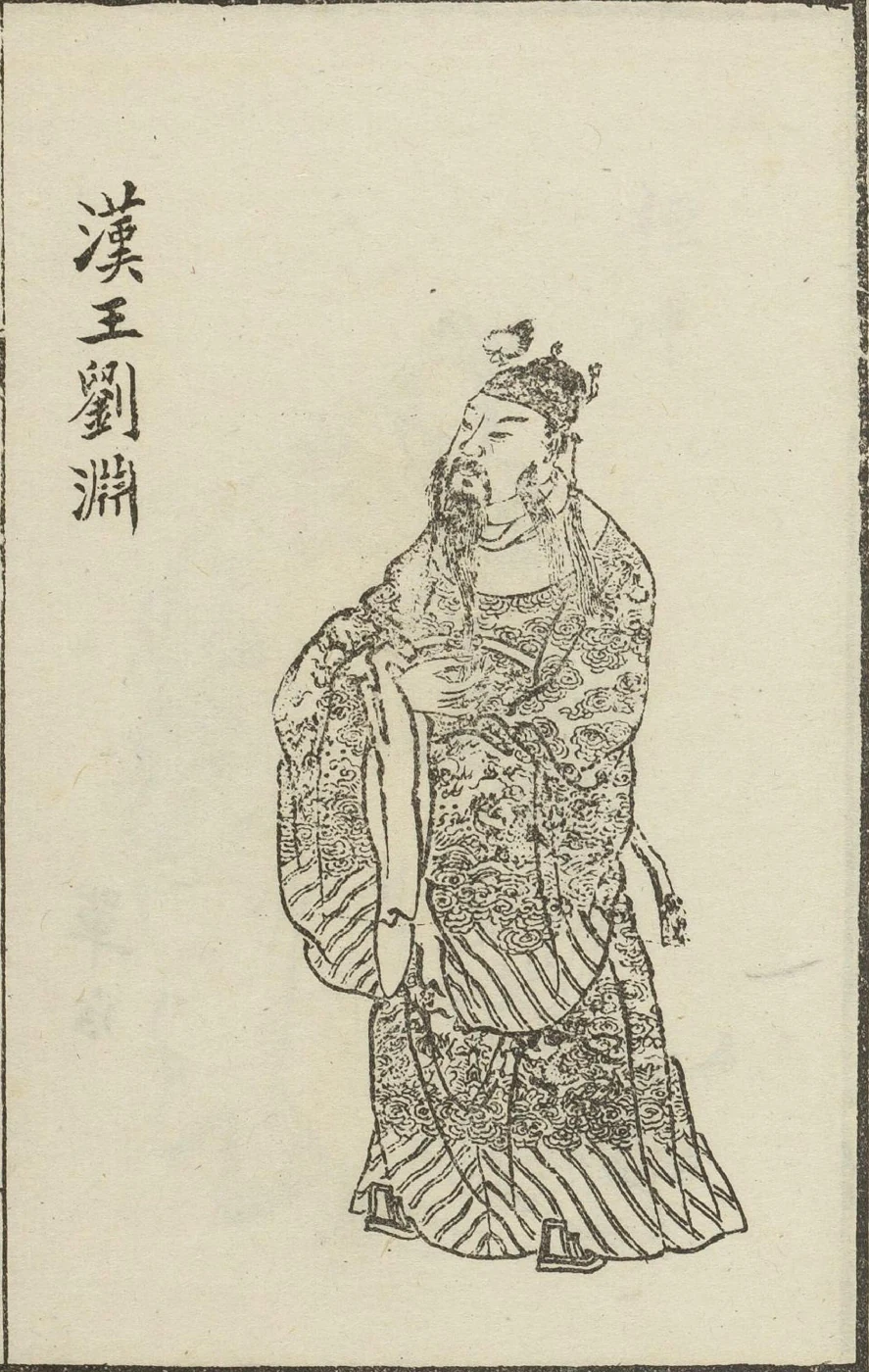
Liu Yuan
Liu Yuan (c. 252–August 29, 310), courtesy name Yuanhai, was from Xinxing Commandery (north of present-day Xinzhou, Shanxi), although one account places his origin in Xicheng, Xihe Commandery (present-day Fenyang, Shanxi). He belonged to the Tuge branch of the Xiongnu and was the founding emperor of Han-Zhao (Former Zhao) during the Sixteen Kingdoms period, ruling from 304 to 310. Liu Yuan was a descendant of Modu Ch
 Former Zhao
Historical figure
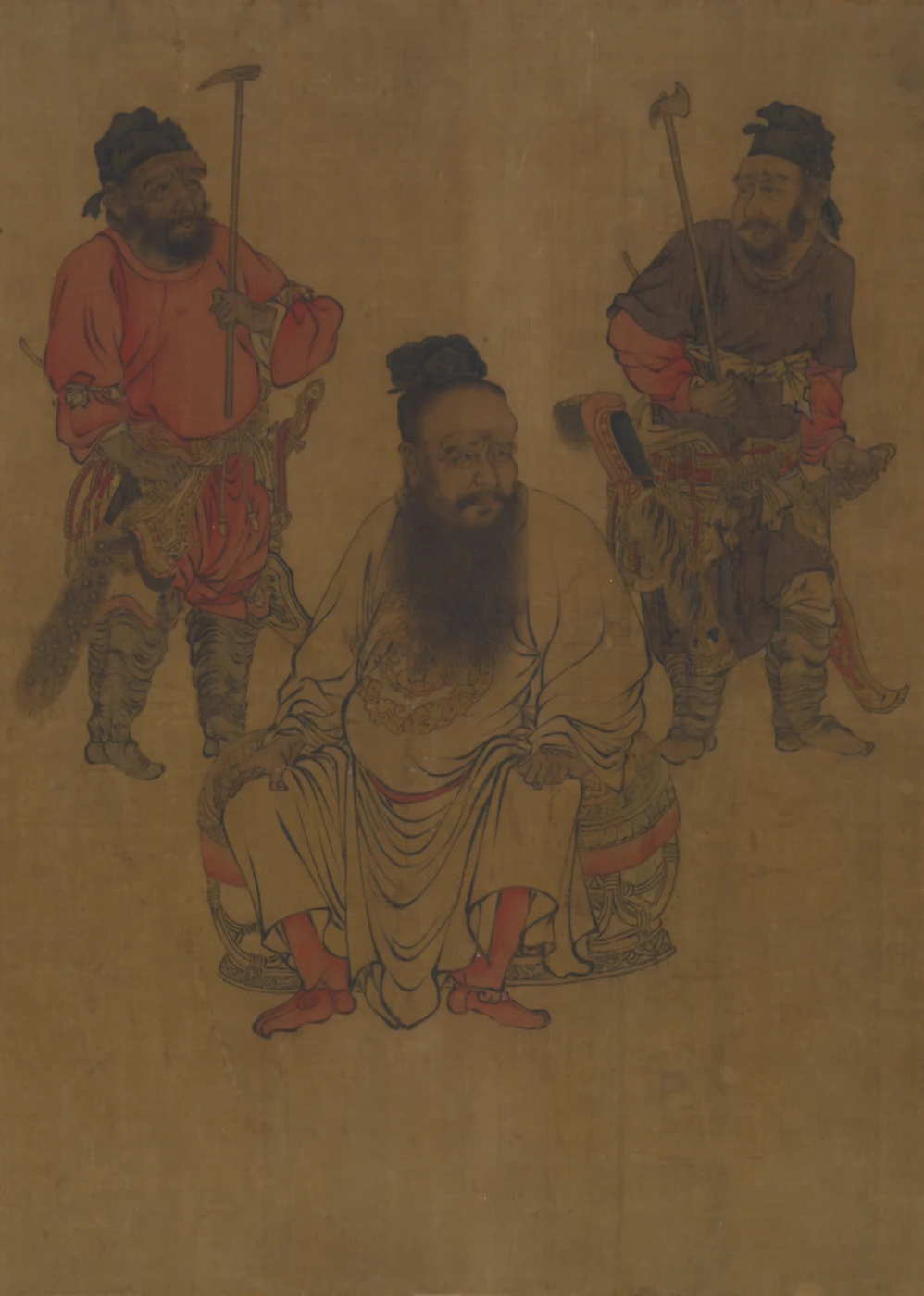
Liu Cong
Liu Cong was the fourth son of Liu Yuan, the founder of Former Zhao; his mother was Lady Zhang. He studied the Chinese classics and military writings and held offices among the Xiongnu Five Divisions and in the service of a Western Jin prince. In 304 (first year of the Western Jin Yong'an era), he joined his father's uprising. After Liu Yuan's death in 310 (second year of the Former Zhao Herui era), the new ruler Liu
Former Zhao
Historical figure
Liu Can
Liu Can (died 318), courtesy name Shiguang, a native of Xinxing (present-day Xinmin, Shanxi), belonged to the Xiongnu people. He was the fourth emperor of Han Zhao (Former Zhao) and the son of Emperor Zhaowu of Han Zhao, Liu Cong. In his youth, Liu Can displayed exceptional talent in both civil and military matters. He was enfeoffed as the King of Henan, led troops into Luoyang, killed Sima Mo, and captured Jinyang.
Former Zhao
Historical figure
Liu Yao
Liu Yao (birth year unknown–329), courtesy-named Yongming, was a Xiongnu man from Xinxing Commandery and a younger kinsman raised by Liu Yuan. As a Han Zhao general, he participated in the capture of Luoyang in 311 (fifth year of Western Jin Yongjia) and the fall of Chang'an in 316 (fourth year of Western Jin Jianxing). In 318 (first year of Former Zhao Guangchu), Jin Zhun killed the Han Zhao ruler Liu Can and seized
KEY PEOPLE
 Western Jin
Emperor
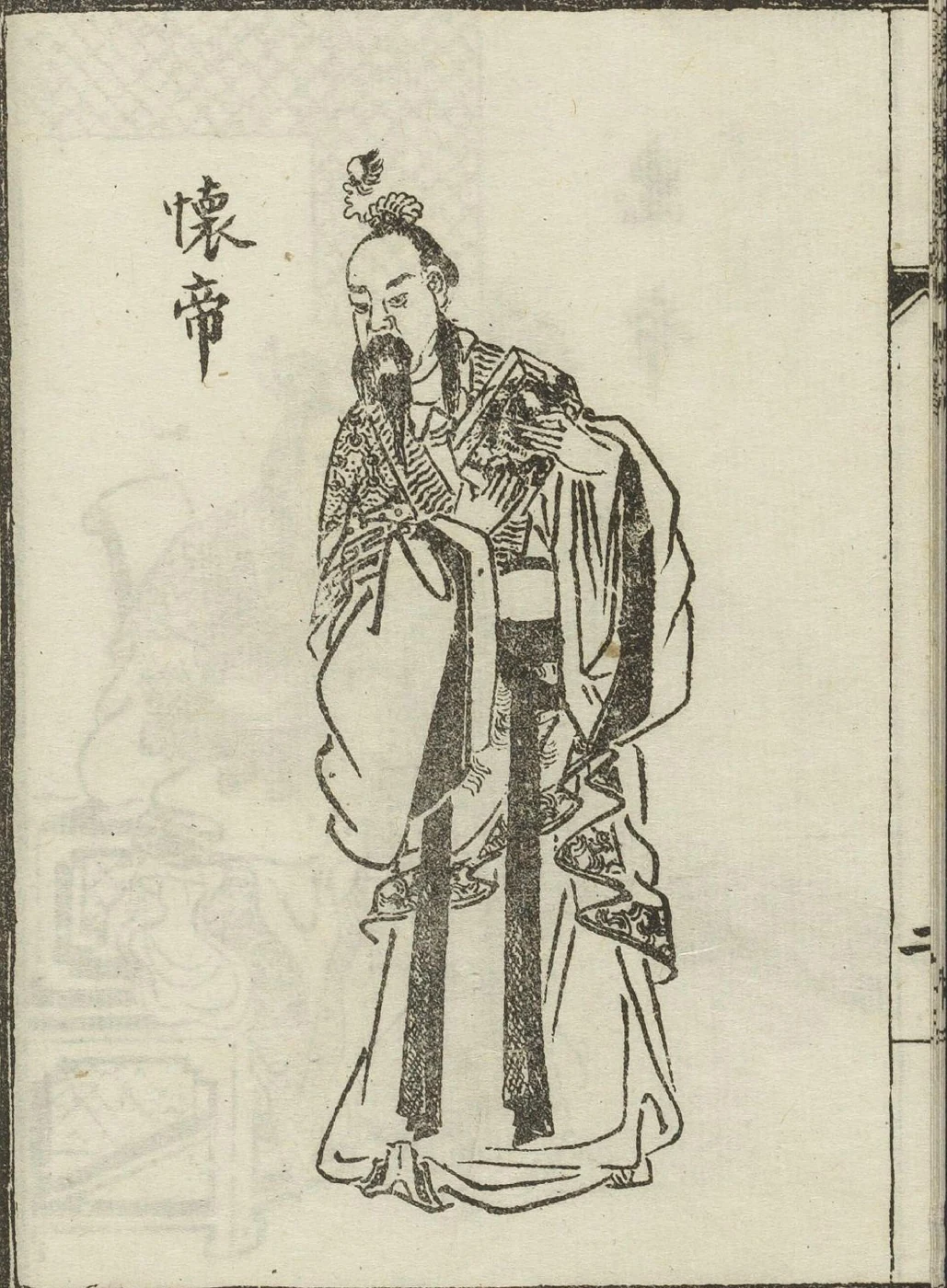
Sima Chi
Sima Chi (284–March 14, 313), courtesy name Fengdu, was a native of Wen County, Henei Commandery (present-day Wen County, Henan). He was the third emperor of the Western Jin, the twenty-fifth son of Emperor Wu of Jin, Sima Yan, and a younger half-brother of Emperor Hui of Jin, Sima Zhong. In 290, the first year of the Taixi era, he was enfeoffed as Prince of Yuzhang, and in 304, the first year of the Yongxing era, he
 Western Jin
Emperor
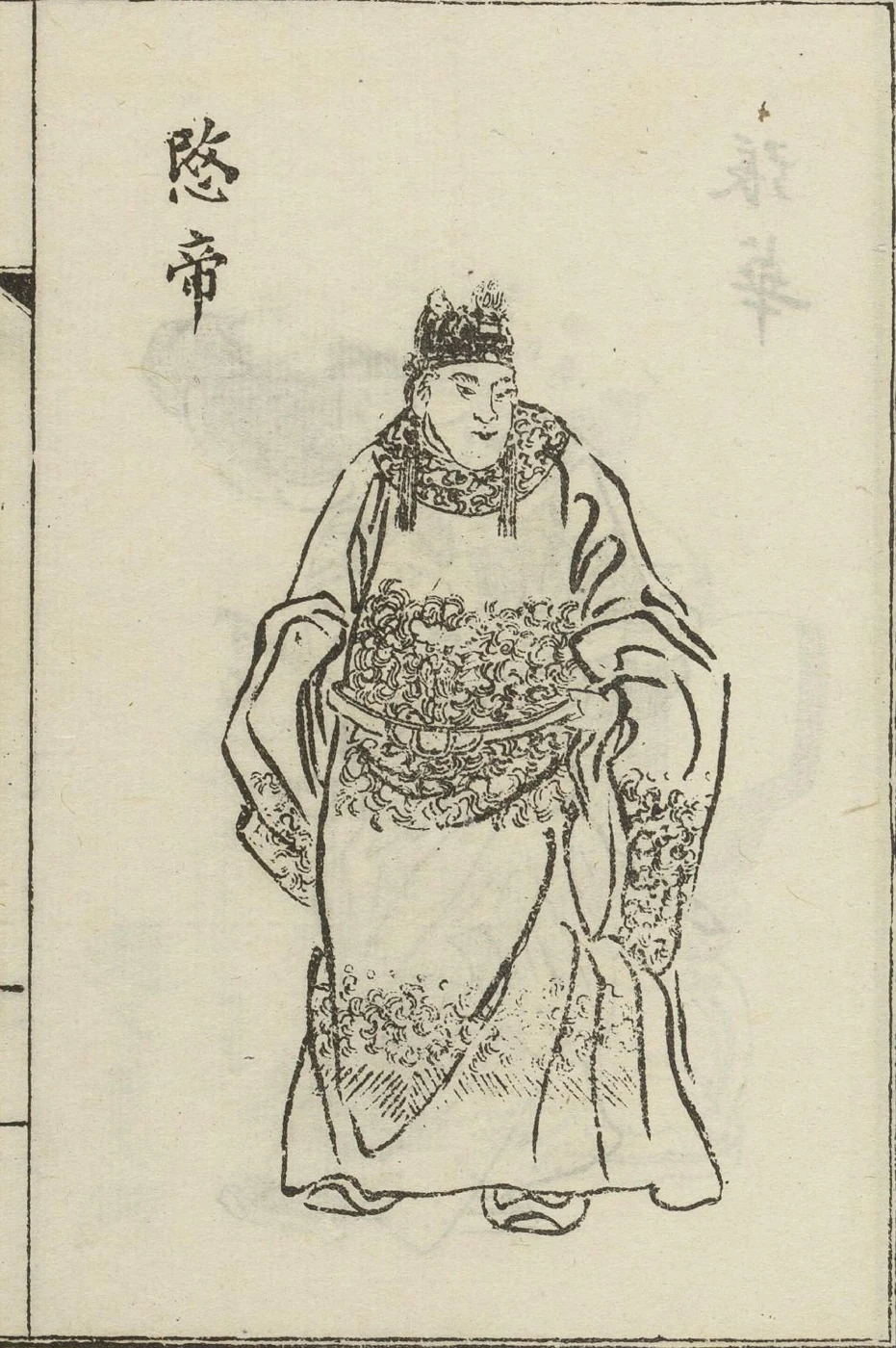
Sima Ye
Sima Ye (300–February 7, 318), also written Sima Ye, courtesy name Yanqi, was a native of Wen County in Henei Commandery (present-day Wen County, Henan) and the last emperor of the Western Jin. He was a grandson of Emperor Wu of Jin, Sima Yan, and the son of Sima Yan, Prince Xiao of Wu. In 311, the fifth year of the Yongjia era, Former Zhao captured Luoyang. After moving from refuge to refuge, Sima Ye was escorted to
Related entries
Bibliography
- 《晋书》
- 《资治通鉴》
- 《十六国春秋》
- 《汉赵国史》
- 《读史方舆纪要》