Northern Wei was established.
386 CE–534 CE
Northern Wei
Concurrent polity北魏
Northern Wei (from the first year of the Dengguo era, 386, to 534) was a contemporaneous regime of the Sixteen Kingdoms and Northern and Southern Dynasties periods. It was founded by the Tuoba clan of the Xianbei, at one point unified northern China, and remained a dominant Northern Dynasty for an extended period. It was also the longest-lived of the Northern Dynasties. Its state name was originally “Wei”; because it was based in northern China and needed to be distinguished from Cao Wei of the…
386 CE–534 CECapital · See entry
ERA OVERVIEW
Northern Wei (from the first year of the Dengguo era, 386, to 534) was a contemporaneous regime of the Sixteen Kingdoms and Northern and Southern Dynasties periods. It was founded by the Tuoba clan of the Xianbei, at one point unified northern China, and remained a dominant Northern Dynasty for an extended period. It was also the longest-lived of the Northern Dynasties. Its state name was originally “Wei”; because it was based in northern China and needed to be distinguished from Cao Wei of the Three Kingdoms period, later historians called it Northern Wei. It was also known as Later Wei, Tuoba Wei, and Yuan Wei. At its height its territory extended from western Liaoning in the east to the area of present-day eastern Xinjiang in the west, south to the Qinling Mountains and Huainan, and north to the deserts north and south of the Yin Mountains. It confronted the Southern Dynasties of Liu Song, Southern Qi, and Liang across the Yangtze and Huai rivers. The Tuoba clan rose in the Dai region. Emperor Daowu, Tuoba Gui, restored the regime and established its capital; Emperor Taiwu, Tuoba Tao, destroyed Xia, Northern Yan, and Northern Liang and unified the north; and Emperor Xiaowen, Yuan Hong, moved the capital to Luoyang and carried out Sinicization reforms, bringing the state to a period of great strength. In its final years, however, the Rebellion of the Six Garrisons, the dominance of the Erzhu clan, and internal court conflict weakened the dynasty. In 534 Emperor Xiaowu, Yuan Xiu, fled west to the Guanzhong region, and Northern Wei split into Eastern Wei, controlled by Gao Huan and based at Ye, and Western Wei, controlled by Yuwen Tai and based at Chang'an, bringing the dynasty to an end.
Time span386 CE–534 CE
CapitalSee entry
ERA TIMELINE
The capital was moved to Pingcheng; Tuoba Gui assumed the imperial title the following year.
Emperor Wencheng Tuoba Jun took the throne, had Zong Ai executed, and issued an edict restoring Buddhism.
The equal-field system and the three-heads system were implemented.
Emperor Xiaowen Tuoba Hong moved the capital toward Luoyang, carried out a series of Sinicization reforms, and changed the imperial surname to Yuan.
(third year of Zhengshi; fifth yea
506 (third year of Zhengshi; fifth year of Liang's Tianjian era): At the Battle of Zhongli, the Wei army was defeated by Liang forces.
The Rebellion of the Six Garrisons and the Heyin Massacre; Er Zhurong slaughtered court officials.
The Erzhu clan was defeated, and Emperor Xiaowu Yuan Xiu was installed.
Emperor Xiaowu Yuan Xiu fled west; Northern Wei split into Eastern Wei and Western Wei. Yuan Xiu was soon killed by Yuwen Tai, and Northern Wei came to an end.
FULL ENTRY
Overview
Northern Wei (from the first year of the Dengguo era, 386, to 534) was a contemporaneous regime of the Sixteen Kingdoms and Northern and Southern Dynasties periods. It was founded by the Tuoba clan of the Xianbei, at one point unified northern China, and remained a dominant Northern Dynasty for an extended period. It was also the longest-lived of the Northern Dynasties. Its state name was originally “Wei”; because it was based in northern China and needed to be distinguished from Cao Wei of the Three Kingdoms period, later historians called it Northern Wei. It was also known as Later Wei, Tuoba Wei, and Yuan Wei. At its height its territory extended from western Liaoning in the east to the area of present-day eastern Xinjiang in the west, south to the Qinling Mountains and Huainan, and north to the deserts north and south of the Yin Mountains. It confronted the Southern Dynasties of Liu Song, Southern Qi, and Liang across the Yangtze and Huai rivers. The Tuoba clan rose in the Dai region. Emperor Daowu, Tuoba Gui, restored the regime and established its capital; Emperor Taiwu, Tuoba Tao, destroyed Xia, Northern Yan, and Northern Liang and unified the north; and Emperor Xiaowen, Yuan Hong, moved the capital to Luoyang and carried out Sinicization reforms, bringing the state to a period of great strength. In its final years, however, the Rebellion of the Six Garrisons, the dominance of the Erzhu clan, and internal court conflict weakened the dynasty. In 534 Emperor Xiaowu, Yuan Xiu, fled west to the Guanzhong region, and Northern Wei split into Eastern Wei, controlled by Gao Huan and based at Ye, and Western Wei, controlled by Yuwen Tai and based at Chang'an, bringing the dynasty to an end.
Historical Development
Foundation and predecessor: The Tuoba were originally a branch of the Xianbei. They initially lived near the Greater Khingan Range in the Nen River basin of present-day Heilongjiang. Before the Eastern Han, after the Xiongnu migrated westward and the Mongolian plateau became comparatively open, they gradually moved westward into the steppe and then south toward Yunzhong and Shengle. In the late Western Jin, their leader Tuoba Yilu aided the Inspector of Bing Province, Liu Kun, against Former Zhao and was enfeoffed by the Western Jin as Duke of Dai and later Prince of Dai. In 338 Tuoba Shiyiqian established Dai with its capital at Shengle, appointed officials with divided responsibilities, and promulgated laws. In 376 Dai was destroyed by Former Qin under Fu Jian, and Shiyiqian was killed by his son Tuoba Shijun, bringing Dai to an end. After Former Qin collapsed following the Battle of the Fei River, Tuoba Gui gathered the former tribal followers and convened at Niuchuan in 386, where he assumed the title Prince of Dai. In the fourth month of the same year he changed the state name to Wei and styled himself Prince of Wei, marking the beginning of Northern Wei.
Height: In 398, the first year of the Tianxing era, the capital was moved to Pingcheng, and the following year Tuoba Gui formally assumed the imperial title as Emperor Daowu. His successor, Emperor Mingyuan Tuoba Si, maintained internal stability and took advantage of the death of Emperor Wu of Liu Song, Liu Yu, to seize Luoyang, Hulao, and other strongholds south of the Yellow River. Under Emperor Taiwu Tuoba Tao, Northern Wei captured Tongwan, the capital of Xia, in 427; occupied Anding and drove out Helian Ding in 428; took Helong and destroyed Northern Yan in 436; and annexed Northern Liang in 439, the fifth year of the Taiyan era. Li Bao submitted in 442, followed by Yang Baochi of Chouchi in 443. Northern Wei had thus absorbed northern China and established a north–south confrontation with Liu Song, whose court was based south of the Yangtze. In Emperor Taiwu's later years, the Gai Wu Rebellion of 445 contributed to the suppression of Buddhism ordered by the emperor in 446. Amid subsequent palace turmoil, he was killed in 452 by the eunuch Zong Ai, after which the ministers enthroned his grandson Tuoba Jun as Emperor Wencheng.
Transformation: After taking the throne, Emperor Wencheng immediately issued an edict restoring Buddhism, rescinded Emperor Taiwu's prohibitions, pursued policies of recuperation, and began the excavation of the Yungang Grottoes. He died in 465, and the young Emperor Xianwen, Tuoba Hong, succeeded him. The powerful minister Yihun created turmoil but was soon eliminated by Empress Dowager Feng and members of the imperial clan, after which Empress Dowager Feng governed as regent. Emperor Xiaowen, Yuan Hong, assumed personal rule after Empress Dowager Feng's death in 490. In 493, the seventeenth year of the Taihe era, he led officials and Xianbei nobles south under the pretext of campaigning against Southern Qi and moved the court toward Luoyang. Luoyang became the capital in 494. He subsequently prohibited the use of the Hu language at court in favor of Chinese, changed dress customs, converted Xianbei surnames to Chinese-style surnames in 496—with the imperial Tuoba clan becoming Yuan—established status rankings, promoted intermarriage with Han Chinese aristocratic families, founded the National University, and carried out the Taihe Reforms. These measures, collectively known as Emperor Xiaowen's Sinicization Reforms, accelerated Northern Wei's integration into the Central Plains and contributed to ethnic and cultural integration.
Decline: Emperor Xiaowen died in 499. Northern Wei remained powerful under Emperor Xuanwu, Yuan Ke, who repeatedly campaigned against the Southern Dynasties and expanded into former Liu Song territories. Political conditions then deteriorated. Emperor Xuanwu died in 515, and his five-year-old son Emperor Xiaoming, Yuan Xu, succeeded him, while real authority was held by Empress Dowager Hu. In 520, her brother-in-law Yuan Cha and the eunuch Liu Teng staged a coup and confined the empress dowager. In 524 soldiers of the Six Towns rose in rebellion after longstanding grievances over unequal treatment and prolonged hardship on the frontier. Government efforts to suppress them failed to restore stability and instead strained the northern defense system and left the capital region exposed, accelerating the dynasty's decline. In 528 Emperor Xiaoming died suddenly, reportedly after being poisoned by Empress Dowager Hu. She briefly placed a female infant on the throne and then installed Yuan Zhao. Er Zhurong used the crisis to enter the capital, carried out the Heyin Massacre in which court officials were slaughtered, manipulated imperial successions, and seized control of the government. Northern Wei's political foundations were gravely weakened.
Fall: After the Heyin Massacre, the Erzhu clan dominated the court and successively installed and deposed emperors. Yuan Hao submitted to Liang in the south and returned with the Liang general Chen Qingzhi to seize Luoyang, only to be defeated soon afterward. Gao Huan, formerly a commander under the Erzhu faction, turned against it, defeated the Erzhu clan in 532, and installed Yuan Xiu as Emperor Xiaowu. In 534 Yuan Xiu, unwilling to remain under Gao Huan's control, fled west to Chang'an and sought the protection of Yuwen Tai. Gao Huan then installed Yuan Shanjian as emperor and moved the capital to Ye, establishing Eastern Wei; Yuan Xiu was later known as the “Departed Emperor.” Not long after Yuan Xiu reached the west, Yuwen Tai killed him and installed Yuan Baoju as emperor at Chang'an, establishing Western Wei. Northern Wei therefore formally divided into Eastern and Western Wei and came to an end. In the official dynastic lineage of the Tuoba–Yuan house, successor regimes continued until Northern Qi replaced Eastern Wei in 550 and Northern Zhou replaced Western Wei in 557.
Politics and Institutions
After its foundation, Northern Wei rapidly transformed from a nomadic tribal confederation into a territorial state. It carried out a policy of dispersing tribal groupings and registering their members as common households, while Eight Tribal Chiefs exercised divided supervision. At the center, the Three Excellencies and officials of the Secretariat oversaw government affairs; directors and vice-directors handled administration, and the Censorate was established for impeachment and supervision. Early appointments drew heavily on meritorious followers and hereditary tribal elites, while later government increasingly emphasized aristocratic status. Local administration followed a three-tier system of provinces, commanderies, and counties. During Emperor Xiaowen's reforms, official grades were standardized into principal and secondary ranks within nine grades, with the secondary grades being an innovation of Northern Wei. The National University was established, status distinctions among elite families were defined, and a salary system was introduced to curb corruption. In 485, the ninth year of Taihe, the equal-field system of land distribution and taxation was extended, and in 486 Li Chong created the three-heads system to reorganize household registration and identify dependents concealed by powerful households. The legal code was revised several times. Although Emperor Xiaowen's reforms sought to simplify and moderate punishments, contemporaries still criticized the laws as restrictive and severe. The court also maintained the practice by which the mother of a designated imperial heir could be put to death in order to restrain maternal relatives, a system that had a lasting effect on imperial succession.
Military and Foreign Relations
Northern Wei maintained a distinction between military and civilian populations. Soldiers were drawn largely from Xianbei and other non-Han groups and served in the palace guard and the frontier defenses of the Six Towns, while agricultural production was carried mainly by Han Chinese communities. The distinction between soldiers and civilians thus also reflected an ethnic division. Under Emperor Taiwu, military preparations were strengthened. Between 427 and 439 Northern Wei successively destroyed Xia, Northern Yan, and Northern Liang and defeated Rouran and Gaoche forces, bringing the state to the height of its power. Warfare with the south nevertheless continued. At the Battle of Zhongli in 506, the third year of Zhengshi and fifth year of Liang's Tianjian era, a Wei army said to number in the hundreds of thousands marched south but was defeated by the Liang commanders Wei Rui and Cao Jingzong, with heavy casualties. The battle reflected the increasing difficulty of large-scale southern offensives. After unifying the north, Northern Wei also maintained frequent contacts with the Western Regions and Central Asia, exchanging envoys and tribute with Sasanian Persia and other states. Foreign merchants and migrants from the Western Regions gathered along Silk Road routes. Although the Northern and Southern Dynasties remained long-term rivals, they also exchanged diplomatic missions, including condolence envoys for royal deaths, and envoys from both sides could be treated with considerable honor.
Economy and Commerce
Northern Wei's early economy rested heavily on pastoralism and raiding, but agriculture was gradually restored after the dynasty entered the Central Plains. At first, the state relied on the system of local magnate supervision, under which powerful households concealed large numbers of dependents: in some cases thirty or fifty families were registered as a single household, causing extensive tax evasion. After Emperor Xiaowen's reforms, the equal-field system of land distribution and taxation distributed land to encourage cultivation. Adult couples received open fields and mulberry land; certain holdings reverted to the state when recipients became old or infirm, and open fields generally could not be sold. Combined with the three-heads system for household registration, these measures greatly expanded the population under direct state control. By the Shengui era of Emperor Xiaoming, registered households reportedly exceeded five million, with more than thirty million people, while some researchers estimate the actual number of households at around six million. The equal-field and three-heads systems expanded the tax and labor base. Luoyang developed into a major commercial center in the north, and handicrafts and trade became increasingly active. Silk Road traffic brought merchants from the Western Regions and Persia, while monetary circulation and workshops developed further. Recurrent warfare in the dynasty's final years again damaged the economy.
Culture and Society
Northern Wei society combined Xianbei traditions with Han Chinese learning, and ethnic and cultural integration was particularly pronounced. After moving to Luoyang, Emperor Xiaowen promoted Sinicization, supported Confucian education, established the National University, and encouraged aristocratic ritual norms, while Xianbei customs and Central Plains institutions increasingly blended. Buddhism flourished, with both the state and private patrons supporting images and monasteries; the number of monks and nuns was said at one point to exceed two million. The Yungang Grottoes began to be excavated around 460 during Emperor Wencheng's reign and were developed for roughly thirty-five years. The Longmen Grottoes were also begun in the reign of Emperor Xiaowen. Their sculpture gradually shifted from a restrained Gandharan-influenced style toward more distinctly Chinese forms. Daoism, including a reformed Celestial Masters tradition, coexisted with Zoroastrianism practiced by Sogdian communities in China. Emperor Taiwu temporarily suppressed Buddhism in 446, an episode commonly known as Emperor Taiwu's persecution of Buddhism; Emperor Wencheng later restored the religion, after which it flourished even more strongly. Important cultural works associated with the period include Jia Sixie's agricultural treatise Essential Techniques for the Welfare of the People, compiled roughly between 533 and 544; Li Daoyuan's geographical Commentary on the Water Classic; Yang Xuanzhi's Record of Buddhist Monasteries in Luoyang; and famous poems such as the Song of the Chile and the Ballad of Mulan.
Rulers and Governing Core
Tuoba Gui, Tuoba Si, Tuoba Tao, Tuoba Yu, Tuoba Jun, Tuoba Hong, Yuan Hong, Yuan Ke, Yuan Xu, Yuan Zhao, Yuan Ziyou, Yuan Ye, Yuan Gong, Yuan Lang, Yuan Xiu.
> This section explains the position of rulers in the regime's political development; full biographies are provided in the corresponding person entities.
Historical Assessment and Legacy
Contemporary assessments: Before and after the move to Luoyang, many aristocratic officials and emperors praised the Sinicization reforms and the unification of the north as achievements of cultural and political order. Historians of the Southern Dynasties, by contrast, often used derogatory labels such as “Suolu” and “Wei captives” for Northern Wei, treating it as a non-Han regime occupying the north and criticizing some rulers for severe legal restrictions and the killing of meritorious officials. Contemporary views were therefore sharply divided and should not be reduced to a single judgment.
Later assessments: Northern Wei is generally regarded as a highly consequential transitional dynasty. It ended the prolonged fragmentation of northern China after the Sixteen Kingdoms, created the northern power in the Northern and Southern Dynasties confrontation, and promoted ethnic integration through the move to Luoyang, Sinicization policies, the equal-field system of land distribution and taxation, and the three-heads system. Its institutional arrangements—including the equal-field system of land distribution and taxation, salary reforms, and systems of official rank and social status—were inherited in various forms by Northern Qi, Northern Zhou, Sui, and Tang, making Northern Wei an important source of later northern and imperial institutions. Eastern and Western Wei emerged from its division, then developed into Northern Qi and Northern Zhou, and ultimately contributed to the political process that led to Sui reunification. Later scholars have also noted that practices such as killing the mother of a designated imperial heir could strengthen imperial authority in the short term but created severe political costs, and Northern Wei's rise and fall was frequently cited as a historical lesson.
Rulers
Tuoba Gui, Tuoba Si, Tuoba Tao, Tuoba Yu, Tuoba Jun, Tuoba Hong, Yuan Hong, Yuan Ke, Yuan Xu, Yuan Zhao, Yuan Ziyou, Yuan Ye, Yuan Gong, Yuan Lang, Yuan Xiu.
Northern Wei
Emperor
Tuoba Gui
Tuoba Gui (August 4, 371–November 6, 409), also known as Tuoba Kai, Tuoba Shegui, Tuoba Yigui, and Tuoba Shiyigui, courtesy name Shegui, was a Xianbei from Shengle, present-day Horinger County in Inner Mongolia. He was the founding emperor, military commander, and political leader of Northern Wei, a grandson of Tuoba Shiyiqian, Emperor Zhaocheng, and the posthumous son of Tuoba Shi, Emperor Xianming. Born north of Ca
Northern Wei
Emperor
Tuoba Si
Tuoba Si (392–December 24, 423), courtesy name Mumo, was a Xianbei ruler and the second emperor of Northern Wei. He was the eldest son of Tuoba Gui, the Daowu Emperor, and his mother was Lady Liu, posthumously honored as Empress Xuanmu. In 409 (Tianci 6), after suppressing the rebellion of his younger brother Tuoba Shao, Prince of Qinghe, he ascended the throne. His era names were Yongxing, Shenrui, and Taichang. He
Northern Wei
Emperor
Tuoba Tao
Tuoba Tao (408–March 11, 452), whose childhood names included Foli and Folifa, was a Xianbei ruler and the third emperor of Northern Wei, reigning from December 27, 423 to March 11, 452. He was the eldest son of Tuoba Si, Emperor Mingyuan, the eldest legitimate grandson of Tuoba Gui, Emperor Daowu, and the son of Lady Du, posthumously Empress Mi of Mingyuan. Tuoba Tao took the throne at sixteen and ruled for twenty-e
Northern Wei
Historical figure
Tuoba Yu
Tuoba Yu (?–452), of the Xianbei ethnicity, courtesy name Kebenzhen, was a native of Pingcheng, Dai Commandery. He was a son of Emperor Taiwu of Northern Wei, Tuoba Tao, and a half-brother of Emperor Jingmu, Tuoba Huang. His mother was Zhaoyi of the Left, of the Lü clan. Tuoba Yu was the fourth emperor of the Northern Wei dynasty, and his reign was extremely brief, lasting only about eight months.
Northern Wei
Emperor
Tuoba Hong
Tuoba Hong (August 14, 454–July 20, 476), whose Xianbei name is recorded in the Chinese source as Didouyin and whose courtesy name was Wanmin, was a Xianbei ruler and the sixth emperor of Northern Wei during the Northern and Southern Dynasties, reigning from 465 to 471. He was the eldest son of Tuoba Jun, Emperor Wencheng, and Lady Li, posthumously Empress Yuan of Wencheng. He was born north of the Yin Mountains in 4
Northern Wei
Historical figure
Yuan Hong
Yuan Hong (467–499), originally Tuoba Hong, was a son of Emperor Xianwen, Tuoba Hong, and the seventh emperor of Northern Wei. He ascended the throne as a child in 471 (Huangxing 5 of Northern Wei), and his grandmother Empress Dowager Feng directed the government during much of his early reign. After her death, he personally advanced reforms centred on the move to Luoyang. He changed Xianbei surnames, court dress, an
Northern Wei
Historical figure
Yuan Zhao
The Chinese source cache identifies this person as a emperor associated with Northern Wei. This entry preserves the source-backed identity and records the available chronology without adding unsupported claims.
Northern Wei
Historical figure
Yuan Ye
Yuan Ye (509 – December 26, 532), courtesy name Huaxing, childhood name Penzi, was a native of Luoyang, Henan, of Xianbei ethnicity. He was the thirteenth emperor of Northern Wei (reigned 530–531), the great-grandson of Emperor Jingmu Tuoba Huang, grandson of Yuan Zhen, Prince Hui of Nan'an, and second son of Yuan Yi, Prince of Fufeng. Yuan Ye had a frivolous and impetuous personality with considerable physical stren
Northern Wei
Historical figure
Yuan Gong
Yuan Gong (498 – June 21, 532), courtesy name Xiuye, of Xianbei ethnicity, was the fourteenth emperor of Northern Wei during the Northern and Southern Dynasties period. He was the grandson of Emperor Xianwen Tuoba Hong and son of Yuan Yu, Prince Huiguang of Guangling. Yuan Gong was steady in character and upright in conduct. He initially inherited the title Prince of Guangling and served as Grand Master of the Palace
Northern Wei
Historical figure
Yuanlang
Yuanlang (513–December 26, 532), courtesy name Zhongzhe, was a native of Luoyang, Henan, and a member of the Xianbei ethnicity. He was the 15th emperor of the Northern Wei and is historically known as the "Later Deposed Emperor." Yuanlang was the great-grandson of Emperor Jingmu (Tuoba Huang) and the third son of Yuan Rong, Prince Zhangwu.
KEY PEOPLE
Northern Dynasties
Empress Dowager
Lady Feng (Empress Dowager Wenming of Northern Wei)
Empress Dowager Feng (442–October 17, 490), a native of Xindu County in Changle Commandery (present-day Jizhou District, Hengshui, Hebei), descended from the royal house of Northern Yan. She was empress to Emperor Wencheng of Northern Wei, Tuoba Jun, the principal mother of Emperor Xianwen, Tuoba Hong, and the principal grandmother of Emperor Xiaowen, Yuan Hong (Tuoba Hong). Born into the Changle Feng clan of the Nor
Northern Wei
Historical figure
Cui Hao
Cui Hao (381–450), courtesy name Boyuan, was a leading Northern Wei statesman and strategist. He served Emperors Daowu, Mingyuan, and Taiwu and became Taiwu's most trusted adviser. He combined classical learning with astronomy, calendrical calculation, and military planning. Cui opposed moving the capital from Pingcheng during a famine, advised the court to exploit rival states' conflicts, and helped plan campaigns a
Northern Wei
Military commander
Kezhuhun Yuan
Kezhuhun Yuan was a prominent Northern Qi general, an old follower of Gao Huan, and rose to the rank of Duke of Gaodu Commandery.
 Northern Wei
Empress dowager
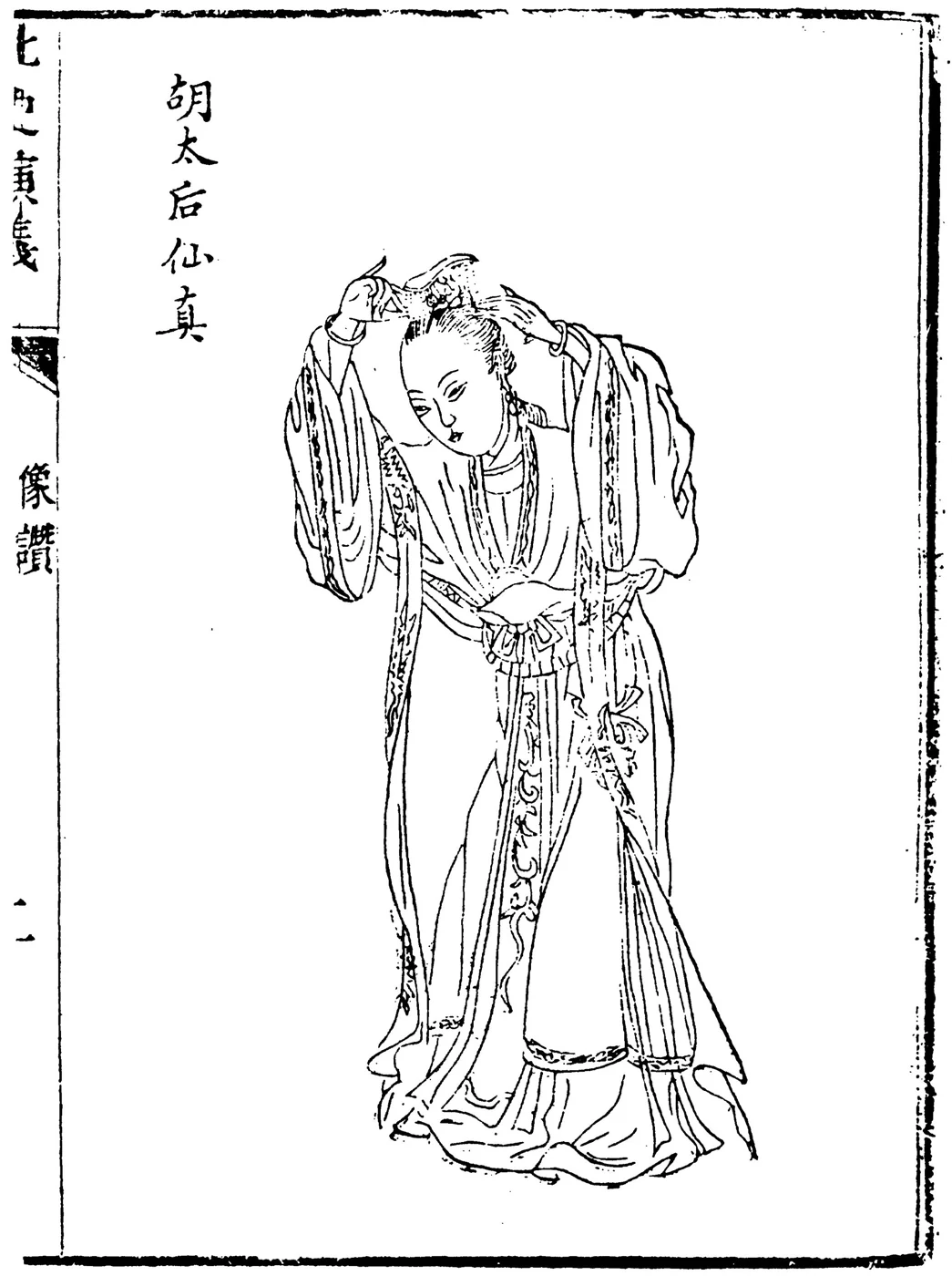
Empress Dowager Hu (Empress Dowager Ling of Northern Wei)
Empress Dowager Hu (d. May 17, 528), also known as Empress Dowager Ling, was from Linjing County in Anding Commandery (present-day Zhenyuan County, Gansu). She was a chonghua consort of Yuan Ke, Emperor Xuanwu of Northern Wei, the mother of Yuan Xu, Emperor Xiaoming, and the daughter of Hu Guozhen, who later held the office of Minister over the Masses. She was an important political figure in the middle and later N
Northern Wei
Northern Wei imperial clansman and general
Yuan Ying
Yuan Ying (?–December 9, 510), originally surnamed Tuoba, was a Xianbei native of Pingcheng in Dai Commandery (present-day Datong, Shanxi). His courtesy name was 虎儿. From youth he was intelligent and studious, widely read with a strong memory, skilled in riding and archery, knowledgeable in music, and somewhat versed in medicine. After Emperor Xiaowen came to the throne, Yuan Ying served as commander of Wuchuan Garri
Northern Wei
Daoist priest
Kou Qianzhi
Kou Qianzhi (366–448), courtesy name Fuzhen, traced his ancestral home to Changping County, Shanggu Commandery (present-day Changping District, Beijing), and later lived in Wannian County, Fengyi Commandery (in the area of present-day Wutun Subdistrict, Yanliang District, Xi'an, Shaanxi). He was a prominent Daoist priest of the Northern Wei and founder of the New Celestial Masters Daoism, also called the Northern Cel
Northern Wei
Writer
Li Daoyuan
Li Daoyuan (472–527; another account gives 466–527), courtesy name Shanchang, was from Zhuo County in Fanyang Commandery, present-day Zhuozhou in Hebei. He was a Northern Wei official, geographer, and writer. His father Li Fan served as Inspector of Qingzhou and was enfeoffed Marquis of Yongning. Li Daoyuan inherited his father’s rank and successively served as a Secretariat official, Investigating Censor, chief aide
 Northern Wei
Military commander
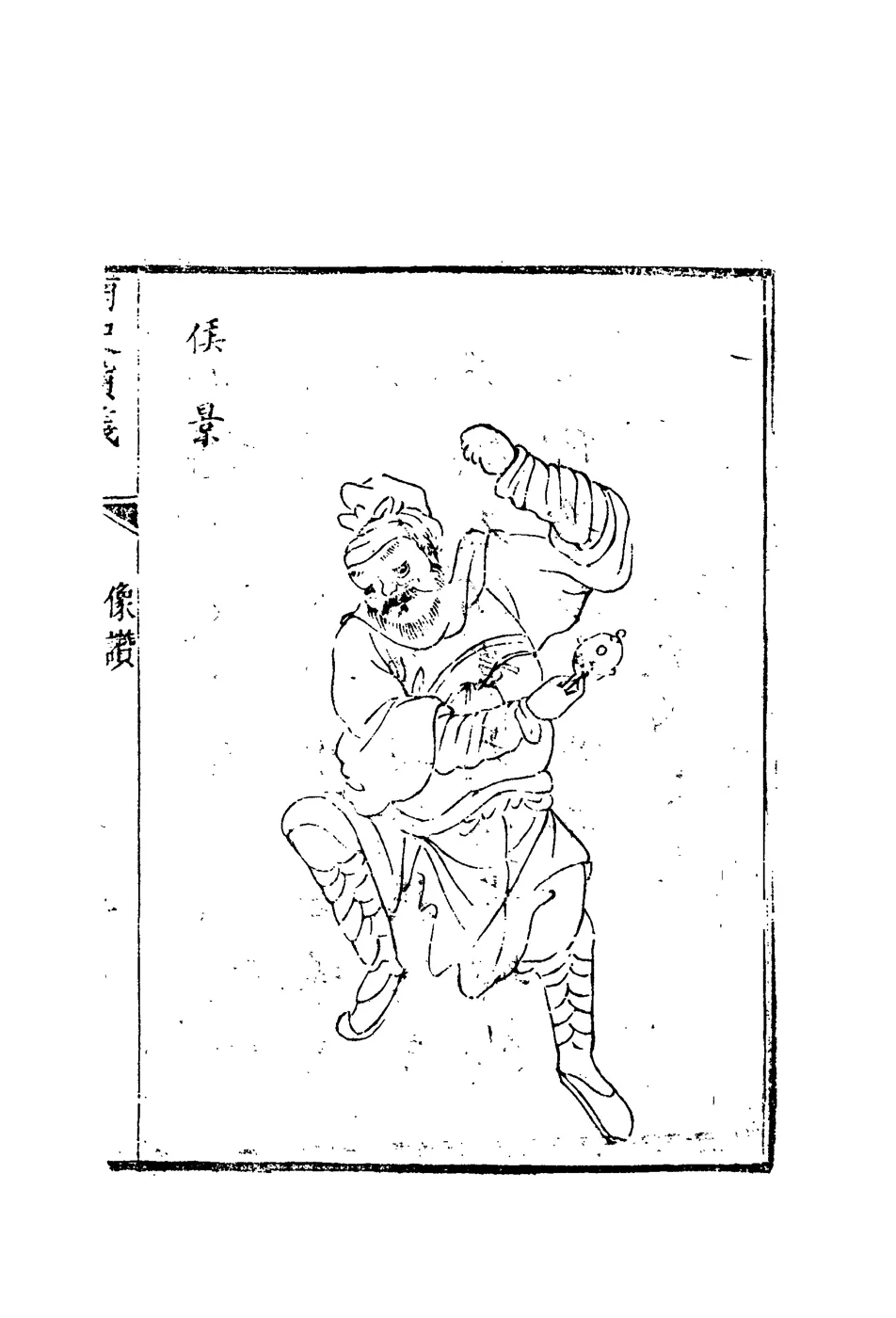
Hou Jing
Hou Jing (502–552), courtesy name Wanjing, originally surnamed Hougu, was from Huaishuo Garrison in present-day Baotou, Inner Mongolia. He was described as a Jie who had become culturally Xianbei and was a warlord of the Northern and Southern Dynasties period. In his early years he served under Erzhu Rong of Northern Wei, and later joined Gao Huan of Eastern Wei, commanding an army of 100,000 and exercising autonomou
Northern Dynasties
Noted general of the Northern Zhou
Houmochen Chong
Houmochen Chong (birth year unknown–563 AD), courtesy name Shangle, was a native of Wuchuan Garrison, Daicheng (modern southwest of Wuchuan, Inner Mongolia), of Xianbei ethnicity. He was one of the prestigious Eight Pillars of State (Ba Zhuguo) of Western Wei and a foundational military commander of Northern Zhou. Renowned in youth for his bravery, equestrian archery, and prudent reticence, he campaigned under Heba Y
Northern Dynasties
Noted general from the late Northern Wei to the Western Wei
Kou Luo
Kou Luo (487–539 AD), originally of the Ruokouyin clan, was a native of Changping, Shanggu Commandery (modern Changping District, Beijing), of Xianbei ethnicity. He was a prominent military commander during the late Northern Wei and Western Wei dynasties. His father relocated to Wuchuan Garrison as a hereditary gentry soldier, establishing the family on the northern frontier. Renowned for his discernment, broad-minde
Northern Dynasties
Historical figure
Yuchi Gang
Yuchi Gang (517–569 AD), courtesy name Poluo, was a native of Dina, Da'an Commandery (modern Shouyang, Shanxi Province), of Xianbei ethnicity. He was a prominent military commander and imperial in-law across the late Northern Wei, Western Wei, and Northern Zhou dynasties, the son of Grand Tutor Yuchi Qidou, nephew of Emperor Wen of Zhou (Yuwen Tai), and younger brother of Duke of Shu Yuchi Jiong. Renowned for his for
Southern Liang
Historical figure
Yuan He
Yuan He (407–479), originally named Tufa Poqiang with the Xianbei name Hedaoba, was a native of Ledu in Xiping Commandery (present-day Haidong, Qinghai). He was a Xianbei prince and the son of King Jing of Southern Liang, Tufa Rutan. Following the collapse of Southern Liang, he defected to Northern Wei, where Emperor Mingyuan recognized their shared bloodlines with the Tuoba royal house and bestowed upon him the surn
Related entries
Bibliography
- 《魏书》
- 《资治通鉴》
- 《晋书》
- 《宋书》
- 《南齐书》
- 《梁书》