Birth | Born in Linjing, Anding, as the daughter of Hu Guozhen
?–528 CE
Empress dowagerfemale regent who ruled in the emperor's name
Empress Dowager Hu (Empress Dowager Ling of Northern Wei)
胡氏(北魏灵太后)
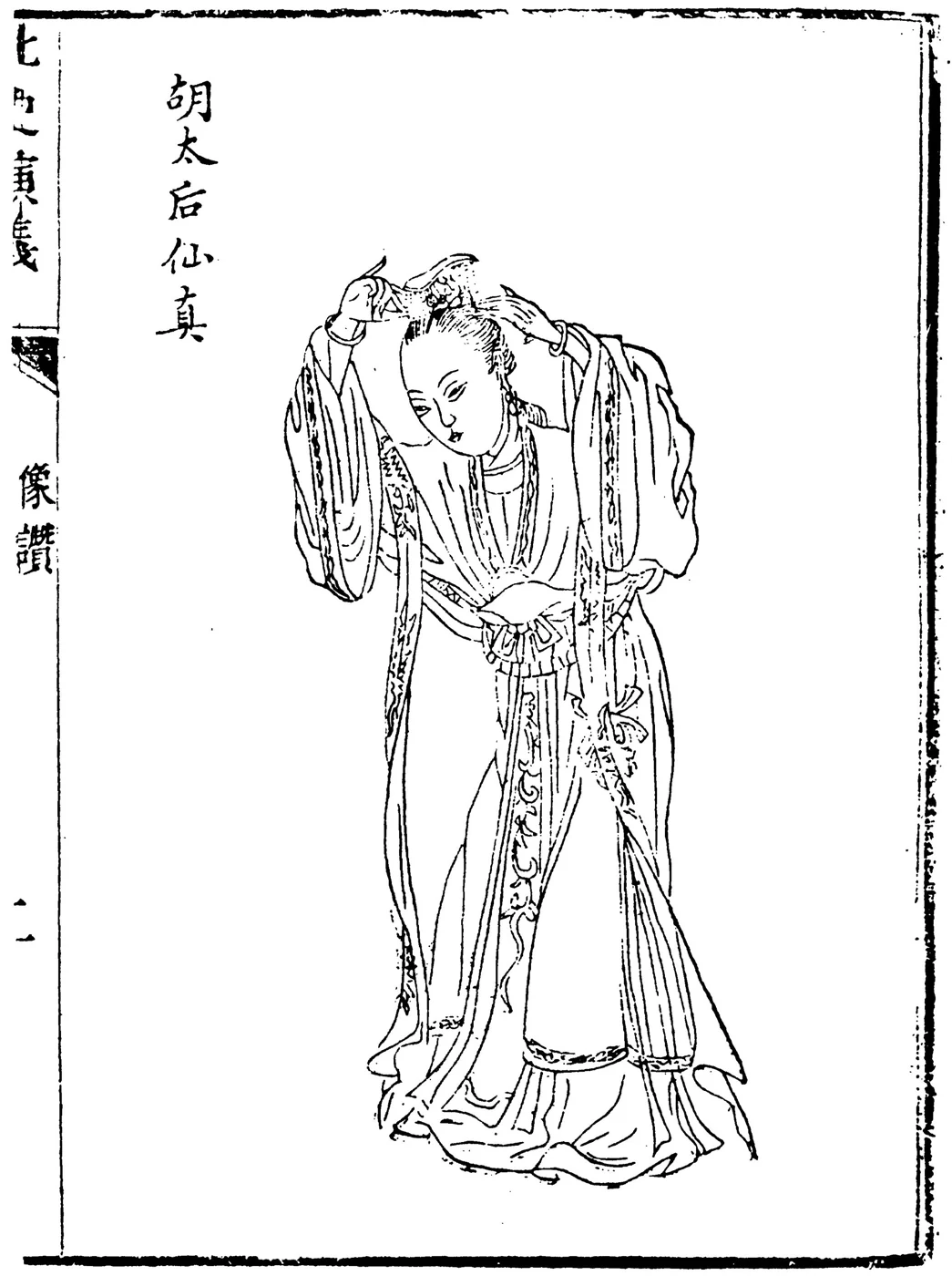
Empress Dowager Hu (d. May 17, 528), also known as Empress Dowager Ling, was from Linjing County in Anding Commandery (present-day Zhenyuan County, Gansu). She was a chonghua consort of Yuan Ke, Emperor Xuanwu of Northern Wei, the mother of Yuan Xu, Emperor Xiaoming, and the daughter of Hu Guozhen, who later held the office of Minister over the Masses. She was an important political figure in the middle and later Northern…
?–528 CENorthern Wei
PROFILE
Empress Dowager Hu (d. May 17, 528), also known as Empress Dowager Ling, was from Linjing County in Anding Commandery (present-day Zhenyuan County, Gansu). She was a chonghua consort of Yuan Ke, Emperor Xuanwu of Northern Wei, the mother of Yuan Xu, Emperor Xiaoming, and the daughter of Hu Guozhen, who later held the office of Minister over the Masses. She was an important political figure in the middle and later Northern Wei and twice ruled from court as regent. During part of her rule Northern Wei reached a period of great strength, but the source also attributes the later deterioration of government to excessive Buddhist patronage, court factional struggle, and disputed imperial succession. After the rapid enthronement and replacement of child rulers in 528, Erzhu Rong seized Luoyang and had Empress Dowager Hu drowned in the Yellow River during the Heyin Incident.
- Alternative names
- Empress Dowager Hu; Empress Dowager Ling
- Period
- Northern Wei
- Dynasty / polity
- Northern Wei
- Identity
- Empress dowager; female regent who ruled in the emperor's name
- Ethnicity / ethnic affiliation
- Not reliably confirmed in available sources
- Native place
- Linjing County, Anding Commandery (present-day Zhenyuan County, Gansu)
- Date of birth
- Unknown
- Place of birth
- Unknown
- Date of death
- May 17, 528
- Periods of regency
- 515–520; 525–528
- Posthumous title
- Not reliably recorded in the sources
- Major achievements
- Consort of Emperor Xuanwu of Northern Wei and mother of Emperor Xiaoming; twice ruled as regent, became heavily involved in Buddhist patronage, and was drowned in the Yellow River during the Heyin Incident
LIFE TIMELINE
Entered the palace | Introduced through her aunt Sengzhi, head of the Buddhist nuns' establishment, and entered the palace as a Chenghua Court Lady
Birth of a son | Gave birth to Yuan Xu in Xuanguang Hall and was promoted to chonghua consort
February 12, 515 (thirteenth day of the first lunar month, fourth year of Yanchang) | Death of Emperor Xuanwu | Cui Guang and Yu Zhong enthroned six-year-old Yuan Xu as Emperor Xiaoming
Honored as Imperial Consort Dowager | Empress Dowager Gao was forced to become a Buddhist nun and moved to Jinyong City
Honored as empress dowager | Court officials petitioned that she assume regency
Formal regency | Her commands were styled as imperial edicts and she used the imperial first-person pronoun
Construction of the Yongning Temple Pagoda | Sent Song Yun and Huisheng to India to copy the design of the Que-li stupa
Suppression of the Mahayana Rebellion | Promulgated an Edict Prohibiting Unauthorized Ordination of Monks
Imperial progress to Mount Song | Abolished various irregular cults, while leaving the Hu Heavenly God outside the prohibition
Xuanguang Palace Coup | Yuan Cha and Liu Teng staged a coup and confined Empress Dowager Hu in Xuanguang Hall
Return to power | Joined with Yuan Yong and others to eliminate Yuan Cha and resumed the regency
Alleged poisoning of Emperor Xiaoming, disputed | Enthroned the emperor's daughter while presenting her as a male heir, then replaced her with Yuan Zhao
May 17, 528 (thirteenth day of the fourth lunar month, first year of Wutai) | Heyin Incident | Erzhu Rong had Empress Dowager Hu and Yuan Zhao drowned in the Yellow River
BIOGRAPHY
Biography
Family Background and Early Life
Hu came from the Hu clan of Anding. Her father Hu Guozhen became a Minister over the Masses under Northern Wei, and her mother was a woman of the Huangfu clan. According to the Book of Wei, when Hu was born “red light shone in all directions.” Zhao Hu, a diviner from Shanbei County in the capital region, reportedly predicted that the girl bore signs of extraordinary nobility, would become “the mother of Heaven and Earth,” and would give birth to a ruler, while warning that no more than three people should know of the prophecy. Hu's aunt Sengzhi served as the senior official responsible for Buddhist nuns and was known for expounding Buddhist doctrine.
During the Zhengshi era (504–508), Sengzhi entered the palace to lecture on Buddhism. Several years later she praised her niece's appearance and character to those around Emperor Xuanwu. Yuan Ke, Emperor Xuanwu, heard of Hu and summoned her into the palace, appointing her a Chenghua Court Lady. At that time, the Northern Wei inner court still retained the practice conventionally described as “when the son is elevated, the mother dies,” under which consorts feared giving birth to a crown prince because a prince's elevation could result in the mother's death. The source states that Hu alone repeatedly said that the Son of Heaven could not be without a son and that she would not fear death if it meant producing the dynasty's principal heir. When she became pregnant, she reportedly vowed in private that if the child were male and in line to become the eldest heir, she would accept death after giving birth.
Birth of Emperor Xiaoming and Her Rise
In 510, the third year of the Yongping era, on the bingchen day of the third lunar month, Hu gave birth to Yuan Xu in Xuanguang Hall and was promoted to the rank of chonghua consort. Emperor Xuanwu abolished the practice under which the mother of an elevated heir was killed, allowing Hu to survive. On the night of February 12, 515, the thirteenth day of the first lunar month in the fourth year of Yanchang, Emperor Xuanwu died. Cui Guang and Yu Zhong then enthroned the six-year-old Yuan Xu as Emperor Xiaoming.
Empress Gao Ying, Emperor Xuanwu's principal empress, reportedly sought to kill Consort Hu. The eunuch Liu Teng informed Hou Gang, who in turn told Yu Zhong. Yu Zhong asked Cui Guang for a plan, and Cui Guang advised placing Hu under strong protection in a separate location so that Empress Gao could not reach her. Hu therefore felt deep gratitude toward these four men. On March 7, 515, Empress Gao was honored as empress dowager. On March 26, Hu was honored as Imperial Consort Dowager. On March 31, the source states that Hu forced Empress Dowager Gao to become a Buddhist nun and moved her to Yaoguang Temple in Jinyong City, allowing her to enter the palace only on festival occasions.
First Regency
In August 515, Hu was honored as empress dowager and officials petitioned that she rule from court. In the ninth lunar month she formally took charge of government. At first, officials addressed her as “Your Highness” when receiving her commands. Later, her orders were styled as imperial edicts, memorials addressed her as “Your Majesty,” and she referred to herself with the imperial pronoun. The source states that she followed a precedent associated with Empress Dowager Deng of the Eastern Han in overseeing state ritual from behind curtains and observing the Three Excellencies perform ceremonies while she acted on behalf of the ruler.
During her first regency, Empress Dowager Hu relied on Yuan Yi to assist in government, dispatched envoys to inquire into popular suffering, issued the Edict Prohibiting Unauthorized Ordination of Monks, suppressed the Mahayana Rebellion, defeated forces of Xiao Yan, Emperor Wu of Liang, recovered the Xia Shi region, and annexed the Liang commandery of Honghua, thereby expanding Northern Wei territory. In the first lunar month of 519, Emperor Xiaoming issued an edict praising the empress dowager for nearly half a decade of regency and for bringing order to the realm. After this, Hu's commands were explicitly issued in the form of imperial edicts.
The same source, however, criticizes Hu for lavish Buddhist patronage. It states that she consumed state wealth in constructing the Yongning Temple Pagoda and increased burdens on the population. In the ninth lunar month of 519, she traveled to Mount Song accompanied by hundreds of palace women, consorts, and princesses. After reaching the summit, she ordered the abolition of cults deemed contrary to proper ritual and the destruction of miscellaneous shrines, while exempting the Hu Heavenly God. On another occasion, she visited the Left Treasury and ordered more than a hundred princes and palace women to carry bolts of cloth and silk according to their strength. Some carried more than two hundred bolts and others more than one hundred. Li Chong, Duke of Chenliu, and Yuan Rong, Prince of Zhangwu, fell under the excessive loads; Li injured his waist and Yuan Rong injured his foot. A contemporary rhyme mocked the spectacle by saying that Chenliu and Zhangwu had injured their waists and broken their legs, and that greedy men had disgraced an enlightened ruler.
Xuanguang Palace Coup and Confinement
In 520, the third year of the Shengui era, Empress Dowager Hu judged that many newly selected court gentlemen were unqualified and removed a large number, retaining only eight men including Zhu Yuanxu, Xin Xiong, Yang Shen, Yuan Zigong, and Zu Ying. In the same year, the powerful Yuan Cha, Hu's brother-in-law, and the eunuch Liu Teng launched what the source calls the Xuanguang Palace Coup. They killed Hu's lover Yuan Yi, Prince of Qinghe, and confined her in Xuanguang Hall. The palace gates were closed day and night, cutting off contact between the palace interior and exterior. Liu Teng personally controlled the keys, and even Emperor Xiaoming could not see his mother. The source states that Hu had to wait for food deliveries and at times lacked sufficient clothing and provisions, suffering hunger and cold.
After Liu Teng died, Yuan Cha relaxed his guard and Hu was eventually released. She complained tearfully to Emperor Xiaoming about the separation between mother and son, stripped Liu Teng of posthumous honors, confiscated his property, and had his grave opened and remains exposed. In 525, the first year of the Xiaochang era, Empress Dowager Hu joined with Yuan Yong and others to regain power. Yuan Cha was ordered to die on charges of rebellion. Because he was also her brother-in-law, however, the source states that he was later posthumously granted the titles Prince of Jiangyang, Palace Attendant, General-in-chief of Cavalry, Equal to the Three Excellencies, Director of the Secretariat, and Inspector of Jizhou.
Second Regency and Final Years
After resuming the regency, Empress Dowager Hu reduced some court extravagance and lightened taxes. The source nevertheless states that, in order to secure her position, she had associates of Emperor Xiaoming killed and engaged in sexual relationships with Zheng Yan, Li Shengui, and others. As Emperor Xiaoming grew older, he became increasingly dissatisfied with his mother's control of government. In 528, the fourth year of the Xiaochang era, he secretly summoned Erzhu Rong to lead troops toward Luoyang and help him seize political control.
The source states that Hu learned of this and poisoned Emperor Xiaoming, though it explicitly notes that the standard histories dispute the claim and that the Book of Wei merely says he died suddenly. Hu then enthroned Emperor Xiaoming's only daughter, presenting her publicly as a male heir. After the political situation had temporarily stabilized, she deposed the child and installed Yuan Zhao, a young male relative of Emperor Xiaoming, who became known as the child ruler of Northern Wei.
These rapid changes shocked the realm. Erzhu Rong suspected deception and marched against the capital. Fifteen days later, he occupied Luoyang and captured Yuan Zhao and Empress Dowager Hu. He took them to the Yellow River. Hu argued at length before him, but Erzhu Rong ignored her pleas and ordered both Yuan Zhao and Empress Dowager Hu drowned in the river. After her death, her younger sister Hu Xuanhui recovered and buried her remains at Shuangling Temple. Three years later, after Gao Huan defeated the Erzhu clan, Hu was reburied with the rites of an empress and was posthumously styled Empress Dowager Ling, also called Empress Xuanwu Ling in some sources.
Major Activities
Political Activity
During her first regency, Empress Dowager Hu relied on Yuan Yi to assist the government, sent envoys across the realm to investigate popular conditions, gave relief to orphans and widows, dismissed incompetent officials, and promoted capable ones. In the first lunar month of 518, the second year of the Xiping era, she sent senior envoys to inspect the regions. In the tenth lunar month of the same year, famine struck the provinces of You, Ji, Cang, and Ying, and she dispatched officials including Zhangsun Zhi to open state granaries for relief. In the seventh lunar month of 518, identified in the source as the first year of Shengui, she opened access to the silver mountain of Hengzhou for common use. In 519 she conducted a large-scale purge of unqualified court gentlemen, retaining only eight men considered genuinely capable. Before 520, the source states that Northern Wei experienced a period in which state treasuries and storehouses were full.
Military Achievements
In the ninth lunar month of 515, Xiao Yan, Emperor Wu of Liang, sent the general Zhao Zuyue to seize the Northern Wei area of Xia Shi by surprise. Empress Dowager Hu appointed Cui Liang, Inspector of Dingzhou, as General Who Pacifies the South and ordered him to lead the campaign. Northern Wei forces recaptured Xia Shi, killed Zhao Zuyue, sent his head to the capital, and captured his troops. In the tenth lunar month, Du Gui, Administrator of Honghua Commandery under Liang, submitted his entire commandery to Northern Wei. In the first lunar month of 517, the Northern Wei court suppressed what the source describes as the largest Buddhist rebellion in Chinese history, the Mahayana Rebellion. In the eleventh lunar month of 518, Mou Hanchong, Inspector of Bazhou under Liang, sent envoys requesting surrender.
Religious Policy
Empress Dowager Hu was a devoted patron of Buddhism. In 516, the first year of the Xiping era, she ordered construction of the Yongning Temple Pagoda. The source gives its height as more than forty zhang, approximately 136 meters, and describes it as the tallest building in the world at the time. She also sent Song Yun, Huisheng, and others to India to copy the internal arrangement and imagery of the Que-li stupa as a model for construction.
In the spring of 518, she promulgated an Edict Prohibiting Unauthorized Ordination of Monks, taking authority over ordination away from individual monasteries and placing it under state control while strictly limiting numbers. In the seventh lunar month of the same year, she ordered that female Palace Attendants be granted the diaochan headdress so their court dress matched that of regular male Palace Attendants, an action the source interprets as giving women equivalent status in this context. During her visit to Mount Song in 519, she abolished cults considered improper and destroyed miscellaneous shrines, while leaving the Hu Heavenly God outside the prohibition.
Travels
In the ninth lunar month of 519, Empress Dowager Hu traveled to Mount Song accompanied by hundreds of palace women, consorts, and princesses. In the twelfth lunar month she ascended the summit and ordered the abolition of irregular cults. She also visited the warm springs at Quekou, climbed Jitou Mountain, and shot at an ivory hairpin herself, reportedly striking it with a single arrow before ordering that the feat be shown to the civil and military officials.
Relations with Contemporaries
Empress Dowager Hu felt deep gratitude toward Cui Guang, Yu Zhong, Hou Gang, and Liu Teng for protecting her when Empress Gao allegedly sought to kill her, and all received favor and appointments. She had an intimate relationship with Yuan Yi, Prince of Qinghe, who was killed by Yuan Cha and Liu Teng. Her relationship with her brother-in-law Yuan Cha was complex: he imprisoned her in a coup and was later ordered to die after she regained power. In her later years, the source states that she had sexual relationships with Zheng Yan and Li Shengui and favored other courtiers including Xu He.
Personal Relations
Family
- Father: Hu Guozhen, Minister over the Masses of Northern Wei
- Mother: Lady Huangfu
- Aunt: Sengzhi, senior official over Buddhist nuns
- Younger sister: a woman of the Hu clan whose personal name is not recorded; wife of Yuan Cha
- Son: Yuan Xu, Emperor Xiaoming of Northern Wei
Imperial Family and Officials
- Husband: Yuan Ke, Emperor Xuanwu of Northern Wei
- Principal empress: Gao Ying, Empress of Emperor Xuanwu, later forced to become a Buddhist nun according to the source
- Senior officials: Cui Guang, Yu Zhong, and Hou Gang, who helped protect Hu from Empress Gao
- Powerful official: Yuan Cha, Hu's brother-in-law, who launched the Xuanguang Palace Coup, imprisoned her, and was later ordered to die
- Eunuch: Liu Teng, one of the principal organizers of the coup; after his death his tomb was opened and his remains exposed
- Lover: Yuan Yi, Prince of Qinghe, killed by Yuan Cha and Liu Teng
- Lovers: Zheng Yan and Li Shengui, favored courtiers in her later years
Enemies
- Gao Zhao, brother of Empress Dowager Gao, who was killed in a plot involving Yuan Yong and Yu Zhong
- Erzhu Rong, who launched the Heyin Incident and had Empress Dowager Hu drowned in the Yellow River
Historical Assessment
Northern Wei and Contemporary Assessments
- Wei Shou, author of the Book of Wei, condemned Empress Dowager Ling as sexually unrestrained and stated that she ultimately brought ruin upon the realm, attributing Northern Wei's collapse to her conduct.
- Emperor Xiaoming Yuan Xu once issued an edict praising the empress dowager's benevolence and early instruction and declaring that nearly half a decade of her regency had brought order and peace throughout the realm.
- A contemporary rhyme about the treasury episode mocked the injuries of the Duke of Chenliu and the Prince of Zhangwu and accused greedy courtiers of disgracing an enlightened ruler.
Sui and Tang Periods
- The Tang historian Li Yanshou repeated in the History of the Northern Dynasties the judgment that Empress Dowager Ling was sexually unrestrained and ultimately ruined the realm, continuing the criticism found in the Book of Wei.
- The bibliographical treatise of the Book of Sui records one juan of Poems of Empress Dowager Ling of the Later Wei, suggesting that she had literary ability, though the work is lost.
Song and Yuan Periods
- Sima Guang described Empress Dowager Hu's life in detail in the Comprehensive Mirror in Aid of Governance and took a critical view of the alleged poisoning of Emperor Xiaoming and the rapid enthronement and deposition of emperors, characterizing her conduct as licentious and morally deficient.
- Hu Sanxing, in his commentary on the Comprehensive Mirror in Aid of Governance, wrote that “the evil of Empress Dowager Ling exceeded that of Empress Lü,” comparing her unfavorably with the Western Han empress dowager.
Modern Assessments
- Lü Simian, in History of the Jin and Northern and Southern Dynasties, analyzed both positive and negative aspects of her rule, regarding the early period as relatively effective but blaming later Buddhist excess, sexual conduct, and power struggles for governmental deterioration.
- Zhou Yiliang, in Notes on the History of the Wei, Jin, and Northern and Southern Dynasties, discussed the practice under which the mother of an elevated heir was killed and its relationship to Hu's childbirth, arguing that Emperor Xuanwu's abolition of the practice made her later political rise possible.
- Tian Yuqing, in works including Hegemony and Legitimacy in Eastern Wei and Northern Qi, discussed the Heyin Incident and Hu's death as a key turning point in Northern Wei's decline.
FIGURES ASSOCIATED WITH THIS DYNASTY
Bibliography
- Wei Shou, Book of Wei, juan 13, “Biography of Empress Xuanwu Ling of the Hu Clan”
- Wei Shou, Book of Wei, juan 9, “Annals of Emperor Xiaoming”
- Li Yanshou, History of the Northern Dynasties, juan 13
- Lü Simian, History of the Jin and Northern and Southern Dynasties, Shanghai Classics Publishing House
- Zhou Yiliang, Notes on the History of the Wei, Jin, and Northern and Southern Dynasties, Zhonghua Book Company