Birth in Anfu
Born into an illustrious scholarly family in Anfu, Jiangxi; demonstrated exceptional classical literacy.
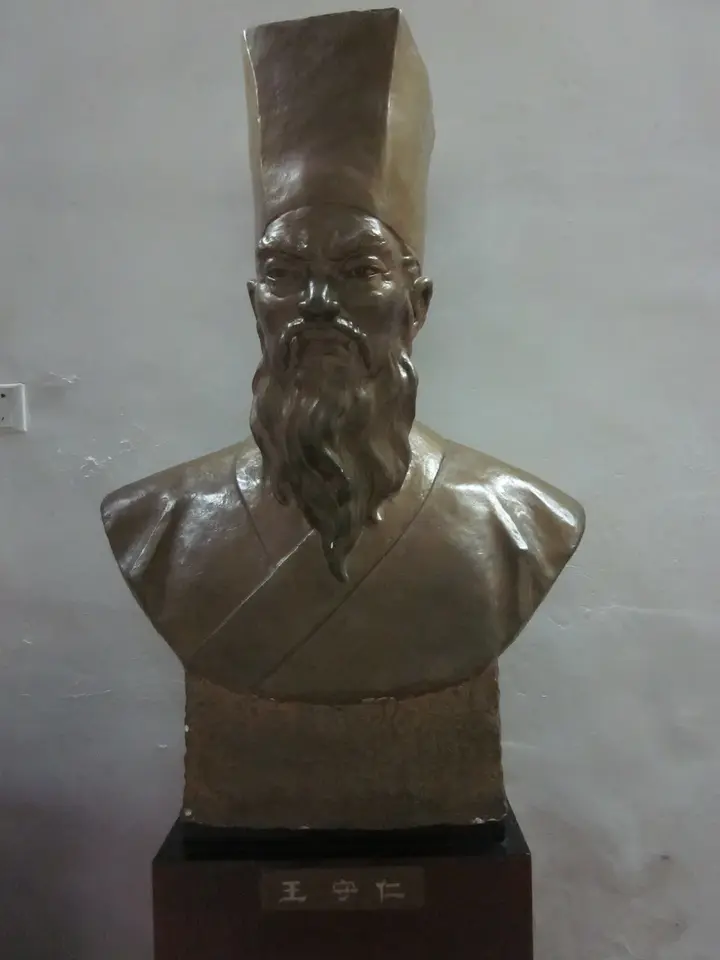
邹守益
Zou Shouyi (邹守益, 1491–1562), courtesy name Qianzhi and art name Dongguo, was widely revered by contemporaries as Master Dongguo. A native of Anfu, Jiangxi, he was a distinguished mid-Ming Neo-Confucian philosopher, educator, and remonstrating statesman who rose to Chancellor of the Nanjing National University. Within intellectual history, he was hailed by Qing scholar Huang Zongxi as the prime doctrinal heir of the Jiangxi…
Zou Shouyi (邹守益, 1491–1562), courtesy name Qianzhi and art name Dongguo, was widely revered by contemporaries as Master Dongguo. A native of Anfu, Jiangxi, he was a distinguished mid-Ming Neo-Confucian philosopher, educator, and remonstrating statesman who rose to Chancellor of the Nanjing National University. Within intellectual history, he was hailed by Qing scholar Huang Zongxi as the prime doctrinal heir of the Jiangxi School of Yangming Philosophy. Endowed with precoce brilliance and moral solemnity, Zou Shouyi secured first place in the imperial metropolitan examinations (huiyuan) in 1511 and placed third overall in the palace examination (tanhua), receiving appointment as a compiler in the Hanlin Academy. In 1519, troubled by scholastic obscurities in Song Neo-Confucian commentaries on the Doctrine of the Mean, he journeyed to Ganzhou to consult philosopher Wang Shouren (Wang Yangming). Deeply illuminated by Yangming's teachings on innate moral knowing, he formally entered the school as a primary disciple. Later that year, when Prince Zhu Chenhao rebelled, Zou Shouyi joined Wang Yangming's command, mobilizing regional gentry to assist in swiftly crushing the insurrection. In 1524, during the Great Rites Controversy, Emperor Shizong sought to elevate his biological father to imperial status. Zou Shouyi risked imperial execution by submitting two impassioned memorials arguing that dynastic ancestral succession could not be bent to satisfy private imperial filial affection. Incensed by his remonstrance, the emperor stripped him of court rank and banished him as vice magistrate to Guangde in southern Zhili. In Guangde, Zou Shouyi founded the Fuchu Academy, lectured to hundreds of scholars, and printed the authoritative Guangde edition of Wang Yangming's literary works, which served as a primary conduit for the dissemination of Instructions for Practical Living. He subsequently served as Director of Personnel Evaluations in Nanjing and Hanlin reader in Beijing. In 1541, following a catastrophic fire in the imperial ancestral temple, Zou Shouyi submitted a solemn memorial urging the emperor to practice moral self-examination and suspend Daoist occult rituals; Emperor Shizong dismissed him from office, banishing him to his hometown. During twenty-one years of retirement in Anfu, Zou Shouyi devoted himself entirely to education. He established the Fugu and Fuzhen academies, organized the celebrated Chishi Society, and presided over the prestigious Qingyuan Mountain conferences. Doctrinally, he championed the thesis of preserving reverence to realize innate knowing, demanding rigorous moral introspection within daily social obligations to curb the antinomian excesses of radical Yangming followers. He served as chief editor for the authoritative Chronological Biography of Wang Yangming. Passing away in 1562 at age seventy-two, he was posthumously honored in 1567 as Vice Minister of Rites with the posthumous title Wenzhuang. Combining moral courage, civic benevolence, and profound philosophical rigor, Zou Shouyi remains an enduring giant in Ming intellectual history.
Born into an illustrious scholarly family in Anfu, Jiangxi; demonstrated exceptional classical literacy.
Placed first in the metropolitan examinations (huiyuan) and third in the palace examinations (tanhua).
Studied under Wang Yangming at Ganzhou and aided him in crushing the rebellion of Prince Zhu Chenhao.
Visited Wang Yangming in Shaoxing; Yangming praised his humility, comparing him to disciple Zengzi.
Impeached court policy during the Great Rites Controversy; demoted to vice magistrate of Guangde.
Established the Fuchu Academy in Guangde and published the historic Guangde edition of Wang Yangming's works.
Returned to Anfu to launch the Chishi Society and implement community compacts for regional reform.
Elevated to Senior Expositor, but transferred to direct the Nanjing Hanlin Academy due to factional jealousy.
Appointed Chancellor of the Nanjing National University, revitalizing classical curricula.
Submitted a candid memorial on the ancestral temple fire; dismissed from officialdom by Emperor Shizong.
Passed away peacefully at his Anfu estate at age seventy-two after two decades of community teaching.
The Longqing Emperor exonerated him, granting the title Vice Minister of Rites and posthumous name Wenzhuang.
Zou Shouyi was born in 1491 in Fengtian, Anfu County, Jiangxi, into a celebrated scholarly lineage. In 1511, at the young age of twenty, he achieved first place (huiyuan) in the national metropolitan examinations in Beijing. He followed this triumph by securing third place overall (tanhua) in the imperial palace examination before Emperor Wuzong, receiving appointment as a compiler in the prestigious Hanlin Academy.
While serving in the capital, Zou Shouyi engaged in profound studies of Song Neo-Confucian commentaries on the Four Books, yet grew perplexed by doctrinal tensions. He reflected that while the Cheng brothers and Zhu Xi emphasized external investigations of things to accumulate knowledge, the foundational Doctrine of the Mean prioritized inner watchful introspection without mentioning exterior investigations. In 1519, having completed ancestral mourning rites, Zou Shouyi traveled to Ganzhou, Jiangxi, to request an epitaph for his father from regional governor Wang Shouren. During extensive dialogues in Ganzhou, Wang Shouren explained that innate moral knowing is directly grounded in the human heart and achieved through the unity of knowing and acting. Zou Shouyi achieved instant spiritual awakening, declaring that the authentic path of the sages had been revealed. He formally became Wang Shouren's disciple.
In the sixth lunar month of 1519, Prince Zhu Chenhao staged a massive rebellion in Nanchang. Zou Shouyi remained at Wang Shouren's military headquarters, mobilizing local Anfu gentry militias, securing logistical supplies, and helping plan operational movements. His strategic assistance contributed directly to Wang Yangming's swift victory within thirty-five days, capturing Zhu Chenhao on Poyang Lake.
Following Emperor Wuzong's death, Zhu Houcong ascended the throne as Emperor Shizong (the Jiajing Emperor). Soon after, the bitter Great Rites Controversy erupted as the young monarch insisted on granting full imperial ancestral honors to his deceased biological father, Prince Xian of Xing. In February 1524, Zou Shouyi submitted a forceful memorial warning against imperial self-indulgence that undermined ancestral succession.
A month later, when the emperor persisted in punishing remonstrators, Zou Shouyi submitted a second memorial. Citing classical precedents, he reminded the emperor that excessive leniency toward biological kin mirrored the historical errors of ancient sycophants who sought short-term imperial favor while courting historical condemnation. Enraged by this criticism, Emperor Shizong stripped Zou Shouyi of his compiler rank and banished him as vice magistrate to Guangde in southern Zhili.
In Guangde, Zou Shouyi embraced his exile with equanimity. He founded the Fuchu Academy on the eastern outskirts of the city, gathering hundreds of scholars to study classical virtue and moral action. During his tenure, Zou Shouyi edited and published the landmark Guangde edition of Wang Yangming's collected lecture notes, establishing the foundational textual basis for Instructions for Practical Living and anchoring the Yangming movement across the Yangtze delta.
In 1526, Zou Shouyi returned to Anfu, where he collaborated with fellow disciples to organize the Chishi Society, dedicating themselves to moral discipline and drafting regional community compacts to eradicate extravagance and local clan feuding. Wang Yangming authored an official essay praising Zou's community work.
Recalled to imperial administration, Zou served as Director of Personnel in Nanjing and Senior Reader in the Spring Court in Beijing. In 1530, he and senior official Huo Tao presented thirteen illustrated scrolls illustrating ancient sage-kings practicing frugality and farming to encourage imperial humility. When Senior Grand Secretary Xia Yan perceived Zou Shouyi's unbending integrity as an obstacle, he engineered his transfer to head the Nanjing Hanlin Academy. In 1536, Zou Shouyi was appointed Chancellor of the Nanjing National University, where he enforced academic discipline and opposed careerist examination learning in favor of genuine moral leadership.
In April 1541, a major conflagration destroyed nine ancestral temples in Beijing. Responding to the emperor's request for counsel, Zou Shouyi submitted an uncompromising memorial arguing that celestial portents reflected flawed governance. He urged the emperor to eliminate Daoist alchemy, abandon autocratic isolation, and restore banished upright officials. Deeply incensed, Emperor Shizong stripped Zou Shouyi of his offices and banished him permanently to his hometown.
Returning to Anfu in his fifties, Zou Shouyi abandoned all thoughts of political re-emergence, dedicating the next twenty-one years to education and scholarship. He built the Fugu and Fuzhen academies and convened large-scale philosophical assemblies at Qingyuan Mountain, which drew scholars from across central and southern China.
Following Wang Yangming's death, the school risked doctrinal fracture as radical followers in Zhejiang and Taizhou gravitated toward antinomian spontaneity. Zou Shouyi stood firm as the moral ballast of the movement. He formulated the principle of preserving reverence to realize innate knowing, asserting that while moral knowledge is innate, it requires perpetual vigilance, self-examination, and active ethical engagement within family and civic life. Under his guidance, the Jiangxi School became the most rigorous and respected branch of Yangming philosophy. Concurrently, he served as chief editor for the authoritative Chronological Biography of Wang Yangming, securing irreplaceable historical records of the master's life.
On November 19, 1562, Master Dongguo passed away peacefully at his home in Anfu at the age of seventy-two. In 1567, Emperor Muzong issued an imperial pardon, conferring upon him the posthumous rank of Vice Minister of Rites and the posthumous name Wenzhuang. Zou Shouyi remains celebrated as a paragon of Confucian integrity and the foremost doctrinal guardian of late Ming Neo-Confucianism.
Studying under Wang Yangming in 1519, he served in the military secretariat during the Prince of Ning's uprising, mobilizing regional gentry to assist in suppressing the insurrection within thirty-five days.
He risked his life to submit two outspoken memorials against Emperor Shizong's elevation of his biological father during the Great Rites Controversy, accepting demotion to Guangde without compromising Confucian principle.
Banished to Guangde, he founded the Fuchu Academy and published the historic Guangde edition of Wang Yangming's collected works, creating a pivotal landmark in the textual dissemination of Ming Neo-Confucianism.
In 1526, he founded the Chishi Society in Anfu, leading local gentry in implementing community compacts and communal granaries to stabilize regional rural welfare for over two decades.
As chief compiler of the Chronological Biography of Wang Yangming, he championed the doctrine of preserving reverence to realize innate knowing, curbing antinomian trends and establishing the Jiangxi School as the moral anchor of Yangming philosophy.
The History of Ming commended his career: "Zou Shouyi was a premier disciple of Wang Shouren. Outspoken at court, he twice suffered severe punishments, yet his moral rectitude grew ever firmer. In Guangde and Anfu, he built academies and gathered students; scholars across Jiangxi revered him as Master Dongguo. In his native place, he implemented community compacts and established charity granaries, dispensing virtue across the region. In the early Longqing reign, he was granted the posthumous title Vice Minister of Rites with the name Wenzhuang; he was truly a distinguished scholar." Wang Yangming lauded him during his lifetime: "Zengzi spoke of questioning those with less ability though possessing ability oneself; Qianzhi truly exemplifies this virtue." Huang Zongxi observed in The Records of Ming Scholars: "After Master Yangming's death, disciples Qian Dehong and Wang Ji were lofty in insight, yet for pure rigor and ability to carry the heavy mantle of the Dao, none equaled Dongguo. Thus the Jiangxi School preserved the authentic lineage, and Dongguo was its rightful heir."
Modern intellectual historians recognize Zou Shouyi as an indispensable bridge between early Yangming thought and late Ming practical learning. By insisting that innate knowledge requires perpetual reverence and civic responsibility, he checked the radical antinomian drift that threatened to dissolve Confucian ethics into idle meditation. His innovative deployment of private academies, printed anthologies, and community compacts demonstrated the transformative social power of Confucian philosophy within local society.
FIGURES ASSOCIATED WITH THIS DYNASTY