Birth in Jiangdong
Born in Eastern Wu as the second son of Zhuge Jin, originally courtesy named Zhongshen.
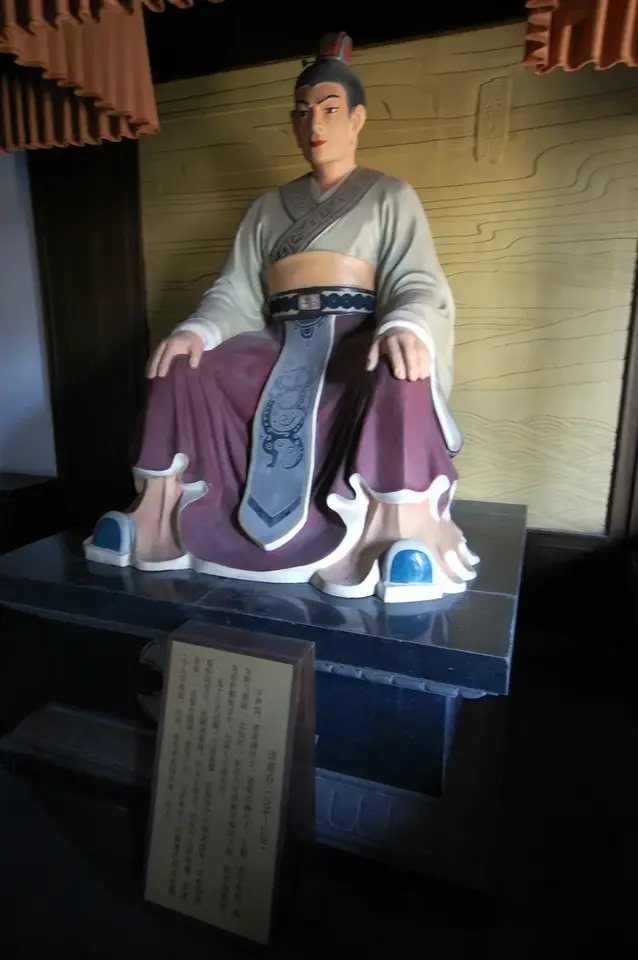
诸葛乔
Zhuge Qiao (204–228), originally courtesy named Zhongshen and later renamed Bosong, was a native of Yangdu County, Langye Commandery (modern south of Yinan, Shandong Province). He was an official and military officer of the Shu Han state during the Three Kingdoms period. Originally the second son of Eastern Wu's Grand General Zhuge Jin, Zhuge Qiao was renowned throughout Jiangdong alongside his elder brother Zhuge Ke.…
Zhuge Qiao (204–228), originally courtesy named Zhongshen and later renamed Bosong, was a native of Yangdu County, Langye Commandery (modern south of Yinan, Shandong Province). He was an official and military officer of the Shu Han state during the Three Kingdoms period. Originally the second son of Eastern Wu's Grand General Zhuge Jin, Zhuge Qiao was renowned throughout Jiangdong alongside his elder brother Zhuge Ke. Contemporary critics observed that while his rhetorical brilliance was slightly surpassed by Zhuge Ke, his humble temperament and moral integrity far exceeded those of his brother. Because his uncle, Chancellor Zhuge Liang of Shu Han, was initially without male heirs, Zhuge Liang formally petitioned Zhuge Jin to adopt Zhuge Qiao as his legitimate heir. With Sun Quan's approval, Zhuge Qiao traveled to Shu, where Zhuge Liang treated him as his own son, altered his courtesy name to Bosong to denote eldest son status, and arranged his appointment as Commandant of Equerry. To prevent aristocratic complacency, Zhuge Liang subjected him to rigorous military discipline. In 227, Zhuge Qiao accompanied the northern expeditionary army to Hanzhong, personally leading several hundred soldiers deep into treacherous mountain valleys to oversee difficult grain transport operations alongside common troops. In 228, Zhuge Qiao tragically fell ill and died in the military camp at the age of twenty-five. Following the extermination of Zhuge Ke's branch in Wu, Zhuge Qiao's son Zhuge Pan was reassigned to inherit Zhuge Jin's lineage in Jiangdong.
Born in Eastern Wu as the second son of Zhuge Jin, originally courtesy named Zhongshen.
Gained scholarly distinction alongside his brother Zhuge Ke, admired for his modest and upright character.
Because Zhuge Liang lacked heirs, Zhuge Qiao was sent to Shu as his adopted son and legitimate heir, renamed Bosong.
Following Liu Shan's accession, appointed Commandant of Equerry to serve in the imperial retinue.
Accompanied Zhuge Liang to Hanzhong for the northern campaign, leading five to six hundred soldiers to transport provisions across mountain gorges.
Succumbed to illness caused by arduous military logistical duties in Hanzhong, passing away at age twenty-five.
Zhuge Qiao was born into the prestigious Zhuge clan of Langye. His biological father was Zhuge Jin, a preeminent minister and general of Eastern Wu, while his uncle was Chancellor Zhuge Liang of Shu Han. Originally named Zhongshen, Zhuge Qiao was the second son of Zhuge Jin. From his youth, he demonstrated deep intellectual maturity, emotional stability, and refined classical learning. He and his elder brother Zhuge Ke earned widespread fame in Jiangdong. Contemporary scholars who compared the brothers noted that while Zhuge Ke possessed greater quickness of wit and flamboyant eloquence, Zhuge Qiao far surpassed his brother in personal humility, emotional moderation, and moral rectitude.
During the late Eastern Han and early Shu Han periods, Chancellor Zhuge Liang remained childless as he approached middle age. Anxious to preserve ancestral sacrifices and dynastic lineage, Zhuge Liang dispatched a letter to his elder brother Zhuge Jin in Jiangdong, requesting that Zhuge Qiao be transferred to Shu as his adopted son. Recognizing the strategic and familial importance of the request, Zhuge Jin petitioned Sun Quan, who granted formal permission for Zhuge Qiao's journey to Chengdu.
Upon his arrival, Zhuge Liang embraced Zhuge Qiao as his legitimate eldest son. Following ancient ritual conventions where the eldest son carried the prefix "Bo," Zhuge Liang changed his courtesy name from Zhongshen to Bosong. Following the enthronement of Emperor Liu Shan, the imperial court appointed Zhuge Qiao as Commandant of Equerry (Fuma Duwei), allowing him to participate in central military councils and palace security.
Despite his paramount position as Chancellor and Regent of Shu Han, Zhuge Liang maintained unyielding simplicity and discipline within his household. Deeply concerned that Zhuge Qiao might become spoiled or aloof due to his father's exalted station, Zhuge Liang strictly forbade any aristocratic luxury in his daily routine, requiring him to live with austere frugality.
In 227, Zhuge Liang submitted his famous Memorial on Taking the Field and mobilized the main military forces of Shu Han to establish forward headquarters in Hanzhong. Although Zhuge Qiao held court office in Chengdu, Zhuge Liang insisted that his son leave the comfort of the rear capital to join the frontline troops in the rugged mountains of southern Shaanxi, sharing quarters and military studies with Huo Yi, son of veteran commander Huo Jun.
In Hanzhong, Zhuge Liang deliberately avoided assigning Zhuge Qiao comfortable clerical duties. Instead, he ordered him to take command of five to six hundred soldiers and venture into deep mountain ravines alongside the sons of other generals to oversee the arduous transport of military rations. The mountain supply lines through the Qinling passes were notoriously treacherous, involving perilous cliffs, torrential rainstorms, and grueling physical labor.
Zhuge Liang addressed a candid letter to Zhuge Jin explaining his decision: "Qiao should by rights have remained in Chengdu, but currently the sons of all our generals are marching with the ranks and bearing physical burdens. I consider it essential that Qiao share their hardships and honors. Today I have dispatched him leading five to six hundred men into the mountain ravines alongside other officers' sons to supervise supply trains." Zhuge Qiao carried out these exhausting tasks without complaint, living and laboring alongside ordinary foot soldiers and earning widespread respect across the army.
In 228, Zhuge Liang launched his first northern expedition toward Mount Qi. However, exhausted by the grueling physical demands and harsh climate of the mountain grain routes, Zhuge Qiao contracted a severe illness in the Hanzhong military camp. Despite the efforts of army physicians, Zhuge Qiao passed away at the young age of twenty-five, plunging Zhuge Liang into profound grief.
Before his untimely death, Zhuge Qiao fathered a son named Zhuge Pan, courtesy name Boyuan. Zhuge Pan rose to the rank of Acting Army Protector and General of Martial Wings in Shu Han, inheriting his father's spotless reputation. Decades later, following the death of Sun Quan, Zhuge Ke served as regent of Eastern Wu but was violently overthrown and executed alongside his entire immediate family by Sun Jun. This coup wiped out Zhuge Jin's branch in Jiangdong.
Because Zhuge Liang had subsequently fathered a biological son, Zhuge Zhan, his own ancestral sacrifices were secure. With the consent of the Shu Han court, Zhuge Qiao's son Zhuge Pan formally reverted to his biological grandfather's lineage, re-establishing Zhuge Jin's agnatic continuity in Jiangdong—an act celebrated as a touching testament to classical familial fidelity.
Zhuge Qiao's adoption was an event of major diplomatic and familial significance during the Three Kingdoms era. By assuming the mantle of Zhuge Liang's legitimate heir while remaining the son of Eastern Wu's chief commander, Zhuge Qiao embodied the personal bonds that undergirded the Wu-Shu geopolitical alliance. His seamless integration into the Shu administration reflected the highest standards of interstate elite solidarity.
Zhuge Qiao's willing service as a frontline logistical officer in the precipitous valleys of Hanzhong exemplified the ethos of the Zhuge household. By laboring directly alongside regular soldiers in the transport of grain, he set aside aristocratic privilege, establishing a standard of civic humility and selfless duty that inspired the second generation of Shu Han commanders.
FIGURES ASSOCIATED WITH THIS DYNASTY