Birth in Nanchang
Born in the Ning Princely Palace in Nanchang as a concubine's son to Zhu Jinjun, Prince Kang of Ning.
朱宸濠
Zhu Chenhao (July 1, 1476 – January 13, 1521), styled Weitian, was an imperial prince of the Ming dynasty, a fifth-generation descendant of the founder Zhu Yuanzhang, great-great-grandson of Zhu Quan (Prince Xian of Ning), and the fourth holder of the Prince of Ning title. Historically referred to as Commoner Ning or Commoner Chen, his ill-fated rebellion represented the climax of princely institutional corruption during the…
Zhu Chenhao (July 1, 1476 – January 13, 1521), styled Weitian, was an imperial prince of the Ming dynasty, a fifth-generation descendant of the founder Zhu Yuanzhang, great-great-grandson of Zhu Quan (Prince Xian of Ning), and the fourth holder of the Prince of Ning title. Historically referred to as Commoner Ning or Commoner Chen, his ill-fated rebellion represented the climax of princely institutional corruption during the reign of the Zhengde Emperor (Ming Wuzong). The Ning princely lineage harbored long-standing resentment dating back to the Jingnan Campaign (1399–1402), when the Yongle Emperor coerced Zhu Quan to yield his frontier troops and subsequently relocated the fief from Daning to Nanchang while stripping away his northern border territories. In 1499, Zhu Chenhao inherited the princely title. Capitalizing on the chaotic governance and decadence of the Zhengde court, he poured vast sums of silver into bribing powerful eunuch Liu Jin, favorite courtier Qian Ning, and Minister of War Lu Wan. Through these corrupt alliances, he successfully restored the princely guards and agricultural estates that had been revoked decades earlier. Having rebuilt a private army, Zhu Chenhao recruited outlaws, manufactured illegal firearms, terrorized regional officials, and poisoned uncooperative censors. On July 14, 1519, upon learning that the court had ordered the revocation of his guards, he murdered Grand Coordinator Sun Sui and Surveillance Vice Commissioner Xu Kui, fabricating a secret imperial edict from the Empress Dowager to launch an armed insurrection involving over one hundred thousand men. However, his advance down the Yangtze was stalled by the heroic resistance of Anqing. Wang Yangming, then Grand Coordinator of Southern Jiangxi, orchestrated brilliant counter-measures: spreading deceptive intelligence, raising loyal prefectural militias, and capturing Zhu Chenhao's base at Nanchang. Forced to turn back, Zhu Chenhao was trapped on Lake Poyang, where Wang Yangming unleashed fire-ship attacks that destroyed the rebel fleet and captured the prince. The rebellion collapsed in just forty-three days, and Zhu Chenhao was stripped of princely rank and ordered to commit suicide in Tongzhou, permanently terminating the Ning princely lineage.
Born in the Ning Princely Palace in Nanchang as a concubine's son to Zhu Jinjun, Prince Kang of Ning.
Invested by the imperial court with the title Prince of Shanggao.
Succeeded to the title as the fourth Prince of Ning following his father's demise.
Dispatched emissaries with massive bribes to eunuch Liu Jin, securing temporary restoration of the princely bodyguard.
Spent vast treasures bribing Qian Ning and Lu Wan to secure an imperial decree restoring three princely guards and estate revenues.
Enlisted notorious lake pirate chieftains Wu Shi and Ling Shiyi, casting heavy artillery and building warships.
Fabricated an imperial edict from the Empress Dowager, murdered Sun Sui and Xu Kui, and launched armed rebellion with 100,000 troops.
Advance stalled before Anqing; Wang Yangming seized the opportunity to launch a surprise assault that recaptured Nanchang.
Trapped on Lake Poyang, the rebel fleet was incinerated by Wang Yangming's fire-ships; Zhu Chenhao was captured alive.
Ordered by Emperor Wuzong to commit suicide at Tongzhou; princely fief and guards permanently abolished.
When Zhu Yuanzhang founded the Ming dynasty, he stationed imperial sons along northern strategic frontiers. His seventeenth son, Zhu Quan (Prince Xian of Ning), was enfeoffed at Daning, commanding eighty thousand elite troops and the renowned Uriankhai cavalry. In 1399, Zhu Di (the future Yongle Emperor) launched the Jingnan Campaign, coercing Zhu Quan to join his cause with promises to share the realm upon victory. After taking the throne, Yongle reneged, transferring Daning to Mongol tribes and relocating Zhu Quan to Nanchang while stripping his military authority.
During the Tianshun reign (1457–1464), the Ning princely line was implicated in suspected treason, resulting in the total revocation of princely bodyguards and agricultural lands, breeding generations of bitterness within the palace.
Zhu Chenhao was born on July 1, 1476, in the Nanchang palace, a concubine's son to Zhu Jinjun, Prince Kang of Ning. In 1494, he received the title Prince of Shanggao. Following his father's death in 1497, Zhu Chenhao utilized generous gifts and political maneuvers to secure the succession, formally assuming the title of fourth Prince of Ning in 1499. Taking the style "Weitian," he entertained lavishly, priding himself on royal lineage while nursing dangerous imperial ambitions.
In 1505, the eccentric and irresponsible Zhengde Emperor ascended the throne, allowing governance to fall into the hands of the notorious eunuch cabal led by Liu Jin. Recognizing pervasive corruption in the capital, Zhu Chenhao resolved to restore the princely bodyguards to create an autonomous army.
In the summer of 1507, Zhu Chenhao dispatched palace eunuchs with hundreds of thousands of silver taels to bribe Liu Jin. Despite stiff opposition from the Ministry of War, Liu Jin issued an edict in 1508 restoring the Ning guards. However, when Liu Jin fell from power and was executed in 1510, the court promptly rescinded the guards once again, intensifying Zhu Chenhao's determination to rebel.
Undaunted, Zhu Chenhao liquidated family heirlooms to bribe court dignitaries. Through palace musician Zang Xian, he allied with imperial favorite Qian Ning, commander of the Embroidered Uniform Guard, while paying massive bribes to Minister of War Lu Wan. In April 1514, timing their move when Grand Academician Fei Hong was sequestered grading metropolitan examination papers, Qian Ning secured an imperial decree without cabinet review, restoring three full guard regiments along with substantial grain and estate revenues, providing Zhu Chenhao with a formal military force.
With his military guard established, Zhu Chenhao expanded his illicit network. He recruited notorious Poyang Lake pirates including Wu Shi and Ling Shiyi, alongside bandit leaders and fugitive criminals. He established clandestine armories to manufacture armor, cannons, and warships, while employing sorcerers Li Ziran and Li Shixue to concoct astrological omens claiming that "an imperial aura had arisen in the southeast."
Throughout Jiangxi, Zhu Chenhao ruled with untrammeled despotism. He seized hundreds of thousands of acres of agricultural estates, monopolized fishing and transport levies on Lake Poyang, and established a secret intelligence apparatus named "Yangchun Hall" to kidnap and torture uncooperative citizens and officials. When regional imperial clansmen like Prince of Ruichang Zhu Youxue resisted his demands, Zhu Chenhao orchestrated false charges to cut off their allowances, driving several relatives to despair.
In 1513, when Investigating Censor Wang Zhe refused to cooperate with the prince, Zhu Chenhao invited him to a banquet; Wang Zhe died of sudden poisoning upon returning home. Vice Commissioner Hu Shining submitted an urgent memorial detailing Zhu Chenhao's treasonous armament. Alarmed, Zhu Chenhao paid Qian Ning to fabricate counter-charges, having Hu Shining imprisoned and exiled.
Subsequently, newly appointed Grand Coordinator Sun Sui and Vice Commissioner Xu Kui recognized the certainty of rebellion and quietly prepared defenses, establishing city guard posts and requesting that patrol boats be concentrated at the mouth of Lake Poyang. Zhu Chenhao repeatedly attempted to intimidate or bribe Sun Sui, but the coordinator remained incorruptible.
In the spring of 1519, multiple censors including Xiao Yuan and Xia Liangsheng submitted urgent memorials warning that the Prince of Ning was on the verge of open revolt. Persuaded by Grand Academician Yang Tinghe, Emperor Wuzong dispatched imperial commissioners to Nanchang to revoke the Ning guard and reclaim usurped estates.
Tipped off by Qian Ning's agents, Zhu Chenhao realized that loss of his bodyguard would lead to immediate arrest. On July 13, 1519, he invited provincial civil and military officials to a grand banquet under the pretext of celebrating his birthday.
On the morning of July 14, with armed guards lining the palace hall, Zhu Chenhao broke into tears and declared: "Emperor Xiaozong was poisoned by traitors; the reigning monarch is merely an adopted commoner of illegitimate birth. I hold a secret edict from the Empress Dowager commanding me to march north and supervise the empire!"
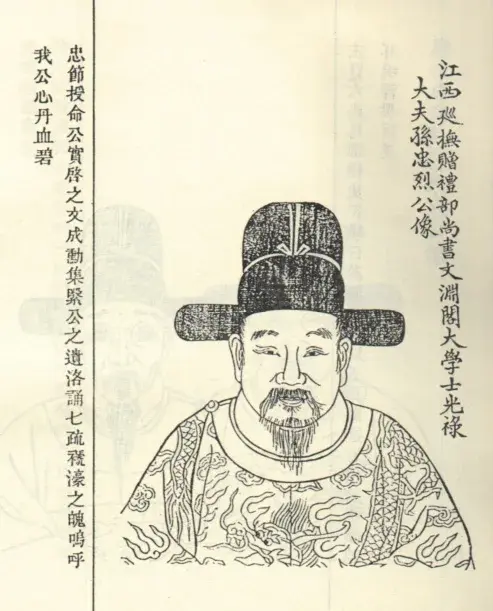
Grand Coordinator Sun Sui stepped forward, demanding: "Where is this secret edict? Produce it immediately!" Unable to display any document, Zhu Chenhao ordered his guards to force Sun Sui to his knees. Sun Sui cursed the rebel prince, refusing to yield. Vice Commissioner Xu Kui likewise denounced Zhu Chenhao as a treasonous insurgent. Enraged, Zhu Chenhao ordered both men executed outside the palace gates.
Zhu Chenhao seized the provincial treasury and armories, appointed retired Vice Minister Li Shishi as Grand Preceptor, designated provincial scholar Liu Yangzheng as chief strategist, and commissioned lake pirates as generals, assembling a rebel force of one hundred thousand troops, launching the Prince of Ning Rebellion.
Adopting Li Shishi's counsel, Zhu Chenhao resolved to sail his fleet down the Yangtze River to capture Nanjing, intending to proclaim himself emperor in the southern capital before marching north on Beijing. When the magistrates of Jiujiang and Nankang abandoned their posts, Zhu Chenhao grew overconfident.
In early August, Zhu Chenhao's armada approached the strategic fortress of Anqing, which barred entry into the lower Yangtze. Prefect Zhang Wenjin, Regional Commander Yang Rui, and Vice Magistrate Zheng Qi organized a heroic defense. Despite ferocious bombardments from rebel siege towers and artillery, Anqing's defenders showered the attackers with boulders, boiling oil, and incendiary rockets, killing key rebel commanders He Jie and Ding Tang and stalling the invasion for over two weeks.
Meanwhile, Wang Yangming, then Grand Coordinator of Southern Jiangxi, mobilized loyal prefectural militias from Ji'an, Linjiang, Yuanzhou, and Ganzhou. Employing brilliant psychological warfare, Wang Yangming circulated forged imperial dispatches claiming that sixteen divisions totaling one hundred and sixty thousand troops were converging from Zhejiang and Fujian. Deceived by these reports, Zhu Chenhao hesitated in Nanchang for days, granting Wang Yangming vital time to assemble his militia forces.
Learning that Zhu Chenhao was bogged down before Anqing, Wang Yangming executed the classical stratagem of "besieging Wei to rescue Zhao," marching directly on the undefended rebel capital of Nanchang. On August 14, Wang Yangming stormed the city from four directions, annihilating the garrison, capturing the Ning palace archives, and seizing the families and treasure of the rebel army.
Hearing that his base was lost, Zhu Chenhao panicked. Ignoring Liu Yangzheng's desperate advice to bypass Nanchang and strike directly for Nanjing, Zhu Chenhao reversed his fleet and sailed upriver into Lake Poyang to retake his home city.
Wang Yangming deployed his forces at Huangjiadu, preparing a decisive ambush. On August 18, the two fleets collided. Wang Yangming lured the massive rebel warships into shallow waterways before springing flank ambushes, routing the vanguard and killing over a thousand rebels.
On August 19, Zhu Chenhao distributed massive silver bounties to inspire a counter-attack. Prefect Wu Wending led government vessels through barrages of arrows to shatter the rebel spearhead.
Before dawn on August 20, the final engagement commenced. Zhu Chenhao had chained his flagship division together to create an imposing floating fortress. Observing a sudden favorable shift in the wind, Wang Yangming unleashed squadrons of small fire-rafts loaded with reeds and gunpowder directly into the chained armada. The inferno spread instantly, turning the lake into a sea of fire. Over thirty thousand rebel soldiers drowned or burned, and the lake waters ran red.
Realizing all was lost, Zhu Chenhao wept and prepared to drown himself alongside his heir Zhu Gongtiao, but was captured by boarders. Li Shishi, Liu Yangzheng, and the pirate commanders were captured, bringing the forty-three-day rebellion to an end.
Brought before Wang Yangming, Zhu Chenhao fell to his knees, begging for his life and offering all his princely wealth to be spared as a commoner tending his ancestral graves. Wang Yangming sternly rebuked him: "You rebelled against Heaven and sovereign, murdered loyal ministers, and ravaged the realm; dynastic law permits no pardon!" Zhu Chenhao lamented: "If only I had listened to Li Shishi's advice to strike Nanjing directly, I would not have fallen into this trap!"
Following the capture, Emperor Wuzong marched south with an imperial army to stage a mock campaign. Sychophants like Jiang Bin schemed to release Zhu Chenhao into the lake so the emperor could "recapture" him in combat. Foreseeing disaster, Wang Yangming outmaneuvered them, surrendering the captive prince directly to loyal eunuch Zhang Yong, who escorted him securely back to the north.
On January 13, 1521, as Emperor Wuzong returned to Tongzhou outside Beijing, he issued an imperial decree stripping Zhu Chenhao of imperial lineage, reducing him to commoner status, and ordering him to commit suicide in the military camp, followed by the cremation of his remains. His sons were executed, his co-conspirators put to death, and the Ning princely domain was permanently dissolved, bringing an end to the century-old princely establishment.
The rebellion of Zhu Chenhao represented the historical zenith and ultimate crisis of the Ming princely system. Established to secure the dynasty, the princes were legally restricted from administrative and military commands following the Yongle reign.
However, amidst the systemic decadence of the Zhengde court, Zhu Chenhao exploited vast fiscal resources to penetrate central corridors of power, reacquiring the right to maintain heavily armed private regiments. The rebellion underscored the mortal danger of princely military revival, directly prompting the Jiajing Emperor to implement stringent, irreversible controls over imperial clan autonomy.
Zhu Chenhao's operations in Jiangxi illustrated the profound deterioration of mid-Ming local security. Unable to command legitimate public support, he integrated lake pirates, mineral prospectors, and bandit networks into a private military organization disguised as an imperial household.
This corrupt nexus relied on violent extortion and commercial monopolies, terrorizing the Jiangxi populace. Despite its initial numerical strength, this criminalized coalition lacked military discipline and collapsed rapidly when confronted by the rigorous strategy, moral authority, and civic coordination of Wang Yangming's forces.
Zhu Chenhao's military conduct offered a textbook case study in strategic incompetence. Failing to exploit his early momentum to seize Nanjing, he permitted himself to be immobilized before the walls of Anqing.
When Nanchang fell, his inability to prioritize broad geopolitical goals over private familial anxiety led him to retreat into the bottleneck of Lake Poyang, where his fleet was incinerated. His erratic leadership exemplified the fatal limitations of a pampered prince attempting high-stakes military conquest.
Throughout his conspiracy, Zhu Chenhao relied heavily on occult superstitions and esoteric sorcery to fabricate political legitimacy for his usurpation. He patronized fraudulent sorcerers such as Li Ziran and Li Shixue within his palace, squandering massive fortunes constructing Taoist and Buddhist sanctuaries across Mount Lu and Mount Xishan to solicit imperial portents. These occultists concocted prophecies alleging that "the aura of an emperor has arisen in the southeast" and claimed that boiling well waters and sightings of white stags in Nanchang were celestial signs granting him the Mandate of Heaven.
Zhu Chenhao embraced these delusions unreservedly, even ordering Taoist priests in feathered vestments to chant spells before his troops on the day of the rebellion to bewitch the common soldiers. This bizarre political fanaticism collapsed immediately in the face of Wang Shouren's rational military command and disciplined operations, remaining in dynastic history as a ludicrous farce.
During his two decades as Prince of Ning, Zhu Chenhao inflicted catastrophic damage on the civic economy and livelihood of Jiangxi and neighboring provinces. Inventing predatory levies, he forcibly enclosed tens of thousands of mu of fertile polders surrounding Lake Poyang and established hundreds of private toll stations to extort exorbitant duties from salt, tea, and fishing merchants.
Whenever wealthy merchants or common peasants resisted his extortion, Zhu dispatched princely enforcers and bandit recruits to intimidate them, dragging victims into private princely dungeons for torture until ransom was paid, ruining countless households. This relentless predation devastated the agricultural stability of Jiangxi's rice-growing heartland and disrupted commerce along the Yangtze River, alienating the populace and guaranteeing that his rebellion would find no popular support.
To mask his treason, Zhu Chenhao fabricated a brazen political falsehood at the outset of his uprising. He publicly declared that the late Hongzhi Emperor had been poisoned by treacherous courtiers and claimed that the reigning Zhengde Emperor was an illegitimate commoner infant adopted into the palace. He proclaimed that he had taken up arms in obedience to a "secret edict from Empress Dowager Cishou commanding him to assume the regency in Beijing."
However, this clumsy falsehood carried zero credibility within the Ming bureaucracy and gentry society. In the provincial assembly hall on the day of the uprising, Grand Coordinator Sun Sui shattered Zhu's pretext with a single demand: "Where is this secret edict? Please present the imperial decree to the court!" Leaving Zhu struck dumb, Sun exposed the treason before all assembled. Regional civil and military magistrates recognized the rebellion as pure treason; with the exception of a handful of coerced opportunists, prefectural and county officials across Jiangnan held fortresses and raised loyalist militias, ensuring the total ideological and political bankruptcy of the rebellion.
FIGURES ASSOCIATED WITH THIS DYNASTY