Birth | Born in Wuxing (present-day Huzhou, Zhejiang), as an eleventh-generation descendant of Emperor Taizu of Song
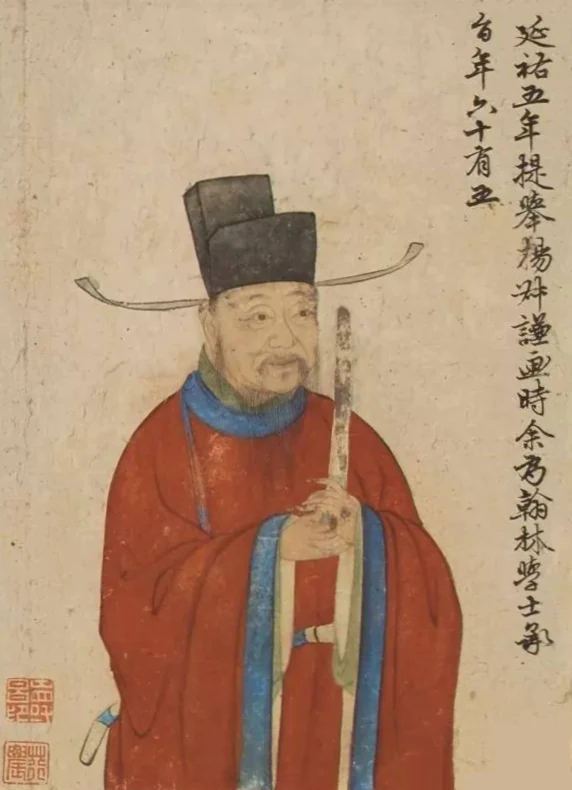
1254 CE–1322 CE
Writercalligrapherpainterofficial
Zhao Mengfu
赵孟頫
Zhao Mengfu (October 22, 1254–July 29, 1322), courtesy name Ziang and art name Songxuedaoren, also known as Shuijinggong Daoren and Oubo and, in middle age, sometimes signing his name Mengfu, was a native of Wuxing in Zhejiang (present-day Huzhou, Zhejiang). He was an official, calligrapher, painter, and writer of the late Southern Song and early Yuan periods, and an eleventh-generation descendant of Emperor Taizu of Song,…
1254 CE–1322 CESouthern Song
PROFILE
Zhao Mengfu (October 22, 1254–July 29, 1322), courtesy name Ziang and art name Songxuedaoren, also known as Shuijinggong Daoren and Oubo and, in middle age, sometimes signing his name Mengfu, was a native of Wuxing in Zhejiang (present-day Huzhou, Zhejiang). He was an official, calligrapher, painter, and writer of the late Southern Song and early Yuan periods, and an eleventh-generation descendant of Emperor Taizu of Song, Zhao Kuangyin. Broadly learned and accomplished, Zhao Mengfu excelled in classical prose and poetry, understood music, and was an expert connoisseur. In calligraphy he was skilled in regular script, running script, and small regular script. His rounded yet vigorous style became known as the “Zhao style” and exerted a profound influence on later calligraphy. In painting he helped establish a new direction for Yuan literati painting and was the first to formulate the theory that calligraphy and painting share the same use of the brush. He served under five Yuan rulers—Kublai Khan, Temür, Khaishan, Ayurbarwada Buyantu Khan, and Shidibala—and rose to Chief Academician of the Hanlin Academy and Grand Master for Glorious Happiness. He was posthumously granted the title Duke of Wei and given the posthumous name Wenmin.
- Also known as
- Zhao Ziang, Songxuedaoren, Ziang
- Courtesy name
- Ziang
- Art name
- Songxuedaoren
- Era
- Southern Song, Yuan
- Dynasty/Regime
- Southern Song, Yuan
- Identity
- Writer, calligrapher, painter, official
- Date of Birth
- October 22 1254
- Date of Death
- July 30 1322
- Ethnicity
- Han Chinese
- Native place
- Wuxing, Zhejiang (present-day Huzhou, Zhejiang)
- Place of birth
- Wuxing (present-day Huzhou, Zhejiang)
- Place of death
- Not recorded in historical sources
- Highest office
- See Biography and Major Activities
- Major achievements
- Eleventh-generation descendant of Emperor Taizu of Song; served the Yuan after the fall of the Song; a leading master of painting and calligraphy; founded the Zhao style of calligraphy
LIFE TIMELINE
Age eleven | His father, Zhao Yuyin, died; his birth mother, Lady Qiu, supervised his education
Age fourteen | Entered official service through hereditary privilege, passed the Ministry of Personnel selection procedure, and was transferred to serve as judicial administrator of Zhenzhou
Fall of the Southern Song | Lived in seclusion at home after the dynasty’s fall and studied the Classics under the elderly scholar Ao Jigong
Age thirty-two | Recommended by Cheng Jufu, Attendant Censor of a regional censorial office, and went to Dadu for an audience with Kublai Khan
Age thirty-three | Appointed Director in the Ministry of War
Age thirty-six | Promoted to Direct Academician of the Jixian Academy; in the same year participated in remonstrations seeking remission of taxes and levies across the realm
Age thirty-eight | Appointed associate administrator of the Jinan Circuit administration
Age forty-five | Served as Direct Academician of the Jixian Academy and Director of Confucian Education for Jiangsu and Zhejiang
Age fifty-six | Recalled to the capital and appointed Hanlin Reader-in-Waiting
Age sixty-two | Appointed Chief Academician of the Hanlin Academy and Grand Master for Glorious Happiness
Age sixty-five | Pleaded illness and requested retirement, withdrawing to Wuxing
Age sixty-nine | Died; posthumously granted the title Duke of Wei and the posthumous name Wenmin
BIOGRAPHY
Biography
Family Background and Early Life
Zhao Mengfu was born on the tenth day of the ninth lunar month in the second year of the Baoyou era under Emperor Lizong of Song (October 22, 1254), in Wuxing (present-day Huzhou, Zhejiang). He was an eleventh-generation descendant of Emperor Taizu of Song, Zhao Kuangyin. His tenth-generation ancestor was Zhao Defang, Prince of Qin and fourth son of Taizu; his fifth-generation ancestor was Zhao Zicheng, Prince Xiu'anxi and father of Zhao Shen, Emperor Xiaozong of Song; and his fourth-generation ancestor was Zhao Bogui, Prince Chong. Because Emperor Xiaozong granted Zhao Bogui a residence in Huzhou, his descendants became residents of Huzhou. Zhao Mengfu's great-grandfather Zhao Shichui, grandfather Zhao Xiyan, and father Zhao Yuyin all served in the Southern Song and held high office. Zhao Yuyin rose to Vice Minister of Revenue, prefect of Lin'an, and Pacification Commissioner of western Zhejiang; the Yuan later posthumously granted him the titles Grand Secretary of the Jixian Academy and Duke of Wei. Zhao Mengfu was Zhao Yuyin's seventh son. His principal mother was Lady Li and his birth mother was Lady Qiu. His grandfather died early without a son, and his grandmother adopted him as heir.
Zhao Mengfu was intelligent from childhood. He was said to remember whatever he read, compose readily, and write with great speed. His father died when he was eleven, after which his birth mother supervised his studies. At fourteen, because his family had served as officials for generations, Zhao Mengfu entered office through hereditary privilege. He passed the Ministry of Personnel examination for selecting officials and was assigned as judicial administrator of Zhenzhou.
Seclusion after the Fall of the Song and Entry into Yuan Service
After the Southern Song fell, Zhao Mengfu lived in seclusion at home for a time. His mother, Lady Qiu, told him, “The present dynasty will surely recruit talented men from Jiangnan. If you do not study more, how can you rise above ordinary people?” He therefore applied himself even more diligently, studying the Classics under the elderly scholar Ao Jigong. His learning advanced and his reputation grew. Jaghu Jiqi, then Minister of Personnel, once recommended Zhao Mengfu for a post as compiler in the Hanlin Academy and National History Office, but Zhao declined to take up the appointment.
In 1286, the twenty-third year of the Zhiyuan era, Cheng Jufu, an Attendant Censor of a Yuan regional censorial office, was ordered to seek out former Song officials living in seclusion in Jiangnan. He found more than twenty, with Zhao Mengfu ranked first, and Zhao was separately introduced at court for an audience with Kublai Khan. Kublai was delighted by Zhao's bold talent and radiant bearing, regarding him as resembling a transcendent immortal, and seated him above Ye Li, Left Assistant Director of the Department of State Affairs. The court had just established the Department of State Affairs, and Zhao Mengfu was ordered to draft an edict for promulgation throughout the realm. After reading it, Kublai praised him, saying that it expressed exactly what he wished to say.
Career under the Yuan
In June 1287, the twenty-fourth year of the Zhiyuan era, Kublai Khan appointed Zhao Mengfu Director in the Ministry of War. The ministry oversaw the empire's postal stations. At the time, the costs of food and lodging for traveling envoys had increased many times over, and local governments could not meet the expense except by forcibly collecting supplies from the people, causing serious hardship. Zhao asked the Secretariat to resolve the problem by increasing the issue of paper currency. Later, when Zhiyuan paper currency became difficult to circulate, the court sent Liu Xuan of the Department of State Affairs together with Zhao Mengfu to Jiangnan to investigate officials of the provincial administration for failure to enforce currency policy. Officials of the Left and Right Offices and various circuits were flogged, but Zhao did not have a single person beaten. After he returned to the capital, Chancellor Sangge sharply criticized him for his leniency.
In 1290, the twenty-seventh year of the Zhiyuan era, Zhao Mengfu was promoted to Direct Academician of the Jixian Academy. That same year, a severe earthquake struck Beijing, killing or injuring hundreds of thousands, and Kublai was deeply troubled. Sangge had earlier sent Xindu and Wang Ji to audit taxes and grain throughout the realm, carrying out extensive exactions that left the people in distress. Zhao persuaded Arghun Shari, Grand Secretary of the Jixian Academy, to petition Kublai for a general amnesty and tax remission. When the edict had been drafted, Sangge became furious, but Zhao stepped forward and convinced him by explaining the consequences, thereby bringing relief to the people.
Kublai once intended to have Zhao Mengfu participate in affairs of the Secretariat, but Zhao firmly refused. Believing that long service close to the ruler would invite jealousy, he repeatedly requested an outside appointment. In 1292, the twenty-ninth year of the Zhiyuan era, he was sent out as associate administrator of the Jinan Circuit administration. A man named Yuan Xian'er, who was serving compulsory labor at a salt works, fled because he could not endure the hardship. His father falsely accused another laborer of killing him. Zhao suspected an injustice and did not issue an immediate judgment. A month later, Xian'er returned to the salt works on his own, and the people of the circuit praised Zhao's discernment.
In August 1299, the third year of the Dade era, Zhao Mengfu was appointed Direct Academician of the Jixian Academy and Director of Confucian Education for Jiangsu and Zhejiang, serving in Hangzhou for ten years. In 1309, the second year of the Zhida era, after completing his term, he was reassigned as Gentleman of the Middle Order, magistrate of Taizhou in the Yangzhou Circuit, concurrently in charge of encouraging agriculture. Before he could take up the post, the crown prince Ayurbarwada Buyantu Khan, the future Emperor Renzong of Yuan, sent an envoy to summon him. In 1310, the third year of the Zhida era, the court recalled Zhao to the capital and appointed him Hanlin Reader-in-Waiting. In 1316, the third year of the Yanyou era, he was appointed Chief Academician of the Hanlin Academy and Grand Master for Glorious Happiness. From Kublai Khan through the reigns of Khaishan, Ayurbarwada Buyantu Khan, and Shidibala, he was treated with respect.
Later Years and Death
In 1319, the sixth year of the Yanyou era, Zhao Mengfu pleaded illness and requested permission to retire, withdrawing to Wuxing. In 1322, the second year of the Zhizhi era, he died at the age of sixty-nine. He was posthumously granted the title Duke of Wei and the posthumous name Wenmin, and later generations called him “Zhao Wenmin.”
A Prince of Song Blood and the Start of an Official Career
Zhao Mengfu, styled Zi'ang, called the Daoist of the Pine Snow and also the Daoist of the Crystal Palace and the Gull Wave, and in middle life signing himself Mengfu with the other character, was by origin a man of Lanxi in Wuzhou and a descendant of Zhao Defang, prince of Qin, son of the Song founder Zhao Kuangyin. The Yuan History traces his line: his great-great-great-grandfather was Zhao Zicheng, prince Xiu'anxi, and his great-great-grandfather Zhao Bogui, prince Chongxianjing; Emperor Gaozong of Song having no son, he made the son of Zicheng emperor, this being Emperor Xiaozong, and Bogui was Xiaozong's elder brother; Xiaozong granted Bogui a residence at Huzhou, so that his descendants became men of Huzhou. His great-grandfather Zhao Shiwei, grandfather Zhao Xiyong and father Zhao Yuyin all served the Song and rose to high office; under the Yuan, because of Zhao Mengfu's eminence, Shiwei was posthumously given the rank of expositor of the Jixian academy, Xiyong that of commissioner of the court of sacrificial worship, and both were enfeoffed dukes of Wuxing, while Yuyin was given the rank of grand scholar of Jixian and enfeoffed duke of Wei. Zhao Mengfu was the seventh son of Zhao Yuyin, his principal mother being Lady Li and his own mother Lady Qiu; his grandfather having died young without issue, his grandmother took him as heir. He was clever from childhood, could recite a book after one reading and finish a composition as soon as he took up the brush; his father died when he was eleven, and his mother saw to his studies. At fourteen he entered office by his father's privilege and, passing the Board of Personnel's examination, was appointed assistant of revenue for Zhenzhou. After the Song fell he stayed at home and applied himself the more to learning. His mother once told him that "the sage dynasty will surely gather up the talented men of Jiangnan for its use, and if you do not read more, how will you rise above other men?"; so he worked harder still, studying the meaning of the classics under the old scholar Ao Jigong, his learning advancing daily and his fame spreading, and though the minister of personnel, Jiagu Zhiqi, recommended him as compiler of the National History Office, he declined to go.
The Debate on Law, the Case of Wang Huchen, and Sangha's Order of the Rod
In 1286 the assistant censor of the branch office, Cheng Jufu, was ordered to search out men of worth who had withdrawn from the world in Jiangnan, and gathered more than twenty, of whom Zhao Mengfu stood first, being presented separately to Kublai Khan. The emperor, seeing that his talents were heroic and his spirit radiant, like a man among immortals, was delighted and seated him above the president of the right, Ye Li; and when someone said that Zhao Mengfu was a son of the Song imperial house and should not be kept near the emperor, the emperor would not listen. The Shangshu province having just been set up, he was ordered to draft an edict to be published through the empire, and the emperor, reading it, said with joy that it "spoke what my heart wished to say." The court then assembled the officials in the ministry of justice to settle the criminal code, and when the majority wished to make death the penalty for embezzlement of two hundred strings of the Zhiyuan notes, Zhao Mengfu argued that when the notes were first made silver was their standard and the two were weighed together, but that in some twenty years their values had diverged by as much as several tens of times, and that in another twenty years the Zhiyuan notes would be as the Zhongtong notes; to make men die by a reckoning of notes was, he thought, too heavy. The ancients, he said, took rice and silk, which men must have, as the two realities, and silver and coin weighed against them as the two empties; the four had a value that might rise and fall but never greatly diverged, and to reckon embezzlement in silk was the most fitting. Moreover the notes had been created under the Song and used in the frontier commanderies, and the Jin had taken them over, both from necessity; to use them to decide a man's death seemed to him unworthy. Someone, despising him as young and newly come from the south, accused him of wishing to obstruct the Zhiyuan notes, and Zhao Mengfu answered firmly that "law is what a man's life hangs on; if the discussion errs on the side of weight, men will die unjustly. I was ordered to take part in the deliberation and dare not keep silent. Now the Zhongtong notes are empty, and so they were changed for the Zhiyuan notes — but to hold that the Zhiyuan notes will never be empty, is there any reason in that? You do not weigh the matter by reason, but wish to overbear me by force: can that be right?" and the man looked ashamed. The emperor had meant to give him great employment, but those who talked opposed it.
There was a man named Wang Huchen who accused the governor of Pingjiang circuit, Zhao Quan, of lawlessness, and the court ordered Wang Huchen himself to inquire into it; Ye Li firmly memorialized that Wang Huchen should not be sent, but the emperor would not hear. Zhao Mengfu said that Zhao Quan ought indeed to be questioned, but that Wang Huchen, when he had governed that commandery, had often forced the purchase of men's fields and allowed his retainers to profit by fraud, and Zhao Quan had repeatedly contended with him, so that Wang Huchen bore him a grudge; if he went he would surely ruin Zhao Quan, and even if the facts were found, men could not but doubt them. The emperor saw it, and sent another envoy. Sangha, the chancellor, sat in the province office at the first stroke of the bell, and any of the six bureaux who came late was beaten with the rod; Zhao Mengfu, arriving late by chance, was at once dragged off by the judge to be beaten, and he went into the hall of administration and complained to the president of the right, Ye Li, that "in antiquity punishment did not reach the great officers, so as to preserve their sense of shame and teach them duty and honour, and to disgrace a great officer is to disgrace the court." Sangha at once soothed him and sent him out, and thereafter only clerks and below were beaten. Another day, riding outside the eastern imperial wall where the road was dangerous, his horse fell and he was thrown into the river, and Sangha, hearing of it, told the emperor, who had the wall moved about two yards to the west; and the emperor, learning that he was always poor, gave him fifty ingots of paper money.
Remitting Taxes, Exposing Sangha, and Honour Under Four Reigns
In 1290 Zhao Mengfu was promoted expositor of the Jixian academy, and that year there was a great earthquake, worst at Beijing, where the ground sank and black sand and water burst out and several hundred thousand were killed or hurt; the emperor was deeply troubled, and being at the Longhu terrace sent the grand scholar of Jixian, Alahunsali, back in haste to assemble the officials of the Jixian and Hanlin academies and ask the cause of the calamity. But the debaters, fearing Sangha's power, only quoted the classics, the commentaries and the lore of the five elements, speaking of cultivating human affairs to answer heaven's changes, and none dared touch the government. Earlier Sangha had sent Xindu and Wang Ji to audit the revenues of the empire, and of millions already collected tens of millions more remained uncollected, to the great harm of the people, who could not live, killing themselves one after another, while those who fled to the mountains were pursued by troops and no one dared hinder it. Zhao Mengfu, being close to Alahunsali, urged him to memorialize that the emperor proclaim a general amnesty and remit the whole, so that the heavenly change might be averted; Alahunsali memorialized as he had said and the emperor agreed. The draft edict was ready when Sangha flew into a rage, saying it could not be the emperor's will; and Zhao Mengfu came forward and told him that of the uncollected revenues the men were all dead, so from whom could they be taken, and that unless they were remitted then, someone later would lay the loss of tens of millions at the door of the Shangshu province and it would be a deep injury to the chancellor himself; and Sangha, seeing the force of it, gave way and the people were relieved. The emperor once asked him to compare Ye Li and Liu Mengyan, and Zhao Mengfu answered that Liu Mengyan was his father's friend, a man of weight and honesty, confident, resourceful and decisive, with the capacity of a great minister, while of the books Ye Li had read he had read them all, and of what Ye Li knew and could do he knew and could do the same. The emperor said that Liu Mengyan had been first in the palace examination under the Song and risen to chancellor, yet when Jia Sidao ruined the state and deceived his lord had fawned upon him, whereas Ye Li was then a commoner and dared to petition at the palace gate to denounce Jia Sidao, and was therefore worthier, adding that because Liu Mengyan was his father's friend Zhao Mengfu dared not censure him and should write a poem to admonish him; and Zhao Mengfu wrote a poem with the lines "the past is past and may not be spoken of; let me repay the Yuan with loyalty and uprightness," which the emperor praised. When he withdrew he told the attendant Cheli that the emperor, discussing how Jia Sidao ruined the state, had blamed Liu Mengyan for silence, and that Sangha's crimes were worse than Jia Sidao's, so that if they too kept silent they could not excuse themselves later; but that he was a distant subject whose words would not be heard, and that among the attendants there was none who read and understood right principle, was generous and of high integrity, and was trusted by the emperor, to compare with Cheli — and that "to lose one day's life to rid the myriad families of a cruel thief is the work of a benevolent man; you must strive for it." Cheli did indeed recount Sangha's crimes before the emperor, who in anger had his guards slap his face, so that blood gushed from mouth and nose and he fell to the ground; but questioned again shortly after he answered as before, and other ministers also spoke, so that the emperor had Sangha executed according to his crimes, abolished the Shangshu province, and many ministers left office for their offences.
The emperor wished Zhao Mengfu to have a share in the government of the Secretariat, but he firmly declined, and an edict was issued allowing him to pass in and out of the palace gates without restriction; and at every audience the emperor would talk with him at leisure of the way of government, to much profit. The emperor once asked whether he was a grandson of the Song founder or of Emperor Taizong, and he answered that he was of the eleventh generation from the founder; the emperor asked whether he knew the founder's deeds, and he excused himself as ignorant, whereupon the emperor said that many of the founder's acts were worth adopting and he knew them all. Zhao Mengfu, thinking that to remain long at the emperor's side would draw envy, pressed to be posted abroad, and in 1292 went out as assistant of the Jinan circuit commandery. The commander's post being vacant he held the office alone, and its business was simple and clear. Later he was attacked by the assistant of the surveillance commission, Wei Halahasun, but the summoning of Zhao Mengfu back to the capital to work on the Veritable Records of Shizu dissolved the matter; afterwards he was transferred to be prefect of Fenzhou, but before he went an edict ordered him to write out the Diamond Sutra in gold characters. In the eighth month of 1299 he was appointed expositor of Jixian and intendant of Confucian studies for Jiangzhe, serving at Hangzhou for ten years. In 1310 he was summoned back to the capital as expositor of the Hanlin academy and ordered with other scholars to compose the prayers for the suburban sacrifice and propose names for the halls, and disagreeing with them he asked leave and went home; but Renzong, having known his name while still heir apparent, on coming to the throne summoned him to be expositor of Jixian and grand master of the palace, and in 1316 made him chancellor of the Hanlin academy and grand master for glorious happiness. Renzong favoured him greatly, calling him by his style and not by name, and once, discussing men of letters with his attendants, compared him to Li Bai of the Tang and Su Shi of the Song; he also said that Zhao Mengfu's conduct was pure and upright, his learning wide, his calligraphy and painting without peer, and that he understood besides the doctrines of Buddhism and Daoism, all beyond other men. When someone who disliked him tried to sow discord the emperor at first acted as if he had not heard; and when another memorial said that what was recorded in the national history should not be made known to Zhao Mengfu, the emperor said: "Zhao Zi'ang was chosen by the emperor Shizu, and I have specially favoured him with courtesy, placed in the academies to oversee composition and transmit it to later ages — what is this chattering about?" He then gave him five hundred ingots, telling his attendants that "the Secretariat always says the state's funds are insufficient and will hold them back; give them from the separate store of paper money at the Puqing temple." When Zhao Mengfu went months without coming to the palace the emperor asked after him, and his attendants all said he was old and feared the cold, whereupon the imperial treasury was ordered to give him a sable coat. He had first entered office on Cheng Jufu's recommendation as a gentleman, and when Cheng Jufu, then chancellor of the Hanlin academy, asked to retire, Zhao Mengfu succeeded him, going first to pay his respects at Cheng's gate before entering the academy, which men of the day thought a splendid affair of the cap and gown. In the fourth month of 1319, because of the illness of his wife Guan Daosheng, he was permitted to go home and left the capital on the twenty-fifth; in the fifth month she died in the boat at Linqing, and he and his son escorted the coffin home. He died in 1322 at the age of sixty-nine, and was posthumously given the office of pacification commissioner of Jiangzhe and enfeoffed duke of Wei with the posthumous name Wenmin.
Major Activities
Literary Contributions
Zhao Mengfu excelled in classical prose and poetry. His poetry belonged to the Yuan southern tradition described as “following the Tang and attaining antiquity”: his old-style verse took the Jin dynasties as its model, while his regulated verse followed Tang poetry. His poems survive in the Songxuezhai ji. His prose was clear, refined, unusual, and elegant, and he enjoyed considerable fame in the literary world of the early Yuan.
Calligraphy
Zhao Mengfu excelled in regular script, running script, and small regular script. His calligraphy was rounded, vigorous, and elegant and became known as the “Zhao style.” Together with Xianyu Shu and Deng Wenyuan, he was known as one of the “Three Masters of the Early Yuan.” Zhao advocated adherence to ancient models, held that brushwork was paramount in calligraphy, diligently copied earlier masters, and investigated their brush methods. He sought to combine the spirit and charm of Jin calligraphy with the disciplined rigor of Tang methods. Wang Xizhi exerted the greatest influence on him. Zhao made two major contributions to the history of Chinese calligraphy: the revival of zhangcao cursive script and the revival of small regular script. Representative works include Fu on the Goddess of the Luo River, Danba Stele, and Inscription on the Reconstruction of the Three Gates of Xuanmiao Temple. On November 18, 2019, his calligraphic handscroll Two Letters to Guo Youzhi sold for RMB 267.375 million, becoming the highest-priced work by Zhao Mengfu.
Painting
Zhao Mengfu, Gao Kegong, Li Kan, and Shang Qi were collectively known as the “Four Masters of the Early Yuan.” After taking office in Dadu, Zhao absorbed a northern archaic painting style characterized by abbreviated brushwork and studied the styles of the Tang painter Wang Wei and the Five Dynasties painter Dong Yuan, producing works such as Autumn Colors on the Qiao and Hua Mountains and Water Village. He helped inaugurate a literati painting style centered on expressive brushwork, synthesized earlier traditions without being restricted to a single style, sought a return to simplicity, and valued plainness and naturalness. He was the first to formulate the theory that painting and calligraphy use the brush in the same way, profoundly influencing later literati painting. Zhao painted a broad range of subjects, including landscapes, figures, animals, flowers and birds, bamboo, and rocks. His son Zhao Yong and his wife Guan Daosheng were also painters, and the Yuan painter Wang Meng was his grandson through his daughter.
Political Activities
After entering Yuan service, Zhao Mengfu frequently offered policy advice at court. When criminal law was being discussed, he opposed determining matters of life and death according to depreciated Zhiyuan paper money, arguing that the penalties were too severe. During the audit of taxes and grain, he persuaded Sangge to remit uncollected levies, allowing the people some respite. Through the imperial attendant Cheli, he also exposed Sangge's wrongdoing, contributing to Sangge's execution. While serving in the Jinan Circuit administration, he carefully investigated the Yuan Xian'er case and corrected a wrongful accusation.
Travels and Residences
Zhao Mengfu's life took him across both northern and southern China. He lived in Wuxing in his early years and withdrew to his home region after the fall of the Song. In 1286 he traveled north to Dadu and then spent about a decade serving in northern China. From the late Zhiyuan era into the early Dade era he held office in Jiangnan, including ten years as Director of Confucian Education for Jiangsu and Zhejiang. In later life he retired to Wuxing and died there.
Relations with Contemporaries
Zhao Mengfu's closest friendship was with the Semu painter Gao Kegong. Soon after Zhao first arrived in Dadu to serve in 1286, the two began associating closely. Gao was thereafter influenced by Zhao and took up painting, becoming regarded as a painter of exceptional talent; they also collaborated on works such as Strange Rocks and Ancient Trees. Zhao likewise maintained close friendships with the calligraphers Xianyu Shu and Deng Wenyuan, the three together being known as the “Three Masters of the Early Yuan.”
His Theory of Calligraphy, His Achievement, and the Spread of His Work
Zhao Mengfu's place in the history of Chinese calligraphy is not to be overlooked, and his contribution lies not only in his works but in his writing on the art. He held that "in learning calligraphy there are two things: the first is the method of the brush, the second the form of the characters; if the brush method is not refined, however good it is it is still bad, and if the form is not excellent, however practised it is still raw; only when one understands these two may one speak of calligraphy." He said also that "in learning calligraphy the profit lies in savouring the ancient models until one knows the meaning of their handling of the brush," and, on copying the old models, pointed out that men of former times who obtained a few lines of an old stele or model and studied them single-mindedly became famous, so that, the Preface to the Orchid Pavilion being Wang Xizhi's most satisfying work, one who studied it without ceasing need hardly fear not to surpass others. He also held that "the method of calligraphy changes with the times, but the handling of the brush has never changed in a thousand ages," later writers explaining that the unchanging thing is the grain of the brush, not its face. He was good at taking the strengths of others, and while most calligraphers of the Song and Yuan were skilled only in running and cursive script, he mastered every form: his tightly knit structure came from Wang Xizhi, his clear and free bearing from Wang Xianzhi, and in stele inscriptions he closely imitated Li Beihai; in seal, clerical, small regular, running and cursive he did whatever he wished, all worthy to stand with the ancients. Later ages learned Zhao's calligraphy in great numbers, his characters were much in fashion in Korea and Japan, and many of his Buddhist and Daoist writings lie scattered in famous mountains. Contemporaries reckoned him first in the realm, and later ages listed him among the four great masters of regular script, Yan, Liu, Ou and Zhao. As to the spread of his work, Emperor Renzong once took the calligraphy of Guan Daosheng and bound it, with that of Zhao Mengfu and his second son Zhao Yong, in jade rollers with the imperial seal, to be stored in the palace; and his two letters to Guo Youzhi fetched over a hundred million in a later auction. It is also recorded that in the Yuan at Yangzhou a rich man named Zhao, fond of entertaining, had a Bright Moon Tower, and that the spring couplets men wrote for it mostly failed to please him; one day when Zhao Mengfu passed through Yangzhou the host brought him up to the tower and feasted him lavishly with silver vessels, and at the half of the feast, producing paper and brush, asked him for a spring couplet, whereupon he wrote at once, "Three thousand guests in the fairy park of the spring wind; the first tower of Yangzhou under the bright moon," and the host, delighted, gave him all the silver. He was a believer in Buddhism and took refuge with Zhongfeng Mingben, regarding the copying of sutras as a store of merit, and half a month before his death wrote the "Sores and Wounds" letter to Zhongfeng Mingben; this faith coloured the calm and modest style of his calligraphy and painting.
Painting, His Place in the History of the Art, and His Four Masteries
Zhao Mengfu painted a wide range of subjects — landscape, figures, animals, flowers and birds, bamboo and rock — and was skilled in ink bamboo and flowers and birds, all marked by round, moist, clear and elegant brushwork, using the flying-white method for rocks and the brush of calligraphy for bamboo. He insisted on reforming the manner of the Southern Song academy, saying himself that "in painting what matters is that there be the sense of antiquity; without it, however fine the work, it is of no use," and reaching back to the standards of the Five Dynasties and Northern Song; contemporaries praised him for having the "refinement" of the Tang and the "vigour" of the Northern Song while ridding himself of the "delicacy" and the "wildness" of both, and he opened a new manner of painting for the Yuan. In the history of the art, if the interest of Tang and Song painting lay in creating a scene through literature, Zhao Mengfu was the bridge between them; and if the movement of literati painting before the Yuan was chiefly a preparation in opinion, while after the Yuan it replaced formal painting by successful practice and became the mainstream, the giant who brought about that change was still Zhao Mengfu. He took Jin and Tang as his mirror, criticising the strange and violent and the petty and garish manner of the Southern Song; and as a scholar-official painter he brought into one the outlined and the washed, the coloured and the ink, the heavy ink and the heavy brush, the imitation of the ancients and his own invention, even the lofty air of the gentleman and the untrammelled air of the literatus, turning the "landscape for wandering" into the "landscape of feeling," and reconciling scene-making with free expression and poetic quality with calligraphic quality. In calligraphy, painting, poetry and seal-carving he was master of all four, and even in his own day was known in China and abroad, so that men of Japan and India prized his work. In poetry and prose he was skilled in the old-style verse and in song, understood music and was a fine connoisseur; his poetry belonged to the southern Yuan manner of "revering the Tang and recovering the ancient," his old-style verse following the two Jins and his regulated verse the Tang, and his collection, the Pine Snow Studio, survives, his prose being clear, moist, strange and untrammelled and famous in the literary world of the early Yuan; and he was skilled at judging ancient objects and famous paintings, of whom contemporaries said that he knew them at a glance and was never once in a hundred wrong. Later opinion of the man and the artist differed. Some said that he was by nature quick and grave, never speaking or laughing at random, that his verse and prose were clear and deep and ancient, that he judged ancient vessels and paintings well, that his landscapes, bamboo, rock, figures, horses, flowers and birds all reached the subtle, and that he was especially good at calligraphy, being first in the realm — while noting that "his fame as a man of talent was much obscured by his calligraphy and painting: men know his calligraphy and painting but not his prose, and know his prose but not his talent for government." A Ming critic compared his romantic talent with that of Wen Zhengming, weighing at length their verse and prose, calligraphy and painting, small regular and running hands, and their strengths and weaknesses. Criticism fastened on his conduct in taking office under the Yuan though of Song imperial blood, so that he "was not in accord with the general opinion," and some, reading his poem harmonising a rhyme of Yao Zijing with the lines "of my old fellow students few now remain; again I sigh that in my going out and staying in my heart was at odds," held that in old age he could not escape self-reproach; others mocked his calligraphy as "warm, mild and elegant, reaching far back to Wang Xizhi, but too charming, delicate and soft, wholly lacking the spirit that does not yield in a great matter," to which others replied that one cannot judge a man's character by his brush and ink. Yet in talent and art he was "of romantic elegance and literary grace, unrivalled in his day," not only first in calligraphy in the Yuan but in prose fit to take his place among Yu Ji, Yang Zai, Fan Peng and Jie Xisi, and not far below them.
Personal Relations
- Eleventh-generation ancestor: Emperor Taizu of Song, Zhao Kuangyin
- Tenth-generation ancestor: Zhao Defang, Prince Kanghui of Qin
- Fifth-generation ancestor: Zhao Zicheng, Prince Xiu'anxi
- Fourth-generation ancestor: Zhao Bogui, Prince Chongxianjing
- Great-grandfather: Zhao Shichui
- Grandfather: Zhao Xiyan
- Father: Zhao Yuyin
- Principal mother: Lady Li
- Birth mother: Lady Qiu
- Wife: Guan Daosheng (Yuan painter and poet)
- Sons: Zhao Liang, Zhao Yong, Zhao Yi
- Grandson through his daughter: Wang Meng (Yuan painter)
- Ao Jigong (teacher of the Classics)
- Cheng Jufu (recommender)
- Gao Kegong (close friend and painter)
- Xianyu Shu (close friend and calligrapher)
- Deng Wenyuan (colleague and calligrapher)
- Arghun Shari (colleague and friend)
- Kublai Khan
- Temür
- Khaishan
- Ayurbarwada Buyantu Khan
- Shidibala
- Sangge (powerful Yuan official whose wrongdoing Zhao Mengfu exposed through Cheli)
- Weihala Hasun (official of a regional surveillance commission who slandered Zhao Mengfu after Zhao failed to comply with his wishes)
Historical Assessment
Yuan and Contemporary Assessments
- Kublai Khan, impressed by Zhao Mengfu's bold talent and radiant bearing, described him as being “like a transcendent among men” and seated him above Ye Li, Left Assistant Director of the Department of State Affairs. (History of Yuan)
- Ayurbarwada Buyantu Khan treated Zhao Mengfu with great respect and once compared him with the Tang poet Li Bai and the Song writer Su Shi. (History of Yuan)
- Gao Kegong maintained a close friendship with Zhao Mengfu and, influenced by him, took up painting and became regarded as a painter of exceptional talent. (Tuhui baojian)
Ming and Qing Assessments
- Wang Shizhen of the Ming wrote of Zhao's calligraphy: “Within five hundred years in either direction and across ten thousand li, there has been no calligraphy like this.” (Yanzhou shanren sibu gao)
- Although Dong Qichang of the Ming criticized Zhao's calligraphy as “not equal to that of the Jin masters,” he also acknowledged his stature as a “sage of calligraphy,” saying that “none of Zhao's writing is without deliberate intention, and none fails to conform to the rules.” (Huachanshi suibi)
- The Qianlong Emperor of the Qing greatly admired Zhao Mengfu's calligraphy, compared him with Wang Xizhi, and included many of Zhao's works in the Sanxitang fatie. (Yuzhi shiwen ji)
Modern Assessments
- Li Zhujin, in Autumn Colors on the Qiao and Hua Mountains: The Life and Painting of Zhao Mengfu, systematically studied Zhao's life and art and regarded him as a leading figure in Yuan literati painting.
- Qigong commented on Zhao's calligraphy: “In the structure and brushwork of Zhao's characters, there is nothing that does not conform to established method and not a single stroke that lacks precision.” (Qigong lunshu jueju)
- Modern scholars generally regard Zhao Mengfu as a synthesizing master of Yuan painting and calligraphy whose influence extended through the Ming and Qing and into modern times.
FIGURES ASSOCIATED WITH THIS DYNASTY
Bibliography
- Song Lian, History of Yuan, JuanYiBaiQiShiEr·Lie ZhuanDiWuRecords of the Grand Historianu, (et al.)
- Ke Shaomin, New History of Yuan, juan 190, ()