Mutiny in Lulong
Officer Chen Xingtai assassinated military governor Shi Yuanzhong; Chen was subsequently killed by Zhang Jiang; Zhang Zhongwu mobilized at Xiongwu Fortress to suppress the rebellion.
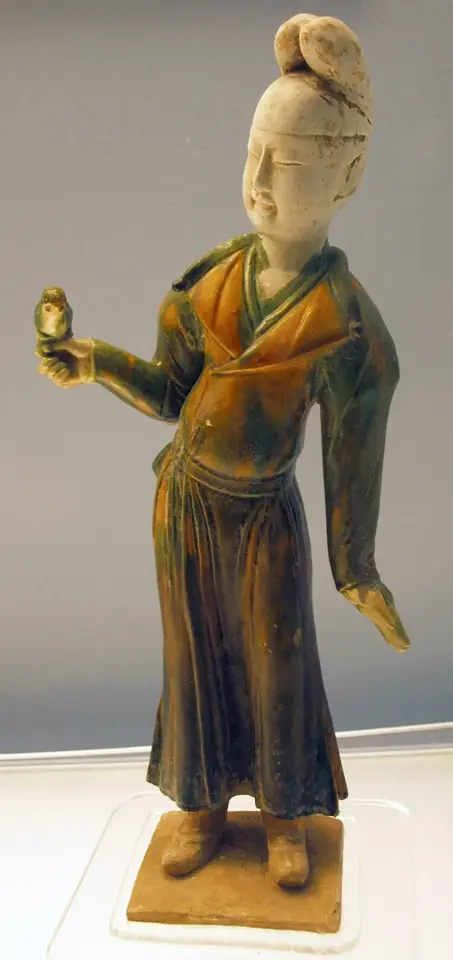
?–850 CE
张仲武
Zhang Zhongwu (张仲武, ?–849), a native of Fanyang (present-day southwest Beijing) with ancestral roots in Qinghe, was a renowned military commissioner and general of the middle-to-late Tang Dynasty. His family had served for generations in the Lulong Army of Youzhou. His distant ancestor Zhang Wei had served as Inspector of Yingzhou and was ennobled as the Baron of Qinghe during the Northern Wei Dynasty. His…
Zhang Zhongwu (张仲武, ?–849), a native of Fanyang (present-day southwest Beijing) with ancestral roots in Qinghe, was a renowned military commissioner and general of the middle-to-late Tang Dynasty. His family had served for generations in the Lulong Army of Youzhou. His distant ancestor Zhang Wei had served as Inspector of Yingzhou and was ennobled as the Baron of Qinghe during the Northern Wei Dynasty. His great-great-grandfather, great-grandfather, and grandfather all served as military officers in Youzhou, while his father Zhang Guangchao rose to Senior General of the Left Valiant Guard and Acting Minister of War, standing as an esteemed veteran commander of Lulong. In his youth, Zhang studied the Zuo Zhuan and Confucian literature before taking up arms to serve as commander of the Xiongwu Army in northern Ji. In the first year of Huichang (841), when mutinous officers Chen Xingtai and Zhang Jiang staged successive rebellions in Lulong, Zhang dispatched administrative assistant Wu Zhongshu to Chang'an to pledge loyalty. Prime Minister Li Deyu advocated his appointment, prompting Emperor Wuzong to commission Zhang as acting governor. Zhang marched on Youzhou, executed Zhang Jiang, and was formally appointed Military Commissioner of Youzhou Lulong. During his tenure defending the northern marches, Zhang achieved monumental military feats. In the second year of Huichang (842), he ordered his younger brother Zhang Zhongzhi to lead thirty thousand elite troops to crush the invading Uyghur army under General Na Jiezhuo, capturing over a thousand nomadic nobles and seven thousand tents. He allied with the Khitan and Xi peoples to execute more than eight hundred Uyghur monitors, shattering their plots against the border. In the first year of Dazhong (847), Zhang led expeditionary cavalry deep into the northern wilderness, burning two hundred thousand tents of the rebellious Mountain Xi and capturing immense livestock, bringing decades of tranquility to the northeastern frontier. Emperor Wuzong ordered Li Deyu to compose the Inscription Commemorating Holy Merits to be carved on stone in northern Ji, while Emperor Xuanzong elevated Zhang to chancellor rank as Joint Manager of Affairs and Acting Minister of Works. He died in office in 849, was posthumously honored as Grand Defender, and received the posthumous name Zhuang.
Officer Chen Xingtai assassinated military governor Shi Yuanzhong; Chen was subsequently killed by Zhang Jiang; Zhang Zhongwu mobilized at Xiongwu Fortress to suppress the rebellion.
Dispatched administrative assistant Wu Zhongshu to Chang'an to pledge allegiance; supported by Li Deyu, he was appointed acting governor of Lulong.
Marched into Youzhou and executed Zhang Jiang; officially appointed Military Commissioner of Youzhou Lulong and ennobled as Duke of Lanling Commandery.
Dispatched his brother Zhang Zhongzhi with thirty thousand troops to crush Na Jiezhuo, capturing over a thousand nomadic aristocrats and seven thousand tents.
Formed alliances with Khitan and Xi tribes to execute over eight hundred Uyghur overseers; detained secret envoys to thwart an assault on Wuyuan.
Appointed Acting Minister of War and Eastern Pacification Commissioner against the Uyghurs, coordinating imperial strategic planning.
General Shi Xiong crushed the main Uyghur horde at Shahu Mountain, causing thousands of wandering refugees to surrender to Zhang; promoted to Acting Right Servant.
Requested the erection of the Inscription Commemorating Holy Merits on the Lulong border; Emperor Wuzong ordered Li Deyu to compose the official text.
Following the enthronement of Emperor Xuanzong, elevated to Joint Manager of Affairs with the Secretariat-Chancellery to reward his pacification of the northern frontiers.
Led expeditionary forces deep into northern mountains, burning two hundred thousand rebel tents and sending captured chieftains and livestock to Chang'an.
Promoted to Acting Minister of Works and concurrent Director of the Secretariat; barbarian tribes submitted across the borders.
Died of illness at his headquarters in Youzhou; posthumously honored as Grand Defender with the posthumous name Zhuang; succeeded by his son Zhang Zhifang.
Zhang Zhongwu's ancestors originated from the prestigious Qinghe Zhang clan, later relocating to Fanyang where they settled for generations in the Yan-Zhao region. According to ancestral steles, his distant ancestor Zhang Wei served as Inspector of Yingzhou and was ennobled as Baron of Qinghe during the Northern Wei Dynasty. Following the establishment of the Lulong Military Commission in the mid-Tang, prominent families in Youzhou integrated civil learning with martial prowess.
Zhang's great-great-grandfather Zhang Zuoming served as Right Guoyi Commandant of Youzhou; his great-grandfather Zhang Yuanjiao served as Zhechong Commandant; his grandfather Zhang Renxian served as Deputy Mentor to the Crown Prince and was posthumously honored as Minister of Works; and his father Zhang Guangchao served as Senior General of the Left Valiant Guard and Acting Minister of War, standing as an incorruptible veteran general universally revered across Lulong.
In his youth, Zhang Zhongwu applied himself diligently to classical literature, mastering the Zuo Zhuan and excelling in historical exposition. He established early fame as an articulate scholar whose writings showed deep structural logic. However, observing the chronic border turbulence and repeated mutinies among regional garrisons, he realized that literary pursuits alone could not resolve military crises. He abandoned civil scholarship to join the garrison forces of Youzhou.
Demonstrating mastery over tactical formations and commanding with strict discipline, Zhang rose through the officer corps to become commander of the Xiongwu Army in northern Ji. Stationed at the strategic bottleneck of Jimen along the Great Wall, Xiongwu fortress anchored frontier defense against northern nomadic incursions. In this command, Zhang promoted agricultural reclamation, stockpiled grain supplies, fortified defensive walls, and instituted rigorous scouting patrols. Treating common soldiers with sincere care, he gained the absolute devotion of both regular soldiers and local archers, building formidable authority along the northern border.
In the autumn of the first year of Huichang (841), violent mutiny erupted within the Lulong command. Rebellious officer Chen Xingtai surprised Military Governor Shi Yuanzhong, assassinated him, and seized authority as acting governor, dispatching couriers to Chang'an to demand official commission. In the capital, Prime Minister Li Deyu understood the insubordinate habits of the northeastern garrisons, pointing out that if the throne rushed to confirm mutinous officers, it would merely validate violent usurpation. Li advised delaying confirmation, predicting that internal friction would soon destroy the rebels.
Within a month, rival officer Zhang Jiang assassinated Chen Xingtai to usurp power. Fearing the martial prestige of Zhang Zhongwu at Xiongwu fortress, Zhang Jiang initially invited him to take charge of the province, but quickly reneged once he consolidated local support, petitioning the throne for confirmation himself.
Outraged by Zhang Jiang's treacherous instability and fearing for the welfare of local civilians, Zhang Zhongwu assembled his forces at Xiongwu, issuing manifestos denouncing the usurper. To ensure legitimacy, he dispatched administrative assistant Wu Zhongshu to Chang'an to seek imperial approval. Emperor Wuzong granted Wu an audience in the Yanying Hall, directing prime ministers to question him thoroughly. Wu presented a cogent strategic analysis, explaining that Chen Xingtai and Zhang Jiang were rootless transients whose cruelty alienated the population, whereas Zhang Zhongwu was the son of esteemed veteran commander Zhang Guangchao, possessed deep Confucian erudition and long military experience, and was profoundly devoted to the imperial throne.
When Li Deyu questioned how Zhang could quell a major rebellion with only eight hundred garrison soldiers and five hundred militia, Wu replied that military victory depended upon winning the hearts of the troops, and that popular loyalty would disintegrate the rebellion overnight. Deeply impressed, Li urged Emperor Wuzong to refuse confirmation to mutinous usurpers and authorize Zhang's loyalist intervention. Wuzong designated Prince Li Hong as nominal governor and appointed Zhang Zhongwu as acting governor. Upon hearing of the decree, the garrison expelled Zhang Jiang. Zhang marched into Youzhou, executed Zhang Jiang, and pacified the army. In the eleventh month, Wuzong officially commissioned Zhang as Military Commissioner of Youzhou Lulong and ennobled him as Duke of Lanling Commandery.
During the early Huichang era, the northern steppes underwent violent upheaval. The Yenisei Kirghiz destroyed the Uyghur Khaganate, forcing Wujie Qaghan to lead hundreds of thousands of nomadic refugees southward toward the Tang frontier. When internal Uyghur factions assassinated rebellious ministers, general Na Jiezhuo gathered seven thousand tents, leading tens of thousands of horsemen across the border toward Yuyang and menacing Youzhou.
Facing this imminent peril, Zhang Zhongwu fortified frontier passes while ordering his younger brother Zhang Zhongzhi alongside commanders You Fenghuan and Wang Ruoqing to lead thirty thousand elite infantry and cavalry in an interception. Clashing in the wilderness outside Yuyang, the Lulong divisions charged with furious courage, completely routing the nomadic invaders. Tang troops killed thousands, captured over a thousand nomadic princes and aristocrats, and received the submission of thirty thousand followers alongside vast quantities of wagons, herds, and banners. The wounded Na Jiezhuo fled north and was executed by Wujie Qaghan, completely eliminating the threat to Youzhou.
Uyghur elites had traditionally maintained supervisory monitors among the Khitan and Xi tribes to extract tribute and gather frontier intelligence. Capitalizing on his victory, Zhang dispatched emissary Shi Gongxu to persuade both tribes of imperial benevolence. Moved by Tang prestige, the Khitan and Xi captured and executed over eight hundred Uyghur monitors and spies, severing Uyghur control over the northeast. Soon afterward, the Uyghurs plotted a surprise attack on Wuyuan, sending an embassy of forty-seven officers under General Xuanmen under the guise of peace. Having bribed an attendant to discover the plot, Zhang intentionally detained the embassy in luxury. Deprived of communication, the invading nomadic army froze and starved in the desert, completely collapsing their offensive.
In the eighth month of the second year of Huichang (842), Emperor Wuzong launched a three-pronged campaign against the Uyghurs, appointing Zhang as Eastern Pacification Commissioner overseeing frontier units and tribal auxiliaries. In the second month of the third year of Huichang (843), General Shi Xiong shattered the main Uyghur army at Shahu Mountain, causing tens of thousands of fleeing refugees to seek refuge under Zhang in Youzhou. The court promoted Zhang to Acting Right Servant. To commemorate these triumphs and inspire future generations, Zhang petitioned to erect a victory stele along the frontier. Emperor Wuzong approved the request and ordered Prime Minister Li Deyu to compose the Inscription Commemorating Holy Merits, which was carved on stone on the Lulong border as an enduring monument.
In the second month of the first year of Dazhong (847), Emperor Xuanzong ascended the throne. Honoring Zhang's monumental achievements in crushing the Uyghurs and securing the eastern borders, Xuanzong elevated him to Joint Manager of Affairs with the Secretariat-Chancellery, granting him the prestigious rank of regional chancellor. In the fifth month of that year, the Mountain Xi confederation launched sweeping raids against border fortresses. Zhang mobilized Lulong cavalry and drove deep into the hostile wilderness over a thousand li to strike the Mountain Xi heartland.
The Lulong forces routed the rebel host, captured their supreme chieftain, incinerated two hundred thousand encampment tents, slew over three hundred enemy officers, and captured over seventy thousand head of livestock alongside five hundred supply wagons, parading the spoils in Chang'an to universal celebration.
In the second year of Dazhong (848), the court promoted Zhang to Acting Minister of Works and concurrent Director of the Secretariat. Throughout his eight-year administration of Youzhou, Zhang defended the borders against nomadic incursions, comforted the civilian populace, repaired defensive fortifications, and reclaimed border wastelands, fostering rare tranquility across Hebei. Steppe tribes submitted tribute and dared not violate imperial borders.
In the fifth month of the third year of Dazhong (849), exhausted by decades of military campaigning, Zhang died of illness in his official residence. Deeply grieved, the imperial court suspended audiences in mourning, posthumously promoted him to Grand Defender, and awarded him the posthumous name Zhuang. The Lulong army revered his legacy, choosing his son Zhang Zhifang to succeed him, while local civilians erected shrines to honor his memory.
Zhang's secretarial assistant Li Jian composed an eloquent encomium celebrating his career, praising him for conquering thousands of barbarian tents, expanding imperial frontiers by a thousand li, and securing universal submission through martial courage and benevolent governance. Serving two emperors during an era when northeastern garrisons were notoriously defiant, Zhang Zhongwu maintained absolute loyalty to the throne, eradicated internal garrison mutinies, and defeated nomadic invasions, establishing decades of border security as an indispensable pillar of the Huichang and Dazhong restorations.
Zhang Zhongwu studied Confucian classics and the Zuo Zhuan from youth, applying deep historical wisdom to military governance. As commander of Xiongwu fortress, he enforced strict discipline, prohibited harassment of civilians, and promoted extensive agricultural reclamation north of Guizhou, stockpiling hundreds of thousands of bushels of grain and fortifying Great Wall beacon towers, transforming frontier garrisons into an elite, disciplined fighting force.
When violent mutinies erupted in Lulong in 841, Zhang leveraged his prestige as the scion of an esteemed military house, dispatching Wu Zhongshu to Chang'an to coordinate with Prime Minister Li Deyu. He swiftly quashed the usurpation of Zhang Jiang, ending prolonged internal factionalism and restoring imperial authority over Yan-Ji.
In 842, when Uyghur commander Na Jiezhuo menaced Yuyang with seven thousand tents, Zhang dispatched his brother Zhang Zhongzhi with thirty thousand troops to intercept the invaders, killing thousands, capturing over a thousand nomadic nobles, and receiving thirty thousand surrendered pastoralists, decisively defusing the northern crisis.
Employing sophisticated diplomacy, Zhang allied with Khitan and Xi chieftains to capture and execute over eight hundred Uyghur overseers and spies. He subsequently detained diplomatic envoys under General Xuanmen to unravel a planned surprise attack on Wuyuan, causing the invading host to collapse in the desert.
In 847, when the Mountain Xi launched widespread border incursions, Zhang personally commanded Lulong cavalry on a thousand-li expedition into the northern wilderness, capturing paramount chieftains, destroying two hundred thousand tents, and capturing seventy thousand livestock, stabilizing the northeastern corridor for decades.
Zhang petitioned the throne to erect the Inscription Commemorating Holy Merits along the frontier boundary of Lulong. Emperor Wuzong ordered Prime Minister Li Deyu to draft the inscription, establishing an enduring monument to Tang border defense.
Over his eight years governing Youzhou, Zhang balanced agricultural development, border fortification, and strict military organization, transforming a notoriously rebellious frontier garrison into a loyal imperial shield.
FIGURES ASSOCIATED WITH THIS DYNASTY