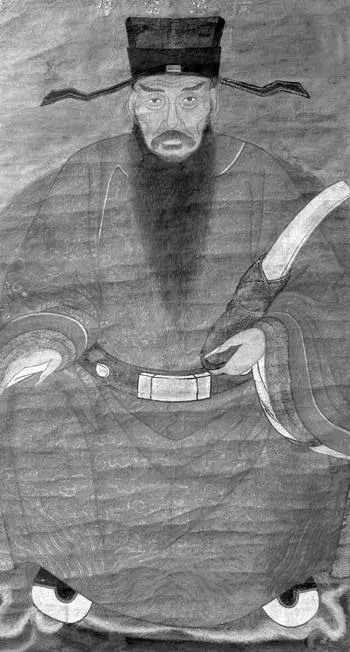
PROFILE
Zhang Cong (, 1475–1539), later bestowed the name Zhang Fujing with the courtesy name Maogong , was an eminent statesman, institutional reformer, and Senior Grand Secretary during the Jiajing reign of the Ming Dynasty.
Hailing from Yongjia, Zhejiang, Zhang Cong spent his early decades rigorously researching classical Confucian ritual texts, especially the Three Ritual Classics. After facing repeated setbacks in the imperial examinations, he obtained the jinshi degree in 1521 at the age of forty-seven. Upon the accession of Emperor Shizong (the Jiajing Emperor), the imperial court became embroiled in the fierce Great Rites Controversy. Championing the classical principle of distinguishing the line of imperial succession from ancestral lineage, Zhang firmly argued that Emperor Shizong succeeded to the throne via collateral imperial succession rather than direct adoption by Emperor Xiaozong. This doctrine preserved the natural bonds of filial piety toward the emperor's biological parents, earning Emperor Shizong's deep gratitude and trust.
Elevated to the Grand Secretariat, Zhang Cong spearheaded sweeping political and administrative reforms known as the Jiajing Reforms. In the socio-economic sphere, he aggressively investigated and reclaimed imperial estates and aristocratic manors across the capital region and outer provinces, curbing widespread land annexation and restoring independent peasant farming. In the administrative sphere, he decisively abolished the century-old system of eunuch regional commanders, dismantling the sprawling network of eunuch interference in provincial and border military commands. Furthermore, Zhang reformed the imperial civil service examination system, purged corrupt and incompetent officials, and promoted capable, incorruptible scholar-officials. His fearless leadership, integrity, and uncompromising dedication established political discipline during the early Jiajing era and shaped late Ming governance. He was posthumously honored with the title of Grand Preceptor and the posthumous title Wenzhong.
- Courtesy Name
- Bingyong (秉用), later bestowed Fuging (孚敬) with courtesy name Maogong (茂恭)
- Art Name
- Luofeng (罗峰)
- Posthumous Title
- Wenzhong (文忠)
- Dynasty
- Ming Dynasty
- Ancestral Home
- Yongjia County, Wenzhou Prefecture, Zhejiang Province
- Date of Birth
- November 30, 1475
- Date of Death
- March 23, 1539
- Age at Death
- 65
- Highest and Primary Official Posts
- Senior Grand Secretary of the Grand Secretariat, Grand Preceptor of the Crown Prince, Grand Secretary of the Hall of Magnificent Flowering (Huagai Dian), Minister of Rites, Minister of Personnel, Censor-in-Chief of the Censorate
- Historical Identity
- Prominent statesman, institutional reformer, and Senior Grand Secretary during the Jiajing reign of the Ming Dynasty
BIOGRAPHY
Chronology
- 1475 | Birth in Southern Zhejiang | Born in Huagai Township, Yongjia County, Wenzhou, devoting his early youth to classical scholarship and the Three Ritual Classics.
- 1521 | Metropolitan Degree and Ritual Memorial | Passed the palace examination as a second-class jinshi at age forty-seven; submitted his groundbreaking memorial arguing that succession to the throne did not require severing filial ties to biological parents.
- 1524 | Summons to Capital and Academician Appointment | Summoned by imperial order to the capital and promoted to Hanlin Academician, assisting Emperor Shizong in officially establishing ritual honors for his biological parents.
- 1527 | Leading the Censorate and Reform Guidelines | Promoted to Vice Minister of Rites and Director of the Compilation for the Minglun Dadian; appointed head of the Censorate and presented the rigorous Ninety-Five Censorate Regulations to rectify bureaucratic conduct.
- 1529 | Appointment as Senior Grand Secretary | Promoted to Grand Secretary of the Hall of Prudent Demeanor and Minister of Personnel, serving as Senior Grand Secretary to direct the comprehensive Jiajing Reforms.
- 1530 | Reclaiming Aristocratic Manors | Supervised the thorough inspection of over five hundred imperial and noble estates in the capital region, returning thousands of seized hectares to commoner proprietors.
- 1531 | Abolition of Eunuch Regional Commanders | Bestowed the imperial name Fujing; championed the total eradication of eunuch regional commanders across provinces and garrisons, eradicating internal palace meddling in provincial administration.
- 1532 | Political Upheaval and Recall | Resigned temporarily following intense factional slander and imperial suspicion; recalled to the Grand Secretariat the following year by imperial decree.
- 1535 | Final Retirement Due to Illness | Permitted to retire with full official stipends and honors after suffering severe illness and repeated fainting episodes on duty.
- 1539 | Death in Native Homeland | Passed away at his residence in Wenzhou at the age of sixty-five; deeply mourned by Emperor Shizong, who posthumously conferred the title Grand Preceptor and the posthumous name Wenzhong.
Biography
Classical Scholarship and Late Imperial Success
Zhang Cong was born on November 30, 1475, in Huagai Township, Yongjia County, Wenzhou Prefecture, Zhejiang Province. From his early youth, he displayed exceptional intellectual tenacity, devoting himself to classical Confucian studies. At the age of thirteen, he penned a poem on a white feather fan, expressing his aspirations to maintain spotless integrity and bring refreshing relief to the people of the empire. He mastered the profound nuances of ancient rituals recorded in the Rites of Zhou, the Etiquette and Ceremonial, and the Book of Rites.
Despite his scholarly brilliance, Zhang encountered severe obstacles in the imperial examination hierarchy. Although he earned his provincial degree (juren) in 1498, he traveled to the capital seven times over the next two decades, each time failing the metropolitan examination. Rather than succumbing to despair, Zhang lived among commoners in Wenzhou, establishing the Luofeng Academy in Yaoxi to lecture and train younger scholars. During this protracted period of rural teaching, he gained firsthand knowledge of agrarian distress, predatory land seizures, and fiscal corruptions, cultivating pragmatic governance concepts that later defined his national reforms.
In the second lunar month of 1520, the forty-six-year-old scholar ventured to Beijing for another examination attempt. In the third month of 1521, Emperor Wuzong died without leaving an heir. Following the dynastic instructions laid down by Ming founder Zhu Yuanzhang, the Grand Empress Dowager and Senior Grand Secretary Yang Tinghe issued an imperial edict selecting Wuzong's younger paternal cousin, the hereditary Prince of Xing Zhu Houcong, to ascend the throne as Emperor Shizong. In the fifth month of 1521, Zhang Cong passed the delayed palace examination, securing second place in the second rank. At forty-seven years of age, he was assigned to observe administrative affairs within the Ministry of Rites.
The Great Rites Controversy and Ideological Triumph
Shortly after Emperor Shizong ascended the throne, the court erupted into intense ideological warfare regarding imperial ancestor worship and filial legitimacy, known historically as the Great Rites Controversy. Senior Grand Secretary Yang Tinghe and Minister of Rites Mao Cheng, citing precedents from the Han and Song dynasties involving Emperor Ai of Han and Emperor Yingzong of Song, insisted that the young monarch must formally adopt his deceased uncle Emperor Xiaozong as his legal father and address his biological father, the late Prince of Xing, as "Imperial Uncle." The fourteen-year-old sovereign deemed this requirement an unnatural severance of sacred family bonds, adamantly refusing compliance and threatening abdication.
On July 1, 1521, while serving as a probationary observer in the Ministry of Rites, Zhang Cong boldly intervened by submitting a landmark memorial to the emperor. Zhang demonstrated that the Han and Song precedents were fundamentally inapplicable because both Emperor Ai and Emperor Yingzong had been brought into the inner palace and designated as imperial heirs during their adoptive predecessors' lifetimes. In contrast, Emperor Wuzong had ruled independently for sixteen years and died childless; Emperor Shizong inherited the throne pursuant to the dynastic rule of fraternal succession, inheriting the legitimate imperial lineage directly as a reigning sovereign. Zhang argued that no empire under heaven could demand that an emperor discard his real parents.
Emperor Shizong was profoundly moved by Zhang Cong's logical defense, declaring that this argument preserved the natural relationship between father and son. In November 1521, Zhang submitted an expanded treatise titled Inquiries on the Great Rites, whose cogent reasoning won the secret admiration of retired Grand Secretary Yang Yiqing. Angered by Zhang's opposition, Yang Tinghe used bureaucratic mechanisms to demote and banish him to the secondary capital as a Secretary in the Nanjing Ministry of Justice. Undeterred, Zhang allied with like-minded scholars such as Gui E and Huo Tao, continuing to submit memorials from Nanjing. In 1524, Emperor Shizong summoned Zhang Cong and Gui E back to Beijing via imperial postal relays, elevating them to Academicians of the Hanlin Academy. When conservative courtiers staged a massive protest at the Zuoshun Gate, Shizong severely punished the factional ringleaders and formally confirmed the ritual titles of his biological parents, solidifying Zhang Cong's position as the emperor's chief counselor.
Elevation to the Grand Secretariat and National Governance
In August 1527, Zhang Cong was elevated to Right Vice Minister of War and appointed Chief Director for the compilation of the Minglun Dadian, an authoritative treatise establishing the constitutional and ritual foundations of the Jiajing era. In the same month, he was assigned to oversee the Censorate, where he instituted ninety-five regulatory articles to purge disciplinary indolence among imperial inspectors. In 1528, he entered the Grand Secretariat as Minister of Rites and Grand Secretary of the Wenyuan Hall.
In the autumn of 1529, following the retirement of Yang Yiqing, Zhang Cong was promoted to Grand Secretary of the Hall of Prudent Demeanor and assumed the preeminent role of Senior Grand Secretary. Confronting decades of accumulated administrative decay dating from the Zhengde reign, Zhang embarked on an aggressive program of structural renewal. Understanding that rampant aristocratic land grabs lay at the root of agrarian insolvency, he mobilized the state bureaucracy to inspect imperial manors and noble estates. Concurrently, he dismantled the abusive regional eunuch command networks, curbed examination abuses, streamlined bureaucratic recruitment, and instituted strict evaluations for local magistrates.
Political Vicissitudes and Imperial Retirement
Zhang Cong possessed a stern, uncompromising character, harboring visceral contempt for bureaucratic venality and flatterers. His vigorous eradication of aristocratic privileges and refusal to grant private favors provoked intense hostility among powerful court factions, eunuchs, and imperial relatives. Over his seven years in the Grand Secretariat, Zhang was repeatedly targeted by censorial attacks and imperial suspicion, enduring four dismissals and subsequent reappointments. Yet, each time he was recalled, he resumed his duties with unyielding vigor.
In February 1531, because his personal name Cong sounded phonetically close to Emperor Shizong's personal name Houcong, Zhang petitioned to alter his name to honor the monarch. Appreciating his modesty, Emperor Shizong personally wrote and bestowed the new name Fujing with the courtesy name Maogong. In the same year, Vice Minister of Personnel Xu Jin was caught accepting bribes; Xu secretly dispatched a letter offering Zhang Cong a massive payoff in exchange for protection. Zhang immediately exposed the illicit correspondence in open court, causing Xu to be stripped of his civil status and dismissed into commoner ranks, sending shockwaves through the capital bureaucracy.
Years of relentlessly intense administrative burdens combined with ruthless factional warfare shattered Zhang Cong's health. In the spring of 1535, he suffered severe physical exhaustion and fell unconscious while on duty in the imperial offices. Although Emperor Shizong personally formulated medicinal remedies and dispatched imperial physicians to treat him, Zhang repeatedly submitted tearful petitions requesting retirement. Reluctantly acknowledging the severity of his illness, Shizong permitted him to retire with full stipends and imperial travel escort.
Final Years and Posthumous Honor
Returning to his ancestral home in Wenzhou, Zhang Cong lived with austere frugality, resembling an impoverished commoner scholar. He strictly instructed his lineage members never to abuse his high court status, forbidding them from intervening in local government affairs or extorting commoners. During his retirement, Zhang immersed himself in classical studies and poetry, and independently directed the comprehensive compilation of the Wenzhou Prefecture Gazetteer, preserving invaluable regional historical records.
On March 23, 1539, Zhang Cong passed away at his residence in Yaoxi at the age of sixty-five. Upon receiving the news, Emperor Shizong was overwhelmed with grief, canceling court audiences and dispatching imperial emissaries to oversee lavish sacrificial burials. Shizong posthumously bestowed upon him the supreme rank of Grand Preceptor and the revered posthumous name Wenzhong, honoring his enduring contributions to the Ming Dynasty.
Major Achievements
Reclaiming Aristocratic Manors and Suppressing Land Annexation
Beginning in the reign of Emperor Renzong, the imperial house established official imperial manors, which expanded exponentially during the Zhengde period. Imperial relatives, princes, aristocrats, and influential eunuchs abused their authority to seize fertile commoner fields, falsely classifying private property as official domain land. By 1514, imperial manors in the metropolitan capital region alone encompassed over 37,500 qing (approximately 250,000 hectares). Powerful families routinely appropriated ancestral lands, leaving original peasant owners liable for unpaid tax obligations on lost land. This unchecked annexation precipitated catastrophic rural destitution, creating over six million landless vagrants across the empire and fueling widespread peasant uprisings.
Upon assuming the leadership of the Grand Secretariat, Zhang Cong designated the containment of land grabs and the stabilization of peasant households as the foremost priority of the Jiajing Reforms. Overcoming fierce resistance from conservative nobles and palace eunuchs who had stalled earlier imperial initiatives, Zhang expanded the land clearance campaign from the capital region to all provinces, targeting aristocratic estates as well as sprawling Buddhist and Daoist properties.
By 1530, under Zhang Cong's direct supervision, imperial commissions investigated 528 noble manors and imperial estates across the capital region, totaling over 57,400 qing of land. More than 26,000 qing of illicitly annexed fields were reclaimed and returned directly to their rightful commoner owners. Furthermore, Zhang withdrew the predatory military overseers stationed on noble manors, issuing strict statutes decreeing that anyone attempting to annex commoner lands or accept private dedications would be permanently exiled into border military service, with aristocratic culprits subjected to criminal prosecution. This decisive intervention curbed systemic agrarian abuses, relieved peasant suffering, and stabilized Ming tax revenues.
Total Abolition of Eunuch Regional Commanders
Since the reigns of Emperor Xuande and Emperor Zhengtong, the Ming central court had routinely dispatched eunuch regional commanders to provincial capitals and strategic military garrisons. Endowed with imperial mandate, these eunuchs exercised supreme authority over provincial civil administrators and military generals, amassing extensive control over fiscal, administrative, and judicial affairs. Under the pretext of presenting annual tributes to the throne, they extortionately extracted enormous wealth, executed arbitrary punishments, and formed an oppressive nationwide network of palace corruption.
Emperor Shizong recognized the malevolence of the system but hesitated to dismantle it due to internal palace opposition and financial dependence on eunuch tributes. Zhang Cong repeatedly submitted secret memorials and urged the emperor in private audiences to eradicate the system, arguing that eunuch dominance eroded imperial authority and devastated regional security. To prevent palace eunuchs from mobilizing counter-measures, Zhang adopted a quiet, incremental strategy of dismantling provincial postings from interior provinces to the frontier.
In the intercalary sixth month of 1531, Zhang launched a decisive campaign, abolishing eunuch commanders across Zhejiang, Guangdong, Guangxi, and Fujian on grounds of rampant extortion and administrative sabotage. He systematically extended this abolition to Shaanxi, Sichuan, and ultimately all northern border garrisons. Zhang Cong's decisive reform entirely eradicated the eunuch regional command system, restoring legitimate bureaucratic authority to provincial governors and military commanders. Consequently, the early Jiajing reign became the only period in Ming history completely untainted by eunuch tyranny, earning praise from generations of historians.
Rectification of the Censorate and Bureaucratic Discipline
Zhang Cong was noted for his incorruptible demeanor and abhorrence of bureaucratic laziness and bribery. While presiding over the Censorate in 1527, he presented ninety-five comprehensive regulatory articles to Emperor Shizong, selecting the seven most urgent items for immediate nationwide execution to enforce investigative discipline.
In official personnel appointments, Zhang discarded rigid seniority criteria, advocating merit-based promotions for officials who demonstrated integrity, administrative competence, and genuine concern for common welfare. When the Governor of North Zhili petitioned that all magistrate positions be reserved exclusively for metropolitan and provincial degree holders, Zhang vigorously objected, asserting that talent and clean governance took precedence over formal academic degrees.
Throughout his ten years in power, Zhang maintained absolute personal honesty, refusing all private solicitations from powerful relatives and palace eunuchs. He did not introduce a single palace eunuch into governance, entertained no secret private visits, and refused to solicit unearned hereditary privileges for his relatives. When Vice Minister Xu Jin attempted to bribe him to evade criminal investigation in 1531, Zhang immediately submitted the incriminating letter to judicial authorities, cashiering Xu from officialdom and establishing an atmosphere of administrative probity across the capital.
Reforming the Civil Service Examinations and Talent Cultivation
By the mid-Ming dynasty, the imperial civil service examinations had devolved into rigid, pedantic literary exercises disconnected from practical governance. To rectify this decline, Zhang Cong restructured examination standards, emphasizing administrative realism and statecraft while curtailing academic fraud. He eliminated redundant student quotas and overhauled the appointment of provincial education intendants.
Despite early criticism from conservative literati, Zhang's educational reforms substantially elevated academic integrity and practical competence across the empire. Four decades later, Grand Secretary Zhang Juzheng reflected on the scholarly atmosphere of his youth during the early Jiajing reign, praising the education officials selected under Zhang Cong's system for their upright character, moral dignity, and refusal to accommodate private influence. The cohort of pragmatic, upright officials fostered under Zhang Cong later formed the bureaucratic backbone that executed the great administrative reforms of the Longqing and Wanli eras.
Compilation of Regional Gazetteers and Scholarly Works
In addition to his political legacy, Zhang Cong was a formidable Confucian classicist and prolific author. Throughout his life, he authored extensive classical treatises, including eight volumes of Commentary on the Book of Rites, twelve volumes of Annotated Commentary on the Rites of Zhou, five volumes of Commentary on the Etiquette and Ceremonial, and six volumes of Explication of Du Fu's Regulated Verse.
In 1537, having retired to his hometown in advanced age, Zhang independently undertook the ambitious task of compiling the Wenzhou Prefecture Gazetteer to replace outdated, fragmented local records. Applying rigorous historiographical standards, he systematically cataloged the geography, water conservancy, demographic records, taxation systems, local government offices, and literary heritage of southern Zhejiang. His gazetteer remains a celebrated milestone of Ming local historiography and an indispensable source for the study of late imperial socio-economic history.
Personal Relationships
- Monarch and Subject: Emperor Shizong (, the Jiajing Emperor). Formed a close political bond through the Great Rites Controversy by advocating collateral succession without ancestral severance; trusted deeply to lead the Jiajing Reforms despite occasional friction caused by imperial capriciousness.
- Political Rival: Yang Tinghe. Senior Grand Secretary during the late Zhengde and early Jiajing periods; staunchly insisted that Emperor Shizong adopt Emperor Xiaozong, vigorously attempting to suppress Zhang Cong.
- Political Rival: Yang Shen. Son of Yang Tinghe and Senior Compiler in the Hanlin Academy; led hundreds of officials in the Zuoshun Gate protest against the ritual honors advocated by Zhang Cong, remaining a lifelong adversary.
- Political Ally: Gui E. Fellow metropolitan graduate who stood alongside Zhang Cong during the Great Rites Controversy and actively co-directed the Jiajing Reforms, later entering the Grand Secretariat.
- Colleague: Yang Yiqing. Senior statesman and Grand Secretary who praised Zhang Cong's treatise Inquiries on the Great Rites; collaborated with Zhang in governing the empire before developing late-career policy differences.
- Colleague: Huo Tao. Influential statesman who staunchly supported Zhang Cong's ritual scholarship, later rising to Minister of Rites.
Historical Evaluation
- Ming Shizong Shilu: "Throughout the entire Jiajing reign, when evaluating statesmanship and ministerial achievements, none surpassed Fujing."
- Ming Shi: "Fujing was resolute, bright, and decisive, never shrinking from suspicion or resentment. Although his self-reliance and impatience limited his magnanimity toward political opponents, his personal integrity was incorruptible, and he never catered to the powerful, earning universal admiration from his contemporaries."
- Yang Yiqing: "The arguments articulated by Zhang Bingyong are so true that even if the ancient sages were reborn, they would not alter a single word."
- Zhang Juzheng: "In our youth, we witnessed that education intendants were celebrated luminaries of the realm, capable of carrying themselves with dignity and moral duty, refusing to bend to favoritism, while none dared to solicit private advantages. The scholarly customs and Confucian demeanor of that time approached the purity of antiquity."
- He Liangjun: "In taking the courageous responsibility to eradicate the regional eunuch commanders, Zhang Luofeng displayed a boldness unmatched even by those ministers who enjoyed the most exclusive imperial favor."
Related Entries
- Great Rites Controversy
- Jiajing Reforms
- Emperor Shizong of Ming
- Yang Tinghe
- Gui E
- Eunuch Regional Commanders