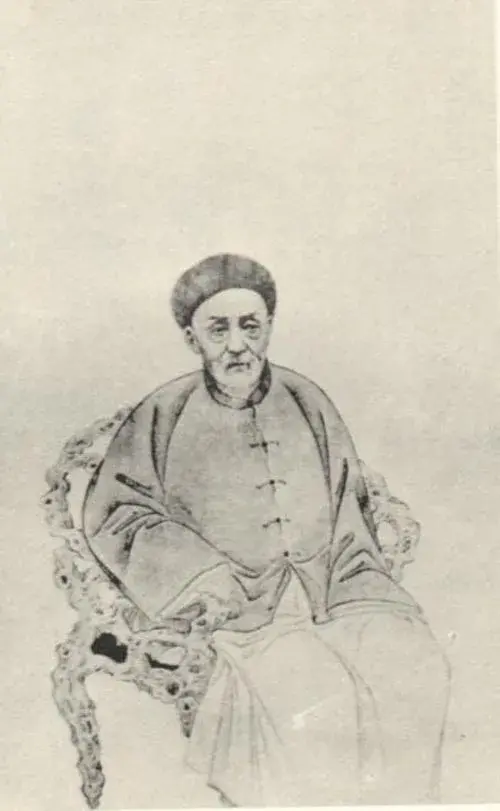
PROFILE
Yu Yue (俞樾, December 25, 1821 – February 5, 1907), courtesy name Yinfu and pseudonym Quyuan, known among contemporaries as Master Quyuan, was a native of Deqing County in Huzhou Prefecture, Zhejiang Province (modern Qianyuan Town, Deqing, Huzhou). He was an eminent late Qing classicist, philologist, man of letters, calligrapher, and educator. In 1850, he achieved the Jinshi degree, winning high praise from chief examiner Zeng Guofan. He entered the Hanlin Academy as a Bachelor and was appointed Compiler. In 1855, he was appointed Provincial Education Intendant of Henan, but was subsequently dismissed in 1857 following a censor's accusation that his examination topics had distorted classical scripture, after which he renounced public office permanently.
Following his dismissal, Yu relocated to Suzhou, where he built his celebrated retreat, Quyuan Garden, dedicating himself to research and teaching. At the invitation of regional governors, he directed the premier Zhejiang classical academy, Gujing Jingshe in Hangzhou, for thirty-one years. Training scholars through rigorous evidential methodology, he nurtured outstanding luminaries including Zhang Taiyan, Wu Changshuo, Sun Yirang, and prominent Japanese scholar Inoue Tetsujiro, becoming revered as the foremost classical master of late Qing southeastern China.
In scholarship, Yu synthesized Han and Song methodologies, specializing in phonology, paleography, and semantic exegesis. He authored the monumental thirty-five-fascicle Qunjing Pingyi and the thirty-five-fascicle Zhuzi Pingyi, which culminated the Qianjia evidential tradition. He also pioneered Chinese grammatical and rhetorical analysis in his seven-fascicle Gushu Yiyi Juli. Over his lifetime, he authored over five hundred fascicles, compiled in his later years as Chunzaitang Quanshu. Yu passed away at Quyuan in Suzhou in 1907 at the age of eighty-six.
- Courtesy Name
- Yinfu (荫甫)
- Pseudonym
- Quyuan (曲园, self-styled Quyuan Jushi 曲园居士)
- Dynasty
- Qing
- Ancestral Home
- Deqing County, Huzhou Prefecture, Zhejiang (modern Deqing, Huzhou, Zhejiang)
- Birth Date
- December 25, 1821 (2nd day of the 12th lunar month, 1st year of the Daoguang reign, Qing)
- Death Date
- February 5, 1907 (23rd day of the 12th lunar month, 32nd year of the Guangxu reign, Qing)
- Age at Death
- 86
- Highest Office
- Provincial Education Intendant of Henan, Compiler in the Hanlin Academy
- Historical Identity
- Classicist, philologist, scholar, educator
BIOGRAPHY
Chronology
- 1821 (1st year of the Daoguang reign) | Birth in Deqing | Born on December 25 in Nandai Village, Deqing County, Zhejiang, studying diligently from childhood.
- 1844 (24th year of the Daoguang reign) | Juren Degree | Passed the Zhejiang provincial examination, gaining literary reputation in Jiangsu and Zhejiang.
- 1850 (30th year of the Daoguang reign) | Jinshi Degree | Passed the palace examination in the second class, praised by Zeng Guofan and appointed Hanlin Compiler.
- 1855 (5th year of the Xianfeng reign) | Education Intendant of Henan | Appointed Provincial Education Intendant of Henan, inspecting prefectural schools and eradicating fraud.
- 1857 (7th year of the Xianfeng reign) | Dismissal from Office | Impeached by a censor for examination questions alleged to dissect classical canons; stripped of office.
- 1867 (6th year of the Tongzhi reign) | Constructing Quyuan | Purchased land in Mayike Lane in Suzhou to construct Quyuan Garden, adopting the title Quyuan Jushi.
- 1868 (7th year of the Tongzhi reign) | Directing Gujing Jingshe | Assumed directorship of Gujing Jingshe in Hangzhou, leading the academy for thirty-one years.
- 1899 (25th year of the Guangxu reign) | Retirement to Suzhou | Retired from teaching at age seventy-nine, settling at Quyuan to collate and publish Chunzaitang Quanshu.
- 1907 (32nd year of the Guangxu reign) | Demise at Quyuan | Passed away at Quyuan on February 5 at age eighty-six; interred near West Lake in Hangzhou.
Life and Career
Impoverished Youth and Examination Success
Yu Yue was born on December 25, 1821, in Nandai Village outside Deqing, Zhejiang. Although his father, Yu Hongjian, had passed the provincial examinations, his modest stipends and unbending principles left the household in poverty. When Yu was four years old, his mother, Lady Yao, moved with Yu and his elder brother to Linping in Hangzhou to seek qualified tutors. Living in frugal conditions supported by his mother's continuous weaving, Yu pursued classical texts, transcribing ancient scriptures under dim oil lamps. In 1834, at fourteen, he passed the local examinations to become a government licentiate.
In 1844, at twenty-four, Yu achieved the Juren degree in the Zhejiang provincial examination. To support his family, he taught in regional academies across Baoding and neighboring prefectures, reading rare volumes in gentry libraries. In 1850, at thirty, he competed in the metropolitan examination in Beijing, earning his Jinshi degree in the second class. During the Hanlin palace examination, chief examiner Zeng Guofan assigned the poetic theme "The fallen flowers on the water surface are all literature." While other candidates composed mechanical parallel verses, Yu opened with two evocative lines: "Though blossoms fall, spring yet abides; when heaven's grace triumphs, the river flows on." Highly impressed by this philosophical vitality, Zeng placed Yu at the top of the class, selecting him as a Hanlin Bachelor. In 1852, Yu completed his term and was appointed Compiler.
Education Intendant of Henan and Imperial Censure
In 1855, at thirty-five, Yu was appointed Provincial Education Intendant of Henan. Responsible for civil examinations and regional schools, Yu traveled lightly across Kaifeng, Luoyang, Guide, and Nanyang. He personally supervised examination registration to eliminate proxy examinees, punished corrupt degree brokers, and abolished customary travel levies imposed on candidates, winning wide acclaim from Henan scholars.
However, factional rivalry in the capital frequently utilized literary accusations to attack principled officials. In 1857, Censor Cao Dengyong compiled examination questions Yu had assigned, including quotations from the Zuo Zhuan and Mencius, accusing him of deliberately dissecting sacred texts to satirize the imperial court. Cao also claimed Yu had disrupted established customs by abolishing traditional fees. The Xianfeng Emperor issued an edict dismissing Yu from office and barring him from public service permanently. Facing the abrupt collapse of his political career, Yu remained composed, viewing his dismissal as an opportunity to dedicate his life to scholarship.
Constructing Quyuan Garden in Suzhou
Following his dismissal, Yu supported his household through calligraphy and publishing in Zhenjiang and Shanghai. In 1867, with financial assistance from fellow disciples Li Hongzhang and Pan Zuyin, Yu purchased abandoned land in Mayike Lane in Suzhou. Drawing upon Laozi's aphorism that "what is bent becomes whole," he named the estate Quyuan Garden, adopting the title Quyuan Jushi. He named his main studio Chunzaitang (Spring Abides Studio) to commemorate Zeng Guofan's early patronage.
Within Quyuan, Yu arranged waterways, rockeries, and quiet pavilions, establishing an orderly daily regimen. Rising at dawn, he worked in Chunzaitang throughout the day, writing and collating texts. While visitors continuously sought his calligraphy and advice, he declined official social gatherings, dedicating his uninterrupted hours to compiling masterpieces including Qunjing Pingyi, Zhuzi Pingyi, and Gushu Yiyi Juli.
Directing the Gujing Jingshe Academy for Three Decades
In 1868, Zhejiang Governor Ma Xinyi and regional officials invited Yu to serve as director of Gujing Jingshe in Hangzhou. Founded by Ruan Yuan in 1801 on the southern slopes of Gushan by West Lake, the academy had long served as southeastern China's premier center of Han evidential learning. Yu accepted the invitation, inaugurating an extraordinary thirty-one-year directorship from 1868 to 1899.
Throughout his tenure, Yu upheld rigorous evidential standards. Traveling to Hangzhou each spring and returning to Suzhou in autumn, he personally designed bimonthly examination topics requiring students to analyze paleography, phonology, and Han commentaries while rejecting formulaic examination rhetoric. He reviewed thousands of student essays by candlelight, publishing outstanding submissions in the academy's journal.
Under Yu's guidance, Gujing Jingshe became a celebrated cradle of late Qing intellectual talent. Luminaries such as Zhang Taiyan, Wu Changshuo, Sun Yirang, Lin Shu, and Cui Shi emerged from his academy. Japanese scholars of the Meiji period, including Inoue Tetsujiro and Shimada Kan, journeyed to Hangzhou and Suzhou to study under him, revering him as the "Master of Jiangnan." In 1899, nearing eighty, Yu retired to Quyuan. On February 5, 1907, he passed away peacefully at Chunzaitang at the age of eighty-six, interred on Santai Mountain near West Lake.
Major Achievements
Compiling Qunjing Pingyi: A Monument of Classical Exegesis
Yu Yue is celebrated as the final monumental figure of the Qianjia evidential tradition. Over decades of research, he addressed obscure passages and accumulated errors in classical commentaries, producing the thirty-five-fascicle masterwork Qunjing Pingyi. The work covered thirteen foundational Classics, including the Yijing, Shujing, Shijing, the three ritual canons, the three Spring and Autumn commentaries, the Analects, Xiaojing, Mencius, and Erya.
Employing paleographical analysis, archaic phonology, ancient syntax, and institutional history, Yu corrected widespread misinterpretations in traditional commentaries. Adhering to empirical objectivity, he followed neither Han commentators nor Song Neo-Confucians blindly, verifying variant readings against pre-Qin bronze inscriptions and early transmitted manuscripts. He systematically identified transcription errors, phonetic loans, and interpolations, creating a critical textual compendium praised as the most comprehensive classical collation since Ruan Yuan's Shisanjing Jiaokanyi.
Expanding Evidential Research in Zhuzi Pingyi
Following Qunjing Pingyi, Yu extended evidential methodology from Confucian canons to the pre-Qin and early Han philosophical masters, authoring the thirty-five-fascicle Zhuzi Pingyi. The work systematically collated over twenty non-canonical philosophical texts, including Laozi, Zhuangzi, Liezi, Mozi, Xunzi, Guanzi, Han Feizi, and Huainanzi.
Challenging the conventional bias that dismissed non-Confucian thinkers, Yu treated pre-Qin philosophical texts with the same rigorous philological care as classical scriptures. Utilizing archaic phonetic loan patterns and pre-Qin script conventions, he rectified over one thousand corrupted characters, missing clauses, and misplaced bamboo slips. His critical notes on Zhuangzi, Mozi, and Xunzi were particularly groundbreaking, elucidating Mohist logic and resolving textual corruptions in Yang Liang's commentary on Xunzi, facilitating the late nineteenth-century revival of non-Confucian philosophical studies.
Establishing Philological Syntax in Gushu Yiyi Juli
Yu's most original contribution to Chinese historical linguistics and textual criticism was Gushu Yiyi Juli (Illustrations of Syntactical and Textual Doubts in Ancient Books) in seven fascicles, published in 1870. For centuries, traditional scholars unfamiliar with archaic grammar, syntax, and rhetoric had erroneously altered ancient texts based on contemporary linguistic conventions.
Through comprehensive inductive analysis, Yu systematically classified eighty-eight distinct linguistic and rhetorical anomalies common in pre-Qin and Han texts. These included parallel mutual references, inverted syntax, repeated phrasing, merged characters, and confusing auxiliary particles with substantive nouns. Providing concrete textual examples for each category, Yu demonstrated that ancient Chinese prose followed dynamic stylistic conventions rather than rigid later grammatical rules. The work became the first systematic treatise on ancient Chinese textual grammar and rhetoric, serving as an indispensable guide for textual collators.
Compiling Chunzaitang Quanshu and Revising Popular Fiction
Yu was also a prolific author of miscellanies, poetry, and popular narrative literature. In his later years, he gathered his life's writings into Chunzaitang Quanshu, comprising twenty-two distinct works across more than five hundred fascicles, including notebooks such as Chaxiangshi Congchao and Quyuan Zazuan, literary collections, and medical commentaries.
In vernacular literature, Yu demonstrated an open-minded approach rare among traditional classicists. Observing that the popular chivalric novel Sanxia Wuyi was vividly told but featured an awkward opening chapter, Yu personally edited and polished the text, republishing it in 120 chapters as Qixia Wuyi (Seven Heroes and Five Gallants). In his preface, he praised the novel's capacity to encourage social justice and moral rectitude, elevating popular storytelling into refined literature and influencing the modern Chinese novel.
Personal Relationships
- Patron and Examiner: Zeng Guofan, Grand Secretary and military commander; chief examiner of the 1850 examination who selected Yu and remained his lifelong mentor.
- Fellow Disciple and Benefactor: Li Hongzhang, Governor-General of Zhili; fellow disciple under Zeng Guofan who provided financial aid to construct Quyuan Garden.
- Official Colleague: Pan Zuyin, Minister of Works and prominent epigrapher in Suzhou; close scholarly friend who examined bronzes and steles with Yu.
- Distinguished Disciple: Zhang Taiyan, renowned scholar, revolutionary, and philosopher; studied at Gujing Jingshe for eight years under Yu's direct tutelage.
- Distinguished Disciple: Wu Changshuo, master painter, calligrapher, and seal carver; studied classical scholarship at Quyuan under Yu.
- Distinguished Disciple: Sun Yirang, eminent classicist and paleographer; studied at Gujing Jingshe, mastering textual criticism under Yu's guidance.
- Japanese Disciple: Inoue Tetsujiro, professor at Tokyo Imperial University and philosopher; visited Yu in China, honoring him as an East Asian Confucian master.
- Great-Grandson: Yu Pingbo, prominent modern scholar, writer, and Dream of the Red Chamber specialist, who carried forward the family tradition.
Historical Evaluations
- Zeng Guofan, Complete Works of Zeng Guofan: "Yu Yinfu of Deqing possesses peerless literary vigour and exceptionally pure classical learning; the works written in his Chunzaitang have rendered immense service to sacred scriptures and commentaries."
- Zhang Taiyan, Record of Gujing Jingshe: "Master Deqing directed the academy for thirty years, guiding scholars with authentic Han evidential learning; scholars throughout Jiangdong considered it the highest honor to study at his gate."
- Liang Qichao, An Introduction to the Intellectual History of the Qing Dynasty: "Yu Yinfu's compilation of Qunjing Pingyi and Zhuzi Pingyi represents the grand finale of Qing evidential scholarship; majestic in scope and rigorous in judgment, he was truly an intellectual giant of an era."
- Wang Guowei, Guantang Jilin: "The master examined the Classics through philology with boundless depth; his Gushu Yiyi Juli dispelled countless obscurities for generations of literary and historical researchers."
Related Entries
- Zeng Guofan
- Zhang Taiyan
- Wu Changshuo
- Gujing Jingshe
- Qunjing Pingyi
- Zhuzi Pingyi
- Gushu Yiyi Juli