Birth in Wuxian
Born into a prominent official family in Suzhou; displayed early memory and scholarly talent under family instruction.
叶梦得
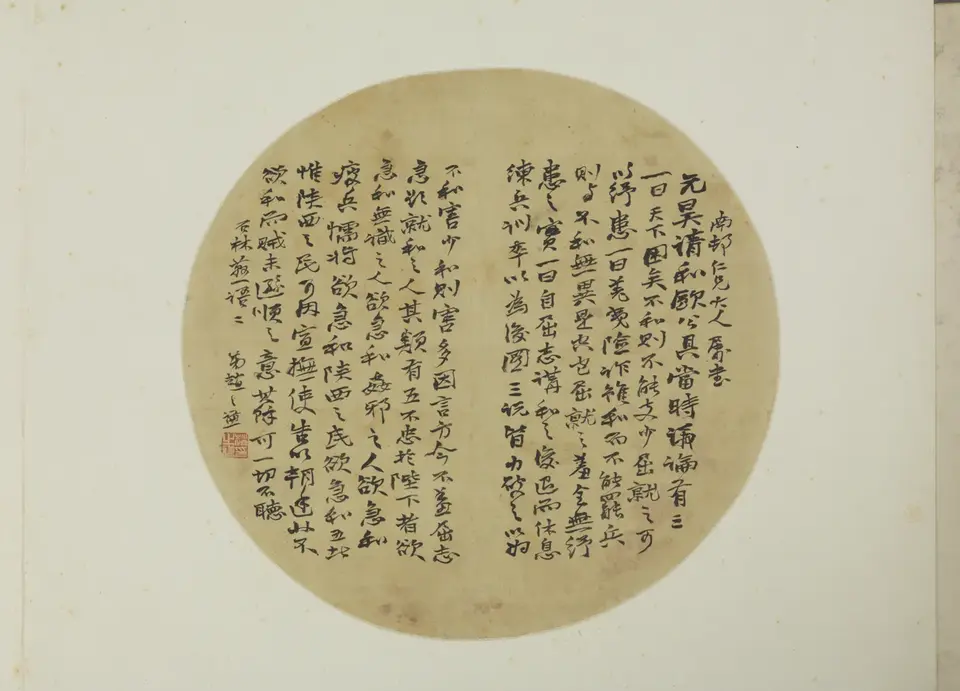
Ye Mengde (叶梦得, 1077–1148) was an influential statesman, grand councilor, man of letters, and scholar spanning the late Northern and early Southern Song dynasties, courtesy name Shaoyun, art name Recluse of Shilin (Shilin Jushi), ancestral home in Songyang, Chuzhou, later residing in Wuxian, Suzhou. Born into an elite lineage, his mother was the sister of celebrated scholar Chao Buzhi. Ye passed the metropolitan…
Ye Mengde (叶梦得, 1077–1148) was an influential statesman, grand councilor, man of letters, and scholar spanning the late Northern and early Southern Song dynasties, courtesy name Shaoyun, art name Recluse of Shilin (Shilin Jushi), ancestral home in Songyang, Chuzhou, later residing in Wuxian, Suzhou. Born into an elite lineage, his mother was the sister of celebrated scholar Chao Buzhi. Ye passed the metropolitan examinations in 1097, serving in the central government under Emperor Huizong as Drafter of Edicts, Hanlin Academician, Minister of Revenue, and Left Vice Grand Councilor (Shangshu Zuo Cheng). Following the Jingkang incident and the loss of northern China, Ye assisted Emperor Gaozong in establishing the Southern Song, serving as Pacification Commissioner of Jiangdong and Prefect of Jiankang, where he organized river defenses and naval forces. In later years, he opposed peace negotiations led by Qin Hui, retiring to the Shilin Valley in Huzhou. Ye produced scholarly works across history, institutions, and literature, including Shilin Ci, Shilin Yanyu, Bishu Luhua, and Shilin Shihua.
Born into a prominent official family in Suzhou; displayed early memory and scholarly talent under family instruction.
Earned his jinshi degree at twenty-one; appointed Magistrate of Dantu, earning administrative praise.
Promoted to Hanlin Academician, Minister of Revenue, and Left Vice Grand Councilor.
Appointed Pacification Commissioner of Jiangdong and Prefect of Jiankang, securing southern defenses.
Resigned from public service over opposition to Qin Hui's peace policy; retired to Lake Tai's Shilin Valley.
Passed away at his Shilin estate at seventy-two; posthumously honored by the court with senior ranks.
Ye Mengde was an ancestral native of Songyang in Chuzhou, a fifth-generation descendant of Northern Song Vice Minister of Justice Ye Kui, his family having relocated to Wuxian in Suzhou. His family included eminent imperial ministers such as Ye Qingchen and Ye Can, while his father Ye Zhu served as vice prefect in multiple regions. His mother, Lady Chao, was the sister of Chao Buzhi, one of the celebrated Four Scholars of the Su Gate.
Instructed in childhood by his mother Lady Chao and mentored by his uncle Chao Buzhi, Ye displayed precocious intellectual brilliance, reading voraciously in classical histories and dynastic regulations. In 1097, at the youthful age of twenty-one, Ye passed the metropolitan examinations with high honors, receiving his first appointment as Sheriff of Dantu in Runzhou, where he earned administrative praise for diligent policing and civil order.
During the reign of Emperor Huizong, Ye advanced rapidly through the central bureaucracy owing to his vast erudition and elegant official drafting. During the Daguan and Zhenghe eras, he served successively as Proofreader in the Palace Library, Diary Drafter, and Drafter of Imperial Edicts, frequently summoned to draft ceremonial liturgies and lecture on the Classics.
Subsequently, Ye was promoted to Minister of Revenue managing imperial finances, and was elevated to Left Vice Grand Councilor (Shangshu Zuo Cheng), entering the supreme ranks of the State Council. In central office, he proposed fiscal rationalization and transport reforms. However, disapproving of Grand Councilor Cai Jing's factional purges, Ye repeatedly requested provincial assignments, governing key regions including Hangzhou, Yingchang, and Fuzhou with benevolent popularity.
In 1126, Jurchen forces captured the Northern Song capital of Kaifeng, carrying the imperial court into captivity. Located in the south during the crisis, Ye joined Prince Kang (later Emperor Gaozong), supporting the establishment of the Southern Song administration.
With northern troops advancing toward the Yangtze, Gaozong appointed Ye Pacification Commissioner of Jiangdong and Prefect of Jiankang (modern Nanjing). Arriving at a neglected garrison, Ye directed the repair of city walls, established coastal and river beacon stations, recruited local volunteers, and organized a naval patrol fleet of over a thousand vessels. His defensive preparations deterred crossing attempts by Jurchen forces, helping stabilize the regional borderlands during the early Jianyan period.
During the early Shaoxing era, debate intensified between officials favoring continued military operations and those supporting peace agreements. While generals like Yue Fei and Han Shizhong won victories in the field, Chancellor Qin Hui pursued diplomatic terms involving territorial concessions. At court, Ye spoke against unilateral concessions, urging sustained river defense.
Recognizing Qin Hui's dominance over policy, Ye submitted his resignation, retiring to his estate in the Shilin Valley near Huzhou. There, he gathered an extensive private library, devoting his time to writing, textual collations, and tea culture. He passed away at Shilin in 1148 at the age of seventy-two, mourned as an experienced senior statesman.
Ye was a pivotal figure in the development of the heroic (haofang) lyric tradition during the dynastic transition, standing as the foremost heir to Su Shi's lyrical mantle and an essential harbinger of Xin Qiji's Southern Song patriotic school. Prior to 1127, his lyrics reflected the delicate romanticism of the capital; following the catastrophic Jingkang Incident and his flight south, Ye infused his poetry with profound historical grief, martial resolve, and patriotic fervor.
His masterpiece Basheng Ganzhou (Composed on Eight Public Mountain at Shouyang Tower) stands as an enduring monument of heroic verse. Gazing out over the ancient battlefield of the Fei River toward lost northern territories, he poured forth soaring indignation and cosmic resolve. In works like Niannujiao, rhyming to Su Shi's Red Cliff ode, and Shuitiao Getou, his verse possessed expansive grandeur, thoroughly sweeping away the effeminate sentimentality of late Song poetry.
In retirement at the Shilin Valley, Ye produced monumental scholarly works of enduring historical and institutional significance. His ten-volume Shilin Yanyu provides an authoritative chronicle of central political institutions, court rituals, bureaucratic evolutions, and scholar-official anecdotes from the founding of the Northern Song through the Huizong reign. Based upon imperial gazettes, veritable records, and direct administrative experience, its rigorous documentation serves as an indispensable source for the History of Song.
Beyond Shilin Yanyu, Ye authored Bishu Luhua in two volumes, Shilin Shihua on poetic criticism, Yanxia Fangyan, Shilin Zouyi, and Jiankang Ji. The compilers of the Siku Quanshu lauded his scholarship, affirming that among all Song anecdotal treatises, the writings of Master Shilin reign supreme.
During his tenure in Jiankang as Pacification Commissioner of Jiangdong in the early Jianyan era, Ye demonstrated exceptional strategic acumen. Facing roving bands of disorganized troops and Jurchen raiding parties, he implemented a strategy combining active pacification, local militia organization, and fortified natural defenses.
He supervised the construction of a thousand naval warships patrolling the Yangtze River, reinforced the stone fortresses at Shitoucheng and Caishi, and organized garrison farming (tuntian) across thousands of mu, providing food for frontline troops and settling tens of thousands of northern refugees. His decisive preparations stabilized the southern frontier, enabling the nascent Southern Song court to survive its most perilous crisis.
Ye Mengde's poetic career presents a clear trajectory divided by the Jingkang migration. His early lyrics, composed amidst youthful opulence, favored ornate diction and elegant melodies; following the loss of the Central Plains, Ye discarded artificial cosmetics to make the lyric genre a primary vessel for patriotic resistance and philosophical reflection.
His late lyrics stripped away superfluous ornament to attain substantive naturalness (luoqi hua er shi zhi), combining simplicity with heroic momentum. Ming biblio-collector Mao Jin praised his verse as "stately and profound, never stooping to soft, seductive phrasing," while his evocative landscapes directly ushered in the golden age of Southern Song patriotic lyricism exemplified by Zhang Yuangan, Zhang Xiaoxiang, and Xin Qiji.
Written during his retirement at Mount Bian, Ye's two-volume Bishu Luhua occupies an exalted place in Song scholarly literature. Structured as informal summer essays, the work presents rigorous critical inquiries into Tang and Song classical commentaries, literary anecdotes, textual authenticity, and regional customs.
Combining decades of high administrative service with encyclopedic learning, Ye provided objective, incisive assessments of the New Policies of Wang Anshi, the Three Hall Examination System, and the conservative governance of Sima Guang. The Siku Quanshu summary praised Bishu Luhua for its original discernment and rigorous evidential reasoning, elevating it far above common miscellaneous compilations.
FIGURES ASSOCIATED WITH THIS DYNASTY