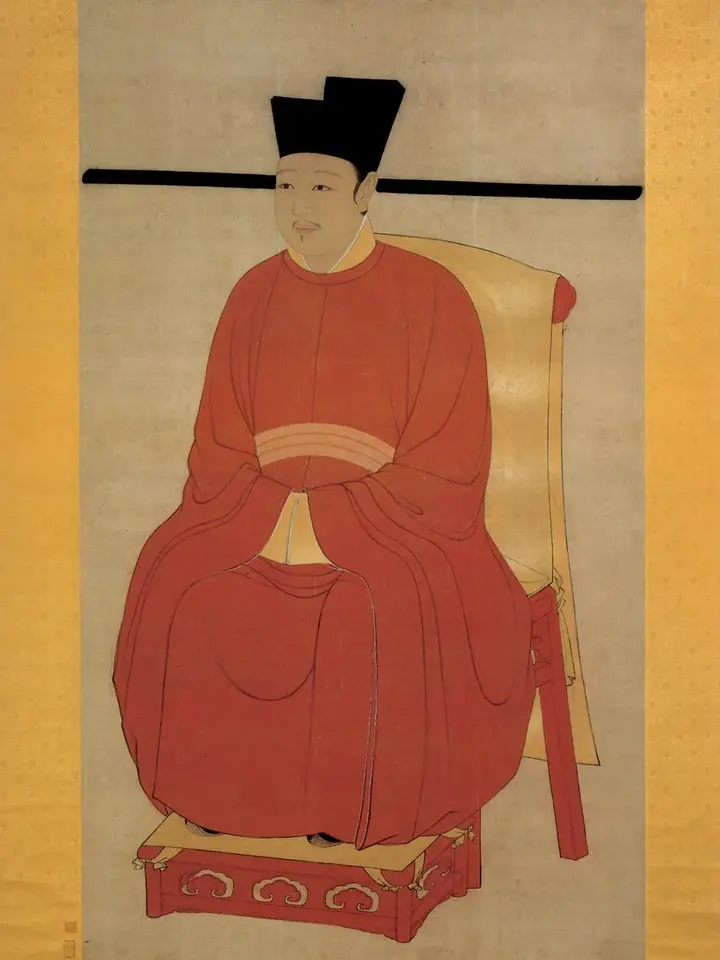
PROFILE
Yang Wujiu (杨无咎, 1097–1169), courtesy name Buzhi, art name Taochen Laoren and Qingyi Zhangzhe, was a celebrated ink plum painter, calligrapher, ci lyricist, and unbending hermit scholar during the transition between the Northern and Southern Song dynasties, originating from Qingjiang, Linjiang Military Prefecture. He was born in 1097 during the reign of Emperor Zhezong and died in 1169 during the reign of Emperor Xiaozong, living to the age of seventy-three.
Yang was born into an illustrious bureaucratic lineage, being the grand-nephew of Northern Song Hanlin Academician Yang Jie. Naturally disdainful of bureaucratic vanity, Yang refused to enter the civil examinations throughout his life, choosing to live as an unranked commoner. Following the southern flight of the Song court, autocratic Grand Councilor Qin Hui repeatedly sought to recruit him into his retinue, but Yang adamantly refused, demonstrating uncompromising literati integrity. In the history of Chinese art, Yang holds an epochal position as the founder of the ringed-petal method (quanhuafa) for ink-wash plum blossoms. He dismantled the earlier practice of blotching petals with ink washes, instead outlining petals with needle-sharp, resilient brushstrokes that captured the icy purity and structural strength of winter plums, establishing the orthodox aesthetic of literati plum painting. When Emperor Gaozong dismissed his paintings as rustic village plums, Yang proudly carved an official seal reading Village Plum by Imperial Decree, boldly defying imperial taste. He was equally accomplished in poetry, calligraphy, and lyrics, leaving behind Taochen Ci and his national treasure handscroll Four Views of Plum Blossoms preserved in the Palace Museum in Beijing.
- Courtesy Name
- Buzhi
- Art Name
- Taochen Laoren, Qingyi Zhangzhe
- Dynasty
- Northern Song, Southern Song
- Ancestral Home
- Qingjiang, Linjiang Military Prefecture (modern Zhangshu, Jiangxi Province)
- Date of Birth
- 1097 (Shaosheng 4, Song Zhezong)
- Date of Death
- 1169 (Qiandao 5, Song Xiaozong)
- Age at Death
- 73
- Primary Identity
- Ink plum painter, calligrapher, ci lyricist, hermit scholar
BIOGRAPHY
Chronology
- 1097 (Shaosheng 4) | Birth in Qingjiang | Born into an illustrious scholarly family in Qingjiang, receiving extensive training in calligraphy, painting, and music.
- 1120 (Xuanhe 2) | Hermitage in the Mountains | Established a studio in the hills of Qingjiang, focusing on landscape sketching and winter plum studies.
- 1127 (Jianyan 1) | Southern Flight | Fled south amidst the Jingkang crisis, residing across Jiangnan waterways and earning renown for his ink plum painting.
- 1140 (Shaoxing 10) | Defiance Against Qin Hui | Repeatedly refused invitations and lucrative offers from Grand Councilor Qin Hui, maintaining secluded commoner status.
- 1162 (Shaoxing 32) | Creation of Four Views of Plum Blossoms | Painted his magnum opus, Four Views of Plum Blossoms, for his nephew Fan Duanbo, integrating poetry, calligraphy, and painting.
- 1169 (Qiandao 5) | Demise at Qingjiang | Passed away peacefully at his residence in Qingjiang at age seventy-three, honored by scholars as Master Taochen.
Biography
Illustrious Lineage and Devotion to Painting
Yang Wujiu was born into a prominent family in Qingjiang County, Linjiang Military Prefecture. His great-uncle was Yang Jie, a celebrated Hanlin Academician and Vice Minister of Rites during the reign of Emperor Zhezong. Reared in a rich scholarly environment, Yang read widely across the four classical libraries and mastered musical harmonics. However, observing the political corruption of the late Huizong reign, Yang resolved never to seek bureaucratic advancement through examinations, choosing lifelong seclusion.
From early youth, Yang developed an intense fascination with winter plum blossoms. He traveled across southern peaks, seeking wild plum trees amidst winter blizzards and observing their resilient growth along mountain crags. In his native Qingjiang, he erected a painting studio, spending days in meditative observation and sketching, gradually surpassing the conventional techniques of contemporary artists.
Southern Migration and the Founding of Ringed-Petal Ink Plum
During the Jingkang crisis of 1126, Jurchen armies overran northern China, destroying the Northern Song capital. Yang fled southward with retreating refugees, experiencing the hardships of wartime displacement. Settling across the Jiangnan waterways, he transformed the solitary purity of the winter plum into an artistic symbol of national grief and cultural perseverance.
Artistically, Yang achieved a historic breakthrough. Prior to his innovation, ink plum painting followed the method of Monk Zhongren of Huaguang Temple, who dabbed petals with direct washes of diluted ink. While evocative, this technique often resulted in blurred, muddy contours. Yang innovated the ringed-petal technique, using resilient, centered-brush lines to draw the delicate curves of the five petals, accentuating the blossoms with dark ink dots for the calyx and stamens. This breakthrough gave ink plums the crisp translucence of carved jade, establishing the classical paradigm of literati monochrome painting.
Moral Defiance and the Village Plum Seal
During the Shaoxing era, Grand Councilor Qin Hui dominated the imperial court, persecuting resistance heroes while seeking to co-opt prominent artists. Learning of Yang's artistic fame, Qin Hui dispatched retainers with lavish gifts to purchase plum-blossom screens, promising him imperial office. Disdaining Qin Hui's treasonous appeasement, Yang adamantly refused all gifts and shut his doors, refusing to set foot inside the prime minister's mansion.
Emperor Gaozong, an avid collector of art, was later shown Yang's ink plum paintings. Accustomed to the colorful, decorative bird-and-flower paintings of the imperial academy, the emperor dismissed Yang's sparse, icy compositions, remarking: "These are merely village plums!" When Yang learned of the emperor's critique, he laughed heartily, taking it as the highest compliment to his natural, unpretentious aesthetic. He immediately commissioned an artisan to carve a seal reading Village Plum by Imperial Decree, imprinting it proudly upon his paintings to mock the superficial taste of the imperial court.
Late Masterpieces and Enduring Legacy
In his later years, Yang continued his quiet life in Qingjiang, adopting the art name Taochen Laoren. In 1162, at sixty-six years of age, he responded to a request from his nephew Fan Duanbo by painting his surviving masterpiece, Four Views of Plum Blossoms.
The handscroll depicted the four developmental stages of the plum: unopened buds, blossoming, full bloom, and fading petals, harmonized with expressive calligraphy. In 1169, Yang passed away peacefully in Qingjiang at the age of seventy-three. His artistic breakthroughs and moral defiance established an enduring model for the Chinese literati tradition.
Major Achievements
Innovating the Ringed-Petal Method in Ink Plum Painting
Yang Wujiu's most revolutionary contribution to world art was his invention of the ringed-petal method (quanhuafa) for ink-wash plum blossoms, ending the era of blurred ink dabs.
By introducing calligraphic iron-wire brushwork to outline the petals, Yang imparted structural vitality and crystalline elegance to monochrome plums. His technique made the ink plum the premier genre among the Four Gentlemen of Chinese art, providing the foundational model for subsequent masters including Zhao Mengjian, Wang Mian, Wen Zhengming, and Xu Wei.
Creating the National Treasure Four Views of Plum Blossoms
Yang's supreme surviving masterwork is the paper handscroll Four Views of Plum Blossoms, preserved in the Palace Museum in Beijing.
Measuring thirty-seven centimeters in height and over two hundred centimeters in length, the scroll depicts four branches representing the lifecycle of the plum: budding, blossoming, full bloom, and shedding petals. Yang contrasted fine petal outlines with dry, calligraphic brushstrokes for the twisted branches. Following each painting, Yang inscribed an original ci lyric, creating a peerless synthesis of poetry, calligraphy, painting, and seal carving.
Embodying Literati Independence and Moral Integrity
Yang's artistic renown was inseparable from his moral character. In an era marked by appeasement and political subservience, his ink plums symbolized uncompromising personal and national dignity.
His refusal to flatter Qin Hui and his ironic adoption of the Village Plum by Imperial Decree seal demonstrated fearless independence from autocratic political power, cementing his reputation as an exemplar of literati virtue.
Lyrical Accomplishments in Taochen Ci
Beyond painting, Yang was an accomplished lyricist, leaving behind the single-volume collection Taochen Ci, containing nearly a hundred poems.
Influenced by Su Shi and Liu Yong, his lyrics featured elegant diction, emotional warmth, and melodic grace. Imperial bibliographers praised his lyrics for their fluid musicality and elevated reflection, free from vulgar romantic cliches.
Personal Relationships
- Grand-Uncle: Yang Jie, celebrated Hanlin Academician and Vice Minister of Rites in the Northern Song.
- Nephew and Patron: Fan Duanbo, literatus for whom Yang painted his masterpiece Four Views of Plum Blossoms.
- Political Nemesis: Qin Hui, dictatorial grand councilor whose invitations Yang steadfastly rejected.
- Literary Associate: Xiang Ziyin, prominent patriotic lyricist who maintained close artistic ties with Yang.
Historical Evaluations
- Huaji (Deng Chun): Yang Wujiu was a native of Qingjiang styling himself Taochen Laoren; his plum paintings captured the true essence of cold forests and secluded valleys, holding himself aloof from power as a true gentleman.
- Tuhui Baojian (Xia Wenyan): Yang Wujiu created the ringed-petal method in plum painting, full of spirit and vitality, breaking away from conventional paths to become the foremost master under heaven.
- Siku Quanshu Zongmu Tiyao: Yang Wujiu was celebrated for his calligraphy and painting, and his lyrics were equally graceful and vigorous; his verses on the Four Views of Plum Blossoms established an elevated independent style.
- Shiqu Baoji: The authentic Four Views of Plum Blossoms by Yang Wujiu possesses transcendent brushwork and spirited vitality, truly an imperial treasure to be preserved for ten thousand generations.
Related Entries
- Four Views of Plum Blossoms
- Ink Plum Painting
- Ringed-Petal Technique
- Taochen Ci
- Qin Hui
- Emperor Gaozong of Song
Bibliography
Bibliographic information is not yet available for this entry.