Birth in Fuzhou
Born into a scholar-physician household in Cangxia, Fuzhou, receiving classical education under his father.
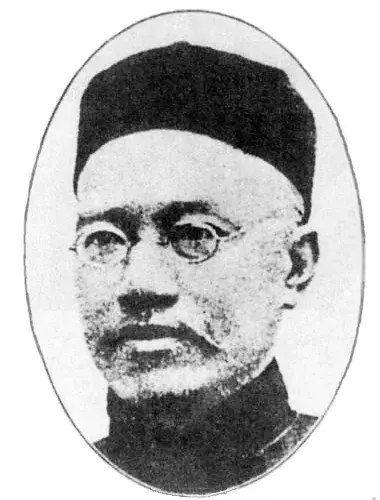
严复
Yan Fu (1854–1921), courtesy name Jidao, was the foremost pioneer of modern Chinese enlightenment thought, a transformative translator of Western social philosophy, and an architect of modern Chinese higher education. Born into a scholar-physician family in Houguan, Fujian, he graduated from the Fujian Shipbuild Academy before studying modern naval tactics and international law at the Royal Naval College in Greenwich,…
Yan Fu (1854–1921), courtesy name Jidao, was the foremost pioneer of modern Chinese enlightenment thought, a transformative translator of Western social philosophy, and an architect of modern Chinese higher education. Born into a scholar-physician family in Houguan, Fujian, he graduated from the Fujian Shipbuild Academy before studying modern naval tactics and international law at the Royal Naval College in Greenwich, England. During his stay in Europe, he recognized that the genuine power of the West lay not merely in superior naval vessels and modern weaponry, but in constitutional governance, scientific rationality, and institutional protections for individual agency. Returning to China, he served as the principal administrator of the Beiyang Naval Academy for two decades, training China's inaugural generation of modern naval commanders. Following the catastrophic defeat in the First Sino-Japanese War of 1894–1895, Yan Fu penned impassioned essays including On the Origins of Strength (Yuan Qiang) and On National Salvation (Jiuwang Juelun), exposing the systemic bankruptcy of imperial absolutism and the civil service examination system. Through his milestone translation of Thomas Henry Huxley's Evolution and Ethics (Tianyan Lun), Yan introduced the concepts of natural selection, survival of the fittest, and social struggle to Chinese intellectuals, creating a profound seismic shock that transformed modern Chinese intellectual history. He subsequently translated eight foundational Western masterpieces in political science, economics, law, and logic, introducing works by Adam Smith, Montesquieu, John Stuart Mill, and Herbert Spencer. In 1912, he took helm as the inaugural president of Peking University, preserving modern academic autonomy amidst severe civil strife. He remains venerated as China's first systematic introducer of Western enlightenment thought.
Born into a scholar-physician household in Cangxia, Fuzhou, receiving classical education under his father.
Following his father's death, entered the Navigation School of the Fujian Shipyard Academy with top honors.
Dispatched as part of the first naval student cohort to the Royal Naval College in Greenwich, England.
Graduated and returned to China, teaching at Fuzhou Shipyard Academy before transferring to Tianjin.
Promoted to Superintendent of the Beiyang Naval Academy, introducing modern Western naval curricula.
Traumatized by defeat in the Sino-Japanese War, published influential essays such as 'On the Urgency of World Change' and 'On Strength'.
Founded the reformist newspaper Guowen Bao and published his seminal translation Tianyan Lun (Evolution and Ethics).
Appointed Director of the Translation Bureau of the Imperial University of Peking by Zhang Baixi.
Assisted Ma Xiangbo in founding Fudan Public School in Shanghai and served as its second principal.
Appointed Director-General of the Imperial University of Peking and served as the first Chancellor of Peking University.
Listed among the founders of the Chou'anhui, advocating gradual constitutional reform.
Returned to Fuzhou in his twilight years and passed away in his Langguan Alley residence at age sixty-seven.
Yan Fu was born in 1854 in Houguan County, Fuzhou Prefecture, Fujian Province. His father, Yan Zhenxian, was an upright physician well regarded for his benevolent medical practice. In his childhood, Yan Fu received rigorous traditional classical training, acquiring an extensive command of classical philology and imperial history.
In 1866, when Yan Fu was twelve years old, an outbreak of cholera swept through Fuzhou, claiming his father's life. The household was plunged into severe poverty. Deprived of the financial means to pursue imperial examinations, Yan Fu made the decisive choice to sit for the entrance examinations of the newly founded Navigation School at the Fujian Shipbuild Academy in Mawei.
Founded by Shen Baozhen and Zuo Zongtang, the school provided free board, lodging, and an allowance of four taels of silver per month, but required students to master English, navigation, spherical trigonometry, physics, and marine engineering. Yan Fu applied himself tirelessly, graduating at the head of the navigation division in 1871.
Between 1871 and 1876, Yan served aboard modern warships such as the Jiansheng and Yangwu, sailing along China's coastal waters, Taiwan, Japan, and the Ryukyu Islands, gaining extensive firsthand naval operational experience.
In 1877, the Qing imperial government dispatched its first cohort of naval cadets to Europe. Yan Fu, alongside Liu Buchan and Lin Yingsheng, was selected to study at the prestigious Royal Naval College in Greenwich, England.
During his two-year stay in Great Britain, Yan Fu's intellectual horizons expanded far beyond naval tactics and steam engineering. He regularly attended parliamentary debates in Westminster, observed trials in British common law courts, and immersed himself in modern European political philosophy, reading works by John Locke, Adam Smith, and Charles Darwin.
During this period, Yan established a close intellectual friendship with Guo Songtao, China's first diplomatic minister to Great Britain. The two frequently conversed late into the night, concluding that Western ascendancy rested not upon industrial machinery, but upon the rule of law, constitutional protections, and the cultivation of an enlightened citizenry.
Returning to China in 1879, Yan Fu was appointed by Viceroy Li Hongzhang in 1880 to serve as chief instructor and subsequently superintendent of the Beiyang Naval Academy in Tianjin. Over the course of twenty years, Yan modernized maritime curricula and oversaw the rigorous training of China's naval elite.
However, Yan felt deeply constrained by bureaucratic inertia and official corruption within the late Qing bureaucracy. Despite sitting repeatedly for provincial imperial examinations to obtain traditional bureaucratic credentials, he was repeatedly rejected by conservative examiners, intensifying his disillusionment with the imperial examination system.
In 1894, the First Sino-Japanese War erupted. The Beiyang Fleet, which Yan had poured decades of effort into training, was completely obliterated at the Battle of the Yalu River and the Siege of Weihaiwei. His closest shipmate and friend Liu Buchan committed suicide to avoid capture. The tragedy shattered Yan's belief in piecemeal technological modernization.
Filled with agonizing grief and profound patriotic urgency, Yan Fu laid aside his naval textbooks and took up the pen to address the existential crisis facing China. In the spring of 1895, he published four monumentally influential essays in Tianjin's Zhilin: On the Speed of World Transformation (Lun Shi Bian Zhi Ji), On the Origins of Strength (Yuan Qiang), On National Salvation (Jiuwang Juelun), and Refutation of Han Yu (Pi Han).
In these treatises, Yan launched a devastating critique against imperial despotism, declaring that the historical absolute monarchs of China had treated the empire as personal property while keeping the populace in perpetual ignorance and weakness. He called for abolishing the eight-legged essay, terminating foot-binding and opium consumption, and implementing universal scientific schooling.
In October 1897, Yan Fu joined with Wang Xiuzhi and others in Tianjin to establish the Guowen Bao, a progressive daily newspaper that fearlessly reported domestic and international affairs, serialized groundbreaking reform treatises, and fostered enlightened public opinion throughout northern China.
During the high tide of the 1898 Reform Movement, Yan completed his masterful translation of Thomas Huxley's Evolution and Ethics, titling it Tianyan Lun. The book exploded across Chinese literary circles, fundamentally altering how generations of scholars viewed national survival and global competition.
Following the suppression of the Hundred Days of Reform and the disaster of the Boxer Rebellion, Yan Fu dedicated his intellectual energies to systematically translating Western foundational works. Between 1900 and 1909, he produced classical translations of Adam Smith's The Wealth of Nations, Montesquieu's The Spirit of the Laws, John Stuart Mill's On Liberty and A System of Logic, and Herbert Spencer's The Study of Sociology.
In May 1912, following the founding of the Republic of China, Yan Fu was appointed the first president of Peking University. Facing catastrophic financial insolvency and political instability, Yan vigorously resisted bureaucratic proposals to shut down the institution, defending university autonomy and modern disciplinary structures.
In his final decade, disillusioned by warlord factionalism and rapid cultural upheaval, Yan Fu's political stances turned noticeably conservative. In 1915, he was listed among the sponsors of the Chou'anhui, which supported Yuan Shikai's bid for monarchical restoration, an action that drew sharp public controversy and censure.
Following Yuan's death, Yan retired from active politics, dedicating his twilight years to classical scholarship, poetry, and reflective writing. Suffering from worsening chronic bronchial asthma, he moved from Beijing back to his hometown of Fuzhou in 1920.
On October 27, 1921, Yan Fu passed away peacefully at his Langguan Alley residence in Fuzhou at the age of sixty-seven. His legacy as the preeminent herald of modern Chinese enlightenment remains permanently inscribed in Chinese intellectual history.
Yan Fu's translation of Thomas Huxley's Evolution and Ethics under the title Tianyan Lun constitutes one of the most transformative intellectual events in modern Chinese history. Rather than producing a mechanical literal rendition, Yan adopted an exquisite classical prose style, infusing the text with extensive critical commentary to address China's urgent national crisis.
He introduced the fundamental maxims of Darwinian evolutionary theory—"natural selection" (tianze), "survival of the fittest" (shizhe shengcun), and "competition among species" (wujing)—convincing Chinese intellectuals that nations and civilizations are governed by relentless evolutionary struggle.
The work dismantled the ancient Chinese cyclical view of history, instilling an acute sense of existential crisis and modern progressivism in figures such as Kang Youwei, Liang Qichao, Lu Xun, and Hu Shi, laying the intellectual foundation for the modern Chinese national salvation movement.
In the preface (Li Yan) to Tianyan Lun in 1898, Yan Fu enunciated his timeless translation doctrine: "Translation involves three difficulties: faithfulness (xin), expressiveness (da), and elegance (ya)." This formulation established the foundational aesthetic and theoretical standard for modern Chinese translation studies.
Yan explained that faithfulness requires complete fidelity to the original author's conceptual essence; expressiveness demands lucid, fluent linguistic structure tailored to reader comprehension; and elegance necessitates refined literary diction capable of carrying profound philosophical inquiry across cultural boundaries.
This breakthrough superseded previous haphazard oral translation practices conducted by foreign missionaries and local scribes, elevating modern translation into a sophisticated discipline of creative intellectual synthesis.
Between 1896 and 1909, Yan Fu accomplished the monumental feat of translating eight cornerstone works of Western social science and political philosophy into classical Chinese.
These translations included Adam Smith's The Wealth of Nations (Yuan Fu), Montesquieu's The Spirit of the Laws (Fa Yi), John Stuart Mill's On Liberty (Qunji Quanjie Lun) and A System of Logic (Mule Mingxue), Herbert Spencer's The Study of Sociology (Qunxue Yiyan), Edward Jenks's A History of Politics (Shehui Tongquan), and William Stanley Jevons's Logic (Mingxue Qianshuo).
Through these seminal volumes, Yan introduced modern theoretical concepts into the Chinese lexicon, coining or standardizing terms for "liberty," "rights," "society," "constitution," "logic," "induction," and "deduction," which formed the basic conceptual architecture for modern Chinese intellectual discourse.
In his masterwork essays Yuan Qiang and Jiuwang Juelun, Yan Fu formulated the comprehensive doctrine of the "Three Cultivations" (San Yu): "energizing physical vigor" (gu min li), "enlightening intellectual understanding" (kai min zhi), and "renovating moral character" (xin min de).
Yan argued that China's systemic weakness stemmed fundamentally from the collective degradation of its population. Energizing vigor required eliminating opium abuse, abolishing female foot-binding, and introducing physical training to build resilient bodies.
Enlightening intellect required abolishing the memorization of eight-legged essays and instituting modern scientific, mathematical, and technical academies. Renovating moral character demanded dismantling authoritarian servility and nurturing civic responsibility and mutual equality among citizens, establishing a holistic framework for China's modern educational and civic rebirth.
Published in 1901, Yan Fu's translation of Adam Smith's The Wealth of Nations (Yuan Fu) introduced the foundational tenets of modern classical political economy to the Chinese world.
In his extensive analytical commentaries, Yan highlighted the fundamental economic reality that legitimate self-interest serves as the primary engine of wealth generation. He argued that when the state protects property rights, upholds contract enforcement, and removes feudal customs barriers, individual pursuits of prosperity spontaneously aggregate into collective national wealth.
Yan severely criticized Qing state monopolies, arbitrary exactions, and government-supervised merchant enterprises, advocating for monetary stabilization, tariff autonomy, private commercial freedom, and industrial division of labor, laying the intellectual groundwork for modern Chinese commercial and economic modernization.
Published between 1904 and 1909, Yan Fu's translation of Montesquieu's The Spirit of the Laws (Fa Yi) exerted an immense intellectual impact upon late Qing legal and constitutional reforms.
Yan explicated the modern constitutional principle that legitimate political authority must be rooted in law, arguing that law is a public instrument of society rather than the private prerogative of an absolute ruler. He systematically categorized despotic, monarchical, and republican polities, championing constitutional limitations on monarchical power.
Critically, Yan introduced the tripartite separation of powers—legislative, executive, and judicial—stressing that unchecked authority inevitably leads to tyranny. His work provided the primary theoretical blueprint for the late Qing constitutional movement and the modernization of China's judicial system.
In 1905, Yan Fu published his translation of John Stuart Mill's A System of Logic (Mule Mingxue), marking the first systematic introduction of modern inductive and deductive scientific logic to Chinese scholarship.
In his interpretive annotations, Yan demonstrated that the rapid advancement of modern Western civilization rested upon the rigorous application of empirical observation, controlled experimentation, and logical inference. He sharply attacked traditional scholastic tendencies toward arbitrary textual interpretation, lack of empirical verification, and dogmatic speculation.
Through this pioneering work, Yan introduced rigorous scientific methodology to Chinese academia, steering traditional classical philology toward modern empirical and rational inquiry.
Yan Fu served as an institutional pioneer of modern Chinese higher education. During his twenty-year tenure at the Beiyang Naval Academy, he moved beyond mechanical training to institute an advanced curriculum comprising mathematics, natural philosophy, foreign languages, and international maritime law.
In 1912, as the inaugural president of Peking University, Yan took charge during a period of acute national turbulence. In the face of ministerial fiscal collapse and official pressure to disband the university, Yan maintained institutional cohesion, recruited accomplished faculty, restructured colleges, and defended academic autonomy, ensuring the successful transformation of the imperial academy into China's flagship modern university.
FIGURES ASSOCIATED WITH THIS DYNASTY