Birth in Dingyuan
Born into an agrarian family in Dingyuan, Haozhou; displayed martial prowess and mastered aquatic reconnaissance in youth.
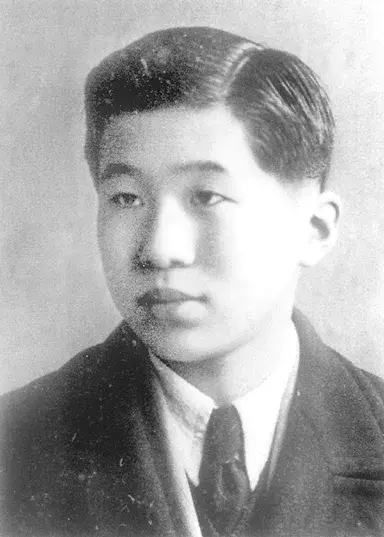
吴良
Wu Liang (吴良, 1323–1381), originally named Wu Guoxing, was conferred the personal name Liang by Zhu Yuanzhang (Emperor Taizu of Ming). A native of Dingyuan in Haozhou (present-day Dingyuan County, Anhui Province), he was an illustrious founding military general and merit subject of the Ming Dynasty, and the elder brother of Wu Zhen, the Marquis of Jinghai. Renowned for his imposing physical stature, uncompromising…
Wu Liang (吴良, 1323–1381), originally named Wu Guoxing, was conferred the personal name Liang by Zhu Yuanzhang (Emperor Taizu of Ming). A native of Dingyuan in Haozhou (present-day Dingyuan County, Anhui Province), he was an illustrious founding military general and merit subject of the Ming Dynasty, and the elder brother of Wu Zhen, the Marquis of Jinghai. Renowned for his imposing physical stature, uncompromising integrity, and strategic foresight, Wu excelled in both terrestrial and amphibious warfare, possessing rare abilities in underwater reconnaissance. In 1352, Wu joined Zhu Yuanzhang's insurgent forces in Dingyuan, serving as vanguard commander of the supreme camp. He played a distinguished role in crossing the Yangtze River, seizing Caishi, Taiping, and Jiqing, and assisting Xu Da in capturing Zhenjiang and Changzhou. In 1357, Wu captured Mount Qinwang and secured Jiangyin, receiving imperial orders to garrison the strategic fortress as Regional Commander. Backed by the Yangtze and commanding the north-south transit corridors of Jiangnan, Jiangyin stood on the direct frontline against Zhang Shicheng's affluent Eastern Wu regime. Adhering faithfully to Zhu Yuanzhang's strategic directive to preserve local stability and avoid rash provocations, Wu fortified city walls, deepened moats, and slept in battle armor on the watchtowers for ten years. He repeatedly crushed massive land and water invasions launched by Zhang Shicheng, winning decisive victories at Mount Jun, Wuxi, and the naval envelopment at Fuzimen. His iron defense ensured the eastern flank of the Ming capital at Jinling remained impregnable, enabling Zhu Yuanzhang to concentrate his armies upriver against Chen Youliang without fear of eastern encirclement. Zhu Yuanzhang lauded him as "the Wu Qi of our modern era." In 1370, Wu was promoted to Vice Commissioner-in-Chief and ennobled as Marquis of Jiangyin with an iron tally. In 1372, he served as deputy commander under Deng Yu to pacify the Wuxi tribal rebellions in Guangxi. He passed away in Qingzhou in 1381 at fifty-nine, receiving posthumous ennoblement as Duke of Jiang and the posthumous name Xianglei, with imperial burial on the shaded slopes of Mount Zhong.
Born into an agrarian family in Dingyuan, Haozhou; displayed martial prowess and mastered aquatic reconnaissance in youth.
Joined Zhu Yuanzhang's rebel army at Dingyuan; commissioned as vanguard commander of the supreme camp.
Executed underwater reconnaissance before crossing the Yangtze; stormed Caishi, Taiping, Lishui, and Liyang.
Participated in capturing Jiqing (Nanjing); marched with Xu Da to take Zhenjiang and Changzhou, garrisoning Danyang.
Captured Mount Qinwang and took Jiangyin; appointed Regional Commander to erect an impenetrable eastern shield.
Routed Zhang Shicheng's massive invasion fleet under general Su Tongqian through coordinated pincer counter-attacks; destroyed reinforcements at Wuxi.
Coordinated with Zhu Yuanzhang's relief army to encircle Zhang Shicheng's naval fleet at Fuzimen, capturing two thousand elite troops.
Ennobled as General of Martial Courage and Guard Commander of Suzhou; stabilized civilian society and promoted to Assistant Commissioner-in-Chief.
Promoted to Vice Commissioner-in-Chief and created Marquis of Jiangyin with a stipend of 2,500 piculs, receiving an hereditary iron tally.
Served as deputy general under Deng Yu to crush Wuxi tribal rebellions in Guangxi, pacifying the Left and Right Rivers.
Supervised construction of the Prince of Qi's palace in Qingzhou; passed away in November at fifty-nine, posthumously created Duke of Jiang.
Wu Liang was born in 1323 in Dingyuan County, Haozhou, within the Huai River valley, into a family devoted to traditional agriculture. Amidst the collapse of Mongol administrative authority and widespread banditry in central China, Wu grew into an imposing, upright warrior endowed with cool determination and strategic acuity. Alongside his younger brother Wu Zhen, he mastered martial combat. Possessing extraordinary aquatic stamina, Wu could dive underwater for extended intervals to observe enemy river defenses, a talent that made him famous throughout the region.
In 1352, Zhu Yuanzhang raised the banner of anti-Yuan rebellion at Haozhou, recruiting martial elites across Huaixi. Wu Liang and Wu Zhen joined Zhu's vanguard. Recognizing their loyalty and martial skill, Zhu immediately designated Wu Liang as vanguard commander of the supreme camp and Wu Zhen as his personal bodyguard. In consecutive engagements across Dingyuan and Chuzhou in 1354, Wu spearheaded shock attacks that breached enemy lines. In early 1355, he participated in the capture of Hezhou.
In June 1355, faced with heavy Mongol naval cordons along the northern shore of the Yangtze, Zhu resolved to force a river crossing. Wu Liang utilized his aquatic reconnaissance skills, diving beneath enemy vessels under cover of darkness to chart water channels and identify defensive stakes off Caishi. During the amphibious assault, Wu braved swarms of arrows to lead the charge onto the crags of Caishi, conquering Taiping Prefecture, Lishui, and Liyang. In 1356, Wu participated in the grand offensive that captured the regional metropolis of Jiqing (Nanjing). He then accompanied General-in-Chief Xu Da to take Zhenjiang and Changzhou, earning promotion to Garrison Commander and being entrusted with the defense of Danyang.
In 1357, Wu Liang joined Vice Commander Zhao Jizu to seize Jiangyin. At that time, eastern warlord Zhang Shicheng stationed elite forces on Mount Qinwang, the dominant height outside Jiangyin, constructing fortified stone redoubts. Wu led elite infantry up sheer cliffs to storm the stronghold, pursuing fleeing defenders to take the walled city of Jiangyin.
Bounded by the Yangtze River to the north and shielding the rich plains of Suzhou and Changzhou to the south, Jiangyin was the paramount strategic bottleneck guarding the lower Yangtze delta. Zhang Shicheng held the wealthy territories of Liangzhe and Huaidong with hundreds of thousands of well-provisioned troops. Standing directly opposite Zhang's capital at Suzhou, Jiangyin faced relentless enemy probes and lavish bribery attempts. Grasping the vital stakes, Zhu Yuanzhang personally cautioned Wu: "Jiangyin is our southeastern gateway and supreme shield. In governing it, you must enforce rigorous discipline among the ranks. Do not engage in clandestine external correspondence; do not harbor fugitives; do not covet petty profits; and do not provoke reckless border skirmishes. Your sole duty is to secure the borders and keep the people at peace!"
Wu adhered strictly to this counsel. Upon arrival, he reconstructed dilapidated parapets, excavated defensive trenches, positioned heavy siege cross-bows, and maintained round-the-clock combat readiness. In 1359, Zhang Shicheng mobilized a massive combined force to besiege Jiangyin. Warships crowded the river, while general Su Tongqian established his command post atop Mount Jun to direct the assault. Wu orchestrated an ingenious double envelopment: he ordered his brother Wu Zhen to march through the North Gate to draw the enemy's main force, while secretly dispatching commander Wang Ziming with a thousand cavalry through the South Gate to strike Su Tongqian's command post from the rear. Trapped in a vicious pincer, the Eastern Wu army collapsed, and Su fled in panic, leaving thousands of dead. Soon afterward, when Zhang's detachments circled to attack Changzhou, Wu dispatched light forces via mountain paths to ambush and annihilate the enemy relief column at Wuxi.
Throughout this critical decade, Zhu Yuanzhang was repeatedly engaged in life-or-death confrontations upriver against Chen Youliang around Poyang Lake and Wuchang, leaving the defenses of Jinling severely depleted. Yet despite his vast numerical superiority, Zhang Shicheng never dared advance a single inch toward Jinling, deterred by Wu's unbreakable defense at Jiangyin.
In 1365, having vanquished Chen Youliang, Zhu Yuanzhang ordered Xu Da and Chang Yuchun to launch a massive offensive to annex Huaidong, capturing Taizhou. In desperation, Zhang Shicheng launched his elite naval force from Matuosha to strike Zhenjiang, sailing hundreds of towering multi-decked warships up the Yangtze to sever Xu Da's communications. Wu placed Jiangyin on high alert, repelling frontline incursions.
In the spring of 1366, Zhu Yuanzhang personally led naval squadrons downriver to relieve Jiangyin. The Eastern Wu fleet withdrew toward the river mouth at Fuzimen. Seizing the initiative, Wu launched his riverine and land forces from Jiangyin, striking the enemy flank in concert with Zhu's main armada. The joint assault shattered the Eastern Wu fleet, capturing two thousand elite marines and dozens of warships, eliminating Zhang Shicheng's naval power along the Yangtze.
In 1367, Xu Da stormed Suzhou, extinguishing Zhang Shicheng's regime. Recognizing his immense services, Zhu appointed Wu General of Martial Courage and Guard Commander of Suzhou. Suzhou had suffered grievously during the protracted siege; upon assuming office, Wu rebuilt civic defenses, prohibited soldiers from mistreating commoners, dredged irrigation canals, and stabilized food prices, allowing the devastated region to recover swiftly. He was soon promoted to Assistant Commissioner-in-Chief in the Chief Military Commission and transferred to govern Quanzhou in Huguang.
In 1368, the Ming Dynasty was formally proclaimed. In November 1370, Emperor Taizu executed a grand ennoblement of founding heroes. In recognition of his decennial vigil over Jiangyin, Wu was promoted to Vice Commissioner-in-Chief and ennobled as Marquis of Jiangyin, granted an annual stipend of two thousand five hundred piculs of grain and an hereditary iron tally guaranteeing exemption from execution for his lineage.
In 1371, aboriginal tribal chiefs staged rebellions across Jingzhou and Suining in Hunan; Wu was dispatched to pacify the borderlands through military deterrence and civil amnesty. In 1372, major tribal uprisings erupted across the Wuxi region in Guangxi, with chieftains along the Left and Right Rivers raiding imperial settlements. Taizu commissioned General of the Southern Expedition Deng Yu to lead the punitive expedition, designating Wu as his principal deputy general to lead several divisions from Jingzhou.
Advancing through dense alpine rainforests, Wu led from the front, taking Tonggu and Wukai before capturing the mountain redoubts of Tanxi and Taiping. During the climactic engagement, he braved malarial mists to storm the precipitous cliffs of the Bronze Pass and Iron Stronghold, executing the rebel ringleaders of Qingdong and Yashan and capturing thousands of insurgent fighters. Terrified by his swiftness, tribal chieftains along the Left and Right Rivers submitted to Ming authority, establishing lasting peace across western Guangdong and Guangxi.
In 1379, Emperor Taizu enfeoffed his seventh son, Zhu Bo, as Prince of Qi, establishing his princely seat at Qingzhou in Shandong. As Wu Liang's eldest daughter had been selected as the Princess Consort of Qi, Wu occupied the dual role of founding merit subject and father-in-law to the imperial prince. Consequently, Taizu assigned Wu to Qingzhou to supervise the construction of the princely palaces and municipal fortifications.
In Qingzhou, Wu maintained his lifelong frugality and personal diligence. He inspected ramparts and stone masonry daily, ensuring the palaces were dignified without squandering imperial funds, while protecting conscript laborers from official abuse. However, decades of relentless campaigning, exposure to harsh climates, and physical exhaustion took their toll. While on duty in Qingzhou, Wu fell critically ill.
On November 26, 1381, Wu Liang passed away peacefully in his official residence in Qingzhou at the age of fifty-nine. Upon receiving the report, Emperor Taizu was overcome with grief, suspending court audiences for three days. Taizu issued an imperial decree posthumously promoting him to Grand Master of Virtuous Power, Pillar of State, and Left Commissioner-in-Chief of the Center Military Commission, creating him Duke of Jiang with the posthumous title Xianglei. In February 1382, he was interred on the northern slopes of Mount Zhong in Nanjing, honored with monumental spirit-way steles and stone sculptures befitting the highest-ranking founding fathers of the Ming Empire.
Wu Liang's paramount achievement in the founding of the Ming Dynasty was his steadfast decennial defense of the fortress of Jiangyin from 1357 to 1367.
During the critical decade when rival warlords contested the empire, Zhu Yuanzhang's headquarters at Jinling faced lethal strategic danger: Chen Youliang commanded the upper reaches of the Yangtze, while Zhang Shicheng threatened to severed downstream river communications. As the gateway to Jinling, Jiangyin occupied the decisive operational pivot. Confronted by overwhelming numerical odds, Wu instituted an airtight defensive regime, sleeping in his battle armor atop the watchtowers for ten years. He routed Su Tongqian at Mount Jun, ambushed reinforcements at Wuxi, and encircled the enemy at Fuzimen. By pinning down Zhang Shicheng's massive armies in the east, Wu enabled Zhu Yuanzhang to concentrate his primary forces in the upper Yangtze to crush Chen Youliang without fear of a rear assault. Taizu declared: "Wu Liang defended Jiangyin, completely relieving me of eastern anxieties; truly he is the Wu Qi of our modern era!"
Wu Liang was distinguished among Huaixi founding generals for combining battlefield heroism with deep civil literacy and benevolent governance.
While many early Ming commanders were unlettered and prone to military exactions, Wu practiced strict personal frugality, avoiding private accumulation of wealth, women, and luxuries. During peaceful intervals at Jiangyin and Suzhou, he founded Confucian academies, inviting distinguished Jiangnan scholars to lecture on classical histories such as the Zuo Zhuan and Comprehensive Mirror in Aid of Governance. He instituted military farming (tuntian), restored river transport networks, and lowered agrarian tax levies, turning wartime battlefields into thriving civilian communities. His disciplined benevolence won universal devotion among scholars and commoners, celebrated in poems and commemorative texts by great literati including Song Lian and Wu Bozong.
In 1372, serving as deputy general under Deng Yu, Wu executed a brilliant counter-insurgency campaign across the rugged mountains of Guangxi and Hunan.
Navigating treacherous gorges and disease-ridden jungles, Wu deployed deep tactical penetrations to capture fortified tribal centers at Tonggu, Wukai, Tanxi, and Taiping. Scaling vertical cliffs, his assault units stormed the legendary Bronze Pass and Iron Stronghold, eradicating rebel sanctuaries. In tandem with military strikes, Wu implemented equitable civil settlements and strictly prohibited looting, convincing dozens of indigenous chieftains along the Left and Right Rivers to swear allegiance to the Ming court, cementing imperial security along southwestern frontiers.
FIGURES ASSOCIATED WITH THIS DYNASTY