Imperial Clan Birth
Born into the imperial Li family of the Tang dynasty, educated in classical literature, ethics, and arts.
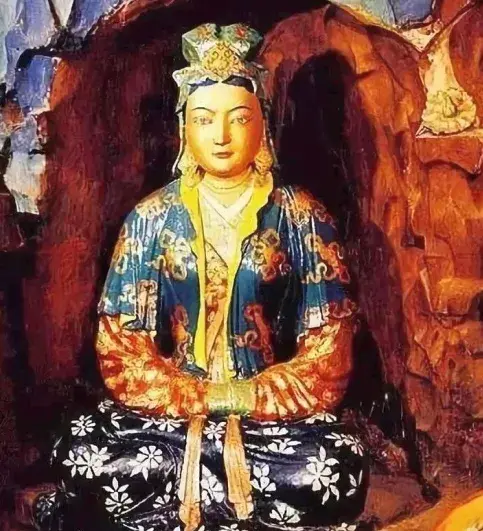
李氏(唐文成公主)
[!NOTE] Princess Wencheng (d. 680), of the imperial Li clan of the Tang dynasty, was a renowned Chinese peace-marriage princess (heqin gongzhu) and Queen Consort (Tsenmo) of the Tibetan Empire as the wife of the founder of the Tubo Kingdom, Songtsen Gampo. Revered in Tibetan tradition as Rgya mo bza' ("Chinese Queen") and an earthly emanation of the White/Green Tara, she was selected from the Tang imperial clan by…
[!NOTE] Princess Wencheng (d. 680), of the imperial Li clan of the Tang dynasty, was a renowned Chinese peace-marriage princess (heqin gongzhu) and Queen Consort (Tsenmo) of the Tibetan Empire as the wife of the founder of the Tubo Kingdom, Songtsen Gampo. Revered in Tibetan tradition as Rgya mo bza' ("Chinese Queen") and an earthly emanation of the White/Green Tara, she was selected from the Tang imperial clan by Emperor Taizong following Songtsen Gampo's embassy led by Minister Gar Tongtsen Yulsung. In 641, escorted across the plateau by Minister of Rites Li Daozong (Prince of Jiangxia), she was met by Songtsen Gampo at Lake Gyaring (Bohai) and formally enthroned in Lhasa (Rasa). Bringing with her the sacred life-sized Jowo Rinpoche (statue of the twelve-year-old Sakyamuni Buddha), advanced astronomical calendars, medicinal compendia, agricultural technology, and thousands of skilled artisans, she profoundly catalyzed the civilization of the Tibetan plateau. She facilitated the construction of the Jokhang and Ramoche temples, while Songtsen Gampo erected the red mountain palace (the forerunner of the Potala Palace) in her honor, abolished the local face-painting custom (zhimian), and sent noble youths to the Imperial University in Chang'an. Following Songtsen Gampo's demise in 650, she resided in Tibet for an additional thirty years, serving as the paramount living guardian of Sino-Tibetan peace and cultural integration until her passing in 680.
Born into the imperial Li family of the Tang dynasty, educated in classical literature, ethics, and arts.
Songtsen Gampo raided Songzhou; Tang forces checked the advance; Songtsen Gampo apologized and renewed the marriage petition.
Tubo Chief Minister Gar Tongtsen Yulsung brought five thousand ounces of gold to Chang'an, securing Emperor Taizong's consent.
Escorted by Prince of Jiangxia Li Daozong; welcomed by Songtsen Gampo at Lake Gyaring; celebrated royal marriage in Lhasa.
Songtsen Gampo built palace halls for the princess, banned the face-painting custom, and sent youths to Chang'an.
Tang Taizong triumphed in the Liaodong campaign; Songtsen Gampo sent a seven-foot golden goose as imperial tribute.
Dispatched 1,200 Tubo cavalry to reinforce Tang envoy Wang Xuance, defeating the usurper Arunasva in Central India.
Tang Taizong passed away; Songtsen Gampo sent golden offerings to Zhaoling and reaffirmed loyalty to Emperor Gaozong.
Following the king's death, Princess Wencheng chose to remain in Tibet for thirty years to sustain Sino-Tibetan concord.
Passed away in Lhasa from smallpox; accorded a state funeral by the Tubo court, with Tang imperial envoys attending.
Princess Wencheng was born into the imperial Li clan during the early Zhenguan era of the Tang dynasty. While official dynastic annals such as the Old Book of Tang and New Book of Tang do not record her personal name or specific paternity, contemporary historical scholarship indicates that she was a daughter of the extended imperial lineage, closely related to Emperor Taizong's royal cousin Li Daozong, Prince of Jiangxia, or Li Daoqui, Prince of Rencheng. Raised within the cosmopolitan imperial capital of Chang'an, she received an elite education in Confucian moral classics, Buddhist literature, silk weaving, medicine, and Chinese astronomy.
On the Tibetan plateau, King Songtsen Gampo (reigned c. 617–650) unified the warring mountain clans and established the centralized Tubo Kingdom. In 634, Songtsen Gampo dispatched his first diplomatic tribute embassy to Chang'an. Emperor Taizong sent the envoy Feng Dexia on a reciprocal mission. Observing the grandeur of the Tang Empire, Songtsen Gampo formally petitioned for a marriage alliance with an imperial princess, but the initial request was declined by the imperial court.
In 638, attributing the rejection to the interference of the neighboring Tuyuhun kingdom, Songtsen Gampo launched an invasion, crushing the Tuyuhun, Dangxiang, and Bailan Qiang tribes before advancing two hundred thousand troops to besiege the Tang frontier fortress of Songzhou (modern Songpan, Sichuan). Emperor Taizong mobilized five armies under Minister of Personnel Hou Junji. Tang vanguard commander Niu Jinda executed a nocturnal cavalry raid on the Tubo encampment, killing over a thousand warriors. Realizing that the military power of the Tang Empire was formidable, Songtsen Gampo withdrew from the frontier, dispatched an envoy to seek pardon, and renewed his marriage proposal with earnest humility.
In the autumn of 640 (fourteenth year of Zhenguan), Songtsen Gampo sent his foremost prime minister, Gar Tongtsen Yulsung (known in Chinese annals as Lu Dongzan), to Chang'an. Gar Tongtsen presented five thousand ounces of gold and thousands of rare precious stones as a formal betrothal gift. In the imperial court, Gar Tongtsen resolved all diplomatic riddles posed by Emperor Taizong, demonstrating extraordinary wit. Recognizing that an imperial marriage would secure the southwestern frontier and transform a nomadic adversary into an enduring ally, Emperor Taizong formally invested his clan daughter as Princess Wencheng and consented to the royal union.
On February 2, 641 (fifteenth day of the first month, fifteenth year of Zhenguan), the imperial capital of Chang'an celebrated the departure of Princess Wencheng. Emperor Taizong appointed his trusted royal cousin, Minister of Rites Li Daozong (Prince of Jiangxia), as Imperial Commissioner to personally escort the princess across the empire.
The bridal retinue was unprecedented in its cultural and material scale. The Tang court provided the sacred twelve-year-old life-sized gilded statue of Sakyamuni Buddha (Jowo Rinpoche), hundreds of volumes of Buddhist scriptures, medical manuals for four hundred diseases, sixty manuals on architectural carpentry and hydraulic engineering, astronomical calendars, and divination books. Furthermore, the convoy was accompanied by skilled imperial artisans, agricultural specialists, silk weavers, physicians, musicians, and farmers, along with seeds of superior wheat and turnip, silkworm eggs, and exquisite rolls of patterned brocade.
Departing Chang'an, the convoy traversed the Wei River valley, passed the Longyou passes, followed the Qinghai Route of the Silk Road past Sun and Moon Mountain (Riyue Shan), and crossed the frozen high-altitude wilderness of the Tibetan plateau.
In the spring of 641, hearing of the princess's approach, Songtsen Gampo led his royal guard and ministers hundreds of miles north to Lake Gyaring (Bohai, near modern Maduo County, Qinghai Province) to receive his bride. Meeting Imperial Commissioner Li Daozong beside the sacred lake, the Tibetan sovereign formally prostrated himself, observing the ceremonial etiquette of a son-in-law (zixu zhi li). Songtsen Gampo proclaimed: "My ancestors never wed an imperial princess of the Heavenly Court; that I now receive Princess Wencheng is the highest fortune of my life! I shall erect grand palaces for the princess to display the majesty of the Great Tang to all future generations."
Following Li Daozong's departure, Songtsen Gampo and Princess Wencheng journeyed south to Lhasa (Rasa). The entire populace turned out in ceremonial silk to celebrate the royal wedding. Songtsen Gampo ascended the throne of celebration, officially crowning Princess Wencheng as Queen Consort (Tsenmo, or Rgya mo bza').
Following her arrival, Princess Wencheng exerted a transformative civilizing influence upon the institutions and culture of the Tibetan court.
In daily life, the ancient Tibetans observed the primitive custom of smearing their faces with reddish-brown earth (zhimian). Disliking this practice, Princess Wencheng requested its abolition; Songtsen Gampo promptly issued an imperial decree prohibiting face-painting throughout the kingdom. Concurrently, the king discarded his traditional sheepskin garments, adopting robes of Han silk brocade, and dispatched noble youths to the Imperial Academy (Guozixue) in Chang'an to study classical poetry and statecraft. He established Chinese scribal secretariats within his court, enabling the Tubo administration to replace crude wooden notches with formal bureaucratic documentation.
As a devoted Buddhist, Princess Wencheng transformed Tibetan sacred geography. The Jowo Sakyamuni statue she brought became the ultimate spiritual treasure of Tibetan Buddhism. Drawing upon Chinese geomancy (fengshui), she surveyed the topography of Lhasa, identifying the landscape as an auspicious yet slumbering demoness that required temple foundations at its cardinal acupuncture points. Under her guidance, Songtsen Gampo commissioned the construction of the Jokhang Temple over the drained Othang lake, while Princess Wencheng personally directed the construction of the Ramoche Temple to enshrine the Jowo Buddha. Furthermore, on the Red Mountain of Lhasa, Songtsen Gampo erected a magnificent nine-hundred-and-ninety-nine-room royal palace complex, which became the historic architectural precursor to the modern Potala Palace.
In agriculture and craft production, Princess Wencheng's artisan retinue catalyzed an agrarian revolution across the Yarlung and Lhasa river valleys. Chinese masters introduced ox-drawn plows, advanced crop rotation, and watermills for grinding barley, causing grain yields to double. They introduced the cultivation of silkworms, the distillation of spirits, the brewing of vinegar, ceramic pottery kilns, and paper-making technology, liberating the Tibetan people from subsistence pastoralism and laying the foundations of a flourishing medieval economy.
Throughout the Zhenguan reign, the Tang-Tubo peace alliance stood as a rock of geopolitical stability across Inner Asia.
In 645, upon Emperor Taizong's victorious return from the Liaodong campaign against Goguryeo, Songtsen Gampo dispatched Minister Gar Tongtsen to Chang'an to present a seven-foot gilded bronze goose as imperial tribute, accompanied by a letter expressing profound filial devotion.
In 648, Tang imperial envoy Wang Xuance was ambushed by the usurper Arunasva during a mission to Magadha in Central India. Escaping to the Tibetan border, Wang appealed to the Tang-Tubo alliance for military assistance. Demonstrating absolute fidelity to the marriage pact, Songtsen Gampo and Princess Wencheng immediately mobilized twelve hundred elite Tibetan cavalry. Joining seven thousand Nepalese horsemen under Wang Xuance's command, the allied army crossed the Himalayas, captured Arunasva's capital, and transported the usurper as a captive to Chang'an.
In May 649, Emperor Taizong passed away. The newly enthroned Emperor Gaozong dispatched envoys to announce the mourning, conferring upon Songtsen Gampo the ranks of Prince of Xihai and Commandant of Equerry. Songtsen Gampo dispatched an embassy bearing fifteen kinds of gold tribute to the Zhaoling mausoleum, pledging military assistance should any vassals rebel against the new Tang emperor. In tribute to this loyalty, Emperor Gaozong ordered a stone statue of Songtsen Gampo carved and placed outside the imperial mausoleum.
In 650, King Songtsen Gampo passed away prematurely. Following her husband's demise, Princess Wencheng faced an acute personal dilemma. Although the Tang court offered to repatriate her to Chang'an, she recognized that her continued presence in Lhasa was the sole remaining anchor of peace between the two empires. Selflessly declining a comfortable life in the capital, she chose to remain in Tibet for the next thirty years.
Revered by subsequent Tibetan kings—Mangsong Mangtsen and Tridu Songtsen—and the entire populace, she continued to oversee temple expansion, protect monastic orders, and mediate diplomatic friction during turbulent border skirmishes over the Western Regions.
In December 680 (first year of Yonglong), Princess Wencheng contracted smallpox and passed away in Lhasa at approximately fifty-six years of age. The entire Tibetan nation was plunged into deep mourning. The Tubo court accorded her a magnificent state funeral, interring her in the royal burial tumuli of Chonggye. Emperor Gaozong suspended court audiences and dispatched an imperial embassy across the plateau to deliver imperial condolences. Through four decades of selfless devotion, Princess Wencheng forged an immortal bond between the Han and Tibetan peoples.
Princess Wencheng's historic marriage was the foundational turning point in the formation of the unified, multi-ethnic Chinese nation. Before her entry into Tibet, the Himalayan plateau and the central plains were isolated by forbidding natural barriers, susceptible to destructive warfare.
By establishing the sacred "maternal uncle and nephew" (jiusheng) political relationship between the Tang emperor and the Tibetan monarchs, she ended border hostilities and allowed the Tang Empire to focus its resources on securing the northern steppe and the Silk Road. More profoundly, her presence planted the seeds of cultural reverence for Chinese civilization within the Tibetan aristocracy, creating a permanent political and psychological alignment that led ultimately to the formal integration of Tibet into the Chinese unified realm under the Yuan dynasty.
Princess Wencheng was the foremost historical agent of modern technology transfer to the Tibetan plateau. Her retinue introduced iron smelting, agricultural implements, water conservation techniques, and double-ox plowing to the mountain valleys, fundamentally transforming pastoral nomads into settled agriculturalists.
Her artisans established the first paper-making workshops, ink manufactories, and ceramic kilns in Lhasa, enabling the Tubo state to compile legal codes and historical records. The introduction of medicinal classics and therapeutic diagnostic methods significantly reduced infant mortality and epidemic diseases, sparking demographic growth and civil development across the plateau.
In the history of Tibetan Buddhism, Princess Wencheng is revered as a founding patroness equal in stature to King Songtsen Gampo.
The Jowo Sakyamuni statue she transported from Chang'an is universally acknowledged as the most sacred religious icon in Tibetan Buddhism. Her geometric and geomantic planning established the architectural layout of Lhasa, resulting in the construction of the Jokhang Temple and the Ramoche Temple. These holy shrines established the physical core around which the sacred city of Lhasa evolved over the next millennium, transforming Tibet from an animistic shamanic society into a major center of world Buddhist civilization.
In the collective memory of the Tibetan people, Princess Wencheng was apotheosized as Rgya mo bza' and venerated as an incarnation of the bodhisattva Tara (Drolma).
Her likeness is enshrined in gilded statues across the Potala Palace, Jokhang Temple, and the Princess Wencheng Temple in Yushu, Qinghai, surrounded by centuries of unceasing incense. The traditional Tibetan opera Princess Wencheng remains the most popular national performance art. As celebrated in the 823 Tang-Tubo Peace Alliance Inscription standing before the Jokhang Temple—"The uncle and nephew have harmonized their states into one, their affection enduring for myriad generations"—Princess Wencheng remains the eternal emblem of national unity and cultural harmony.
FIGURES ASSOCIATED WITH THIS DYNASTY