Birth in Taicang
Born on the seventeenth day of the sixth lunar month into an impoverished military family in Taicang.
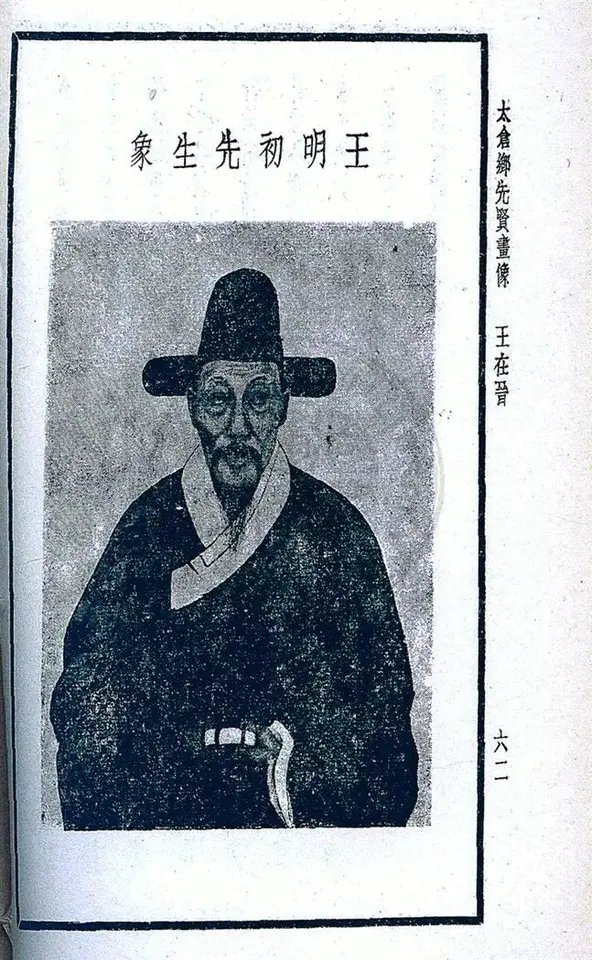
王在晋
Wang Zaijin (王在晋, 1568–1643), courtesy name Mingchu and art name Huyun, was a native of Taicang, Suzhou Prefecture (modern Taicang, Jiangsu). He was an eminent military strategist, frontier supreme commander, and military historian of the late Ming Dynasty who held senior posts including Supreme Commander of Liaodong, Minister of War, Minister of Justice, and Minister of Personnel and War in Nanjing. Born into an impoverished…
Wang Zaijin (王在晋, 1568–1643), courtesy name Mingchu and art name Huyun, was a native of Taicang, Suzhou Prefecture (modern Taicang, Jiangsu). He was an eminent military strategist, frontier supreme commander, and military historian of the late Ming Dynasty who held senior posts including Supreme Commander of Liaodong, Minister of War, Minister of Justice, and Minister of Personnel and War in Nanjing. Born into an impoverished military household, Wang Zaijin lost his father at age fifteen and studied under the strict tutelage of his elder brother. Passing the imperial examinations in 1592, he entered officialdom as a drafter in the Secretariat before serving in the Ministry of Works. In 1600, he was appointed Coastal Defense Vice Commissioner for Xingquan in Fujian, where he promoted veteran naval officer Shen Yourong, defeating pirate fleets and Japanese marauders across Zhangzhou, Quanzhou, and the Penghu Islands to secure the southeastern coast. Subsequently, Wang Zaijin governed in Huguang, Zhejiang, and Jiangxi before being elevated to Governor of Shandong in 1619 to oversee agricultural military colonies and maritime transport supporting the northern frontier. In early 1622, the disastrous collapse of Ming forces at Guangning resulted in the complete loss of Liaodong. Amidst profound court panic, Emperor Xizong presented Wang Zaijin with imperial robes, an embroidered banner, and a sword of state, appointing him Supreme Commander of Liaodong and Minister of War. Facing a desperate operational landscape where Ming forces had abandoned all forward positions, Wang Zaijin devised the defensive strategy of appeasing the Mongols and fortifying regional choke points, proposing the construction of an outer fortified perimeter at Balipu, eight li outside Shanhaiguan, to create a double defense line protecting the capital. However, his pragmatic strategic doctrine met vehement opposition from front-line censor Yuan Chonghuan and Grand Secretary Sun Chengzong, who advocated an aggressive forward advance of two hundred li to fortify Ningyuan. Overruled by Sun Chengzong, Wang Zaijin was transferred to Nanjing as Minister of War. In the early Chongzhen reign, he briefly returned as Minister of Justice and Minister of War before being cashiered due to political intrigues surrounding Marquis Zhang Qingzhen. Retiring to his hometown for fourteen years, he compiled Veritable Records of Liaodong Affairs Across Three Reigns and A Compendium of Coastal Defense, providing premier firsthand primary sources on the Ming-Qing war. Passing away in 1643 at age seventy-six, Wang Zaijin is recognized for his farsighted defensive realism during the twilight of the Ming empire.
Born on the seventeenth day of the sixth lunar month into an impoverished military family in Taicang.
Passed the imperial examinations and was appointed drafter in the Grand Secretariat.
Appointed Vice Commissioner of Xingquan in Fujian, promoting Shen Yourong to rout coastal pirates.
Promoted to Right Vice Censor-in-Chief and Governor of Shandong, managing logistics for Liaodong.
Appointed Supreme Commander of the Grand Canal, then Left Vice Minister of War in Beijing.
Appointed Minister of War and Supreme Commander of Liaodong; proposed the Balipu outer wall.
Dismissed from Liaodong due to disagreements with Sun Chengzong; reassigned to Nanjing.
Appointed Minister of Personnel and subsequently Minister of War in Nanjing.
Appointed Minister of Justice and soon Minister of War under the Chongzhen Emperor.
Dismissed from office following political entanglements regarding imperial investiture documents.
Passed away at his native estate at the age of seventy-six, leaving major historical treatises.
Wang Zaijin was born on July 10, 1568 (the seventeenth day of the sixth lunar month of the second year of the Longqing reign) in Taicang, Suzhou Prefecture. His family hailed originally from Hongdong, Shanxi, migrating to Henan before an ancestor was registered as a hereditary military guardsman in Taicang during the early Ming period. When Wang Zaijin was fifteen, his father died while traveling north on mandatory garrison duty. His elder brother Wang Zaiheng, eighteen years his senior, took charge of his education, demanding rigorous classical study despite family poverty.
In 1585, Wang Zaijin passed the provincial examination, and in 1592, he earned the metropolitan graduate degree. He commenced his career as a drafter in the Secretariat. After completing his evaluation with distinction, he was promoted to secretary in the Ministry of Works, later serving as vice director and director in the Bureau of Waterways, gaining practical engineering expertise in masonry, fortifications, and regional hydraulics.
In April 1600, Wang Zaijin was transferred to Fujian as Coastal Defense Vice Commissioner for Xingquan. Observing the resurgence of piracy along the coastline, he promoted veteran naval officer Shen Yourong. Working in concert with provincial commander Zhu Wenda, they mounted sweeps across coastal waters, annihilating pirate strongholds and securing the Penghu Islands. In 1604, he received official commendation for his maritime victories. Over the following decade, he served as provincial administration commissioner in Huguang, surveillance commissioner in Zhejiang, and senior administration commissioner in Jiangxi.
In March 1619, the Ming army suffered a devastating defeat against the Jurchen forces of Nurhaci at the Battle of Sarhu, placing the northern frontier in grave peril. Emperor Wanli elevated Wang Zaijin to Right Vice Censor-in-Chief and Governor of Shandong. In Shandong, Wang Zaijin resettled refugees from Liaodong, established agro-military colonies, and strengthened the maritime bases of Dengzhou and Laizhou to supply frontline garrisons.
In August 1620, the newly enthroned Taichang Emperor appointed him Supreme Commander of the Grand Canal. Two months later, as frontier conditions worsened, the court created an additional Left Vice Minister of War post and summoned Wang Zaijin to Beijing to manage imperial logistics. In January 1622, the strategic citadel of Guangning fell to Nurhaci. Ming commanders Xiong Tingbi and Wang Huazhen clashed bitterly and retreated in disarray, leading to the collapse of all forty forward fortresses in Liaoxi. Terrified by the refugee crisis at Shanhaiguan, the imperial court turned to Wang Zaijin.
On March 18, 1622, Emperor Xizong invested Wang Zaijin with imperial robes, jade accoutrements, and a sword of state, appointing him Minister of War and Supreme Commander of Liaodong, Jizhou, Tianjin, and Deng-Lai. Arriving at Shanhaiguan, Wang Zaijin personally inspected the terrain, concluding: "The Eastern Crisis has suffered four disastrous stages: first at Qinghe and Fushun, second at Kaiyuan and Tieling, third at Liaoyang and Shenyang, and fourth at Guangning. The fourth stage has surrendered all of Liaodong, leaving no forward territory to maneuver. Retreating to Shanhaiguan, we have not a single step left to withdraw."
Recognizing the superiority of Eight Banners cavalry in open-field combat, Wang Zaijin advocated a strategy of strategic consolidation termed Appeasing the Mongols and Fortifying Choke Points. Concurring with Jiliao governor Wang Xiangqian, he sought to use monetary subsidies to maintain the neutrality or assistance of Chahar Mongol tribes, preventing Nurhaci from outflanking the Great Wall. Concurrently, recognizing that Shanhaiguan was dangerously cramped, he proposed constructing an outer perimeter wall at Balipu, eight li outside the main gate. This thirty-li masonry barrier would enclose the heights of Jiaoshan, Huanxiling, and Yipianshi, featuring artillery redoubts and housing forty thousand garrison troops to turn Shanhaiguan into an impregnable fortress.
Wang Zaijin's defensive doctrine was vehemently challenged by frontline censor Yuan Chonghuan, who insisted on projecting the defensive perimeter two hundred li forward to Ningyuan. Wang Zaijin rejected this plan, warning that an isolated citadel deep in hostile territory would be vulnerable to siege and starvation. Refusing to yield, Yuan Chonghuan secretly appealed to Grand Secretary Ye Xianggao.
Emperor Xizong sent Grand Secretary and imperial tutor Sun Chengzong to inspect defenses at Shanhaiguan. Sun Chengzong criticized Wang Zaijin's Balipu wall as overly defensive, arguing that it wasted resources. Adopting Yuan Chonghuan's forward posture, Sun Chengzong recommended Wang Zaijin's dismissal upon his return to Beijing. In August 1622, Wang Zaijin was relieved of his frontier command and transferred to Nanjing as Minister of War, leading him to retire shortly thereafter on grounds of ill health.
In 1625, Wang Zaijin was briefly recalled as Minister of Personnel and War in Nanjing. In 1628, the Chongzhen Emperor summoned him back to Beijing as Minister of Justice and subsequently Minister of War. Throughout his ministerial tenure, he continued to urge financial prudence and warned against overextending military outposts in Liaoxi. In early 1629, embroiled in factional disputes surrounding Marquis Zhang Qingzhen, Wang Zaijin was dismissed and stripped of his official rank.
In rural retirement, Wang Zaijin witnessed his strategic warnings materialize: the Later Jin bypassed the fortified Ningyuan defenses, marching through Mongol territory to raid Beijing during the Jisi Incident of 1629, and the costly Ning-Jin defense network was eventually dismantled. In seclusion at Taicang, he spent fourteen years writing his forty-volume military chronicle Veritable Records of Liaodong Affairs Across Three Reigns, preserving confidential frontier memorials, imperial decrees, and tactical reports. He also penned A Compendium of Coastal Defense.
Wang Zaijin passed away in Taicang in the spring of 1643 at the age of seventy-six. Although official Qing historians subjected his works to literary censorship, modern scholarship recognizes his texts as invaluable primary sources and affirms his legacy as one of the most prescient defensive strategists of the late Ming period.
Serving as Coastal Defense Vice Commissioner for Xingquan in 1600, Wang Zaijin promoted naval commander Shen Yourong and directed combined fleet actions across Zhangzhou, Quanzhou, and the Penghu Islands, defeating piratical bands and securing maritime peace across the Taiwan Strait.
Following the catastrophic loss of Guangning in 1622, Wang Zaijin stepped forward as Supreme Commander of Liaodong and Minister of War, taking charge of four regional military theaters and restoring morale across the demoralized border defense garrisons.
Conducting rigorous field inspections of Shanhaiguan, he devised the Balipu outer wall plan to establish a layered defense system around the Great Wall pass, formulating an insightful doctrine of strategic contraction based on realistic military assessments.
Over fourteen years of retirement, he authored Veritable Records of Liaodong Affairs Across Three Reigns, synthesizing confidential official dispatches, imperial rescripts, and military intelligence to create an indispensable primary chronicle of late Ming military affairs.
The History of Ming commended his defensive foresight: "Wang Zaijin rose through civilian ministries and possessed practical military aptitude. Following the fall of Guangning, he assumed command in a perilous hour and proposed the Balipu outer wall to protect the pass; his proposals were prudent and seasoned. However, Sun Chengzong and Yuan Chonghuan favored offensive advances and discarded his counsel. When Ningyuan and Jinzhou subsequently fell and the capital was repeatedly threatened, observers recognized the validity of Wang Zaijin's earlier insights." Minister of War Zhang Heming stated: "Wang Zaijin possesses unbending integrity and far-reaching strategic vision; his perception is as clear as torchlight and his leadership cuts through complexity, serving as a steadfast pillar of dynastic defense."
Modern military historians re-evaluate Wang Zaijin as an exceptionally pragmatic strategist who understood that early seventeenth-century Ming forces were unsuited for offensive warfare against nomadic heavy cavalry. His proposal to consolidate resources at Shanhaiguan rather than squander imperial treasuries on exposed desert fortresses reflected sound strategic principles. His Veritable Records of Liaodong Affairs Across Three Reigns remains one of the most reliable and thorough documentary collections on the collapse of the Ming northeastern border.
FIGURES ASSOCIATED WITH THIS DYNASTY