Life
Classical Studies and Leadership in the Former Seven Masters
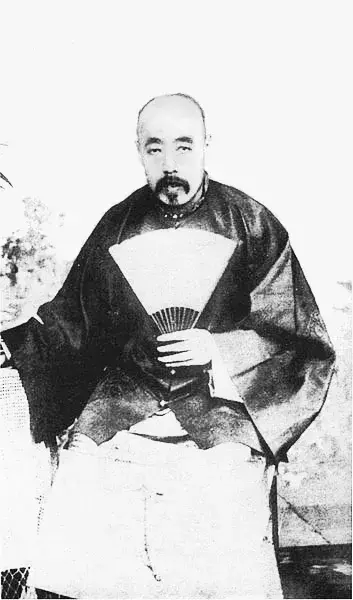
Wang Tingxiang was born on December 4, 1474 CE (twenty-fifth day of the tenth lunar month in the tenth year of Chenghua) in Chonghua Township, Yifeng County, Kaifeng Prefecture. His ancestral lineage originated in Luzhou, Shanxi, migrating to Yifeng during the Tianshun reign. From early childhood, Wang exhibited extraordinary cognitive brilliance, reading classical annals with ease and retaining more than a thousand characters per day. Eminent local scholar Tian Jian admired his precocity, recognizing him as future ministerial talent. In the twenty-second year of Chenghua (1486 CE), at age thirteen, he became a licentiate and studied under provincial scholar Li Zhen.
In the eighth year of Hongzhi (1495 CE), Wang passed the Henan provincial examination at twenty-two. Following examination setbacks in Beijing, he returned to Luzhou to sweep ancestral tombs, gathering kin and scholars to lecture at his studio, known as the "Ziheng Study." In the twelfth year of Hongzhi (1499 CE), he entered the Imperial College in Beijing, studying under Chancellor Xie Duo and immersing himself in astronomy, calendar calculations, and diverse philosophical schools. In the fifteenth year of Hongzhi (1502 CE), he achieved second-class honors in the metropolitan jinshi examinations and was appointed Hanlin Bachelor alongside Kang Hai and Li Tingxiang, celebrated as the "Four Talents of the Hanlin."
During this era, Chinese literature was suffocated by the ornate, formulaic "Cabinet Style" (Taige Ti). Resisting this bureaucratic decadence, Wang Tingxiang united with Li Mengyang, He Jingming, Xu Zhenqing, Bian Gong, Kang Hai, and Wang Jiusi to ignite a major literary revolution known historically as the Former Seven Masters. Championing the maxim that prose must emulate the Qin and Han while poetry should reflect the High Tang, they sought to revive vitality, authentic emotion, and social engagement. Wang's poetry, characterized by robust resonance and austere dignity, established his enduring stature as a literary pioneer.
Uncompromising Integrity and Resisting Eunuch Liu Jin
In the seventeenth year of Hongzhi (1504 CE), upon completing his Hanlin candidacy, Wang Tingxiang was assigned as Supervising Secretary in the Office of Scrutiny for War. As Mongol forces repeatedly raided the northern garrisons of Datong and Xuanfu, Wang demonstrated strategic insight in his extensive memorial Ni Jinglue Bianguan Shiyi Shu. He insisted that border security demanded consolidating core defense, guaranteeing food logistics, selecting capable commanders, eliminating eunuch oversight, and enforcing merit-based military discipline.
Upon Emperor Wuzong's accession in the first year of Zhengde (1506 CE), chief eunuch Liu Jin usurped supreme executive power, purging upright officials. Observing mourning for his father, Wang returned to Beijing in the third year of Zhengde (1508 CE) and was appointed Investigating Censor of Shaanxi. Shaanxi was Liu Jin's native home, where his relatives seized farmland and extorted provincial treasuries with impunity. While local bureaucrats groveled, Wang conducted clandestine inquiries and sternly arrested Liu Jin's criminal agents. Enraged, Liu Jin fabricated charges of "willful insubordination," casting Wang into the dreaded Imperial Bodyguard prison (Zhaoyu). Despite brutal torture, Wang refused to yield. Due to resolute defense by senior ministers, Liu Jin was compelled to commute his death sentence to dismissal, demoting him to Vice Magistrate of Bozhou. In Bozhou, Wang remained serene, opening public lecture halls to teach classical philosophy to grateful local scholars.
In August of the fifth year of Zhengde (1510 CE), Grand Secretary Yang Tinghe eradicated Liu Jin's clique. Wang was exonerated and restored to the Censorate, stationed in Shaanxi. When the massive peasant insurgencies led by Liu the Sixth and Liu the Seventh approached Shaanxi borders, Wang mobilized grain reserves, garrisoned strategic mountain passes, and suppressed local unrest in Jingyang and Qingyang. In 1511 CE, he inspected Shanxi, petitioning for the elevation of talented grassroots commoners, and in 1512 CE overhauled the tea-horse trade across the northwest, curbing smuggling and securing tens of thousands of warhorses.
Regional Governance and Pacification of the Southwest
In the eighth year of Zhengde (1513 CE), Wang Tingxiang was promoted to Surveillance Vice Commissioner of Sichuan. Traveling through precipitous gorges, he confronted rampant banditry and unruly tribal chieftains. Adopting an astute blend of benevolence and force, he penetrated remote tribal territories, pardoned repentant bandit chieftains, executed unyielding rebels, and established a durable neighborhood mutual-security network that pacified eastern Sichuan.
Subsequently transferred as Education Intendant and then Surveillance Commissioner of Shandong, Wang dismantled bribery in civil examinations, restored Mingshan Academy in Licheng, and personally instructed licentiates in the Classic of Changes and Zhang Zai's materialist philosophy. Inspecting the Confucius Temple in Qufu, he strictly investigated fraudulent hereditary claims, safeguarding official integrity.
In the first year of Jiajing (1521 CE), Emperor Shizong elevated Wang to Right Assistant Censor-in-Chief and Grand Coordinator of Sichuan. A major rebellion had erupted among ethnic tribes across Liangshan and southern Sichuan, capturing counties and defeating regular troops. Assuming direct field command, Wang executed a comprehensive strategy: subverting tribal alliances through imperial proclamations while executing nocturnal cavalry raids against mountain strongholds. His decisive victory captured rebel leaders, terminating the regional crisis. He subsequently established frontier garrisons and reformed land taxes to ensure long-term stability.
Military Reforms and Leading the Censorate
In the ninth year of Jiajing (1530 CE), Wang was recalled to the capital as Right Vice Minister of War in Nanjing, reorganizing naval defenses and dredging maritime channels to defend against coastal piracy. During this tranquil assignment, he finalized his master treatises Shen Yan and Taiji Bian, formulating his profound materialist critique of Neo-Confucian idealism.
In the twelfth year of Jiajing (1533 CE), Wang was appointed Minister of War in Beijing and placed in charge of the Integrated Training Divisions (tuanying). The twelve capital divisions had long decayed into hollow institutions where noble officers embezzled stipends, wealthy families purchased exemptions, and aged hirelings substituted for actual soldiers. Wang submitted his sharp Tuanying Junzheng Shu, exposing three systemic blunders: excessive menial corvée, rampant payroll embezzlement, and substitute enlistment of infirm vagrants. Personally reviewing troop registers on the parade grounds, he cashiered tens of thousands of frail substitutes, recruited hardy northern youths, enforced strict firearm-cavalry coordination, and barred court eunuchs from meddling in troop rosters, revitalizing the defensive core of the empire.
In the fifteenth year of Jiajing (1536 CE), Wang was elevated to Left Censor-in-Chief presiding over the Censorate, conferred the supreme honor of Grand Guardian of the Heir Apparent. In this central supervisory role, he rooted out bureaucratic graft. He imparted to young officials his famous analogy of the "sedan-chair bearer's clean shoes": observing a porter walking after rain, who took pains to avoid mud until his first splash, after which he stepped heedlessly into every puddle; so too must an official remain incorruptible from the very beginning. His vigilance maintained rigorous discipline throughout the court.
Unjust Dismissal and Late Academic Legacy
During mid-Jiajing, Emperor Shizong became obsessed with Daoist immortalist rituals. Marquis Guo Xun exploited the emperor's religious fervor to amass illicit fortunes. Wang Tingxiang despised Guo Xun's corruption, repeatedly challenging him during court assemblies.
In April of the twentieth year of Jiajing (1541 CE), a devastating conflagration destroyed the Imperial Ancestral Temple. Interpreting this as celestial admonition, Shizong ordered officials to submit self-examinations. In his Tianbian Zichen Shu, Wang argued from a materialist stance that natural disasters are regular cosmic occurrences, urging the throne to rectify governance, purge flatterers, and curb bribery. The memorial wounded the emperor's pride. Soon after, the Censorate investigated Guo Xun's massive embezzlement. To deflect guilt, Guo accused the Censorate of bias and implicated Wang. Seizing this pretext, Shizong stripped the sixty-seven-year-old Wang of all offices and banished him to commoner status. Wang departed Beijing serenely without rancor.
Returning to Yifeng, Wang devoted his final years to writing and tutoring scholars who journeyed from across the realm. He transmitted his materialist doctrines and edited his Junchuan Ji. On November 23, 1544 CE (ninth day of the eleventh lunar month of the twenty-third year of Jiajing), Wang passed away at seventy. In early Longqing, the court fully rehabilitated his name, restoring his titles, conferring the posthumous title Sumin, and promoting him to Junior Protector.
Major Contributions
Constructing the Materialist Monument of Qi-Monism
Wang Tingxiang's supreme contribution to Chinese intellectual history was his construction of a rigorous materialist ontology centered on Qi-Monism (yuanqi yiyuan lun), shattering the metaphysical foundations of Cheng-Zhu Neo-Confucianism and Yangming Mind-philosophy. Cheng Yi and Zhu Xi had posited principle (li) as an ethereal, transcendent spiritual entity that preceded physical reality, claiming that "before heaven and earth existed, there was only principle." Conversely, Wang Yangming proclaimed that "mind is principle" and "nothing exists outside the mind."
Wang Tingxiang countered with his revolutionary maxim: "Above original qi there is no thing, no Dao, and no principle." He demonstrated that primordial material qi (yuanqi) constitutes the sole ontological reality and origin of the cosmos, from which heaven, earth, stars, water, fire, and all myriad creatures coalesce. He established that "qi is the foundation of principle, and principle is the conveyance of qi," demonstrating that abstract principles cannot exist independently of matter. To elucidate the conservation of matter, he offered his celebrated ocean-ice analogy: "Qi condenses and disperses, but it never perishes. Consider ice in relation to the sea: cold causes water to freeze into ice, which is condensation; melting restores it to water, which is dispersion. Though the ice melts away, the water of the ocean has never diminished." This insight stood at the vanguard of ancient Chinese materialist cosmology.
Critiquing Cosmic Teleology and Historical Dogmatism
Wang Tingxiang applied his materialist framework to dismantle theological teleology. Rejecting the superstitious doctrine of "interaction between Heaven and humanity" (tianren ganying), he asserted that nature operates through inherent physical laws devoid of moral consciousness: "Heaven and earth generate things because momentum dictates it; what conscious intent could Heaven possess?"
He demolished the teleological claim that Heaven created grains and animals specifically for human nourishment, posing his celebrated dilemma: "Grains may seem designed for man; but did Heaven also create lethal, belly-tearing poisonous weeds for man to eat? Chickens and pigs may seem created for humans; but did Heaven create vipers, scorpions, and centipedes for humans? If one claims Heaven creates animals for man, then when tigers and wolves seize humans and eat them, can one claim that Heaven created humanity for tigers and wolves?" Furthermore, he attacked historical dogmatism: "When well-fields deteriorated, paths were opened; when feudal enclaves were abolished, commanderies were established. What functioned in the past cannot function today; principles change with historical circumstance, and obsolete forms decay." He proved that human institutions must evolve dynamically with historical progress.
Establishing the Empirical Epistemology of Action Preceding Knowledge
In epistemology, Wang Tingxiang developed an empirical theory of sensory reflection, refuting the Neo-Confucian premise that "knowledge precedes action" and Wang Yangming's doctrine of "unity of knowledge and action" which subsumed action into subjective thought. Wang Yangming held that the human mind inherently possesses innate moral knowledge (liangzhi), requiring no exterior investigation.
Wang Tingxiang championed the materialist principles that "action precedes knowledge" (xing er hou zhi) and "knowledge and action advance together." In Ya Shu, he wrote: "To discuss a matter is to practice it; to practice a matter is to genuinely know it. Mere discourse without practice cannot be deemed true knowledge." He explained that the human mind is merely a cognitive organ: "When still and unprovoked, the mind possesses no internal movement; motion is stimulated by external encounters, for the mechanism lies outside." Without external stimuli and sensory contact, cognition cannot occur. Examining dreams and spirits, he explained dreams as psychological reflections of sensory memory (poshi) or waking thoughts, affirming that bodily death extinguishes human spirit, eliminating superstitious foundations for ancestral hauntings.
Classical Literary Revival and Pragmatic Stylistics
As a foundational master of the Former Seven Masters, Wang Tingxiang revitalized Ming literature against the shallow complacency of the Cabinet Style. Together with Li Mengyang and He Jingming, he insisted that prose should emulate the historical grandeur of the pre-Qin and Han, while poetry should reflect the vigorous rhythm of the High Tang.
Critically, when Li Mengyang's followers deteriorated into sterile, verbatim mimicry of archaic phrases, Wang warned against literal imitation. He introduced the dialectical doctrine of "emulating principles to achieve creative transformation" (niyi yi cheng qi bianhua), insisting that studying the ancients must capture their inner spirit while reflecting contemporary social realities. His own poetry, including Kuyu Tan and Sai Xia Qu, portrayed the tribulations of frontier soldiers and displaced vagrants with austere, unadorned emotional depth.
Restoring Capital Defense and Strategic Military Engineering
Wang Tingxiang was that rare combination of classical philosopher and pragmatic military commander. Serving in the Office of Scrutiny for War and as Minister of War directing the Integrated Training Divisions, he systematically revitalized Ming defenses.
He reformed the twelve capital divisions, purging phantom rosters, cashiering decrepit substitutes, and enlisting vigorous recruits. Emphasizing firepower and tactical synergy, he commissioned large-scale casting of matchlocks (niaochong), Folangji bronze cannons, and rocket carts, organizing integrated vehicle-infantry-cavalry battle formations to repel nomadic steppe cavalry. Along the Great Wall frontier, he reinforced mountain redoubts, cultivated military colonies (tuntian), established supply depots, and erected beacon-fire communication networks, significantly enhancing the defensive posture of the realm.
Empirical Research in Acoustics, Calendrics, and Natural Sciences
Driven by his materialist curiosity, Wang Tingxiang expanded his inquiries into musical temperament, astronomy, and physical observation, pioneering the scientific ethos of the late Ming.
In musical acoustics, he attacked the mystical numerological associations that Song Confucians attached to pitch-pipe lengths. In Lülü Yishuo, he constructed experimental pipes and stringed instruments, conducting physical acoustic measurements on the fundamental pitch-pipe (Huangzhong), calculating bore diameter corrections, and exploring string vibrational dynamics, providing essential groundwork for Zhu Zaiyu's discovery of equal temperament. In nature observation, he examined snowflakes across multiple winters, recording: "Observing spring snow caught upon my sleeve, every flake invariably displayed six petals," empirically correcting ancient textual ambiguities. Through meticulous hive observation, he likewise debunked the classical myth that mud dauber wasps do not breed offspring, embodying the spirit of empirical scientific discovery.