Suppression of the rebellion of Chengjiao | Suppression of the rebellion of Chengjiao, Lord of Chang'an. One account says Wang Jian did not directly participate, although sources record that he was already a Qin general at the time.
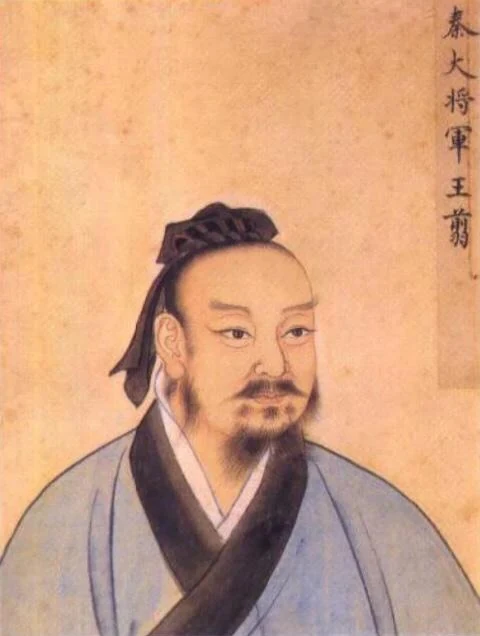
300 BCE–210 BCE
General
Wang Jian
王翦
Wang Jian was a famous Qin general of the late Warring States period and a native of the eastern township of Pinyang, northeast of present-day Fuping, Shaanxi. His dates of birth and death are unknown. He was active roughly from the final years of King Zhaoxiang of Qin through the period after Qin Shi Huang completed the conquest of the Six States. Together with Bai Qi, Li Mu, and Lian Po, he is traditionally counted among…
300 BCE–210 BCEQin Dynasty
PROFILE
Wang Jian was a famous Qin general of the late Warring States period and a native of the eastern township of Pinyang, northeast of present-day Fuping, Shaanxi. His dates of birth and death are unknown. He was active roughly from the final years of King Zhaoxiang of Qin through the period after Qin Shi Huang completed the conquest of the Six States. Together with Bai Qi, Li Mu, and Lian Po, he is traditionally counted among the “Four Great Generals of the Warring States.” Wang Jian was one of the principal military commanders who carried out Qin's wars of unification. He successively led armies that defeated Zhao, Yan, and Chu, while his son Wang Ben destroyed Wei and Qi. The achievements of father and son were central to Qin's conquest of the realm. Later genealogical traditions revered Wang Jian as an ancestor of the Wang clans of Langya and Taiyuan.
- Other name
- Wang Jian of Pinyang
- Period
- Qin
- Date of Birth
- Not recorded in historical sources
- Date of Death
- Not recorded in historical sources
- Dynasty/Regime
- Qin
- Identity
- General
- Ethnicity/Ethnic affiliation
- Not recorded in historical sources
- Native place
- Eastern Township of Pinyang (present-day Fuping County, Shaanxi)
- Place of birth
- Not recorded in historical sources
- Major achievements
- Qin commander during the late Warring States period; led the campaigns that destroyed Zhao and Chu and, together with his son Wang Ben, helped complete the unification of the realm.
LIFE TIMELINE
Led troops against Zhao and captured Eyu and eight other cities. | Led troops against Zhao and captured Eyu and eight other cities.
Advanced from Shang Commandery against Zhao in coordination with Yang Duanhe and used a st | Advanced from Shang Commandery against Zhao in coordination with Yang Duanhe and used a stratagem of alienation that led to Li Mu's removal.
Captured Handan and Zhao king Qian | Captured Handan and Zhao king Qian; Zhao was destroyed.
Led an army against Yan | Led an army against Yan, defeated the combined Yan-Dai forces at the Yi River, captured Ji, and forced King Xi of Yan to flee to Liaodong.
When asked for a plan to conquer Chu | When asked for a plan to conquer Chu, insisted that 600,000 troops were necessary. His advice was rejected, and he claimed illness and returned to Pinyang.
After Li Xin and Meng Tian suffered a major defeat in Chu | After Li Xin and Meng Tian suffered a major defeat in Chu, the king personally went to Pinyang to ask Wang Jian to return. Wang Jian led 600,000 troops against Chu.
Held fortified positions and refused battle | Held fortified positions and refused battle; when the Chu army withdrew eastward, pursued and decisively defeated it, killing Xiang Yan, though another account says Xiang Yan committed suicide.
Captured King Fuchu of Chu | Captured King Fuchu of Chu, pacified Chu, and established commanderies and counties; afterward, or perhaps at the same time, is said to have campaigned south against the Baiyue, although this is disputed.
Qin unified the realm | Qin unified the realm; Wang Jian and Wang Ben were among the most meritorious figures in the conquest.
BIOGRAPHY
Biography
Family Background and Early Life
Wang Jian was a native of the eastern township of Pinyang, northeast of present-day Fuping, Shaanxi. According to genealogical reconstruction in the “Genealogical Tables of Chancellors” in the New Book of Tang, he was descended from Prince Jin, son of King Ling of Zhou, and was the sixteenth-generation descendant of Prince Jin. Although this claim is generally regarded as a later genealogical attachment, Wang Jian appears to have come from a military family in Qin territory. He developed an interest in military affairs while young and entered service under King Zheng of Qin. The historical record gives little detail about his early career, but his eventual rise to supreme command suggests extensive practical experience in warfare.
Internal Rebellions and Rise to Prominence
In 239 BCE, the eighth year of King Zheng of Qin, Chengjiao, Lord of Chang'an and younger brother of the Qin king, led troops against Zhao but rebelled and defected to Zhao after being encouraged by Fan Yuqi. The Records of the Grand Historian states that “the king's younger brother Chengjiao, Lord of Chang'an, led an army to attack Zhao, rebelled, and died at Tunliu.” The sources do not explicitly state that Wang Jian participated in suppressing the rebellion, though the Chinese source notes that as a Qin general he may have been involved.
In 238 BCE, the ninth year of King Zheng of Qin, the king held his coming-of-age ceremony at Qinian Palace in Yong, where Lao Ai launched a rebellion. The king mobilized forces, suppressed the revolt, pursued and executed Lao Ai, and purged his faction. The sources do not record whether Wang Jian directly participated. After the revolt was suppressed, Lü Buwei was dismissed as chancellor because of his implication in the affair, while Wang Jian's position as a veteran Qin commander continued to rise.
Conquest of Zhao
In 236 BCE, the eleventh year of King Zheng of Qin, Wang Jian led troops against Zhao and captured Eyu, in present-day Heshun, Shanxi, together with eight other cities. The sources say that after only eighteen days in command he ordered officers whose stipends were below one hundred shi to return home and retained only two men out of every ten. The remaining troops were selected elites with high morale, and they captured Eyu in a single offensive.
In 229 BCE, the eighteenth year of King Zheng, Qin launched a major campaign against Zhao. Wang Jian advanced from Shang Commandery through Jingxing and coordinated with Yang Duanhe, intending to destroy Zhao in one blow. Zhao general Li Mu resisted, and the two sides remained deadlocked for more than a year. Wang Jian employed a stratagem of alienation that caused King Qian of Zhao to have Li Mu killed. After Li Mu's death, Wang Jian broke the Zhao army, killed its commander Zhao Cong, captured Handan, and took King Qian prisoner, bringing Zhao to an end.
Campaign against Yan
In 227 BCE, the twentieth year of King Zheng, after Jing Ke attempted to assassinate the Qin king, King Zheng angrily ordered Wang Jian to lead an army against Yan. King Xi of Yan and Zhao Jia, King of Dai, joined forces in resistance, with Crown Prince Dan commanding the combined army. Qin defeated them along the Yi River. Wang Jian then captured Ji, the Yan capital, while King Xi fled to Liaodong, leaving Yan in existence only nominally.
War of Conquest against Chu
In 226 BCE, the twenty-first year of King Zheng, the Qin king summoned his ministers to discuss the conquest of Chu. Wang Jian stated that “nothing short of 600,000 men will suffice,” while Li Xin argued that no more than 200,000 were needed. The king was pleased with Li Xin's confidence and regarded Wang Jian as old and timid, so he sent Li Xin and Meng Tian with 200,000 troops. Wang Jian claimed illness and retired to his home at Pinyang.
Soon afterward, the Chu general Xiang Yan confronted the 200,000 Qin troops with a force of 400,000. After initially giving ground, the Chu army counterattacked with elite troops, shattered two Qin camps, and killed seven commandants. The Qin force suffered a major defeat. The king was furious and personally hurried to Pinyang to apologize to Wang Jian and ask him to return. Wang Jian again insisted on 600,000 troops, and the king agreed.
Wang Jian set out with the 600,000-man army, and the king personally saw him off at Bashang. Before departing, Wang Jian repeatedly asked for grants of fields, houses, and gardens in order to reassure the king. When others questioned him, he explained: “The king of Qin is harsh and suspicious by nature. Now he has entrusted the entire military strength of the realm to me. If I do not ask repeatedly for lands and estates to show that I have no greater ambition, I will instead cause the king to suspect me.”
In 224 BCE, the twenty-third year of King Zheng, Wang Jian entered Chu territory but fortified his positions and refused battle. He rested the soldiers and shared their food. The Chu army repeatedly challenged him, but the Qin forces remained behind their defenses. After a year, the Chu believed Qin had no intention of fighting and withdrew eastward. Wang Jian then launched a pursuit with elite troops, decisively defeated the Chu army, and followed it to south of Qi, where Xiang Yan was killed, though one account says Xiang Yan committed suicide after defeat. The following year Wang Jian captured King Fuchu of Chu, pacified Chu, and established commanderies and counties.
After Unification
After Qin unified the Six States, the sources provide little information about Wang Jian. One tradition says that he withdrew from power in time and thus died peacefully. His son Wang Ben was enfeoffed as Marquis of Tongwu for his military achievements. His grandson Wang Li later served as a Qin general but was captured by Xiang Yu at the Battle of Julu. Wang Jian's military contribution to Qin unification was exceptional, yet historical texts say little about his later years, and his final fate may simply have been a natural death.
Wang Jian was a native of the eastern district of Pinyang, fond of military matters from boyhood and a servant of King Zheng of Qin. In 236 BCE he attacked the Zhao stronghold of Yuyu, broke it and took nine cities besides. Before the fighting he reorganized his army, sending home all below the rank of a hundred bushels and keeping two men out of every ten, who proved to be the pick of the force; with this high-spirited body he took Yuyu and with it nine towns of Zhao.
In the wars of unification, apart from Han, which fell first without his part, the other five states were destroyed either by him or by his son Wang Ben. In 229 BCE he marched from Shangjun against Zhao and faced the famous Zhao general Li Mu for more than a year; by a stratagem he made King Qian of Zhao kill Li Mu, after which he swept forward, routed the Zhao army and killed its commander, so that Zhao's lands became Qin commanderies and its king surrendered. In 227 BCE, after Jing Ke's attempt on the king's life, Wang Jian was sent against Yan; the Yan-Dai forces under the Heir Apparent Dan were beaten at the Yi river, and he took the Yan capital Ji, so that King Xi fled to Liaodong and Yan existed in name only.
The conquest of Chu best displays his generalship. Asked by the king how many men were needed, Li Xin said two hundred thousand; Wang Jian said six hundred thousand was the least. The king thought him old and timid, sent Li Xin, and Li Xin was crushingly defeated. The king went in person to Pinyang to apologize and ask him to take command; Wang Jian insisted on six hundred thousand and the king agreed. As he set out he repeatedly asked for fine fields and houses, and when his officers thought him grasping he explained that the king was of a restless and suspicious temper, and that with all Qin's armored men in his single hand, only by asking for estates for his descendants to show he had no other ambition could he keep the king from suspecting him. In Chu he held his walls and would not fight, resting and feeding his men daily while the Chu army challenged in vain; when he asked what games the troops were playing and was told they were throwing stones and jumping, he said they were ready. When the Chu army moved east he pursued, shattered it, and its general Xiang Yan died of the defeat; King Fuchu of Chu was captured and Chu perished. In 221 BCE his son Wang Ben marched south from Yan against Qi, took King Jian of Qi, and the six states were gone.
Three generations of the family thereafter served Qin as generals: Wang Ben was a famous commander in his own right, and Wang Jian's grandson Wang Li, commanding against Zhao at the end of Qin, was defeated by Xiang Yu at Julu and taken prisoner. Sima Qian, treating Bai Qi and Wang Jian together in the Records, observes that each was short in one thing and long in another, Wang Jian being known for his seasoned caution and his care for his own safety, in contrast to Bai Qi's brilliant ruthlessness.
The order of Qin's conquests and the division of labor between father and son were roughly these: Han was destroyed by Neishi Teng in 230 BCE, Zhao by Wang Jian in 228, the Yan capital Ji broken by Wang Jian in 226, Wei destroyed by Wang Ben in 225 by diverting the Yellow River and the Hong canal against Daliang, Chu by Wang Jian in 223, and Qi by Wang Ben marching south from Yan in 221. Five of the six states thus fell to the father or the son, a record rare among military houses since the Warring States. Wang Jian's hallmark as a commander was caution: he would not stake everything on a single battle, using a stratagem to remove Li Mu in Zhao and standing on the defensive in Chu until the enemy tired — always seeking the greatest result at the least cost.
His repeated requests for fields and houses, made to give himself a venal appearance, has been read ever since as a classic case in the relations of ruler and minister. The Records says King Zheng laughed at the requests, and Wang Jian privately explained that the king was suspicious by temper and that with the whole army in his hands he must seem to care only for property or invite mistrust. Sima Qian, treating him with Bai Qi, notes that each was short in one thing and long in another: Wang Jian could not beat a larger force with a smaller as Bai Qi could, but he preserved both name and life, in contrast to Bai Qi's death by imperial command. When the Tang established the temple of the Martial King to honor commanders of the past, Wang Jian was among them, a mark of his standing among later military men.
The family's fortunes ran on to the end of Qin: his grandson Wang Li was beaten and taken at Julu by Xiang Yu, and three generations of generals ended with that battle. Later genealogies of the Wang surname commonly claim descent from Wang Jian through his son Wang Ben and grandson Wang Li, holding that Wang Li's sons Wang Yuan and Wang Wei founded respectively the Wang of Langya and the Wang of Taiyuan. Such descent is traced in the registers and need not be reliable, but it shows the standing of Wang Jian's house in later ideas of lineage.
Wang Jian was the weightiest commander in the Qin army after Bai Qi. In his time Qin far outstripped the six states and what was needed was a steady executor rather than a gambler, which suited his method: no risks, no contempt for the enemy, certain victory bought with ample force and patient waiting. The Tang and Song honored generals of the past in the temple of the Martial King, its lists of those worshipped and attending revised more than once, and Wang Jian appears from the Tang onward, a mark of his place in the genealogy of Chinese strategy.
The Records is brief on his two most important campaigns: "In the eleventh year of the First Emperor, Jian attacked Yuyu in Zhao, broke it and took nine cities"; and "in the eighteenth year Jian attacked Zhao, and after more than a year took it, the King of Zhao surrendering and all Zhao's land being made commanderies." In the first he reorganized his army, weeding out the weak and keeping the strong, a common means of raising fighting quality in the Warring States; the second is directly bound up with Li Mu's death by stratagem. The campaigns against Yan and Chu are more fully recorded, and the Chu campaign preserves his two celebrated passages — asking for fields and houses to seem venal, and refusing battle behind his walls — which later ages have repeatedly cited in discussions of strategy and of the relations of ruler and minister.
Major Activities
Military Contribution
Wang Jian was one of the principal commanders of Qin's wars of unification. He led armies that destroyed Zhao and broke the power of Yan and Chu, while his son Wang Ben conquered Wei and Qi. Father and son were therefore credited with major contributions to Qin's conquest of the realm. Wang Jian's style of command was deliberate and cautious, with a strong ability to recognize the right moment to strike. His Chu campaign became his most celebrated operation: with 600,000 troops he refused repeated challenges, rested and trained his forces, and attacked only after the Chu army relaxed its guard and began to withdraw, producing a decisive victory.
Political Judgment
Wang Jian was remembered not only for military ability but also for political caution. Before the Chu campaign he disagreed with the Qin king by insisting that 600,000 troops were necessary and retired when his advice was rejected. After being recalled, he repeatedly asked for fields and residences so that the king would see him as interested in private wealth rather than political power. The gesture reduced the ruler's suspicion of a commander holding an enormous army and helped secure both Wang Jian's personal safety and the successful prosecution of the campaign.
Travels and Campaign Geography
Wang Jian's military activity extended across areas of present-day Shanxi, Hebei, Hubei, and Hunan. In the Zhao campaigns he passed through Jingxing and entered Handan; in the Yan campaign he crossed the Yi River and captured Ji; and in the conquest of Chu he campaigned across the Huai and Yangtze regions and helped pacify territories to the south. His movements covered many of the principal theaters of Qin's wars of unification.
Relations with Contemporaries
Wang Jian had a close working relationship with Qin Shi Huang. The Chinese source cites Sima Qian's statement that “the First Emperor treated him as a teacher,” although Wang Jian remained cautious in dealing with the ruler. He was often contrasted with Li Xin: Li Xin was young and confident and underestimated Chu, suffering a major defeat, whereas Wang Jian was older and more cautious and ultimately succeeded. Wang Jian and the Meng family were pillars of the Qin military; the historical tradition states that “the Wang and Meng clans had the greatest merit.”
Personal Relations
- Son: Wang Ben, Qin general who conquered Wei and Qi and was enfeoffed as Marquis of Tongwu
- Grandson: Wang Li, Qin general captured by Xiang Yu at the Battle of Julu
- Great-grandsons: Wang Yuan and Wang Wei, according to the genealogical table in the New Book of Tang, a later genealogical tradition
- Qin Shi Huang: Ruler and subject; according to the source tradition, Qin Shi Huang treated Wang Jian as a teacher, and Wang Jian served him in the conquest of the Six States
- Li Xin: Fellow general; differed with Wang Jian over the force required to conquer Chu and suffered defeat after underestimating Chu
- Meng Tian: Fellow Qin general
- Li Mu: Zhao general; removed after Wang Jian used a stratagem of alienation
- Xiang Yan: Chu general; defeated during Wang Jian's conquest of Chu, though one account says he committed suicide
Historical Assessment
Qin and Early Historical Tradition
- Sima Qian: “Wang Jian served as a Qin general and destroyed the Six States. At that time he was a veteran commander and the First Emperor treated him as a teacher, yet he could not assist Qin in establishing virtue and strengthening its foundations. He merely accommodated himself to the ruler and sought favor until his death.” (Records of the Grand Historian, “Biographies of Bai Qi and Wang Jian”)
- Sima Qian: “In the twenty-sixth year of the First Emperor, the entire realm was annexed; the Wang and Meng clans had the greatest merit, and their names were transmitted to later generations.” (Records of the Grand Historian, “Biographies of Bai Qi and Wang Jian”)
- Ban Gu: “Qin, building on the victories of four generations and relying on the natural barriers of rivers and mountains, employed men such as Bai Qi and Wang Jian, fierce as wolves, who extended their claws and fangs and hunted the Six States until the realm was annexed.” (Book of Han, “Treatise on Punishments and Laws”)
Han and Tang Periods
- Sima Zhen: “Bai Qi and Wang Jian were both skilled in the use of troops. In turn they served as Qin generals, taking cities and defeating Chu.” (Annotations Seeking the Obscure in the Records of the Grand Historian)
- Du Mu: “The Zhou had Grand Duke of Qi; Qin had Wang Jian ... Men such as these, in their own age, devised plans by examining antiquity and comparing it with the present; their designs were subtle, secret, and far-reaching.” (“Preface to the Annotated Art of War”)
- Yan Zhenqing: In 782, the third year of the Jianzhong era of Tang, Wang Jian was included among sixty-four renowned generals of antiquity who received posthumous honors, as recorded in the Institutional History of Tang.
Song, Yuan, Ming, and Qing Periods
- Su Shi: “One who is skilled in the use of troops, when destroying an enemy state, should act as a child loosens a tooth ... Wang Jian used 600,000 men to take Chu; this was the way of pulling out a tooth in one stroke.” (Collected Works of Su Shi)
- Chen Yuanliang: “The Zhou phoenix did not cry; the Qin tiger watched ... Six hundred thousand soldiers, dense and strong. Then Fuchu was presented, and in the end the land of Chu was pacified.” (Extensive Records from the Forest of Affairs)
- Huang Daozhou: “Wang Jian served Qin and judged the Chu campaign with clear resolve ... As a general he was ruthless, and one generation endured hardship. In the third generation fortune turned ill, and Wang Li was captured.” (Expanded Biographies of Famous Generals)
- Deng Tingluo: “Among those of antiquity skilled in commanding large forces, none surpassed Wang Jian and Han Xin.” (Questions on the Mirror of War)
Modern Period
- Modern scholarship generally recognizes Wang Jian's military ability and historical importance and regards him as one of the most important commanders in Qin's wars of unification. His deliberate style of command and political caution have been repeatedly praised. Some scholars have also noted, however, that he did not help Qin establish a durable political order; the dynasty collapsed in its second generation, and military victory did not become long-term stable government.
FIGURES ASSOCIATED WITH THIS DYNASTY
Bibliography
- Records of the Grand Historian, vol. 73, “Biographies of Bai Qi and Wang Jian”
- Records of the Grand Historian, vol. 6, “Basic Annals of the First Emperor of Qin”
- Book of Han, vol. 23, “Treatise on Punishments and Laws”
- Local Gazetteer Compilation Office of the Yuyao Municipal People's Government, Tracing the Origins of the Yaojiang Wang Clan and Wang Yangming's Family Affairs, Unity Press, 2020