Birth into Great Clan
Born into the premier aristocratic Langya Wang clan in Linyi; his grandfather Wang Lan was a prominent Western Jin minister.
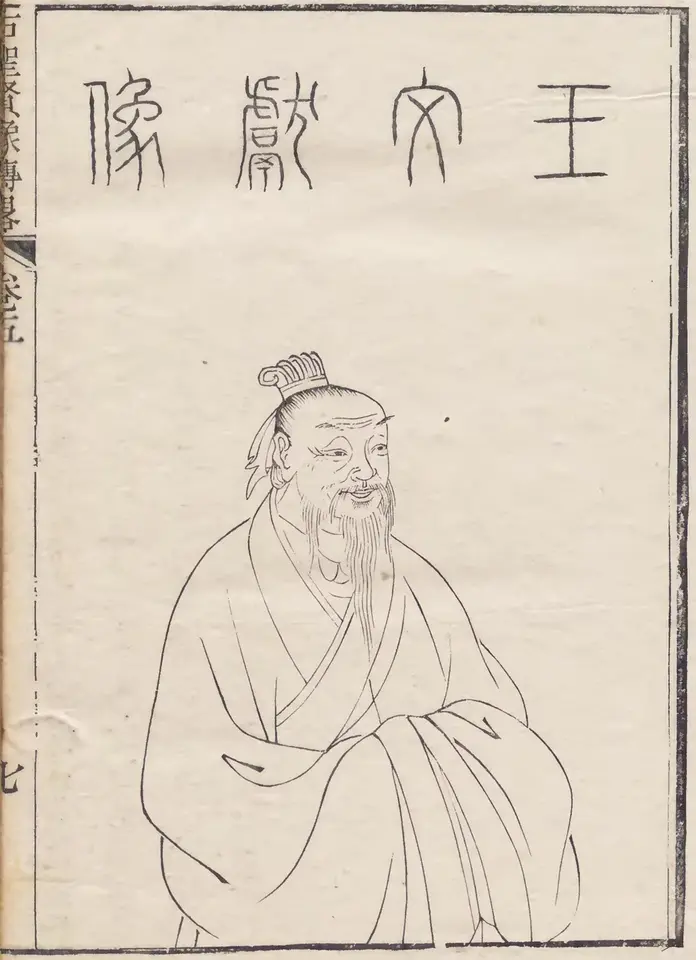
王导
[!NOTE] Wang Dao (276 – September 7, 339), courtesy name Maohong and posthumously titled Duke Wenxian of Shixing, was a preeminent statesman, master calligrapher, and the paramount founding chancellor of the Eastern Jin dynasty. Hailing from Linyi in Langya Commandery (modern Linyi, Shandong Province), he served as the patriarchal head of the illustrious Langya Wang clan. Amid the chaos of the Disaster of Yongjia and the…
[!NOTE] Wang Dao (276 – September 7, 339), courtesy name Maohong and posthumously titled Duke Wenxian of Shixing, was a preeminent statesman, master calligrapher, and the paramount founding chancellor of the Eastern Jin dynasty. Hailing from Linyi in Langya Commandery (modern Linyi, Shandong Province), he served as the patriarchal head of the illustrious Langya Wang clan. Amid the chaos of the Disaster of Yongjia and the collapse of the Western Jin in northern China, Wang Dao recognized the strategic necessity of southward migration. Accompanying Sima Rui (later Emperor Yuan of Jin) to Jianye (modern Nanjing) in 307, he orchestrated the southward exodus of northern aristocratic clans (yiguan nandu). By forging an unprecedented political alliance with influential southern Jiangnan gentry leaders such as Gu Rong and He Xun, and establishing the innovative system of immigrant commanderies and counties (qiaozhou qiaojun), he anchored the survival of the imperial court south of the Yangtze River. Upon Sima Rui's ascension to the imperial throne in 318, Wang Dao stood at the pinnacle of government, giving rise to the famous contemporary proverb "Wang and Sima share the realm" (Wang yu Ma, gong tianxia). Serving through three successive reigns under Emperors Yuan, Ming, and Cheng, he held the supreme posts of Grand Tutor (Taifu), Imperial Chancellor (Chengxiang), and Director of the Imperial Secretariat. Adopting a philosophical statecraft centered on "preserving stability through tranquility" (zhenzhi yijing), he skillfully mediated tensions between the northern immigrant aristocracy, indigenous southern elites, and the imperial house. During the rebellions of Wang Dun and Su Jun, he stood steadfastly at the capital, personally shielding the child emperor Cheng and organizing royalist armies to reclaim Jiankang. His leadership ensured the institutional continuity and cultural preservation of Han civilization in southern China.
Born into the premier aristocratic Langya Wang clan in Linyi; his grandfather Wang Lan was a prominent Western Jin minister.
Appointed Marshal of the Right by Sima Yue; formed a close strategic partnership with Prince of Langya Sima Rui.
Escorted Sima Rui to garrison Jianye, personally recruiting southern leaders Gu Rong and He Xun to establish power.
Luoyang fell; northern aristocrats wept at Xinting, but Wang Dao sternly exhorted them to dedicate their lives to restoring the homeland.
Sima Rui ascended the throne as Emperor Yuan of Jin; invited Wang Dao onto the imperial couch; appointed Director of the Imperial Secretariat.
Cousin Wang Dun rebelled; Wang Dao led twenty clan members to submit to court punishment daily, demonstrating unbroken loyalty.
Emperor Yuan died in grief; Emperor Ming ascended the throne; Wang Dao was appointed Minister of Works, helping suppress Wang Dun's rebels.
Emperor Ming died; Wang Dao and Yu Liang received the deathbed testament to assist the five-year-old Emperor Cheng, advancing to Minister of Education.
Su Jun's rebels sacked Jiankang; Wang Dao sat steadfast beside the terrified six-year-old emperor, secretly organizing provincial royalist armies.
Overruled proposals to abandon Jiankang and flee south, personally supervising the capital's reconstruction to steady imperial morale.
Appointed Grand Tutor, Chancellor, and Director of the Imperial Secretariat, governing with benevolence and tranquility.
Passed away on September 7 in Jiankang at sixty-four; Emperor Cheng ordered a state funeral modeled on Huo Guang, granting the posthumous name Wenxian.
Wang Dao was born in 276 in Linyi, Langya Commandery (modern Linyi, Shandong Province), into one of the most prestigious aristocratic families of the Han and Wei dynasties. The Langya Wang clan traced its lineage through successive generations of eminent statesmen, including Western Han Remonstrance Grandee Wang Ji and Western Jin Chancellor Wang Xiang. His grandfather, Wang Lan, served as Grand Master for Splendid Happiness and was enfeoffed as Master of Jiqiu, renowned for his filial piety and brotherly devotion; his father, Wang Cai, served as General of the Army's Military Marshal. From youth, Wang Dao exhibited extraordinary poise, intellectual depth, and philosophical eloquence, winning widespread acclaim among northern literati. At the age of fourteen, the esteemed scholar Zhang of Chenliu met him in Huainan, exclaiming to Wang Dao's grand-uncle Wang Kai: "This youth possesses majestic presence and boundless capacity; he will undoubtedly become a pillar of state and a chancellor of armies!" Zhou Yi, upon first meeting him, similarly marveled at his statecraft, comparing him to Guan Zhong.
Inheriting his grandfather's title of Master of Jiqiu, Wang Dao repeatedly declined preliminary imperial appointments as Aide to the Minister of Works and Attendant to the Crown Prince. He married Lady Cao, daughter of Western Jin Secretariat Officer Cao Ye, maintaining a household of exemplary order and discipline. In 305 (second year of Yongxing), Prince of Donghai Sima Yue, who held regency in Luoyang, appointed the twenty-nine-year-old imperial prince Sima Rui as General of Pacification of the East and Commander of Military Affairs in Xuzhou, stationed at Xiapi. Wang Dao had long cultivated an intimate, fraternal friendship with Sima Rui. Observing the horrific civil warfare of the War of the Eight Princes, which had depopulated northern China and laid bare the Western Jin court to nomadic invasion, Wang Dao presciently concluded that central China was doomed to catastrophic destruction and that survival required a strategic retreat to the rich, unravaged plains of the southern Yangtze.
Wang Dao devoted his full intellect to guiding Sima Rui, privately urging him to extricate himself from the political vortex of Luoyang and return to his fiefdom to plan for the future. Sima Rui embraced his counsel wholeheartedly. Utilizing his connections with Prince of Donghai Sima Yue's influential consort, Lady Pei, Wang Dao successfully orchestrated Sima Rui's reassignment to the south. In July 307 (first year of Yongjia), Sima Yue appointed Sima Rui as General of Pacification of the East and Commander of All Military Affairs in the Jiangnan region of Yangzhou, establishing his headquarters at Jianye (modern Nanjing). Appointed Military Marshal of the expedition, Wang Dao accompanied Sima Rui across the Yangtze, initiating the historic southern migration of northern Han civilization.
Upon arriving in Jianye, Sima Rui and Wang Dao faced a perilous political environment. Following the Western Jin conquest of Eastern Wu in 280, northern courts had systematically marginalized southern aristocrats from high metropolitan offices. Consequently, the wealthy landed clans of Jiangnan viewed the arrival of northern refugees and imperial princes with deep suspicion and open hostility. For over a month after establishing his residence, not a single southern aristocrat or clan patriarch visited Sima Rui's headquarters, leaving the nascent regime isolated and vulnerable.
Recognizing the existential danger, Wang Dao advised Sima Rui: "The prominent gentlemen of Jiangnan revere Gu Rong of Wuxing and He Xun of Kuaiji as their moral leaders. If we win the sincere allegiance of Gu and He, the remaining aristocratic clans of the Three Wu will naturally follow, and our foundation will be secured!" Setting aside northern aristocratic pride, Wang Dao traveled alone in an unadorned carriage to visit He Xun and Gu Rong in person, treating them with profound respect as peers and expounding the imperative of collective survival. Deeply moved by Wang Dao's humility and vision, Gu Rong and He Xun agreed to enter Sima Rui's administration.
During the Third Month purification festival (xiuxi) along the Qinhuai River, Wang Dao orchestrated a brilliant display of political pageantry: Sima Rui rode in a magnificent imperial carriage flanked closely on horseback by Wang Dao, his cousin Wang Dun, and leading northern luminaries in full ceremonial regalia. Observing this dignified spectacle, southern leaders including Gu Rong and Ji Zhan knelt reverently beside the highway to offer homage. This symbolic rapprochement cemented the historic pact between northern immigrant elites and southern indigenous landholders, securing domestic stability.
In 311 (fifth year of Yongjia), Xiongnu forces of the Han-Zhao regime sacked Luoyang, capturing Emperor Huai and massacring over thirty thousand officials and civilians. Northern China descended into chaos, and sixty to seventy percent of northern aristocratic lineages fled south to Jianye. Amid the national catastrophe, Wang Dao advised Sima Rui to establish the innovative administrative system of "immigrant commanderies and counties" (qiaozhou qiaojun), preserving the original northern administrative names and household registries for displaced refugees. This system accommodated hundreds of thousands of northern migrants without displacing native landholders, forming a formidable military and fiscal foundation for Eastern Jin.
During this traumatic period, northern aristocrats including Zhou Yi and Xie Kun gathered for a banquet at Xinting (south of modern Nanjing). Gazing across the majestic Yangtze landscape, Zhou Yi wept, lamenting: "The scenery is not different, yet how tragic is the change of our rivers and mountains!" The assembled ministers broke into tears, hiding their faces. Wang Dao arose in anger, his countenance stern, and rebuked them fiercely: "We ought to unite our strength for the imperial house and recover the sacred homeland! Why sit here like captive prisoners of Chu, weeping at one another!" His electrifying rebuke shamed the courtiers, instantly reviving their resolve to resist northern invaders and rebuild the Chinese state.
In March 318 (first year of Daxing), following the execution of Emperor Min in the north, Sima Rui formally ascended the throne in Jiankang, establishing the Eastern Jin dynasty as Emperor Yuan of Jin. During the grand coronation ceremony, as civil and military officials knelt in homage, Emperor Yuan descended from the dais, took Wang Dao by the hand, and repeatedly invited him to ascend the imperial throne and sit beside him to receive the empire's congratulations. Terrified by this breach of protocol, Wang Dao stepped back and adamantly declined, stating: "If the sun in heaven were to descend and stand equal with all earthly beings, where would the common people turn to bathe in its radiant light?" Emperor Yuan relented, appointing Wang Dao Senior General of the Agile Cavalry, Equal in Dignity to the Three Excellencies, Director of the Imperial Secretariat, and Supervisor of the Secretariat, enfeoffing him as Marquis of Wugang.
At this zenith of power, Wang Dao governed central civil administration in Jiankang, while his aggressive cousin Wang Dun held military command over six strategic upper-Yangtze provinces from Wuchang. Members of the Langya Wang clan occupied top civil and military posts throughout the provinces, leading the populace to proclaim the celebrated rhyme: "Wang and Sima share the realm" (Wang yu Ma, gong tianxia).
However, as dynastic authority stabilized, Emperor Yuan grew increasingly uneasy with the overweening dominance of the Langya Wang clan. Seeking to reassert monarchical autonomy, the emperor elevated political upstarts Diao Xie and Liu Wei as his confidential ministers, progressively excluding Wang Dao from inner-court deliberations. Furthermore, the emperor stationed royalist armies under Dai Yuan and Liu Wei at Hefei and Huaiyin, nominally to deter northern barbarians, but covertly to guard against Wang Dun.
Faced with royal estrangement and public humiliation, Wang Dao displayed consummate patience and magnanimity. He accepted his demotion without bitterness, harboring no treasonous resentment and continually writing to his cousin Wang Dun to urge restraint. Contemporary observers lauded Wang Dao's serene equanimity in navigating the hazardous shifts of court favor.
In the spring of 322 (first year of Yongchang), Wang Dun, unable to brook the emperor's hostile military deployments, launched an armed rebellion from Wuchang under the pretext of purging the corrupt ministers Liu Wei and Diao Xie and exonerating Wang Dao. In the capital, Liu Wei urged Emperor Yuan to execute all members of the Langya Wang clan in Jiankang.
In this moment of supreme mortal danger, Wang Dao demonstrated unbending loyalty. Each dawn, he led more than twenty brothers, sons, and nephews to the palace gates, kneeling in simple attire to submit their lives to imperial justice. As Senior Vice Director of the Secretariat Zhou Yi entered the palace for an audience, Wang Dao called out from the roadside: "Boren, I entrust the lives of my entire clan of a hundred souls to you!" Zhou Yi walked past without speaking, loudly declaring to the imperial guards: "Today we enter the palace to slay the rebels and earn a grand golden seal!" Yet once before Emperor Yuan, Zhou Yi vigorously defended Wang Dao, swearing upon his life that Wang Dao was pure, loyal, and blameless of his cousin's treason. Deeply moved, Emperor Yuan rescinded the execution order, personally returned Wang Dao's official robes, and took him by the hand, exclaiming: "Maohong, I am about to entrust the destiny of the state to you; how could you utter such words?"
Nevertheless, Wang Dun's veteran legions breached the defenses of Jiankang, capturing the Shitou fortress. Diao Xie was killed, Liu Wei fled to the northern warlord Shi Le, and Emperor Yuan was humiliated. Triumphant in the capital, Wang Dun sought to execute Zhou Yi and Dai Yuan for their unyielding loyalty to the emperor. Wang Dun asked Wang Dao: "Should Zhou Yi and Dai Yuan be appointed to the Three Excellencies?" Wang Dao remained silent. Wang Dun asked: "Can they serve as Vice Directors of the Secretariat?" Wang Dao again said nothing. Wang Dun smiled coldly: "If they cannot be employed, then they must be executed!" Wang Dao offered no word of defense. Wang Dun summarily executed Zhou Yi and Dai Yuan.
It was only after the rebellion was suppressed that Wang Dao, reviewing confidential imperial archives in the Secretariat, discovered Zhou Yi's handwritten memorial fiercely defending Wang Dao's innocence before Emperor Yuan. The document was stained with Zhou's tears and devotion. Clutching the memorial, Wang Dao wept uncontrollably, beating his chest before his colleagues and lamenting: "Though I did not slay Boren, Boren died because of me! How can I ever face this noble friend in the underworld!" This tragic cry immortalized Wang Dao's profound remorse over the brutal factional costs of aristocratic politics.
In late 322, Emperor Yuan died in anguish, succeeded by his resolute son Emperor Ming (Sima Shao). Appointing Wang Dao Minister of Works, Emperor Ming prepared to crush Wang Dun, who had fallen terminally ill in 324 while planning to usurp the throne. Wang Dao announced that Wang Dun was already dead, leading civil officials in public mourning, which shattered rebel morale. He then assisted Emperor Ming in annihilating the rebel remnants under Shen Chong. In recognition of his loyalty, he was elevated to Duke of Shixing Commandery. In 325, the twenty-seven-year-old Emperor Ming fell fatally ill. On his deathbed, he summoned Wang Dao and the empress's brother Yu Liang, entrusting them with the joint regency of his five-year-old son, Emperor Cheng (Sima Yan).
Following Emperor Cheng's accession, Wang Dao advanced to Minister of Education. However, actual regency was monopolized by Central Secretariat Director Yu Liang, whose haughty intolerance alienated regional frontier commanders. In late 327, Yu Liang's clumsy attempt to strip the Huainan general Su Jun of his military command provoked Su Jun and Zu Yue into open rebellion.
In early 328 (third year of Xianhe), Su Jun's battle-hardened forces stormed Jiankang, slaughtering officials, raping palace women, and torching the imperial palaces. As imperial guards fled, the sixty-four-year-old Wang Dao donned his ceremonial robes, walked into the Taiji Hall, and took his seat beside the weeping six-year-old Emperor Cheng, holding the child sovereign in his arms. When bloodstained rebel commanders entered the hall with drawn swords, Wang Dao glared at them with majestic solemnity, his moral presence so commanding that the soldiers dared not harm the child emperor.
Su Jun placed Emperor Cheng and Wang Dao under house arrest at the Shitou fortress. While feigning compliance with Su Jun, Wang Dao secretly smuggled letters to Western military commanders, urging Inspector of Jingzhou Tao Kan, Inspector of Jiangzhou Wen Qiao, and Xi Jian to mobilize loyalist armies. Responding to Wang Dao's summons, Tao Kan and Wen Qiao led a massive armada down the Yangtze, besieging Shitou fortress. In 329, Su Jun was killed in combat, and his rebellion was crushed.
In the aftermath of the rebellion, Jiankang lay in ruins, its palaces reduced to ash and its population starving. Senior ministers, including Wen Qiao and Yu Liang, urged Emperor Cheng to abandon the devastated city and relocate the capital south to Kuaiji or west to Yuzhang.
Wang Dao adamantly opposed abandoning Jiankang. He argued forcefully before the court: "Jiankang has accumulated the imperial aura of the south since the Sun Wu dynasty; protected by the natural moat of the Yangtze in the north and supplied by the rich harvests of the Three Wu in the south, it is the true heart of the empire. If we abandon it after a single disaster, the morale of our people will collapse, our resolve to recover the north will vanish, and northern invaders will immediately strike! We must hold Jiankang, maintain tranquility, and rebuild our nation with the people!" Moving his own household into a crude thatched hut, Wang Dao personally led the reconstruction of imperial altars, cleared rubble, and resettled refugees. His resolve preserved Jiankang as the enduring capital of southern Chinese civilization.
Following the pacification of Su Jun, Wang Dao's moral authority was supreme. In 338, Emperor Cheng appointed him Grand Tutor (Taifu), Chancellor (Chengxiang), and Director of the Imperial Secretariat.
In his final years, Wang Dao governed through a unique synthesis of Daoist natural non-action (wuwei) and Confucian benevolence. Recognizing that after decades of catastrophic civil warfare, the populace was exhausted and factional rivalries were acute, he made "preserving stability through tranquility" (zhenzhi yijing) his guiding principle. He eschewed harsh legalism, tolerated minor infractions, and sought broad aristocratic consensus. Later Eastern Jin chancellor Xie An lauded his statesmanship: "Governance should be like Wang Dao's in Jiangzuo: though appearing to do nothing daily, the state and the people naturally abide in peace."
On September 7, 339 (twenty-fifth day of the seventh month, fifth year of Xiankang), Wang Dao passed away peacefully in Jiankang at sixty-four. The grief-stricken Emperor Cheng wept openly in court, suspending court audiences for three days. The emperor ordered a state funeral modeled on the highest precedent of Western Han Grand General Huo Guang and Western Jin Prince of Anping Sima Fu. The court conferred upon him the posthumous title of Grand Tutor, bestowing official coffins, ceremonial robes, three hundred thousand copper coins, and two hundred bolts of silk, with imperial guards escorting his hearse. Thousands of officials and mourning citizens lined the streets as he was interred on the southern banks of the Qinhuai River. The court bestowed the illustrious posthumous name Wenxian ("Cultured and Sagacious"), honoring his monumental role in preserving the Eastern Jin state.
Wang Dao's supreme institutional legacy was the creation and maintenance of the aristocratic power-sharing system known as "Wang and Sima share the realm" (Wang yu Ma, gong tianxia).
Following the total disintegration of centralized imperial authority in the Disaster of Yongjia, Sima Rui arrived in the south lacking imperial military forces and treasury reserves. Wang Dao recognized that under these dire circumstances, monarchical legitimacy alone could not sustain a regime; survival required binding the imperial Sima house to the leading northern immigrant clans (led by the Langya Wang clan) and southern gentry families.
By coordinating civilian governance through his own chancellorship while his cousin Wang Dun held frontier military command, Wang Dao established a stable aristocratic coalition that compensated for the throne's weakness. Crucially, Wang Dao restrained his own clan from overthrowing the dynasty, maintaining the sacred legitimacy of the imperial house. This institutional framework ensured the survival of the Eastern Jin for over a century, establishing a durable model of aristocratic balance of power that preserved Han civilization during the Northern and Southern Dynasties.
The most formidable social challenge facing the fledgling Eastern Jin was the bitter antagonism between northern refugee clans (qiaoxing) and native Jiangnan landowners (wuxing).
Wang Dao resolved this rift through mutual respect and institutional accommodation. He mastered the southern Wu dialect, personally courted indigenous leaders such as Gu Rong and He Xun, and ensured that native elites received substantial representation in the imperial bureaucracy.
Simultaneously, Wang Dao instituted the innovative system of "immigrant commanderies and counties" (qiaozhou qiaojun). By preserving the ancestral administrative names and household registrations of northern refugees, this policy allowed displaced populations to settle collectively without losing their clan structures or competing violently with local landowners for land registries. This measure organized hundreds of thousands of refugees into resilient agricultural settlements and military reserves, providing the essential fiscal and military backbone of the Eastern Jin state.
In administrative philosophy, Wang Dao established the celebrated doctrine of "preserving stability through tranquility" (zhenzhi yijing). In an era traumatized by dynastic collapse and civil unrest, lesser statesmen frequently resorted to draconian laws and frequent policy reversals.
Drawing from Daoist quietude and Confucian humanism, Wang Dao understood that an exhausted society required recuperation above all else. He avoided intrusive regulations, showed leniency toward minor bureaucratic shortcomings, and prioritized political harmony over rigid administrative enforcement. When criticized for his apparent passivity, he calmly remarked: "People call me confused and muddled; future generations will long for this very muddle." History vindicated his judgment: his tolerant, non-intrusive governance allowed the Jiangnan economy to undergo unprecedented agricultural development, laying the foundation for southern China's economic eclipse of the north.
Although famed for his wit in pure conversation (qingtan), Wang Dao was a dedicated patron of classical Confucian education and historical documentation.
In 320, witnessing the collapse of state academies amid wartime dislocation, Wang Dao submitted his famous memorial Petition to Establish the Imperial University (Qing Li Taixue Shu). He argued that without public instruction in classical ethics, moral cohesion could not be restored. Under his patronage, the Eastern Jin rebuilt the Imperial University in Jiankang, appointing Erudites of the Five Classics and enrolling sons of civil officials, revitalizing classical scholarship in the south.
Furthermore, in 319, Wang Dao instituted the Eastern Jin historiographical bureau, appointing Editorial Directors (zhuzuo lang) to collect lost archives and record the imperial dynastic annals, ensuring that historical records survived the cataclysm of the Western Jin. In the realm of art, Wang Dao was himself an accomplished master of running and cursive script, nurturing within his household the immortal calligraphers Wang Xizhi and Wang Xianzhi, elevating the Langya Wang family into the defining apex of Chinese calligraphy.
FIGURES ASSOCIATED WITH THIS DYNASTY