Birth in Hua County
Born into a scholarly family in Henan, dedicating his youth to classical studies.
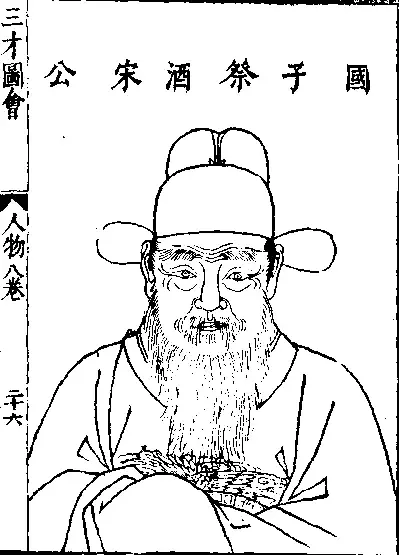
宋讷
Song Ne (1311–1390), courtesy name Zhongmin and art name Xigu, was a native of Hua County in Henan. He was a distinguished Confucian scholar, educator, and foundational academic statesman of the early Ming dynasty, rising to the positions of Chancellor of the National University (Guozijian Jijiu) and Grand Academician of the Wenyuan Pavilion. Known for his gravitas and classical erudition, he passed the imperial examination…
Song Ne (1311–1390), courtesy name Zhongmin and art name Xigu, was a native of Hua County in Henan. He was a distinguished Confucian scholar, educator, and foundational academic statesman of the early Ming dynasty, rising to the positions of Chancellor of the National University (Guozijian Jijiu) and Grand Academician of the Wenyuan Pavilion. Known for his gravitas and classical erudition, he passed the imperial examination under the Yuan dynasty in 1363, serving briefly as Magistrate of Yanshan before resigning to live in seclusion during the peasant rebellions. In 1369, he answered an imperial summons to participate in compiling ritual and musical canons for the nascent Ming court, retiring to his native village upon the project's completion. In 1380, recommended by Senior Counselor Du Xiao, Song Ne entered Ming service as Instructor at the National University. His classical lectures drew wide admiration, and in 1382 he was promoted to Hanlin Academician and Grand Academician of the Wenyuan Pavilion at over seventy years of age, with the Hongwu Emperor (Zhu Yuanzhang) comparing his late-blooming service to Jiang Ziya aiding the founding of the Zhou dynasty. Appointed Chancellor of the National University in 1383, Song Ne enforced strict pedagogical discipline, lecturing daily without rest and residing in the student quarters. During the metropolitan examination of 1385, two-thirds of the successful candidates came from the National University under his tutelage, earning high praise from the emperor. When bureaucratic rivals sought to fabricate charges against him, Zhu Yuanzhang executed his accusers and retained Song Ne in office. In 1390, Song Ne passed away in the university quarters at the age of eighty after performing the spring sacrificial rites to Confucius. The emperor personally composed a funerary eulogy and granted him an imperial burial, marking the first time a fourth-rank civil official received such an honor in the Ming dynasty.
Born into a scholarly family in Henan, dedicating his youth to classical studies.
Attained the jinshi degree under the Yuan dynasty; served as Magistrate of Yanshan before resigning amidst widespread rebellion.
Summoned to the capital to assist in compiling imperial rites and music; declined office and returned home.
Recommended by Senior Counselor Du Xiao; joined the National University as an instructor of classical texts.
Promoted to Hanlin Academician and Grand Academician of the Wenyuan Pavilion at age seventy-one.
Elevated to Chancellor of the National University, instituting comprehensive academic codes and pedagogical reforms.
His students comprised two-thirds of successful jinshi degree recipients in the 1385 examination.
Passed away in the student quarters after presiding over sacrificial rites to Confucius; granted an imperial burial.
Song Ne was born in 1311 during the reign of Emperor Wuzong of the Yuan dynasty in Hua County, Henan. Raised by his father Song Chonglu under strict moral discipline, he distinguished himself through quiet solemnity and deep immersion in the Neo-Confucian teachings of Cheng Yi and Zhu Xi. In 1363, he passed the metropolitan examinations and was appointed Magistrate of Yanshan. However, as the Red Turban rebellions ravaged northern China, Song Ne relinquished his official seal and returned to Henan to care for his parents in seclusion.
In the first month of 1369, following the establishment of the Ming dynasty, the Hongwu Emperor summoned eighteen renowned scholars to the capital to compile foundational state compendia on rites and music. Song Ne traveled to Nanjing, contributing textual expertise on historical institutional precedents. Once the volumes were presented to the throne, he declined imperial appointments and returned to his native village. In 1372, passing by the overgrown ruins of the former Yuan palaces, he composed elegiac verses reflecting upon dynastic rise and fall, praised by contemporaries for his historical discernment.
In 1380, following the abolition of the Central Secretariat, the Hongwu Emperor sought experienced scholars to guide civil governance. Senior Counselor Du Xiao praised Song Ne's virtue and erudition, prompting the emperor to summon him to Nanjing as Instructor at the National University. Song Ne expounded the classics with clarity, attracting students from across the empire.
In 1282, the Hongwu Emperor convened court scholars to draft an array of state edicts. While others hesitated, the seventy-one-year-old Song Ne composed fluent, solemn drafts without revision. Highly pleased, the emperor promoted him to Hanlin Academician and commissioned him to draft the commemorative inscription for the Imperial Temple of Confucius. In the eleventh month of that year, he was appointed Grand Academician of the Wenyuan Pavilion. The emperor issued an imperial patent observing: "King Wen recognized Jiang Ziya along the Pan Stream at an advanced age, establishing eight hundred years of Zhou rule. Though your years are advanced, proceed with diligence."
In 1383, Song Ne was elevated to Chancellor of the National University. At the time, the academy enrolled thousands of students, including the sons of founding meritorious aristocrats and provincial tributaries. Many students were undisciplined and relied upon family influence. Song Ne established twenty-four strict institutional statutes, posted them in the lecture halls, and enforced strict daily attendance. He sat upright in the Minglun Hall from dawn until dusk delivering lectures, and slept in the modest student dormitories.
Under his direction, academic standards were transformed. In the third month of 1385, the Ming court reinstituted metropolitan examinations after a prolonged suspension. Out of 472 successful jinshi candidates, two-thirds had been directly instructed by Song Ne at the National University. Delighted by this result, the Hongwu Emperor issued a commendation praising Song Ne's pedagogical leadership.
Song Ne's prestige aroused envy among court officials. Instructor Jin Wenzheng conspired with Minister of Personnel Yu Xi, submitting memorials accusing the elderly chancellor of tyrannical discipline and issuing an unauthorized directive forcing him into retirement. When Song Ne arrived at court to bid farewell, the emperor investigated the matter, grew furious at the conspiracy, and executed Yu Xi and Jin Wenzheng, ordering Song Ne to remain in office.
The Hongwu Emperor frequently employed court painters to observe ministers in secret. One afternoon, after a student stumbled and broke a tea set, Song Ne sat in his study with a stern expression, lamenting his failure to impart composure. A court painter sketched his stern countenance and presented it to the throne. The following morning, the emperor asked why he had been angry the previous day. Astonished, Song Ne explained the domestic mishap and his self-reproach. When the emperor produced the covert portrait, Song Ne bowed in apology, and the emperor laughed, expressing deeper trust in the chancellor's candor.
In the early spring of 1390, eighty-year-old Song Ne fell critically ill from overwork. His eldest son Song Lin, an investigating censor recalled by imperial favor to nurse his father, wept and begged him to return to his private residence. Song Ne sternly reprimanded him: "Today marks the spring sacrificial rites to the Supreme Sage Confucius. As chancellor, how dare I neglect state rituals on account of my frail body?" He had himself carried in a palanquin to oversee the ceremonies.
Upon concluding the rites and returning to his study, Song Ne passed away peacefully at his desk. Deeply grieved, the Hongwu Emperor suspended court audiences, composed a personal funeral eulogy, and dispatched Ministry of Rites officials to oversee his state burial. In Ming bureaucratic history, he was the first fourth-rank civil official to receive an imperially funded burial. During the Zhengde era, he was posthumously honored with the name Wenke.
As Chancellor of the National University, Song Ne authored twenty-four strict statutes governing academic study, ritual decorum, and examination criteria, transforming the academy into the disciplined intellectual cradle of the early Ming civil bureaucracy.
In the pivotal 1385 metropolitan examination, students trained by Song Ne captured two-thirds of the 472 jinshi degrees awarded, providing the infant Ming administration with an essential cohort of disciplined Confucian bureaucrats.
Responding to an imperial inquiry regarding northern defense, Song Ne drafted a detailed strategic memorial recommending decentralized military agricultural colonies along the borders, advising that troops farm during peace and defend during incursions, an initiative adopted by the throne.
Living in modest university dormitories despite holding senior cabinet rank, Song Ne demonstrated personal austerity, devotion to duty, and fearless integrity, earning the unique honor of an imperially funded state burial.
FIGURES ASSOCIATED WITH THIS DYNASTY