Age one | Born on the guihai day of the first lunar month at the family residence in Hongqiao Ward, Shanyin County, Shaoxing Prefecture
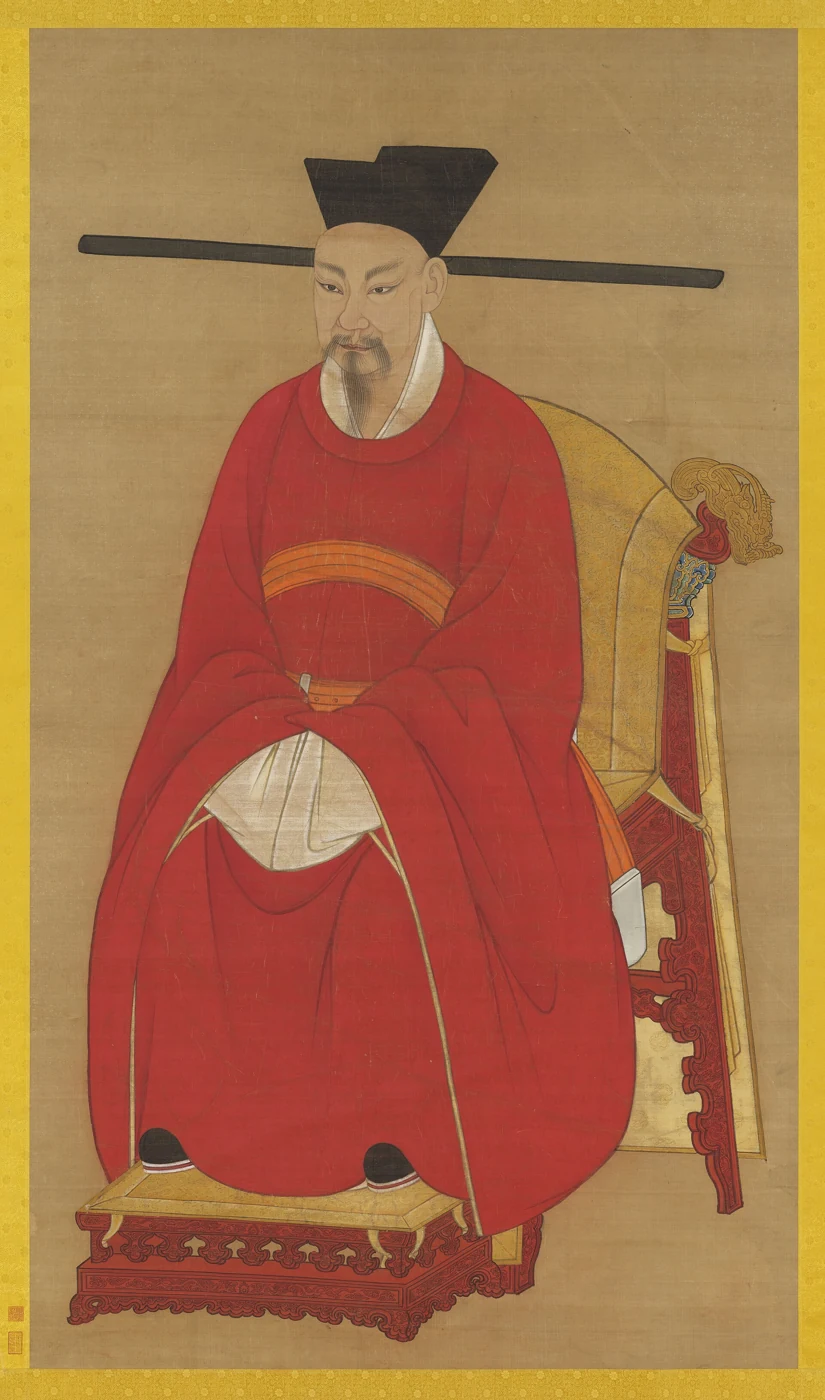
1205 CE–1264 CE
Southern Song emperor
Zhao Yun
赵昀
Zhao Yun (guihai day of the first lunar month in the first year of the Kaixi era, January 26, 1205–dingmao day of the tenth lunar month in the fifth year of the Jingding era, November 16, 1264), originally named Zhao Yuju and later Zhao Guicheng before adopting the name Zhao Yun on accession, was the fifth emperor of the Southern Song. He was a tenth-generation descendant of Emperor Taizu of Song, Zhao Kuangyin, and a…
1205 CE–1264 CESouthern Song
PROFILE
Zhao Yun (guihai day of the first lunar month in the first year of the Kaixi era, January 26, 1205–dingmao day of the tenth lunar month in the fifth year of the Jingding era, November 16, 1264), originally named Zhao Yuju and later Zhao Guicheng before adopting the name Zhao Yun on accession, was the fifth emperor of the Southern Song. He was a tenth-generation descendant of Emperor Taizu of Song, Zhao Kuangyin, and a ninth-generation descendant of Zhao Dezhao, Prince Yanyi, and was a native of Shanyin County in Shaoxing Prefecture, present-day Shaoxing, Zhejiang. He reigned for forty years, from the dingyou day of the intercalary eighth lunar month in the seventeenth year of Jiading (September 18, 1224) to the dingmao day of the tenth lunar month in the fifth year of Jingding (November 16, 1264), the longest reign of any Southern Song emperor.
- Also known as
- Emperor Lizong; originally named Yuju
- Era
- Southern Song
- Dynasty/Regime
- Southern Song
- Identity
- Southern Song emperor
- Date of Birth
- January 26 1205
- Date of Death
- November 16 1264
- Ethnicity
- Not recorded in historical sources
- Native place
- Shanyin County, Shaoxing Prefecture (present-day Shaoxing, Zhejiang)
- Place of birth
- Family residence at Hongqiao Ward, Shanyin County, Shaoxing Prefecture
- Place of death
- Not recorded in historical sources
- Reign
- 1224–1264
- Predecessor
- Emperor Ningzong of Song (Zhao Kuo)
- Successor
- Emperor Duzong of Song (Zhao Qi)
- Era names
- Baoqing, Shaoding, Duanping, Jiaxi, Chunyou, Baoyou, Kaiqing, Jingding
- Temple name
- Lizong
- Posthumous name
- Jiandao Beide Dagong Fuxing Liewen Renwu Shengming Anxiao Emperor
- Highest office
- See Biography and Major Activities
- Major achievements
- Fifth emperor of the Southern Song; a distant imperial clansman placed on the throne by Shi Miyuan; elevated Cheng-Zhu Neo-Confucianism to official orthodoxy; in later years favored Buddhism and neglected government
LIFE TIMELINE
Age seven | His father Zhao Xilu died; he and his mother Lady Quan moved to the household of his maternal uncle Quan Baozhang
Age seventeen | Selected by Shi Miyuan and brought into the palace, given the name Zhao Guicheng, and made heir to the princely line of Yi
Age twenty | Emperor Ningzong of Song died; Shi Miyuan and Empress Yang forged an edict and enthroned him, after which his name was changed to Zhao Yun
Age twenty-three | Posthumously enfeoffed Zhu Xi as Duke of Xin and began openly promoting Neo-Confucianism
Age twenty-nine | Shi Miyuan died; Zhao Yun began personal rule and removed Shi's faction
Age thirty | Joined the Mongols in destroying the Jin in the first lunar month and launched the Duanping Advance into Luoyang in the fifth; after its failure the Song-Mongol War became full-scale
Age thirty-seven | Granted additional honors to Zhou Dunyi, Cheng Hao, Cheng Yi, and Zhang Zai, and personally copied the Admonitions of the White Deer Grotto Academy for presentation to the Imperial Academy
Age thirty-eight | Sent Yu Jie to govern Sichuan and strengthen its defenses
Age forty-five | Made Lady Yan a Noble Consort; in later years increasingly favored sycophantic officials and government deteriorated
Age fifty-four | Mongol forces launched a comprehensive invasion of the Song, while Ding Daquan concealed military reports
Age fifty-five | Mongol forces attacked Ezhou; Jia Sidao offered submission and tribute to Kublai Khan and later falsely reported the military situation to claim credit
Age sixty | Died of illness in Lin'an on the dingmao day of the tenth lunar month; ordered his nephew Zhao Qi to succeed him
Buried at Yongmu Mausoleum in Kuaiji Prefecture | Buried at Yongmu Mausoleum in Kuaiji Prefecture
Granted the posthumous title Jiandao Beide Dagong Fuxing Liewen Renwu Shengming Anxiao Emp | Granted the posthumous title Jiandao Beide Dagong Fuxing Liewen Renwu Shengming Anxiao Emperor and the temple name Lizong
BIOGRAPHY
Biography
Family Background and Early Life
Although Zhao Yun was a tenth-generation descendant of Emperor Taizu of Song, Zhao Kuangyin, the Southern Song throne had, since Emperor Gaozong Zhao Gou, passed through the line of Emperor Taizong Zhao Guangyi. Descendants of Zhao Dezhao in Taizu's line had long been remote from succession. By the generation of Zhao Yun's father, Zhao Xilu, the family's blood relationship with the reigning house had become quite distant. Zhao Xilu received no noble title in his lifetime and held only a minor local post in Shanyin County, leaving the family in circumstances little different from those of commoners. Zhao Yun was born on the guihai day of the first lunar month of 1205, the first year of Kaixi, at the family home in Hongqiao, Shanyin County, Shaoxing Prefecture. The History of Song, “Basic Annals of Lizong,” records that on the night before his birth his father, later posthumously Prince Rong, dreamed of a visitor in purple robes and a golden cap, and that at the child's birth “five colors shone brilliantly in the room and red light reached the heavens like the sun at midday.” These supernatural stories were evidently later embellishments by historians intended to sacralize his accession.
In 1211, the fourth year of Jiading, Zhao Yun's father died when the boy was seven. His birth mother, Lady Quan, later posthumously honored as Lady Cixian, took him and his younger brother Zhao Yurui back to her natal family, where they lived in the household of her elder brother Quan Baozhang, a local baozhang in Shaoxing, until Zhao Yun was sixteen. This period of ordinary household life exposed him to popular hardship and later contributed to a certain practical orientation during the Duanping Reforms.
Selection for the Palace and Accession
All eight biological sons of Emperor Ningzong Zhao Kuo died young. In 1221, the fourteenth year of Jiading, Ningzong made Zhao Hong, a descendant of Zhao Dezhao, an imperial son. The princely line of Yi was left without an heir, and Ningzong ordered Chancellor Shi Miyuan to find an upright member of the imperial clan to inherit it. Shi assigned the search to his staff member Yu Tianxi. While returning home to sit the civil service examinations, Yu encountered heavy rain near Shaoxing and sheltered at Quan Baozhang's home, where he met the brothers Zhao Yuju and Zhao Yurui. Impressed by their conduct and aware that they belonged to the Zhao imperial clan, Yu recommended them to Shi Miyuan. Shi brought both brothers to Lin'an for personal examination and judged the elder, Zhao Yuju, suitable to inherit the Yi princely line.
In the sixth lunar month of 1221, Zhao Yuju received the rank Bingyi Lang; in the eighth lunar month he was appointed Senior General of the Right Gate Guard and given the name Zhao Guicheng; in the ninth lunar month he was established as heir to Prince Yijinghui. In the fifth lunar month of 1222, the fifteenth year of Jiading, he was promoted to Defense Commissioner of Shaozhou.
After Zhao Hong was made an imperial son, he strongly resented Shi Miyuan's monopolization of power and declared that after succession he would banish Shi to Hainan. Shi learned of this and resolved to establish a different ruler. In the intercalary eighth lunar month of 1224, the seventeenth year of Jiading, Shi made Zhao Guicheng an imperial son, gave him the name Zhao Yun, appointed him Military Commissioner of Wutai, and enfeoffed him as Duke of Cheng. In the same month Emperor Ningzong died. Shi Miyuan and Empress Yang forged an imperial testament, demoted Crown Prince Zhao Hong to Prince of Ji, and enthroned Zhao Yun as Emperor Lizong of Song.
Period of Shi Miyuan's Dominance
Zhao Yun owed his accession entirely to Shi Miyuan, who continued to dominate government after the enthronement. Although Zhao Yun was already an adult, he could not meaningfully intervene in state affairs, and political power remained in Shi's hands. Shi Miyuan's domination lasted twenty-five years. During this period he excluded opponents, kept upright officials such as Zhen Dexiu and Wei Liaoweng away from court, and turned the censorial organs into instruments of his control. Zhao Yun could do little but endure and wait privately for an opportunity.
In 1227, the third year of Baoqing, Zhao Yun posthumously enfeoffed Zhu Xi as Duke of Xin and began promoting Neo-Confucianism. The move reflected both intellectual preference and political calculation: Neo-Confucian teaching emphasized ruler-minister hierarchy and ethical order and therefore helped strengthen the legitimacy of an accession regarded as irregular.
Personal Rule and the Duanping Reforms
In 1233, the sixth year of Shaoding, Shi Miyuan died and Zhao Yun began personal rule. He first removed members of Shi's faction, appointed Hong Zikui and others as Investigating Censors to impeach the “Three Villains” of the Shi faction—Liang Chengda, Li Zhixiao, and Mo Ze—and recalled Zhen Dexiu and Wei Liaoweng, whom Shi had previously excluded. These reforms became known as the “Duanping Reforms.”
The Duanping Reforms extended across politics, finance, the military, and culture. Politically, Lizong removed Shi's followers, selected chancellors more carefully, personally promoted censorial officials, and sought to purify official administration. Economically, with paper currency issues exceeding 300 million strings and producing inflation, the court stopped issuing new notes, withdrew some old currency, and used 100,000 taels of stored gold and several million taels of silver to stabilize prices. Militarily, the court promoted commanders such as Meng Gong and Yu Jie and organized defense around the three principal theaters. Culturally, Cheng-Zhu Neo-Confucianism was established as official orthodoxy.
In 1234, the first year of Duanping, Southern Song and Mongol forces captured Caizhou; Emperor Aizong of Jin committed suicide and the Jin dynasty ended. Lizong had Aizong's remains presented at the imperial ancestral temple to console the spirits of Emperors Huizong and Qinzong. In the fifth lunar month of the same year, despite opposition from some officials, he launched the Duanping Advance into Luoyang in an attempt to recover the former Northern Song capitals of Kaifeng and Luoyang. Song troops briefly entered Kaifeng, but with inadequate provisions and weak reinforcements they were ambushed by Mongol forces near Luoyang, suffered severe losses, and withdrew south in disorder. The failure seriously weakened Southern Song strength and, more importantly, gave the Mongols a pretext to attack the Song; from that point the Song-Mongol War became full-scale.
Later Neglect of Government and Decline of the State
In the later period of his reign, Lizong no longer displayed the energetic effort at governance seen during the Duanping Reforms. Tired of state affairs, he pursued sensual pleasures, first turning government over to figures such as Ding Daquan, Ma Tianji, and Dong Songchen, and later relying heavily on Jia Sidao. Noble Consort Yan was his most favored consort in later years. He spent treasury funds over three years building a merit temple for her, more magnificent than the temples devoted to his own ancestors, leading contemporaries to nickname it the “Temple Surpassing Lingyin.”
Noble Consort Yan, Ma Tianji, Ding Daquan, and Dong Songchen formed an inner-outer alliance, used favor to interfere in government, and prompted people to write at the court gate the warning “Yan, Ma, Ding, and Dang—the power of the state is about to perish.” In 1240, the fourth year of Jiaxi, Lin'an suffered severe famine: “the hungry seized food on the roads, and in the markets people killed others to sell [their goods],” signs of growing social disorder.
In 1259, the first year of Kaiqing, Mongol forces attacked Ezhou. Right Chancellor Jia Sidao offered submission to Kublai Khan and promised the territory north of the Yangtze. When Möngke Khan died at Diaoyu Fortress, Kublai withdrew north to compete for the throne, allowing the Southern Song to escape immediate danger. Jia Sidao then falsely reported the military situation to claim credit, winning Lizong's confidence while saying nothing of his promise to cede territory.
On the dingmao day of the tenth lunar month in 1264, the fifth year of Jingding, Zhao Yun died of illness in Lin'an after a forty-year reign, at the age of sixty. His testament named his nephew Zhao Qi as successor, who became Emperor Duzong of Song.
The emperor Lizong, originally named Zhao Yuju and later Zhao Guicheng, was a tenth-generation descendant of the founder of the Song. His father Zhao Xilü, posthumously prince of Rong, lived in Shanyin county in Shaoxing prefecture and held only minor local office, so that the family's blood tie to the throne was distant; his mother was of the Quan family. Born in 1205, he lost his father at seven, and his mother took her three children back to her own family, lodging with her brother, a village headman in Shaoxing, until the boy was sixteen. The emperor Ningzong, whose own sons had all died young, ordered his chancellor to find a kinsman of good character to inherit the princedom of Yi, and the chancellor Shi Miyuan gave the task to his retainer Yu Tianxi. Sheltering from rain at the headman's house, Yu Tianxi came to know the two brothers, learned they were of the Zhao clan and thought them well-mannered, and recommended them. Shi Miyuan had them brought to him, judged the elder, Zhao Yuju, a fit heir to the princedom of Yi, and in 1221 brought him into the palace under the name Zhao Guicheng.
In the intercalary eighth month of 1224, as Ningzong lay dying, Shi Miyuan sent Yang Gu and Yang Shi to the empress to announce a testamentary order giving the emperor's son Zhao Hong a princely title and a provincial post, and making Zhao Guicheng emperor. On Ningzong's death Zhao Guicheng took the throne as Lizong; Zhao Hong was made prince of Ji and afterward driven to his death. Lizong owed his throne wholly to a powerful minister's management, which fixed his long subordination to Shi Miyuan before he took government himself and planted in him the wish to establish himself by some great deed.
The great foreign affair of his reign was the alliance with the Mongols against the Jin. The Mongols were rising fast in the north as a power as dangerous to the Song as the Jin had been, and opinion at court divided: some, hating the Jin, urged a joint attack; others, recalling the lesson of the earlier alliance with the Jin against the Liao, argued that the Jin must be kept as a buffer, since with the lips gone the teeth grow cold. In the twelfth month of 1232 a Mongol envoy came to the Jinghu command to propose a joint campaign, the commissioner Shi Songzhi reported it to court, and most of the ministers agreed, thinking it an opportunity to avenge the Jin invasions; Lizong, who cherished ambitions of restoration, saw it as a heaven-sent chance for immortal service, and had Shi Songzhi agree. The Mongols promised to return Henan once the Jin were destroyed, but the promise was verbal only, with no written agreement on Henan's status, which left a great danger behind. The Jin emperor Aizong, learning of the pact, sent envoys to win the Southern Song's support, arguing that the Mongols had destroyed forty states and then the Western Xia, that with Xia gone the blow would fall on the Jin, and with the Jin gone on the Song, and that an alliance with the Jin would serve the Song as much as the Jin; Lizong refused. In 1233 the Song armies took Jin territory and the prefecture of Tangzhou, cutting off the Jin emperor's line of retreat; in the tenth month Shi Songzhi sent the cavalry commander Meng Gong with twenty thousand men to besiege Caizhou with the Mongols. In the first month of 1234 Caizhou fell, the emperor Aizong hanged himself, his successor Wanyan Chenglin was killed by mutinous soldiers, and the Jin were no more. In the third month Lizong sent men to visit and repair the Northern Song imperial tombs in Henan, and soon after had Aizong's remains presented in the ancestral temple, to comfort the spirits of the emperors Hui and Qin.
Once the Jin were destroyed, the Song and the Mongols quickly passed from allies to enemies. The attempt in 1234 to recover the three capitals of the north failed, the Mongols used it as a pretext for a general invasion, and for more than forty years war went on, draining the Southern Song's strength. In domestic affairs, after Shi Miyuan's death Lizong briefly took government into his own hands, dismissed Shi's partisans and employed the Confucian scholars Zhen Dexiu and Wei Liaoweng — the "Duanping reform"; he promoted the school of principle strongly, and in 1241 decreed that Zhou Dunyi, Zhang Zai, the two Cheng brothers and Zhu Xi be sacrificed in the Confucian temple, from which the Cheng-Zhu learning acquired an official orthodoxy whose influence on thought and on the examinations lasted for centuries. The reform's results were limited, however; he gave himself increasingly to pleasure, and government fell to Ding Daquan and then to Jia Sidao, whose private peace at Ezhou and false report of victory became one of the turning points of the dynasty's last years. Lizong died in 1264 and was succeeded by his nephew Zhao Qi, Emperor Duzong. Early in the Yuan, the Buddhist commissioner for Jiangnan, Yang Lianzhenjia, opened the six Song imperial tombs at Shaoxing and had Lizong's skull made into a drinking vessel; it was recovered and reburied only in the early Ming, and his posthumous fate has often been cited as an epilogue to the fall of the Song.
Major Activities
Alliance with the Mongols against the Jin
In the twelfth lunar month of 1232, the fifth year of Shaoding, Mongol envoy Wang Ji arrived in Jinghu to discuss a joint Song-Mongol attack on the Jin. Shi Songzhi, Military Commissioner for Jinghu, reported the proposal to the central government. Most ministers supported it, regarding the alliance as an opportunity to avenge the humiliation of the Jingkang Incident; only Zhao Fan opposed it and urged the court to remember the lesson of Emperor Huizong's Maritime Alliance. Lizong saw the destruction of the Jin as a heaven-sent opportunity for lasting achievement and accepted the Mongol proposal. The Mongols orally promised to return Henan to the Song after the Jin was destroyed, but the two sides concluded no written agreement over Henan, creating a major future problem.
After learning of the Song-Mongol alliance, Emperor Aizong of Jin sent envoys seeking Southern Song support and argued from the principle of interdependence: “The Mongols have destroyed forty states, then Western Xia; when Xia fell they came upon us, and when we fall they will certainly come upon the Song. When the lips are gone, the teeth grow cold: this is the natural principle.” Lizong rejected the appeal. In 1233 Song forces captured Dengzhou and other places, heavily defeated the Jin army of Wuxian at Madeng Mountain, and took Tangzhou. In the tenth lunar month Shi Songzhi ordered Meng Gong to lead 20,000 troops and join Mongol forces in besieging Caizhou. In the first lunar month of 1234, Caizhou fell, Emperor Aizong committed suicide, and the Jin dynasty ended.
Duanping Advance into Luoyang
After the Jin fell, Mongol forces withdrew north and Henan was left open. In the fifth lunar month of 1234, Lizong appointed Zhao Kui commander and Quan Zicai vanguard commander and ordered an expedition into Henan. Quan recovered Guide Prefecture and advanced toward Kaifeng, entering it in the seventh lunar month. Because supplies from the rear failed, he could not continue and lost the opportunity. Half a month later, Zhao Kui divided his army into two routes and continued toward Luoyang despite inadequate provisions, where Mongol forces ambushed the Song troops and inflicted heavy losses. The entire Song army withdrew in defeat, ending hopes of recovering the former territory. Tens of thousands of elite soldiers were lost, large quantities of supplies were wasted, and, more importantly, the campaign gave the Mongols a pretext to invade the Southern Song, after which the Song-Mongol War expanded into full-scale conflict. Lizong had to issue a self-critical edict acknowledging his errors in order to calm the population.
Duanping Reforms
After Shi Miyuan's death, Lizong began personal rule and implemented reforms later known as the Duanping Reforms. Politically, he removed Shi's followers Liang Chengda, Li Zhixiao, Mo Ze, Yuan Shao, and others; selected chancellors carefully and corrected the situation in which a single powerful minister monopolized the office; personally promoted more than forty censorial officials, including Hong Zikui, Li Zongmian, Li Shao, Xie Fangshu, and Jiang Wanli, making the vigor of the censorate one of the last bright features of late Southern Song politics; and personally composed the Inscription on Careful Judging and Inscription on Integrity, treating corruption as comparable in seriousness to premeditated murder, intentional killing, and arson and punishing a number of corrupt officials.
To address excessive numbers of officials, Lizong adopted several measures: he abolished abuses in direct court appointments and returned such vacancies to the Ministry of Personnel; reduced acting appointments and required vacancies for county and prefectural offices in the interior to be filled from serving officials; controlled examination intake, with the six civil service examinations from Duanping through Chunyou admitting about 450 candidates on average; and tightened promotion rules so that those without county or prefectural service could not enter the central court as directors.
Promotion of Neo-Confucianism
Lizong consistently wished to establish Neo-Confucianism as orthodox state learning. In 1227 he posthumously enfeoffed Zhu Xi as Duke of Xin. After the Duanping Reforms, Zhu Xi, Zhou Dunyi, Cheng Hao, Cheng Yi, and Zhang Zai were successively admitted to sacrifice in the Temple of Confucius. In 1241, the first year of Chunyou, Lizong additionally enfeoffed Zhou Dunyi as Earl of Runan, Cheng Hao as Earl of Henan, Cheng Yi as Earl of Yiyang, and Zhang Zai as Earl of Mei, and personally copied Zhu Xi's Admonitions of the White Deer Grotto Academy for presentation to students of the Imperial Academy. In 1246, the sixth year of Chunyou, he ordered prefectures and counties to carve the Admonitions on stone for public display. In 1261, the second year of Jingding, he determined the list of scholars to be sacrificed to in the Temple of Confucius, including Sima Guang, Zhou Dunyi, Cheng Hao, Cheng Yi, Zhang Zai, Zhu Xi, Shao Yong, Zhang Shi, and Lü Zuqian; all except Sima Guang were representative Neo-Confucian thinkers.
Military Deployment against the Mongols
After the failure of the Duanping Advance into Luoyang, Mongol forces invaded the Southern Song. The two sides alternated victories and defeats and the war entered a prolonged stalemate. Lizong used this period to strengthen military organization and reinforce the three main theaters of Sichuan, Jinghu, and the Two Huai, promoting commanders including Yu Jie, Du Gao, Wang Jian, Zhang Jue, and Lü Wende. In 1242, the second year of Chunyou, Lizong sent Yu Jie, who had achieved notable results fighting the Mongols in the Two Huai, to govern Sichuan. Yu constructed the mountain-fortress defense system including Diaoyu Fortress, laying the foundation for the Southern Song's defense of Sichuan for several decades.
The politics of Lizong's reign fall broadly into the years of Shi Miyuan's ascendancy and those after he took government himself. Following Shi's death, Lizong took hold of the government, dismissed his partisans, employed such scholar-officials renowned for the school of principle as Zhen Dexiu, Wei Liaoweng and Hong Zikui, and recalled officials banished for speaking out — the "Duanping reform"; he also reorganized the paper currency and cut supernumerary posts in the prefectures to relieve a straitened treasury. The reform made a certain noise but achieved little, given deep-rooted abuses, financial stringency and mounting trouble on the frontier. The measure of his reign with the longest effect was his promotion of the school of principle: in 1241 he decreed that Zhou Dunyi, Zhang Zai, the two Cheng brothers and Zhu Xi be sacrificed in the Confucian temple, whereby the Cheng-Zhu learning acquired official orthodoxy; the examinations and schools of the Yuan, Ming and Qing followed that line, and the Four Books with Zhu Xi's commentaries became required reading for scholars.
The military turning point came after the destruction of the Jin. In 1234 the Song armies moved north to recover the three capitals while Henan lay open after the Jin's fall, but with supply lines failing and forces dispersed they were driven back by the Mongols near Luoyang — the "entry into Luoyang" of the histories. The Mongols used it as a pretext for a general invasion, attacking Sichuan-Shaanxi, Jingxiang and the Huai valley by three routes in 1235; the Song fought hard under Meng Gong in Jingxiang, and Yu Jie built up Sichuan around mountain fortresses such as Diaoyu, but a long war was now settled upon them. Over the following decades there were local successes — in 1259 the Mongols failed before Diaoyu city and Möngke died in camp — but the state's strength drained away. In his last years Lizong neglected government; it passed in turn to Ding Daquan and Jia Sidao, and Jia's private peace at Ezhou, reported to the court as a great victory, and his public-field law to pay for the army deepened popular resentment. Lizong died in 1264 and his nephew Zhao Qi succeeded, and the dynasty's fortunes never turned again.
Later judgments of Lizong dwell chiefly on his accession and his last years. He was set up by the minister Shi Miyuan on a forged testament, and the prince of Ji, Zhao Hong, was destroyed — a blot on the public record; his first years of personal rule raised hopes, and the destruction of the Jin was often praised, but in old age he neglected affairs and trusted powerful ministers and could not reverse the decline in the war with the Mongols. One of the longest-reigning emperors of the Southern Song, he lived to see the fall of the Jin and the whole course by which the Mongols passed from allies to the greatest threat, and the successes and failures of his government are commonly discussed together with the causes of the dynasty's fall.
Beyond honoring the school of principle, the reign had other cultural measures: the emperor restored and enlarged the National Academy and the prefectural and county schools, had the classics and histories printed locally, and repeatedly granted posthumous honors to the scholars of Zhu Xi's line, so that the idea of a "succession to the Way" came gradually to accord with imperial orthodoxy. This promotion of a school by the power of the state fixed the Cheng-Zhu learning as the single orthodoxy for centuries thereafter, and also hardened it once it acquired official standing into the standard answers of examination essays — a gain and a loss still argued over by later writers.
Personal Relations
- Father: Zhao Xilu, posthumously Prince Rong
- Mother: Lady Quan, posthumously Lady Cixian
- Younger brother: Zhao Yurui, whose son Zhao Qi was adopted as Lizong's heir and became Emperor Duzong of Song
- Wife: Empress Xie Daoqing, honorific title Shouhe Shengfu
- Consorts: Noble Consort Jia, daughter of Jia She and elder sister of Jia Sidao; Noble Consort Yan; Lady Lin
- Children: sons Zhao Ji, posthumously Prince Yong; Zhao Yi, posthumously Prince Zhao; Zhao Wei, son of Xie Daoqing who died young and was posthumously Prince Qi; daughter Princess Zhou-Han, born to Noble Consort Jia and married to Yang Zhen
- Shi Miyuan: powerful chancellor who placed Zhao Yun on the throne and dominated government for years
- Zheng Qingzhi: chancellor during the Duanping Reforms
- Shi Songzhi: Military Commissioner for Jinghu who handled the campaign to destroy the Jin
- Meng Gong: leading commander in the wars that destroyed the Jin and resisted the Mongols
- Yu Jie: sent to govern Sichuan and build the mountain-fortress defense system
- Jia Sidao: powerful minister favored in Lizong's later years who in 1259 offered submission and tribute to Kublai Khan
- Ding Daquan, Ma Tianji, Dong Songchen: sycophantic officials favored in his later years
- Yu Tianxi: staff member of Shi Miyuan who discovered Zhao Yun and recommended that he be brought into the palace
- Zhen Dexiu and Wei Liaoweng: prominent Neo-Confucian officials excluded by Shi Miyuan and recalled after Lizong began personal rule
- Hong Zikui: Investigating Censor appointed after personal rule who impeached Shi Miyuan's followers
- Zhao Hong: original crown prince deposed by Shi Miyuan and later persecuted to death
- Mongols: after the Duanping Advance into Luoyang, the Song-Mongol War became full-scale
- The group around Noble Consort Yan, Ding Daquan, and Dong Songchen: disrupted government in Lizong's later years, prompting the warning “Yan, Ma, Ding, and Dang—the power of the state is about to perish”
Historical Assessment
Song and Contemporary Assessments
- Diary Drafter Mou Zicai memorialized Lizong that he should not summon female entertainers and dancers into the palace, saying that “this act has ruined Your Majesty's thirty years of self-cultivation.”
- Yao Mian admonished Lizong by citing Emperor Xuanzong of Tang, Yang Guifei, and Gao Lishi. Lizong defended himself by saying, “Although I lack virtue, I have not gone as far as the Illustrious Emperor.”
- Contemporaries wrote the eight characters “Yan, Ma, Ding, and Dang—the power of the state is about to perish” at the court gate to warn that Lizong's favoritism toward corrupt officials would bring the state's ruin.
Song-Yuan Period
- The Yuan-compiled History of Song stated: “Lizong enjoyed a long reign, equal to that of Renzong. Yet in Renzong's age worthy chancellors succeeded one another. During Lizong's forty years, men of worth such as Li Zongmian, Cui Yuzhi, and Wu Qian were never fully employed, while Shi Miyuan, Ding Daquan, and Jia Sidao stole and manipulated authority from beginning to end. It is therefore fitting that the results of his rule did not equal those of the Qingli and Jiayou eras.”
- The History of Song also commented on the Caizhou campaign: “Fortunately he relied upon the Great Dynasty to settle on a plan of joint attack ... yet he then coveted territory and abandoned the agreement. Once the army entered Luoyang, conflict followed; warfare and disaster became continuous, and the realm contracted day by day.”
- The History of Song praised his promotion of Neo-Confucianism: “He first removed Wang Anshi from sacrificial association in the Temple of Confucius, elevated the Nine Scholars of Lian and Luo, and honored Zhu Xi's Four Books, greatly transforming scholarly habits ... if later generations restore the government of antiquity through the Learning of Principle, in assessing the work of correcting and assisting, its beginnings truly lie with this emperor.”
Ming-Qing Period
- When the Hongwu Emperor Zhu Yuanzhang learned that Yang Lianzhenjia had looted the six Southern Song imperial tombs and made Lizong's skull into a drinking vessel, he sighed: “The rulers after the Song's southern migration had no great loss of virtue, nor did they have an inherited feud with the Yuan. The Yuan took advantage of their weakness and conquered them; why then inflict such cruelty afterward?” He later sent men to recover Lizong's skull. In 1369, the second year of Hongwu, it was buried with imperial rites at Yingtian Prefecture, and the following year returned for reburial at the former site of Yongmu Mausoleum in Shaoxing.
- Ming-Qing thinker Wang Fuzhi criticized Lizong's alliance with the Mongols against the Jin in Song Lun as “borrowing the invader's troops and supplying the bandit's grain,” arguing that Lizong pursued short-term advantage while ignoring the danger of losing a buffer state.
Modern Assessments
- Modern Song historian Yu Yunguo, in A Detailed Account of the Song Dynasty, regards the Duanping Reforms after Lizong began personal rule as the Southern Song's last opportunity for revival, one that was lost after the failure of the Duanping Advance into Luoyang.
- Scholars generally hold that Lizong's promotion of Neo-Confucianism had profound later influence, establishing Cheng-Zhu Neo-Confucianism as official orthodoxy, while the tendency of the school to discuss mind and moral nature without adequate attention to practical affairs became increasingly visible in the late Southern Song.
- Modern researchers note that Lizong reigned for forty years, pursuing vigorous reform in the first part of his personal rule and sensual pleasure in later years; the rise and fall of his personal determination closely paralleled the Southern Song's movement from consolidation toward decline.
FIGURES ASSOCIATED WITH THIS DYNASTY
Bibliography
- History of Song, LiZong BenJi, et al.
- History of Song, DuZong BenJi, et al.
- History of Jin, AiZong BenJi, et al.
- Yu Yunguo, A Concise History of Song, People’s Publishing House, 2013